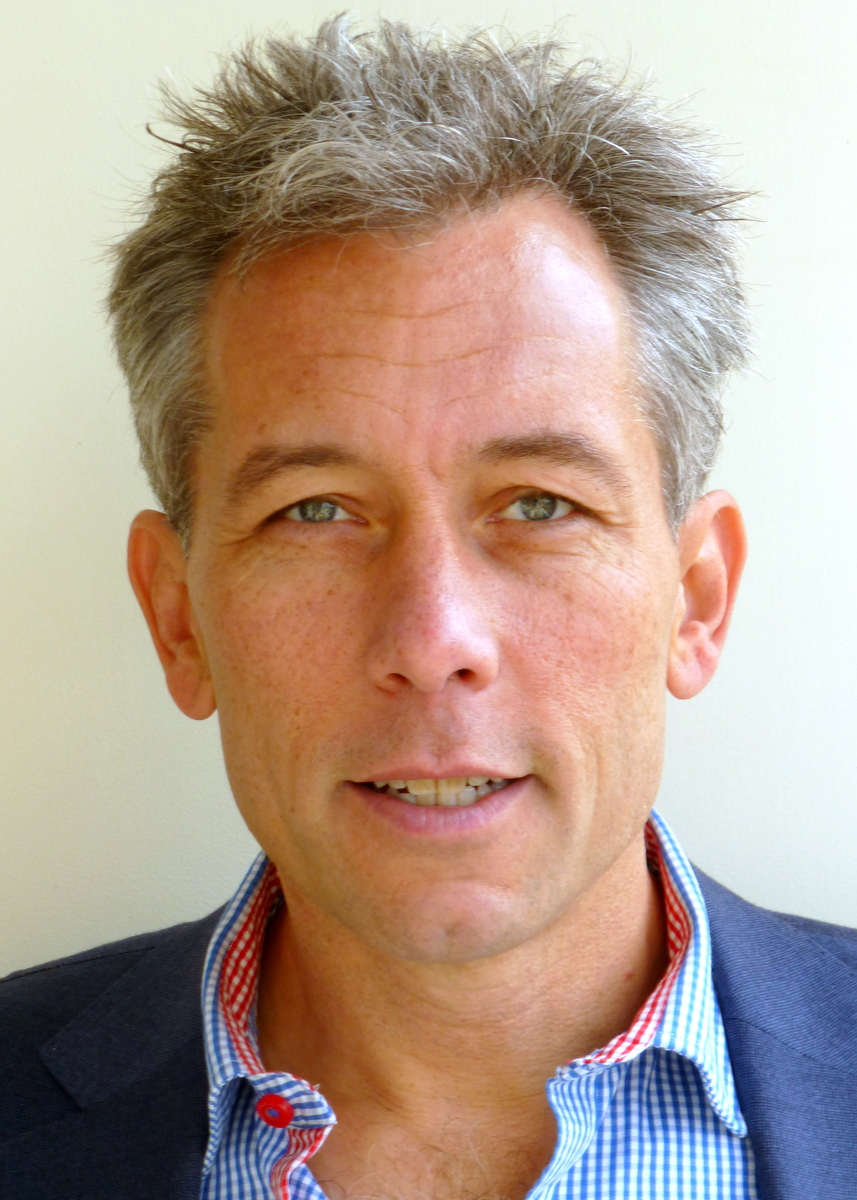
039: David Zetland on Aguanomics, Water Scarcity, Water Wars and ‘Toilet-to-Tap’
David Zetland is an assistant professor at Leiden University College, where he teaches various classes on economics. He was a Postdoctoral Fellow in Natural Resource Economics and Political Economy at UC Berkeley (2008-2010) and a Senior Water Economist at Wageningen University (2011-2013). David blogs on water, economics and politics at aguanomics.com and gives many talks to public, professional and academic audiences.
David has two books The End of Abundance: economic solutions to water scarcity (2011) and Living with Water Scarcity (2014). He received his PhD in Agricultural and Resource Economics from UC Davis in 2008. David lives in Amsterdam.
Influencers:
Adam Smith, Friedrich Hayek and Nassim Taleb.
Economics:
In this interview, David mentions and discusses: scarcity, shortage, commodity, supply, demand, marginal cost, opportunity cost, unintended consequences, monopoly, common-carrier system, the water-diamond paradox, development economics, governance, probability, fat tails, Buddhist economics, the problem of over-consumption, non-satiation assumption, GDP, pricing, fairness and efficiency.
Economists:
In this interview, David mentions and discusses: Adam Smith, Friedrich Hayek, Nassim Nicholas Taleb and Ernst Friedrich Schumacher.
The Water-Diamond Paradox (23rd minute in this Episode)
Find out:
- if we should be worried more about a shortage of water or a scarcity of water.
- if we should learn from the oil industry and develop the technology-equivalent of extracting oil from oil sands and desalinate the ocean water?
- if we can tell whether we know the water footprint of a cow and if it’s different in California than Ireland.
- why water is actually free and what you pay is for the delivery.
- if there is an opportunity costs to acquiring water?
- why people living in the slums of India pay up to 50 times the price for water than those who have cheaper piped water.
- if a water monopoly is an effective market structure.
- if price competition in the market for water would result in the over-use of water consumption.
- about Scottish Water and how other utilities across the UK and adopting their distribution and pricing structure.
- about the water-diamond paradox.
- why David decided to do a PhD in economics after failing to get rich in the dotcom era.
- how David came to get his family name ‘Zetland’.
- about the coming ‘Water Wars’ and how it has already started.
- about Sao Paulo’s troubled water situation and how it’s creating gang warfare on the streets.
- who we should assign the property rights to water.
- about Chile‘s exemplary assigning of water property rights.
- what David proposes to be the most effective way of managing water.
- how Singapore are becoming independent in creating their supply of water and are no longer depending on imports from Malaysia.
- how Singapore are building technologies to recycle water from waste.
- why the ‘toilet-to-tap’ water recycling initiative has failed in the US but is working in Singapore.
- how marketing recycled water works in Singapore and not in the US – one known as ‘New Water’ and the other ‘Toilet-to-Tap Water’.
- why Singapore treats water as a national security issue.
- why it will take 20 years to build a desalination plant and why San Diego will need 15 of these plants to serve the water needs of the locals.
- about the new Irish water utility, Irish Water, and how the management decided to ‘award’ themselves bonuses even before the Irish people payed for their water.
- about ‘Buddhist Economics’ and the assumption of non-satiation.
- what David would suggest if he was an Economic Advisor to any country regarding water policy.
Why David Studied Economics:
When I was between 25 and 30 years old, I travelled to 65 countries and when I came back to the States I was looking around and figuring out what to do. I tried to get rich in the dotcom era and that totally failed and I started to work with a bunch of academic mathematicians and they were really kinda cool people. But they were pretty cool and I thought ‘well this is interesting. Maybe I should go and do something academic’. I went back to grad school to get a PhD and I wanted to do development economics. My research project, which was to go and study cocaine production in South America, sounded to my advisors a littlest dangerous. Then one of my advisors said that there was this really strange case in Southern California where San Diego is in a big fight with other water utilities and maybe you should look into that. So that ended up being my dissertation – David Zetland.
David’s Advice to a Country Implementing a Water Policy:
“You have to take care of your environment. Then you have to commodify all the rest of the water. But all that revenue really should go to the citizens of that country. Other than that, I’m open to any other discussion about what’s a better system in terms of balancing between efficiency, which is pricing and fairness which is the distribution of those revenues” – David Zetland.
‘Water Water Everywhere and Not a Drop to Drink’: The Right to Water – It’s a Necessity After All
The ‘Right to Water’ is an important part of the conversation but it tends to confuse things. People need water for drinking, cleaning, washing and so on. But is there a right to water to put on your garden? Is there a right to water to wash your car? Do farmers have a right to water that goes on their fields if that means the river is going to be dry? So, there comes a point where the ‘Right to Water’ runs out and we have to start talking about water as a scarce good or an economic commodity. That’s the separation you need to start with.
Shortage is worse than scarcity because you can’t get any of what you want, even if you have time or money – David Zetland
David Zetland’s book ‘Living with Water Scarcity’ is about learning how to manage water scarcity, the same way we have learned to manage land scarcity, time scarcity and money scarcity. Water scarcity is not confined to any particular region or country. This is a global phenomenon. We can generalise water scarcity in terms of the lack of water available. But there exists specific concerns such as the scarcity of clean water, which is becoming a problem in northern European countries and eastern United States, where there’s lots of water but a lot of it is polluted.

Ireland’s Anti-Water Charges Protest 2014
The irony for people living in Ireland, for example, is that the country is surrounded by water but yet availability of fresh, clean water can be scarce in some regions. There are a few towns and villages in Ireland who have been buying bottled water or are on boiling notices due the presence of cryptosporidium in their water. Water shortages is not necessarily an immediate concern for Ireland. However, California, on the other hand, is experiencing their 4th year of drought. This is something that is being experienced in many regions around the world, but ‘California has more reporters hanging around’ and other regions’ grief remain unreported.
The ‘Water Water Everywhere and Not a Drop to Drink’ problem leads people to think that we should desalinate the ocean and get all the water that we want from the ocean. This, however, would be a great physical and expensive task to undertake and the conversation on desalination tends to stop. Should we learn from the oil industry and develop the technology-equivalent of extracting oil from oil sands and desalinate the ocean water?
Adam Smith explained the value in exchange as being determined by labor: ‘The real price of every thing, what every thing really costs to the man who wants to acquire it, is the toil and trouble of acquiring it’.
David frames this as ‘Technologies and Techniques’; techniques meaning how we use technologies and how we use water. “In the case where you have scarcity, you could say we’re going to build a desalination plant, drill a deeper well, build aqueducts, take shorter showers or stop watering our lawns. We should try and help people use as many ways as possible instead of focusing on one particular silver bullet.”
Who’s the Straw that Broke the Camels Back?
Numerous groups are pointing the finger at each other and casting blame each others way for causing pollution, drought and water scarcity. Besides the natural precipitation, farmers use half as much water as people in the city, such as industries and municipalities. In California, farmers use four times as much water as cities, say in the UK. Farmers obviously use water in various forms, but they’re not necessarily using more than the cities.
Then there’s the big discussion about who should be allowed to or who has the right to us water and that’s where the politics and mudslinging comes in. However, the level of precipitation is different in Arizona and California, as well as in Spain and Cyprus, compared to regions in Ireland and the UK.
Quotes from David in this Episode:
on how cheap water in India results in water utilities not having the infrastructure to deliver water to the slum areas. These people end up paying up to 50 times for their water from tankards. This water is dirty and people, particularly children, queue up for hours to collect and carry this water to their homes which can often be on the 3rd or 4th floor of a building.
“The customer is vulnerable to being exploited by the monopoly and the monopoly is vulnerable to being exploited by the customer. And that’s where regulations come in” – David Zetland on the need for regulation in the market for water.
Why is water, which is something we need to live, so cheap, whereas diamonds, which are a pure frivolous luxury, so expensive? – David Zetland on the Water-Diamond Paradox.
Water Wars in Sao Paulo, Brazil
Sao Paulo’s reservoirs have fallen to such low levels that their supply fails to meet with their expected demand. There were a lot of ways in which Sao Paulo could’ve dealt with this risk, such as fixing their leaky networks. They cannot get water from somewhere else. You’ve got a limited amount of water and 10 to 20 million people who need water to drink. The utility can shut off the water supply at various locations if they like and that raises the question of rich versus poor. That kind of decision is not going to please anybody. There have been protests over this.
David’s assessment of this is that if Sao Paulo wants to avoid a war on the streets, they need to shut of everybody’s water and have tankard trucks distributing water in Jerry cans in the corners – one man, one bottle. And that’s because you’d be addressing the concern of social equality and human rights.
Israel is not going to invade Turkey for their water. You can’t win that battle. You can’t bring back the water – it’s too heavy.There won’t be wars of plunder, there’ll be just conflicts over who’s going to get the water. Water gangs will form and they will take your water.
Recommended Books:
- The End of Abundance: economic solutions to water scarcity (2011) by David Zetland.
- Living with Water Scarcity (2014) by David Zetland.
- Small is Beautiful by Ernst Friedrich Schumacher.
- The Theory of Moral Sentiments by Adam Smith.
- Check out David’s review of ‘Small is Beautiful’ by E. F. Schumacher.
- Find out here why David decided to give his book away for FREE.
Where to Find David Zetland:
- Blog: aguanomics
- Twitter: @aguonomics
Podcast: Play in new window | Download