• ABOUT
  • RESOURCES
  • PODCAST
  • BOOKS
  • BLOG
  • SUPPORTERS
  • QFA Financial Advice
  • CONTACT

Economic Rockstar

Connecting Brilliant Minds in Economics and Finance

149: Soumaya Keynes on Tariffs, Trump and Trade Agreements
July 22, 2018 by Frank

http://traffic.libsyn.com/economicrockstar/149_Soumaya_Keynes_Final.mp3
Play in New WindowDownload

149: Soumaya Keynes on Tariffs, Trump and Trade Agreements


Soumaya Keynes is the economics and trade correspondent at The Economist. She writes for the print edition and the Free Exchange blog.

Before joining The Economist Soumaya did research on the public finances and pensions at the Institute for Fiscal Studies, an economic research institute.

Before that Soumaya worked in the Banking and Credit team at Her Majesty’s Treasury in London. Soumaya has an M.Phil. and B.A. in Economics from Trinity College, Cambridge.

She is co-host of a weekly podcast on trade economics called Trade Talks.

In this episode, Soumaya mentions and discusses:

  • Tariffs and Trade.
  • On the WTO: when they established and for what reason.
  • The General Agreement on Tariffs and Trade (GATT).
  • Trans-Pacific Partnership (TPP).
  • NATO.
  • EU blockage of US beef imports due to hormone induction but lacks scientific evidence.
  • Brexit: can Ireland and the UK create their own trade agreement as made permissible within the WTO which was also similar to those countries who created the TPP.
  • About NAFTA.
  • Why did Trump go after reforming or disrupting NAFTA?

Books:

Evicted: Poverty and Profit in the American City by Mathew Desmond.

Janesville: An American Story by Amy Goldstein

On Writing Well by William Zinsser


Writing Tips:

Excerpt from this episode with Soumaya Keynes

“Clear writing has value anywhere would be my first point. As someone who reads a lot of academic articles for my job, I think it has an impression that academic writing has to be wordier or more complicated essentially to demonstrate how clever you are. And as a reader of that I would argue that good writing is good wherever it is and there is huge value to being clear and having short sentences and being understandable. You know, jargon is often something that people hide behind. Do you really need to use the ten-letter version of the word where a five-letter version is available?

One thing that came to me relatively late is that essentially there are two kind of writers. There are the kind who other people think of as natural writers who can write out a first draft and it’s perfect. And for disclosure I am not one of those kind of writers. And then the other kind is the kind that basically needs three drafts to get what they are happy with. And I think before I came to The Economist that I would have thought that maybe because I need three drafts as I wasn’t as good a writer as the person who could do it first time. But that I think is really not the case. Just because it feels like it’s taken a lot of effort that you need to do a lot of re-writing to get it in the shape that you want that doesn’t say anything about the quality of the final product or just how good a writer you are.

The risk is that if you know that you need a few rounds of editing to get something in to the shape that you wanted that you label yourself a bad writer and that makes you worried or anxious about writing anything new.

And so, my words of wisdom would be ‘You’re still a great writer even if it takes you a few tries’, or at least that what I tell myself.”

Other Episodes that May Interest You:

  • 144: Donald Boudreaux on International Trade, Tariffs and Protectionism
  • 040: Rebecca Harding on Trade Finance and How Delta Economics Can Help Identify Growth Opportunities World-Wide

Links:

  • Soumaya Keynes personal website
  • The Economist
  • Trade Talks podcast
  • Peterson Institute for International Economics

Patreon

If you’re a fan of the podcast and would like to show your support in anyway, please check out my Patreon page at www.patreon.com/economicrockstar where you can sign up for any of the awards for as little as $1 a month or you can simply follow me on the Economic Rockstar Facebook page or on Twitter or simply recommend the show to a friend, especially if they have never had the opportunity to study economics.

http://traffic.libsyn.com/economicrockstar/149_Soumaya_Keynes_Final.mp3

Podcast: Play in new window | Download
144: Donald Boudreaux on International Trade, Tariffs and Protectionism

June 15, 2018 by Frank

http://traffic.libsyn.com/economicrockstar/144_Donald_Boudreaux_Final.mp3
Play in New WindowDownload

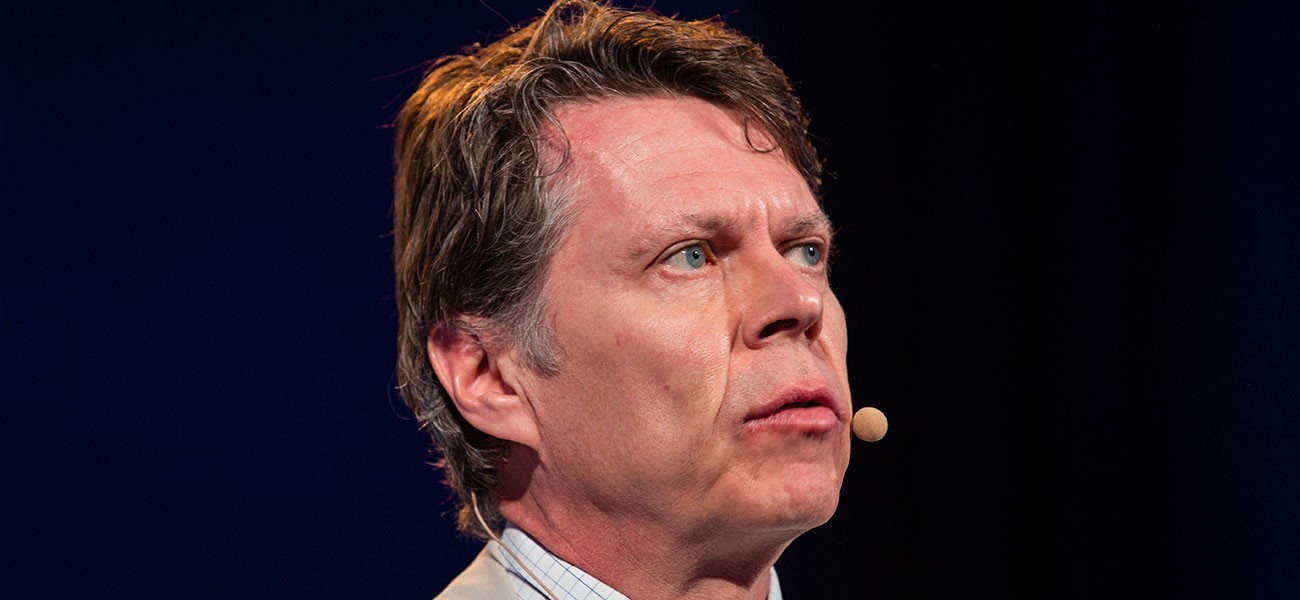
144: Donald Boudreaux on International Trade, Tariffs and Protectionism

Donald Boudreaux is an American economist, author, professor, and co-director of the Program on the American Economy and Globalization at the Mercatus Center at George Mason University in Fairfax, Virginia.

He is the author of the 2007 and 2012 books Globalization and Hypocrites and Half-Wits, respectively.

He contributes a column twice a month to the Pittsburgh Tribune-Review and contributes to the Cafe Hayek blog.

Economists mentioned in the Episode:

David Ricardo, Adam Smith, John Maynard Keynes, James Buchanan, Russ Roberts, Hecksher-Ohlin, Daniel Ikenson.

In this Episode, you will learn:

  • Why we should look at Ricardo’s model of comparative advantage at an individual level rather than at a country level.
  • Why Krispy Kreme had to close some of its stores.
  • Is French Bourdeaux wine really all French or does the global supply chain have some hidden origins to this grape?
  • Does globalisation facilitate material prosperity?
  • Is there a race to the bottom?
  • Is globalisation facilitating our human needs for increased leisure time?
  • Is globalisation good for us?
  • Protectionism and what it means for US jobs.
  • Will car manufacturing jobs come back to Detroit?
  • Are restrictions to trade a contributor to poor economic growth?
  • Does trade promote diplomacy and reduce military intervention?
  • Did the 1930 Smoot-Hawley tariff on US imports worsen the Great Depression?
  • and much more.

People mentioned in this Episode:

  • Katharine Graham CEO of The Washington Post in the 1970s.
  • Warren Buffett
  • H. L. Mencken (journalist 19 – 20th century)

Where to find Donald J. Boudreaux:

  • Cafe Hayek
  • www.donaldjboudreaux.com

Readings:

  • Economic Possibilities for our Grandchildren by John Maynard Keynes (1930)   

Books:

  • Hypocrites and Half-Wits: A Daily Dose of Sanity from Cafe Hayek by Donald Boudreaux
  • Globalization by Donald Boudreaux
  • An Enquiry into the Nature and Causes of the Wealth of Nations by Adam Smith
  • Perennial Seller by Ryan Holiday

Patreon

If you’re a fan of the podcast and would like to show your support in anyway, please check out my Patreon page at www.patreon.com/economicrockstar where you can sign up for any of the awards for as little as $1 a month or you can simply follow me on the Economic Rockstar Facebook page or on Twitter or simply recommend the show to a friend, especially if they have never had the opportunity to study economics.

http://traffic.libsyn.com/economicrockstar/144_Donald_Boudreaux_Final.mp3

Podcast: Play in new window | Download
114: Deirdre McCloskey on Equality and Greed and How To Be a Very Good Economist

December 2, 2016 by Frank

http://traffic.libsyn.com/economicrockstar/114_Deirdre_McCloskey_Final.mp3
Play in New WindowDownload

114: Deirdre McCloskey on Equality and Greed and How To Be a Very Good Economist

Deirdre McCloskey taught at the University of Illinois at Chicago and was a Distinguished Professor of Economics, History, English, and Communication.

She was also adjunct professor of Philosophy and Classics there, and for five years was a visiting Professor of philosophy at Erasmus University in Rotterdam.

Since October 2007 Deirdre has received six honorary doctorates. In 2013, she received the Julian L. Simon Memorial Award from the Competitive Enterprise Institute for her work examining factors in history that led to advancement in human achievement and prosperity.

Deirdre’s main research interests include the origins of the modern world, the misuse of statistical significance in economics and other sciences, and the study of capitalism, among many others.

Deirdre has written 17 books and around 400 scholarly pieces on topics ranging from technical economics and statistical theory to transgender advocacy and the ethics of the bourgeois virtues.

Her latest book, Bourgeois Equality: How Ideas, Not Capital or Institutions, Enriched the World is part of the Bourgeois Era trilogy described as an “apology” for capitalism.

Deirdre describes herself as a “post-modern, quantitative, free-market, feminist, Episcopalian, Midwestern, gender-crossing, literary woman”.

Deirdre’s website deirdremccloskey.org contains information and links to her books, articles, interviews and much more.

Economics:

In this episode, Deirdre discusses and mentions: blackboard economics, poverty, game theory, inequality, education, healthcare, economic growth, trade, production possibility frontier, gains from trade, liberty, greed, equality, utility maximisation, covered interest arbitrage, theory of marriage.

Economists:

In this episode, Deirdre discusses and mentions: Adam Smith, John Mayanrd Keynes, Karl Marx, David Hume, Gary Becker, Shoshana Grossbard, Nancy Folbre, Herbert Gintis, Jonathan McEvoy, Sam Bowles, Nassim Taleb, Paul Samuelson, Kenneth Arrow, Thomas Piketty, Joseph Schumpeter and David Ricardo.

On the Economics Discipline:

“It’s not to soften the science. It’s to harden the science. We’ve got to stop talking about this softening. That’s not going to persuade the guys to take this stuff seriously. It’s harder to do it correctly than to do it by going on and on with Game Theory and Max. U. As Keynes said ‘A person who is only an economist is not going to be a very good economist’. And I think that’s correct. You need to be a statistician and a mathematician of course and I’m not against that. But you also need to be a historian and a philosopher and a sociologist and a psychologist and a serious person who knows the world. And the way we know the world is mainly through the humanities, through theology, through religion, through novels. through poetry, song, country music where the river meets the road. It’s through films, through gossip, through going to a football game with their mates. That’s how we learn how societies really work. And it’s harder to bring that to bare our human experience into the economic science. But to get a good economic science, and like any thoughtful person agrees, you have to have all of that.” – Deirdre McCloskey

On Greed and Envy:

“Greed is a corrosive sin. Greed is the sin of the conservatives and envy is the sin of the socialists. And both of them is corrosive of the human soul. What happens in both greed and envy is that possessions, if you allow me I am a Christian,  take the place of God or to take the place, to put it more generally, of some dignified transcendent outside yourself. Both of them are selfish.”  – Deirdre McCloskey

On Liberalism:

“Liberalism is under attack everywhere, this populism that we see all over the place is anti-liberal above all. But I believe on the long run all societies will become liberal democracies. And the reason is the incredible magnitude of the economic gain from adopting liberal policies as in Singapore, as in Hong Kong, as in South Korea andTaiwan, as in Botswana, as in most spectacularity China and India. And then, if I can persuade people, in the longer sweep of history I make the point of Holland in the 17th century and England and Scotland in the 18th in the New World. And this liberal experiment that we engaged in then and is being repeated now in China and India is so productive that I think that it will win in the end.”  – Deirdre McCloskey

People Mentioned in this Episode:

  • Lillian Bettencourt 
  • The Clancy Brothers 
  • St Thomas Aquinas

Writing Tips:

  • Put pen to paper and keep going. – Deirdre McCloskey
  • Read Deirdre’s book Economical Writing for amazing writing tips for economists.

Recommended Books:

  • Economical Writing by Deirdre McCloskey
  • Crossing: A Memoir by Deirdre McCloskey


http://traffic.libsyn.com/economicrockstar/114_Deirdre_McCloskey_Final.mp3

Podcast: Play in new window | Download

087: Asgeir B. Torfason on the Economy of Iceland and Explaining Negative Cashflows in Banks

May 26, 2016 by Frank

http://traffic.libsyn.com/economicrockstar/087_Asgeir_Torfason_Final.mp3
Play in New WindowDownload

087: Asgeir B. Torfason on the Economy of Iceland and Explaining Negative Cashflows in Banks

Asgeir B. Torfason is Assistant Professor in the School of Business at the University of Iceland where he teaches asgeir torfasonFinance, Accounting and Financial Statement Analysis. Asgeir is also Postdoc Research Fellow, as well as an Assistant Professor at Gothenburg Research Institute.

Asgeir defended his PhD at Gothenburg University in May 2014 with dissertation: Cash Flow Accounting in Banks – A study of practice.

His research combines bank management, finance theory, monetary economics and accounting studies.

Previous research has focused on asset values and long-term investment in real estate, a field where Asgeir has extensive practical experience, covering the Nordics as VP for a REIT listed on NYSE.

Prior to that he worked in university management after getting an MBA from Norwegian Business School in Oslo, and studied earlier Philosophy and Economics in Iceland.

Economics:

In this episode, Asgeir mentions: Iceland’s economy, IT bubble, Tulip Mania, banks, capital controls, devaluation, tourism, resources, trade, cashflows, assets, liabilities, revenue, equity, income statements, bankruptcy, lending, negative cashflows, money multiplier, reserve requirement, central banks, quantitative easing, swap lines and housing bubbles.

Economists:

In this episode, Asgeir mentions: Joseph Schumpeter, John Maynard Keynes, Hyman Minsky, Perry G Mehrling, 

Links:

  • Economics of Money andBanking, Part One by Perry G Mehrling
  • Economics of Money andBanking, Part Two by Perry G Mehrling
  • Money View by Institute for New Economic Thinking
  • Katharina Pistor, Professor of Law at Columbia Law School

Papers:

  • The difference between cash flows in banks and non-financial firms by Asgeir B. Torfason
  • Methods for Making Sense of Cash Flow in Banks by Asgeir B. Torfason
  • Cash flow accounting in banks – a study of practice (PhD) by Asgeir B. Torfason

Books:

  • The New Lombard Street: How the Fed Became the Dealer of Last Resort by Perry Mehrling
  • Lombard Street-A Description of the Money Market by Walter Bagehot
  • Manias, Panics and Crashes: A History of Financial Crises, Sixth Edition by Charles P. Kindleberger
  • The Economic Consequences of the Peace by John Maynard Keynes

Where to Find Asgeir:

  • Twitter:  @asgeirbt
  • About.me
http://traffic.libsyn.com/economicrockstar/087_Asgeir_Torfason_Final.mp3

Podcast: Play in new window | Download

077: The Irish Economy 100 years on from the 1916 Easter Rising

March 17, 2016 by Frank

http://traffic.libsyn.com/economicrockstar/077_Ireland.mp3
Play in New WindowDownload

077: The Irish Economy 100 years on from the 1916 Easter Rising

This is a commemorative episode celebrating the 100 year anniversary of Ireland’s 1916 Easter Rising in which the Proclamation of the Republic was read by Padraig Pearse at four minutes past noon on Easter Monday, April 24th, from the steps of the General Post Office on Sackville Street (now known as O’Connell Street). The document proclaimed Ireland’s independence from Great Britain.

How was Ireland’s economy performing in 1916 and how far have we come 100 years on?

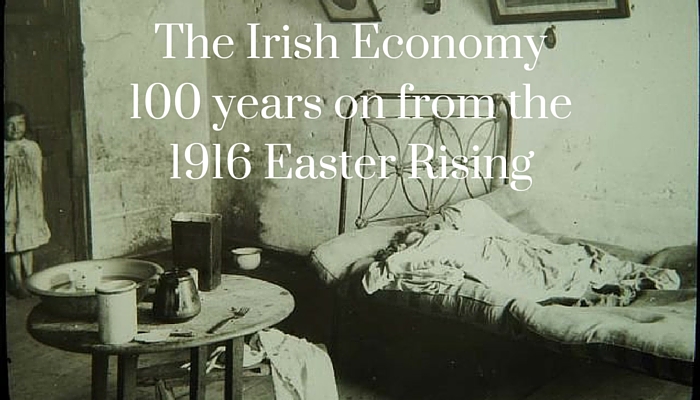
The Irish Economy 100 years on from the 1916 Easter Rising

Background:

Ireland in 1916, consisting of 32 counties, was ruled by Great Britain. The 32 county economy experienced a period of unprecedented prosperity mainly due to the positive economic effects of the First World War.

However, since the Great Irish Famine of 1846, Ireland experienced mass emigration and large numbers of deaths. The laissez-faire economic ideology was a failure. From the period 1851 to 1916, over 5 million Irish citizens emigrated reducing the population from a peak of approximately 8 million to 3 million.

The Irish economy was ruled by Great Britain and its economy became increasingly tied to trends in global markets. The cost of living increased and there were some rises in living standards. These were subject to sharp declines due to the recessions of 1859 to 1863 and 1877 to 1880. Poverty was widespread and tensions between landlords and tenant farmers escalated. Despite this poverty, Irish living standards were above most of Eastern and Central Europe but income levels remained below the UK and the US.

Ireland’s economy became increasingly reliant on four main industries: Agriculture, Linen production, Shipbuilding (where the Titanic was built) and Brewing and Distilling. However, agricultural exports were heavily dependent on Great Britain and Shipbuilding was dependent on an outdated industry. For example, it wasn’t long after the First World War that the Irish Shipbuilding industry collapsed.

The First World War of 1914 brought about a period of prosperity for Ireland, due to the increased demand for food, linen and ships that were directly linked to the war effort. However, this prosperity was not shared by all.

So what did the Irish economy of 1916 look like compared to its economy today 100 years on?

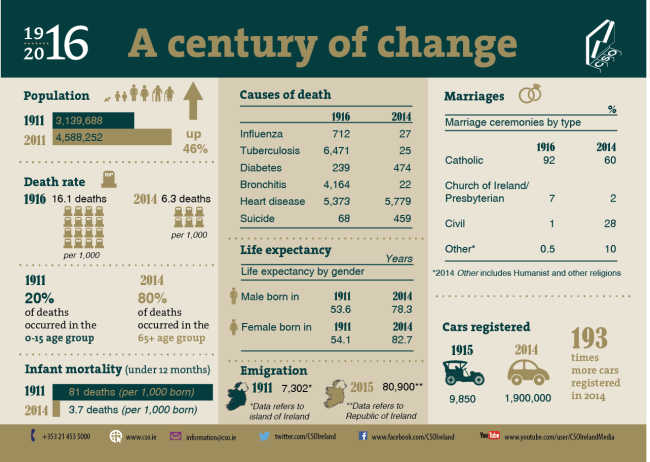
CSO 1916 - 2016 infographic

Source: Central Statistics Office

Population:

The population of Ireland in 1916 was one of the lowest recorded in its history. According to the population census of 1911, the population stood at just 3.14 million. It represented a country devastated by death caused by the famine over a half century previous and the subsequent mass emigration that ensued.

A 9-year-old Irish immigrant laborer shucks oysters in front of his foreman in the U.S. in 1911. pic.twitter.com/cOKICWk8Ta

— HISTORY (@HISTORY) April 12, 2016

Today, Ireland’s population has recovered to 4.59 million, an increase of 46%. However, many have emigrated due to the financial crisis of 2007, most notably Ireland’s youth. We have reverted to being a net emigration population after a period of becoming a net immigration population, attracting workers from overseas as well as bringing Irish people home.

Emigration for the whole island of Ireland in 1916 was 7,366 or 17 per 10,000 of the population. This had fallen from a substantial level before the outbreak of the Great War. The latest data for 2015 shows emigration for the Republic of Ireland at 80,900 representing 175 per 10,000 of the population.

Emigration in 1916 consisted of 5,580 females and only 1,786 males. This I found surprising.

The four main destinations for Irish emigrants in 1916 were the US, the UK, Canada and then Australia.

In 2015, the UK was the main destination for Irish emigrants. Only 7% of emigrants went to the US in 2015 compared to 58% emigrating in 1916.

The Irish diaspora abroad is quite large. Despite being a small island off Western Europe, Irish smiles have been welcomed all over the world. Ancestry can be traced back to Ireland particularly for those living in the United States, the UK, Argentina, Australia and Canada.

Today, it is estimated that there are 80 million people of Irish descent living around the world today. Other that the Republic of Ireland and Northern Ireland, Montserrat in the Caribbean is the only other country where St. Patrick’s Day is a public holiday.

Montserrat is known as the Emerald Isle of the Caribbean and it’s Irish heritage dates back to the 17th century when the island became a safe haven for the Irish who were originally sent to the Caribbean as slaves by Great Britain’s leader Oliver Cromwell. A census in 1678 showed that more than half of the population on the island were Irish.

Life Expectancy:

According to records for 1911, the life expectancy for a male born in Ireland was 53.6 years and for a female 54.1 years. Today, a male born in Ireland has a life expectancy of 78.3 years and a female 82.7 years.

Despite the period of prosperity, Ireland remained divided in terms of the gap between wealth and poor. Much of rural Ireland in the west of the country lived as an agrarian society, dependent on agriculture for a living. Living standards were much lower relative to other parts of the country.

Urban areas did not escape the ravishes of poverty. Inequality was more prevalent in urban towns, particularly in Dublin city. Despite a boom in food and linen exports in 1916, the Irish poor remained hungry.

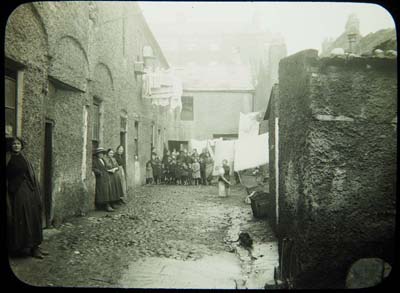
Henrietta Place, Dublin 1913. The flight of wealth to the suburbs often meant an escape from inner city squalor.

Henrietta Place, Dublin 1913. The flight of wealth to the suburbs often meant an escape from inner city squalor.

Poverty levels in Ireland today are at 8% with households consisting of one adult and one or more dependent children considered most at risk. Rural Ireland, including the West of Ireland, has a higher incidence of poverty than the rest of the country. As the saying goes, things change but always stay the same!

Many adults and children perished due to influenza, bronchitis and tuberculosis. These were the leading causes of death in Ireland along with heart disease. Today, heart disease is the leading cause of death in Ireland with few incidences of death from the other forms. The number of deaths by suicide that was officially recorded in 1916 were 68 compared to 459 for 2014, This represented 10 per 100,000 of the population compared to approximately 2 per 100,000 of the population.

Housing:

Ireland’s macro economy of 2016 is showing remarkable progress since it’s recession, bailout and financial crisis. The Irish have a love affair with housing. Perhaps it has its roots in history where many people were evicted from their homes during the Great Irish Famine.

During the boom from 1998 to 2007, Irish house prices soared only to come crashing down once the crisis hit. At its peak, over 90,000 houses were built but today only 11,000 houses were completed. The Irish housing market is under immense stress with demand outstripping supply. This shortage is resulting in much higher rents than what was recorded during the boom period. House prices are recovering but recent government legislation is making it difficult for landlords who are selling their property or evicting their tenants in order to capture the higher rental yields. Ireland is undergoing a housing crisis in today.

In 1916, Ireland experienced a severe housing crisis. Dublin and other cities became infamous for the living conditions of its citizens. The tenements, where many impoverished families lived, marked a bleak period in recent Irish history.

Multiple families shared large terraced houses with extremely poor sanitary and hygiene conditions. It was estimated at the time that 20,000 families in Dublin occupied single rooms and in some cases with other families. Family sizes of 8 or 10 children were not unusual. There were cases of 104 people occupying a single house built to accommodate one family.

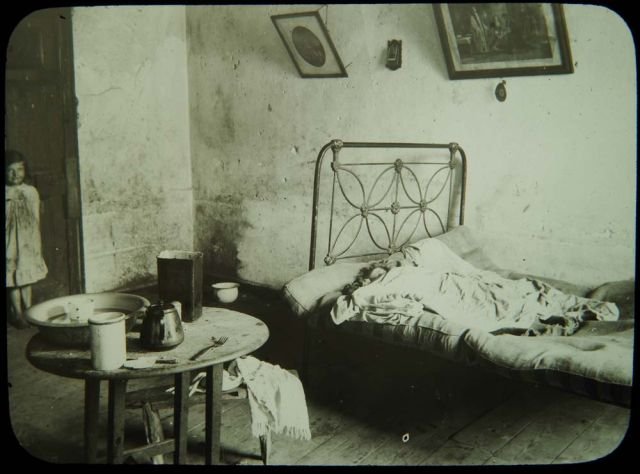
A Tenement Room on Francis Street, Dublin in 1913

A Tenement Room on Francis Street, Dublin in 1913

Many evictions took place as families fell behind in rent. Facing starvation, children queued for bread which was handed out by religious orders. Many people in the West of Ireland emigrated due to food shortages and abandoned their homes. Despite many empty homes in the rural parts of Ireland, many families suffered homelessness, extremely poor living conditions and starvation.

Due to the housing crisis that Ireland is experiencing today in 2016, there are some echoes of the past. Homelessness has jumped 100% since January 2015. Over 700 families are living in emergency accommodation in hotels and guest houses. Evictions are up significantly and there are currently 17,000 people in the courts who are at risk of losing their homes. Food parcels are being handed out each week and the number queuing is rising.

Employment:

The Irish economy in 1916 was transitioning toward becoming an industrial nation. It was by no means considered backward and was in fact placed in the group of middle-ranking industrialised countries along with the Netherlands, the Scandinavian countries, Italy and Portugal.  26.8% of workers in 1911 worked in manufacturing jobs compared to 8.6% in 2011.

An estimated 150,000 men had joined the British army and many men and women went to the UK to find employment in munition factories and hospitals. Wages had increased during this time.

Almost 50% of the working population were employed in the Agriculture sector in 1911. This compares to just 4.9% in 2011.

In 1911, 8.8% of the labour force in Ireland worked in the professional group of occupations. By 2011, these workers now account for over 40% of the Irish workforce.

Ireland’s unemployment rate today is 8.8% coming from a recent high of 14.4%. It is unsure what the level was in 1916.

Exports:

Ireland in 1916 mostly consisted of indigenous industries. 85,000 workers were employed in linen production with over 18 million pounds (weight) of linen yarn and 112 million pounds (weight) of finished linen goods exported. Prior to the outbreak of World War I in 1914, about 70% of these exports were to the United States of America. However between 1914 and 1918, linen was in great demand for military purposes by the British Army for items such as tents, haversacks, hospital equipment and aeroplane fabric.

Today much of its traditional industry gone today. Very few linen manufacturers and weavers exist today. To bring my own personal family history into this story, my family remains one of a few linen weavers in Ireland today, producing the best Irish linen in the market with exports to countries that include Japan, the US and Italy. I’m personally proud of my father for what he has achieved and for extending the Irish tradition of producing the finest linen in the world.

Ireland is considered a small open economy and the UK still remains one of our largest trading partners. The Irish economy attracts many multinationals companies to locate here. In 2016, Ireland ranks among the top countries regarding industrial competitiveness and ease of doing business.

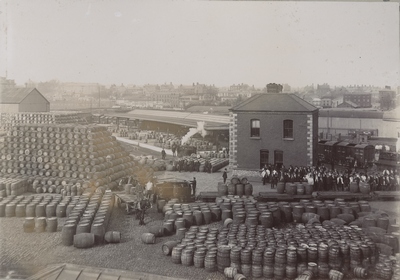
The Guinness brewery was the main brewery in Ireland and in 1916 it had the largest output of any brewery in the world, brewing more than two-thirds of all beer brewed in Ireland.

Cask Yard St. James' Gate Brewery 1906 - 1913

Cask Yard St. James’ Gate Brewery 1906 – 1913

The largest exporting sectors in Ireland during 1916 were woollens, brewing, butter, bacon, poultry, cattle, cotton goods and linen. The sectors that were in decline included horses, whiskey, pigs and sheep.

Ireland had a trade surplus of 1.5 million pounds (and a balance surplus of 11.1 million pounds) in 1916. For the latest data today, which is January 2016, Ireland is operating a trade surplus of 4.99 billion euro. Ireland’s largest exporting sectors are Medical and pharmaceutical products (representing 27% of total exports), Office machines and automatic data processing machines, and Food and live animals (representing 7.8% of our total exports).

The EU accounts for 56% of the total value of Irish goods exported. Belgium is Irelands largest export trading partner accounting for 15% of the total value of goods exported.

Great Britain remains Ireland’s single largest source of imports with 25% of the total value of goods imported to Ireland.

The USA remains Irelands largest non-EU destination for exports and imports.

GDP:

According to research by Kevin O’Rourke of the Department of Economics at University College Dublin a proxy measure for GDP per capita in Ireland was estimated to be 32.50 in 1913. This was based on a GDP estimate of 150 million. To put this into some context, the estimated GDP per capita in 1864 was 12.50 with GDP estimated at 60 million – over a 160% increase in nominal terms between the Famine and the Great War. Irish GDP per capita converged on the UK average during this time.

According to the International Geary-Khamis dollars, Ireland’s GDP per capita in 1913 was $2,736 whereas the US GDP per capita was $5,301 and the UK’s at $4,921, almost twice that of Ireland’s. This seems to suggest that incomes had yet to converge with those in Great Britain.

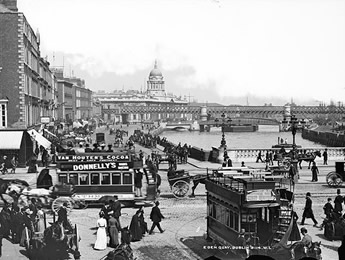
Eden Quay displays the bustle of turn of the century Dublin city life

Eden Quay displays the bustle of turn of the century Dublin city life

Ireland would have been considered one of the poorest Western European countries along with Greece, Italy, Portugal and Spain – yes there’s that familiar acronym of the financial crisis.

Today, Ireland is considered one of the richest countries in the world with GDP per capita of just under $49,000, placing the country in 10th position, with the US in 9th and the UK in 19th according to the World Bank.

GDP for Ireland was $11.9 million but this collapsed to $7.8 million by 1921 perhaps due to the Irish civil war. It was only in 1960 that Ireland recovered to pre-1916 levels.

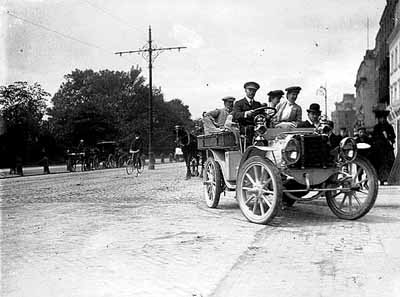
There were 9,850 cars registered in Ireland in 1915 with now over 2 million registered today.

F_Horse, bicycle, Car_Stephen'sGreen_clar21t

Inflation:

Due to the outbreak of the First World War in 1914 and the resulting scarcity of goods, inflation in Ireland increased considerably by 200% over the wartime period as measured by the wholesale price index.

Unless wage inflation was outpacing price inflation in 1916, which is very unlikely, families must have experienced a real reduction in the purchasing power of their £.

These increases in prices were also due to Government policy which increased taxes and duties on various products.

The retail price of butter, tea and eggs were expensive in 1916. For example, the price of a pound of butter then would have cost 7 euro 35 cent updated to today’s consumer price index compared to today’s price of 2 euro 79 cent.

Links:

  • Data: Central Statistics Office
  • Data: International Geary-Khamis dollars by Professor Angus Maddison
  • Paper: Monetary Data and Proxy GDP Estimates: Ireland 1840 – 1921 by Kevin O’Rourke, UCD.
  • Read Ireland’s Proclamation of the Republic where equal rights for all men, women and children was declared along with the creation of a sovereign country.

Family History Research:

  • Ireland’s Census: Search for your Irish Heritage for the following Census years: 1911, 1901, 1851, 1841, 1831 and 1821.
  • National Library of Ireland: www.nli.ie

Images:

  • All images courtesy of the National Library of Ireland
  • Infographic courtesy of the Central Statistics Office
http://traffic.libsyn.com/economicrockstar/077_Ireland.mp3

Podcast: Play in new window | Download

060: Manu Saadia on Trekonomics – The Economics of Star Trek: Scarcity, Productivity and Public Goods

November 26, 2015 by Frank

http://traffic.libsyn.com/economicrockstar/Manu_Saadia_Final.mp3
Play in New WindowDownload

060: Manu Saadia on Trekonomics – The Economics of Star Trek: Scarcity, Productivity and Public Goods

Manu Saadia fell into science fiction and Star Trek fandom at the age of eight, back in Paris, France, where he was born and raised.Manu Saadia

Manu  studied history of science and economic history in Paris and Chicago. After many happy years in the Ivory Tower, he yielded to his childhood passion for the future.

Manu embarked on his continuing mission to explore strange new worlds by boldly going where many have gone before: Los Angeles, CA, where he advise and (occasionally) builds tech companies.

Manu received the 2005 Wayne C. Booth Graduate Student Prize for Excellence in Teaching at the University of Chicago.

His book, Trekonomics, is currently available for pre-order at www.inkshares.com and will be released in 2016.

Star Trek offers much more detail about its own world and the way its economics actually works – like the plumbing so to speak. So that’s what I wanted to do. Go into the plumbing of Star Trek. – Manu Saadia

Economics:

In this interview, Manu mentions:  trekonomics, crowd funding, labor, economic history, trade, robots, capitalism, comparative advantage, currency, money, Gold-Pressed Latinum, public goods, conspicuous consumption, scarcity, peak oil, productivity and opportunity costs.

Economists:

In this interview, Manu mentions: Brad DeLong, Felix Salmon, Adam Smith, Thomas Malthus, Hubbert, Paul Ehrlich, Julian Simon, Romer, Larry Summers, John Maynard Keynes and Angus Deaton,

In this episode you will learn:

  • why Manu Saadia wrote Trekonomics.
  • about the Star Trek Economics panel at Comic Con.
  • why economists love Star Trek.
  • about inkshares and how it can help authors publish their book.
  • how traditional media rather than social media boosted pre-order sales of Trekonomics – an ironic outcome.
  • when Manu’s interested in economics and Star Trek collided.
  • about the work of Isaac Asimov and how his stories are a discourse on economics.
  • how the stories of robots and the future by Asimov influenced and shaped the storyline in Star Trek.
  • about the replicators in Star Trek and how they solve the problem of economic scarcity.
  • about the Ferengi’s and how they represent capitalism and trade.
  • why The Federation or the humans in Star Trek do not use money but have a foreign account to trade with the Ferengi’s.
  • about the Ferengi’s currency, Gold-Pressed Latinum, which cannot be replicable.
  • why owning a replicator is a ‘pain in the ass’.
  • how things that cannot be replicated has value but those that can be replicated has no value.
  • if Keynes’ The Economic Possibilities of Our Grand Children is a rebuttal of the writings of H. G. Wells.
  • about GPS being a public good and the benefits it has brought to the public.
  • why making GPS a public good in 1983 was one of the best decisions Ronald Reagan made as US President.
  • Manu’s favourite Star Trek episode is Lower Decks (The Next Generation).

Quotes by Manu Saadia in Episode 60 of the Economic Rockstar Podcast:

Trekonomics got a lot of support and very nice feedback from a lot of economists – Manu Saadia

Click To Tweet

“It always baffles me when you have these very famous and serious economic thinkers were in fact  total Star Trek nerds. I was on a panel at New York Comic Con with Brad DeLong, Paul Krugman and Annalen Newitz from i09. There was Chris Black as well and Felix Salmon.” – Manu Saadia

Brad DeLong came to the panel with a Star Trek hoodie. – Manu Saadia

Click To Tweet

On Isaac Asimov: “All of his work is a long meditation on economics, either foundation where there is this science called psychohistory which is in fact a fictional mathematical modelling of human behaviours on the scale of societies on a galactic scale.” – Manu Saadia

“One of the reasons why I wanted to study economics was that I was fascinated by and really wanted to understand the transformation of humanity’s relation to its own labor. This is one of the great questions of political economy because it determines a lot of things when it comes to the shape society and the role of the state and how behaviors are determined and constructed over time. But it’s also the key to understanding where we’re going”. – Manu Saadia

“I would say the replicators are more of a metaphor. If you look at their status in the series, they do not help move the narratives forward. They’re just there to signify that there’s no need to work. They’re a little bit like robots in Asimov. They have the same narrative function, which is to show and demonstrate that post-scarcity does exist and is based on automation and artificial intelligence.” – Manu Saadia

The Ferengi’s are the capitalist, merchant traders of the galaxy – Manu Saadia

Click To Tweet

Most of the stuff in Star Trek is basically a public good – Manu Saadia

Click To Tweet

I think Star Trek is very much what Keynes described in The Economic Possibilities of Our Grand Children – Manu Saadia

Click To Tweet

Books:

  • Scatter, Adapt, and Remember by Annalen Newitz 
  • Isaac Asimov
  • Frankenstein by Mary Shelly
  • The Economic Possibilities of Our Grand Children by John Maynard Keynes

Papers:

  • Romer (1990) Productivity Gains

Links:

  • What I Learned Crowdfunding Trekonomics  by Manu Saadia
  • Trekonomics The economics of Star Trek: how does it work, and how do we get there?  by Manu Saadia
  • View the transcript to The Amazing Economics of Star Trek at New York Comic Con
  • www.i09.com 
  • www.inkshares.com
  • What the economics of Star Trek can teach us about the real world by Brian Fung, Andrea Peterson and Hayley Tsukayama Washington Post 
  • The Live Long and Prosper Edition Slate Money 
  • Club of Rome 

Manu’s Favorite Star Trek Epsiodes:

  • City on the Edge of Forever
  • Arena

Where to Find Manu:

  • inkshares.com
  • fusion.net

Music:

  • Star Trek Episode Amok Time
http://traffic.libsyn.com/economicrockstar/Manu_Saadia_Final.mp3

Podcast: Play in new window | Download

055: David Skarbek on the Economics of Prison Gangs and The Social Order of the Underworld

October 22, 2015 by Frank

http://traffic.libsyn.com/economicrockstar/055_David_Skarbek_Final.mp3
Play in New WindowDownload

055: David Skarbek on the Economics of Prison Gangs and The Social Order of the Underworld

Dr David Skarbek is a Senior Lecturer in Political Economy and Undergraduate Exam Board Chair in the Department of Political Economy at Kings College, London.

David’s research interest is to understand how people define and enforce property rights in the absence of strong, effective governments. His work has examined incarceration, gangs, and crime in the United States.

David received a BS in Economics from San Jose State University and a MA and PhD in Economics from George Mason University. He previously taught in the political science department at Duke University.

David’s teaching include ‘Research Methods for Politics’, ‘Economics of Crime’ and ‘Political Economy of Organized Crime’

David’s new book is The Social Order of the Underworld: How Prison Gangs Govern the American Penal System (Oxford University Press). It examines how inmates create self-governance institutions to promote economic and social interactions behind bars.

Economists:

In this interview, David mentions: Alex Tabarrok, Peter Leeson and Peter Boettke.

Economics:

In this interview, David mentions: Scarcity, rationality, irrationality, incentives, governance, social economics, black market economy, gang taxes, drug taxes, marginal cost, correlation, constitutional economics, the collective action problem, free-rider problem, monopoly, trade and protection.

Economics explains everything when properly applied and that discovering how it does so is the most delightful intellectual project that one can imagine – David Skarbek

“Gangs formed because the prison population became very large” – David Skarbek

Click To Tweet

Prison is a very strategic environment. In some ways prison is somewhat an excellent context to apply the rational choice approach – David Skarbek

In this episode you will learn:

  • what makes states stable.
  • how prisoners trade in a black market economy.
  • why gang-based governance in prisons looks very different today than 100 years ago.
  • why big prison systems have serious prison gang problems compared to small prison systems.
  • how women prisons are better controlled as they are governed in a decentralised way.
  • about the control that prisoners in adult correctional facilities have control over minors in juvenile correctional facilities.
  • whether private prisons result in a larger prison population.
  • diminishing returns to prison years.
  • how do prison guards feel about prison gangs.
  • how the costs of having prison gangs is externalised to the taxpayer.
  • how the availability of resources that are provided by prisons could determine the level of prison gang culture.
  • why didn’t slaves revolt when being shipped to other countries.
  • how the free-rider problem was the main reason why slaves did not revolt on ships.
  • whether having weapons is necessary in reducing crime.

Books:

  • The Social Order of the Underworld: How Prison Gangs Govern the American Penal System by David Skerbek
  • The Invisible Hook: The Hidden Economics of Pirates by Peter Leeson
  • Enforcing the Convict Code: Violence and Prison Culture by Rebecca Trammell
  • The Better Angels of Our Nature: Why Violence Has Declined by Steven Pinker

Papers:

  • Why Didn’t Slaves Revolt More Often During the Middle Passage? (D. Skarbek and A. Marcum) Rationality & Society 26(2) 2014: 232-262.

Movies:

  • The Godfather
  • The Godfather II

Where to Find David:

  • Website: www.davidskarbek.com
  • Twitter: @DavidSkarbek
http://traffic.libsyn.com/economicrockstar/055_David_Skarbek_Final.mp3

Podcast: Play in new window | Download

052: Alex Tabarrok on Globalisation, Bounty Hunters and Leveraging Online Education

October 1, 2015 by Frank

http://traffic.libsyn.com/economicrockstar/Alex_Tabbarrok__Final.mp3
Play in New WindowDownload

052: Alex Tabarrok on Globalisation, Bounty Hunters and Leveraging Online Education

Alex Tabarrok is Associate Professor of Economics at George Mason University and co-founder (with Tyler Cowen) of Marginal Revolution University, an online platform for learning economics.Alex Tabarrok

Alex is Senior Fellow and former Research Director for The Independent Institute, Assistant Editor of The Independent Review, Bartley J. Madden Chair in Economics at the Mercatus Center and Director of the Center for Study of Public Choice.

Alex is the author or editor of a number of books including the introductory economics textbooks, Modern Principles, The Voluntary City and Changing the Guard: Private Prisons and the Control of Crime.

Alex is a TED speaker with over 640,000 views of his TED talk, How Ideas Trump Crises.

Alex received his Ph.D. in economics from George Mason University, and he has taught at the University of Virginia and Ball State University.

“I hope to be teaching long after I’m dead” – Alex Tabarrok

Click To Tweet

In this episode, you will learn:

  • how to ensure that criminals turn up of trial and to reduce the possibility of them becoming a fugitive.
  • how bounty hunters are more successful than the police in catching criminals.
  • why bounty hunters and bail bondsmen are the most best for the taxpayer.
  • why bounty hunters invited Alex Tabarrok to join them in a bounty hunting.
  • why a mother’s signature on a bail bond is the most effective way of making sure a criminal repays its  due.
  • how effective are the police in deterring crime.
  • how a police strike in Montreal in 1967 resulted in an spike in crime.
  • how the terror alert level results in an increase in police presence and results in a decrease in local crime.
  • whether we should reward the police for reducing crime and the problems that could arise from this reward system.
  • about the use of value-added tests for identifying teacher quality.
  • whether the best teachers have a positive impact on the future earnings of their students.
  • if a country can have a welfare state and open borders.
  • how the next generation of immigrants revert to the average of their adopted country including crime.
  • why immigrants to the United States are the most entrepreneurial.
  • why Alex co-founded Marginal Revolution University.
  • what Marginal Revolution University is about and who it’s for.
  • how to leverage the best teachers and leverage their experience.
  • how teaching will evolve into a format that’s similar to how plays evolved into movies with leading actors being paid millions of dollars and the production being created just once.
  • how artificial intelligence and computer adaptive learning programmes will be the next wave of teaching and learning.
  • what is the ideal length for a recorded educational video.
  • why universities will have to adapt to online technologies.
  • why parents and politicians want colleges to use online technologies.

Immigrants have lower crime rates, but the children of immigrants have about average crime rates. It’s unfortunate that the immigrants adopt our ways. They assimilate to American crime rates – Alex Tabarrok

Personal Habits:

I love doing what I do and that removes a lot of barriers. It gets you up in the mornings – Alex Tabarrok

Takeaway:

“Economics is fun. Economics brings in these world histories, things about climate, geography and history” – Alex Tabarrok

Economics:

In this interview, Alex mentions: crime, incentives, causality, elasticity, Baumol’s Cost Disease, rewards, redistribution, welfare, taxes, entrepreneurship, human capital, globalisation, public goods, free trade, structural unemployment and trade.

Economists:

In this interview, Alex mentions: Tyler Cowen, Greg Mankiw, Paul Krugman, Eric Callan, John Click, Milton Freidamn, John Nash, Bryan Caplan, Robin Hanson, Joseph Schumpeter, Adam Smith, David Hume and Richard Cantillon.

“This is a cliche, but Adam Smith really is great” – Alex Tabarrok

Click To Tweet

Ted:

  • How Ideas Trump Crises by Alex Tabarrok
  • Comment: Solving Crises Through Innovation and Ideas or Creating Problems Through Marginalisation and Displacement by Frank Conway

My TED talk is 75% of my entire teaching. So that 15 minute talk has been seen by so many people that that’s the majority – the big majority of all my teaching in my life. – Alex Tabarrok

Podcasts:

  • EconPop

Books:

  • Economics in One Lesson by Henry Hazlitt
  • The Armchair Economist by Stephen Lansberg
  • Freakonomics by Steven  D. Levitt and Stephen J. Dubnar
  • An Economist Gets Lunch: New Rules for Everyday Foodies by Tyler Cowen
  • The Undercover Economist by Tim Hartford
  • The Undercover Economist Strikes Back by Tim Hartford
  • The Case Against Education by Bryan Caplan (coming soon)
  • The Age of Em by Robin Hanson 
  • Trekonomics by Manu Saadia

    http://traffic.libsyn.com/economicrockstar/Alex_Tabbarrok__Final.mp3

    Podcast: Play in new window | Download

    040: Rebecca Harding on Trade Finance and How Delta Economics Can Help Identify Growth Opportunities World-wide

    July 8, 2015 by Frank

    http://traffic.libsyn.com/economicrockstar/040_Rebecca_Harding_Final.mp3
    Play in New WindowDownload

    040: Rebecca Harding on Trade Finance and How Delta Economics Can Help Identify Growth Opportunities World-wide

    Dr Rebecca Harding is CEO of Delta Economics, which specialises in the area of Trade Finance. Rebecca is an independent economistRebecca Harding with an extensive background in modelling economic growth, trade, productivity, innovation and enterprise.

    Rebecca is the author of nine books and has written over 250 articles on economic issues. She has held senior positions in leading academic, think-tank and corporate organisations, including roles at the London Business School, Deloitte and the Work Foundation.

    Rebecca has advised the European Union and regional governments and agencies in the UK and Germany on innovation and enterprise policy.

    Rebecca is a Board Member of the Society of Business Economists and a Board Member and Trustee of the German British Forum. In 2013, she was elected as a national representative of the European Movement UK.

    Rebecca holds a BA in Economics and German and an MSc and PhD in the economics of Science and Innovation from the University of Sussex and writes on her blog rebeccanomics.com.

    How Rebecca First Discovered Economics:

    Rebecca was taught economics as a kid by her father who was a sociologist. “An economist who’s taught by a sociologist is quite an unusual thing. He started off with the fundamental principle that economics is wrong because people aren’t rational. So the first lesson in economics I had was my father telling me that the subject was wrong”.

    I have a very eclectic background. I was taught by a sociologist. Some of my big influences when I was in university were in geopolitics and international relations. I’ve done a lot of political science and a lot of philosophy as well. And then, of course, I have an economics, mathematics and language background. So I’m a bit weird. I call myself a hybrid.

    Find Out:

    • about Dr Harding’s company DeltaEconomics.
    • about the data used by DeltaEconomics and why it has developed its database of statistics.
    • what is Trade Finance and how it has experienced phenomenal growth in recent years.
    • how companies bridge the finance gap between the time they export goods to the time they receive payment.
    • what the challenges are with long-term growth in trade.
    • if there are inherent risks associated with the trade finance market as more sophisticated derivative and credit markets emerge.
    • about the inherent risks that may appear in the derivatives markets for trade finance.
    • if a market collapse could be the outcome of a non-compliant and unregulated trade finance securities market.
    • if could an implosion in trade finance is possible with large defaults in payments due mainly to the development of a derivatives and securities market.
    • if sovereign risk will become prominent if trade finance risk increases.
    • if enough data exists for trade finance to allow it to mature into a fully functioning wholesale and derivatives market.
    • about some risks to the global supply chain.
    • about the pioneers of innovation and productivity in economic theory.
    • how productivity and trade finance could be correlated.

    Economics:

    In this interview, Rebecca mentions and discusses: trade finance, credit, exports, growth, derivatives, securitisation, risk aversion, sovereign risk, business risk, contagion, commodities, inflation, fiscal policy, monetary policy, foreign direct investment, demographics, innovation and total factor productivity.

    Economists:

    In this interview, Rebecca mentions and discusses: Joseph Schumpeter, Christopher Freeman, Carlota Perez, J. K. Galbraith and Frances Coppola.

    Influencers:

    Karl Marx, Christopher Freeman, Carlota Perez, Joseph Schumpeter, J. K. Galbraith,

    On Delta Economics:

    “For trade data, it’s the best platform in the world – it’s corrected, it’s clean, it’s comprehensive and it covers continents like Africa all on one platform. It gives clients information on what the trading opportunities are” – Rebecca Harding, CEO of Delta Economics.

    “We view the world from a trade perspective. Trade is important because it’s how businesses interact with one another.”

    Delta Economics – It’s macroeconomic big data! – Rebecca Harding

    Click To Tweet

    What we’ve done is pioneer the way in which big data is used in economics – Rebecca Harding

    Click To Tweet

    What is Trade Finance?

    Trade Finance is everything that drives trade itself. From a financial perspective, if you look at the value of world trade, about 80% of that is financed by banks or backed up by big insurance companies or finance through export credit agencies. It’s a huge market and grew very quickly in the from 2000 to 2007. The reason being was due to emerging markets entering into global trade in a very much aggressive way. Banks saw huge opportunities for financing trade.

    Essentially, if you are trading with another company in another country, then what you need is some kind of bridging finance between the gap from when you put your goods onto a ship or an aeroplane and when it’s received by the person in the other country and paid for. So what this company needs is some kind of financing gap between those two points. That’s what trade finance is.

    By including trade finance data into forecasting, you get much more accurate forecasts as to what’s going to happen to trade. In 2007, there was a tightening of credit available to businesses since the credit in the financial markets of developed countries had locked up. Subsequently, much of the trade finance went to emerging Asia and emerging Latin America and financed huge growth there.

    The whole Trade Finance market is largely driven through very large finance houses such as JP Morgan, HSBC, Barclays, Bank of America, Merrill Lynch and BNP Paribas. These very big global banks are the ones that are involved on a day-to-day basis with the trade-receivables, the credit lines, the letters of credit, the open account and the working capital.

    What’s also interesting about Trade Finance is that you also have quasi-government agencies and export credit agencies, which are part of the private sector and which are sometimes supported by the public sector. There is also a massive insurance market and legal sector attached to it. With such growth in the Trade Finance market, there is interest now coming from private sector private equity companies who see an opportunity to buy the debt and securitise it and actually use it as an asset class. What Delta Economics also do is it allows the data user to understand trade finance as an asset class. Companies can securitise the debt and trade that securitisation. The derivatives market will be an important component of this.

    The Trade Finance market is estimated to be worth $7.4 trillion annually. There are many companies , like Lloyds, who will be putting security behind the money they are backing up.

    It was seen as a way of fuelling long-term economic growth through trade.

    Data Sources Mentioned in this Episode:

    • Delta Economics
    • UN Comtrade
    • IMF Direction of Trade Statistics

    Recommended Books:

    • As Time Goes by: From the Industrial Revolutions to the Information Revolution by Christopher Freeman

    Where to Find Rebecca Harding:

    • Twitter: @RebeccaDelta
    • LinkedIn: Rebecca Harding
    • Blog: www.rebeccanomics.com
    • Website: www.deltaeconomics.com
    http://traffic.libsyn.com/economicrockstar/040_Rebecca_Harding_Final.mp3

    Podcast: Play in new window | Download

    Frank Conway

    Frank Conway is founder of Economic Rockstar and lecturer of economics, finance and statistics. Read More…

    View My Blog Posts

    Youtube Sub

    Become a Patron of the Economic Rockstar Podcast

    patreon

    Ireland’s Economy by the Numbers

    Leaving Cert Economics: Ireland’s Economy  Click here to download a workbook on Ireland’s Economy so that you can add your own notes. [Original size] Ireland’s Economy by fconway

    Categories

    Subscribe and Never Miss An Episode

    itunes-logo

    Recent Posts

    • Ireland’s Economy by the Numbers April 8, 2019
    • 174: Wendy Carlin on The Core Project, Capitalism, Democracy and Normative Statements February 13, 2019
    • 173: Stephen Wright on Core Econ as a Learning Resource for Mainstream Economics January 28, 2019
    • 172: Best of 2018 Part 2: From the Great Depression to Futurism; Institutions, Individualism, Cooperation and Reciprocity January 22, 2019
    • 171: Best of 2018 Part 1 January 3, 2019

    Copyright © 2026 · Podcast Pro Theme on Genesis Framework · WordPress · Log in

    This website uses cookies to improve your experience. We'll assume you're ok with this, but you can opt-out if you wish. Accept Reject Read More
    Privacy Policy

    Privacy Overview

    This website uses cookies to improve your experience while you navigate through the website. Out of these, the cookies that are categorized as necessary are stored on your browser as they are essential for the working of basic functionalities of the website. We also use third-party cookies that help us analyze and understand how you use this website. These cookies will be stored in your browser only with your consent. You also have the option to opt-out of these cookies. But opting out of some of these cookies may affect your browsing experience.
    Necessary
    Always Enabled
    Necessary cookies are absolutely essential for the website to function properly. This category only includes cookies that ensures basic functionalities and security features of the website. These cookies do not store any personal information.
    Non-necessary
    Any cookies that may not be particularly necessary for the website to function and is used specifically to collect user personal data via analytics, ads, other embedded contents are termed as non-necessary cookies. It is mandatory to procure user consent prior to running these cookies on your website.
    SAVE & ACCEPT