• ABOUT
  • RESOURCES
  • PODCAST
  • BOOKS
  • BLOG
  • SUPPORTERS
  • QFA Financial Advice
  • CONTACT

Economic Rockstar

Connecting Brilliant Minds in Economics and Finance

050: Dan Ariely on Irrational Behavior and the Importance of Our Environment When Making Decisions

September 16, 2015 by Frank

http://traffic.libsyn.com/economicrockstar/050_Dan_Ariely_Final.mp3
Play in New WindowDownload

050: Dan Ariely on Irrational Behavior and the Importance of Our Environment When Making Decisions

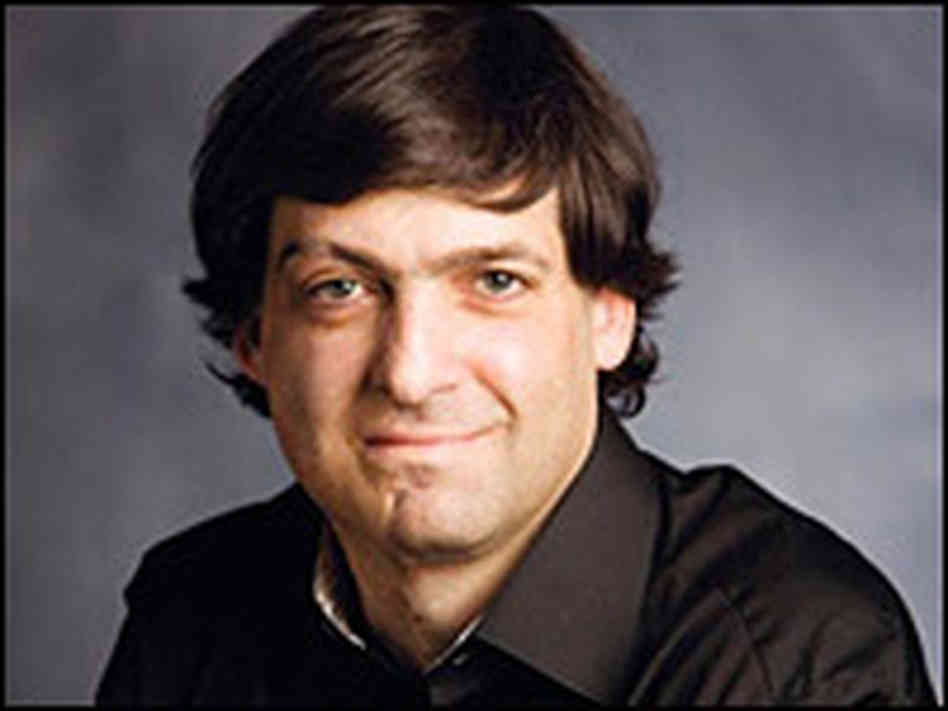
Dan Ariely is Professor of Psychology & Behavioral Economics at Duke University in North Carolina. Dan’s interests spanDan Ariely a wide range of behaviors, and his sometimes unusual experiments are consistently interesting, amusing and informative, demonstrating profound ideas that fly in the face of common wisdom.
In addition to appointments at the Fuqua School of Business, the Center for Cognitive Neuroscience, the Department of Economics, and the School of Medicine at Duke University, Dan is also a founding member of the Center for Advanced Hindsight.

Dan is the author of the New York Times bestsellers Predictably Irrational, The Upside of Irrationality, and The Honest Truth About Dishonesty and his latest book Irrationally Yours is now available.

Dan has received numerous honors and awards in medicine, psychology and economics.

Dan received a B.A in Psychology from Tel Aviv University, an M.A and PhD in Cognitive Psychology from University of North Carolina and another PhD in Business Administration from Duke University.

Influencer:

Professor Hanan Frenk, Tel Aviv University

Economists:

In this interview, Dan mentions: Brian Wansink. 

Psychologists:

In this interview, Dan mentions: Mike Norton and Elizabeth Dunn.

Economics:

In this interview, Dan mentions and discusses: Tragedy of the Commons, behavioral economics, public goods, pricing, decision-making, choice architecture, Ulysses Contract, happiness, asymmetric dominance effect and choice.

Takeaway:

“Think about your environment and always experiment” – Dan Ariely

Click To Tweet

In this episode, you will learn:

  • about Dan Ariely’s traumatic experience resulting in severe burns.
  • how Dan Ariely found his love for psychology and behavioral economics.
  • why Dan will not be teaching his Irrational Behavior course on Coursera.
  • the problems with MOOCs like Coursera and why it is making the wrong choice regarding its open platform system.
  • why Dan was turned down for his first book – a cookbook and what advice he was given by a publisher.
  • why we as humans make very costly mistakes and what we can do about it.
  • how people eat more than they realise and how experiments in economics have shown this.
  • why we are bad at doing things that makes us happy.
  • the most common mistake companies make when making decisions or processing information.
  • how companies can avoid making mistakes.
  • if anger is a good or bad emotion.
  • the most surprising finding from Dan Ariely’s research.
  • the most surprising question put to Ask Ariely.
  • how to get poor people in Kenya to save.
  • how your environment matters when making decisions.

Quotes by Dan Ariely in Episode 50 of the Economic Rockstar Podcast:

“Choice architecture is this idea that our environment influences how we make decisions” – Dan Ariely

Click To Tweet

“In the process of trying to not make any mistakes, companies create environments that punish risk and therefore punish ingenuity and growth” – Dan Ariely

“Tim is a very interesting character and he is experimenting on himself. We have to realize that his experiments have the validity that they work very well for him” – Dan Ariely

On Coursera:

“I think we do need rules for trolls. I think that pricing is a very good mechanism for some things and I’m not sure it’s a mechanism for all for all things like this. The reality is that Coursera probably over samples from the people on the tail of the distribution in terms of mental stability.” – Dan Ariely

Books:

  • Predictably Irrational by Dan Ariely
  • The Upside of Irrationality by Dan Ariely
  • The Honest Truth About Dishonesty by Dan Ariely
  • Irrationally Yours by Dan Ariely
  • The 4 Hour Chef by Tim Ferriss
  • Happy Money: The Science of Smarter Spending by Elizabeth Dunn and Michael Norton

Resources Mentioned by Dan Ariely:

  • Kitchen Safe: www.thekitchensafe.com
  • Coursera: www.coursera.org

Where to Find Dan Ariely:

  • Website: www.danariely.com
  • Twitter: @danariely
  • LinkedIn: Dan Ariely
  • Ted: www.ted.com

Transcript:

The full transcript of this episode with Dan Ariely will be available shortly.

Thanks for Listening!

Thanks so much for joining me again this week. Have some feedback you’d like to share? Leave a note in the comment section below!

If you enjoyed this episode, please share it using the social media buttons you see at the bottom of the post.

Also, please leave an honest review for the Economic Rockstar Podcast on iTunes! Ratings and reviews are extremely helpful and greatly appreciated! They do matter in the rankings of the show, and I read each and every one of them.

http://traffic.libsyn.com/economicrockstar/050_Dan_Ariely_Final.mp3

Podcast: Play in new window | Download

012: Yoram Bauman on Cartoons, Being a Stand-Up Economist & His Passion to Save the Environment

December 25, 2014 by Frank

http://traffic.libsyn.com/economicrockstar/012_Yoram_Bauman.mp3
Play in New WindowDownload

012: Yoram Bauman on Cartoons, Being a Stand-Up Economist & His Passion to Save the Environment 

Yoram BaumanYoram Bauman is considered the world’s first and only stand-up economist and uses cartoons to explain economic concepts and theories. He has a PhD from the University of Washington and a BA in Mathematics from Reed College. Yoram lectured environmental and health economics at both Whitman College and University of Washington and was a visiting research scholar at the University of International Business and Economics in Beijing. Yoram has swapped the lecture hall for the comedy club and is on a mission to spread joy to the world and to reform economics education. Every year Yoram organizes the Humor Session at the American Economic Association annual meeting.

Yoram is an advocate for carbon pricing and other economic approaches to protecting the environment. Yoram has written extensively on these issues but has also published numerous micro and macro books with comedy and entertainment as its central theme. They include The Cartoon Introduction to Economics, The Cartoon Introduction to Climate Change and Stand-Up Economics: The Micro Textbook. Some of these books have been translated into over 10 languages.

Economic Themes:

In this interview, Yoram mentions and discusses: adverse selection, portfolio selection theory, the invisible hand, environmental economics, environmental taxes, market power, monopoly, corruption, opportunity cost, free market, revenue-neutral carbon taxes, consumption tax, tragedy of the commons, externalities, correlation, hyperinflation, population growth, economic growth, monetary base and rational expectations.

Economists and Economic Schools:

In this interview, Yoram mentions: George Akerlof, James Tobin, Adam Smith, Gregory Mankiw and Paul Krugman.

Yoram’s AH-HA HA HA HA Moment:

“I went to graduate school to work on environmental taxes and to make them a reality, so being an academic was one path to doing that. When I was in graduate school I wrote a parody of an economics textbook by Greg Mankiw just to blow off steam. It ended up getting published in a science humor journal called The Annals of Improbable Research and they run a humor session each year at the AAAS meeting. They invited me to come and I had so much fun that I got into stand-up comedy as a hobby.”

“My academic career wasn’t going as well as I hoped.”

Yoram’s Affirmations/Mantra:

  • “When I had choices in front of me, in terms of life choices, I was going to choose the path of adventure. That’s turned out to work really well for me. There’s this constant pressure in life that you’re not good enough. Maybe you have a PhD in economics but you’re not a Professor at Harvard. I’m in a position where I can take chances and I don’t have to pursue the resume builder and I don’t have to take the conventional path.”
  • “I think if a lot of people stop and look in the mirror, especially college-educated folks, I think that they are already winners. And when you’re already a winner then you can afford to take some risks and take some chances.”
When you’re already a winner you can afford to take some risks and take some chances – Yoram

Click To Tweet

Personal Habits:

  • Yoram’s 4 month old baby Zadie wakes up at 4am for a bottle feed. He feeds her, puts her back to sleep and stays up, spending 2 to 3 hours working when it’s quite.
I work pretty hard and set deadlines for myself and make them happen – Yoram Bauman

Click To Tweet

  • Yoram spends some of his time at Lighthouse Coffee in Seattle, where his child likes to nap with the comforting noise that’s there, and gets to work on his emails while off-line (there’s no wi-fi at Lighthouse Coffee). It’s a great way to clear out your inbox without fighting off all the traffic

Influencers:

  • Yoram’s father, his grandmother, Helen Winter, his godmother Betty Tansey, his professors, the Overeducated Cartoonist, Larry Gonick, Jon Stewart and John Oliver.

The longer we live, the more there is to learn and the more exciting it is to dig out the answers – Helen Winter.

Click To Tweet

In this episode, you will learn:

  • about revenue-neutral carbon taxing.
  • if we should keep economics serious or is there room for comedy?
  • why it’s important to motivate people to open a textbook and how humor and comedy can  do this.
  • how cartoons and humor can bring so much detail and understanding to economic concepts.
  • where it all began for Yoram when writing a cartoon economics textbook.
  • about the cartoon books written by Yoram that document the annals of economic theory.
  • how Yoram humorously depicts why some economists have won the Nobel Prize in Economics in a simplified and memorable manner.
  • how Adam Smith calls the winners of the Nobel Prize in Economics to interview them. Spooked? Find out how.
  • how Yoram found his true calling while reading Mankiw’s economics textbook.
  • how Yoram uses cartoons and comedy to teach us economics and to inform us of the need for environmental taxes, something he is passionate about.
  • how Yoram can use his knowledge on monopoly to maintain a lucrative career in comedy.
  • if Yoram ‘fears market failure’ (he is a monopolist after all!).
  • how the comedy club and the lecture hall are quite similar.
  • about Yoram’s passion for environmental tax reform.
  • how we can reduce the carbon impact on our environment with tax reform.
  • about the meaning of The Tragedy of the Commons.
  • about the secret to being a comedian.
  • why I think Yoram reminds me of Walter White from Breaking Bad.
  • about the connection Yoram has with Steve Jobs.
  • about the influence that the strong women in Yoram’s life had on his outlook and philosophy.
  • how having a new born baby has created a new habit for Yoram to help him get things done.
  • about Joss Paper or spirit money and how you can make your dead ancestors wealthy in the afterworld.

On Being a Monopolist:

“I’m the world’s first and only, so I have market power. Fortunately, I know a thing or two about monopoly pricing.” – Yoram Bauman

‘I’m the world’s first and only, so I have market power’ – Yoram Bauman

Click To Tweet

Yoram has over 1.7 million YouTube views – ‘That’s a lot for economics jokes’ – Yoram Bauman

On Failure:

“I’m not afraid of failure because I’m an economist. Economists are experts on failure.” – Yoram Bauman

Click To Tweet

“I’ve done my fair share of ‘bombing’. Hopefully you learn from it, you grow from it and you also realise that it’s not the end of the world and that you wake up the next morning and the sun still rises and you try again.”– Yoram Bauman

On Cartooning and The Similarities Between Teaching and Stand-Up Comedy:

  • “Anytime you can try to reach out to people and humanise the subject and humanise yourself as an instructor I think that’s helpful. Humor has a way of motivating people. Especially at college level, teachers forget how important motivation is. Try and give people an incentive to crack open a textbook other than the fact their grades depend upon it.”

‘Cartooning is an under-appreciated method of education’ – Yoram Bauman

Click To Tweet

  • “What I learned from comedy is that it’s a two-way street. You have to pay attention to where the audience is and you have to figure out ways to get feedback from them. In the comedy world that’s quite easy – people are either laughing or they’re not laughing. You get feedback pretty easily. But in the teaching world it’s a lot harder to get feedback. You have get yourself in that mindset of thinking about how is the audience viewing this and how can I figure out where they are and how can I connect with them.”

Gigging in Beijing in The Bookworm

  • There’s no censorship at The Bookworm. There’s actually quite a bit of free speech in China if you’re a Westerner speaking English.
  • They had a book on Tiananmen Square in The Bookworm.
  • There’s a lot of China that’s very laissez-faire. You think about it as a Communist state, and you think this must mean it’s like a police state like North Korea. But it’s actually a lot like the Wild West in the United States in many places.
  • If you look at the day-to-day lives of many people, it’s become more like the Wild West than the totalitarian North Korea style regime.

Environmental Tax Reform

  • If we had higher taxes on bad things like pollution, we can afford to have lower taxes on good things. That idea struck me as being intellectually beautiful and it also struck me as something that was politically a good idea that could get some bi-partisan support.
  • I decided to devote a considerable portion of my life-energy to make pollution tax a reality.
  • Economic theory and almost all economists think that revenue-neutral carbon tax is a good idea but if you look at the political system, it’s been very difficult to get environmental taxes to work in the political arena.

British Columbia Case Study on Carbon Taxing

  • British Columbia is considered to have the best climate policy in the world with its revenue-neutral carbon tax and it’s performing terrifically. But it’s one of the relatively few examples of a textbook case of environmental economics in action in terms of pollution taxes.
  • The revenue from the carbon tax in British Columbia reduces investment and corporate tax, so the overall impact on the province is its fiscal status is basically zero.
  • I’m working with a group called Carbon Washington and we’re going to reduce sales tax in the state. Households will pay a few hundred dollars more a year for fossil fuels but they’ll pay a few hundred dollars less a year for something else.

China’s Role in Environmental Reform

  • The Chinese make noise about pricing carbon. There’s a big agreement their president made with President Obama. Maybe they’re exploring the idea but I have a hard time believing that they’re fully committed to it because they don’t yet seem to be fully committed to reducing local air pollution.

Tragedy of the Commons (21:23)

The Secret To Being a Comedian

  • “Let yourself be free to explore unusual areas and hobbies. You have to give yourself permission to follow your passions to pursue something. I gave myself permission to try it (comedy) and I gave myself permission to fail, and I think with a lot of creative endeavours it’s what you  need to do.”

The Difference Between Macro Economists and Micro Economists:

“The level of vitriol in macro economics makes it especially appealing as a target. Micro economists disagree about little things, but on the big things they are all pretty much on the same page. But macro economists are really all over the map and so that opens up some opportunities for  comedy.”

Recommended Books:

  • The Cartoon Introduction to Economics: Volume One: Microeconomics by Yoram Bauman and Grady Klein
  • The Cartoon Introduction to Economics: Volume Two: Macroeconomics by Yoram Bauman and Grady Klein
  • The Cartoon Introduction to Climate Change by Yoram Bauman and Grady KleinAudible
  • Economics of the Environment: Selected Readings by Robert Stavins
  • Becoming Richard Pryor by Scott Saul
  • Andy Kaufman: The Truth, Finally by Bob Zmuda
  • Books by comedian Lenny Bruce
  • A bunch of baby books.

Favorite Internet Resources:

  • Greg Mankiw’s Blog
  • Paul Krugman’s Blog
  • Real Climate
  • Climate Progress
  • Climate Etc by Judith Curry

Where To Find Yoram Bauman:

  • Yoram’s website: www.standupeconomist.com
  • Carbon Washington: www.carbonwa.org
http://traffic.libsyn.com/economicrockstar/012_Yoram_Bauman.mp3

Podcast: Play in new window | Download

Frank Conway

Frank Conway is founder of Economic Rockstar and lecturer of economics, finance and statistics. Read More…

View My Blog Posts

Youtube Sub

Become a Patron of the Economic Rockstar Podcast

patreon

Ireland’s Economy by the Numbers

Leaving Cert Economics: Ireland’s Economy  Click here to download a workbook on Ireland’s Economy so that you can add your own notes. [Original size] Ireland’s Economy by fconway

Categories

Subscribe and Never Miss An Episode

itunes-logo

Recent Posts

  • Ireland’s Economy by the Numbers April 8, 2019
  • 174: Wendy Carlin on The Core Project, Capitalism, Democracy and Normative Statements February 13, 2019
  • 173: Stephen Wright on Core Econ as a Learning Resource for Mainstream Economics January 28, 2019
  • 172: Best of 2018 Part 2: From the Great Depression to Futurism; Institutions, Individualism, Cooperation and Reciprocity January 22, 2019
  • 171: Best of 2018 Part 1 January 3, 2019

Copyright © 2026 · Podcast Pro Theme on Genesis Framework · WordPress · Log in

This website uses cookies to improve your experience. We'll assume you're ok with this, but you can opt-out if you wish. Accept Reject Read More
Privacy Policy

Privacy Overview

This website uses cookies to improve your experience while you navigate through the website. Out of these, the cookies that are categorized as necessary are stored on your browser as they are essential for the working of basic functionalities of the website. We also use third-party cookies that help us analyze and understand how you use this website. These cookies will be stored in your browser only with your consent. You also have the option to opt-out of these cookies. But opting out of some of these cookies may affect your browsing experience.
Necessary
Always Enabled
Necessary cookies are absolutely essential for the website to function properly. This category only includes cookies that ensures basic functionalities and security features of the website. These cookies do not store any personal information.
Non-necessary
Any cookies that may not be particularly necessary for the website to function and is used specifically to collect user personal data via analytics, ads, other embedded contents are termed as non-necessary cookies. It is mandatory to procure user consent prior to running these cookies on your website.
SAVE & ACCEPT