• ABOUT
  • RESOURCES
  • PODCAST
  • BOOKS
  • BLOG
  • SUPPORTERS
  • QFA Financial Advice
  • CONTACT

Economic Rockstar

Connecting Brilliant Minds in Economics and Finance

115: Edward Conard on The Upside of Inequality: How Good Intentions Undermine the Middle Class

December 12, 2016 by Frank

http://traffic.libsyn.com/economicrockstar/115_Ed_Conard_Final.mp3
Play in New WindowDownload

115: Edward Conard on The Upside of Inequality: How Good Intentions Undermine the Middle Class

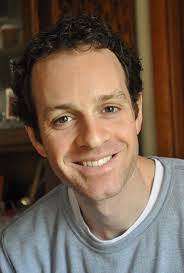
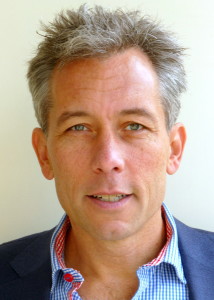
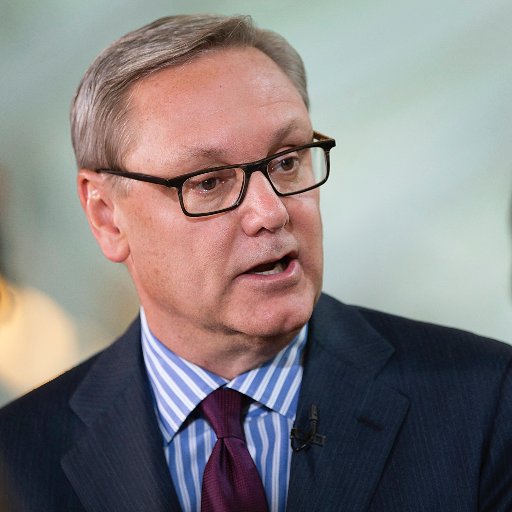
Edward Conard is the author of the New York Times top-ten bestselling book, Unintended Consequences: Why ed-conard-economic-rockstarEverything You’ve Been Told About the Economy Is Wrong (2012), and his recent book The Upside of Inequality: How Good Intentions Undermine the Middle Class which reached #7 on the New York Times Bestsellers list and is #1  on the New York Times business book list month. He is a visiting scholar at the American Enterprise Institute. and former Bain Capital partner.
Ed Conard has debated economists, policymakers and journalists on topics related to inequality, the 2008 mortgage crisis, and the U.S. budget. He has appeared on television over 150 times, most notably when he debated Jon Stewart in one of the longest interviews in the Daily Show’s history. Ed has also written opinion pieces for the Wall Street Journal, The New York Times, Foreign Affairs and many other respected publications.

You can check out interviews, op-eds and articles by Ed at his website www.edwardconard.com.

Links:

  • Edward Conard’s Website: www.edwardconard.com
  • Facebook: www.facebook.com/EdwardConard/
  • Twitter: @EdwardConard
  • American Enterprise Institute

Books:

  • Unintended Consequences: Why Everything You’ve Been Told About the Economy Is Wrong by Edward Conard
  • The Upside of Inequality: How Good Intentions Undermine the Middle Class by Edward Conard
http://traffic.libsyn.com/economicrockstar/115_Ed_Conard_Final.mp3

Podcast: Play in new window | Download
104: Russ Roberts on How Adam Smith Can Change Your Life and the Theory of Moral Sentiments

September 19, 2016 by Frank

http://traffic.libsyn.com/economicrockstar/104_Russ_Roberts_Final.mp3
Play in New WindowDownload

104: Russ Roberts on How Adam Smith Can Change Your Life and the Theory of Moral Sentiments

Russ Roberts is Associate Editor, founder and host of the popular and much loved podcast EconTalk, russ-roberts-economic-rockstarand founding advisory board member of the Library of Economics and Liberty.

Russ is the John and Jean De Nault Research Fellow at Stanford University’s Hoover Institution.

His two rap videos on the ideas of John Maynard Keynes and F.A. Hayek, created with filmmaker John Papola, have had more than eight million views on YouTube.

Russ’ latest book How Adam Smith Can Change Your Life: An Unexpected Guide to Human Nature and Happiness takes the lessons from Adam Smith’s The Theory of Moral Sentiments and applies them to modern life.

Russ is also the author of three economic novels teaching economic lessons and ideas through fiction. The Price of Everything: A Parable of Possibility and Prosperity, The Invisible Heart: An Economic Romance and The Choice: A Fable of Free Trade and Protectionism.

Russ blogs at CafeHayek.com and archives his work at russroberts.info.

A three-time teacher of the year, Russ has taught at George Mason University, Washington University in St. Louis, the University of Rochester, Stanford University, and the University of California.

He earned his Ph.D. from the University of Chicago and his undergraduate degree in economics from the University of North Carolina at Chapel Hill.

Economists:

In this episode, Russ discusses and mentions: Adam Smith, F. A. Hayek, David Hume, Vernon Smith, Milton Friedman and Nassim Nicholas Taleb.

Economics:

In this episode, Russ discusses and mentions: Austrian economics, classical economics, spontaneous order, pricing, supply, demand, surge pricing, unintended consequences, price controls, taxes and subsidies.

In this episode, you will learn:

  • about Adam Smith and how the application of Smith’s philosophical and economic thinking can change your life.
  • what the market forces are and the positive and negative examples of the spontaneous order.
  • the invisible hand and prices.
  • what surging prices are.
  • what Smith describes as the impartial spectator and the power of our conscience.
  • Adam Smith’s advice on how to be happy.
  • two ways to get people to pay attention to you and what Smith believed is the most ethical way.
  • what Smith believed was the cultural norm to accept behaviors.

Two Ways to Get People to Pay Attention to You:

Be rich, famous and powerful. It works. But don’t be fooled. You have a natural tendency to pursue money, fame and power because it will get you attention, respect and love. But that’s the wrong way to get there.

The right way to get there is through wisdom and virtue. Understand the world and treat people well. If you do that, you’re also going to be loved, respected and praised. But you won’t be doing the things along the way that people do when they want to become rich, powerful and famous that are not so good for you that cold lead to regret, shame and misbehavior. The temptation to do the unethical thing to pursue fame, power and money is always there.

Writing Tips:

  • Write everyday.
  • The trick to being a good writer is being a good editor.

Where to Find Russ Roberts:

  • Website: russroberts.info
  • Website: econtalk.org
  • Twitter: @EconTalker
  • Medium: medium.com/@russroberts

Recommended Books:

  • How Adam Smith Can Change Your Life: An Unexpected Guide to Human Nature and Happiness by Russ Roberts
  • The Price of Everything: A Parable of Possibility and Prosperity by Russ Roberts
  • The Invisible Heart: An Economic Romance by Russ Roberts
  • The Choice: A Fable of Free Trade and Protectionism by Russ Roberts
  • The Theory of Moral Sentiments by Adam Smith
  • The Wealth of Nations by Adam Smith
  • The Fatal Conceit: The Errors of Socialism (The Collected Works of F. A. Hayek) by F. A. Hayek
  • Individualism and Economic Order by F. A. Hayek
  • Fooled by Randomness: The Hidden Role of Chance in Life and in the Markets (Incerto) by Nassim Taleb

c

http://traffic.libsyn.com/economicrockstar/104_Russ_Roberts_Final.mp3

Podcast: Play in new window | Download
101: Chris Coyne on the Opportunity Cost to War, Exporting Democracy and the Nirvana Fallacy

September 1, 2016 by Frank

http://traffic.libsyn.com/economicrockstar/101_Chris_Coyne_Final.mp3
Play in New WindowDownload

101: Chris Coyne on the Opportunity Cost of War, Exporting Democracy and the Nirvana Fallacy

Christopher Coyne is an Associate Professor of Economics at George Mason University and the AssociateChris Coyne Economic Rockstar Director of the F. A. Hayek Program for Advanced Study in Philosophy, Politics, and Economics at the Mercatus Center.

He also serves as Director of Graduate Studies for the Department of Economics.

Professor Coyne serves as the Co-Editor of The Review of Austrian Economics, the Co-Editor of The Independent Review, the Co-Editor of Advances in Austrian Economics, and the Book Review Editor of Public Choice.

Chris has authored numerous academic articles, book chapters, and policy studies and his research interests include political economy and military intervention.

Professor Coyne is the author or co-author of numerous books including Future: Economic Peril or Prosperity? and After War: The Political Economy of Exporting Democracy.

He is also the co-editor of The Oxford Handbook of Austrian Economics and The Handbook on the Political Economy of War.

In 2016 Chris was selected as a recipient of George Mason University’s University Teaching Excellence Award.

His work can be found at www.ccoyne.com

Economics:

In this episode, Chris discusses and mentions: economics of war, the Nirvana Fallacy, incentives, knowledge constraints, unintended consequences, the Capitalist-Peace hypothesis, dependency effects, public goods, praxeology, prohibition and society.

Economists:

In this episode, Chris discusses and mentions: Ludwig von Mises, F. A. Hayek, Robert Higgs, Mike Munger, Peter Leeson, Rachel Coyne, James Buchanan, Gordon Tullock, Claude-Frédéric Bastiat and Henry Hazlitt.

Professor Coyne’s Daily Routine:

  • Everyday is the same. I wake up every morning between 5 and 6 am and work out in the garage for 1 to 2 hours. Then I eat breakfast and get to work.
  • I work in chunks – anywhere from 1 to 3 hours and I take little breaks in between.
  • When I find myself losing focus, I do little things like getting a cup of coffee or do a chore around the house or going outside for a few minutes. It resets my mind.
  • I’ll work from 8 or 9 am to lunch. I get lunch, maybe work a little more and then I shift more into administrative mode. It requires a different brain power than reading and writing.

Links:

  • Polity IV Index

Recommended Books:

Human Action by Mises: “That is an excellent book in terms of a systematic treatise on economics.” – Chris Coyne.

Crisis and Leviathan: Critical Episodes in the Growth of American Government by Robert Higgs: “It’s a wonderful treatment of how government grows through the onset of crises. He’s focused mainly on the United States. He talks about the evolution of the US government and he highlights these punctuated points of crises where government grew. Of course World War 2 and the Great Depression being among the main ones that he highlights. It’s excellent both for the history but also for the framework he lays out – called the ‘Ratchet Effect’ (how the government ratchets up in size. It’s a wonderful book that I highly recommend.” – Chris Coyne.

Papers Mentioned in the Episode:

  • Coyne, C. and Hall. A. (2014). The Political Economy of Drones, Defence and Peace Economics, 25(5): 445-460.
  • Coyne, C., Boettke, P. and Leeson, P. (2014). Earw(h)ig: I Can’t Hear You Because Your Ideas are Old, Cambridge Journal of Economics, 38(3): 531-544.
  • Coyne, C. and Coyne, R. (2014). The Identity Economics of Female Genital Mutilation,” Journal of Developing Areas, 48(2): 137-152.
  • Coyne, C., Boettke, P. and Hall, A. (2013). Keep Off the Grass: The Economics of Prohibition and U.S. Drug Policy, Oregon Law Review, 91(4): 1069-1096.
  • Coyne, C. and Leeson,P. (2012). Sassywood, Journal of Comparative Economics, 40(4): 608-620. 

Where to Find Professor Coyne:

  • Website: www.coyne.com
  • Twitter: @ccoyne1

Books:

  • Human Action by Ludwig von Mises
  • Crisis and Leviathan: Critical Episodes in the Growth of American Government by Robert Higgs
  • Future: Economic Peril or Prosperity? by Chris Coyne
  • Flaws and Ceilings: Price Controls and the Damage They Cause by Chris Coyne
  • Doing Bad by Doing Good: Why Humanitarian Action Fails by Chris Coyne
  • Media, Development and Institutional Change by Chris Coyne
  • After War: The Political Economy of Exporting Democracy by Chris Coyne
  • The Oxford Handbook of Austrian Economics
  • The Handbook on the Political Economy of War.
http://traffic.libsyn.com/economicrockstar/101_Chris_Coyne_Final.mp3

Podcast: Play in new window | Download

095: Scott Burns on Mobile Money Banking in Africa and the Success of M-Pesa

July 20, 2016 by Frank

http://traffic.libsyn.com/economicrockstar/095_Scott_Burns_Final.mp3
Play in New WindowDownload

095: Scott Burns on Mobile Money Banking in Africa and the Success of M-Pesa

Scott Burns is a Mercatus PhD Dissertation Fellow in the Economics PhD Program at George Mason Scott Burns Economic RockstarUniversity.

Scott earned his BS in Economics from Louisiana State University where he was part of the Speech and Debate Club and the Phi Eta Sigma Honors Society.

His current publications include The War on Drugs in Afghanistan: Another Failed Experiment in Interdiction and Old (Chicago) school, new century: the link between Knight and Simons’ Chicago plan to Buchanan’s constitutional money.

Scott’s PhD dissertation topic has to do with one of the most exciting yet under-appreciated miracles of the market going on in the world today, the “mobile money revolution” in Sub-Saharan Africa.

Scott writes for the blog Alt-M, which is a blog run by free banking scholars on the theme ‘Ideas for an Alternative Monetary Future’.

Scott, along with fellow Econ PhD student at GMU, David Lucas, started a band inspired by Adam Smith called ‘The Butcher and the Baker’.

Economics:

In this episode, Scott mentions: banking, monopolies, natural monopoly, market failure, savings, investment, development economics, finance, GDP, laissez-faire, mobile money, unintended consequences, bitcoins and hyper-inflation.

Economists:

In this episode, Scott mentions: Adam Smith, Ludwig von Mises, F. A. Hayek, Joseph Schumpeter, Scott Sumner, David Beckworth, Lawrence H. White and George A. Selgin,

Links:

  • Finance for All: Kenya’s M-PESA
  • Alt-M
  • Top 12 Economics Books as Recommended by Economic Rockstar Guests
  • Monetary Workshop at Cato Institute

Papers:

  • Coyne, C., Hall-Blanco , A. and Burns, S. (2016). The War on Drugs in Afghanistan: Another Failed Experiment with Interdiction. The Independent Review.
  • Burns, S. (2016). Old (Chicago) school, new century: the link between Knight and Simons’ Chicago plan to Buchanan’s constitutional money. Constitutional Political Economy.

Articles:

  • Burns, S. (2016). The Road Less Traveled: Austrian Macro, Monetary Disequilibrium Theory, and Free Banking. Research on the History of Economic Thought and Methodology, Volume 348: pp 337 – 363.
  • Burns, S. and Michel, N. J. (2016). Choosing Your Own Money Central to Economic Freedom. Cayman Financial Review, Issue 42.

Books:

  • Economics in One Lesson by Henry Hazlitt
  • The Law by Frederic Bastiat
  • Human Action by Ludwig von Mises
  • Free Banking in Britain: Theory, Experience and Debate 1800-1845 by Lawrence H. White
  • The Theory of Free Banking by George A. Selgin


Companies Mentioned in this Episode:

  • Uber, Airbnb, Amazon and Safaricom.
http://traffic.libsyn.com/economicrockstar/095_Scott_Burns_Final.mp3

Podcast: Play in new window | Download

085: Michael Roberts on Understanding Karl Marx and His Thinking on Capitalism

May 12, 2016 by Frank

http://traffic.libsyn.com/economicrockstar/085_Michael_Roberts_Final_.mp3
Play in New WindowDownload

085: Michael Roberts on Understanding Karl Marx and His Thinking on Capitalism

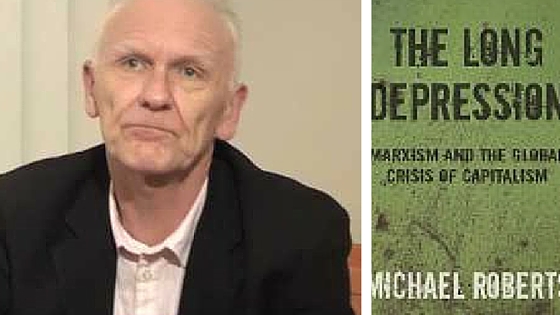
Michael Roberts

Michael Roberts has worked as an economist for over 30 years in the City of London. He is author of The Great Recession: Profit cycles, economic crisis A Marxist View and The Long Depression: Marxism and the Global Crisis of Capitalism.

Economics:

In this episode, Michael mentions: Marxism, capitalism, Austrian economics, GDP, multinationals, inflation, printing of money, booms, busts, profitability, recession, depression, inequality, wealth, means of production, private property, competition, externalities, unintended consequences, bailout, austerity and unemployment.

Economists:

In this episode, Michael mentions: Karl Marx, Friedrich Hayek, Adam Smith, John Maynard Keynes, Brad DeLong and Paul Mattick.

Links:

  • www.thenextrecession.wordpress.com by Michael Roberts

Books:

  • The Great Recession: Profit cycles, economic crisis A Marxist View by Michael Roberts
  • The Long Depression: Marxism and the Global Crisis of Capitalism by Michael Roberts
  • The Communist Manifesto by Karl Marx and Friedrich Engels
  • Capital by Karl Marx
  • Business As Usual by Paul Mattick
  • Waiting for Godot by Samuel Beckett


http://traffic.libsyn.com/economicrockstar/085_Michael_Roberts_Final_.mp3

Podcast: Play in new window | Download

076: Greg Ip on Foolproofing the Economy and Why Stability is Destabilizing

March 10, 2016 by Frank

http://traffic.libsyn.com/economicrockstar/076_Greg_Ip.mp3
Play in New WindowDownload

076: Greg Ip on Foolproofing the Economy and Why Stability is Destabilizing

Greg Ip is one of the best-known economics journalists in the US.Greg Ip Economic Rockstar

He is currently chief economics commentator of The Wall Street Journal and writes about U.S. and global economic developments and policy each week in the Capital Account column and on Real Time Economics, the Wall Street Journal’s economics blog.

From 2008 to January 2015, he was U.S. Economics Editor of The Economist magazine. Greg is the author of Foolproof: Why Safety Can Be Dangerous and How Danger Makes Us Safe as well as author of The Little Book of Economics: How the Economy Works in the Real World.

“Stability is Destabilising”- Hyman Minsky

Economics:

In this episode, Greg mentions and discusses: junk bonds, capitalism, investment, growth, financial crisis, bank deposits, loans, currency, gold, exchange rates, money market funds, bank run, exchange traded funds, recessions, unintended consequences and the Paradox of Thrift.

Economists:

In this episode, Greg mentions and discusses: Paul Volcker, Hyman Minsky, Gary Gorton, Joseph Schumpeter and John Maynard Keynes.


In this episode you will learn:

  • about the theme behind Greg Ip’s latest book Foolproof.

  • when the pursuit of safety lead us into danger?

  • what forest fires have to do with Wall Street.

  • about the relationship between the financial market (and its potential for a crisis) and ecological systems.
  • the way we publicly and privately try to cope with risk and danger and how those choices can create unintended consequences.

  • about the Fallacy of Composition: Things you do that are safe actually end up making other people less safe.
  • what American Football can teach us about the Fallacy of Composition.
  • how making American Football safe with the introduction of helmets has created increased risk taking and more injuries.
  • what past economic and financial crises have in common.
  • how the financial system succeeded too well in making people feel their money was safe.
  • how banking regulations and capital controls introduced after the financial crisis will create risks in other parts of the economy and financial markets.
  • if savings is actually bad for the economy.

  • about Keynes’ Paradox of Thrift and how savings forces others to borrow.

  • whether exchange traded funds (ETFs) will be the next financial catastrophe.
  • about the Peltzman Effect on anti-lock brakes.
  • how Paul Volcker‘s regulation of capital flows caused the growth of shadow banking.

  • how The Great Moderation changed attitudes about debt and how relaxed laws allowed high-risk households to borrow for mortgages.

  • about Gary Gorton of Yale and his explanation for a financial crisis.
  • how being present in danger can remind ourselves of the things that aren’t always safe.
  • whether the finance industry could take the lessons learned about safety and regulation in the airline industry.
  • why the Lehman Brothers collapse surprised many due to the US government indicating to the market that banks and mortgage companies would be bailed out.
  • how German savers were much to blame for the euro crisis than their European counterparts that borrowed.
  • why we continue to build cities near water which can cause devastation in the form of floods and tidal waves.
  • why The Netherlands, with their ‘Room For The River’ programme, is destroying dykes and allowing their lands to flood.
  • why Greg Ip is worried about the situation in China and how the stability that the government is trying to maintain will eventually lead to instability.

“If banks are limited from lending then lending activity will migrate elsewhere. We see this happening at exchange traded funds and other shadowy parts of the financial system. And you worry that risks are starting to grow there.” – Greg IP

“One way to protect ourselves against disaster is to make use of the presence of danger to remind ourselves that things aren’t always safe and to take steps that keep us safe”.  – Greg IP

“What I worry about more is that the pendulum has swung too far against risk taking. And the risks that are been taken are being channeled too far in the direction of financial risk and not real economy risk – people starting new businesses or buying new homes.” – Greg Ip

“What I worry about China is that they have leadership that is worried about political and economic stability.”

Where to Find Greg Ip:

  • The Wall Street Journal 
  • www.gregip.com

Books:

  • Foolproof: Why Safety Can Be Dangerous and How Danger Makes Us Safe by Greg Ip
  • The Little Book of Economics: How the Economy Works in the Real World by Greg Ip

Other Interesting Links:

  • Deregulation: The Expected and The Unexpected by Sam Peltzman
  • Do we really need more regulation of financial derivatives? by Merton H. Miller
  • Financial Innovation: The Last Twenty Years and the Next by Merton H. Miller
  • Peltzman, S. (1975). The Effects of Automobile Safety Regulation, Journal of Political Economy: 677 – 726.
  • National Center for Catastrophic Sport Injury Research 
  • Probability of a Hazardous Material Truck Accident in New Jersey by Damodaran, M., Daniel, J. and Luke, A. C. (2002)
http://traffic.libsyn.com/economicrockstar/076_Greg_Ip.mp3

Podcast: Play in new window | Download

039: David Zetland on Aguanomics, Water Scarcity, Water Wars and ‘Toilet-to-Tap’

July 1, 2015 by Frank

http://traffic.libsyn.com/economicrockstar/039_David_Zetland_Final.mp3
Play in New WindowDownload

039: David Zetland on Aguanomics, Water Scarcity, Water Wars and ‘Toilet-to-Tap’

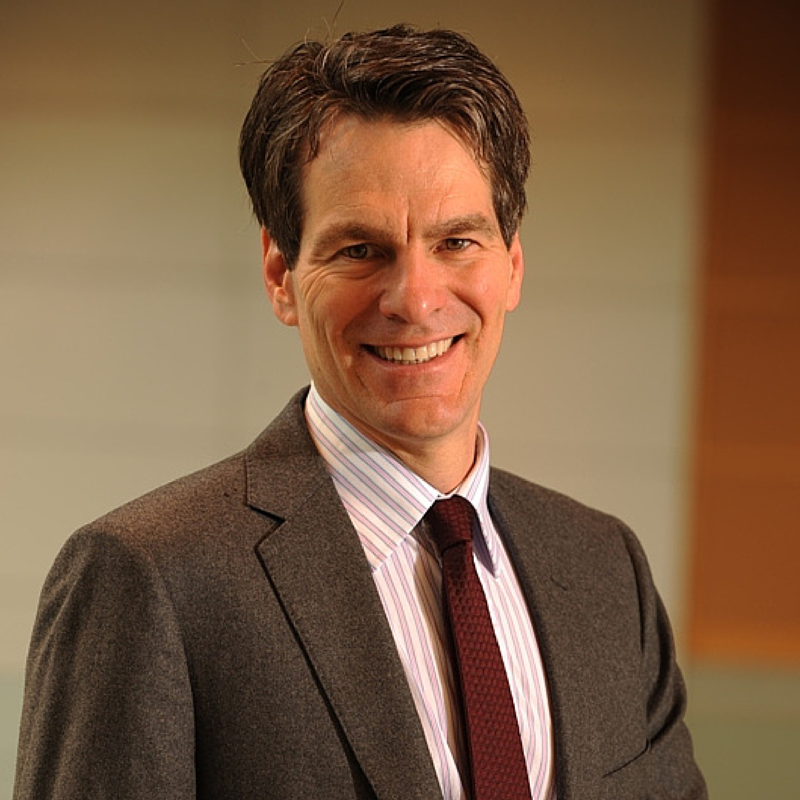
David Zetland is an assistant professor at Leiden University College, where he teaches various classes on economics. He was a PostdoctoralDavid Zetland Fellow in Natural Resource Economics and Political Economy at UC Berkeley (2008-2010) and a Senior Water Economist at Wageningen University (2011-2013). David blogs on water, economics and politics at aguanomics.com and gives many talks to public, professional and academic audiences.

David has two books The End of Abundance: economic solutions to water scarcity (2011)  and Living with Water Scarcity (2014). He received his PhD in Agricultural and Resource Economics from UC Davis in 2008. David lives in Amsterdam.

Influencers:

Adam Smith, Friedrich Hayek and Nassim Taleb.

Economics:

In this interview, David mentions and discusses: scarcity, shortage, commodity, supply, demand, marginal cost, opportunity cost, unintended consequences, monopoly, common-carrier system, the water-diamond paradox, development economics, governance, probability, fat tails, Buddhist economics, the problem of over-consumption, non-satiation assumption, GDP, pricing, fairness and efficiency.

Economists:

In this interview, David mentions and discusses: Adam Smith, Friedrich Hayek, Nassim Nicholas Taleb and Ernst Friedrich Schumacher.

The Water-Diamond Paradox (23rd minute in this Episode)

Find out:

  • if we should be worried more about a shortage of water or a scarcity of water.
  • if we should learn from the oil industry and develop the technology-equivalent of extracting oil from oil sands and desalinate the ocean water?
  • if we can tell whether we know the water footprint of a cow and if it’s different in California than Ireland.
  • why water is actually free and what you pay is for the delivery.
  • if there is an opportunity costs to acquiring water?
  • why people living in the slums of India pay up to 50 times the price for water than those who have cheaper piped water.
  • if a water monopoly is an effective market structure.
  • if price competition in the market for water would result in the over-use of water consumption.
  • about Scottish Water and how other utilities across the UK and adopting their distribution and pricing structure.
  • about the water-diamond paradox.
  • why David decided to do a PhD in economics after failing to get rich in the dotcom era.
  • how David came to get his family name ‘Zetland’.
  • about the coming ‘Water Wars’ and how it has already started.
  • about Sao Paulo’s troubled water situation and how it’s creating gang warfare on the streets.
  • who we should assign the property rights to water.
  • about Chile‘s exemplary assigning of water property rights.
  • what David proposes to be the most effective way of managing water.
  • how Singapore are becoming independent in creating their supply of water and are no longer depending on imports from Malaysia.
  • how Singapore are building technologies to recycle water from waste.
  • why the ‘toilet-to-tap’ water recycling initiative has failed in the US but is working in Singapore.
  • how marketing recycled water works in Singapore and not in the US – one known as ‘New Water’ and the other ‘Toilet-to-Tap Water’.
  • why Singapore treats water as a national security issue.
  • why it will take 20 years to build a desalination plant and why San Diego will need 15 of these plants to serve the water needs of the locals.
  • about the new Irish water utility, Irish Water, and how the management decided to ‘award’ themselves bonuses even before the Irish people payed for their water.
  • about ‘Buddhist Economics’ and the assumption of non-satiation.
  • what David would suggest if he was an Economic Advisor to any country regarding water policy.

Why David Studied Economics:

When I was between 25 and 30 years old, I travelled to 65 countries and when I came back to the States I was looking around and figuring out what to do. I tried to get rich in the dotcom era and that totally failed and I started to work with a bunch of academic mathematicians and they were really kinda cool people. But they were pretty cool and I thought ‘well this is interesting. Maybe I should go and do something academic’. I went back to grad school to get a PhD and I wanted to do development economics. My research project, which was to go and study cocaine production in South America, sounded to my advisors a littlest dangerous. Then one of my advisors said that there was this really strange case in Southern California where San Diego is in a big fight with other water utilities and maybe you should look into that. So that ended up being my dissertation – David Zetland.

David’s Advice to a Country Implementing a Water Policy:

“You have to take care of your environment. Then you have to commodify all the rest of the water. But all that revenue really should go to the citizens of that country. Other than that, I’m open to any other discussion about what’s a better system in terms of balancing between efficiency, which is pricing and fairness which is the distribution of those revenues” – David Zetland.

‘Water Water Everywhere and Not a Drop to Drink’: The Right to Water – It’s a Necessity After All

The ‘Right to Water’ is an important part of the conversation but it tends to confuse things. People need water for drinking, cleaning, washing and so on. But is there a right to water to put on your garden? Is there a right to water to wash your car? Do farmers have a right to water that goes on their fields if that means the river is going to be dry? So, there comes a point where the ‘Right to Water’ runs out and we have to start talking about water as a scarce good or an economic commodity. That’s the separation you need to start with.

Shortage is worse than scarcity because you can’t get any of what you want, even if you have time or money – David Zetland

David Zetland’s book ‘Living with Water Scarcity’ is about learning how to manage water scarcity, the same way we have learned to manage land scarcity, time scarcity and money scarcity. Water scarcity is not confined to any particular region or country. This is a global phenomenon. We can generalise water scarcity in terms of the lack of water available. But there exists specific concerns such as the scarcity of clean water, which is becoming a problem in northern European countries and eastern United States, where there’s lots of water but a lot of it is polluted.

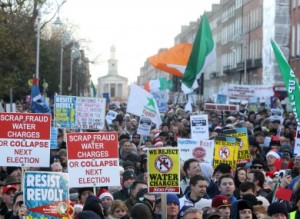
Ireland's Anti-Water Charges Protest 2014

Ireland’s Anti-Water Charges Protest 2014

The irony for people living in Ireland, for example, is that the country is surrounded by water but yet availability of fresh, clean water can be scarce in some regions. There are a few towns and villages in Ireland who have been buying bottled water or are on boiling notices due the presence of cryptosporidium in their water. Water shortages is not necessarily an immediate concern for Ireland. However, California, on the other hand, is experiencing their 4th year of drought. This is something that is being experienced in many regions around the world, but ‘California has more reporters hanging around’ and other regions’ grief remain unreported.

The ‘Water Water Everywhere and Not a Drop to Drink’ problem leads people to think that we should desalinate the ocean and get all the water that we want from the ocean. This, however, would be a great physical and expensive task to undertake and the conversation on desalination tends to stop. Should we learn from the oil industry and develop the technology-equivalent of extracting oil from oil sands and desalinate the ocean water?

Adam Smith explained the value in exchange as being determined by labor: ‘The real price of every thing, what every thing really costs to the man who wants to acquire it, is the toil and trouble of acquiring it’.

David frames this as ‘Technologies and Techniques’; techniques meaning how we use technologies and how we use water. “In the case where you have scarcity, you could say we’re going to build a desalination plant, drill a deeper well, build aqueducts, take shorter showers or stop watering our lawns. We should try and help people use as many ways as possible instead of focusing on one particular silver bullet.”

Who’s the Straw that Broke the Camels Back?

Numerous groups are pointing the finger at each other and casting blame each others way for causing pollution, drought and water scarcity. Besides the natural precipitation, farmers use half as much water as people in the city, such as industries and municipalities. In California, farmers use four times as much water as cities, say in the UK. Farmers obviously use water in various forms, but they’re not necessarily using more than the cities.

Then there’s the big discussion about who should be allowed to or who has the right to us water and that’s where the politics and mudslinging comes in. However, the level of precipitation is different in Arizona and California, as well as in Spain and Cyprus, compared to regions in Ireland and the UK.

Quotes from David in this Episode:

“These pro-poor policies can end up being so anti-poor. It’s terrible, it’s actually almost a crime” – David Zetland

Click To Tweet

on how cheap water in India results in water utilities not having the infrastructure to deliver water to the slum areas. These people end up paying up to 50 times for their water from tankards. This water is dirty and people, particularly children, queue up for hours to collect and carry this water to their homes which can often be on the 3rd or 4th floor of a building.

“The customer is vulnerable to being exploited by the monopoly and the monopoly is vulnerable to being exploited by the customer. And that’s where regulations come in” – David Zetland on the need for regulation in the market for water.

Why is water, which is something we need to live, so cheap, whereas diamonds, which are a pure frivolous luxury, so expensive? – David Zetland on the Water-Diamond Paradox.

Water Wars in Sao Paulo, Brazil

Sao Paulo’s reservoirs have fallen to such low levels that their supply fails to meet with their expected demand. There were a lot of ways in which Sao Paulo could’ve dealt with this risk, such as fixing their leaky networks. They cannot get water from somewhere else. You’ve got a limited amount of water and 10 to 20 million people who need water to drink. The utility can shut off the water supply at various locations if they like and that raises the question of rich versus poor. That kind of decision is not going to please anybody. There have been protests over this.

David’s assessment of this is that if Sao Paulo wants to avoid a war on the streets, they need to shut of everybody’s water and have tankard trucks distributing water in Jerry cans in the corners – one man, one bottle. And that’s because you’d be addressing the concern of social equality and human rights.

Israel is not going to invade Turkey for their water. You can’t win that battle. You can’t bring back the water – it’s too heavy.There won’t be wars of plunder, there’ll be just conflicts over who’s going to get the water. Water gangs will form and they will take your water.


Recommended Books:

  • The End of Abundance: economic solutions to water scarcity (2011)  by David Zetland.
  • Living with Water Scarcity (2014) by David Zetland.
  • Small is Beautiful by Ernst Friedrich Schumacher.
  • The Theory of Moral Sentiments by Adam Smith.
  • Check out David’s review of ‘Small is Beautiful’ by E. F. Schumacher.
  • Find out here why David decided to give his book away for FREE.

Where to Find David Zetland:

  • Blog: aguanomics
  • Twitter: @aguonomics
http://traffic.libsyn.com/economicrockstar/039_David_Zetland_Final.mp3

Podcast: Play in new window | Download

033: Abdullah Al-Bahrani on the Economy of Oman and How Racial Discrimination Empowered Him to Succeed in Life and in Economics.

May 22, 2015 by Frank

http://traffic.libsyn.com/economicrockstar/033_Abdullah_Al_Bahrani_Final.mp3
Play in New WindowDownload

033: Abdullah Al-Bahrani on the Economy of Oman and How Racial Discrimination Empowered Him to Succeed in Life and in Economics.

Dr. Abdullah Al Bahrani is an Assistant Professor of Economics at Northern Kentucky University,Abdullah al Bahrani where he serves as the Principles of Economics Coordinator.

Abdullah’s research interests are in the fields of Industrial Organization and Education of Economics. Currently, his primary focus is on innovative approaches to teaching Economics. In Industrial Organization, his research examines market structure and competition in the banking and real estate industries.

Prior to joining academia, Dr. Al Bahrani worked in the mortgage industry from 2003-2006. He has also served as outside economic consult to the Ministry of Education, Sultanate of Oman and new business ventures entering Oman.

Abdullah received his Ph.D. in Economics from the University of Kentucky in 2010, where he received an award for Best Economics Graduate Teaching Assistant.

His Master degree in Economic Theory was awarded by American University in Washington D.C. in 2003 and he earned a Bachelor of Science in Business Economics from the University of Louisville in 2002.

Influencers:

My parents are big advocates of education and they instil the value of education and the value of curiosity – Abdullah Al-Bahrani

Personal Habits:

Abdullah has a 5am start and gets to the gym most mornings. It is at the gym where Abdullah creates his to-do list, becomes super-organized and listens to Economic Rockstar!

On dealing with racial discrimination:

You roll up your sleeves and you keep on trying – Abdullah Al-Bahrani

Abdullah’s Philosophy and Affirmations:

Failure is the opportunity to begin again more intelligently

Click To Tweet

Failing in a business does not need to mean that you failed as a person – Abdullah Al-Bahrani

Click To Tweet

Whatever you do, allow your personality to shine – Abdullah Al-Bahrani

Click To Tweet

The thing that I appreciate is people that push the boundaries that create new paths – to me that’s what growth is – Abdullah Al-Bahrani

My philosophy is to embrace technology – Abdullah Al-Bahrani

Click To Tweet

Find Out:

  • why Abdullah decided to do a Phd in Economics in 2006 and left the mortgage industry just before it imploded.
  • about Abdullah’s economic consultancy work with the Sultanate of Oman.
  • about Abdullah’s connection when reviewing labor market studies in Oman (Hint: She is the Director General of the National Centre of Career Guidance and is as maternal to Abdullah as Oman as a country is to him).
  • how Oman are creating an entrepreneurial spirit to drive is economy in the future.
  • why Oman is faced with difficulties in transitioning to an entrepreneurial economy.
  • how Omani culture is preventing it’s people to take on risk and why incentives do not work.
  • about Abdullah’s suggestion that to create an entrepreneurial spirit in Oman, the labor market must first be liberalised.
  • how ‘Omanization’ has made it costly for foreign firms to set up subsidiaries in Oman.
  • why Omani’s are not hired by foreign firms setting up in Oman.
  • why discrimination exists in the Omani labor market and why US and UK ex-pats would be a preferred employee.
  • how data limitations for Oman make it difficult to conduct an empirical analysis of the labor market.
  • how labor market regulations in Oman is making it costly for firms to hire Omani’s.
  • about some economic indicators for Oman.
  • about Oman’s free trade agreements, the Gulf Corporation Council and the potential Oman offers.
  • about Oman’s tourism initiative to create Oman as an eco-friendly destination.
  • how Abdullah is integrating social media into the classroom, making education a more interactive and conducive learning environment for students.
  • about Abdullah’s clever way of using a students’ mobile phone in explaining the concept of a negative externality.
  • how to create a sense of community in a classroom.
  • why Abdullah received an Easter basket of goodies from a student’s mother.
  • why Abdullah is ‘helping his students to ‘clean’ their social media footprint.
  • how Abdullah encourages his students to connect with him on whatever platform they choose to use.
  • how using ESPN 30 for 30 to teach economics and to keep the economics student engaged.
  • how to teach economics with no math and no graphs.
  • about the research Abdullah is doing on racial discrimination in the labor market.
  • how Abdullah is identifying how racial discrimination is evident in online markets where, unlike traditional markets,  the color of your skin is not a factor.
  • if your last name prevent you from getting a loan, employment or from being priced out of a market.
  • how dropping a letter from your name can get you a job if you’re being racially discriminated against.
  • how Abdullah was racially discriminated against in both the labor market and when selling mortgage loans in the USA.
  • how Abdullah dealt with racial discrimination and how it gave him his Phd dissertation question.
  • how online price comparison websites may actually be anti-competitive.
  • how online stores are eating into the consumer surplus.

Economists:

In this interview, Abdullah mentions:

Darshak Patel, Kim Holder, Gary Becker, Steven Levitt, Stephen Dubnar, Frank Scott, Chris Bollinger and Gail Hoyt, Brandon Sheridan and Roland Fryer.

Economics:

In this interview, Abdullah mentions and discusses:

Labor market, incentives, entrepreneurship, small and medium sized enterprise, venture capital, unintended consequences, business cycle, unemployment, GDP per capita, trade agreements, indigenous industries, multinational companies, Gulf Corporation Council, tourism, factor endowments, negative externality, comparative advantage, search cost, marginal cost, competition and consumer surplus.

Papers:

  • Al-Bahrani, Abdullah and Darshak Patel (2014). Using ESPN 30 for 30 to Teach Economics. Southern Economic Journal. 81:3. 829-842.
  • Al-Bahrani, Abdullah. Competition in Online Markets: When Banks, Compete do Consumers Really Win? Journal of Housing Research. Forthcoming (Accepted October 2014).
  • Al-Bahrani, Abdullah and Darshak Patel (2015). Incorporating Twitter, Instagram and Facebook in Economics Classrooms. Journal of Economic Education. 44:1. 56-67.

Books:

  • The Color of Credit: Mortgage Discrimination, Research Methodology, and Fair-Lending Enforcement by Stephen Ross and John Yinger.
  • Chicago by Alaa Al-Aswani

Resources:

  • Twitter

Where to find Abdullah:

  • Twitter: @teach_econ
  • Website: www.teach-econ.com


http://traffic.libsyn.com/economicrockstar/033_Abdullah_Al_Bahrani_Final.mp3

Podcast: Play in new window | Download

029: John Cochrane on the Future of Finance, MOOC Education, Regulation and the Case for Free Markets

April 22, 2015 by Frank

http://traffic.libsyn.com/economicrockstar/029_John_Cochrane_Final.mp3
Play in New WindowDownload

029: John Cochrane on the Future of Finance, MOOC Education, Regulation and the Case for Free Markets

John Cochrane is the AQR Capital Management Distinguished Service Professor of Finance at the University of Chicago Booth School of Business and is currently Senior Fellow at the Hoover Institution.

Professor Cochrane is a Research Associate of the National Bureau of Economic Research and past director of its asset pricing program, and an Adjunct Scholar of the CATO institute.

John is past President and Fellow of the American Finance Association, and a Fellow of the Econometric Society. He has been an Editor of the Journal of Political Economy, and associate editor of several journals including the Journal of Monetary Economics.

John’s is the author of 3 books including the book Asset Pricing. Other  finance publications include articles on stock and bond markets, exchange rates, interest rates, liquidity premiums and option pricing.

John’s monetary economics publications include articles on the relationship between deficits and inflation, the effects of monetary policy, and on the fiscal theory of the price level.

John currently teaches the MBA class Advanced Investments and a variety of PhD classes in Asset Pricing and Monetary Economics.

John earned a Bachelor’s degree in Physics at MIT, and earned his Ph.D. in Economics at the University of California at Berkeley.

In addition to research and teaching, John is a competitive sailplane pilot and windsurfs.

John blogs as ‘The Grumpy Economist’.

Find Out:

  • why Professor Cochrane is known as the Grumpy Economist.
  • about John’s Proposed New Structure for US Debt.
  • how to create financial stability with a currency fit for the 21st century.
  • about the advantages of government debt.
  • what happened when Ireland guaranteed the bondholders and entered into a bailout.
  • the limitations to a eurozone country when faced with a bailout.
  • why countries should be allowed to act like companies and default.
  • why Greece should have defaulted and why Ireland should not have bailed out the bondholders.
  • about Professor Cochrane competing in the World Gliding Championship for the USA.
  • why Professor Cochrane delivered his Asset Pricing PhD course as a MOOC.
  • the costs and benefits of delivering a MOOC.
  • how MOOCs will become the textbook of the future.
  • how to monetize a MOOC and which type of course would have mass market appeal.
  • Ireland’s aim to become the capital of MOOCs.
  • how to create a social environment for students using MOOCs.
  • why Professor Cochrane went from a degree in physics to a PhD in Economics.
  • why people are stuck in the welfare system.
  • about the over-regulated US economy that restricts the development of competitive markets.
  • how Uber gave supply-side competition in the US taxi market.
  • what should be done to the US healthcare industry which is protected from competition.
  • if the US Federal Reserve should end its monopoly on the dollar and allow other currencies, such as Bitcoin, compete.
  • about the unique feature of US government debt – it cannot default!
  • who are Professor Cochrane’s heroes due to their no bullshit approach to research.
  • why the the 2008 financial crisis was proof that the efficient market hypothesis works.
  • what annoys Professor Cochrane.

Influencers:

  • University of California: George Akerlof, Roger Crane, Jim Pearce and Tom Roffenburg.
  • University of Chicago: Robert Lucas, Lars Hansen, Gene Fama, Ed Prescott and Tom Sargeant.

Defining Moment

A professor was showing an economics class that John attended in which he explained, using the Budget Constraint, why people are stuck in welfare. Up to that point, John had read that it was due to people being lazy or that it was due to moral, sociology or cultural. However, the analysis showed that any normal person who was stuck below an income threshold and receiving benefits would not welcome a moderate pay rise as they would lose entitlements.

Here was a value-free, and ethics-free, a morality-free discussion of a social problem that showed exactly where it came from, exactly how to fix it, exactly how the perverse design of the well-intentioned welfare was causing people to get stuck. That was my conversion moment.

Economics:

In this interview, John mentions and discusses: Asset Pricing, unintended consequences, free markets, incentives, budget constraints, welfare, competition, supply-side competition, regulation, monopoly, natural monopoly, bitcoin, debt, default, Gold Standard, fractals and efficient market hypothesis.

Economists:

In this interview, John mentions and discusses: George Akerlof, Roger Crane, Jim Pearce, Tom Roffenburg, Robert Lucas, Lars Hansen, Eugene Fama, Ed Prescott, Tom Sargeant, Benoit Mandlebrot

“What makes free markets work is the discipline of competition, of the ability of new entrants to come in and disrupt things” – Professor Cochrane.

“Regulation is stifling the ability of  new people with great ideas, with cost control ideas to come in and make healthcare both better and a lot cheaper” – Professor Cochrane.

The Future of Finance:

Professor Cochrane likens the financial crisis as a ‘good old-fashioned’ run on the banks. Twenty years ago, the world economy developed ‘electronic interest-paying money’. Most of the financial system uses overnight repurchase agreements, money market funds and short-term government bonds. These became very liquid and have been prone to runs just like bank notes. For financial stability, the crucial thing is to get away from this run-prone system.

John proposed that governments should provide interest-paying electronic money that will not experience a run in the 21st Century. This would look something like a money-market fund. It will always be worth $1, pays interest and will always be electronically transferable. Financial stability would be achieved and we would have more efficient payments.

On Ireland Bailing Out All Depositors

Irish banks took a lot of German deposits and invested them in US sub-prime mortgages. The money passed through Ireland and it’s not quiet clear why the taxpayers of Ireland who footed the bill for that. Why couldn’t the depositors from Germany lost a little bit of their money along the way. That would have seemed to make sense. Cyprus and Iceland made their depositors take haircuts.

When you’re a small country with an open banking system, the model of the government who bails out all depositors including foreign depositors is not one that can go on. That’s a troublesome system. Ireland maybe regretting bailing out all of the depositors in the process.

Since Ireland is part of the EU and the eurozone, it cannot print money to bailout people. Government debt in that situation becomes private debt. Ireland would not be in as much trouble if it didn’t bailout the depositors in its bank.

Greece certainly should have just defaulted the way a company defaults. If a company defaults on its debt it doesn’t have to leave the eurozone, so why shouldn’t countries become like companies.

MOOCs: The Future but Not a Substitute for Formal Education

Professor Cochrane delivered his PhD class ‘Asset Pricing’ as a MOOC. He felt that such ‘cut and dry’ material would be easier to get started with, particularly when he also had a book of the same name, rather than a more discussion-based empirical class. There were numerous challenges along the way. “It turned out being a lot more work than I thought it was going to be but it also turned out very rewarding”. It allows Professor Cochrane to leverage his delivery going from teaching 20 students to upward of thousands of students.

MOOC

Like any new technology, there are lots of unanticipated ways in which it can be used, unanticipated markets that are going to find it that nobody thought about it how that was going to work out. MOOCs were originally intended to deliver ‘introductory-type’ classes which would have mass appeal. However, John believes that the way forward for MOOCs is in the delivery of ‘distinctive-type’ classes where the class is more specialised and in greater variety.

Creating a MOOC can be costly in terms of time, resources and the infrastructure that needs to be built to deliver the course. “Like all technology, if you’ve ever made a webpage, it has a high fixed cost but low marginal cost.” The secret to putting a MOOC together is it has a high fixed cost to put it together. Creating the video content for lectures is easy. It’s putting together the significant typo-free problem sets and other materials like that that’s hard. But once the MOOC is done, it is scalable in terms of multiple years and to a lot of people.

Professor Cochrane views MOOCs as a way of creating a ‘flipped classroom’. They will not be a substitute for formal education but one of the ways that MOOCs will develop into is that they will become the modern textbook. “The MOOC is a self-contained class outside the university but it’s a textbook for my classroom”. Professor Cochrane’s Asset Pricing class at Stanford is a much less formal experience due to the flipped nature of his classroom.

MOOCs have allowed his students to review the material and answer the questions in his series of videos before they arrive to class. Subsequently, Professor Cochrane can deliver more advanced material, as well as have an in-dept discussion on the material the student reviewed on his MOOC. The class becomes a much more rewarding, personal, interactive experience.

MOOCs will be beneficial to the university in so far as creating a brand so as to attract more students to attend. Being online with a MOOC will be useful for the university to connect with their alumni who may be interested in doing an executive education. The MOOC will be paid for indirectly by attracting people into the executive programmes since the flipped classroom model would work very well for this cohort of people.

The social environment of the class turns out to be very important to getting people to stick with the course on MOOC. MOOCs need to move from its current form to a version “2.0 Social Internet and to re-create that social structure that gets people going. The next round of MOOC will need to integrate social media so that the learning experience becomes part of a community of students just like it is on campus”.

How to Create a Social Environment for Students on MOOCs

  • Scheduled classes so that students attend together.
  • Discussion forums where students are encouraged to participate after the class.
  • Weekly Google Hangouts

http://youtu.be/U5CfYQw4X7k

How Similar the Study of Physics is to Economics

Physics teaches you quantitative analysis as well as modelling.

There is some truth in the physics joke: “Physics is the study of massless elephants going down a frictionless sandpaper”. You have to find the elements of a problem, simplify it down to what’s solvable and intuit how it works, not only mathematical. It’s about the intuition of seeing something work and describing it mathematically.

Economics is similar to undergraduate physics – everything before Quantum Theory. If you’re good at mechanics and electricity of magnetism, then that structure is what’s behind economics and you should be equally good at economics. You will also be good at the modelling part of economics which is all about throwing out all the real-world details that don’t really matter to a particular problem. If the mass of the elephant wasn’t particularly important to that problem, then just assume the mass of sumables. That’s the key to economics.

Economics is full of quantitative parables and you have to make them vivid by making them simple and clear. And then understanding intuitively how to put the pieces together.

On discovering economics, Professor Cochrane believed that he could use the tools of Physics to understand all the hard social problems that everybody is fighting and getting so excited about in a value-free way.

On Bitcoin:

“The design of Bitcoin is fundamentally flawed. We have lost anonymity. That worries me for political reasons as well as economic reasons”. Anything that is done electronically, then the National Security Administration knows what you bought if you use your credit card. Cash allows you to do things anonymously. “Bitcoin promised anonymity but didn’t really deliver it in the first place.”

Bitcoin is based on the Gold Standard model where we need a fixed supply of something rather than a steady price of something.

Where to Find John Cochrane:

  • Website: The Grumpy Economist
  • Faculty Page: Chicago Booth
  • MOOC: Asset Pricing

The Grumpy Economist

http://traffic.libsyn.com/economicrockstar/029_John_Cochrane_Final.mp3

Podcast: Play in new window | Download

Frank Conway

Frank Conway is founder of Economic Rockstar and lecturer of economics, finance and statistics. Read More…

View My Blog Posts

Youtube Sub

Become a Patron of the Economic Rockstar Podcast

patreon

Ireland’s Economy by the Numbers

Leaving Cert Economics: Ireland’s Economy  Click here to download a workbook on Ireland’s Economy so that you can add your own notes. [Original size] Ireland’s Economy by fconway

Categories

Subscribe and Never Miss An Episode

itunes-logo

Recent Posts

  • Ireland’s Economy by the Numbers April 8, 2019
  • 174: Wendy Carlin on The Core Project, Capitalism, Democracy and Normative Statements February 13, 2019
  • 173: Stephen Wright on Core Econ as a Learning Resource for Mainstream Economics January 28, 2019
  • 172: Best of 2018 Part 2: From the Great Depression to Futurism; Institutions, Individualism, Cooperation and Reciprocity January 22, 2019
  • 171: Best of 2018 Part 1 January 3, 2019

Copyright © 2026 · Podcast Pro Theme on Genesis Framework · WordPress · Log in

This website uses cookies to improve your experience. We'll assume you're ok with this, but you can opt-out if you wish. Accept Reject Read More
Privacy Policy

Privacy Overview

This website uses cookies to improve your experience while you navigate through the website. Out of these, the cookies that are categorized as necessary are stored on your browser as they are essential for the working of basic functionalities of the website. We also use third-party cookies that help us analyze and understand how you use this website. These cookies will be stored in your browser only with your consent. You also have the option to opt-out of these cookies. But opting out of some of these cookies may affect your browsing experience.
Necessary
Always Enabled
Necessary cookies are absolutely essential for the website to function properly. This category only includes cookies that ensures basic functionalities and security features of the website. These cookies do not store any personal information.
Non-necessary
Any cookies that may not be particularly necessary for the website to function and is used specifically to collect user personal data via analytics, ads, other embedded contents are termed as non-necessary cookies. It is mandatory to procure user consent prior to running these cookies on your website.
SAVE & ACCEPT