
• ABOUT
  • RESOURCES
  • PODCAST
  • BOOKS
  • BLOG
  • SUPPORTERS
  • QFA Financial Advice
  • CONTACT

Economic Rockstar

Connecting Brilliant Minds in Economics and Finance

103: Brian Mills on the Labor Market in Baseball, the Umpire Strikes Back and R

September 15, 2016 by Frank

http://traffic.libsyn.com/economicrockstar/103_Brian_Mills_Final.mp3
Play in New WindowDownload

103: Brian Mills on the Labor Market in Baseball, the Umpire Strikes Back and R

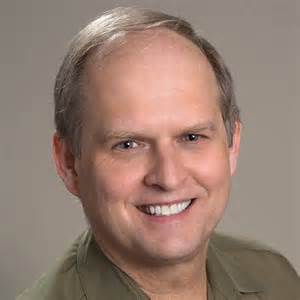
Brian Mills is an Assistant Professor at the University of Florida within the Department of Tourism, brian-mills-economic-rockstarRecreation, and Sport Management specializing in Managerial Sports Economics.
Professor Mills is also Associate Research Faculty within the Eric Friedheim Tourism Institute (EFTI).

Brian’s research interests encompass topics such as the sports labor market, industrial organization and sports league policy, public policy and economic development related to sport, and advanced analytics in the sports business. He is especially interested in applying economic lessons and quantitative analysis to problems that sport managers face in their everyday decision making.

Dr. Mills has also worked on consulting projects for professional sports teams and municipalities both in the U.S. and Canada.

Before arriving at Florida, Brian received his PhD and MA in Sport Management from the University of Michigan.  During that time, he also completed MA degrees in Statistics and in Applied Economics.  Brian earned his BA in Psychology in 2006 from St. Mary’s College of Maryland where he played NCAA Division III baseball.

Brian’s work and research interests can be found at brianmmills.com and at princeofslides.blogspot

Brian is now offering a new course called Exploring Pitch Data with R over at www.datacamp.com.

Check it out. You’ll have lots of fun learning basic data manipulation, summarization, and visualization in R using Statcast data.

Economics:

In this episode, Brian discusses and mentions: sports economics, labor market, externalities, incentives, wages, allocation of time, R, population, GDP and incomes.

Economists:

In this episode, Brian discusses and mentions: Rodney Fort, Stefan Szymanski, Lawrence Kahn and Bill Gerrard.

Links:

  • 090: Stefan Szymanski on Soccernomics and How Sabermetrics, Inequality and Finance Rules the Sport
  • 096: Cameron Murray on the Robinson Crusoe Economy and Blogging toward your PhD
  • 099: Rodney Fort on Sport Economics, Big Data in Baseball and the Value of Hosting an Olympic Games
  • Freakonomics
  • Fastball Movie
  • Trackman Baseball
  • Trackman Golf

Brian Mills’ Writing Tips:

  1. Always be reading and writing.
  2. Give or receive feedback and re-write.
  3. Develop a habit of note-taking.
  4. Turn your idea into a good story.

Resources:

  • Sabermetrics, Scouting, and the Science of Baseball
  • Data Camp
  • Exploring Pitch Data with R
  • A Guide to Sabermetric Research: How to Find Raw Data by the Society for American Baseball Research
  • Number Munchers game

Artilces:

Scoring in Baseball Is Down. Blame the Umpires: A Study Found That Umpires Have Expanded Their Strike Zone in Recent Years in The Wall Street Journal

Books:

  • Pay Dirt by Rodeny Fort
http://traffic.libsyn.com/economicrockstar/103_Brian_Mills_Final.mp3

Podcast: Play in new window | Download
073: Robin Hanson on The Age of Em and How Brain Emulations Will Double Economic Growth Every Month

February 18, 2016 by Frank

http://traffic.libsyn.com/economicrockstar/073_Robin_Hanson.mp3
Play in New WindowDownload

073: Robin Hanson on The Age of Em and How Brain Emulations Will Double Economic Growth Every Month

Robin Hanson is associate professor of economics at George Mason University. He is also a research associate at robin hansonOxford’s Future of Humanity Institute and chief scientist at Consensus Point.

Professor Hanson has diverse research interests, including spatial product competition, health incentive contracts, reversible computation, the origin of life, the survival of humanity, very long-term economic growth, growth given machine intelligence, and interstellar colonization

Robin has pioneered prediction markets, also known as information markets and idea futures, since 1988.

His passion is to understand everything, and to save the world. He is addicted to “viewquakes”, loves to argue one on one, and values honesty and passion. He blogs at OvercomingBias.com which has had over eight million visits.

His book The Age of Em: Work, Love and Life When Robots Rule the Earth will be available in May 2016, and The Elephant in the Brain, co-authored with Kevin Simler, in spring 2017.

Economists:

In this episode, Robin mentions and discusses: Thomas Malthus and Cass Sunstein

Economics:

In this episode, Robin mentions and discusses: emulation economy, economic growth, labor, competition, wages, subsistence economy, capital, land, slaves, supply and demand.

In this episode you will learn:

  • about Robin Hanson’s work in economics.
  • what is The Age of Em and how it could double economic growth every month rather than the current doubling of growth every 15 years.
  • what are brain emulations.
  • what is a singularity and if we will have one within the next 200 years.
  • how the workforce of the future look.
  • how humans will retire and have brain emulations do their work.
  • what will a brain emulation be like.
  • if humans will revert to subsistence levels of existence as predicted by Malthus.
  • about the labor market of the future and whether wages will be competed away with humans and ems living on the margin.
  • how Robin anticipates living in the future and how you can too.
  • why space exploration and space colonization will be delayed until after the rapid and exponential economic expansion brought about by brain emulation.
  • whether you can have a brain emulation of your own brain or whether the process will be reserved to a few hundred people who are best equipped to perform certain tasks.
  • how the relationship between humans and robots is portrayed as a dichotomy – a heaven or hell scenario – but this will not be the case with the technology available using brain emulations.
  • how you can be ‘teleported’ from one device to another without being physically affected.
  • how Robin used economic theory to explain the economy of the future where brain emulations are the drivers of growth.
  • why the Age of Em will last for about 2 years.
  • about Robin Hanson’s request to have only his head cryogenically frozen and what he hopes to achieve.

Paper:

  • Hanson, R. (1994). If Uploads Come First: The Crack of a Future Dawn 

Podcast Episodes:

  • Manu Saadia

Books:

  • The Age of Em by Robin Hanson
  • Trekonomics by Manu Saadia
  • The World According to Star Wars by Cass Sunstein

Resources:

  • The Age of Em
  • www.overcomingbias.com
  • Future of Humanity Institute
  • Consensus Point


http://traffic.libsyn.com/economicrockstar/073_Robin_Hanson.mp3

Podcast: Play in new window | Download
058: Morten Jerven on Poor Numbers and Why Economists Get It Wrong With Africa

November 11, 2015 by Frank

http://traffic.libsyn.com/economicrockstar/058_Morten_Jerven_Final.mp3
Play in New WindowDownload

058: Morten Jerven on Poor Numbers and Why Economists Get It Wrong With Africa

Morton Jerven is Professor of Economic History and Development at the School for International Studies at Simon Fraser University in Vancouver, Canada.

In 2014, Morton was appointed Associate Professor in Global Change and International Relations at Noragrica at the Norwegian University of Life Sciences.

Morton has published widely on African economic development, and particularly on patterns of economic growth and on economic development statistics.

Upon the release of his book, Poor Numbers: How We Are Misled by African Development Statistics and What to Do about It, Morton caused uproar across Africa and had been expelled from two conferences. His latest book Africa: Why Economists Get It Wrong is now available on Amazon.

Morton is an economic historian, with an MSc and PhD from the London School of Economics.

Economics:

In this interview, Morten mentions: capital markets, sovereign bonds, National Income Statistics, GDP, demographics, wages, rents, profits, consumption, investment, exports, imports, population growth, m-pesa, debt-to-GDP ratio, poverty and GDP per capita.

Economists:

In this interview, Morten mentions: Jonathan Temple, Stephen Durlauf, Simon Johnson, Shanta Deverajan, Neil Fantom (World Bank) and Wolfgang Stolper.

In this episode you will learn:

  • why Morten was expelled from two conferences in Africa.
  • about the knowledge problem that exists in economic statistical data.
  • if economic statistics is underfunded relative to other social sciences.
  • whether economic data from African countries is intentionally misleading or if it’s a methodology and availability problem.
  • what is GDP and why is it used.
  • the problems with measuring GDP.
  • why the production approach is really the only valid method to measuring GDP.
  • why a country’s GDP is estimate by proxy and how productivity data is difficult to collect.
  • how population growth is used as a proxy for GDP.
  • whether we should allow Google and other companies that store big data to provide economic data.
  • whether cooperation or conflict between big data and official statistics will emerge.
  • how observing the brightness of countries from space is now being used to measure economic growth.
  • what the IMF does to missing data, such as GDP.
  • why Morten collected his own data for a number of African countries since the IMF wouldn’t share their own.
  • whether papers written by the IMF and the World Bank undergo a peer-review process.
  • how the ‘branding’ of statistics by the World Bank and the IMF can mislead the user.
  • how using the 3 methods of calculating GDP for all African countries shows significant differences when ranking each from poorest to wealthiest.

Quotes by Morten Jerven:

Statistics is the archetypal way of generalising from complex social realities to a very orderly aggregate picture – Morten Jerven

Make everything count. If you write something, make sure it’s going somewhere. If you prepare a lecture to speak about something, make sure you have an idea about how that can become a publishable unit – Morten Jerven

Make sure, as an academic working, it’s important not to think that working long hours is the key to being effective. Start writing early. It’s important – Morten Jerven

Organisations Mentioned in this Episode:

  • African Development Bank
  • IMF
  • World Bank
  • Centers for Disease Control and Prevention

Books:

  • Poor Numbers: How We Are Misled by African Development Statistics and What to Do About It by Morton Jerven
  • Africa: Why Economists Get It Wrong by Morton Jerven
  • How to Lie with Statistics by Darryl Huff
  • Handbook of Econometrics by Stephen Durlof and Jonathan Temple
  • Planning Without Facts: Lessons in Resource Allocation from Nigeria’s Development by Wolfgang Stolper

Papers/Articles:

  • Henderson, V., Storeygard, A. and Weil, D. (2012) “Measuring economic growth from outer space” American Economic Review 102(2): 994-1028.
  • Financial Times: Africa Counts the Costs of Miscalculation by Andrew Jack

Resources:

  • World Bank Development Database
http://traffic.libsyn.com/economicrockstar/058_Morten_Jerven_Final.mp3

Podcast: Play in new window | Download

025: Dan Hamermesh on the Economics of Beauty: Attractive People Are More Successful

March 26, 2015 by Frank

http://traffic.libsyn.com/economicrockstar/025_Dan_Hamermesh.mp3
Play in New WindowDownload

025: Dan Hamermesh on the Economics of Beauty: Attractive People Are More Successful 

Dan Hamermesh is Professor in Economics at the Royal Holloway University of London and at thePortraitHamermeshwithoutJacket University of Texas at Austin. Dan researches the economics of beauty. He received his Ph.D. from Yale and has since taught at Princeton, at Michigan State, and at Texas. He has held visiting professorships at universities in North America, Europe, Australia and Asia, and lectured at almost 250 universities in 48 states and 33 foreign countries. His research, published in nearly 100 refereed papers in scholarly journals, has concentrated on time use, labor demand, discrimination, academic labor markets and unusual applications of labor economics (to beauty, sleep and suicide).

Professor Hamermesh has received many notable and distinguished honors and awards in recognition for his contribution to the field of economics. These include the Mincer Award and the IZA Prize in Labor Economics, the John R. Commons Award, as well as many teaching of excellence awards.

Daniel’s teaching include Microeconomics; Macroeconomics; Econometrics; Economics of Labor and Economics of Life.

Daniel is the author of many books including Demand for Labor: The Neglected Side of the Market, Beauty Pays: Why Attractive People Are More Successful, The Economics of Time Use and Economics Is Everywhere. He is also a regular contributor to the Freakonomics blog and podcast.

Economic Themes:

In this interview, Dan mentions and discusses:

Speculation, inter-temporal maximisation, labor economics, incentives, wages, welfare payments, comparative advantage and externalities.

Economists:

In this interview, Dan mentions:

 John Maynard Keynes, Gary Becker, Gregg Lewis, Robert Lucas and Michael Lewis.

Influencers:

Gary Becker and Gregg Lewis

A lot of my stuff is the weird kind of stuff that Becker pioneered – Dan Hamermesh.

Click To Tweet

Gregg Lewis had a concern about data – about doing it right, making sure you were right. That’s a crucial thing. One has to take data seriously – Dan Hamermesh.

Advice:

Do what you think you’ll enjoy, because if you think you’ll enjoy it the odds are pretty good you’ll do well at it. You’ll be motivated to work hard and to succeed – Dan Hamermesh

Find out:

  • how economics can be used beyond the theoretical framework we see in textbooks.
  • why we should think about economics in things we see or do in the real world.
  • how students of economics can inspire their professors in a two-way mutual learning process.
  • how economics is everywhere – we just need to think, see and interpret.
  • how economics is enjoying a revival in reaching to mass audiences.
  • the benefits of economics books like Freakonomics, Beauty Pays, Dollars and Sex and Happiness By Design.
  • why we should read interesting books on economics.
  • if happiness is related to how beautiful or attractive you are.
  • why better-looking men are happier.
  • how to recognise if you are beautiful.
  • what good-looking attorneys, prostitutes, politicians and NFL quarter-backs have in common.
  • if economists should be studying the effects of being attractive and ugly.
  • if people have an increased need to become beautiful.
  • whether increased spending on cosmetics, hair and clothing by women will have a pay-off in the labor market.
  • if plastic surgery to alter beauty results in higher earnings.
  • about the disability benefits available to obese people.
  • if an obese person is perceived to be less beautiful than a slim person.
  • if there is a relationship between ugliness and where a person lives.
  • why Dan was interested in studying the economic impact of beauty.
  • which economic markets show evidence of the impact of beauty.
  • how Dan first met his wife of 42 years.
  • what Dan thinks of Abercrombie and Fitch’s ‘six-pack’ hiring policy.
  • if being attractive prohibits opportunities in the labor market.
  • if you should work in the private or public sector if you are good-looking.
  • how to identify an externality on the side-walk.
  • why you should do what you’ll enjoy rather than chasing the money.

Why Attractive People Are Happier and Economically Better-Off.

Attractive people have been found to be happier than not-so-good-looking people. Better-looking men receive higher incomes, which make them happier overall. Attractive women are also happier, but their happiness is more direct in that their happiness is the result of knowing that they are good-looking. Attractive women do receive higher incomes but this is not a direct link to their happiness as it is for men.

“The beauty itself is directly more salient to them than it was for men, even though the overall effect was identical for both genders” – Dan Hamermesh.

How someone realises if they are attractive or not is due to the reinforcement by other people in making you aware whether you are good-looking or ugly. “Better-looking babies are treated better by their parents and by other people. Better-looking 5 year olds are treated better in kindergarten than ugly ones. When you’re chosen for teams or go out in High School, the better-looking people do better. And they also, given even the amount of education they attained, they’ll do better in the labor market. They’ll get better jobs, make higher pay, even within the same occupation” (Dan Hamermesh). Good-looking attorneys, prostitutes, politicians and National Football League quarter-backs make higher pay than their uglier colleagues.

In the labor market, the top one-third of people who are considered good-looking will earn 10 to 12% more in income independent of any differences that might exist between them and those not considered good-looking.

A woman’s increased spending on cosmetics, hair and clothing will not increase her perceived beauty and will also have a minimal pay-off on the labor market for her. Plastic surgery for cosmetic reasons does not have a benefit in terms of increasing earnings in the labor market. You do it to feel good. It’s not an economic investment, it’s a feel-good investment.

“Unless a person is morbidly obese, people do not view him or her as being any uglier than anybody else, all things taking together” – Dan Hammermesh.

Does Location Determine Whether You Are Beautiful or Ugly?

I ask Dan whether a person’s good looks are determined by the area in which they live. The reason I ask this is based on our earlier discussion on why attractive people typically earn a higher income. It can be fair to suggest that cities or regions that pay more would consequently attract good-looking people.

Dan states that “if you’re a good-looking person, you’re going to flock to an area where your looks pay off more. And if you’re a bad-looking person, you might want to go away from an area where looks pay off. In the UK, where people who were born in Scotland and Wales, if they’re good-looking, are more likely to migrate to South-East England (London) than other people”.

Also, “people who were born in South-East England (London) who are bad-looking appear to move to outlying areas where their looks aren’t so important”.

“Looks not only affects where we live in terms of what we make, but where we choose to live in terms of where we spend out adult lives. You’ll go where you get the biggest bang for your buck or, in this case, the biggest pounds for your beauty.”

Economic Markets Where Beauty and Attractiveness Are Present:

  1. Labor Markets: Higher wages and better conditions.
  2. Marriage Markets: A good-looking woman will attract a man who earns more.
  3. Market on Unsecured Loans: Attractive people are more likely to get a loan and on better terms.

Recommended Books:

  • Beauty Pays: Why Attractive People Are More Successful by Dan Hamermesh.
  • Economics Is Everywhere by Dan Hamermesh.
  • The Worldly Philosophers: The Lives, Times And Ideas Of The Great Economic Thinkers by Robert L. Heilbroner.
  • Moneyball by Michael Lewis.

Where To Find Dan Hamermesh:

  • Facebook: BeautyPays
http://traffic.libsyn.com/economicrockstar/025_Dan_Hamermesh.mp3

Podcast: Play in new window | Download
023: Loretta Napoleoni on Financing Terrorism and the Creation of the Islamic State

March 12, 2015 by Frank

http://traffic.libsyn.com/economicrockstar/023_Loretta_Napoleoni.mp3
Play in New WindowDownload

023: Loretta Napoleoni on Financing Terrorism and the Creation of the Islamic State

Loretta Napoleoni is an expert on terrorist financing and the IslLoretta Napoleoniamic State. She advises several governments and international organizations on counter-terrorism and money laundering.

As Chairman of the countering terrorism financing group for the Club de Madrid, Loretta brought heads of state from around the world together to create a new strategy for combating the financing of terror networks.

Loretta is a regular media commentator for CNN, Sky and the BBC and advises several banks on strategies to counter the current ongoing crisis. She lectures regularly around the world on economics, terrorism and money laundering.

Loretta is also a columnist and writes about terrorism, money laundering and the economy for several European financial papers including El Pais, The Guardian and Le Monde.

Loretta began her career as an economist, working for several banks and international organizations in Europe and the US. She has a Phd in economics and a Masters of Philosophy in International Relations and one in terrorism.

She is the bestselling author of numerous books including The Islamist Phoenix, Maoanomics, Rogue Economics, Terror Incorporated and Insurgent Iraq.

Her books are translated into 18 languages including Chinese and Arabic.

“I studied economics because I thought that economics was the way to change the world” – Loretta Napoleoni.

Economic Themes:

In this interview, Loretta mentions and discusses: Islamic Finance, gold, barter, quantitative easing, reserve currency, consumerism, the Marshall Plan, labor, wages, sex trade, slavery, demand, profit, trade unions, capitalism and growth.

Economists:

In this interview, Loretta mentions: Adam Smith, David Ricardo, Karl Marx, John Stuart Mills and John Maynard Keynes.

Advice:

The key is to always search for the truth. It is important to listen to the experts because otherwise you get the wrong picture – Loretta Napoleoni.

Find out:

  • about Loretta’s involvement in the feminist revolution in the 1970s in Italy where she was one of the founding members of the Italian Feminist Movement.
  • why she studied economics and the subsequent irony of working for a Russian bank.
  • why Loretta sold her company to do a PhD in terrorism at the London School of Economics.
  • about Loretta’s contact with the Italian Marxist organisation, The Red Brigade.
  • how terrorists fund their activities.
  • who initially sponsored ISIS or the Islamic State initially and how they may regret this.
  • why Jihadi John and others were attracted to the Islamic State.
  • how Saudi Arabia’s sponsor of a war by proxy against the Assad regime in Syria resulted in the creation of IS.
  • about The Caliphate and why IS wants to re-create a modern version of this region.
  • about the functioning economy of the Islamic State.
  • if the Islamic State has a functioning banking system.
  • if the Islamic State is using gold coins, dollars or a bartering system.
  • about the how women are treated in the Islamic State.
  • why Loretta believes that the feminist movement ultimately failed.
  • if the US policy of quantitative easing is making it easier to finance terrorism due to the increase in the money supply.
  • the meaning of the Patriot Act and how every transaction made in US dollars is tracked and traced everywhere in the world.
  • whether the US should stop their foreign policy in the Middle East and North Africa.
  • how the world is being shaped by dark economic forces based on the fantasy world of consumerism.
  • how an increase in the number of democratic countries has resulted in an increase in modern-day slavery.
  • about the sex trade and the fall of the Berlin Wall.
  • how the Chinese are better capitalists than Western countries.
  • how we can learn from the Chinese economy.
  • whether Africa will benefit from the Chinese model of capitalism.
  • why there is a ‘race to the bottom’ in todays economy.
  • why Loretta believes that we need a new theory in economics.
  • about the problem of mathematics in economics.
  • the advice Loretta gives for writing a book.

The Caliphate and Islamic State

The Caliphate is a way to formulate the Muslim political utopia, whereby for centuries, Muslims have dreamt of the creation of a State but have failed. The political reality of their world has been dictatorship, foreign power, colonization or the tribal system.

The Caliphate is the only political expression that the Muslims have produced. The ancient Caliphate was a splendid civilization, very different from the Caliphate of the Islamic State because it was very tolerant. Jews, Christians and Muslims lived together in peace without any problems.

Today, the economy of the Islamic State is a closed economy in which the trading of goods and services is done within the State. There is some degree of smuggling going on. Loretta Napoleoni believes that the rise of the Islamic State is a European problem because of colonialization.

Quantitative Easing, the US Dollar and the Illegal Arms Market

The US can borrow against the stock of dollars in circulation all over the world since the dollar is the reserve currency. What this means is that the US prints more dollars, not only for the demand inside the US but also for the demand outside the US. The illegal arms market is run in dollars. Since this is a market that grows, it therefore needs to be fed an increasing supply of dollars. If the Islamic State is using dollars, then they will benefit indirectly from the printing of money inside the United States.

Slavery and the Link with Consumerism

This economy, this rogue economics, is very much an economy that is driven on one end by consumption, this endless consumption. And to feed this monster of endless consumption, you have to produce at a cheaper level. So you use anything you can.  – Loretta Napoleoni.

The sex trade boomed with the fall of the Berlin Wall. Some women had no alternative but to prostitute themselves to feed their family because of the collapse of the Communist economy.

On economics:

“There is too much maths. Everything is reduced to mathematical models. They want to predict everything with numbers. Economics is a social science so you can’t predict people’s behavior.”

Advice:

“If you want to write a book, you start now and you stop when you finish. You don’t stop in the middle, you don’t do many things. All you do is work, work, work.” – Loretta Napoleoni.

Resources:

  • Scrivener 
  • Evernote

Recommended Books:

  • The Islamist Phoenix: Islamic State and the Redrawing of the Middle East by Loretta Napoleoni.
  • Maonomics: Why Chinese Communists Make Better Capitalists than We Do by Loretta Napoleoni.
  • 10 Years That Shook the World by Loretta Napoleoni.
  • Terrorism and the Economy: How the War on Terror is Bankrupting the World by Loretta Napoleoni.
  • Rogue Economics: Capitalism’s New Reality by Loretta Napoleoni.
  • Terror Incorporated: Tracing the Dollars Behind the Terror Networks by Loretta Napoleoni.
  • The Wealth of Nations by Adam Smith
  • The Theory of Moral Sentiments by Adam Smith

Where To Find Loretta Napoleoni:

  • www.lorettanapoleoni.net
http://traffic.libsyn.com/economicrockstar/023_Loretta_Napoleoni.mp3

Podcast: Play in new window | Download

Frank Conway

Frank Conway is founder of Economic Rockstar and lecturer of economics, finance and statistics. Read More…

View My Blog Posts

Youtube Sub

Become a Patron of the Economic Rockstar Podcast

patreon

Ireland’s Economy by the Numbers

Leaving Cert Economics: Ireland’s Economy  Click here to download a workbook on Ireland’s Economy so that you can add your own notes. [Original size] Ireland’s Economy by fconway

Categories

Subscribe and Never Miss An Episode

itunes-logo

Recent Posts

  • Ireland’s Economy by the Numbers April 8, 2019
  • 174: Wendy Carlin on The Core Project, Capitalism, Democracy and Normative Statements February 13, 2019
  • 173: Stephen Wright on Core Econ as a Learning Resource for Mainstream Economics January 28, 2019
  • 172: Best of 2018 Part 2: From the Great Depression to Futurism; Institutions, Individualism, Cooperation and Reciprocity January 22, 2019
  • 171: Best of 2018 Part 1 January 3, 2019

Copyright © 2026 · Podcast Pro Theme on Genesis Framework · WordPress · Log in

This website uses cookies to improve your experience. We'll assume you're ok with this, but you can opt-out if you wish. Accept Reject Read More
Privacy Policy

Privacy Overview

This website uses cookies to improve your experience while you navigate through the website. Out of these, the cookies that are categorized as necessary are stored on your browser as they are essential for the working of basic functionalities of the website. We also use third-party cookies that help us analyze and understand how you use this website. These cookies will be stored in your browser only with your consent. You also have the option to opt-out of these cookies. But opting out of some of these cookies may affect your browsing experience.
Necessary
Always Enabled
Necessary cookies are absolutely essential for the website to function properly. This category only includes cookies that ensures basic functionalities and security features of the website. These cookies do not store any personal information.
Non-necessary
Any cookies that may not be particularly necessary for the website to function and is used specifically to collect user personal data via analytics, ads, other embedded contents are termed as non-necessary cookies. It is mandatory to procure user consent prior to running these cookies on your website.
SAVE & ACCEPT