• ABOUT
  • RESOURCES
  • PODCAST
  • BOOKS
  • BLOG
  • SUPPORTERS
  • QFA Financial Advice
  • CONTACT

Economic Rockstar

Connecting Brilliant Minds in Economics and Finance

011: Steve Keen on Debunking Economics and the Misinterpretation of Keynes

December 18, 2014 by Frank

http://traffic.libsyn.com/economicrockstar/011_Steve_Keen.mp3
Play in New WindowDownload

011: Steve Keen on Debunking Economics and the Misinterpretation of Keynes

Prof Steve KingstonSteve Keen is Professor of Economics and Head of Department of Economics, History and Politics at Kingston University, London. Steve’s interpretative analysis is quite different to the norm. Steve likes to be known socially as an anti-economist and has spent 40 years fighting delusion in economics. That delusion has led us into a crisis and Steve may have finally won his battle… or has he? Steve is the winner of the Revere Award for being the economist who most convincingly warned of the economic crisis and whose work is most likely to prevent another one. He topped the poll beating Roubini, Shiller, Soros, Stiglitz and Krugman.

Economic Themes:

In this interview, Steve mentions and discusses: Keynesian economics, supply, demand and equilibrium, demand curves, Debt/GDP ratio, financial crisis, housing market bubble and IS-LM model.

Economists and Economic Schools:

In this interview, Steve mentions: Frank Stilwell, Neva Goodwin, Jack Reardon, John Maynard Keynes, Hyman Minsky, John Hicks, Paul Krugman, Paul Samuelson, Marshallian Economics (Alfred Marshall) and Walrasian Economics (Leon Walrasian).

In this episode, you will learn:

  • how Steve saw the 2008 financial crisis coming when he investigated Debt/GDP levels.
  • Steve’s views on current economic teachings in many school, colleges and universities around the world.
  • what should be done at these colleges and how a pluralist approach to teaching economics is best.
  • about Steve’s thoughts on the treatment of Keynesian economics.
  • about Steve’s involvement in a Marvel-style comic book dedicated to teaching economics.

‘Stability is Destabilising’ Steve Keen’s t-shirt from the MINSKY campaign

Economics deserves Comedy – Steve Keen

Click To Tweet

Keynesian Economics

“If you read the Keynes that I base my work on which is really Keynes in 1937, not the General Theory, but the papers from 1937 – read that and a lot of Austrians will think they’re reading Hayek. Keynes is being completely bastardised. What people when they are saying Keynesian they mean Samuelsonian”.

Keynes according to the Americans is what Samuelson said what Keynes said – Steve Keen

Click To Tweet

My vision of who Keynes is very different to the one that Paul Krugman has – Steve Keen

Click To Tweet

Recommended Books:

  • Debunking Economics: The Naked Emperor Dethroned by Steve Keen
  • Money, Blood and Revolution: How Darwin and the doctor of King Charles I could turn economics into a science by George Cooper
  • Dynamic Economic Systems: A Post-Keynesian Approach by John Markus Blatt
  • Introducing a New Economics: Pluralist, Sustainable, Progressive by Jack Reardon.

Favorite Internet Resources:

  • www.debtdeflation.com/blogs
  • Steve Keen on YouTube
  • www.ideaeconomics.org
http://traffic.libsyn.com/economicrockstar/011_Steve_Keen.mp3

Podcast: Play in new window | Download

009: Naomi Brockwell (Bitcoin Girl) on Bitcoins, Liberty, Government and Fiat Currency.

December 3, 2014 by Frank

http://traffic.libsyn.com/economicrockstar/009_Naomi_Brockwell.mp3
Play in New WindowDownload

009: Naomi Brockwell (Bitcoin Girl) on Bitcoins, Liberty, Government and Fiat Currency.

Naomi BrockwellNaomi Brockwell is the always effervescent face of Bitcoin Girl She is an opera singer, film-maker and actress, and studied commerce at the University of Western Australia. Currently residing in New York, Naomi also runs her own company Rainsworth Productions and is a fellow at The Moving Picture Institute. Naomi speaks five languages, plays six musical instruments and, of course, is a gold medal-winning Irish dancer. Naomi is on the Advisory Council of the Mannkal Economic Education Foundation.

Economic Themes:

In this interview, Naomi mentions and discusses: bitcoins, crypto-currencies, monetary policy, inflation, fiat currency, fractional reserve banking, central banks, living standards,  international trade, negative externalities, unintended consequences, equilibrium, supply and demand.

Economists and Economic Schools:

In this interview, Naomi mentions: Victor Niederhoffer, Gene Epstein, Murray Rothbard, Jean-Baptiste Say, Ludwig von Mises, Friedrich Hayek, Carl Menger, Erik Voorheese, Paul Krugman, Austrian economics, Libertarianism, Keynesian economics and Hunter Lewis.

Naomi’s Passions:

Economics, Film, Dance and Opera Singing.

Naomi’s Affirmations/Mantra:

“I like people who are inspiring and I like reading their biographies” – Naomi Brockwell

“We really underestimate what we can achieve and if we remember that so much more is possible than we may think, then that’s a good way to live. It encourages you to press your boundaries and explore new horizons. Seek what your potential is, really try to fulfil your potential.” – Naomi Brockwell

Naomi’s Influencers:

Gene Epstein, Murray Rothbard and Georgia Hilton of The Moving Picture Institute

Exclusive News Announced on the Economic Rockstar Podcast:

Naomi is writing a FUN and ACADEMIC book which will be released soon.

Find Out:

  • what Naomi’s two favorite drinks are – they’re Irish by the way!
  • and watch Naomi’s video ‘Bitcoin Girl’ (see below), made with The Moving Picture Institute, in which she is featured.
  • what began Naomi’s passion for economics after staying in New York City to study and train with other great opera singers.
  • how a discussion on the housing crisis and the housing bubble at Junto in New York City inspired Naomi to read economics.
  • how a chance email to Gene Epstein of Barron’s developed a passion for Austrian and Libertarian economics.
  • Naomi’s shared views with Gene on educating people in economics even if they disagree on some of the thinking.
  • why Naomi questions the foundation of fiat money after reading Rothbard.
  • why Naomi believes that the private sector can manage money better than the government.
  • why bitcoin is used voluntarily with no coercion.
  • what is a virtual or crypto-currency and how does it work when there is no physical coin to use.
  • what excites Naomi about Bitcoin and why, as Bitcoin Girl, she is becoming synonymous with Bitcoin.
  • what cryptography is and what it has to do with Bitcoin.
  • the difference between fractional reserve banking and how bitcoin operates.
  • what scares Naomi when she requested her Australian bank to transfer her own money into a Bitstamp account.
  • about Naomi’s thoughts on inflation and fiat currencies.
  • why Naomi believes that Bitcoin will take many people out of poverty and how it will benefit the 2.5 billion people that are un-bankable.
  • why Bitcoin owners have a right to privacy, while owners of fiat money run the risk of having their identity and privacy hacked.
  • why American venture capital investor Tim Draper bought up Bitcoins from the Silk Road auction.
  • where venture capital money is going in relation to Bitcoin.
  • why governments and central banks have a vested interest to make Bitcoin obsolete.
  • about the opportunities and the jobs being created by the Bitcoin industry.
  • why bitcoins are safe from government interference and control.
  • why Naomi thinks Uber and AirBnB should follow the decentralized model of Bitcoin.
  • if Bitcoin is a buying opportunity.
  • who is Satoshi Nakamoto (or maybe not!).
  • what Naomi was doing in a World War II submarine

https://www.youtube.com/watch?v=XEthXBHsEac

Advice:

Find people who you find really inspirational and learn as much as you can – Naomi Brockwell

Click To Tweet

On Bitcoins:

Bitcoin is a digital currency which is keeping up with the digital age – Naomi Brockwell

Click To Tweet

Bitcoin is a global currency keeping up with a global marketplace – Naomi Brockwell

Click To Tweet

Bitcoin is specifically being engineered as an ideal form of money – Naomi Brockwell

Click To Tweet

The fact that people are using Bitcoin because they prefer it over sovereign currency interests me – Naoim Brockwell

Click To Tweet

Bitcoin, in layman’s terms is ‘Money for the Internet’ – Naomi Brockwell

Click To Tweet

About Bitcoin: That is a superstar currency right there – Naomi Brockwell

Click To Tweet

Which is Safer – Your details with J.P. Morgan or a Bitcoin wallet?

It’s just as easy to get access to a persons bitcoin if they have access to the key as it is to get into someones house if you get access to their key. It’s very much the same issue. However, the issue I have with J.P. Morgan is that they take all of your private information. So identity fraud can ruin a persons life.

When a person hacks into my Bitcoin account, first of all it’s up to me to decide how I want to secure that. There are incredible secure ways that I can use to protect my Bitcoins.

There are no personal details attached to that money. There are no names, no phone numbers and no addresses – just ones and zeros.

If someone hacks into J.P. Morgan, they steal everything about me. That is really, really scary and that is far more severe than any Bitcoin hacking.

With Bitcoin, it’s all up to you how you want to safe-guard your property. There are paper wallets.

Venture capital investment is going to Bitcoin entrepreneurs who are improving the Bitcoin infrastructure.

There are going to be scammers just as there are in any other industry.

I feel that I’m empowered using Bitcoin – Naomi Brockwell

Click To Tweet

About Fiat Currency:

“As long as my money stays in an organisation that can be coerced by government or can play by its own rules, I don’t have control over my own money. That’s a scary thought. My instinct is to get my money out of that system as fast as I can so that I can regain the control over where I want to spend my own money” – Naomi Brockwell.

Inflation is a secret tax that the government didn’t need approval for. There is absolutely no sane reason why any person should accept money from someone that they know will be worth less the next day. It’s possibly the biggest scam ever created.

‘Money is not an invention of the State and it’s not a product of a legislative act’ – Carl Menger

Click To Tweet

On Sensationalist News Stories on Bitcoins:

“If it Bleeds, it Leads. So any bad news on Bitcoin is good news for media outlets” – Naomi Brockwell.

Click To Tweet

Every second week someone is putting out a report – it’s usually Paul Krugman that says ‘Bitcoin is finally dead’ – Naomi Brockwell

Personal Habits:

  • Naomi subscribes to Louise Hay’s Daily Affirmation
  • Naomi and Gene Epstein run an Austrian economics reading group together.
I like to surround myself with such amazing and inspiring people – Naomi Brockwell

Click To Tweet

Takeaway:

There is so much more to economics and to the housing crisis than the mainstream media let on – Naomi Brockwell

Click To Tweet

Economics is just an incredible way of helping the less fortunate areas of society, of helping people out of poverty, of helping the unrepresented, people being persecuted by government. Economic, if you really understand it, it provides all of these answers. With economics, you could do a lot more to help people.

Recommended Books:

  • What Has the Government Done to Our Money by Murray Rothbard
  • Money: How the Destruction of the Dollar Threatens the Global Economy – and What We Can Do About It by Steve Forbes
  • The Financial Crisis and the Free Market Cure: Why Pure Capitalism is the World Economy’s Only Hope by John Allison
  • Where Keynes Went Wrong: And Why World Governments Keep CreatingInflation, Bubbles, and Busts by Hunter LewisAudible

Favorite Internet Resources:

  • On Life and Liberty by Erik Voorheese
  • The Moving Picture Institute for FREE movies.
  • Liberty.me

Where To Find Naomi Brockwell:

  • Websites: naomibrockwell.com and bitcoingirl.com
  • Moving Picture Institute


http://traffic.libsyn.com/economicrockstar/009_Naomi_Brockwell.mp3

Podcast: Play in new window | Download

008: Robbie Butler on Using Sports to Teach Entry-Level Economics

November 26, 2014 by Frank

http://traffic.libsyn.com/economicrockstar/008_Robbie_Butler.mp3
Play in New WindowDownload

008: Robbie Butler on Using Sports to Teach Entry-Level Economics

Robbie Butler is a lecturer of economics at University College Cork in Ireland. He combines his love of sports with economics to explain many economic concepts. He lectures on a multitude of modules, such as Microeconomics, Macroeconomics, Growth Economics and Corporate Strategy.  Robbie received his PhD from University of Hertfordshire in England, is published in a number of internationally renowned academic journals and is a regular economics contributor on media. Robbie’s primary passion is in sports, namely football (soccer) and he has a Junior International cap for Ireland. Robbie managed to bridge his passion for sports with his career in economics and, along with his brother David and other colleagues, created and runs the popular website www.sportseconomics.org.

Economic Themes:

In this interview, Robbie mentions and discusses: economic growth, institutional economics, the logic of collective action in society, the rise and decline of nations, sports economics, theory of Multiple Intelligence, incentives, game theory, the volunteers dilemma, decision-making, competition, government funding, laissez-faire and sabermetrics.

Economists and Economic Schools:

In this interview, Robbie mentions: Professor Geoffrey Hodgeson, Mancur Olson, David Kahneman, Stefan Szymanski, Ignacio Palacios-Huerta, Jadrian Wooten, Rodney Fort, Brad Humphreys, Seamus Coffey, John Considine, David, Butler, Declan Jordan and John Eakins.

Robbie’s Influencers:

His PhD supervisor/mentor Professor Geoffrey Hodgeson who recently established the World Institutional Network for Interdisciplinary Research (WINIR), the works of Mancur Olson, Stefan Szymanski, Rodney Fort and Brad Humphreys.

Find Out:

  • who lectured Robbie as an undergrad. Hint: He’s the host of this show!
  • how Robbie’s use of sports in explaining economics grew from fun and a personal interest into something that has grown and evolved into something quite serious.
  • how playing football at a highly competitive level has allowed Robbie view economics in quite a unique way.
  • how this unique view has given Robbie an ability to delve into economics with many sports analogies and examples in which students can relate.
  • how having played sports competitively has given Robbie a level of respect and credibility when using sports-related themes in economics.
  • the importance of working with like-minded people and how it makes life so much easier.
  • why a coffee break with colleagues can have the most intellectually-stimulating conversations bursting with ideas.
  • a great tip before publishing a blog post when working with others who share the same website – it cuts out the use of Google Docs, Dropbox, etc.
  • how working with a sibling makes the feedback on your work more critical and raw – something that could help with perfecting the right article.
  • about the Theory of Multiple Intelligence by  Harvard educationalist Howard Gardner – we have 8 ways of learning.
  • how sports can be used as “a lens to the economic world” that empowers the student when learning and understanding economic theory.
  • how a change to the rules of a football/soccer game in the Caribbean between Barbados and Granada created incentives that reflects the behaviour of rational economic agent.
  • how a penalty shoot-out between Manchester United and Chelsea in the Champions League Final showcases the Volunteers Dilemma in economic game theory (Chelsea are instructed to take all penalties to Manchester United keeper’s left but he finds out Chelsea’s strategy when faced with the last penalty-taker by pointing to his own left – game theory demonstrated in football).
  • how watching the Simpsons can expose us to economic theory with its many parodies.
  • why Robbie believes that the English Premier League is in trouble and has all the hallmarks of a bubble.
  • how the different economic structures of the US (free market) and Europe (socialist) are reversed when it comes to the economic model of sports.
  • how the debt/GDP ratio imposed on EU countries is similar to the debt/income rules imposed on football clubs.
  • why big clubs may be willing to break the spending rules of the game despite the imposition of monetary fines.
  • about the use of metrics by Billy Bean’s Oakland A’s and how a ‘mediocre’ team could beat the cash-rich New York Yankees and Boston Red Sox.

Advice:

On Learning and Teaching Economics:

“We all have to develop ourselves and our understanding”.

If you work hard, you get the returns – there are no shortcuts @RobbieButlerUCC

Click To Tweet

On Research:

“Try and keep the material as current as you possibly can”.

Personal Habits:

  • Robbie, like all great educators, is always learning about the most optimal ways to teaching economics.
  • When working with a group who share the same website, it is best to leave each post unpublished as a draft so that your colleagues can give some critical advice or recommendations before being published.
  • Constantly updating the teaching material.

Takeaway:

On Hard Work:

“Hard work is everything. Nobody is born with an innate ability to do something. The harder you work, the easier things become. Thant applies to college, studying, sports and life in general” – Robbie Butler, UCC.

On the Value of Informal Meet-ups:

Some of our coffee meetings can be quite vicious, but it’s a good sounding board for ideas @RobbieButlerUCC

Click To Tweet

On Ways of Learning:

“People develop their understanding of different concepts in different ways. Some people have very good spatial recognition and may not be good at logical reasoning. Other people are fantastic musicians or artists. some people are very good numerically. So, because we all learn in very different ways, we need to teach in such a way that tries to capture as many forms of multiple intelligence theory as we can. We use sports as a lens to the economic world”.

On Sports in Economics:

We use sport as a lens to the economic world – @RobbieButlerUCC

Click To Tweet

On the Use of Data:

“When you’re teaching economics or doing research, data is key and lots of data in sport is collected for us. There are so many things we can analyse from an economic perspective using the lens of sport”.

Recommended Books:

  • Soccernomics by Simon Kuper and Stefan Szymanski
  • Homer Economicus: The Simpsons and Economics by Joshua Hall
  • The Wealth and Poverty of Nations: Why Some Nations Are So Rich and Some So Poor by David Landes
  • Thinking, Fast and Slow by Daniel KahnemanAudible
  • Moneyball: The Art of Winning an Unfair Game by Michael Lewis

Favorite Internet Resources:

  • Sports Economics
  • Economic Incentives

Where To Find Robbie Butler:

  • Website: www.sportseconomics.org
http://traffic.libsyn.com/economicrockstar/008_Robbie_Butler.mp3

Podcast: Play in new window | Download

007: Ryan Blair – Gangster turned Millionaire on Decision-Making, Game Theory and Incentives

November 21, 2014 by Frank

http://traffic.libsyn.com/economicrockstar/007_Ryan_Blair.mp3
Play in New WindowDownload


Episode 007: Ryan Blair –  Gangster turned Millionaire on Decision-Making, Game Theory and Incentives

Ryan BlairRyan Blair is a serial entrepreneur but his path to becoming a millionaire is both unique and fascinating. From a middle-class family who lost it all, Ryan became a gang member and, at times, carried an AK-47. life changed for Ryan due to a strong work ethic and a will to succeed. He overcame great obstacles to achieve extraordinary success.

With six multi-million dollar companies by age 30, Ryan vowed to make his current company, ViSalus Sciences, be the first billion dollar company to come out of the Great Recession and to help many people along the way. He is a philanthropist and New York Times best selling author.

Economics and Finance Themes:

In this interview, Ryan Blair mentions and discusses: decision-making, incentives, rewards, compensation, leveraging, poverty, entrepreneurialism, economic systems, philanthropy, venture capitalists, investors, Game Theory, complementary goods and capital markets.

How being a gang member is similar to being a business person:

  • “A gang is an economic system. Similarities  exist between being an entrepreneur and a legitimate businessman and doing business as a gang member on the street”.
  • “A gang is simply illegal entrepreneurship. It has a management hierarchy. Generally a gang will have various revenue streams. It has a compensation system. There are incentives and rewards as a recruiting system to recruit new members. There’s replication that occurs as a business model. The gang will have different hubs and different cities and countries it operates in. There are so many similarities”.
  • “Game theory is simply the idea of a game of chicken. Sometimes you have to be willing to risk it all and a lot of the time you have to be willing to walk away from a deal”.

Ryan’s Influencers:

  • Bob Hunt: Ryan’s step-father. Find out what he taught Ryan.
  • John Wooden: basketball player and NCAA coach, author on leadership and winner of the Presidential Medal of Freedom.
  • John C. Maxwell: Expert on leadership and New York Times best-selling author.
  • Dale Brown: NCAA Hall of Fame basketball coach.

In this episode, you will learn:

  • what life was like for Ryan growing up with a violent, drug-addicted father and how his family lost everything.
  • how Ryan overcame this to teach people how to overcome their poor decisions or the decisions of their family or the environment they were born into.
  • what skeletons Ryan takes out of the closet (revealed in his book) giving us some insight in this podcast.
  • why people are shocked that he was in a gang but how people that he knew in the past are even more shocked by his appearance, level of education and his ability to articulate on subjects that he is passionate about.
  • how over-leveraging and keeping-up with the Jones’ fuelled by credit in the economic ‘good times’ can be destructive for some families.
  • how Ryan went from middle-class to poverty to multi-millionaire.
  • how Ryan went from earning minimum wage at 18 to earning 6 figures within 2 years.
  • how staring at a 60-year old prisoner became the defining moment that changed Ryan’s life-path.
  • how Ryan overcame dyslexia and ADD to create his own auditory learning system, something which the current educational system failed to do.
  • why Ryan believes that ‘vision’ is so important in your life.
  • how Ryan helps people facing life in adversity: Clue? – The creation of foundations and philanthropic work.
  • about Ryan’s work with autism.
  • about the importance of having mentors and having a life purpose.
  • why Ryan had the perfect attributes to be involved in gangs. [Ryan was forced into a gang because he was a young kid, influenceable and could be productive. He was an angry kid, got into a lot of fights and had something to prove to society].
  • how Ryan learnt powerful lessons from the boardroom on how to structure agreements.
  • how Ryan used the economic theory of Game Theory to get ahead in business and become the dominant player.
  • how Ryan applies mathematical techniques to get the result he’s looking for.
  • the meaning behind Ryan’s tattoos: ‘Carpe Diem’ and ‘8411’.
  • how a tragedy that befell Ryan’s mother has become a great learning experience and a way to develop and to value certain things in life.
  • how Ryan will help give his son a strong work ethic and an incentive to do whatever he wants to do.
  • what Ryan would tell his younger self? –
    ‘Don’t allow short-term thinking to impact your long-term vision’- Ryan Blair

    Click To Tweet

Advice:

  • Ryan’s life purpose goal: “I will measure my influence by the network of the people I can draw upon for inspiration and economic creation’ – Ryan Blair”.
  • Ryan’s Philosophy: “Success is about your beliefs, values, actions and skills. So if you work on all of these things you will be successful” – Ryan Blair”.
  • On Vision: “I use that method in my life and my conscious and subconscious has no choice but to pursue them because I really fall in love with the vision”.
  • On Failing: “I fail forward and try to draw from certain things or from my gang past or maybe perhaps an investment that I made that didn’t work out so well”.
  • On Recruitment:   
    ‘Recruitment is one of the most important things on building a culture in business’ – Ryan Blair

    Click To Tweet

  • On Getting the Best Deal: “If you’re not prepared to walk away [from the deal] and the other party knows that, then you’re gonna be out-negotiated in many cases or you simply won’t get the best result possible for you, your family and your shareholders, which is what’s most important in a business negotiation”.
  • On Learning: Because Ryan knew that he wanted to be an entrepreneur, it was easy for him to associate learning with growth as an entrepreneur.
  • On Opportunities: “Opportunity exists all around you. If you’re looking for it and if you train yourself in how to see it – start there. If I sat in my garden, I could possibly find an opportunity to become an entrepreneur and be successful”.
  • On Nutrition and Learning: “Have a breakfast in the morning before school so as to have a proper education. Nutrition is so important to learning and to growth in an individual”.
  • ‘
    A Quitter Never Wins and A Winner Never Quits’ – Napoleon Hill

    Click To Tweet

Personal Habits:

1. 

‘I’m an idealist. I like to make things as good as I possibly can’ – Ryan Blair

Click To Tweet

2. Asking questions: “I ask a lot of questions of myself. Am I doing the right things? Am I making the right adjustments necessary for me to achieve the result that I want? I ask myself the question ‘Why not?”.

“If I want a vacation and I can’t afford one I then go ‘Why can’t I afford one and someone else can?’. Generally, there’s a reason for that. Maybe you haven’t properly saved or you don’t have enough income coming in. If I want a new car that I would really like to have and I can’t afford it, I’ll ask myself ‘Why not?’ and eventually I ask that question enough times then I got the new car or I got the vacation or I got the houses or I got the stuff that I wanted. Now I ask myself ‘Why can’t I have a billion dollar company?’ The answer is a multi-faceted one and it’s one that I will find a solution to and solve the problem”.

3. Making decisions: “Making the right decisions is harder to do because you can’t always have all the facts and all the information in front of you. I look back on a lot of my decisions, reflecting on them and say ‘Hey, maybe I didn’t make the right decision’, meaning there was another decision that would have been better”. A wrong decision could have been made because “I had the wrong facts or, perhaps, the wrong intentions or emotions in the decision-making process that made me fail to make the right decision”.

4. Evaluating decisions and making the necessary adjustments: “In life, you’re going to make some bad decisions, particularly in business because you don’t always have all the facts or you can’t predict the future or you don’t know how the economy might change or how capital markets might change”.

“If bad decisions are made, you’ve just got to assess it, understand it and make better decisions, and eventually you accumulate enough right decisions to where you’ve got success”.

The Golden Rule that Ryan Lives By:

“The Path is all Math” – “you’re reverse engineering or you’re finding the mathematical equation to get the result you’re looking for and that could be a result of fixing any deficiency in your life or to improve something. There’s generally a mathematical path to it and that could simply be the number of steps in the formula or the amount of time it takes for you to get the result that you’re looking for”.

‘Understanding the math behind things is very important’ – Ryan Blair

Click To Tweet

‘The Path is all Math’ – Ryan Blair

Click To Tweet

Takeaway:

  • Don’t let anyone steal your milk: a gang member lifestyle allowed Ryan to develop an innate ability to spot trouble in the boardroom and to fight his corner.
  • Be careful in deals that you do as an entrepreneur with venture capitalists or sophisticated investors. Ryan found himself in a situation where he had created value and wealth but faced not receiving any of it.
  • “Life can deal you a bad hand and if you sit at the table long enough and you play with the best strategy, you’ll end up getting a great result out of it. And I’m living proof of that”.
  • Attributes required to make multi-generational wealth: creativity and strong work ethic.

Recommended Books:

  • Nothing to Lose, Everything to Gain by Ryan Blair
  • David and Goliath:  Underdogs, Misfits, and the Art of Battling by Malcolm Gladwell
  • Blink: The Power of Thinking Without Thinking by Malcolm Gladwell
  • The Tipping Point: How Little Things Can Make a Big Difference by Malcolm Gladwell
  • Outliers: The Story of Success by Malcolm Gladwell
  • The 5 Levels of Leadership: Proven Steps to Maximize Your Potential by John MaxwellAudible

Favorite Internet Resource:

  • http://www.ryanblair.com
  • http://ntldocumentary.com
  • Audible is the leading provider of premium digital spoken audio information and entertainment on the internet.

Where to Find Ryan Blair:

  • Instagram
  • Twitter
  • Facebook
http://traffic.libsyn.com/economicrockstar/007_Ryan_Blair.mp3

Podcast: Play in new window | Download

006: Andrew Heaton on Using Comedy to Explain Economic Concepts

November 20, 2014 by Frank

http://traffic.libsyn.com/economicrockstar/006_Andrew_Heaton.mp3
Play in New WindowDownload

006: Andrew Heaton on Using Comedy to Explain Economic Concepts

Andrew Heaton

Andrew Heaton is a comedian, writer and political satirist. He is the presenter of the witty and entertaining economics podcast, EconPop and has a Masters degree in International Politics. Andrew has been featured in a Bollywood movie, plays a lead role in the sitcom Cap South and has been voted best new comedian of 2013 in New York. Andrew hails from Oklahoma, is an Officer to a Prince and plays the Ukelele to enhance the mood of his friends’ amorous endeavors.

Economic Themes:

In this interview, Andrew mentions and discusses: wheat quotas, comparative advantage, protectionism, relative and actual growth, free markets and limited government, Austrian Theory of Monetary Creation, supply and demand, signalling, subjective value, negative externalities, tariffs and import duty, protectionism, corporation tax, scarce resources, population, abundance of resources, the Great Depression, US deficit, unintended consequences, behavioral economics and risk aversion.

Economists and Economic Schools:

In this interview, Andrew mentions: the Chicago School, the Austrian School, Libertarianism, Adam Smith, Milton Friedman, Freidrich Hayek, John Maynard Keynes, Murray Rothbard, Frédéric Bastiat, Thomas Malthus, Gene Epstein, Steven Horwitz,

Andrew’s Influencers:

Gene Epstein and Milton Friedman.

Podcasts:

EconPop is hosted by Andrew, who is joined by economist Steven Horwitz and professor of literature Paul Cantor.

In this episode, you will learn:

  • how Andrew became interested in economics while studying abroad in Scotland.
  • what parallels Andrew draws between politics, economics and comedy.
  • what economists and school of thought Andrew draws inspiration from to carve out his own views.
  • where and from whom Andrew gets his inspiration for his anecdotal writings on economics concepts.
  • how economic concepts is in abundance in life and can be found in the many movies we may have watched.
  • what qualities Andrew believes makes a successful person.
  • about Andrew being an Officer to Prince Leonard of Hutt River.
  • what comparative advantage is and how Andrew explains it in an unusual but light-hearted way.
  • why Andrew believes we will never run out of resources and why we should not worry about scarcity.

Advice:

‘If you’re gonna have a lot of activities that you are doing, you need to be mentally organised and very good at prioritising.’

‘To supercharge your day, when you are getting to your tasks, do the one you hate most first… the rest of your day is a cinch.’

‘With books, the trick is you just write a thousand words a night… your subconscious mind works on it and when you sit down the following night it’s a little bit easier.  You have a full novel in two and half months.’

Personal Habits:

  • Andrew works extremely hard to get things done. He has blended comedy with economics to allow this dismal science to become enjoyable or entertaining.
  • Andrew believes that having the right mentor is hugely beneficial and such a relationship allows him to learn and focus on reaching small milestones. This has worked out favorably well for Andrew in the field of economics where he developed a strong set of opinions on some theoretical aspects of economics. By expanding his knowledge-base through economics books and the many discussions with his mentor, Gene Epstein, Andrew has opened new doors and created new opportunities that otherwise may not have been attainable. His love of economics, particularly the Austrian and Chicago Schools and libertarianism, has given Andrew a lot of material to work on for his comedic performances onstage, online and in books.
  • Andrew writes quite frequently and believes that constant writing will have a payoff in terms of the publication of a book.
  • Andrew writes ‘common sense economics for people who need to learn about common sense economics’ – Gene Epstein

    Click To Tweet

  • Andrew plays the ukelele but, unfortunately, it wasn’t ‘tuned’ correctly for him to give us a treat on this podcast. So, as an homage to Andrew, I changed the outro music theme of Economic Rockstar to one that uses a ukelele. I hope you enjoy it!

Takeaway:

On Economics and Comedy:

Economics is a dismal science, so if you can make it funny it sweetens it – Andrew Heaton

Click To Tweet

On Humor and Economic Differences:

‘When you start arguing with somebody your adrenaline level shoots up.  Just on a biochemical level, you become much less able to hear what they are saying because you are taking a defensive posture.  Conversely, when you’re laughing, you produce endorphins.  And, if I can make you laugh, for a moment you are willing to listen to me – just for a moment.’

On Human Innovation Outpacing Declining Resources:

“We didn’t end the Stone Age because we ran out of stones”. – Andrew Heaton

Click To Tweet

Recommended Books:

  • Laughter Is Better Than Communism by Andrew Heaton
  • Frank Got Abducted by Andrew Heaton
  • Re-Boot Grandpa by Andrew Heaton (coming soon in 2016)
  • Speech Trap Werewolf by Andrew Heaton (coming soon)
  • The Conscience of a Conservative by Barry Goldwater
  • Parliament of Whores: A Lone Humorist Attempts to Explain the Entire U.S.  Government by P.J. O’Rourke
  • Free To Choose by Milton Friedman and Rose Friedman
  • Life at the Bottom: The Worldview That Makes the Underclass by Theodore Dairymple
  • Economics In One Lesson by Henry Hazlitt
  • Nudge: Improving Decisions About Health, Wealth and Happiness by Richard H. Thaler and Cass R. Sunstein

Favorite Internet Resources:

  • Evernote

Where To Find Andrew Heaton:

  • Website: MightyHeaton
  • Twitter: @MightyHeaton

Contact Andrew and start a campaign if you would like him to create a ‘Mighty Heaton’ doll!

http://traffic.libsyn.com/economicrockstar/006_Andrew_Heaton.mp3

Podcast: Play in new window | Download

005: Hector Avellaneda on Buying Gold to Protect Your Wealth from a Dollar Crisis

November 19, 2014 by Frank

http://traffic.libsyn.com/economicrockstar/005_Hector_Avellaneda.mp3
Play in New WindowDownload

Episode 005: Hector Avellaneda on Buying Gold to Protect Your Wealth from a Dollar Crisis

Hector AvellanedaHector Avellaneda is from Houston, Texas and has a passion for entrepreneurship, economics, finance and gold. This, however, only materialized after Hector came face to face with a untold truth and one of the harshest lessons that only a life experience can teach you, as long as you are willing to dig deep in search for answers.

Hector, the son of Mexican immigrants to the US, grew up in poverty and was statistically destined to a life of poverty in adulthood. However, Hector wanted to defy this probability and worked extremely hard in school. In typical fashion, Hector accumulated college debt and was ironically facing a poorer life than his own parents despite a larger mean income.

Hector questioned the college debt system and deeply explored how US citizens have grown accustomed to taking on such debt. Further research led him to realise that middle-class America could see their wealth wiped out due to an impending dollar crisis. Subsequently, Hector wrote an economics and finance-related book to share his findings and to suggest what you can do to protect your wealth.

Economics and Finance Themes:

In this interview, Hector mentions and discusses: poverty, wealth, college debt, economic crisis, the Great Depression, loans, credit card debt, poverty trap, psychological effects of poverty, deficit, free markets, incentives, purchasing power, inflation, taxes, quantitative easing, money supply, the Minsky Moment, financial literacy, properties of money, fiat currency, the US Federal Reserve, stock markets, crypto-currencies, the Gold Standard.

Hector’s Influencers:

His dad and a college counsellor. Find out more in his book ‘De-CLASS-ified’ (see below for a link to Amazon and get an e-copy on Amazon for a bargain $2.99).

In this episode, you will learn:

  • how Hector had all the hallmarks of continuing to live a life of poverty in America.
  • about Hector being bullied in school because of the charitable clothes he wore .
  • how Hectors’ father and mother’s sense of hard-work and money management became naturally ingrained in him.
  • how Hector defied and beat the statistical odds of remaining poor for life due to a strong work ethic and a desire to succeed.
  • how hard work in school can open up many opportunities in life including an internship with NASA.
  • the importance of being mentored.
  • how easy credit for college education made Hector ‘s financial position worse off than his parents.
  • what triggered Hector into discovering the truth about the American economy and the college debt system.
  • the risks in the US economy.
  • why the US could be faced with a massive default on student loans and what is triggering this today.
  • how it became acceptable to borrow to pay for college.
  • why Hector’s $50,000 student debt became a blessing in disguise.
  • how Hector’s research into the US college debt crisis resulted in him writing an economics and finance book without having a background in these disciplines.
  • why the middle class in America is about to collapse financially.
  • why the US government will seize money from an American workers’ wages.
  • what type of college degree is not in demand in US anymore.
  • what you should do today when making a college or subject choice.
  • what it takes to have financial and economic freedom.
  • about the 7 properties of money.
  • what countries are doing today with their dollar reserves.
  • about who actually owns the Federal Reserve Bank of America. Hint: It’s not the US government!
  • what you can do to protect your wealth from being transferred to others.
  • who are buying up gold and for what reason.

On Living in Poverty:

  • ‘I was pretty poor. I lived in a small wooden type of house with a sheet metal roof’ – Hector Avellaneda
  • ‘Growing up I saw my parents argue and fight about money and not having enough money to take a family trip or a vacation or just be able to enjoy a day out on the town and so my parents were always very stressed out, always kind of arguing and fighting’ -Hector Avellaneda
  • ‘I was made fun off in school because a lot of clothes that I wore was donated from the local church or local program, a local donation program’ – Hector Avellaneda
  • ‘I always told myself that I was going to do whatever it took to make sure that I was successful in life and to make sure that I got out of that poverty that I had seen as a child’ – Hector Avellaneda

Advice:

  • “Today we need computer scientists, we need computer programmers, we need engineers – those are the degrees that are in demand  and I myself sit on the board directors of a non-profit organization here in Houston that actually encourages kids to go to college and major in things like engineering, major in things like computer science because I think those are the degrees that we need in today’s economy” – Hector Avellaneda.

  • ‘To have financial and economic freedom, I had to become an entrepreneur’ – Hector Avellaneda

    Click To Tweet

  • “For anyone who is going to college or who is thinking about going to college today, I would say ‘do some real research and figure out what pay expectations you will have upon graduation’ and, with that said, make sure that, if you are going to go to college, major in a degree that will be able to sustain your way of life that you want to live and if you don’t want to major in something like engineering or computer science because that’s just not what you are passionate for then don’t take on any student debt” – Hector Avellaneda.

  • Those holding onto paper assets are at risk of losing it all to those holding real tangible assets like gold and silver, land and claims on oil fields.

Personal Habits:

  • A hard worker, head-strong, determined, passionate and a desire to find out the truth through research, self-education, reading and learning.
  • Hector had a desire to find out what went wrong in his life as he was mis-sold the American idea of taking on college debt . With a limited exposure to finance and economics in college, $50,000 of college debt and unemployed due to the Great Recession of 2008, Hector read widely to learn and understand about the truth behind the US economy, the trillions of dollars of debt and the risks of a mass student loan default and a dollar crisis. 

Takeaway:

‘We have a generation of college students who are graduating into financial bondage’ – Hector

Click To Tweet

The free markets have been distorted due to all the incentives that have been created in the US economy.

‘Paper money eventually returns to its intrinsic value – zero’ – Voltaire

Click To Tweet

Before making a college decision, do a course that will allow you to earn an income to pay off your debt, otherwise do not take on debt.

Increase your understanding of financial literacy. Read books on money.

Schools and Universities need to teach more economics, finance and financial literacy subjects to all students.

Self-education is very important – read books and get access to the necessary information online.

‘Money is nothing more than an economic tool by which we convert our time and freedom’ – Hector

Click To Tweet

Recommended Books:

  • The Death of Money by James Rickards
  • De-CLASS-ified: The Fall of the Middle Class and Rise of the Internet Entrepreneur by Hector Avellaneda

Favorite Internet Resource:

  • iCloud

Where to Find Hector Avellaneda:

  • Gold and Silver Buyer Club
  • New Class Rising
  • Podcast on iTunes
http://traffic.libsyn.com/economicrockstar/005_Hector_Avellaneda.mp3

Podcast: Play in new window | Download

004: Jadrian Wooten on Using Sports to Carve Out a Career in Economics – Sports Economics

November 18, 2014 by Frank

http://traffic.libsyn.com/economicrockstar/004_Jadrian_Wooten.mp3
Play in New WindowDownload

Episode 004: Jadrian Wooten on Using Sports to Carve Out a Career in Economics – Sports Economics

Jadrian WootenJadrian Wooten is an Economics lecturer at Pennsylvania State University. Jadrian’s research focuses primarily on sports economics. He has a PhD from Washington State University and an MBA from Sam Houston State University.  He analyses various economic concepts that otherwise would not be evident by a typical sports fan or analyst. Jadrian shares his passion for teaching economics and believes that an interactive classroom is the best learning environment.

Economics and Finance Themes:

In this interview, Jadrian mentions and discusses: economics in sports, price discrimination, market structures, decision-making, some of his academic papers, over-confidence, Billy Bean, John Nash, Jim Cramer, stock markets, behavioral psychology, herding, contrarian investors, unemployment, labor economics and loss-aversion.

Jadrian’s Influencers:

His past lecturers, particularly Professor Mark Frank and Professor Darren Grant of Sam Houston State University.

Find Out:

  • how Jadrian found a love for economics and the moment he wanted to teach it.
  • which academic paper made Jadrian realise that you can combine sports with economics and have the ‘dream job’.
  • about Jadrian’s unique teaching style and how it culminated from the collective influences of past professors.
  • how Jadrian used billions of tweets on Twitter to identify over-confidence in a sport pundits’ predictions of outcomes in games.
  • who has a better prediction rate for sports results – amateurs or pundits.
  • what type of words you should use so as to increase your Twitter followers.
  • Jadrian’s opinion on online learning and the use of social media in knowledge sharing.

Advice:

‘You’ll be successful in this class, as an adult and in life, if you just read’ – Jadrian Wooten

Click To Tweet

The more you read, even books that are non-academic, you can see economic applications.

Personal Habits:

  • Jadrian sees economics all around him and has developed a new passion for it each semester. Jadrian focuses a lot of his time and effort outside of the classroom on explaining economics to people who may not be taking it in school. Whether that’s online or whether they are doing research, Jadrian likes to talk to them about how economics can be used in their everyday life.
  • “My goal is try to get people reading about economics or thinking about economics. Even if they are not going to university, there are still plenty of popular press books that they can use to kind of learn the basics and get excited about it” – Jadrian Wooten.
  • Jadrian has a unique style that a lot of people don’t understand but it comes from the influences of his past teachers. 
    I am a collective piece of all of my former teachers – Jadrian Wooten

    Click To Tweet

    .

  • “I am a word minimizer when it comes to slides. I love talking. I have no problem chatting with students and being in front of the classroom.”
  • “I am a big believer in showing them data, showing them graphs, showing them stuff that’s actually going on – actual application.”
  • “I am a big believer in the ‘Zero Inbox’. I don’t keep e-mails in my inbox. If something comes into my e-mail, I’ll respond to it immediately if I can.”

Takeaway:

‘Whether you think you can or you think you can’t, you’re right’ – Henry Ford

Click To Tweet

If you think you have the ability when you start and if you put your mind to it, you can achieve the things that you want to do and if you don’t think that you can do it, then you know that’s also true, you are going to end up failing because of self-defeat.

‘Anyone who stops learning is old, whether twenty or eighty. Anyone who keeps learning stays young and the greatest you can do is to keep your mind young’ – Mark Twain

‘Dedicate time in your day to reading… it can be just books in general’ – Jadrian Wooten

Click To Tweet

Recommended Books:

  • Scorecasting: The Hidden Influences Behind How Sports Are Played and Games Are Won by Tobias Moskowitz

Favorite Internet Resource:

  • Calendly.com makes life easy for business professionals and their customers by streamlining administrative tasks through simple, beautiful scheduling software.

Where to Find Jadrian Wooten:

  • Twitter: @wootenomics
  • http:www.jadrianwooten.com


http://traffic.libsyn.com/economicrockstar/004_Jadrian_Wooten.mp3

Podcast: Play in new window | Download

000: About Economic Rockstar

November 10, 2014 by Frank

http://traffic.libsyn.com/economicrockstar/000_About_Economic_Rockstar.mp3
Play in New WindowDownload

Episode 000: About the Economic Rockstar Podcast

Economic RockstarEconomic Rockstar is created for you, the economist, financial analyst, teacher or student. If you are looking to expand your knowledge or awareness, Frank Conway delivers the information you just don’t want to miss. Economic Rockstar brings to you each week an economist, financial analyst or business leader who shares their experiences, research interests or ideas. Hear their views on different schools of economic thinking – Chicago, Austrian, Keynesian and Classical, behavioral economics, stock markets, and how economics and finance can be used in our lives. Economic Rockstar interviews top-level lecturers and academics from highly renowned universities, best-selling authors and bloggers, inspirational CEOs and business leaders, as well as amazing and thought-provoking people who have recently discovered economics and  finance and are carving out a career in their new-found passion. Guests in each episode gives us wonderful advice, takeaways and insights that will help you become part of the Economic Rockstar community that will be ‘Connecting Brilliant Minds in Economics and Finance’.

Why an Economics Podcast?

My name is Frank Conway and I’ve noticed a huge transitional shift in the way education is being delivered, supported by the technological advancements being made. These advancement are breaking down the barriers that once prevented many people from accessing a basic right – technology has removed geographic, demographic, cultural and wealth-related barriers, allowing a surge in the acquisition of of knowledge and education. This can be witnessed by the many excellent online educational resources such as Massive Open Online Courses or MOOCs.

The way we are sourcing this information is rapidly changing too and there is a desire for many of us to listen or watch on-the-go:

  • online video-sharing tools
  • audiobooks
  • podcasts

These mediums are experiencing a phenomenal increase in usage. So, the demand is there and, just like a true economist, this demand must be met with supply! I want to supply this information to you to embrace the changes in the habits and preferences for people like you who are hungry for knowledge and information on multiple platforms.

Mission Statement of Economic Rockstar

‘Economic Rockstar is built on the foundation that education, including self-education, is key to unlocking your minds potential’

My passion is to help you along this journey of knowledge obtainment and learning and, again, I quote Mark Twain to emphasise my mission statement:

“Anyone who stops learning is old, whether twenty or eighty. Anyone who keeps learning stays young. The greatest thing you can do is keep your mind young”
Mark Twain

Who Will Feature on the Economic Rockstar Podcast?

  • Economists
  • Teachers, Lecturers and Academics
  • Financial Analysts
  • Inspirational Business Leaders and CEOs
  • Authors
  • Bloggers

About the Economic Rockstar Logo

After a few iterations, I finally settled on a great logo with a fellow podcaster stating “I’ve instantly developed a picture about what this podcast is going to be about!”.

  • ‘Economic Rockstar’ represents the fantastic guest that will feature on each episode who are doing wonderful and amazing things in the field of economics. Economics is a social science and can be found in all aspects of our lives. The concepts, principles and practice of economics can be found in financial markets, business and our livelihoods.
  • The singular, rather than the plural, in ‘Rockstar’ is for the aesthetics, as well as it reflecting the 1 person I’ll be interviewing on each episode. Both words, ‘Economic’ and ‘Rockstar’ have 8 letters in each, allowing it to fit neatly within the circle. Also, ‘Rockstar’ begins and ends in the same letter.
  • The circle is symbolic in terms of the constant and the forever inter-connectivity of which it represents. In the case of Economic Rockstar, it represents the connections our guests have with one another and with you, with each one of us being connected by economics.
  • The red graphical line has a double entendre.  It represents the amazing information being shared by our guests, which is passing from one part of your headphones to the other . It also pays homage to the stock market, reflecting a similar pattern to the S&P500 since 1998. 

About the Economic Rockstar Tagline

Economic Rockstar – ‘Connecting Brilliant Minds in Economics and Finance’

Click To Tweet

The Economic Rockstar tagline embraces the common connectivity that we all share in our love and interest in all things economics. It is built upon the mission statement outlined above, which embraces the ideas and thoughts of Mark Twain, Seth Godin and Peter Drucker.

We have entered the initial phase of a great Connection Economy, which “builds on who you know, what you know and how that knowledge influences your connections”
Seth Godin

“The basic economic resource – the means of production – is no longer capital, nor natural resources, nor labor. It is and will be knowledge”
Peter Drucker

Economic Rockstar Blog

The blog posts found on this site embrace some of the themes discussed or mentioned by our guest in each podcast. Some posts will also reflect and summarise the webinars that I hold quite regularly. If you are interested in finding out more about my webinars, please contact me below in the comments section, like my Facebook page or sign up through the pop-up box that appears on this site (f you haven’t done so already).

toto togel situs togel situs toto situs toto situs toto situs toto situs toto toto slot situs toto situs togel situs toto slot gacor situs toto situs togel situs toto situs toto situs togel situs toto pam4d situs toto pam4d gimbal4d pam4d gimbal4d sangkarbet sangkarbet pam4d toto slot
http://traffic.libsyn.com/economicrockstar/000_About_Economic_Rockstar.mp3

Podcast: Play in new window | Download

  • Prev Page...
  • 1
  • 2

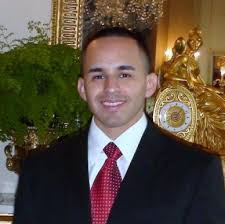
Frank Conway

Frank Conway is founder of Economic Rockstar and lecturer of economics, finance and statistics. Read More…

View My Blog Posts

Youtube Sub

Become a Patron of the Economic Rockstar Podcast

patreon

Ireland’s Economy by the Numbers

Leaving Cert Economics: Ireland’s Economy  Click here to download a workbook on Ireland’s Economy so that you can add your own notes. [Original size] Ireland’s Economy by fconway

Categories

Subscribe and Never Miss An Episode

itunes-logo

Recent Posts

  • Ireland’s Economy by the Numbers April 8, 2019
  • 174: Wendy Carlin on The Core Project, Capitalism, Democracy and Normative Statements February 13, 2019
  • 173: Stephen Wright on Core Econ as a Learning Resource for Mainstream Economics January 28, 2019
  • 172: Best of 2018 Part 2: From the Great Depression to Futurism; Institutions, Individualism, Cooperation and Reciprocity January 22, 2019
  • 171: Best of 2018 Part 1 January 3, 2019

Copyright © 2026 · Podcast Pro Theme on Genesis Framework · WordPress · Log in

This website uses cookies to improve your experience. We'll assume you're ok with this, but you can opt-out if you wish. Accept Reject Read More
Privacy Policy

Privacy Overview

This website uses cookies to improve your experience while you navigate through the website. Out of these, the cookies that are categorized as necessary are stored on your browser as they are essential for the working of basic functionalities of the website. We also use third-party cookies that help us analyze and understand how you use this website. These cookies will be stored in your browser only with your consent. You also have the option to opt-out of these cookies. But opting out of some of these cookies may affect your browsing experience.
Necessary
Always Enabled
Necessary cookies are absolutely essential for the website to function properly. This category only includes cookies that ensures basic functionalities and security features of the website. These cookies do not store any personal information.
Non-necessary
Any cookies that may not be particularly necessary for the website to function and is used specifically to collect user personal data via analytics, ads, other embedded contents are termed as non-necessary cookies. It is mandatory to procure user consent prior to running these cookies on your website.
SAVE & ACCEPT