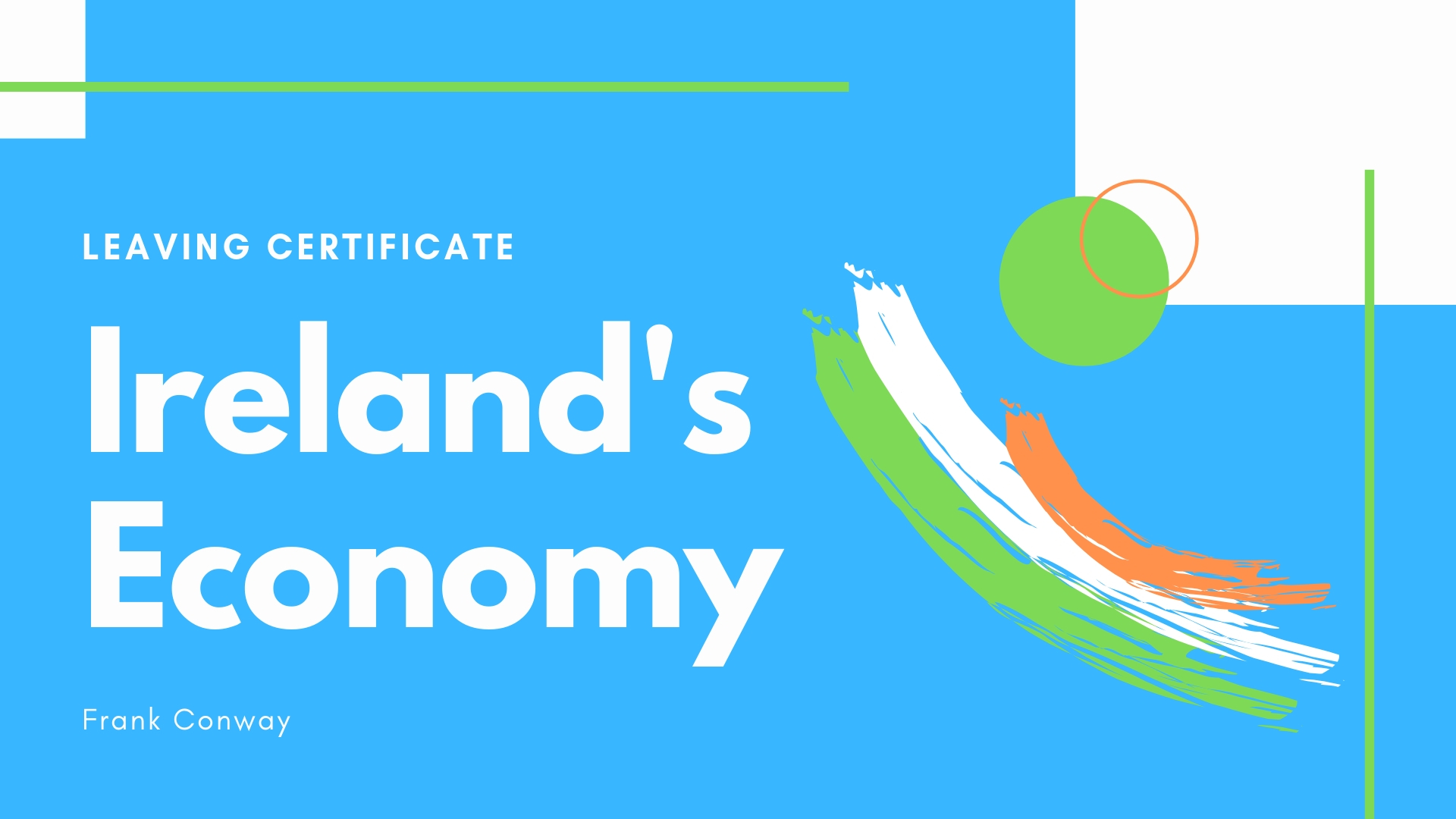
Leaving Cert Economics: Ireland’s Economy
Click here to download a workbook on Ireland’s Economy so that you can add your own notes.
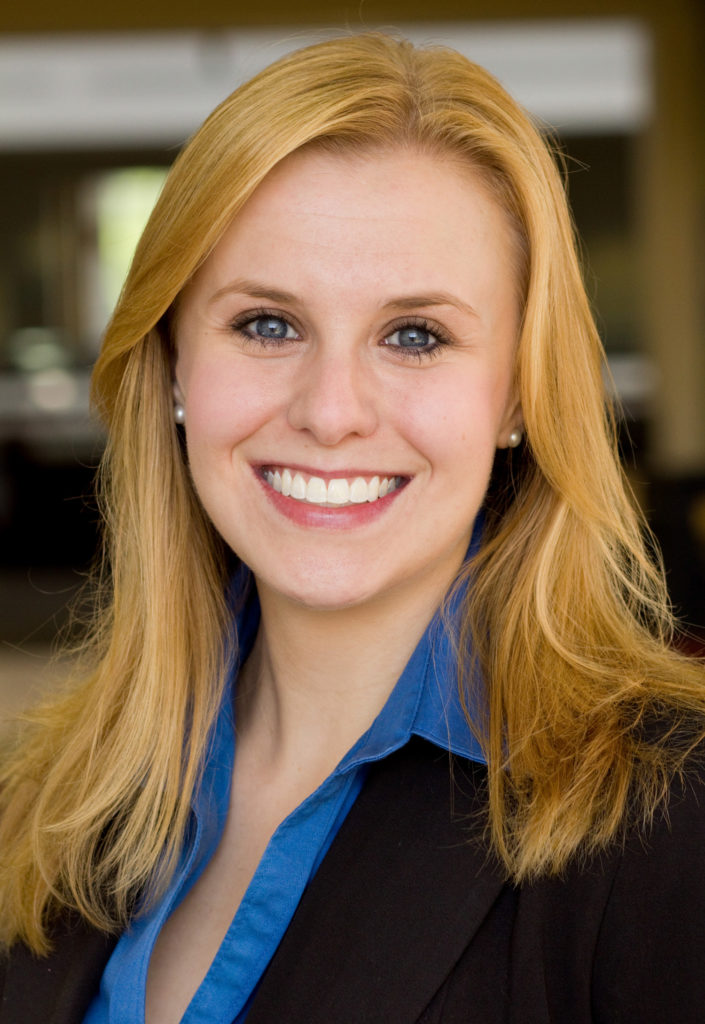
Abby Hall is an Assistant Professor in Economics at the University of Tampa in Tampa, Florida and a Research Fellow with the Independent Institute.
She earned her PhD in Economics from George Mason University in Fairfax, Virginia in 2015.
Her broader research interests include Austrian Economics, Political Economy and Public Choice, and Peace Economics, and Institutions and Economic Development.
Her work includes topics surrounding the U.S. military and national defense, including, domestic police militarization, arm sales, weapons as foreign aid, the cost of military mobilization, and the political economy of military technology.
She is currently researching how foreign intervention adversely impacts domestic political, social, and other institutions.
You can find Abby’s research, writings and other information on her website at www.abigailrhall.com.
In this episode Abby mentions: Chris Coyne, James Buchanan, Adam Smith, Ludwig von Mises, F.A. Hayek, Robert Higgs, Henry Hazlitt, David Skarbek, Stephanie Haeffele-Balch and Tom Duncan.


If you’re a fan of the podcast and would like to show your support in anyway, please check out my Patreon page at www.patreon.com/economicrockstar where you can sign up for any of the awards for as little as $1 a month or you can simply follow me on the Economic Rockstar Facebook page or on Twitter or simply recommend the show to a friend, especially if they have never had the opportunity to study economics.
Podcast: Play in new window | Download
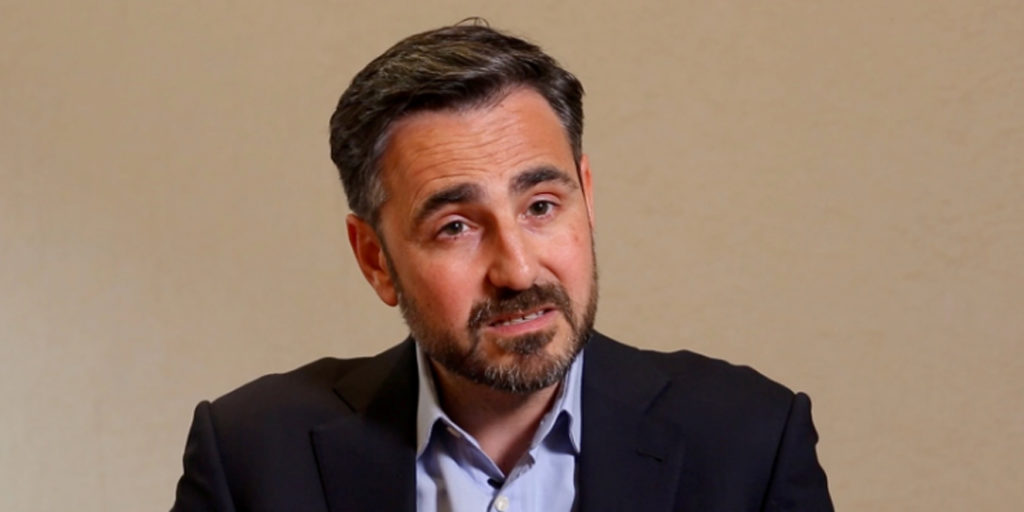
Eric Lonergan is a macro hedge fund manager, economist, and writer. His most recent book is Money published by Routledge. He has written for Foreign Affairs, The Financial Times, and The Economist. He also advises governments and policymakers. He first advocated expanding the tools of central banks to including cash transfers to households in the Financial Times in 2002. In December 2008, he advocated the policy as the most efficient way out of recession post-financial crisis, contributing to a growing debate over the need for ‘helicopter money’.
If you’re a fan of the podcast and would like to show your support in anyway, please check out my Patreon page at patreon.com/economicrockstar where you can sign up for any of the awards for as little as $1 a month or you can simply follow me on the Economic Rockstar Facebook page or on Twitter or simply recommend the show to a friend, especially if they have never had the opportunity to study economics.
Podcast: Play in new window | Download
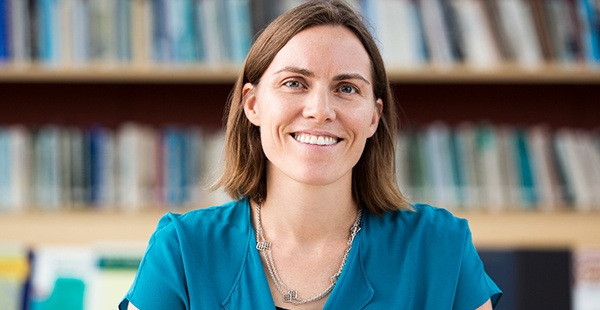
Emily Oster is Professor of Economics at Brown University. Before joining Brown University Professor Oster wasa faculty member of the University of Chicago, Booth School of Business following the completion of her PhD from Harvard. Emily’s research covers development economics, health economics and research design.
Professor Oster is the author of “Expecting Better: Why the Conventional Pregnancy Wisdom Is Wrong — and What You Really Need to Know”. Her book has over 600 customer reviews on Amazon and has over 4400 ratings on Goodreads. Emily has featured in SuperFreakonomics and her Ted talk ‘Flip your thinking on AIDs in Africa’, has almost 1 million views.
Diabetes and Diet: Purchasing Behavior Response to Health Information
American Economic Journal:Applied Economics, Forthcoming
Does Disease Cause Vaccination? Disease Outbreaks and Vaccination Response
Journal of Health Economics, Forthcoming
Witchcraft, Weather and Economic Growth in Renaissance Europe
Journal of Economic Perspectives, Winter 2004.
118: Zachary Feinstein on Systemic Risk and Economics in Star Wars and Harry Potter
114: Deirdre McCloskey on Equality and Greed and How To Be a Very Good Economist
022: Josh Angrist on Taking the Con Out of Econometrics – Kung Fu Style
The Time Ferriss Show: Gretchen Rubin — Experiments in Happiness and Creativity
Mostly Harmless Econometrics: An Empiricist’s Companion by Josh Angrist and Jörn-Steffen Pischke
Radical Markets: Uprooting Capitalism and Democracy for a Just Society by
The Book of Dust: La Belle Sauvage by Philip Pullman
Harry Potter Paperback Box Set (Books 1-7) by J. K. Rowling


If you’re a fan of the podcast and would like to show your support in anyway, please check out my Patreon page at patreon.com/economicrockstar where you can sign up for any of the awards for as little as $1 a month or you can simply follow me on the Economic Rockstar Facebook page or on Twitter or simply recommend the show to a friend, especially if they have never had the opportunity to study economics.
Podcast: Play in new window | Download
Dr. Emily Skarbek is a Lecturer in Political Economy at King’s College London.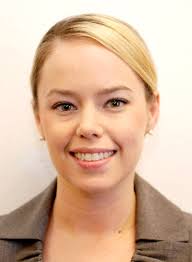
Emily’s research examines the role of voluntary associations in solving complex public goods problems after natural disasters.
Her empirical approach is three-pronged, drawing on archives, historical sources, and field-work following large-scale natural disasters.
In addition, Emily has a passion for the history of economic thought, which she believes can play a key role in advancing contemporary debates. She is particularly interested in the epistemic arguments of Friedrich Hayek.
In 2014, Emily was awarded the annual Gordon Tullock prize for best article published in Public Choice by a junior scholar. She is also a contributing author to several books including After Katrina: The Political Economy of Disaster and Community Rebound and Hayek and the Modern World.
Dr. Skarbek received her PhD in Economics from George Mason University and was previously an Assistant Professor at San Jose State University and a Fellow at the Center for History of Political Economy at Duke University.
Emily blogs at EconLog, one of the world’s leading economics blogs. For more on Dr. Skarbek, visit her website www.emilyskarbek.com or follow her on twitter @EmilySkarbek.
In this episode, Emily discusses and mentions: natural disasters, political incentives and the Samaritan’s Dilemma.
In this episode, Emily discusses and mentions: David Skarbek, Elinor Ostrom, Emily Chamlee-Wright, Virgil Storr, Adam Smith, David Ricardo, Karl Marx, John Stuart Mill, Alfred Marshall, John Maynard Keynes, Friedrich Hayek, William Easterly, Claudia Williamson, James Buchanan, Daniel Kahneman, Peter Leeson and Diane Coyle.
Website: www.emilyskarbek.com
Twitter: @EmilySkarbek


Podcast: Play in new window | Download
Phillip Pilkington works in investment and has contributed to numerous online and print media 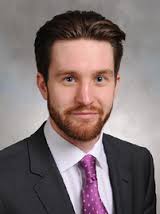 outlets as a freelance economic journalist.
Phillip ran a popular economics blog called www.fixingtheeconomists.wordpress.com and will be releasing his book The Reformation in Economics soon.
Phillip earned his B.A. in Journalism from the Independent Colleges, as well as his M.A. in Economics from Kingston University.
All views expressed by Phillip are his own and are not representative of the firm in which he works.
In this episode, Philip mentions: utility maximizing, behavioral bias, interest rates, time preference, savings, money, comparative advantage, decision making, consumption function, marginal propensity to consume and the multiplier.
In this episode, Philip mentions: Steve Keen, Paul Samuelson, Adam Smith, James Steuart, David Ricardo and G. L. S. Shackle.


Podcast: Play in new window | Download
Manu Saadia fell into science fiction and Star Trek fandom at the age of eight, back in Paris, France, where he was born and raised.
Manu studied history of science and economic history in Paris and Chicago. After many happy years in the Ivory Tower, he yielded to his childhood passion for the future.
Manu embarked on his continuing mission to explore strange new worlds by boldly going where many have gone before: Los Angeles, CA, where he advise and (occasionally) builds tech companies.
Manu received the 2005 Wayne C. Booth Graduate Student Prize for Excellence in Teaching at the University of Chicago.
His book, Trekonomics, is currently available for pre-order at www.inkshares.com and will be released in 2016.
Star Trek offers much more detail about its own world and the way its economics actually works – like the plumbing so to speak. So that’s what I wanted to do. Go into the plumbing of Star Trek. – Manu Saadia
In this interview, Manu mentions: trekonomics, crowd funding, labor, economic history, trade, robots, capitalism, comparative advantage, currency, money, Gold-Pressed Latinum, public goods, conspicuous consumption, scarcity, peak oil, productivity and opportunity costs.
In this interview, Manu mentions: Brad DeLong, Felix Salmon, Adam Smith, Thomas Malthus, Hubbert, Paul Ehrlich, Julian Simon, Romer, Larry Summers, John Maynard Keynes and Angus Deaton,
“It always baffles me when you have these very famous and serious economic thinkers were in fact total Star Trek nerds. I was on a panel at New York Comic Con with Brad DeLong, Paul Krugman and Annalen Newitz from i09. There was Chris Black as well and Felix Salmon.” – Manu Saadia
On Isaac Asimov: “All of his work is a long meditation on economics, either foundation where there is this science called psychohistory which is in fact a fictional mathematical modelling of human behaviours on the scale of societies on a galactic scale.” – Manu Saadia
“One of the reasons why I wanted to study economics was that I was fascinated by and really wanted to understand the transformation of humanity’s relation to its own labor. This is one of the great questions of political economy because it determines a lot of things when it comes to the shape society and the role of the state and how behaviors are determined and constructed over time. But it’s also the key to understanding where we’re going”. – Manu Saadia
“I would say the replicators are more of a metaphor. If you look at their status in the series, they do not help move the narratives forward. They’re just there to signify that there’s no need to work. They’re a little bit like robots in Asimov. They have the same narrative function, which is to show and demonstrate that post-scarcity does exist and is based on automation and artificial intelligence.” – Manu Saadia
Podcast: Play in new window | Download

Graphic Design and Illustration by Colm O’Connor www.colmoconnor.com
The Notorious Conor McGregor is one of Mixed Martial Arts (MMA) foremost fighters today. He has come from a life of obscurity to UFCs most feared and respected cage fighter today. What will McGregor do to take the UFC title from Jose Aldo? Is McGregor unstoppable? Will McGregor take down everyone in his path to this title? Is McGregor so focused on the prize that he cares less about how much damage he will do to others? Conor McGregor is Homo Economicus.
Economics is a social science and the Greek scholar Hesiod (700 – 650 BC) is considered to be first economist when he wrote about scarcity and resources: “…through work men grow rich in flocks and substance…” The term ‘Homo Economicus’ is the central theme to which the study of modern economics has evolved, and is considered to be first mentioned in the 19th Century works of J.S. Mills. Homo Economicus or Economic Man represents a rational person who aims to maximise their abilities in order to seek an optimal or best outcome. Such a rational person is considered self-interested and is destined to achieve their targeted aims irrespective of its undesirable effects on others.
So does McGregor fit Mills’ “arbitrary definition of man, as a being who inevitably does that by which he may obtain the greatest amount of necessaries, conveniences, and luxuries, with the smallest quantity of labour and physical self-denial with which they can be obtained”?
Is McGregor a rational, self-interested man with the sole determination of acquiring wealth or success without any heed for others and given the constraints that he faces? Yes! But only in the cage.
McGregor admits that money was never his objective when learning the art of fighting: “I’d rather be poor. I’d rather have no money and just be training than in a job I don’t love”. This attitude appears to defy the ideas behind Homo Economicus, but McGregor’s focus is in the octagon and not in the office. McGregor trains extremely hard, both physically and mentally, so that he is in the best shape possible for a fight. He’s aiming to maximise his strengths and abilities to win.
McGregor wants to make his riches doing what he is passionate about. “Competing is what I love to do and money is what I love to get”. He described his fight with Dennis Siver in Boston on January 18th, 2015 as “a keep fresh, get rich fight”.
Is he self-interested? When it comes to fighting, his focus is on winning. There is no room for cooperation and McGregor will achieve success irrespective of the undesirable effects on others.
I believe that we will both come forward. I will crack him one or two. He will panic, he might rush in, I will crack him again, and then the fight will be done. I don’t believe he has many shots left in him and I don’t think he can take many of my shots. I will hurt him in the first couple of exchanges and then I will begin to play, to experiment. I am going to come out of the gates, spinning, flying through the air, and I will crack him with something that will put him down, and I believe it will be a first round stoppage.
McGregor shows all the characteristics that underpins the concept and ideals of Economic Man – someone who will fulfil a desired outcome irrespective of the undesirable effects on others.
Frank Conway is the author of this post. To read other posts by Frank you can visit Economic Rockstar or listen to the podcast on iTunes.
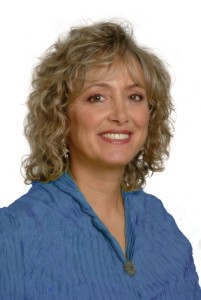 Shoshana Grossbard is Professor of Economics at San Diego State University and founding editor of the Review of Economics of the Household. Shoshana has been a fellow and visiting lecturer at numerous universities including Stanford, Columbia University, the University of Zaragoza, Spain, Tel Aviv and Bar Ilan University, as well as in Munich and Bonn, Germany.
Shoshana obtained her Phd from the University of Chicago where she developed an interest in the New Home Economics from its founders, the late Nobel Laureate Gary Becker and the late Jacob Mincer. The main focus of Shoshana’s research is household economics, family economics and the economics of marriage and, as a student, developed her first non-unitary model of household decision-making. Shoshana is actively promoting the establishment of household economics as a separate specialty in economics. She is one of the first social scientists to have analyzed consequences of gender imbalance in the sex ratio for intra-household distribution, labor supply, fertility and cohabitation. The economics and social impact of polygamy is also a research interest.
Shoshana has published 5 books and more than 50 articles on the determinants of marriage, consumption and labor supply and on the law and economics of household decisions. She is fluent in English, French, Hebrew, Spanish, and Dutch and has presented her work at many universities in more than 13 countries.
In this interview, Shoshana mentions and discusses: household economics, family economics, economics of the household, household decision-making, sex-ratios, the economic and social impact of polygamy, determinants of marriage, opportunity cost, consumption and labor supply, immigration, population, marriage, price discrimination, government intervention and elasticity.
In this interview, Shoshana mentions: New Home Economics, Gary Becker, Jacob Mincer, Adam Smith, Arleen Leibowitz, Linda Edwards, Andrea Beller, Elizabeth Landes, Catalina Amuedo-Dorantes and Sankar Mukhopadhyay.
Shoshana is defined by the feminist movement of the 1960s/1970s in her early student days and her mother’s dislike of being a housewife.
I’ve remained a feminist for the rest of my life. It was always very clear to me that I was going to have a career in addition to having a family.
Hard work. I work very long hours, I work very hard and I’m very motivated to be successful. There’s no other way.
It’s very important to have a critical eye. Whatever you read you have to realise that most research, including research by economists is biased by the point of view of the writer and they have an axe to grind typically. You have to try to figure out what’s the axe they’re grinding before you read it.
When Gary Becker and Jacob Mincer started New Home Economics, it was mostly their initiative but it was the students at the University of Columbia at that time who participated in the labor workshops that were very instrumental in promoting and developing it.
There were a high proportion of women who attended the workshop including Arleen Leibowitz and Linda Edwards and, later on, Andrea Beller and Elizabeth Landes.
It is wrong to view New Home Economics as ideologically motivated to maintain old-fashioned gender roles.
One of the major ideas of the New Home Economics is to consider households like firms where there is household production and to analyse them with the same tools economists analyse business firms.
So basically, households are non-profit firms but there are many small non-profit firms in the economy that are considered part of the economy that are counted in GNP. But the most prevalent non-profit firm, the household, is not counted in the GNP.
Jacob Mincer and Gary Becker were not concerned about what was counted in GNP but they were more micro-economists. So they wanted to use all the tool available from price theory and apply them to the analysis of what households do:
Shoshana‘s approach to the study of polygamy took account of the point of view of women whereas Gary Becker considered variables such as how men’s incomes determined the number of wives he would have.
Shoshana challenged Gary stating that it’s not just about men’s income but it’s also a matter of women’s education, the age of the women, the fertility of the women and the resources that they have because they can bargain with the men about what they’re willing to do.
Shoshana continued to work on economic development issues because polygamy is practiced mostly in less-developed countries where she examined data in Nigeria and then the study of consensual marriages in Guatemala.
Jacob Mincer advised Shoshana, when she was seeking a job, to do more mainstream economics rather than the exotic research mentioned above which may not be of interest to economists in general. That is when she switched to the study of labor force participation and developed a theory of allocation of time in markets for labor and marriage.
There is a major difference between the model developed by Grossbard and that developed by Becker and Mincer. When Becker and Mincer talk of household production, they refer to households as a unit or as an entity making decisions. However, in Grossbard’s model it is the individuals making decisions.
The fundamental question of New Household Economics: Is there an opportunity cost to marriage and what is the implication on labor force participation as a result of marriage?
Individuals, from an early age, have a concept and vision of how they want to live their lives.
Work in Household (WiHo) represents the willingness to work in a household to, say, raise children.
“We should all be conscious that sometimes there is exploitation of the consumer and if you don’t like the subliminal advertising that companies use to make you buy perfume or aftershave well then just don’t buy it.”
Dry cleaners charge more for women’s blouses than for men’s shirts, despite them being the same product, with perhaps the main difference being that the buttons on a blouse are typically located on one side of a blouse to that of a man’s shirt.
Dry cleaners are aware that the price elasticity of demand for a woman needing dry cleaning is less than that of a man, meaning that there is more of a need for women to use the dry cleaning services and would, hence pay more as no-one else would do it for them.
On the other hand, the elasticity of demand is more for men, meaning that dry cleaners may charge less for the same service so as to encourage men to dry clean.
Shoshana states that the reason for this gender price differential by dry cleaners is that the majority of men would not go to a dry cleaners as they have a wife, girlfriend or mother who would take on the task of cleaning their clothes. The WiHo or Work in Household is higher for these women as they have, in the majority of cases, taken on the responsibility of running the household chores.
The women who arrive at a dry cleaners are those who have a low WiHo perhaps due to a working career or an unwillingness to take on the responsibility of such chores or even due to the lack of people willing to do the work, such as a spouse.
Adam Smith stated: “It is not from the benevolence of the butcher, the brewer or the baker that we expect our dinner but from the regard of their own interest”.
If we view all participants in a household as economic agents who have a certain degree of self-interest, should we trust our spouse?
The statement by Adam Smith is about the functioning of the market and how the competition among the bakers and the other professionals brings down the prices and eventually the consumer benefits.
The problem with household production, which is a non-profit firm, is that most of what is produced at home is not going to be sold in the market, principally the children, the beauty of the home, the harmony in the home. These are products that are being consumed by the producers themselves or by the people who pay for the WiHo. In this case, the market system doesn’t work.
The benevolence of the spouse is a very important element. Adam Smith also had a Theory of Moral Sentiments and in the framework of the household, altruism matters. So, benevolence and altruism matters.
Podcast: Play in new window | Download
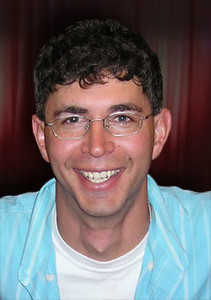 Yoram Bauman is considered the world’s first and only stand-up economist and uses cartoons to explain economic concepts and theories. He has a PhD from the University of Washington and a BA in Mathematics from Reed College. Yoram lectured environmental and health economics at both Whitman College and University of Washington and was a visiting research scholar at the University of International Business and Economics in Beijing. Yoram has swapped the lecture hall for the comedy club and is on a mission to spread joy to the world and to reform economics education. Every year Yoram organizes the Humor Session at the American Economic Association annual meeting.
Yoram is an advocate for carbon pricing and other economic approaches to protecting the environment. Yoram has written extensively on these issues but has also published numerous micro and macro books with comedy and entertainment as its central theme. They include The Cartoon Introduction to Economics, The Cartoon Introduction to Climate Change and Stand-Up Economics: The Micro Textbook. Some of these books have been translated into over 10 languages.
In this interview, Yoram mentions and discusses: adverse selection, portfolio selection theory, the invisible hand, environmental economics, environmental taxes, market power, monopoly, corruption, opportunity cost, free market, revenue-neutral carbon taxes, consumption tax, tragedy of the commons, externalities, correlation, hyperinflation, population growth, economic growth, monetary base and rational expectations.
In this interview, Yoram mentions: George Akerlof, James Tobin, Adam Smith, Gregory Mankiw and Paul Krugman.
“I went to graduate school to work on environmental taxes and to make them a reality, so being an academic was one path to doing that. When I was in graduate school I wrote a parody of an economics textbook by Greg Mankiw just to blow off steam. It ended up getting published in a science humor journal called The Annals of Improbable Research and they run a humor session each year at the AAAS meeting. They invited me to come and I had so much fun that I got into stand-up comedy as a hobby.”
“My academic career wasn’t going as well as I hoped.”
“I’m the world’s first and only, so I have market power. Fortunately, I know a thing or two about monopoly pricing.” – Yoram Bauman
Yoram has over 1.7 million YouTube views – ‘That’s a lot for economics jokes’ – Yoram Bauman
“I’ve done my fair share of ‘bombing’. Hopefully you learn from it, you grow from it and you also realise that it’s not the end of the world and that you wake up the next morning and the sun still rises and you try again.”– Yoram Bauman
“The level of vitriol in macro economics makes it especially appealing as a target. Micro economists disagree about little things, but on the big things they are all pretty much on the same page. But macro economists are really all over the map and so that opens up some opportunities for comedy.”

Podcast: Play in new window | Download