• ABOUT
  • RESOURCES
  • PODCAST
  • BOOKS
  • BLOG
  • SUPPORTERS
  • QFA Financial Advice
  • CONTACT

Economic Rockstar

Connecting Brilliant Minds in Economics and Finance

102: Matías Vernengo on John Maynard Keynes and the Evolution of Keynesian Economic Thinking

September 8, 2016 by Frank

http://traffic.libsyn.com/economicrockstar/102_Matias_Vernango_Final.mp3
Play in New WindowDownload

102: Matías Vernengo on John Maynard Keynes and the Evolution of Keynesian Economic Thinking

Matías Vernengo is Professor of Economics at Bucknell University, Pennsylvania, USA.matias-vernengo-economic-rockstar
Dr. Vernengo is co-author of ‘Conta de Juros Grande & Favela’ and has also edited four books including ‘Banking, Monetary Policy and the Political Economy of Financial Regulation – Essays in the Tradition of Jane D’Arista’.

He has published over fifty academic and popular articles, and contributes to the blogs Naked Keynesianism and Triple Crisis. He is also the co-editor of the Review of Keynesian Economics (ROKE).

Matías’ methodological view emphasizes the importance of the history of ideas for the development of economic theory, and is based on the surplus approach of the classical political economy authors and Marx and the heterodox followers of Keynes.

Dr. Vernengo has written on the effects of external liberalization in Latin America and alternatives to the Washington Consensus, on the international role of the dollar, on current monetary and fiscal policy, on macroeconomic policy during the 1930s and on the history of economic ideas.

Economics:

In this episode, Matías discusses and mentions: Keynesian economics, neo-Keynesianism, Animal Spirits, monetarists, uncertainty, rational expectations, wages, GDP< consumption, multiplier, 

Economists:

In this episode, Matías discusses and mentions: John Maynard Keynes, Joan Robinson, Karl Marx, Ricardo, Frank Knight, Joseph Schumpeter, Milton Friedman, Robert Lucas, Alvin Hansen, Robert Solow, James Tobin, Paul Samuelson, George Akerlof, Robert Shiller, Larry Summers, Alan Blinder, Ben Bernanke, Christina Romer and Janet Yellen.

Professor Matías Vernengo’s Writing Tips:

  1. Think of your audience and write for them.
  2. Present at conferences and get great feedback. It also gets your work out there.
  3. Plan carefully. Write your paper so that it is a good fit to each journal that you’re sending it to.

Where to Find Matías:

  • Website: Naked Keynesiansim
  • Website: Triple Crisis
  • Twitter: @nakedkeynes

Essay:

The Economic Consequences of Mr. Churchill by J. M. Keynes

Books:

  • The Cambridge Colloquium, 1916: Part 2, Analysis Situs by O. Veblen
  • Can Lloyd George Do It? An Examination of the Liberal Pledge by J.M. Keynes and H. D. Henderson
  • The General Theory of Employment, Interest, and Money by J. M. Keynes
  • A Treatise on Probability by J. M. Keynes
  • The Great Transformation: The Political and Economic Origins of Our Time by K. Polanyi
  • The American Economy by W. Greason, W. Gorman and M. Ziobro
  • Production of Commodities by Means of Commodities : Prelude to a Critique of Economic Theory by P. Sraffa
  • Animal Spirits: How Human Psychology Drives the Economy, and Why It Matters for Global Capitalism by G. Akerlof and R. Shiller
  • Phishing For Fools: The Economics of Manipulation and Deception by G. Akerlof and R. Shiller


http://traffic.libsyn.com/economicrockstar/102_Matias_Vernango_Final.mp3

Podcast: Play in new window | Download

  • facebook
  • linkedin
  • twitter
  • google+
  • pinterest

101: Chris Coyne on the Opportunity Cost to War, Exporting Democracy and the Nirvana Fallacy

September 1, 2016 by Frank

http://traffic.libsyn.com/economicrockstar/101_Chris_Coyne_Final.mp3
Play in New WindowDownload

101: Chris Coyne on the Opportunity Cost of War, Exporting Democracy and the Nirvana Fallacy

Christopher Coyne is an Associate Professor of Economics at George Mason University and the AssociateChris Coyne Economic Rockstar Director of the F. A. Hayek Program for Advanced Study in Philosophy, Politics, and Economics at the Mercatus Center.

He also serves as Director of Graduate Studies for the Department of Economics.

Professor Coyne serves as the Co-Editor of The Review of Austrian Economics, the Co-Editor of The Independent Review, the Co-Editor of Advances in Austrian Economics, and the Book Review Editor of Public Choice.

Chris has authored numerous academic articles, book chapters, and policy studies and his research interests include political economy and military intervention.

Professor Coyne is the author or co-author of numerous books including Future: Economic Peril or Prosperity? and After War: The Political Economy of Exporting Democracy.

He is also the co-editor of The Oxford Handbook of Austrian Economics and The Handbook on the Political Economy of War.

In 2016 Chris was selected as a recipient of George Mason University’s University Teaching Excellence Award.

His work can be found at www.ccoyne.com

Economics:

In this episode, Chris discusses and mentions: economics of war, the Nirvana Fallacy, incentives, knowledge constraints, unintended consequences, the Capitalist-Peace hypothesis, dependency effects, public goods, praxeology, prohibition and society.

Economists:

In this episode, Chris discusses and mentions: Ludwig von Mises, F. A. Hayek, Robert Higgs, Mike Munger, Peter Leeson, Rachel Coyne, James Buchanan, Gordon Tullock, Claude-Frédéric Bastiat and Henry Hazlitt.

Professor Coyne’s Daily Routine:

  • Everyday is the same. I wake up every morning between 5 and 6 am and work out in the garage for 1 to 2 hours. Then I eat breakfast and get to work.
  • I work in chunks – anywhere from 1 to 3 hours and I take little breaks in between.
  • When I find myself losing focus, I do little things like getting a cup of coffee or do a chore around the house or going outside for a few minutes. It resets my mind.
  • I’ll work from 8 or 9 am to lunch. I get lunch, maybe work a little more and then I shift more into administrative mode. It requires a different brain power than reading and writing.

Links:

  • Polity IV Index

Recommended Books:

Human Action by Mises: “That is an excellent book in terms of a systematic treatise on economics.” – Chris Coyne.

Crisis and Leviathan: Critical Episodes in the Growth of American Government by Robert Higgs: “It’s a wonderful treatment of how government grows through the onset of crises. He’s focused mainly on the United States. He talks about the evolution of the US government and he highlights these punctuated points of crises where government grew. Of course World War 2 and the Great Depression being among the main ones that he highlights. It’s excellent both for the history but also for the framework he lays out – called the ‘Ratchet Effect’ (how the government ratchets up in size. It’s a wonderful book that I highly recommend.” – Chris Coyne.

Papers Mentioned in the Episode:

  • Coyne, C. and Hall. A. (2014). The Political Economy of Drones, Defence and Peace Economics, 25(5): 445-460.
  • Coyne, C., Boettke, P. and Leeson, P. (2014). Earw(h)ig: I Can’t Hear You Because Your Ideas are Old, Cambridge Journal of Economics, 38(3): 531-544.
  • Coyne, C. and Coyne, R. (2014). The Identity Economics of Female Genital Mutilation,” Journal of Developing Areas, 48(2): 137-152.
  • Coyne, C., Boettke, P. and Hall, A. (2013). Keep Off the Grass: The Economics of Prohibition and U.S. Drug Policy, Oregon Law Review, 91(4): 1069-1096.
  • Coyne, C. and Leeson,P. (2012). Sassywood, Journal of Comparative Economics, 40(4): 608-620. 

Where to Find Professor Coyne:

  • Website: www.coyne.com
  • Twitter: @ccoyne1

Books:

  • Human Action by Ludwig von Mises
  • Crisis and Leviathan: Critical Episodes in the Growth of American Government by Robert Higgs
  • Future: Economic Peril or Prosperity? by Chris Coyne
  • Flaws and Ceilings: Price Controls and the Damage They Cause by Chris Coyne
  • Doing Bad by Doing Good: Why Humanitarian Action Fails by Chris Coyne
  • Media, Development and Institutional Change by Chris Coyne
  • After War: The Political Economy of Exporting Democracy by Chris Coyne
  • The Oxford Handbook of Austrian Economics
  • The Handbook on the Political Economy of War.
http://traffic.libsyn.com/economicrockstar/101_Chris_Coyne_Final.mp3

Podcast: Play in new window | Download
  • facebook
  • linkedin
  • twitter
  • google+
  • pinterest

100: Emily Skarbek on the Economics of Natural Disasters and the Samaritan’s Dilemma

August 25, 2016 by Frank

http://traffic.libsyn.com/economicrockstar/100_Emily_Skarbek_Final.mp3
Play in New WindowDownload

100: Emily Skarbek on  the Economics of Natural Disasters and the Samaritan’s Dilemma

Dr. Emily Skarbek is a Lecturer in Political Economy at King’s College London.Emily Skarbek Economic Rockstar

Emily’s research examines the role of voluntary associations in solving complex public goods problems after natural disasters.

Her empirical approach is three-pronged, drawing on archives, historical sources, and field-work following large-scale natural disasters.

In addition, Emily has a passion for the history of economic thought, which she believes can play a key role in advancing contemporary debates. She is particularly interested in the epistemic arguments of Friedrich Hayek.

In 2014, Emily was awarded the annual Gordon Tullock prize for best article published in Public Choice by a junior scholar. She is also a contributing author to several books including After Katrina: The Political Economy of Disaster and Community Rebound and Hayek and the Modern World.

Dr. Skarbek received her PhD in Economics from George Mason University and was previously an Assistant Professor at San Jose State University and a Fellow at the Center for History of Political Economy at Duke University.

Emily blogs at EconLog, one of the world’s leading economics blogs. For more on Dr. Skarbek, visit her website www.emilyskarbek.com or follow her on twitter @EmilySkarbek.

Economics:

In this episode, Emily discusses and mentions: natural disasters, political incentives and the Samaritan’s Dilemma.

Economists:

In this episode, Emily discusses and mentions: David Skarbek, Elinor Ostrom, Emily Chamlee-Wright, Virgil Storr, Adam Smith, David Ricardo, Karl Marx, John Stuart Mill, Alfred Marshall, John Maynard Keynes, Friedrich Hayek, William Easterly, Claudia Williamson, James Buchanan, Daniel Kahneman, Peter Leeson and Diane Coyle.

Dr. Emily Skarbek’s Tips on Writing:

  1. Write about what you are passionate about.
  2. Ask interesting questions.
  3. Get feedback and be open to the harshest critics or actively seek criticism.

Festival:

  • Festival of Economics 2016: Bristol Festival of Ideas

Papers:

  • Skarbek, E. (2016). Aid, Ethics, and the Samaritan’s Dilemma: Strategic Courage in Constitutional Entrepreneurship, Journal of Institutional Economics 12(2): 371-393.
  • Skarbek, E. (2014). The Chicago Fire of 1871: A Bottom Up Approach to Disaster Relief, Public Choice  160(1): 155-180.
  • Skarbek, E. (2010). Coordinating the Reconstruction of Haiti, Journal of International Peace Operations 6(2) 2010: 25-27.
  • Easterly, W. & Williamson, C. R. (2011). Rhetoric versus Reality: The Best and Worst of Aid Agency Practices, World Development Vol. 39, No. 11, pp. 1930–1949.

Where to Find Emily Skarbek:

Website: www.emilyskarbek.com

Twitter: @EmilySkarbek

Books:

  • The political economy of Hurricane Katrina and community rebound by Emily Chamlee-Wright and Virgil Henry Storr (Eds.).
  • Community Revival in the Wake of Disaster: Lessons in Local Entrepreneurship (Perspectives from Social Economics) by Virgil Henry Storr, Stefanie Haeffele-Balch, Laura E. Grube

  • The Fable of the Bees by Bernard Mandeville
  • Human Action by Ludwig von Mises
  • Individualsim and Economic Order by F. A. Hayek
http://traffic.libsyn.com/economicrockstar/100_Emily_Skarbek_Final.mp3

Podcast: Play in new window | Download

  • facebook
  • linkedin
  • twitter
  • google+
  • pinterest

099: Rodney Fort on Sport Economics, Big Data in Baseball and the Value of Hosting an Olympic Games

August 18, 2016 by Frank

http://traffic.libsyn.com/economicrockstar/099_Rodney_Fort_Final.mp3
Play in New WindowDownload

099: Rodney Fort on Sport Economics, Big Data in Baseball and the Value of Hosting an Olympic Games

Rodney Fort is Professor of Sport Management at the University of Michigan after spending 23 years in an economics Rodney Fort Economic Rockstardepartment at various universities.

Professor Fort teaches Sports Economics and Research Methods for Sport Management and research interests include sport economics, regulation and microeconomics.

Rodney is a recognized authority on sports economics and business, both in the U.S. and internationally. 

He has written 7 books including the best seller Sports Economics, 63 refereed journal articles, and 56 other publications that cover sports topics as diverse as cross-subsidies in U.S. sports leagues to comparative analysis of North American and world sports leagues.

Rodney also serves on the editorial boards of the Journal of Sports Economics, the International Journal of Sport Finance, and Managerial and Decision Economics.  He also currently serves as a vice-president of the International Association of Sports Economists.

Rodney’s work includes being a sports economics consultant, writes for numerous blogs including his own rodsportseconomics and holds the most complete data on the economics and business of U.S. pro sports leagues in existence at Sports Business Data Pages.

Resources:

  • Patricia’s Various Basketball Stuff
  • USA Today
  • Baseball Prospectus
  • Baseball Reference

Links:

  • http://rodsportseconomics.blogspot.ie/
  • Rodney Fort’s Sports Business Data
  • Scully, G. (1974). Pay and Performance in Major League Baseball. American Economic Review. Vol. 64, No. 6 (Dec.), pp. 915-930.

Where to Find Professor Fort

  • Twitter: @RodneyFort
  • Website: Rod Sports Economics

Books

  • The Hustler’s Handbook by Bill Veeck
  • The Lords of the Realm by John Helyar
  • The Sports Business in the Pacific Rim by Young Hoon Lee and Rodney Fort.
  • 15 Sports Myths and Why They’re Wrong by Rodney Fort and Jason Winfree.
  •  Sports Economics by  Rodney Fort.
  • International Sports Economics Comparisons by Rodney Fort and John Fizel (eds.).
  • Economics of College Sports by John Fizel and Rodney Fort (eds.).
  • Hardball: The Abuse of Power in Pro Team Sports by James Quirk and Rodney Fort.
  • Pay Dirt: The Business of Professional Team Sports by James Quirk and Rodney Fort.
http://traffic.libsyn.com/economicrockstar/099_Rodney_Fort_Final.mp3

Podcast: Play in new window | Download

  • facebook
  • linkedin
  • twitter
  • google+
  • pinterest

098: Kirk Du Plessis on Options Trading and Creating on Online Teaching and Trading Platform

August 11, 2016 by Frank

http://traffic.libsyn.com/economicrockstar/098_Kirk_Du_Plessis_Final.mp3
Play in New WindowDownload

098: Kirk Du Plessis on Options Trading and Creating on Online Teaching and Trading Platform

Kirk Du Plessis is a full-time options trader, real estate investor, stay-at-home Dad and personal trading coach.Kirk Du Plessis Economic Rockstar

His background and experience includes time on Wall Street as an investment banker, a senior stock analyst and a senior loan officer.

Kirk is the Founder and Fund Manager at Option Alpha, an online education and training platform for options traders with students from 42 different countries around the world.

You can grab his completely FREE 12-Part Video Training Course which will help you discover how to trade options for consistent monthly income over at optionalpha.com.

Kirk was recently featured in Barron’s Magazine as a contributor to their Annual Broker’s Review.

Kirk’s podcast, The Option Alpha Podcast, features great tips, advice and explanations on all things options trading.

In this Episode, Kirk mentions and discusses:

options, options trading,derivatives, calls, puts, bull call spreads, straddles, stock market, efficient market hypothesis, technical analysis, wasting asset, time decay, turtle traders, delta, survivorship bias, discipline, arbitrage, black swan and leverage.

Podcasts:

  • The Option Alpha Podcast
  • SPI 175: The 8-Year Hobby Blog That Quickly Transformed into a 6-Figure Per Month Business with Kirk Du Plessis
  • EonFire 1092: Learn how to trade options from home with Kirk Du Plessis

Links:

  • Turtle Trader


http://traffic.libsyn.com/economicrockstar/098_Kirk_Du_Plessis_Final.mp3

Podcast: Play in new window | Download

  • facebook
  • linkedin
  • twitter
  • google+
  • pinterest

097: Peita Diamantidis on Being a Finance Action Hero and Gamifying How You Manage Your Finances

August 4, 2016 by Frank

http://traffic.libsyn.com/economicrockstar/097_Peita_Diamantidis_Final.mp3
Play in New WindowDownload

097: Peita Diamantidis on Being a Finance Action Hero and Gamifying How You Manage Your Finances

Peita

Peita Diamantidis is an Author, Financial Adviser and Financial Literacy Advocate.

She combines maths and finance with a passion for communicating leading her on a mission to empower the public to take charge of their finances.

Her easy to understand financial explanations ensure her clients have the tools and information they need to make key financial decisions.

With a background in Actuarial Studies and economics, Peita delivers a deep understanding of the fundamentals of money and finance through the companies that she co-founded: Zaptitude, DeltaPlan Financial Services and Caboodle Financial Services.

With a quirky sense of humour and a deep and abiding love of movies, Peita is in the unique position of being able to use humour and storytelling to communicate the best way to approach an individual’s finances.

Peita is author of Finance Action Hero.

Companies Co-Founded by Peita:

  • Zaptitude.me
  • DeltaPlan Financial Services
  • Caboodle Financial Services

Where to Find Peita:

  • Instagram: @peitamd
  • Twitter: @peitamd
  • Facebook: zaptitudeme

Books:

  • Finance Action Hero by Peita Diamantidis
  • The One Page Financial Plan:  A Simple Way to Be Smart About Your Money by Carl Richards


http://traffic.libsyn.com/economicrockstar/097_Peita_Diamantidis_Final.mp3

Podcast: Play in new window | Download

  • facebook
  • linkedin
  • twitter
  • google+
  • pinterest

096: Cameron Murray on the Robinson Crusoe Economy and Blogging toward your PhD

July 27, 2016 by Frank

http://traffic.libsyn.com/economicrockstar/096_Cameron_Murray_.mp3
Play in New WindowDownload

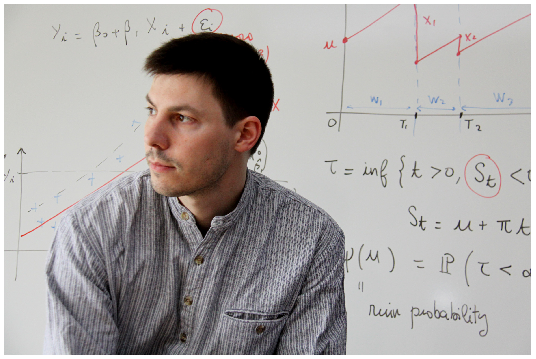
Episode 096Dr Cameron K. Murray  is an economist with a passion for improving society. Cameron writes under the Cameron Murray Economic Rockstarpseudonym Rumplestatskin. 

Cameron has a broad range of interests and a diverse background in property development, environmental economics research and economic regulation. 

In his writings, Cameron aims to bring reliable insights from the academic and technical literature into the mainstream economic debate.

Cameron thinks that economics could be much better than it is, which is why he often write about very fine technical points of economic theory, and the nature of the profession.

Dr Murray specialises in property markets, environmental economics and corruption.

Cameron maintains an internationally renowned personal blog called Fresh Economic Thinking and also writes for MacroBusiness, IDEA economics and Evonomics.

He recently completed a PhD at the University of Queensland on the economics of corruption.

Economics: 

In this episode, Cameron mentions: comparative advantage, property rights and trade.

Economists:

In this episode, Cameron mentions: Steve Keen, Ronald Coase, William Baumal, Alan Blinder and Stanley Jevons.

Links:

  • Fresh Economic Thinking
  • MacroBusiness
  • IDEA economics
  • Evonomics
  • Smart Passive Income with Pat Flynn
  • Green Exam Academy by Pat Flynn
  • Cowspiracy
  • Babysitting the Economy – Slate
  • Robinson Crusoe’s real economic choices

Where to Find Cameron:

  • Website: Fresh Economic Thinking
  • Twitter: @Rumplestatskin
  • Image courtesy of Rose Dlhopolsky

Books:

  • Debunking Economics by Steve Keen
  • Ultrasociety: How 10,000 Years of War Made Humans the Greatest Cooperators on Earth by Peter Turchin
http://traffic.libsyn.com/economicrockstar/096_Cameron_Murray_.mp3

Podcast: Play in new window | Download

  • facebook
  • linkedin
  • twitter
  • google+
  • pinterest

095: Scott Burns on Mobile Money Banking in Africa and the Success of M-Pesa

July 20, 2016 by Frank

http://traffic.libsyn.com/economicrockstar/095_Scott_Burns_Final.mp3
Play in New WindowDownload

095: Scott Burns on Mobile Money Banking in Africa and the Success of M-Pesa

Scott Burns is a Mercatus PhD Dissertation Fellow in the Economics PhD Program at George Mason Scott Burns Economic RockstarUniversity.

Scott earned his BS in Economics from Louisiana State University where he was part of the Speech and Debate Club and the Phi Eta Sigma Honors Society.

His current publications include The War on Drugs in Afghanistan: Another Failed Experiment in Interdiction and Old (Chicago) school, new century: the link between Knight and Simons’ Chicago plan to Buchanan’s constitutional money.

Scott’s PhD dissertation topic has to do with one of the most exciting yet under-appreciated miracles of the market going on in the world today, the “mobile money revolution” in Sub-Saharan Africa.

Scott writes for the blog Alt-M, which is a blog run by free banking scholars on the theme ‘Ideas for an Alternative Monetary Future’.

Scott, along with fellow Econ PhD student at GMU, David Lucas, started a band inspired by Adam Smith called ‘The Butcher and the Baker’.

Economics:

In this episode, Scott mentions: banking, monopolies, natural monopoly, market failure, savings, investment, development economics, finance, GDP, laissez-faire, mobile money, unintended consequences, bitcoins and hyper-inflation.

Economists:

In this episode, Scott mentions: Adam Smith, Ludwig von Mises, F. A. Hayek, Joseph Schumpeter, Scott Sumner, David Beckworth, Lawrence H. White and George A. Selgin,

Links:

  • Finance for All: Kenya’s M-PESA
  • Alt-M
  • Top 12 Economics Books as Recommended by Economic Rockstar Guests
  • Monetary Workshop at Cato Institute

Papers:

  • Coyne, C., Hall-Blanco , A. and Burns, S. (2016). The War on Drugs in Afghanistan: Another Failed Experiment with Interdiction. The Independent Review.
  • Burns, S. (2016). Old (Chicago) school, new century: the link between Knight and Simons’ Chicago plan to Buchanan’s constitutional money. Constitutional Political Economy.

Articles:

  • Burns, S. (2016). The Road Less Traveled: Austrian Macro, Monetary Disequilibrium Theory, and Free Banking. Research on the History of Economic Thought and Methodology, Volume 348: pp 337 – 363.
  • Burns, S. and Michel, N. J. (2016). Choosing Your Own Money Central to Economic Freedom. Cayman Financial Review, Issue 42.

Books:

  • Economics in One Lesson by Henry Hazlitt
  • The Law by Frederic Bastiat
  • Human Action by Ludwig von Mises
  • Free Banking in Britain: Theory, Experience and Debate 1800-1845 by Lawrence H. White
  • The Theory of Free Banking by George A. Selgin


Companies Mentioned in this Episode:

  • Uber, Airbnb, Amazon and Safaricom.
http://traffic.libsyn.com/economicrockstar/095_Scott_Burns_Final.mp3

Podcast: Play in new window | Download

  • facebook
  • linkedin
  • twitter
  • google+
  • pinterest

094: Daniel Crosby on Stock Market Investment Errors and the Price Earnings Ratio

July 14, 2016 by Frank

http://traffic.libsyn.com/economicrockstar/094_Daniel_Crosby_Final.mp3
Play in New WindowDownload

094: Daniel Crosby on Stock Market Investment Errors and the Price Earnings Ratio

Dr. Daniel Crosby is a psychologist, behavioral finance expert and asset manager who daniel crosby economic rockstarapplies his study of market psychology to everything from financial product design to security selection. 

Daniel is author of 2 books – The Laws of Wealth: Psychology and the secret to investing success and You’re not that Great. He is co-author of the New York Times bestseller Personal Benchmark: Integrating Behavioral Finance and Investment Management.

Dr. Crosby is founder of Nocturne Capital. His ideas have appeared in the Huffington Post and Risk Management Magazine, as well as his monthly columns for WealthManagement.com and Investment News.

Daniel was named one of the “12 Thinkers to Watch” by Monster.com, a “Financial Blogger You Should Be Reading” by AARP and in the “Top 40 Under 40” by Investment News.

Daniel was educated at Brigham Young and Emory Universities.

Economics:

Volatility, stock markets, behavioral finance, investments, human error, behavioral bias, money, confirmation bias, loss aversion, price earnings ratio, CAPE, Quantitative Easing and central banks.

Economists:

Benjamin Graham, Christopher Geczy, Jeremy Siegel, Robert Shiller and John Paulson.

We lose 13% of our IQ when we are under stress, so even if you know all of these great lessons about the way the markets work, you tend to have least access to them when you need those lessons the most. – Daniel Crosby

5 consistent factors that underlie the 100 ways that we can make mistakes:

1. Ego – The belief that we are special or different.

2. Emotion – Allowing our feelings to drive our perception of risk.

When we’re in a good mood, the world seems to be a safe place to be. Equity markets seem to be a safe place to be. The opposite is also true.

3. Conservation – A preference for the status quo & Asymmetry – the way we see loses versus gains.

We are much more upset with a loss than a similarly sized gain.

4. Information – We have too much data available for our brains to absorb.

The Fed releases 45,000 pieces of economic data each month. There is no way that we can comprehend all of that. We have information processing problems and we mis-weight data.

5. Attention – Salience trumps probability.

The more vividly we’re able to think  about something, the more probable it seems

Books:

  • The Laws of Wealth: Psychology and the Secret to Investing Success by Daniel Crosby
  • You’re Not That Great by Daniel Crosby
  • Personal Benchmark: Integrating Behavioral Finance and Investment Management by Chuck Widger and Daniel Crosby
  • The Behavioral Finance Reading List featured on Nocturne Capital.

Links:

  • Nocturne Capital
  • 212 Years of Price Momentum (The World’s Longest Back Test: 1801 – 2012) by Christopher Geczy and Mikhail Samonov

Weatherman, Michael Fish gets it wrong with the 1987 Storm in England

http://traffic.libsyn.com/economicrockstar/094_Daniel_Crosby_Final.mp3

Podcast: Play in new window | Download

  • facebook
  • linkedin
  • twitter
  • google+
  • pinterest

093: Arthur Charpentier on Freakonometrics, Machine Learning and Big Data

July 7, 2016 by Frank

http://traffic.libsyn.com/economicrockstar/093_Arthur_Charpentier_Final.mp3
Play in New WindowDownload

093: Arthur Charpentier on Freakonometrics, Machine Learning and Big Data

Arthur Charpentier is currently Assistant Professor at the Faculty of Economics at Université de Rennes I.Arthur Charpentier Economic Rockstar

Professor Charpentier’s teaching activities include Economics of Uncertainty, Modelling Natural Catastrophes, Nonlinear Econometrics, Multivariate Data Analysis, Advanced Techniques in Portfolio Management and Probability and Statistics.

Arthur’s research interests include copula theory, extreme values with applications in finance and insurance, option pricing, actuarial science and statistics of insurance, risk measures, capital allocation and diversification.

Arthur describes his blog ‘freakonometrics’ as an open lab-notebook experiment which can be found at freakonometrics.hypotheses.org/

Arthur completed a PhD Thesis in Mathematics (Statistics) at University of Leuven and a Masters degree in Mathematics applied to economics at University Paris IX Dauphine.

Economics:

In this episode, Arthur mentions: econometrics, significance tests, t-tests, p-value, confidence level, variables, big data, in-sample tests, out 0f sample tests, copula theory, linear models, non-linear models, machine learning and artificial intelligence.

Economists:

In this episode, Arthur mentions: Josh Angrist and Steve Pischke.

Links:

  • Freakonometrics: www.freakonometrics.hypothesis.org
  • Tensorflow: www.tensorflow.org
  • Journal of Machine Learning Research: www.jmlr.org

Books:

  • Mastering ‘Metrics: The Path from Cause to Effect by Josh Angrist and Steve Pishcke
  • Mostly Harmless Econometrics by Josh Angrist and Steve Pishcke
  • Mathématiques De L’assurance Non-Vie by Arthur Charpentier
  • Computational Actuarial Science with R by Arthur Charpentier


Podcast Episodes:

022: Josh Angrist on Taking the Con Out of Econometrics – Kung Fu Style

Coffee

http://traffic.libsyn.com/economicrockstar/093_Arthur_Charpentier_Final.mp3

Podcast: Play in new window | Download

  • facebook
  • linkedin
  • twitter
  • google+
  • pinterest
  • Prev Page...
  • 1
  • …
  • 6
  • 7
  • 8
  • 9
  • 10
  • …
  • 18
  • ...Next Page

Frank Conway

Frank Conway is founder of Economic Rockstar and lecturer of economics, finance and statistics. Read More…

View My Blog Posts

Youtube Sub

Become a Patron of the Economic Rockstar Podcast

patreon

Ireland’s Economy by the Numbers

Leaving Cert Economics: Ireland’s Economy  Click here to download a workbook on Ireland’s Economy so that you can add your own notes. [Original size] Ireland’s Economy by fconway

Categories

Subscribe and Never Miss An Episode

itunes-logo

Recent Posts

  • Ireland’s Economy by the Numbers April 8, 2019
  • 174: Wendy Carlin on The Core Project, Capitalism, Democracy and Normative Statements February 13, 2019
  • 173: Stephen Wright on Core Econ as a Learning Resource for Mainstream Economics January 28, 2019
  • 172: Best of 2018 Part 2: From the Great Depression to Futurism; Institutions, Individualism, Cooperation and Reciprocity January 22, 2019
  • 171: Best of 2018 Part 1 January 3, 2019

Copyright © 2026 · Podcast Pro Theme on Genesis Framework · WordPress · Log in

This website uses cookies to improve your experience. We'll assume you're ok with this, but you can opt-out if you wish. Accept Reject Read More
Privacy Policy

Privacy Overview

This website uses cookies to improve your experience while you navigate through the website. Out of these, the cookies that are categorized as necessary are stored on your browser as they are essential for the working of basic functionalities of the website. We also use third-party cookies that help us analyze and understand how you use this website. These cookies will be stored in your browser only with your consent. You also have the option to opt-out of these cookies. But opting out of some of these cookies may affect your browsing experience.
Necessary
Always Enabled
Necessary cookies are absolutely essential for the website to function properly. This category only includes cookies that ensures basic functionalities and security features of the website. These cookies do not store any personal information.
Non-necessary
Any cookies that may not be particularly necessary for the website to function and is used specifically to collect user personal data via analytics, ads, other embedded contents are termed as non-necessary cookies. It is mandatory to procure user consent prior to running these cookies on your website.
SAVE & ACCEPT