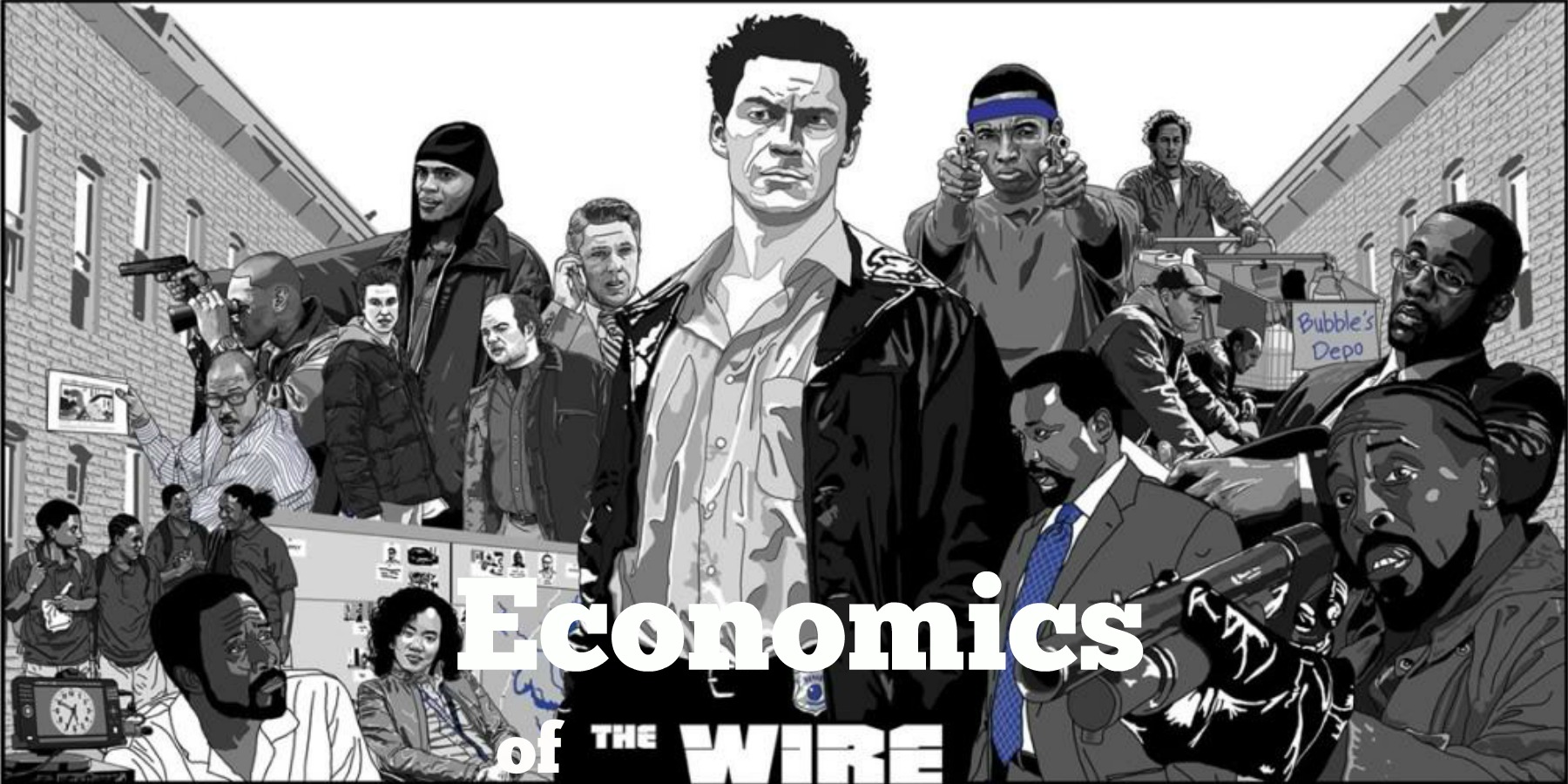
110: Beatrice Cherrier on the Economics of ‘The Wire’ and the Beginning of Economics at MIT
Beatrice Cherrier is an assistant professor at the University of Caen, France.
Professor Cherrier’s research includes the history of postwar economics and how economists’ individual visions combine in collective “styles” of doing economics.
Her current research project is aimed at understanding the rise of applied economics from the mid-1960s onwards.
Beatrice is affiliated with CREM, the Centre for Research in Economics and Management, where she researches alongside social choice theorists.
She teaches in a urban studies department, and is experimenting on her students to figure out how to get non-economists interested in the “dismal” science.
Professor Cherrier blogs on her personal website beatricecherrier.wordpress.com as well as for the Institute for New Economic Thinking.
These students have to understand economics, but not in the way of how to use it. You have to understand why they get that course and how they approach social science. For example urban study students work on the field all of the time, so introducing them to economics with a load of statistics is not the right way. They just won’t get it. They want tools to go into the field and to make sense of social behaviour. The solution is to bring the field into the classroom. The Wire is a great way to analyse these social behaviours, particularly in the city – Professor Beatrice Cherrier.
Economics:
In this episode, Beatrice discusses and mentions: Supply and demand, game theory, cooperation, prisoners dilemma, rationality, experimental economics, sunspots, monetary policy, animal spirits and bibliometric analysis.
Economists:
In this episode, Beatrice discusses and mentions: Kevin Hoover, Berger, Robert Solow, Paul Samuelson, John Maynard Keynes, John Hicks, Edward Prescott, Hanson, F. A. Hayek, Angus Deaton, Arthur Charpentier, Vernon Smith, Paul Krugman, Brad DeLong, Paul Romer, Franco Modigliani and Herbert Simon.
In this episode you will learn:
- how to teach economics to non-economic students.
- how to model the drug market using ‘The Wire‘ as a social analysis.
- using The Wire as a tool to teach economics.
- where is the rationality in gang warfare.
- the benefits of using pop culture to teach economics.
- the beginning of economics at MIT.
- whether Samuelson and Solow ‘invented’ the economics we know today through their mathematics?
- on the computerisation of economics using big data.
- the evolution of economics.
- the history of experimental economics.
- and much much more.
Writing Tips:
- “Writing has never been my strength. It’s the part of my job I don’t like.”
- Do it. To force yourself to do it you have to do it publicly.
- Write in a smaller format to try to put your ideas together and be convincing.
- Blog.
- Do not write for a public audience but rather write in public. If you put this stuff that you’re thinking online, you have to be better at organising your ideas even if you don’t like that.
- “My tip is really for people who don’t like writing. Write on a blog because you can write small, it’s not consequential. Maybe people will read you and give you tips and you’re going to improve yourself.”
Links:
- Introductory Economics for the Real World: Lessons from Teaching with “The Wire” TV Show by Beatrice Cherrier
- The Most Intolerant Wins: The Dictatorship of the Small Minority by N. N. Taleb on Medium
- The Wire
- Breaking Bad
- The Walking Dead
- Russell-Sage Foundation
- Freakonomics
- Freakonometrics
Recommended Books:
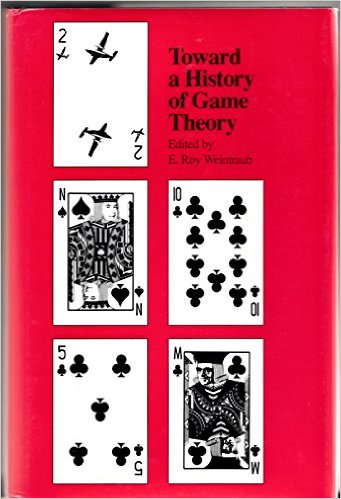
- Toward a History of Game Theory by E. Roy Weintraub
Podcast: Play in new window | Download