• ABOUT
  • RESOURCES
  • PODCAST
  • BOOKS
  • BLOG
  • SUPPORTERS
  • QFA Financial Advice
  • CONTACT

Economic Rockstar

Connecting Brilliant Minds in Economics and Finance

130: Eric Lonergan on the Philosophy of Money (Part 1)
March 2, 2018 by Frank

http://traffic.libsyn.com/economicrockstar/130_Eric_Lonergan_Final.mp3
Play in New WindowDownload

130: Eric Lonergan on the Philosophy of Money (Part 1)


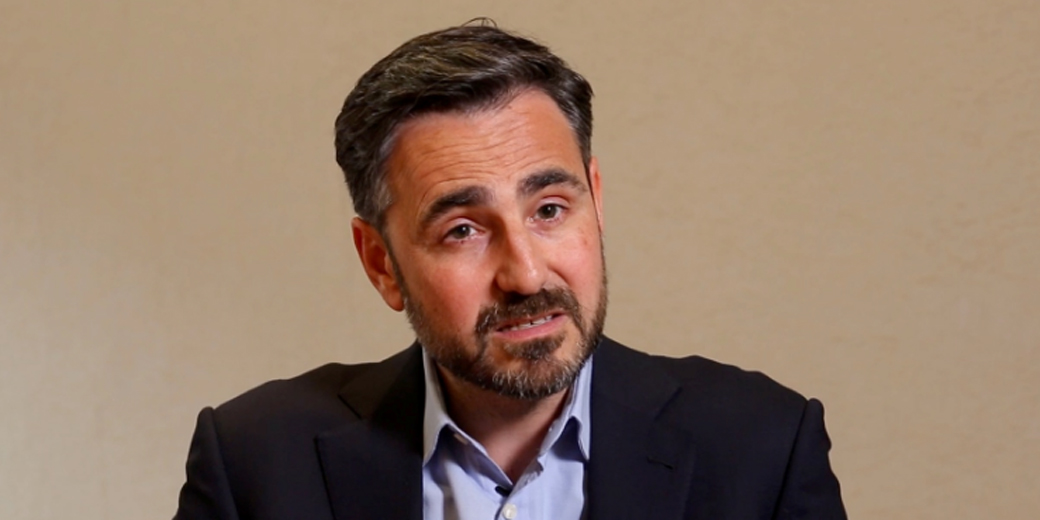
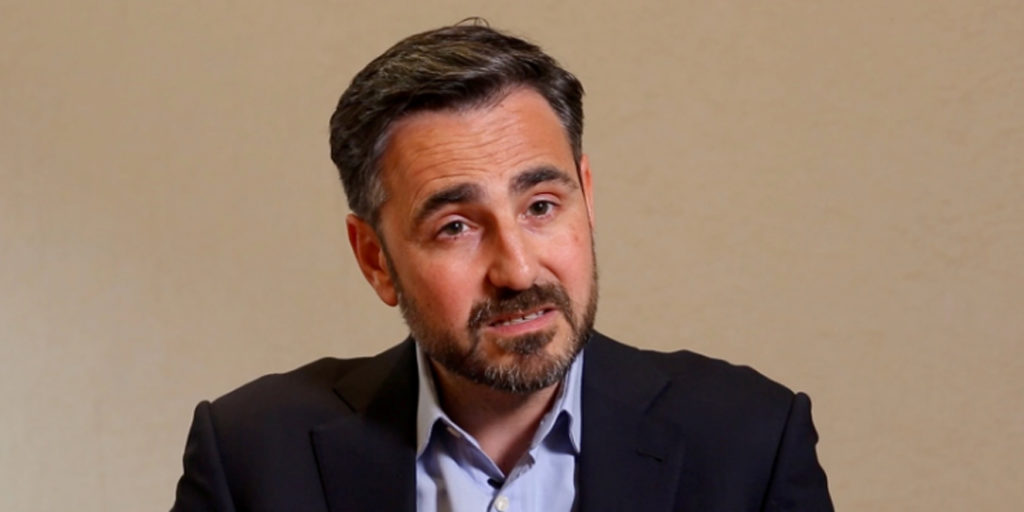
Eric Lonergan is a macro hedge fund manager, economist, and writer. His most recent book is Money published by Routledge. He has written for Foreign Affairs, The Financial Times, and The Economist. He also advises governments and policymakers. He first advocated expanding the tools of central banks to including cash transfers to households in the Financial Times in 2002. In December 2008, he advocated the policy as the most efficient way out of recession post-financial crisis, contributing to a growing debate over the need for ‘helicopter money’.

Patreon

If you’re a fan of the podcast and would like to show your support in anyway, please check out my Patreon page at patreon.com/economicrockstar where you can sign up for any of the awards for as little as $1 a month or you can simply follow me on the Economic Rockstar Facebook page or on Twitter or simply recommend the show to a friend, especially if they have never had the opportunity to study economics.

http://traffic.libsyn.com/economicrockstar/130_Eric_Lonergan_Final.mp3

Podcast: Play in new window | Download

094: Daniel Crosby on Stock Market Investment Errors and the Price Earnings Ratio

July 14, 2016 by Frank

http://traffic.libsyn.com/economicrockstar/094_Daniel_Crosby_Final.mp3
Play in New WindowDownload

094: Daniel Crosby on Stock Market Investment Errors and the Price Earnings Ratio

Dr. Daniel Crosby is a psychologist, behavioral finance expert and asset manager who daniel crosby economic rockstarapplies his study of market psychology to everything from financial product design to security selection. 

Daniel is author of 2 books – The Laws of Wealth: Psychology and the secret to investing success and You’re not that Great. He is co-author of the New York Times bestseller Personal Benchmark: Integrating Behavioral Finance and Investment Management.

Dr. Crosby is founder of Nocturne Capital. His ideas have appeared in the Huffington Post and Risk Management Magazine, as well as his monthly columns for WealthManagement.com and Investment News.

Daniel was named one of the “12 Thinkers to Watch” by Monster.com, a “Financial Blogger You Should Be Reading” by AARP and in the “Top 40 Under 40” by Investment News.

Daniel was educated at Brigham Young and Emory Universities.

Economics:

Volatility, stock markets, behavioral finance, investments, human error, behavioral bias, money, confirmation bias, loss aversion, price earnings ratio, CAPE, Quantitative Easing and central banks.

Economists:

Benjamin Graham, Christopher Geczy, Jeremy Siegel, Robert Shiller and John Paulson.

We lose 13% of our IQ when we are under stress, so even if you know all of these great lessons about the way the markets work, you tend to have least access to them when you need those lessons the most. – Daniel Crosby

5 consistent factors that underlie the 100 ways that we can make mistakes:

1. Ego – The belief that we are special or different.

2. Emotion – Allowing our feelings to drive our perception of risk.

When we’re in a good mood, the world seems to be a safe place to be. Equity markets seem to be a safe place to be. The opposite is also true.

3. Conservation – A preference for the status quo & Asymmetry – the way we see loses versus gains.

We are much more upset with a loss than a similarly sized gain.

4. Information – We have too much data available for our brains to absorb.

The Fed releases 45,000 pieces of economic data each month. There is no way that we can comprehend all of that. We have information processing problems and we mis-weight data.

5. Attention – Salience trumps probability.

The more vividly we’re able to think  about something, the more probable it seems

Books:

  • The Laws of Wealth: Psychology and the Secret to Investing Success by Daniel Crosby
  • You’re Not That Great by Daniel Crosby
  • Personal Benchmark: Integrating Behavioral Finance and Investment Management by Chuck Widger and Daniel Crosby
  • The Behavioral Finance Reading List featured on Nocturne Capital.

Links:

  • Nocturne Capital
  • 212 Years of Price Momentum (The World’s Longest Back Test: 1801 – 2012) by Christopher Geczy and Mikhail Samonov

Weatherman, Michael Fish gets it wrong with the 1987 Storm in England

http://traffic.libsyn.com/economicrockstar/094_Daniel_Crosby_Final.mp3

Podcast: Play in new window | Download
086: Philip Pilkington on Determinism and the Reformation in Economics

May 19, 2016 by Frank

http://traffic.libsyn.com/economicrockstar/086_Philip_Pilkington_Final.mp3
Play in New WindowDownload

086: Philip Pilkington on Determinism and the Reformation in Economics

Phillip Pilkington works in investment and has contributed to numerous online and print media philip pilkingtonoutlets as a freelance economic journalist.

Phillip ran a popular economics blog called www.fixingtheeconomists.wordpress.com and will be releasing his book The Reformation in Economics soon.

Phillip earned his B.A. in Journalism from the Independent Colleges, as well as his M.A. in Economics from Kingston University.

All views expressed by Phillip are his own and are not representative of the firm in which he works.

Economics:

In this episode, Philip mentions: utility maximizing, behavioral bias, interest rates, time preference, savings, money, comparative advantage, decision making, consumption function, marginal propensity to consume and the multiplier.

Economists:

In this episode, Philip mentions: Steve Keen, Paul Samuelson, Adam Smith, James Steuart, David Ricardo and G. L. S. Shackle.

Links:

  • Fixing the Economist – a blog by Philip Pilkington

Books:

  • The Reformation in Economics: A Deconstruction and Reconstruction of Economic Theory by Philip Pilkington
  • Foundations of Business Thought by Calvin M. Boardman
  • Market Sense and Nonsense: How the Markets Really Work (and How They Don’t) by Jack D. Schwager
  • A Treatise Concerning The Principles of Human Knowledge by George Berkley
http://traffic.libsyn.com/economicrockstar/086_Philip_Pilkington_Final.mp3

Podcast: Play in new window | Download

060: Manu Saadia on Trekonomics – The Economics of Star Trek: Scarcity, Productivity and Public Goods

November 26, 2015 by Frank

http://traffic.libsyn.com/economicrockstar/Manu_Saadia_Final.mp3
Play in New WindowDownload

060: Manu Saadia on Trekonomics – The Economics of Star Trek: Scarcity, Productivity and Public Goods

Manu Saadia fell into science fiction and Star Trek fandom at the age of eight, back in Paris, France, where he was born and raised.Manu Saadia

Manu  studied history of science and economic history in Paris and Chicago. After many happy years in the Ivory Tower, he yielded to his childhood passion for the future.

Manu embarked on his continuing mission to explore strange new worlds by boldly going where many have gone before: Los Angeles, CA, where he advise and (occasionally) builds tech companies.

Manu received the 2005 Wayne C. Booth Graduate Student Prize for Excellence in Teaching at the University of Chicago.

His book, Trekonomics, is currently available for pre-order at www.inkshares.com and will be released in 2016.

Star Trek offers much more detail about its own world and the way its economics actually works – like the plumbing so to speak. So that’s what I wanted to do. Go into the plumbing of Star Trek. – Manu Saadia

Economics:

In this interview, Manu mentions:  trekonomics, crowd funding, labor, economic history, trade, robots, capitalism, comparative advantage, currency, money, Gold-Pressed Latinum, public goods, conspicuous consumption, scarcity, peak oil, productivity and opportunity costs.

Economists:

In this interview, Manu mentions: Brad DeLong, Felix Salmon, Adam Smith, Thomas Malthus, Hubbert, Paul Ehrlich, Julian Simon, Romer, Larry Summers, John Maynard Keynes and Angus Deaton,

In this episode you will learn:

  • why Manu Saadia wrote Trekonomics.
  • about the Star Trek Economics panel at Comic Con.
  • why economists love Star Trek.
  • about inkshares and how it can help authors publish their book.
  • how traditional media rather than social media boosted pre-order sales of Trekonomics – an ironic outcome.
  • when Manu’s interested in economics and Star Trek collided.
  • about the work of Isaac Asimov and how his stories are a discourse on economics.
  • how the stories of robots and the future by Asimov influenced and shaped the storyline in Star Trek.
  • about the replicators in Star Trek and how they solve the problem of economic scarcity.
  • about the Ferengi’s and how they represent capitalism and trade.
  • why The Federation or the humans in Star Trek do not use money but have a foreign account to trade with the Ferengi’s.
  • about the Ferengi’s currency, Gold-Pressed Latinum, which cannot be replicable.
  • why owning a replicator is a ‘pain in the ass’.
  • how things that cannot be replicated has value but those that can be replicated has no value.
  • if Keynes’ The Economic Possibilities of Our Grand Children is a rebuttal of the writings of H. G. Wells.
  • about GPS being a public good and the benefits it has brought to the public.
  • why making GPS a public good in 1983 was one of the best decisions Ronald Reagan made as US President.
  • Manu’s favourite Star Trek episode is Lower Decks (The Next Generation).

Quotes by Manu Saadia in Episode 60 of the Economic Rockstar Podcast:

Trekonomics got a lot of support and very nice feedback from a lot of economists – Manu Saadia

Click To Tweet

“It always baffles me when you have these very famous and serious economic thinkers were in fact  total Star Trek nerds. I was on a panel at New York Comic Con with Brad DeLong, Paul Krugman and Annalen Newitz from i09. There was Chris Black as well and Felix Salmon.” – Manu Saadia

Brad DeLong came to the panel with a Star Trek hoodie. – Manu Saadia

Click To Tweet

On Isaac Asimov: “All of his work is a long meditation on economics, either foundation where there is this science called psychohistory which is in fact a fictional mathematical modelling of human behaviours on the scale of societies on a galactic scale.” – Manu Saadia

“One of the reasons why I wanted to study economics was that I was fascinated by and really wanted to understand the transformation of humanity’s relation to its own labor. This is one of the great questions of political economy because it determines a lot of things when it comes to the shape society and the role of the state and how behaviors are determined and constructed over time. But it’s also the key to understanding where we’re going”. – Manu Saadia

“I would say the replicators are more of a metaphor. If you look at their status in the series, they do not help move the narratives forward. They’re just there to signify that there’s no need to work. They’re a little bit like robots in Asimov. They have the same narrative function, which is to show and demonstrate that post-scarcity does exist and is based on automation and artificial intelligence.” – Manu Saadia

The Ferengi’s are the capitalist, merchant traders of the galaxy – Manu Saadia

Click To Tweet

Most of the stuff in Star Trek is basically a public good – Manu Saadia

Click To Tweet

I think Star Trek is very much what Keynes described in The Economic Possibilities of Our Grand Children – Manu Saadia

Click To Tweet

Books:

  • Scatter, Adapt, and Remember by Annalen Newitz 
  • Isaac Asimov
  • Frankenstein by Mary Shelly
  • The Economic Possibilities of Our Grand Children by John Maynard Keynes

Papers:

  • Romer (1990) Productivity Gains

Links:

  • What I Learned Crowdfunding Trekonomics  by Manu Saadia
  • Trekonomics The economics of Star Trek: how does it work, and how do we get there?  by Manu Saadia
  • View the transcript to The Amazing Economics of Star Trek at New York Comic Con
  • www.i09.com 
  • www.inkshares.com
  • What the economics of Star Trek can teach us about the real world by Brian Fung, Andrea Peterson and Hayley Tsukayama Washington Post 
  • The Live Long and Prosper Edition Slate Money 
  • Club of Rome 

Manu’s Favorite Star Trek Epsiodes:

  • City on the Edge of Forever
  • Arena

Where to Find Manu:

  • inkshares.com
  • fusion.net

Music:

  • Star Trek Episode Amok Time
http://traffic.libsyn.com/economicrockstar/Manu_Saadia_Final.mp3

Podcast: Play in new window | Download

057: Alvin Roth on Match-Making, Repugnant Markets and Market Design

November 5, 2015 by Frank

http://traffic.libsyn.com/economicrockstar/057_Alvin_Roth_Final.mp3
Play in New WindowDownload

057: Alvin Roth on Match-Making, Repugnant Markets and Market Design

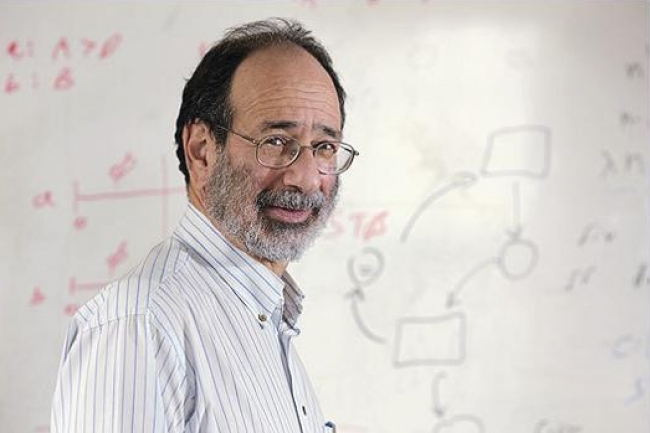
Alvin Roth is the Craig and Susan McCaw Professor of Economics at Stanford University.Alvin Roth

Professor Roth has made significant contributions to the fields of game theory, experimental economics and market design and is known for his emphasis on applying economic theory to solutions for “real-world” problems.

In 2012, Alvin won the Nobel Memorial Prize in Economic Sciences jointly with Lloyd Shapley “for the theory of stable allocations and the practice of market design.”

Alvin Roth has a B.S form Columbia University,  and earned his MS and Ph.D. from Stanford University.

Alvin’s latest book Who Gets What and Why: The New Economics of Matchmaking and Market Design is now available on Amazon.

Economics:

In this interview, Alvin mentions: money, barter, matching markets, supply, demand, price discovery, labor markets, marriage markets, market design, double coincidence of wants, property rights and game theory.

Economists:

In this interview, Alvin mentions: Gary Becker, Christien Exley, Lloyd Shapley, David Gayle, Herb Scarf, Hal R. Varian,  Preston McAfee, Fuhito Kojima, Muriel Niederle, Paul Milgrom, John Levin, Ilya Segal and Oskar Morgenstern.

In this episode you will learn:

  • what economics is and if we need money to allow a market to operate efficiently.
  • about the price discovery process in economics.
  • what is match-making markets and how similar the labor market is to the dating market.
  • what is market design and why it is important.
  • how entrepreneurs and start-ups, like Airbnb and Uber, use market failure to solve a problem.
  • what is a repugnant market.
  • the difference between a thick and a thin market.
  • what makes a market thick.
  • about the black market for kidneys.
  • how kidney exchange works.
  • about the double coincidence of wants in the kidney exchange market.
  • about the problem in the market for water in California.
  • some of the unintended consequences from the war on drugs.

Books:

  • Who Gets What and Why: The New Economics of Matchmaking and Market Design by Alvin Roth
  • Thinking, Fast and Slow by Daniel Kahneman
  • Theory of Games in Economic Behaviour by John von Neumann and Oskar Morgenstern

Papers:

  • Gayle, D. and L. Shapley (1962). College Admissions and the Stability of Marriage, The American Mathematical Monthly, Vol. 69, No. 1, pp: 9 – 15.  
  • Scarf, H. and L. Shapley. (1974). On Cores and Indivisibility. Journal of Mathematical Economics 1: 23-37.

Websites Mentioned in this Episode:

  • Market Design: Alvin Roth’s blog
  • Angel Flight: People Helping People in Need
http://traffic.libsyn.com/economicrockstar/057_Alvin_Roth_Final.mp3

Podcast: Play in new window | Download

053: Helena Norberg-Hodge on Localisation, Trade Treaties and the Economics of Happiness

October 8, 2015 by Frank

http://traffic.libsyn.com/economicrockstar/Helena_Norberg_Hodge_Final.mp3
Play in New WindowDownload

053: Helena Norberg-Hodge on Localisation, Trade Treaties and the Economics of Happiness

Helena Norberg-Hodge is the founder and director of Local Futures. A pioneer of the ‘new economy’ movement, she has been promoting an economics of personal, social and ecological well-being for more than 30 years.Helena Norberg Hodge

Helena is the producer and co-director of the award-winning documentary The Economics of Happiness, and is the author of Ancient Futures: Learning from Ladakh, described as “an inspirational classic”.

Helena has given public lectures in seven languages, and has appeared in broadcast, print, and online media worldwide.

She was honored with the Right Livelihood Award (or ‘Alternative Nobel Prize’) for her groundbreaking work in Ladakh, and received the 2012 Goi Peace Prize for contributing to “the revitalization of cultural and biological diversity, and the strengthening of local communities and economies worldwide”.

Economics:

In this interview, Helena mentions: localisation, globalisation, deregulation, finance, banking, money, real economy, price, demand, subsidies, tax, business alliances, lobbying, competition, trade treaties, unemployment, poverty, natural environment, growth, climate, energy consumption, comparative advantage and GDP.

Economists:

In this interview, Helena mentions: Alex Tabarrok, Adam Smith, David Riccardo,

In this episode you will learn:

  • how and why Helena decided to advocate for and promote localisation.
  • about Ladakh and how it was removed from the rest of the world.
  • how the global market was very destructive to the local market in Ladakh.
  • how globalisation destroyed the livelihood of farms and local businesses and created unemployment.
  • how the happiness and high self-esteem among the people of Ladakh was destroyed after a decade of economic development.
  • why extreme tensions between buddhists and muslims erupted after living in peace for over 500 years in Ladakh.
  • about Ladakh, where the Dalai Lama is the spiritual head.
  • how Ladakh has become a case study on how a local economy has been quickly affected by globalisation.
  • about the phenomenal work Helena is doing to highlight the changing lives and economy of Ladakh and other regions.
  • about the true meaning of the real economy and how cheap money and speculation is destroying it.
  • why the earth is so precious and must be protected before we see irreversible and horrific damage.
  • about the terrific work being undertaken by Local Futures to highlight the need for economic change to protect our earth.
  • why we need to make the local food market a global initiative.
  • how small towns and villages are taking initiatives to feed their community with fresh, organic foods.
  • how schools are integrating nature into their infrastructure to increase the well-being of staff and pupils.
  • how nature provides profound and important psychological healing benefits.
  • how diversifying and staying local can provide more diversified foods per unit of land and water than the large monocultures.
  • why farmers prefer to work closely with the customer than with large-scale supermarkets.
  • whether small farmers and businesses should create a group to represent the their interests and to lobby governments in much the same way as large companies like Volkswagen and Monsanto.
  • how to make small and local businesses more visible.
  • about Helena’s mantra for resistance and renewal – resisting trade treaties and renewing localisation.
  • about the law that was passed in Sweden to have trade treaties to be discussed in secret.
  • how, under the new trade agreements, multinational corporations can sue governments if they inhibit their profit-making ability of that governments country.
  • whether GDP is a good measure of progress and how Helena interprets its true meaning.

Quotes by Helena on the Economic Rockstar Podcast:

“The EU is essentially an economic union and it’s bringing with it a centralised bureaucracy” – Helena Norberg-Hodge

About Earth Being Our Only Economy:

“The earth is our only economy. There’s nothing we use that doesn’t come from the earth. Nothing, nothing. Every iPad, every shoe, every television. And that economy, the real economy, is diversity. It requires and can only continue to live by respecting the uniqueness of every leaf, of every human being. Everything that lives is unique and is changing from moment to moment.” – Helena Norberg-Hodge

“I describe Nature as the economy, but it’s also our Mother. It’s our spiritual home” – Helena Norberg-Hodge

Click To Tweet

“Usually when people talk about the economy, they’re just thinking about paper money. They don’t think about culture and farming as having anything to do with the economy.” – Helena Norberg-Hodge

“The global food economy, from beginning to end, is the biggest contributor to CO2 emissions, and it’s not just because of the factory farming with animals. It’s across the board.” – Helena Norberg-Hodge

About the Stock Market and Cheap Money:

“The market is really young lads sitting in front of computers speculating with huge amounts of money. And they inevitably have to and do favour the giant. They’re betting on the giants ‘horses’ like Monsanto, McDonalds and Walmart. And so this connection between that flood of cheap money created out of thin air, now has become a sort of a ‘blind machinery’ that is eating up the real economy, the earth, extremely rapidly and we’re going to see more horrific examples.” – Helena Norberg-Hodge

Other Quotes:

There is a growing local food market that is going global – Helena Norberg-Hodge

Click To Tweet

GDP is an outrageous measure of progress. It is simply a measure of commercialisation – Helena Norberg-Hodge

With Riccardo and the notion of comparative advantage, it sounds good on the surface. But let’s remember it was brought in in a time of slavery – Helena Norberg-Hodge

Where to Find Helena:

  • Local Futures: www.localfutures.org
  • Economics of Happiness
http://traffic.libsyn.com/economicrockstar/Helena_Norberg_Hodge_Final.mp3

Podcast: Play in new window | Download

037: Noah Smith on Austrian Theory Being a ‘Bad Joke’, Heterodox Models and Efficient Markets

June 18, 2015 by Frank

http://traffic.libsyn.com/economicrockstar/037_Noah_Smith.mp3
Play in New WindowDownload

037: Noah Smith on Austrian Theory Being a ‘Bad Joke’, Heterodox Models and Efficient Markets

Noah Smith is Assistant Professor of Finance at Stony Brook University, New York where he is also a member of the Center for Behavioral Noah SmithFinance research team. Noah’s research Interests include Experimental Finance, Behavioral Finance and Macroeconomics Noah was panel discussant for the Institute for New Economic Thinking Task Force and has received numerous research awards and fellowships. 

Noah is a regular contributor to Bloomberg View where he writes extensively on economics and finance related topics. He also writes at his fantastic economics blog Noahpinion.

Noah received his PhD in economics from the University of Michigan, graduating in 2012. His dissertation examined expectation formation in financial markets. Noah majored in physics as an undergraduate at Stanford University, and spent three years working in Japan, where he still returns from time to time to do research.

Everyone who meets in the public sphere, unless you’re extremely dry and technical, is going to piss people off. Econ is one of those fields where everyone has their own opinion and position and their models that they like. Traditionally, it was this very closed discipline. Econ was for economists and they didn’t often interface with the outside world except through official policy advice and the occasional op-ed. People start talking in the public sphere and I think that disturbs a lot of people. So all the blogs are bad boys really – Noah Smith.

Economics:

GDP, inflation, Central Bank, consumption, microeconomics, macroeconomics, behavioral economics, DSGE, game theory, decision theory, supply, demand, time series, interest rates, linear regression, forecasting, Quantitative Easing, money, gold, Federal Reserve, efficient markets hypothesis, extrapolative expectations, hedge funds, adverse selection, random walk, fat tails and volatility.

Economists:

Paul Samuelson, Brad DeLong, Steve Keen, Greg Mankiw, John H. Cochrane, Jack Schwager, Josh Angrist, Steve Pischke, Ed Phelps, Robert Lucas, Ed Prescott, Paul Volcker, Ludwig von Mises, Friedrich Hayek, Hyman Minsky, Andrei Schleifer, Alok Kumar, Kelly Schuh,  Jonathan Burke, Burton Malkiel, Marcus Brunnermeier, Mark Thoma, Tyler Cowen and Alex Tabarrok.

Find out:

  • whether economists suffer from ‘Physics Envy’.
  • if we should remove mathematics from economics.
  • how math took over economics.
  • if there is a connection between economics and physics.
  • how economics is becoming a more data-driven field.
  • about the micro foundations to macro theory and why these models don’t work.
  • why theory and math-focused economics papers are waning in the academic publishing field.
  • how to approach teaching micro and macro when the theoretical models may not explain much.
  • about whether Economics is moving away from the orthodox method of teaching toward a heterodox method.
  • about the difference between Heterodox and Orthodox teaching in Economics.
  • why Noah considers Austrian Economics to be a bad joke.
  • where Noah falls within the economic spectrum.
  • why Noah believes that heterodox economics is not the future.
  • Noah’s recommended economics blogs to follow.
  • why the Efficient Market Hypothesis is a good starting model for finance students to understand.
  • and much much more

Physics Envy and the Mathematisation of Economics:

At one point economics was a literary discipline. It was philosophical. It was people writing down verbal description of how they thought things worked. Then people started writing down equations. At first it was just a couple of people doing it who were obscure and then, with Paul Samuelson, they really started putting everything in terms of equations and mathematising everything. It was at that point people started to mention that economists had ‘Physics Envy’ because physicists write everything in equations. Maybe that was true as Samuelson had also studied Physics. This was probably a misnomer.

There were new mathematical tools and people were just trying to apply them to things. Math really took over economics and the style of math they did was sometimes similar to physics. Mathematicians are very rigorous. They start with axioms and they have this really formal proof structure. A physicists approach to working with equations is a lot more ad hoc and informal. So in economics, you see both styles. Noah doesn’t think there’s a lot of connection between economics and physics. He also doesn’t believe there is any particular pieces of math in economics that were inspired by physics.

Math helps you organise your thoughts. It makes your economic theory more internally consistent because math always has to work out perfectly and all the logic has to work out. But in practice it rarely does that. What usually happens is that people usually end up sticking in the assumptions they need to get the conclusions they want to see in the theories. So there’s essentially no discipline provided by math on theory, but math is useful when you want to get actual numbers.

Economics is becoming a more and more data-driven field. Now that we have information technology, we have so much data. We have macro data and industry-level data that we can keep track of with electronic records. Government can easily keep track of statistics on all kinds of variables on the economy. We have a lot more financial data. It is easier to get people surveyed so you have a lot more survey data. So you have huge amounts of data that is easily transferable and easily manipulatable in statistics programs. Economists are basically rolling in data. What we’ve seen from that is that data and empirics has become so much central  to the economics field in recent years. The number of published papers that are data and empiric-focused has soared, whereas the percent that is just theory and math-focused has gone down in the last twenty years.

On Teaching Micro and Macro When Theoretical Models Fail:

Economics is not data-free. You can use data to help you teach. But in terms of giving students a hands-on thing where they can predict some outcome something, well for lower-level students, there’s not much you can do. But for upper-level students there are some things you can do with linear regression that help you make a prediction or forecast. Certainly with graduate-level students you can do things with time series econometrics. Then you can have them make forecasts and see how well their forecasts come out. There’s things you can do but it doesn’t work as beautifully as it does in Physics – Noah Smith

Noah Smith on Why He Considers Austrian Economics to be a Bad Joke and Why Heterodox Economics is Not the Future:

The idea that economics is substantially divided between the orthodox and the heterodox is wrong. That’s just not the way it is. There’s only a very few people in the world who call themselves heterodox. For any science you’re going to get some people somewhere who are doing something totally different. There’s probably somebody out there using physics models that look nothing like quantum mechanics or Newton’s Laws or any of the core physics models we think of as real physics. There’s probably someone out there doing some model of a type you and I never heard of and will never hear of. And that’s basically what the heterodox economics guys are.

The people who call themselves heterodox in economics, include some people who are nakedly political. All they really are is political, well I could say hacks but they’re not paid by parties, but they’re trying to make economics into a politicised discipline. So, the most prominent group of these is people who call themselves Austrians.

There were these guys, called the Austrians, who wrote some ideas down. All of those ideas were later taken up by the mathematical economists and put into math language. Most were tested in some way. They were developed further on. But then what happened was there was a tribe of people who declared that all the mathematical economics was bullshit and that what we had to do was pay attention to the wisdom of the ‘Old Masters’. So they spend a lot of time reading the old wisdom of Mises and Hayek and those guys. And the only way this group could survive when economics itself had moved on was to take donations from political people who agree with their politics.

So they politicise themselves in order to survive. And in the wilderness where they deserve to be, their method of analysis they use are a joke. A lot of mainstream normal economics might also be a joke but the Austrian stuff is definitely a joke. And the problem is with the addition of politics to the mix, it really becomes a bad joke.

Most of what they do is advocating through their version of free markets or advocating for various conservative policies and politics. And that’s what they spend most of their time doing. It’s clear that what they really want to do is just turn economics into a mouthpiece for conservative ideas.

I haven’t spent hundreds of hours reading Mises because that would be robbing me of many many valuable hours of my life-span and I’m mortal and my life-span is ticking away and I can’t spend my time reading Mises. I’ve read a little bit. It was obviously silly. It was like reading Jacques Derrida.

It’s so dense and confusing and self-referential and full of neologisms and just, frankly, badly written that what it descends into this infinite recursion where you have people who read the ‘Old Master’ and write some interpretation of the ‘Old Master’ and then someone reads what that person wrote and mis-interprets that and then writes their own interpretation of that. Then you just have this infinite recurring commentary where nobody really knows what the hell anyone else is talking about and they all just sort of talk about their own distorted, twisted perception of what these other people talk about. It gives no insight and no understanding. People ‘parrot’ the words of the ‘Old Masters’ without understanding what the ‘Old Masters ‘ were necessarily meant or what those ideas would even imply.

If you criticise the ‘Old Masters’ or criticise this paradigm of relying on the ‘Old Masters’, They say “Oh, you have to go read everything the ‘Old Masters’ wrote before you are qualified to comment on this. How dare you comment on this when you haven’t read this and this and this. I’ve spent time reading this.” What do you say to that. That’s not scientific. That’s scholastic.

Sometimes you look at Minsky and you look at Hayek and you say these guys aren’t saying such different things after all actually. But the thing is you have the right-wingers in the modern day who think that Hayek and Mises are gods and left-wing guys who think Minsky is a god and they fight like cats and dogs.

The mere fact of these kind of battles is one thing that convinces me that so-called heterodox economics is not the future at all.

Austrians have a lot of blogs. They have a big mouth-piece; much bigger than their academic footprint. Austrians took a huge hit in 2011 and 2012. Those are absolute critical years for this sort of ‘pop-Austrianism’ that has become very popular on sites like zerohedge. All the Austrians are saying is the Fed is printing all this money doing Quantitative Easing. There’s going to be big inflation. And this never happened. That was like a thunderbolt that really discredited Austrians. They were saying things were going to happen by gold now. There was a gold bubble and gold is quite a bit off its peak. A lot of people lost some of their savings on that. People are not happy to lose their savings. If you bought gold collectibles in 2011, well you were a sad puppy when it crashed. That’s God’s punishment. That’s the market’s punishment anyway. It’s the markets punishment for making bets on silliness.

Where does Noah Fall within the Economic Spectrum:

I really don’t know. I suspect something that would look like demand is responsible for most recessions. And I suspect something that they call a limit cycle is going on where something in a boom actually causes a bust to become more likely. So booms lead to busts. Austrians said that, absolutely. The ‘Old Masters’ definitely said that and Minsky said that too – Noah Smith

Recommended Blogs:

  • Economists’ View by Mark Thoma
  • Marginal Revolution by Tyler Cowen and Alex Tabarrok
  • Grasping Reality by Brad DeLong

Recommended Book:

  • The Myth of the Rational Market by Justin Fox
http://traffic.libsyn.com/economicrockstar/037_Noah_Smith.mp3

Podcast: Play in new window | Download

Conor McGregor is Homo Economicus: I’m Going To Whoop His Ass

January 18, 2015 by Frank

Conor McGregor is Homo Economicus: I’m Going To Whoop His Ass  

Conor-McGregor Colm O'Connor

Graphic Design and Illustration by Colm O’Connor www.colmoconnor.com

The Notorious Conor McGregor is one of Mixed Martial Arts (MMA) foremost fighters today. He has come from a life of obscurity to UFCs most feared and respected cage fighter today. What will McGregor do to take the UFC title from Jose Aldo? Is McGregor unstoppable? Will McGregor take down everyone in his path to this title? Is McGregor so focused on the prize that he cares less about how much damage he will do to others? Conor McGregor is Homo Economicus.

Is Conor McGregor the Perfect Example of Homo Economicus?

Economics is a social science and the Greek scholar Hesiod (700 – 650 BC) is considered to be first economist when he wrote about scarcity and resources: “…through work men grow rich in flocks and substance…” The term ‘Homo Economicus’ is the central theme to which the study of modern economics has evolved, and is considered to be first mentioned in the 19th Century works of J.S. Mills. Homo Economicus or Economic Man represents a rational person who aims to maximise their abilities in order to seek an optimal or best outcome. Such a rational person is considered self-interested and is destined to achieve their targeted aims irrespective of its undesirable effects on others.

So does McGregor fit Mills’ “arbitrary definition of man, as a being who inevitably does that by which he may obtain the greatest amount of necessaries, conveniences, and luxuries, with the smallest quantity of labour and physical self-denial with which they can be obtained”?

Let’s Get Rich

Is McGregor a rational, self-interested man with the sole determination of acquiring wealth or success without any heed for others and given the constraints that he faces? Yes! But only in the cage.

McGregor admits that money was never his objective when learning the art of fighting: “I’d rather be poor. I’d rather have no money and just be training than in a job I don’t love”. This attitude appears to defy the ideas behind Homo Economicus, but McGregor’s focus is in the octagon and not in the office. McGregor trains extremely hard, both physically and mentally, so that he is in the best shape possible for a fight. He’s aiming to maximise his strengths and abilities to win.

McGregor wants to make his riches doing what he is passionate about. “Competing is what I love to do and money is what I love to get”. He described his fight with Dennis Siver in Boston on January 18th, 2015 as “a keep fresh, get rich fight”.

Is he self-interested? When it comes to fighting, his focus is on winning. There is no room for cooperation and McGregor will achieve success irrespective of the undesirable effects on others.

  • McGregor visualized his Las Vegas fight with Dustin Poirier:

I believe that we will both come forward. I will crack him one or two. He will panic, he might rush in, I will crack him again, and then the fight will be done. I don’t believe he has many shots left in him and I don’t think he can take many of my shots. I will hurt him in the first couple of exchanges and then I will begin to play, to experiment. I am going to come out of the gates, spinning, flying through the air, and I will crack him with something that will put him down, and I believe it will be a first round stoppage.

  • Likewise, in a Q&A session for UFC178 in Las Vegas 2014, McGregor said what he’s prepared to do in order to win the Featherweight Title: “I will collect heads on the way to that goal… I will go over to Brazil as well and take out every man, woman and child to get that belt”.
  • In the same interview, McGregor mentioned that he didn’t like California and preferred his hometown, Dublin stating: “I’m over here conducting business, you know, and I don’t really care about anything else”.

McGregor shows all the characteristics that underpins the concept and ideals of Economic Man – someone who will fulfil a desired outcome irrespective of the undesirable effects on others.

Where to Find Conor McGregor:

  • Twitter: @TheNotoriousMMA
  • Facebook: The Notorious MMA

Frank Conway is the author of this post. To read other posts by Frank you can visit Economic Rockstar or listen to the podcast on iTunes.

006: Andrew Heaton on Using Comedy to Explain Economic Concepts

November 20, 2014 by Frank

http://traffic.libsyn.com/economicrockstar/006_Andrew_Heaton.mp3
Play in New WindowDownload

006: Andrew Heaton on Using Comedy to Explain Economic Concepts

Andrew Heaton

Andrew Heaton is a comedian, writer and political satirist. He is the presenter of the witty and entertaining economics podcast, EconPop and has a Masters degree in International Politics. Andrew has been featured in a Bollywood movie, plays a lead role in the sitcom Cap South and has been voted best new comedian of 2013 in New York. Andrew hails from Oklahoma, is an Officer to a Prince and plays the Ukelele to enhance the mood of his friends’ amorous endeavors.

Economic Themes:

In this interview, Andrew mentions and discusses: wheat quotas, comparative advantage, protectionism, relative and actual growth, free markets and limited government, Austrian Theory of Monetary Creation, supply and demand, signalling, subjective value, negative externalities, tariffs and import duty, protectionism, corporation tax, scarce resources, population, abundance of resources, the Great Depression, US deficit, unintended consequences, behavioral economics and risk aversion.

Economists and Economic Schools:

In this interview, Andrew mentions: the Chicago School, the Austrian School, Libertarianism, Adam Smith, Milton Friedman, Freidrich Hayek, John Maynard Keynes, Murray Rothbard, Frédéric Bastiat, Thomas Malthus, Gene Epstein, Steven Horwitz,

Andrew’s Influencers:

Gene Epstein and Milton Friedman.

Podcasts:

EconPop is hosted by Andrew, who is joined by economist Steven Horwitz and professor of literature Paul Cantor.

In this episode, you will learn:

  • how Andrew became interested in economics while studying abroad in Scotland.
  • what parallels Andrew draws between politics, economics and comedy.
  • what economists and school of thought Andrew draws inspiration from to carve out his own views.
  • where and from whom Andrew gets his inspiration for his anecdotal writings on economics concepts.
  • how economic concepts is in abundance in life and can be found in the many movies we may have watched.
  • what qualities Andrew believes makes a successful person.
  • about Andrew being an Officer to Prince Leonard of Hutt River.
  • what comparative advantage is and how Andrew explains it in an unusual but light-hearted way.
  • why Andrew believes we will never run out of resources and why we should not worry about scarcity.

Advice:

‘If you’re gonna have a lot of activities that you are doing, you need to be mentally organised and very good at prioritising.’

‘To supercharge your day, when you are getting to your tasks, do the one you hate most first… the rest of your day is a cinch.’

‘With books, the trick is you just write a thousand words a night… your subconscious mind works on it and when you sit down the following night it’s a little bit easier.  You have a full novel in two and half months.’

Personal Habits:

  • Andrew works extremely hard to get things done. He has blended comedy with economics to allow this dismal science to become enjoyable or entertaining.
  • Andrew believes that having the right mentor is hugely beneficial and such a relationship allows him to learn and focus on reaching small milestones. This has worked out favorably well for Andrew in the field of economics where he developed a strong set of opinions on some theoretical aspects of economics. By expanding his knowledge-base through economics books and the many discussions with his mentor, Gene Epstein, Andrew has opened new doors and created new opportunities that otherwise may not have been attainable. His love of economics, particularly the Austrian and Chicago Schools and libertarianism, has given Andrew a lot of material to work on for his comedic performances onstage, online and in books.
  • Andrew writes quite frequently and believes that constant writing will have a payoff in terms of the publication of a book.
  • Andrew writes ‘common sense economics for people who need to learn about common sense economics’ – Gene Epstein

    Click To Tweet

  • Andrew plays the ukelele but, unfortunately, it wasn’t ‘tuned’ correctly for him to give us a treat on this podcast. So, as an homage to Andrew, I changed the outro music theme of Economic Rockstar to one that uses a ukelele. I hope you enjoy it!

Takeaway:

On Economics and Comedy:

Economics is a dismal science, so if you can make it funny it sweetens it – Andrew Heaton

Click To Tweet

On Humor and Economic Differences:

‘When you start arguing with somebody your adrenaline level shoots up.  Just on a biochemical level, you become much less able to hear what they are saying because you are taking a defensive posture.  Conversely, when you’re laughing, you produce endorphins.  And, if I can make you laugh, for a moment you are willing to listen to me – just for a moment.’

On Human Innovation Outpacing Declining Resources:

“We didn’t end the Stone Age because we ran out of stones”. – Andrew Heaton

Click To Tweet

Recommended Books:

  • Laughter Is Better Than Communism by Andrew Heaton
  • Frank Got Abducted by Andrew Heaton
  • Re-Boot Grandpa by Andrew Heaton (coming soon in 2016)
  • Speech Trap Werewolf by Andrew Heaton (coming soon)
  • The Conscience of a Conservative by Barry Goldwater
  • Parliament of Whores: A Lone Humorist Attempts to Explain the Entire U.S.  Government by P.J. O’Rourke
  • Free To Choose by Milton Friedman and Rose Friedman
  • Life at the Bottom: The Worldview That Makes the Underclass by Theodore Dairymple
  • Economics In One Lesson by Henry Hazlitt
  • Nudge: Improving Decisions About Health, Wealth and Happiness by Richard H. Thaler and Cass R. Sunstein

Favorite Internet Resources:

  • Evernote

Where To Find Andrew Heaton:

  • Website: MightyHeaton
  • Twitter: @MightyHeaton

Contact Andrew and start a campaign if you would like him to create a ‘Mighty Heaton’ doll!

http://traffic.libsyn.com/economicrockstar/006_Andrew_Heaton.mp3

Podcast: Play in new window | Download

003: Erin Lowry on Millennials, College Debt and Asking for the Order

November 12, 2014 by Frank

http://traffic.libsyn.com/economicrockstar/003_Erin_Lowry_final.mp3
Play in New WindowDownload

Episode 003: Erin Lowry on Millennials, College Debt and Asking for the Order

Erin LowryErin Lowry is a double major in journalism and theatre and writes on finance and money related matters for the millennial generation. She lives in New York and is founder of brokemillennial.com where she is on a mission to explain financial concepts and money saving tips to her fellow Millennials using a little humor along the way. Erin is also a freelance writer for both Daily Finance and US News and World Report. Erin has deservedly been recognized for her astounding contribution to the finance and money industry, being voted ‘Top Finance Blog’ and winner of the ‘Best Personal Finance Blog for Young Adults’. Erin has also been featured on Forbes and Reuters, as well making appearances on TV, radio and other podcasts for her advice.

Economics and Finance Themes:

In this interview, Erin mentions and discusses: millennials, Generation Y, student loan debt, credit card debt, savings, habits, business startups, money, returns, net profit, incentives and perfect competition.

Erin’s Influencers: 

Her Mum and Dad, Warren Buffett, Bill Gates, Mark Cuban and Magic Johnson.

Find out:

  • how a Krispee Kreme gave Erin her biggest lesson in understanding finance, money and net profit at the tender age of seven.
  • how living in Japan and China during her childhood developed a different money mindset to her fellow consumer-led American peers.
  • how Erin left college debt-free.
  • who are millennials, if you are one and, if so, are you narcissistic and lazy?
  • about the massive student loan and credit card debt taken on by this generation and what you can do about it.
  • the money-saving tips that you can use in college or at work.
  • how saving a little, even $2, from a paycheck now will develop into a powerful life habit.
  • the importance of having a mentor in your life, particularly as a young adult.
  • the importance of networking for millennials.
  • how ‘Asking for the Order’ can help you succeed.
  • some money-saving dating tips.
  • how you can use your free-time between college classes or in the evenings to become creative and generate supplementary income.
  • how to manage your credit card and to use it to your advantage.
  • about the importance of list-making and how this can empower you.
  • about the ‘Snowball Method’ and how it can make you feel good.

Advice:

‘As soon as you get your pay cheque, the first thing you do is pay yourself’ – Erin Lowry

Click To Tweet

  • If you felt an outcome was unfair, ‘Ask for the Order’.  If you don’t tell people what you want, they can’t read your mind and the worse someone can tell you is ‘No’..
  • I find that list writing helps me organize my thoughts and then when I cross something off, it’s just such a satisfying feeling.

  • If you are having debt problems, talk about it to your loved ones, to your closest friends, to a credible financial planner or to a priest.

Personal Habits:

A respect for money was instilled in Erin at a young age by her father, which she carried right through into her adult life. As a head-strong decision-maker, Erin was faced with an ‘economic’ choice in adolescence which resulted in her finishing college debt-free! These traits, coupled with her mother’s mantra ‘Ask for the Order’ has given Erin enough social and financial clout too pursue her love of personal finance and helping fellow millennials to straighten out their finances.

‘Ask for the Order’ – Erin Lowry

Click To Tweet

Takeaway:

  • ‘Your relationship with your parents and how they treat money is huge because we started learning about money from an incredibly young age’.
  • ‘I find very fascinating… men and women that are able to go out and start their own companies and start with very little money and even not necessarily a lot of knowledge about something, and they teach themselves and they just go out and work really, really hard and I think that that’s the realization of the American dream and that it still really is possible.’
  • ‘Put yourself out there, develop contacts and network with others. You can be successful this way.’
  • ‘Never just make the minimum payment on your credit card. Pay it off in full. Banks will earn high interest on outstanding credit card debt.’

Recommended Books:

  • Personal Finance in Your 20s For Dummies by Eric Tyson
  • The Automatic Millionaire: A Powerful One-Step Plan to Live and Finish Rich by David Bach
  • The Ascent of Money by Niall Fergusan

Favourite Internet Resource:

  • Twitter

Where to Find Erin Lowry:

  • brokemillennial.com
  • magnifymoney.com
toto togel situs togel situs toto situs toto situs toto situs toto situs toto toto slot situs toto situs togel situs toto slot gacor situs toto situs togel situs toto situs toto situs togel situs toto pam4d situs toto pam4d gimbal4d pam4d gimbal4d sangkarbet sangkarbet pam4d toto slot
http://traffic.libsyn.com/economicrockstar/003_Erin_Lowry.mp3

Podcast: Play in new window | Download

  • 1
  • 2
  • ...Next Page

Frank Conway

Frank Conway is founder of Economic Rockstar and lecturer of economics, finance and statistics. Read More…

View My Blog Posts

Youtube Sub

Become a Patron of the Economic Rockstar Podcast

patreon

Ireland’s Economy by the Numbers

Leaving Cert Economics: Ireland’s Economy  Click here to download a workbook on Ireland’s Economy so that you can add your own notes. [Original size] Ireland’s Economy by fconway

Categories

Subscribe and Never Miss An Episode

itunes-logo

Recent Posts

  • Ireland’s Economy by the Numbers April 8, 2019
  • 174: Wendy Carlin on The Core Project, Capitalism, Democracy and Normative Statements February 13, 2019
  • 173: Stephen Wright on Core Econ as a Learning Resource for Mainstream Economics January 28, 2019
  • 172: Best of 2018 Part 2: From the Great Depression to Futurism; Institutions, Individualism, Cooperation and Reciprocity January 22, 2019
  • 171: Best of 2018 Part 1 January 3, 2019

Copyright © 2026 · Podcast Pro Theme on Genesis Framework · WordPress · Log in

This website uses cookies to improve your experience. We'll assume you're ok with this, but you can opt-out if you wish. Accept Reject Read More
Privacy Policy

Privacy Overview

This website uses cookies to improve your experience while you navigate through the website. Out of these, the cookies that are categorized as necessary are stored on your browser as they are essential for the working of basic functionalities of the website. We also use third-party cookies that help us analyze and understand how you use this website. These cookies will be stored in your browser only with your consent. You also have the option to opt-out of these cookies. But opting out of some of these cookies may affect your browsing experience.
Necessary
Always Enabled
Necessary cookies are absolutely essential for the website to function properly. This category only includes cookies that ensures basic functionalities and security features of the website. These cookies do not store any personal information.
Non-necessary
Any cookies that may not be particularly necessary for the website to function and is used specifically to collect user personal data via analytics, ads, other embedded contents are termed as non-necessary cookies. It is mandatory to procure user consent prior to running these cookies on your website.
SAVE & ACCEPT