• ABOUT
  • RESOURCES
  • PODCAST
  • BOOKS
  • BLOG
  • SUPPORTERS
  • QFA Financial Advice
  • CONTACT

Economic Rockstar

Connecting Brilliant Minds in Economics and Finance

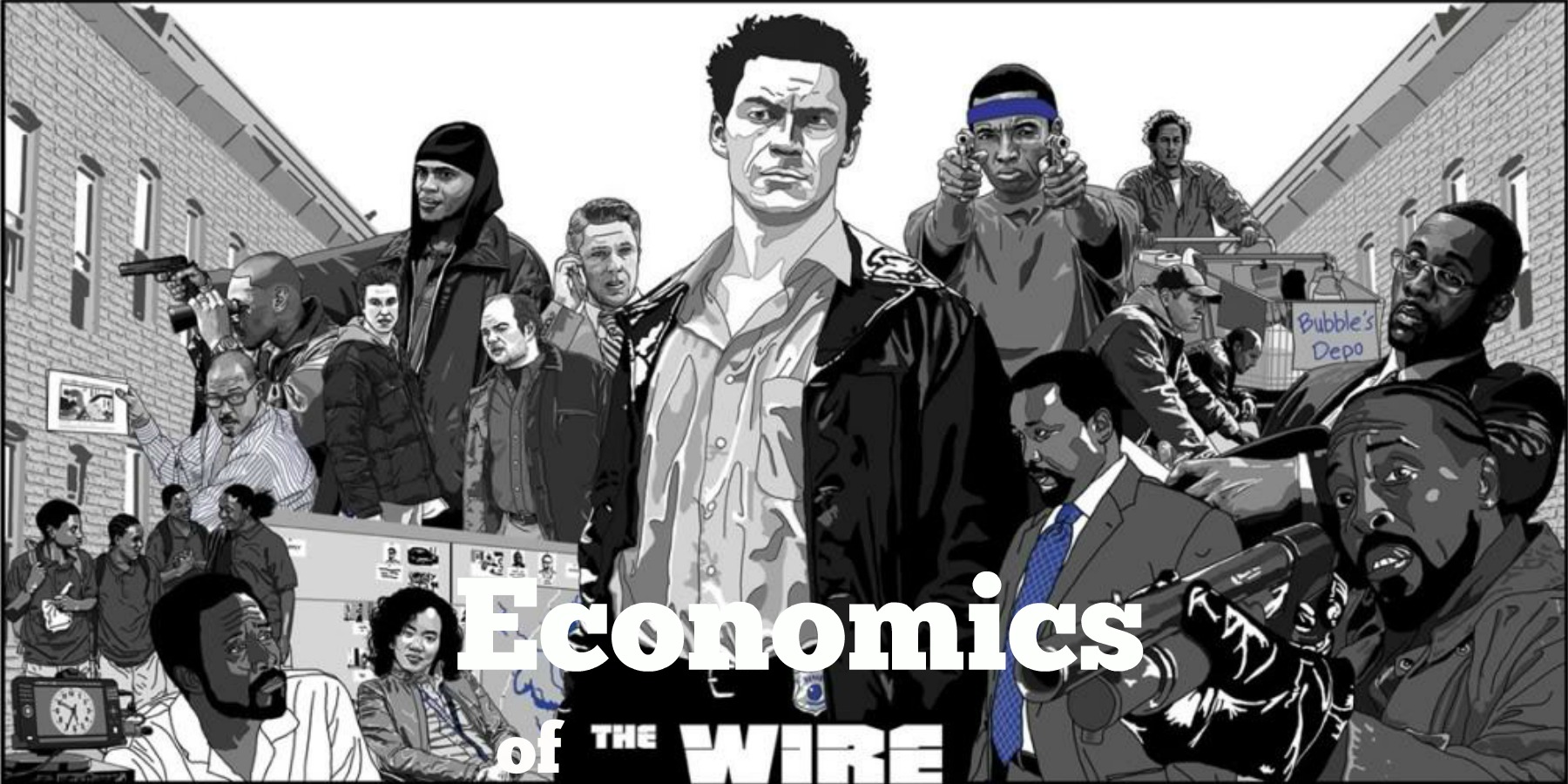
110: Beatrice Cherrier on the Economics of ‘The Wire’ and the Beginning of Economics at MIT

November 4, 2016 by Frank

http://traffic.libsyn.com/economicrockstar/110_Beatrice_Cherrier_Final.mp3
Play in New WindowDownload

economics-of-the-wire

110: Beatrice Cherrier on the Economics of ‘The Wire’ and the Beginning of Economics at MIT

Beatrice Cherrier is an assistant professor at the University of Caen, France.

Professor Cherrier’s research includes the history of postwar economics and how economists’ individual visions combine in collective “styles” of doing economics.

Her current research project is aimed at understanding the rise of applied economics from the mid-1960s onwards.

Beatrice is affiliated with CREM, the Centre for Research in Economics and Management, where she researches alongside social choice theorists.

She teaches in a urban studies department, and is experimenting on her students to figure out how to get non-economists interested in the “dismal” science.

Professor Cherrier blogs on her personal website beatricecherrier.wordpress.com as well as for the Institute for New Economic Thinking.

These students have to understand economics, but not in the way of how to use it. You have to understand why they get that course and how they approach social science. For example urban study students work on the field all of the time, so introducing them to economics with a load of statistics is not the right way. They just won’t get it. They want tools to go into the field and to make sense of social behaviour. The solution is to bring the field into the classroom. The Wire is a great way to analyse these social behaviours, particularly in the city – Professor Beatrice Cherrier.

Economics:

In this episode, Beatrice discusses and mentions: Supply and demand, game theory, cooperation, prisoners dilemma, rationality, experimental economics, sunspots, monetary policy, animal spirits and bibliometric analysis.

Economists:

In this episode, Beatrice discusses and mentions: Kevin Hoover, Berger, Robert Solow, Paul Samuelson, John Maynard Keynes, John Hicks, Edward Prescott, Hanson, F. A. Hayek, Angus Deaton, Arthur Charpentier, Vernon Smith, Paul Krugman, Brad DeLong, Paul Romer, Franco Modigliani and Herbert Simon.

In this episode you will learn:

  • how to teach economics to non-economic students.
  • how to model the drug market using ‘The Wire‘ as a social analysis.
  • using The Wire as a tool to teach economics.
  • where is the rationality in gang warfare.
  • the benefits of using pop culture to teach economics.
  • the beginning of economics at MIT.
  • whether Samuelson and Solow ‘invented’ the economics we know today through their mathematics?
  • on the computerisation of economics using big data.
  • the evolution of economics.
  • the history of experimental economics.
  • and much much more.

Writing Tips:

  • “Writing has never been my strength. It’s the part of my job I don’t like.”
  • Do it. To force yourself to do it you have to do it publicly.
  • Write in a smaller format to try to put your ideas together and be convincing.
  • Blog.
  • Do not write for a public audience but rather write in public. If you put this stuff that you’re thinking online, you have to be better at organising your ideas even if you don’t like that.
  • “My tip is really for people who don’t like writing. Write on a blog because you can write small, it’s not consequential. Maybe people will read you and give you tips and you’re going to improve yourself.”

Links:

  • Introductory Economics for the Real World: Lessons from Teaching with “The Wire” TV Show by Beatrice Cherrier
  • The Most Intolerant Wins: The Dictatorship of the Small Minority by N. N. Taleb on Medium
  • The Wire
  • Breaking Bad
  • The Walking Dead
  • Russell-Sage Foundation
  • Freakonomics
  • Freakonometrics

Recommended Books:

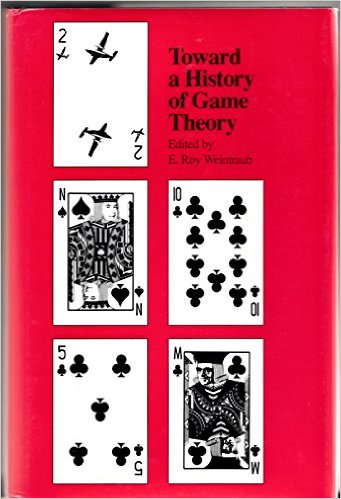
  • Toward a History of Game Theory by E. Roy Weintraub
toward-a-history-of-game-theory-economic-rockstar

http://traffic.libsyn.com/economicrockstar/110_Beatrice_Cherrier_Final.mp3

Podcast: Play in new window | Download
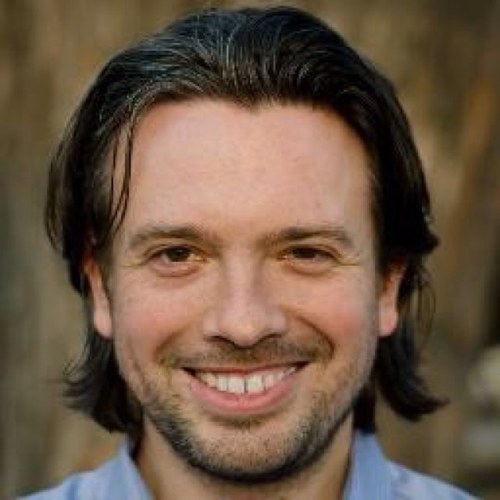
067: Leigh Caldwell on Cognitive Economics and the Mathematics of Behavioral Economics

January 3, 2016 by Frank

http://traffic.libsyn.com/economicrockstar/067_Leigh_Caldwell_Final.mp3
Play in New WindowDownload

067: Leigh Caldwell on Cognitive Economics and the Mathematics of Behavioral Economics

leigh caldwellLeigh Caldwell is a behavioural economist based in London.

Leigh, together with Elina Halonen, runs the Irrational Agency, which takes the latest scientific discoveries in psychology and behavioural economics, blends it with their hands-on experience of marketing and business, and turns them into powerful, incisive market research techniques.

In 2012, Leigh condensed his experience in pricing and the marketing of several of his businesses into a new book The Psychology of Price: How to use price to increase demand, profit and customer satisfaction.

Leigh is co-founder of the London Behavioural Economics Network, writes for the Pricing Revolution and the Knowing and Making blogs, and regularly features as an economics commentator on BBC News, Radio 4, Research Magazine and other media.

My own background is all about intellectual challenge. I went to university early as a teenager. I studied maths and physics. I was always into pushing myself intellectually and finding the next challenge to take on – Leigh Caldwell

Economists: 

In this interview, Leigh mentions: Elina Halonen, Dan Ariely and George Lowenstein.

Economics:

In this interview, Leigh mentions: Behavioral economics, experimental economics, lab experiments, demand curve, equilibrium, utility, mathematics, rationality, nudge, choice architecture, cognitive economics, reference pricing model, anchoring, hyperbolic discounting, heuristics, neuroeconomics, Nudge Unit, organ donation, tax collection, productivity, GDP and unemployment.

In this episode you will learn:

  • why Leigh help co-found the London Behavioural Economics Network (LBEN).
  • the importance of academics and practitioners working together to further the discipline of economics.
  • why finding the sweet-spot between controlled experiments and realism is difficult yet important.
  • what cognitive economics is and how different it is the behavioral economics.
  • whether big data could influence an individuals consumption behaviors.
  • about the need to use the mathematics of computer science in behavioral economics.
  • why we shouldn’t use the current maths of economics to explain human behavior.
  • why a lack of mathematics is holding back the discipline of behavioral economics.
  • why mathematics is essential for theorising and modelling economics, especially behavioural economics.
  • about the paradox of self-awareness in cognitive economics when faced with choices.
  • how a consumers relationship with a material object is a unique experience and how putting a price on the good can ruin this experience.
  • why charging a higher price for your product or service would generate higher profits in a perceived perfectly competitive market.
  • whether the 99p or 99 cent pricing strategy works.
  • about the reference pricing model and why charging $39 for a product is better than charging $34 for the same product.
  • about the importance of setting prices when considering how numbers are spoken, i.e. numbers with more syllables are received to be more expensive than those with fewer syllables. 
  • how Leigh uses the findings in academic papers to make money for his business.
  • how Leigh uses economic conferences to network, to find out about the latest research and to discover the new academic societies that have been established.
  • about Leigh’s goal for 2016 to start a Cognitive Economics Society.
  • about the advice Leigh would give the UK government to apply cognitive and behavioral economics to deal with some aspects of social life.
  • how the UK government changed people’s behaviour about paying their taxes on time.
  • about the productivity challenge the UK government is facing today and what can be done about it.
  • about the current research Leigh is undertaking regarding where our preferences come from.

Conferences:

  • Judgement and Decision Making Conference
  • American Economics Association Conference

Books:

  • The Psychology of Price: How to use price to increase demand, profit and customer satisfaction by Leigh Caldwell.
  • Predictably Irrational by Dan Ariely.
  • Basic Instinct by Pete Luhn
  • Nudge by Richard Thaler
  • Thinking, Fast and Slow by Kahneman and Tversky

http://traffic.libsyn.com/economicrockstar/067_Leigh_Caldwell_Final.mp3

Podcast: Play in new window | Download
055: David Skarbek on the Economics of Prison Gangs and The Social Order of the Underworld

October 22, 2015 by Frank

http://traffic.libsyn.com/economicrockstar/055_David_Skarbek_Final.mp3
Play in New WindowDownload

055: David Skarbek on the Economics of Prison Gangs and The Social Order of the Underworld

Dr David Skarbek is a Senior Lecturer in Political Economy and Undergraduate Exam Board Chair in the Department of Political Economy at Kings College, London.

David’s research interest is to understand how people define and enforce property rights in the absence of strong, effective governments. His work has examined incarceration, gangs, and crime in the United States.

David received a BS in Economics from San Jose State University and a MA and PhD in Economics from George Mason University. He previously taught in the political science department at Duke University.

David’s teaching include ‘Research Methods for Politics’, ‘Economics of Crime’ and ‘Political Economy of Organized Crime’

David’s new book is The Social Order of the Underworld: How Prison Gangs Govern the American Penal System (Oxford University Press). It examines how inmates create self-governance institutions to promote economic and social interactions behind bars.

Economists:

In this interview, David mentions: Alex Tabarrok, Peter Leeson and Peter Boettke.

Economics:

In this interview, David mentions: Scarcity, rationality, irrationality, incentives, governance, social economics, black market economy, gang taxes, drug taxes, marginal cost, correlation, constitutional economics, the collective action problem, free-rider problem, monopoly, trade and protection.

Economics explains everything when properly applied and that discovering how it does so is the most delightful intellectual project that one can imagine – David Skarbek

“Gangs formed because the prison population became very large” – David Skarbek

Click To Tweet

Prison is a very strategic environment. In some ways prison is somewhat an excellent context to apply the rational choice approach – David Skarbek

In this episode you will learn:

  • what makes states stable.
  • how prisoners trade in a black market economy.
  • why gang-based governance in prisons looks very different today than 100 years ago.
  • why big prison systems have serious prison gang problems compared to small prison systems.
  • how women prisons are better controlled as they are governed in a decentralised way.
  • about the control that prisoners in adult correctional facilities have control over minors in juvenile correctional facilities.
  • whether private prisons result in a larger prison population.
  • diminishing returns to prison years.
  • how do prison guards feel about prison gangs.
  • how the costs of having prison gangs is externalised to the taxpayer.
  • how the availability of resources that are provided by prisons could determine the level of prison gang culture.
  • why didn’t slaves revolt when being shipped to other countries.
  • how the free-rider problem was the main reason why slaves did not revolt on ships.
  • whether having weapons is necessary in reducing crime.

Books:

  • The Social Order of the Underworld: How Prison Gangs Govern the American Penal System by David Skerbek
  • The Invisible Hook: The Hidden Economics of Pirates by Peter Leeson
  • Enforcing the Convict Code: Violence and Prison Culture by Rebecca Trammell
  • The Better Angels of Our Nature: Why Violence Has Declined by Steven Pinker

Papers:

  • Why Didn’t Slaves Revolt More Often During the Middle Passage? (D. Skarbek and A. Marcum) Rationality & Society 26(2) 2014: 232-262.

Movies:

  • The Godfather
  • The Godfather II

Where to Find David:

  • Website: www.davidskarbek.com
  • Twitter: @DavidSkarbek
http://traffic.libsyn.com/economicrockstar/055_David_Skarbek_Final.mp3

Podcast: Play in new window | Download
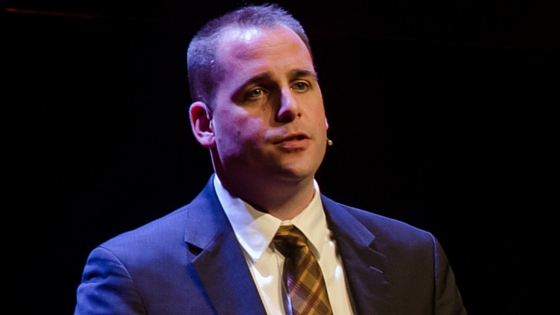
051: Eyal Winter on How Excessive Giving Ensures the Survival of the Human Race and on the Beautiful Mind of John Nash

September 23, 2015 by Frank

http://traffic.libsyn.com/economicrockstar/Eyal_Winter_Final.mp3
Play in New WindowDownload

051: Eyal Winter on How Excessive Giving Ensures the Survival of the Human Race and on the Beautiful Mind of John Nash

eyal winter

Eyal Winter is the Silverzweig Professor of Economics at the Hebrew University and Economics Professor at Leicester University.

He is a member and a former director of the Center for the Study of Rationality, an elected council member of the International Game Theory Society and an elected fellow of the Economic Theory Society.

Eyal was awarded the Humboldt Prize for excellence in research by the German government in 2010. He has presented his work in more than 120 research institutes in 26 countries around the world including Harvard, Stanford, Princeton, Berkeley, Cambridge, and Oxford.

Eyal’s book Feeling Smart: Why our Emotions are More Rational Than We Think was published in January 2015.

Eyal graduated from the Hebrew University of Jerusalem in Mathematics, Statistics and Economics before going on to study his doctorate in Game Theory.

In this episode you will learn:

  • if there is a link between game theory and behavioral economics.
  • how the perceptions of human behaviour vary greatly across all disciplines.
  • if there is a need to have divisions in universities regarding the disciplines being taught.
  • how we can use emotion in a strategic way to make us better off.
  • why human evolution has not removed emotion if it’s considered a hindrance in economics.
  • the importance of training your rationality and emotions to work together.
  • why you should look at something from an outsiders perspective when dealing with an emotional situation.
  • how anger can be an emotion that can make you financially better off.
  • why love, empathy and sympathy can make you better-off in the way how other people treat us.
  • what Eyal Winter means when he says that there is logic in emotion and emotion in logic.
  • how subjective information is more powerful than evidence-based information.
  • why intuition should be taken into consideration in the decision-making process rather than using evidence alone.
  • why you should invoke your rationality into the decision-making process rather than rely on your gut instinct.
  • how game theory is not always about choosing the most optimal outcome for an individual.
  • how we can learn why humans give excessively by observing the behavior of ants and bees.
  • about the incentives of suicide bombers and why their behavior is not irrational if you think about their community.
  • why we treat each other much better than we treat animals.
  • about the incentive to donate and how mixed ethnic communities donate less than more homogenous communities.
  • why the Scandinavian countries are willing to pay the highest taxes and yet have the lowest tax evasion in the world.
  • why it was fascinating yet frustrating for Eyal Winter when he met John Nash.
  • why John Nash developed the Nash Equilibrium to reflect his own way of dealing with people and situations.
  • if we can change people’s behaviour with incentives or social pressure.
  • whether children have a higher emotional intelligence than adults.
  • if seeing a comedian live would be better than seeing your doctor if you feel sad.
  • whether employees should be subjected to ‘Emotional Labor’ by their employers.

Influencers:

Nobel Laureate Bob Aumann

Economics:

In this interview, Eyal mentions: game theory, rationality, irrationality, human behavior, donations, incentives,

Economists:

In this interview, Eyal mentions: Herbert Gintis, Bob Aumann and John Nash.

Personal Habits:

Play Guitar – Traditional Israeli songs and rock, listens to classical music and travel.

“The human race has only one effective weapon, and that is laughter.” -Mark Twain

Click To Tweet

Books:

  • Feeling Smart: Why our Emotions are More Rational Than We Think by Eyal Winter
  • Mapping Human History: Genes, Race and Our Common Origins by Stephen Olson

Resources:

  • Psychology Today 
  • Haaretz Newspaper 

Song:

  • The Famous Blue Raincoat by Leonard Cohen sung by Professor Eyal Winter
http://traffic.libsyn.com/economicrockstar/Eyal_Winter_Final.mp3

Podcast: Play in new window | Download
044: Nancy Folbre on Feminist Economics and the Care Economy

August 6, 2015 by Frank

http://traffic.libsyn.com/economicrockstar/044_Nancy_Folbre_Final1.mp3
Play in New WindowDownload

044: Nancy Folbre on Feminist Economics and the Care Economy

Nancy Folbre is a recently retired Professor of Economics at the University of Massachusetts, Amherst andNancy Folbrecurrently directs a research program of gender and care work at the Political Economy Research Institute.

Professor Folbre’s research focuses on the interface between feminist theory and political economy, with a particular focus on the work of caring for others.

Nancy was elected president of the International Association for Feminist Economics (IAFFE) in 2002, has been an associate editor of the Journal Feminist Economics since 1995, and is also an editorial assistant of the Journal of Women, Politics & Policy.

Nancy is recipient of a MacArthur Fellowship, and she has consulted for the United Nations Human Development Office, the World Bank and other organizations.

Professor Folbre has also written extensively on the social organization of time, namely the time allotted to care for children and the elderly and how family policies and social institutions limit the choices people can make between paid and unpaid work.

She is a contributor to the New York Times Economix blog.

Nancy’s book ‘Saving State U‘ (New Press, 2010) makes a case for strengthening public support for higher education in the United States.

Other recent books include ‘Greed, Lust, and Gender: A History of Economic Ideas’ (Oxford University Press, 2009) and ‘Valuing Children: Rethinking the Economics of the Family’ (Harvard University Press, 2008).

Nancy received a B.A. in philosophy from the University of Texas at Austin in 1971, an M.A. in Latin American studies from UT Austin in 1973, and a Ph.D. in economics from the University of Massachusetts, Amherst in 1979.

In this episode, you will learn:

  • why Nancy Folbre decided to study economics.
  • how the household is very much like the market economy.
  • about feminist household economics.
  • what the underlying principles and foundation to feminist economics.
  • why we should see unpaid work as part of the economy.
  • how the state and the market has reinforced the patriarchal system.
  • why the capitalist system, ironically, has downside effects on women today despite the benefits it provides.
  • why we should adopt the Scandinavian model of paternal responsibility.
  • about the unmeasured ‘Care Economy’ where people perform unpaid work.
  • about the opportunity cost to care work.
  • why Replacement Cost is a better proxy from a National Accounting perspective for measuring the size of the Care Economy.
  • why people are intrinsically motivated to care and that money is not an issue.
  • why Nancy Folbre strongly believes that we should think carefully about how we reward care work.
  • about the ‘Care Penalty’ and why we shouldn’t take advantage of the care workers motivation to work in the care industry.
  • about the societal pressures on a man who decides to stay at home and be the care giver.
  • why we should be providing a better account of the costs and benefits of raising kids.
  • if women have a ‘wage-penalty’ as they are, in most cases, the care-giver.
  • whether we can capture the value spent by parents caring for their children.
  • if intrinsic values of happiness lead to economic benefits for household.
  • if children of developed and less-developed countries are treated differently by their parents in terms of their perception of value.
  • about the rapid decline in fertility rates in India, Asia and Latin America.
  • why self-interest was always described in gender terms and why it was always permissible for men to be self-interested than women.
  • if having more women involved in economics and the economy would lead to better outcomes.

Economists:

In this interview, Nancy mentions and discusses: Gary Becker, Shoshana Grossbard, Friedrich Engels and Adam Smith.

Economics:

In this interview, Nancy mentions and discusses: feminist economics, market choice, economics of the household, altruism, rationality, interdependent utility, collective bargaining, choice, efficiency, inequality, incentives, opportunity cost, replacement cost, free market, Invisible Hand and happiness.

Quotes by Professor Folbre in Episode 044 of the Economic Rockstar Podcast:

Work can be very productive and create value for society even if it’s unpaid – Nancy Folbre

Click To Tweet

“Definitions of femininity and masculinity are changing in a positive way” – Nancy Folbre

Click To Tweet

“Smith had a lot of confidence in the pursuit of individual self-interest” – Nancy Folbre

Click To Tweet

Many people have taken Smith’s praise of the free market as an endorsement of selfish behavior, that it doesn’t matter if you think only of yourself because in a market economy we can be confident that everything will turn out just fine.  What I argue in the Invisible Heart is that’s really incorrect. The market economy really depends to a very great extent on a sense of commitment and obligation to other people of trust and reciprocity and concern for the welfare of others. That affects overall economic organisation and success in some pretty profound ways – Nancy Folbre

“We need to change the way we think about work and about value” – Nancy Folbre

Click To Tweet

Leading happy and worthwhile lives is kinda the point of the whole economic enterprise and sometimes we lose sight of that. And there’s certainly a lot of evidence that what makes people happy is good human relationships, having close ties with family and friends and community. If we appreciated that a little bit more fully, we could organise our economic system a lot more successfully – Nancy Folbre

“I think Feminist Economics is a part of the whole heterodox challenge to the mainstream economics, and I fell good about that” – Nancy Folbre

Recommended Books:

  • Valuing Children: Rethinking the Economics of the Family by Nancy Folbre
  • Greed, Lust, and Gender: A History of Economic Ideas by Nancy Folbre
  • Saving State U by Nancy Folbre
  • The Invisible Heart by Nancy Folbre
  • The Condition of the Working-Class in England in 1844 by Friedrich Engels
  • The Invisible Hand by Adam Smith

Blog:

  • Care Talk by Nancy Folbre

Conference:

  • International Association for Feminist Economics

http://traffic.libsyn.com/economicrockstar/044_Nancy_Folbre_Final1.mp3

Podcast: Play in new window | Download
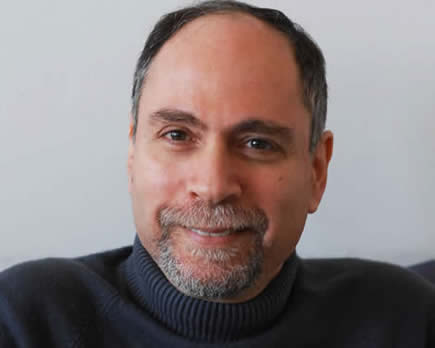
043: Herbert Gintis on Game Theory and the Multidisciplinary Approach to Understanding Human Behavior

July 30, 2015 by Frank

http://traffic.libsyn.com/economicrockstar/043_Herbert_Gintis_Final.mp3
Play in New WindowDownload

043: Herbert Gintis on Game Theory and the Multidisciplinary Approach to Understanding Human Behavior

Herbert Gintis is Emeritus Professor of Economics at University of Massachusetts and visiting Professor at Central European University.Herbert Gintis

He is known for his theoretical contributions to sociobiology, especially altruism, cooperation, epistemic game theory and gene-culture co-evolution.

Herbert has a B.A and M.A in Mathematics but switched his PhD program at Harvard from mathematics to economics.

Professor Gintis was part of a group of economists who developed their ideas on a new economics which encompassed issues of alienation of labor, racism, sexism, and imperialism.

Herbert has worked extensively with economist Samuel Bowles, writing their landmark book, Schooling in Capitalist America.

One of Herbert’s latest books The Bounds of Reason emphasises the unification of economic theory with sociobiology and other behavioral sciences which, in the words of Nobel Prize-winning economist, Vernon L. Smith, “is firmly in the revolutionary tradition of David Hume (Convention) and Adam Smith (Sympathy)”.

In the episode you will learn:

  • about the importance of trans-disciplinary research and the importance of collaboration with other disciplines.
  • why economics is not the only social science that explains human behavior.
  • how biology, economics and sociology explain the behaviour of humans in different ways and which discipline is correct?
  • about the Ultimatum Game and how it shows the cooperative and non-cooperative behaviour of humans.
  • about the morality of humans and how we reciprocate kindness with kindness and unkindness with unkindness.
  • why reciprocity makes humans so successful as a species.
  • why some species have a symbiotic relationship with other species which is not the same as reciprocity.
  • how we can fit all the human feelings together to form a multi-disciplinary approach to understanding human behavior.
  • why we always need a system to punish free-riders and non-cooperators.
  • how the future structure of the University can be seen at Arizona State University today.
  • why we need a new generation of thinkers and research centres who are trans-disciplinary.
  • what projects Professor Herbert Gintis is working on right now.
  • why morality controls politics and your vote will not make a difference.
  • how Herbert gets things done in terms of writing books and journal articles.
  • why Herbert did not like The Black Swan by Nassim Nicholas Taleb.
  • about Herbert’s disagreement with Nassim Nicholas Taleb.
  • why Herbert believes that macroeconomics is wrong and is in agreement with Taleb on that issue.
  • the goal of economic policy is not to predict but to put in place economic and social policies that prevent really bad outcomes.

Influencers:

Kenneth Arrow, John Maynard Keynes, Adam Smith and Albert Einstein.

Economics:

In this interview, Herbert mentions and discusses: Marx, rationality, game theory, rational actor model, experimental economics, prisoners dilemma, the ultimatum game, labor market, reciprocity and morality.

Economists:

In this interview, Herbert mentions and discusses: Vernon Smith, Samuel Bowles, Ernst Fehr, Kenneth Arrow and Nassim Nicholas Taleb.

On Math Being the Core Link to Multi-Disciplinary Knowledge:

“It’s really hard in the Behavioral Sciences to get too close to any one thinker because they’re all tainted by disciplinarianism. We need a new generation of thinkers who really think in all of these disciplines at the same time. As long as you can do the math. If you can’t do the math, you can’t do economics or you can’t do biology. If you can do the math, and you know statistics, there’s no reason why you shouldn’t know all of the fields. We need a generation of people who do that. The reason it’s possible now is the internet. Now, there’s no reason for disciplinary isolation. I think the next generation of behavioral scientists is going to much more broad”.

Arizona State: The Next Generation University… Today

Arizona State University is organised trans-disciplinarily. They don’t have traditional disciplines. They have subject areas depending on who asks questions and subject areas there from all sorts of disciplines. Herbert Gintis believes that’s what the future is going to be like, where you abandon the disciplines and add new research centres based on asking questions like climate change, cooperation, epidemiology, warfare, political structure, etc. And then you just hire people who can do that and talk to each other. It is exciting. It will happen. But it will take a long time because the whole organisation of the university is in terms of disciplines.

All of the real advances in the Behavioral Sciences fall in between the disciplines. It requires you do it all at the same time. it’s likely that at the forefront of change in the Behavioral Sciences will be funding organisations, governmental organisations like the NFF in the United States and the ESF in Europe. 

Quotes by Professor Gintis in Episode 043 of the Economic Rockstar Podcast:

Disciplines are almost like a feudal fiefdom. So it’s very hard to do trans-disciplinary research but that’s where all the real action is these days. Not only in behavioral science but in natural science – Herbert Gintis.

As far as I’m concerned, all of life is game theory. It’s the interaction of strategic interaction of individuals of all discipline species and types and races. So game theory comes first – Herbert Gintis.

Human success is not based on selfishness. It’s based on our ability to cooperate – Herbert Gintis.

Click To Tweet

“The real enemy of understanding humans is the notion that we’re all selfish. It’s just not true – Herbert Gintis

To do creative work, you have to have time. Once you have time, you get a lot of work done – Herbert Gintis.

“What I like to do most in the world is to read and write. That’s what I do” – Herbert Gintis.

“I did not like The Black Swan at all. It made fun of science. It made fun of statistics. It capitalised on a unique event, the financial crisis of 2008, and he used it to say economics is a bunch of crap. I think that’s just a bad mistake and I had some run-ins with him on the web. He thinks that science is about prediction. Now prediction is important but that’s not what science is about. It’s about expectation” – Herbert Gintis.

Projects Herbert Gintis is Working on Right Now:

Non-consequential behaviour in politics: 

“People participate politically even when they don’t make any difference. In all English-speaking countries, no election with more then 40,000 voters has ever been won by one vote. Meaning that no individual has ever made a difference in a political booth. Political structures are moral structures and they don’t necessarily reflect particular self-interest concerns” – Herbert Gintis.

Resources:

  • Herbert created his own word processor and uses LaTex for mathematical equations.
  • The Web.
  • Evernote
  • Scrivener

Recommended Books:

  • The Bounds of Reason: Game Theory and the Unification of the Behavioral Sciences by Herbert Gintis
  • A Cooperative Species: Human Reciprocity and Its Evolution by Samuel Bowles and Herbert Gintis
  • Schooling in Capitalist America: Educational Reform and the Contradictions of Economic Life by Samuel Bowles and Herbert Gintis
http://traffic.libsyn.com/economicrockstar/043_Herbert_Gintis_Final.mp3

Podcast: Play in new window | Download
036: Jason Shogren on Music and Endogenous Risk and Rationality in the Environmental Goods Market

June 11, 2015 by Frank

http://traffic.libsyn.com/economicrockstar/Jason_Shogren_Final.mp3
Play in New WindowDownload

036: Jason Shogren on Music and Endogenous Risk and Rationality in the Environmental Goods Market

Jason Shogren is the Stroock Professor of Natural Resource Conservation and Management and Chair of the Department of Economics and Finance at the University of Wyoming.Jason Shogren

Professor Shogren’s background and research interests include the economics of environmental and natural resource policy, experimental methods; endangered species; invasive species; climate change; agricultural and forest management; energy; health; regulation; and paleoeconomics.

Jason has been named a fellow of the Association of Environmental and Resource Economists (AERE), the nation’s pre-eminent professional society for environmental economists and policy.

Jason served as professor to Sweden’s King Carl Gustaf XVI in 2012 and is a 2007 Nobel Peace Prize winner (shared with Al Gore) as a member of the United Nations team working on climate change.

He has also served as a senior economist on the Council of Economic Advisers in the White House under the Clinton Administration.

Professor Shogren’s teaching include Global Economic Issues, Natural Resource and Environmental Economics, Environmental Risk and Conflict and Experimental Economics.

Jason is well published with over 200 articles and is the author and editor-in-chief of numerous books including Encyclopedia on Resource, Environmental, and Energy Economics, Experimental Auctions and Fat Economics: Nutrition, Health, and Economic Policy

Jason loves fishing and music. He spends his time composing acoustic roots songs that he describes as catawampus Americana music, has five albums and will be touring this summer.

Economists:

In this interview, Jason mentions and discusses:

Janet Yellen, Thomas Sowell, Daniel Kahneman, Amos Tversky, Gary Becker, Isaac Ehrlich, Ralph C. D’Arge, Tom Crocker, Peter Baum, Karl-Göran Mäler, Vernon Smith and Charlie Plott.

Economic Themes:

In this interview, Jason mentions and discusses:

Carbon tax, cap and trade market, the Coase Theorem, probability, general equilibrium models, expected utility, nudge, rationality, irrationality, risk aversion, loss aversion, homo economicus, soft paternalism, trade-off, scarcity, endogenous risk and extreme tail-end events.

“I spent most of my life before becoming a PhD economist as a musician” -Jason Shogren.

Click To Tweet

“I like to think of economics as applied philosophy”- Jason Shogren.

Click To Tweet

Find Out:

  • about the Cap and Trade Market for carbon emissions is a failure and would only work in a micro-management setting.
  • why its best to implement a carbon tax.
  • the difference between luxury emissions and survival emissions and why it maybe difficult for China and India to reduce their carbon.
  • how Jason’s depiction of a low probability-high severity event influenced Janet Yellen to take action on climate change.
  • if we are acting rationally or irrationally toward the environment.
  • how we can exploit rationality ‘for the good’.
  • how, over the last 30 years, we have become averse to just about everything.
  • how we can take advantage of peoples’ status quo to increase their contribution of paying a carbon tax.
  • how designing the right system can nudge people to do the right thing – just like soft paternalism.
  • how Jason sought inspiration about rationality from other disciplines, such as English literature and music composition, rather than from economics.
  • how Jason uses music as a form of escapism.
  • about the inspiration Jason gets for writing songs from economics.
  • who the talented people are behind the creation of Jason’s amazing artwork and photography.
  • about the concerts that Jason Shogren will be playing at each year.
  • about Jason’s hitch-hiking experience in Ireland in 1985 from the Giants Causeway and down along the West Coast (now known as the Wild Atlantic Way).
  • about Jason theoretical thought process regarding endogenous risk and  how he applies it to different environmental risks.
  • what Jason would do if he was once again Economic Advisor to the US government.
  • a little about the Endangered Species Act.
  • what I saw on Professor Shogren’s whiteboard when I spoke to him on Skype. Hint: It’s his next economic model.
  • about the 25% chance you have in meeting Jason in Centennial, Wyoming – it involves the population and the number of pubs!
  • about Jason’s plastic Nobel Prize keychain and where he hangs it.

Jason Shogren band

Influencers:

Ralph C. D’Arge, Tom Crocker (Wyoming), Peter Baum (University of Stockholm) , Karl-Göran Mäler, Vernon Smith  and Charlie Plott.

An Economic Theory that Influenced Jason Shogren:

A paper by Ehrlich and Becker on self-protection and self-insurance, i.e. endogenous risk, where people invest to change the lottery they face in life, influenced Professor Shogren’s theoretical approach to economics. Once Jason started looking at economics from that perspective, he began to see a lot of models in which the states of nature where independent. To Jason, that seemed too fatalistic for how we spend our resources and how we invest. Most environmental policies are a lottery because we can’t guarantee that somebody’s going to live or not get sick based on exposure (to environmental risk).

We have an estimate and ‘safe’ minimum standards, but there’s no guarantee. So we’re really talking about policies at a collective level that are moving probabilities and damages around. We also have investment at a private level in which we’re doing the same thing – Jason Shogren

What, therefore, struck Jason was asking people about their value of reducing risk and they giving him a value of zero. He questioned people’s decision of applying a value of zero to reducing risk. The reason was that they valued the ‘collective’ reduction as zero and not their ‘individual’ reduction because they took care of the risk themselves.

Applying this theoretical thought process to climate change, endangered species, health risks, pandemics, invasive species or any other problem, will most likely have some element of endogenous risk. Once you add that element to it, the model gets a little richer and once the model gets a little richer, then you can explain a little more behaviour. By adding the behavioural element to the model, the question is ‘What drives things more? Technology of reducing risk? Tastes? How do they work together or how they work apart?’.

“If you can strip it down to that level, then you can really look at a lot of different problems using that type of kit”– Jason Shogren. It can become very flexible as a theoretical framework and model, that it is the reason why Jason, his peers and his students were able to look at a lot of different problems in terms of endogenous risk. It allows for focus on a particular research topic, otherwise it would be too scattered.

Jason on Carbon Emissions:

“We still have to figure out a Plan B, because there is no Planet B” – Jason Shogren.

Click To Tweet

Putting a price on carbon has been the way to reduce carbon emissions. Trying to set up cap and trade markets has been too hard. The cap and trade market has allowed the supply to increase – Jason Shogren.

“If you’re waiting for people to do the right thing for the right reason, you can wait a long time. We’ve seen that throughout history. Economists would say that ‘if you want to do the right thing at the right time, let’s get the prices right and then people will make their own choices’. But if you get prices to reflect true costs and reveal hidden costs that are being imposed on others, then hopefully we don’t have to job-own them and nudge them. Maybe we have to nudge people and get the price right. Both theoretical aspects of economics should be complementary and we should not substitute one for the other” – Jason Shogren.

Before we start calling it nudging, there was a saying “The target is the target and the costs are regrettable but not really decisive” – Thomas Sowell.

Rationality in the Environmental Goods Market:

Rationality in psychology is very different to rationality in economics, in that when we think about rationality in economics we think about a social construct. People are making choices within an active exchange institution like a market and if they start making their emotions run wild, then there are people to arbitrage them. Either they like less money to more or they adjust and they start looking for opportunities themselves. It’s not that we all have to be 100% rational. As long as the folks at the margin who are making those trades pay attention, the market is powerful enough to move it along as if everybody was rational. But they don’t have to be.

The problem with environmental goods is that we don’t have markets like that. So now we have to figure out the problem of how to aggregate up in a way that would incorporate both economic monetary decisions and economic non-monetary decisions. That becomes trickier. Up to quite recently, the only thing economists were dealing with in terms of aversion was risk aversion. Typically it was believed that risk was the only thing that people were averse of. And then Kahneman and Tversky came along and we were now averse to losses and we treated gains and losses differently.

Over the last 30 years, we have become averse to just about everything – ambiguity, inflation aversion, equity aversion, disappointment aversion, envy aversion, lying aversion, guilt aversion. And so by adding all of these emotions into our typical economic model, the question is ‘How and when do we stop?’. Do we add all 40 emotions into our models? And now how do we sort out cross-partial derivatives between equity and envy and disappointment and suspicion and regret? And those are jobs that economists have not been typically trained to deal with – assigning complementarities or substitutabilities between different emotional factors.

So part of this working on nudges is trying to understand that if we tweak the models so that we can take advantage of how people feel guilty about this or how they opt-in or opt-out about different things, we can exploit that irrationality ‘for the good’. For example, people like status quo, so let’s take advantage of that. So instead of buying an airline ticket, nowadays you have to opt-in to add in a carbon price or you can buy a carbon off-set. What we should do is get all the airlines to opt out of buying that carbon off-set. And giving our tendencies not to want to opt out of things, we would probably buy a whole lot more carbon off-sets.

If we can exploit those at the same time as having an active market for those off-sets and a price, then it’s not irrational or rational. It’s understanding that there is some instinctual behaviour that people at a ground level will stick with. That’s the whole soft paternalism idea that we know that you know what’s right and we’re just designing the system to help you get there as opposed to us telling you what’s right.

It is extremely difficult to single out one emotion and to identify it as the one emotion that is driving homo economicus away from our rational base-line. It’s going to take us a while to say ‘Here are the ten big emotions that we can live with and let’s just work on those’.

On Human Behavior:

“If I really want to understand human behaviour, who should I read – Shakespeare or Gary Becker?” – Jason Shogren.

Click To Tweet

If we really want to study emotions we should study literature. If you really want to be economical about how people think, then you should study poetry. Then if you want to convey all of that in a compact form that people will pay attention to then you add music. Now you’ve got a melody and lyrics  and you have a path where essentially you are projecting what you are considering to be an important story to tell. Song writing has its structures and its forms that you can easily translate into guidelines and rules and math models, just like we do in economics. To me, arts and science – I don’t know if they’re ying and yang – to me they go parallel and spillover all over each other – Jason Shogren.

What Professor Shogren Would Do Today as Economic Advisor to the US Government:

  1. Figure out a way to introduce a carbon tax but difficulty would lie with the Senate and the House of Representatives since they are essentially run by the Republicans.
  1. Take on the Endangered Species Act because it’s being waiting to be revised for almost 22 years. The way that it is written is that any species has to be protected at any cost. That type pf pressure can’t hold without the economy bursting at the seams. It would be worth going through this Act and add safety valves in a systematic and coherent way. It’s too important for this Act to just sit idly by when people using discretion as to when it holds and when it doesn’t.

josh shogren

Takeaway:

As a younger man, everybody sort of hits that wall of maturity that you don’t really want to go through. Sometime you get forced through it and sometimes you walk through it and sometimes you fall through it. Once you get there and you decide you can’t control the universe, that’s a good place to be – Jason Shogren.

At the same time, you take care of what you can’t control. You know, it’s the oldest story in the book. Once you come to the realisation and you find that balance, things are just way more interesting, way easier to deal with and just, in general, happier. Being a good Scandinavian doesn’t mean I have my gloomy dark moments – Jason Shogren.

Songs Mentioned and Played in this Episode:

  • Works by Jason Shogren
  • Exit In Flames by Jason Shogren
  • Broken Every Vow by Jason Shogren
  • Me and Genghis Khan by Jason Shogren

Concerts Where You Can See Jason Shogren:

  • WHAT fest
  • Nowoodstock
  • Snowy Range

On Ireland:

“I spent a month hitch-hiking in Ireland way back in ’85. I started up in Larne, went up through the Causeway, then all the way down the West coast. It was a great month of hitch-hiking, Guinness, rain, people and adventure. So, yeah, I’m ready to come again” – Jason Shogren.

On Conferences:

“It’s supposed to be fun. You’re supposed to live and learn and try to pass on something better. Sometimes it’s ideas and sometimes it’s ideas through songs” – Jason Shogren.

Musicians Mentioned in this Episode:

  • Mumford and Sons
  • Gordon Barry

Recommended Book:

  • What Work Is by Philip Levine (Poet) 

Where to Find Jason Shogren:

  • Website: www.jshogren.com
  • CDBaby
http://traffic.libsyn.com/economicrockstar/Jason_Shogren_Final.mp3

Podcast: Play in new window | Download

035: Stephen Young on Being Car-Free and the Behavioural Economics of Owning A Car

June 4, 2015 by Frank

http://traffic.libsyn.com/economicrockstar/035_Stephen_Young_Final.mp3
Play in New WindowDownload

035: Stephen Young on Being Car-Free and the Behavioural Economics of Owning A Car

Stephen Young is a Senior Lecturer at Brighton Business School and is subject leader for behavioural economics.Stephen Young

He is also Visiting Lecturer at Brighton and Sussex Medical School, where he teaches Behavioural Economics to health professionals, including commissioners, public health practitioners and GPs.

As an independent consultant and trainer, Stephen also provides client workshops and presentations on behavioural economics and behaviour change.

Stephen is widely published and his research interests include behaviour change, climate change, health, sustainability, and Information and Communications Technology.

Stephen does not own a car and is so passionate about being car free that he writes regularly on his blog livingthecarfreelife.blogspot.com. 

Economists:

In this interview, Stephen mentions and discusses:

Paul Ormerod, Richard Thaler, Cass Sunstein, John Cochrane, Paul Dolan, Malcolm Gladwell, Phil Goodwin, Daniel Kahneman, Adam Smith, Karl Marx, Barry Schwartz, Richard Layard, Nassim Nicholas Taleb, Paul Krugman and Friedrich Hayek.

Economic Themes:

In this interview, Stephen mentions and discusses:

Bank run, financial crisis, risk, behavioural economics, nudge, rationality, incentives, tax, choice architecture, obesity, climate change, externalities, loss aversion and the endowment effect.

On Economic Theory:

“None of the models are completely perfect. None of them work to everybody’s benefit” – Stephen Young

Click To Tweet

Is behavioural economics storming the citadel or is it shoring up the ramparts? – Stephen Young

Click To Tweet

Find Out:

  • why Stephen decided to become an academic.
  • about the Northern Rock bank run in the UK in 2007.
  • why universities need to adapt or die when it comes to addressing relevant content.
  • what Stephen is doing to reduce his carbon footprint in college and how he’s responding to the digital needs of his students.
  • why health professionals are interested in behavioral economics.
  • about the Irish government’s fight against obesity.
  • how Stephen is encouraging a town in the UK to become pedestrian friendly.
  • about framing car ownership – status and perception of rank.
  • how by ditching your car you can burn calories.
  • how the average person is working two days a week to pay for their car.
  • about the emotional attachment that a car represents.
  • what major cities across Europe are doing to make them more pedestrian and bike-friendly.
  • about peak car ownership.
  • some advice from Stephen on how to give up your car and become car free.
  • about the pluralist approach to embracing economics.

“The externalities don’t work for car ownership because it’s not priced in because of the pollution emitted” – Stephen Young

Click To Tweet

You can live a better life without a car. You can be thinner. You  can be richer. You can be more sociable. You can be more flexible. You can get around just as easily – Stephen Young.

Reasons for Peak Car Ownership:

  1. The youth do not have the income to finance the ownership of a car due to the high unemployment rates.
  2. High cost of car insurance.
  3. The opportunity costs of owning the latest technology.
  4. You don’t need a car to participate in a lot of things today.

Behavior Economics in the Health Sector:

“We’re not just nudged by the other side, we’re being bombarded by the other side. There’s a lot of room to doubt the way public health policy is being transacted and implemented in a lot of economies” – Stephen Young.

Giving Up Your Car and Becoming Car Free:

  1. Try living without your car for a while before you give up.
  2. If you’re moving house, locate to an area where everything you need is close by.
  3. Don’t give up your car just because it’ll make the world a better place. Only do it to improve your own life.
  4. Take a ‘hike’ – go for a walk.
  5. Walking is a great way of forming your thoughts and ideas as it clears your head and frees your mind.
  6. Walking, rather than driving, improves your health and well-being. It connects you to where you live, to where you are.

“All truly great thoughts are conceived by walking” – Nietzcshe.

Click To Tweet

Recommended Books:

  • The Death of Economics by Paul Ormerod
  • Why Most Things Fail: Evolution, Extinction and Economics by Paul Ormerod
  • Nudge by Richard Thaler and Cass Sunstein
  • The Tipping Point by Malcolm Gladwell
  • Happiness by Design by Paul Dolan
  • Thinking, Fast and Slow by Daniel Kahneman
  • The Road to Serfdom by Friedrich Hayek
  • Capital: Volume 1 by Karl Marx
  • Misbehaving: The Making of Behavioural Economics by Richard Thaler
  • Poor Economics by Abhijit V. Banerjee and Esther Duflo
  • Scarcity by Sendil Mullainathan and Eldar Shafir
  • The Structure of Scientific Revolutions by Thomas Kuhn

Where to Find Stephen Young:

  • Website: stephenyoung.org.uk
  • Website: livingthecarfreelife.blogspot.com
  • LinkedIn: Stephen Young
  • Twitter: @stephenyounguk
  • BehaviourWorkshops Twitter: @BehaviourW
  • Behaviour Workshops Blog: http://www.behaviourworkshops.blogspot.co.uk/

Stephen Young’s Publications:

  • Young, S (2013). The Behavioural Economics of Owning A Car. eg magazine. Volume 18, Issue 5, March-April  2013. ISSN 2042-1990.
  • Other Publications.

Forthcoming

  • Young, S. and Caisey, V. Behavioral Economics and Social Marketing: Points of Contact?  Chapter in Volume II of Stewart, D. (Ed) Handbook of Persuasion and Social Marketing. NY: Praeger. 2015.
http://traffic.libsyn.com/economicrockstar/035_Stephen_Young_Final.mp3

Podcast: Play in new window | Download
024: Greg Davies on Behavioral Finance and Controlling Your Emotions When Making Trading Decisions

March 19, 2015 by Frank

http://traffic.libsyn.com/economicrockstar/024_Greg_Davies.mp3
Play in New WindowDownload

024: Greg Davies on Behavioral Finance and Controlling Your Emotions When Making Trading Decisions

Greg Davies is Managing Director and Head of Behavioral Finance at Barclays.  He joined the firm in December 2006 to develop and implement commercial applications drawing on behavioural portfolio theory, the psychology of judgment and decision making, and decision sciences.

Today Greg leads a global team of behavioural and quantitative finance specialists, and is responsible for the design and global implementation of Barclays’ Investment Philosophy.

Greg is an Associate Fellow at Oxford University’s Saïd Business School and his first (co-authored) book, ‘Behavioral Investment Management: An Efficient Alternative to Modern Portfolio Theory’, was published in January 2012.

He is co-curator and co-creator of Open Outcry – a reality opera based on the stock market trading floor.

Greg has authored papers in multiple academic disciplines, presents at academic and industry conferences, and is a frequent media commentator on Behavioural Finance.  He is an Editorial Board Member of the Journal of Behavioural and Experimental Finance.

Greg studied at the University of Cape Town and obtained a degree in Economics, Philosophy and Finance. He followed this with an MPhil in Economics and a PhD in Decision Theory and Behavioural Finance from the University of Cambridge.

Economic Themes:

In this interview, Greg mentions and discusses:

Behavioral economics, behavioral finance, rationality, irrational behavior, heuristics, cognitive biases, system 1, system 2, homo economicus, trade-off, home bias, familiarity bias, risk, return, portfolio, efficient frontier, stochastic model, trading floor, noise, herding, bubbles, booms, bust, returns, standard deviation, deterministic model, decision theory, expected utility theory, mean variance and portfolio theory.

Economists:

In this interview, Greg mentions:

Danial Kahneman, Amos Tversky, Terence Odean, Warren Buffet, Charlie Munger and Harry Markowitz.

Influencers:

Jon Elster and Amos Tversky.

Advice:

Be multi-disciplinary. Look for links between fields. Be continuously curious.

Keep learning. Stay curious. Say ‘yes’ to things that are outside your comfort zone.

Find out:

  • what is Behavioral Economics/Finance
  • the disconnection between economics and psychology.
  • how Kahneman and Tversky were ‘swimming up-stream’ to bring common sense to economics.
  • why viewing the world through biases is harmful to behavioral finance.
  • why the ever-increasing list of biases may not be good for the behavioral finance field.
  • about System 1 and System 2 as popularised by Daniel Kahneman.
  • why it’s good to allow emotions to part of the portfolio decision-making process.
  • how to acquire the emotional comfort you need for your long-term financial objectives.
  • how to buy emotional insurance for your long-term investment portfolio.
  • how to avoid costly short-term emotional mistakes.
  • how psychometric tests can extract measures of financial personality.
  • why a set of nudges are designed to help high net-worth individuals to make better decisions.
  • how to build a tailored portfolio to meet your clients needs.
  • why you should consider including expected anxiety into your portfolio building along with risk and return.
  • what an opera experiment has to do with replicating the open outcry system of a trading floor.
  • how music can control your emotions while trading markets.
  • how Barclays Capital are improving the understanding of their clients by turning the lens on themselves.

Behavioral economics is the combination of finance theory and behavioral psychology. It’s about trying to understand how people actually do go about making financial decisions and, as a result, how we might make them better financial decisions.

Problems with Biases in Behavioral Finance:

  • Biases are only often biases if you view them through the lens of what economic theory very narrowly and mathematically deems to be rational.
  • There’s nothing irrational about having the need for a  short-term immediate emotional comfort.
  • A lot of deviations from narrow economic thinking are not irrational at all. They are perfectly reasonable. It is just that other people are bringing other objectives to bear on the decision.
  • The other problem is the tendency to look at the world through a list of biases.

Classical Finance would typically remove irrational behavior from its theories and models. However, the position of Behavioral Finance is much more subtle. As humans, we need emotional comfort. We need to be comfortable with the decisions we make and with the portfolio we hold. There is nothing irrational about that.

You need to find a way of not switching off your emotions but utilising them effectively – Greg Davies

Click To Tweet

Emotions are actually a very good source of information for us if we use them in a thoughtful way – Greg Davies

Resources:

Farnam Street by Shane Parish 

Recommended Books:

  • Thinking Fast and Slow by Daniel Kahneman
  • Explaining Social Behavior: More Nuts and Bolts for the Social Sciences by Jon Elster
  • Behavioral Investment Management: An Efficient Alternative to Modern Portfolio Theory by Greg Davies

Where To Find Greg Davies:

  • Website: Investment Philosophy 
  • Twitter: @GregBDavies
http://traffic.libsyn.com/economicrockstar/024_Greg_Davies.mp3

Podcast: Play in new window | Download

Frank Conway

Frank Conway is founder of Economic Rockstar and lecturer of economics, finance and statistics. Read More…

View My Blog Posts

Youtube Sub

Become a Patron of the Economic Rockstar Podcast

patreon

Ireland’s Economy by the Numbers

Leaving Cert Economics: Ireland’s Economy  Click here to download a workbook on Ireland’s Economy so that you can add your own notes. [Original size] Ireland’s Economy by fconway

Categories

Subscribe and Never Miss An Episode

itunes-logo

Recent Posts

  • Ireland’s Economy by the Numbers April 8, 2019
  • 174: Wendy Carlin on The Core Project, Capitalism, Democracy and Normative Statements February 13, 2019
  • 173: Stephen Wright on Core Econ as a Learning Resource for Mainstream Economics January 28, 2019
  • 172: Best of 2018 Part 2: From the Great Depression to Futurism; Institutions, Individualism, Cooperation and Reciprocity January 22, 2019
  • 171: Best of 2018 Part 1 January 3, 2019

Copyright © 2026 · Podcast Pro Theme on Genesis Framework · WordPress · Log in

This website uses cookies to improve your experience. We'll assume you're ok with this, but you can opt-out if you wish. Accept Reject Read More
Privacy Policy

Privacy Overview

This website uses cookies to improve your experience while you navigate through the website. Out of these, the cookies that are categorized as necessary are stored on your browser as they are essential for the working of basic functionalities of the website. We also use third-party cookies that help us analyze and understand how you use this website. These cookies will be stored in your browser only with your consent. You also have the option to opt-out of these cookies. But opting out of some of these cookies may affect your browsing experience.
Necessary
Always Enabled
Necessary cookies are absolutely essential for the website to function properly. This category only includes cookies that ensures basic functionalities and security features of the website. These cookies do not store any personal information.
Non-necessary
Any cookies that may not be particularly necessary for the website to function and is used specifically to collect user personal data via analytics, ads, other embedded contents are termed as non-necessary cookies. It is mandatory to procure user consent prior to running these cookies on your website.
SAVE & ACCEPT