• ABOUT
  • RESOURCES
  • PODCAST
  • BOOKS
  • BLOG
  • SUPPORTERS
  • QFA Financial Advice
  • CONTACT

Economic Rockstar

Connecting Brilliant Minds in Economics and Finance

038: Leah Bell on Being an Angry Grad and Setting Yourself Up for a Life of Success

June 25, 2015 by Frank

http://traffic.libsyn.com/economicrockstar/038_Leah_Bell_Final.mp3
Play in New WindowDownload

038: Leah Bell on Being an Angry Grad and Setting Yourself Up for a Life of Success

Leah BellLeah Bell spent tens of thousands of dollars on a college education for a degree in Education with the same hope of getting a job one day.  After struggling to find a teaching job as an Elementary school teacher, Leah had to work at a minimum part-time job to supplement her teaching salary. However, the school closed and she lost her job. Leah took on a job related to sales. But after a few years she realized that she wanted nothing more than to stay at home with her son. But with student debt and rising prices, it was extremely difficult on one income.

Leah Bell learned the most about life, not in the classrooms of the colleges she attended, but in the years following. After realizing the struggle in the job market, the difficulty of paying off student loans, and the heartbreak of sacrificing priceless time with family to meet financial needs, she and her husband have devoted their lives to sparing people of this depressing fate through their company Neotrep™, providing entrepreneurs with affordable education and tools to succeed. She recently wrote the book The Angry Grad to help prospective students and recent graduates choose the route of entrepreneurship instead of the unstable job world.

Economics:

Mortgage, student loan, debt, competition, labor, happiness, tax and return on investment.

Economics and finance suddenly became personal. It became emotional and, at that time, I became interested in it because it’s not just about numbers. I want people to get their finances under control so they can have a better life and give their children a better life – Leah Bell.

Economists:

Paul Dolan and John Gathergood.

Influencer:

Robert Kiyosaki

Takeaway:

“Always be asking questions, always be willing to learn and take advantage of all of the resources that are out there” – Leah Bell.

Find Out:

  • what is the average student debt?
  • how a college degree is different today than it was just two or three decades ago.
  • why it’s so difficult for college graduates to find jobs and pay back their student loans.
  • how the future will look if we continue teaching young people that debt is the only way to afford a house, a car and an education.
  • what other options are there for people who are considering an education.
  • how debt is not the only way to get through college.
  • if we are paying more for college than we can hope to get back.
  • if it’s still worth taking on so much debt to get a degree.
  • if we’re living in a school loan debt bubble.
  • what we can do about all this?

The Disillusioned Student

High-school students are being blind-sided and do not truly understand the debt that they will accumulate while attending college. Educators and college and career guidance counsellors are failing high-school students by only providing a one-sided argument to going to college. They emphasise the pros of going to college and, in most cases, fail to disclose the cons of going to college in terms of the costs, term loans and the interest repayments. Educators prepare high-school students for college in terms of the grades but lack the financial planning required by the student and their parents.

Typically, a $30,000 loan, which is approximately the average student debt in the US, will amount to $60,000 in capital and interest repayments over the life the loan. However, in many cases, students fail to meet these repayments which equate to upward of $1,000 per month. Consequently, the loan becomes structured to suit the needs of the graduate by acknowledging their current income status and the number of children they may have.

People are putting life events on hold because of the amount of debt they are in – Leah Bell.

Many graduates have become disillusioned with the education system in terms of the costs and the likelihood of repaying it with jobs that do not exist for the training and preparation that they had done at college. For example, teachers are supplementing their teaching salary (if they have a teaching job that is) with a second income earned at shoe stores and restaurants.

By the time students plan to have their entire loan paid off, their going to have double maybe triple the total amount that they originally took out – Leah Bell.

Unfortunately, parents do not understand the reality of the situation. When they themselves were graduating from college, they typically did well relative to those who didn’t attend. Then, jobs weren’t competitive but today, almost everyone has a college degree and finding a job is so much greater than it was then. Now, you need a masters degree to be competitive.

Since there is a demand for college places and lenders are willing to give education loans, colleges  can charge whatever they want. Colleges are aware of this and are raising their rates to astronomical levels. Colleges too are borrowing to finance the development of their campus and their sports and recreational facilities. Football stadiums are being built to professional standards and who best to service this debt than the incoming college students who are paying the ever-increasing fees.

Students are paying more for a college experience than for a college education – Leah Bell

“The college experience is setting up people to fail”. Unless you’re going to college for an engineering degree or something in computer science or physics, something math or science heavy, those are the jobs that you make a decent amount coming out of college. But not everyone fits this mould. Some want to do something in education, social science, music, photography or the arts. Those, however, are on the lower end of the pay scale.

Quotes by Leah Bell on the Economic Rockstar podcast:

“We’re living a very different life than the one we were expecting” – Leah Bell.

“The highest taxed person is the employee” – Leah Bell.

“Why people are encouraged to go to college and get a job is just for the tax reasons” – Leah Bell.

“Set yourself up for a life of success” – Leah Bell.

Click To Tweet

If you can just discipline yourself enough to sit down and learn and go out and try things and be willing to fail and get back up again, you can do anything – Leah Bell.

You’re capped out at your salary and your employer is using your strengths to become really wealthy. What upsets me is people don’t look inside themselves and see all the potential they have and what they can do for themselves – Leah Bell.

“There is no limit to what you can do. No-one is limiting you” – Leah Bell.

Click To Tweet

“I feel that when I wrote this book, I was writing it to myself 12 years ago” – Leah Bell.

Get off your butt. Get some confidence. Do things different. Step out of the box and be different. Don’t be what everyone’s telling you you have to be – Leah Bell.

“The only person that will ever hold you back is you” – Leah Bell.

Click To Tweet

I deal with doubts every single day – whether or not I can do what I wan to do. Do I have enough time in the day? Am I good enough to do it? That’s so natural – Leah Bell.

There’s no one in the world that has not failed except for the people who don’t try. And the people who don’t try never succeed because they never try to get to the point of success – Leah Bell.

“A winner never quits and a quitter never wins” – Napoleon Hill

Click To Tweet

Blogs Mentioned in this Episode:

  • www.neotrep.com by Leah and Walt Bell
  • www.theangrygrad.com by Leah Bell
  • www.smartpassiveincome.com by Pat Flynn
  • www.flippedlifestyle.com by Shane and Jocelyn Sams

Podcast Episodes Mentioned in this Episode:

  • SPI 122 : From Teachers to Totally Rocking it Online – Shane and Jocelyn Sams Share their Success Story – Smart Passive Income.
  • 007: Ryan Blair – Gangster turned Millionaire on Decision-Making, Game Theory and Incentives – Economic Rockstar.

Recommended Books:

  • The Angry Grad: Your Guide to Student Loans, a Struggling Economy, and Becoming Your Own Boss by Leah Bell
  • Spirit of Apollo by Sidney Newton Bremer
  • The 4-Hour Workweek by Tim Ferriss
  • Nothing to Lose, Everything to Gain: How I Went from Gang Member to Multimillionaire Entrepreneur by Ryan Blair 
  • Rich Dad Poor Dad: What the Rich Teach Their Kids About Money That the Poor and Middle Class Do Not! by Robert Kiyosaki 

Music:

It’s Not Right For You by The Script

This song inspired Leah during the writing of her book The Angry Grad.

Where to Find Leah Bell:

  • Twitter: @AngryGradBook
  • Facebook: The Angry Grad
  • Website: www.theangrygrad.com
http://traffic.libsyn.com/economicrockstar/038_Leah_Bell_Final.mp3

Podcast: Play in new window | Download
013: Frank Conway Reviews the Personal Habits and Advice of Our Guests of 2014

January 1, 2015 by Frank

http://traffic.libsyn.com/economicrockstar/013_Personal_Habits_and_Advice_.mp3
Play in New WindowDownload

013: Frank Conway Reviews the Personal Habits and Advice of Our Guests of 2014

This episode reviews the personal habits and advice of the Economic Rockstar guests of 2014. I explore each episode and find, what I believe, are invaluable nuggets of information. These may not necessarily be related to economics and finance, but given that it’s a New Year, I’d like to share with you their habits and advice. I’ll be personally adopting most of these for 2015. I hope that at least one will resonate with you.

Thanks for listening and enjoy.

The Personal Habits and Advice of the Economic Rockstar Guests of 2014

1) The Importance of Being Mentored

2) Help Others

3) Talk to People

4) Network and Build Your Community

5) Create a Vision and Take Risks

6) Take Responsibilty For Your Actions

7) Give Yourself Permission to Fail and Challenge Yourself

8) Work Hard and Be Disciplined

9) Don’t Settle, Choose Adventure and Fulfill Your Potential

10) Be Careful Who You Listen To

11) Read – Education Is Important

12) Laughter Can Help You Learn

13) Pay Yourself First and Clear Your Debts

Episodes 001 and 002: Jason Stapleton on Technical Trading Systems and Trader Psychology.

Personal Habits: Discipline and the Willingness to Work

A background in the Marine Corp instilled a discipline that Jason could use to his advantage in trading financial markets.  Jason admits that he was average among his group at the Marine Corp but he was willing to work longer, harder and faster than anybody else to be successful. Jason carried this attitude with him to learn how to trade the markets, experiencing losses and gains along the way and eventually building his multi-million dollar business, Trade Empowered, from a $900 initial investment.Know (1)

Advice: ‘Don’t Settle. Be Exceptional’

  • Jason advises that the key to successful trading is to develop a trading strategy and emphasises the benefits of backtesting – “the real benefit of backtesting is the psychological aspect.”  Find out more on the benefits of backtesting in this interview.
  • On stop-losses: “Know where you’re getting out before you get in.”

‘Shut off the noise, avoid financial news TV and stay out of trading forums.’ – Jason Stapleton

Click To Tweet

  • “Most people in life settle for some level of mediocrity between total failure and their true potential. They just settle in life. I would just simply say don’t settle. I don’t care what it is you do, don’t settle. Be exceptional at what you do.”

Don’t settle for mediocrity. People will drag you down. Be exceptional at what you do.

Click To Tweet

Episode 003: Erin Lowry on Millennials, College Debt and Asking for the Order

Personal Habits: ‘A Respect for Money’

A respect for money was instilled in Erin at a young age by her father, which she carried right through into her adult life. As a head-strong decision-maker, Erin was faced with an ‘economic’ choice in adolescence which resulted in her finishing college debt-free! These traits, coupled with her mother’s mantra ‘Ask for the Order’ has given Erin enough social and financial clout too pursue her love of personal finance and helping fellow millennials to straighten out their finances.

Advice: ‘Pay Yourself First’

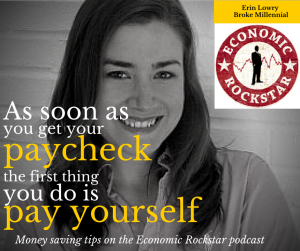
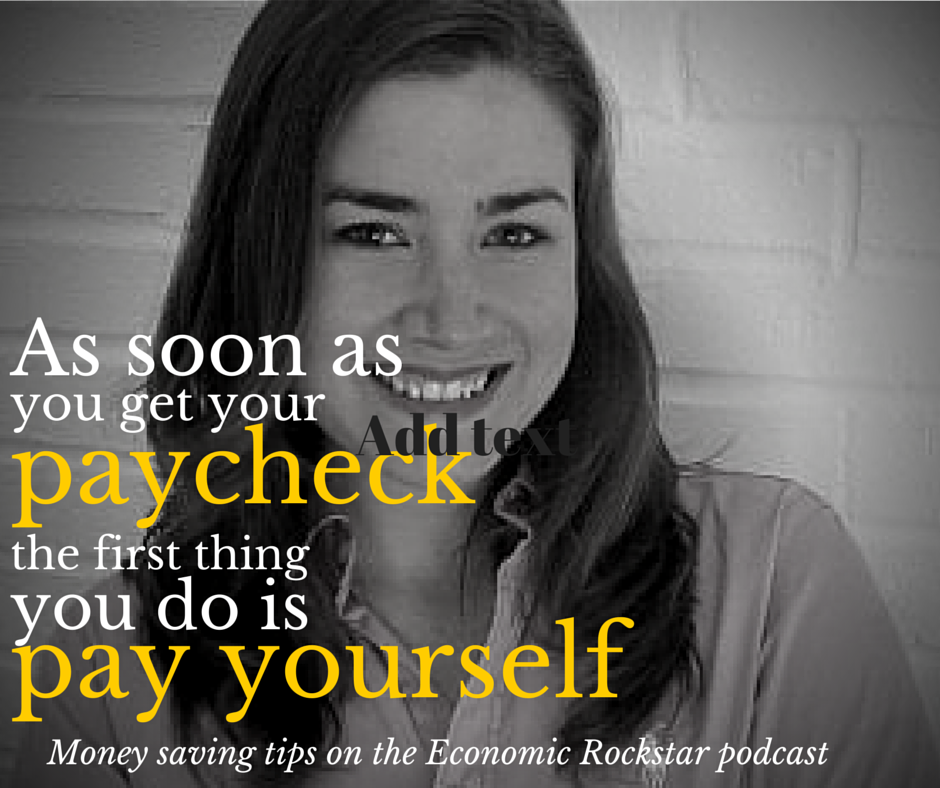
‘As soon as you get your paycheck, the first thing you do is pay yourself’ – Erin Lowry

Click To Tweet

Good (3)

  • If you felt an outcome was unfair, ‘Ask for the Order’.  If you don’t tell people what you want, they can’t read your mind and the worse someone can tell you is ‘No’.
  • I find that list writing helps me organize my thoughts and then when I cross something off, it’s just such a satisfying feeling.
  • If you are having debt problems, talk about it to your loved ones, to your closest friends, to a credible financial planner or to a priest.
  • ‘Put yourself out there, develop contacts and network with others. You can be successful this way.’
  • ‘Never just make the minimum payment on your credit card. Pay it off in full. Banks will earn high interest on outstanding credit card debt.’

Episode 004: Jadrian Wooten on Using Sports to Carve Out a Career in Economics – Sports Economics

Personal Habits:

  • “My goal is try to get people reading about economics or thinking about economics.”– Jadrian Wooten.
  • Jadrian has a unique style of teaching that comes from the influences of his past teachers.  
  • “I am a word minimizer when it comes to slides. I love talking. I have no problem chatting with students and being in front of the classroom.”
  • “I am a big believer in showing them data, showing them graphs, showing them stuff that’s actually going on – actual application.”
  • “I am a big believer in the ‘Zero Inbox’. I don’t keep e-mails in my inbox. If something comes into my e-mail, I’ll respond to it immediately if I can.”

Advice:

  • If you think you have the ability when you start and if you put your mind to it, you can achieve the things that you want to do and if you don’t think that you can do it, then you know that’s also true, you are going to end up failing because of self-defeat.

‘You’ll be successful in this class, as an adult and in life, if you just read’ – Jadrian Wooten

Click To Tweet

  • The more you read, even books that are non-academic, you can see economic applications.

‘Dedicate time in your day to reading… it can be just books in general’ – Jadrian Wooten

Click To Tweet

Episode 005: Hector Avellaneda on Buying Gold to Protect Your Wealth from a Dollar Crisis

Personal Habits:

  • A hard worker, head-strong, determined, passionate and a desire to find out the truth through research, self-education, reading and learning.
  • Hector had a desire to find out what went wrong in his life as he was mis-sold the American idea of taking on college debt . With a limited exposure to finance and economics in college, $50,000 of college debt and unemployed due to the Great Recession of 2008, Hector read widely to learn and understand about the truth behind the US economy, the trillions of dollars of debt and the risks of a mass student loan default and a dollar crisis. 

Advice:

  • Before making a college decision, do a course that will allow you to earn an income to pay off your debt, otherwise do not take on college debt.
  • To have financial and economic freedom, become an entrepreneur.
  • Increase your understanding of financial literacy. Read books on money.

  • Schools and Universities need to teach more economics, finance and financial literacy subjects to all students.

  • Self-education is very important – read books and get access to the necessary information online.

Episode 006: Andrew Heaton on Using Comedy to Explain Economic Concepts

Personal Habits:

  • Andrew works extremely hard to get things done. He has blended comedy with economics to allow this dismal science to become enjoyable or entertaining.
  • Andrew believes that having the right mentor is hugely beneficial and such a relationship allows him to learn and focus on reaching small milestones. This has worked out favorably well for Andrew in the field of economics where he developed a strong set of opinions on some theoretical aspects of economics. By expanding his knowledge-base through economics books and the many discussions with his mentor, Gene Epstein, Andrew has opened new doors and created new opportunities that otherwise may not have been attainable. His love of economics, particularly the Austrian and Chicago Schools and libertarianism, has given Andrew a lot of material to work on for his comedic performances onstage, online and in books.
  • Andrew writes quite frequently and believes that constant writing will have a payoff in terms of the publication of a book.
  • Andrew writes ‘common sense economics for people who need to learn about common sense economics’
  • ‘When you start arguing with somebody your adrenaline level shoots up.  Just on a biochemical level, you become much less able to hear what they are saying because you are taking a defensive posture. Conversely, when you’re laughing, you produce endorphins.  And, if I can make you laugh, for a moment you are willing to listen to me – just for a moment.’

Advice:

  • ‘If you’re gonna have a lot of activities that you are doing, you need to be mentally organised and very good at prioritising.’
  • ‘To supercharge your day, when you are getting to your tasks, do the one you hate most first… the rest of your day is a cinch.’
  • ‘With books, the trick is you just write a thousand words a night… your subconscious mind works on it and when you sit down the following night it’s a little bit easier.  You have a full novel in two and half months.’

Episode 007: Ryan Blair – Gangster turned Millionaire on Decision-Making, Game Theory and Incentives

Personal Habits:

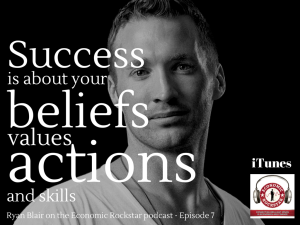
  • I'm anRyan’s Philosophy: “Success is about your beliefs, values, actions and skills. So if you work on all of these things you will be successful.”
  • Ryan’s life purpose goal: “I will measure my influence by the network of the people I can draw upon for inspiration and economic creation.
  • On Failing: “I fail forward and try to draw from certain things or from my gang past or maybe perhaps an investment that I made that didn’t work out so well.”
  • ‘I’m an idealist. I like to make things as good as I possibly can’ – Ryan Blair

    Click To Tweet

  • Asking questions: “I ask a lot of questions of myself. Am I doing the right things? Am I making the right adjustments necessary for me to achieve the result that I want? I ask myself the question ‘Why not?”.
  • Decision-making: “If bad decisions are made, you’ve just got to assess it, understand it and make better decisions, and eventually you accumulate enough right decisions to where you’ve got success”.
  • “The Path is all Math” – “you’re reverse engineering or you’re finding the mathematical equation to get the result you’re looking for and that could be a result of fixing any deficiency in your life or to improve something. There’s generally a mathematical path to it and that could simply be the number of steps in the formula or the amount of time it takes for you to get the result that you’re looking for.”
  • Attributes required to make multi-generational wealth: creativity and strong work ethic.

Advice:

  • On Vision: “I use that method in my life and my conscious and subconscious has no choice but to pursue them because I really fall in love with the vision.”
  • On Recruitment: “Recruitment is one of the most important things on building a culture in business.
  • Be careful in deals that you do as an entrepreneur with venture capitalists or sophisticated investors.
  • On Getting the Best Deal: “If you’re not prepared to walk away [from the deal] and the other party knows that, then you’re gonna be out-negotiated in many cases or you simply won’t get the best result possible for you, your family and your shareholders, which is what’s most important in a business negotiation”.
  • On Learning: Because Ryan knew that he wanted to be an entrepreneur, it was easy for him to associate learning with growth as an entrepreneur.
  • On Opportunities: “Opportunity exists all around you. If you’re looking for it and if you train yourself in how to see it – start there. If I sat in my garden, I could possibly find an opportunity to become an entrepreneur and be successful”.
  • On Nutrition and Learning: “Have a breakfast in the morning before school so as to have a proper education. Nutrition is so important to learning and to growth in an individual.”

Episode 008: Robbie Butler on Using Sports to Teach Entry-Level Economics

Personal Habits:We use

  • Robbie, like all great educators, is always learning about the most optimal ways to teaching economics.
  • Constantly updating the teaching material.
  • On the Value of Informal Meet-ups: “Some of our coffee meetings can be quite vicious, but it’s a good sounding board for ideas.”
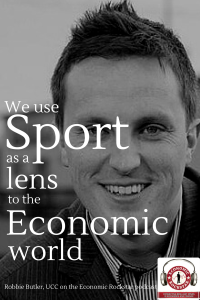
  • On Ways of Learning: “Because we all learn in very different ways, we need to teach in such a way that tries to capture as many forms of multiple intelligence theory as we can. We use sports as a lens to the economic world”.

Advice:

On Learning and Teaching Economics: “We all have to develop ourselves and our understanding”.

If you work hard, you get the returns – there are no shortcuts @RobbieButlerUCC

Click To Tweet

On Research: “Try and keep the material as current as you possibly can”.

On Hard Work: “Hard work is everything. Nobody is born with an innate ability to do something. The harder you work, the easier things become. Thant applies to college, studying, sports and life in general” – Robbie Butler, UCC.

Episode 009: Naomi Brockwell (Bitcoin Girl) on Bitcoins, Liberty, Government and Fiat Currency

Personal Habits:The fact that

  • “I like people who are inspiring and I like reading their biographies” – Naomi Brockwell
  • Naomi subscribes to Louise Hay’s Daily Affirmation
  • Naomi and Gene Epstein run an Austrian economics reading group together.

I like to surround myself with such amazing and inspiring people – Naomi Brockwell

Click To Tweet

  • Economics is just an incredible way of helping the less fortunate areas of society, of helping people out of poverty, of helping the unrepresented, people being persecuted by government. Economics, if you really understand it, provides all of these answers. With economics, you could do a lot more to help people.

Advice:

Find people who you find really inspirational and learn as much as you can – Naomi Brockwell

Click To Tweet

  • “We really underestimate what we can achieve and if we remember that so much more is possible than we may think, then that’s a good way to live. It encourages you to press your boundaries and explore new horizons. Seek what your potential is, really try to fulfil your potential.” – Naomi Brockwell

Episode 010: Douglas Goldstein on How Chess Can Teach Us Lessons on Strategic Financial Planning

For thosePersonal Habits:

  • ‘I tend to be more conservative. I look for ways of trying to protect my business and my savings. I’mconstantly looking for problems, coming up with solutions before the problems arise so that they don’t arise.’
  • Goal-setting. Check out Doug’s and Susan’s goal-setting paradigm STRATegic in Rich As A King.
  • Doug is an anti-debt person and is a philanthropist.
  • Doug organizes everything first thing in the morning – calender, email and builds a list of what needs to be done. He does the unpleasant but most important things first. Everything that’s crossed out are his accomplishments for the day.

Takeaway:

  • ‘Get yourself a teacher – a real mentor’ – Doug Goldstein

    Click To Tweet

  • Don’t be afraid to pick up the phone and calling someone if you have a question about your business.
  • Having a pretty good strategy today is much better than having no strategy until maybe one day you’ll develop one.
  • It’s okay to develop as a strategist. It’s what all investors do and it’s what all chess players do.
  • The news you’re getting from most sources is probably useless.
  • ‘Give me a stock clerk with a goal and I’ll give you a man who will make history. Give me a man with no goals and I’ll give you  a stock clerk.’ J.C. Penney
  • Doug uses this quote from Alice in Wonderland to explain the concept of having a specific budgeting roadmap or goal set within a certain time frame.
  • When Planning for a year, plant corn. When planning for a decade, plant trees. When planning for a life, train and educate people’ – Chinese proverb.
  • For those who want long-term success, start with education – Doug Goldstein

    Click To Tweet

Advice:

  • There’s nothing that you’re actually going to know about what’s going to happen tomorrow in the markets. But what you do know is to educate your clients about how to responsibly take care of their own money.
  • Every move must have a purpose – Susan Polgar Chess Grandmaster

    Click To Tweet


  • Amateur investors  and amateur chess players move around because they can’t figure out their strategy. They make a move that doesn’t really have a purpose and that’s a huge mistake.
  • Go into meetings and discussions with people as a friend. Assume that they’re there to work with you and not against you. You’ll be much happier.
  • Plan ahead. ‘It wasn’t raining when Noah built the Ark’ – Howard Ruff

    Click To Tweet


  • Focus on developing a strategy.
  • Build your community – that’s how you will ultimately succeed. Build a group of people that you can constantly be in touch.
  • ‘Spend a lot more time focusing on what you can give to people, than what you can get from them. I believe that’s the path to success.’ Doug Goldstein
  • ‘Liquidity, having access to your money, is really really important’ – Doug Goldstein

    Click To Tweet

Career Advice

‘We are not the same as our parents and grandparents. You’re not going to work for some company for your whole life and then retire with a great pension at 60. it’s up to you to take care of yourself. The governments going broke, your parents are probably going broke, you’re going broke and you’re in debt. You’ve got to get your own act together. As soon as you understand how business works, you should try and set your own sails and find something that you really enjoy doing, that can add value and work really hard to do it.’

‘There’s nothing wrong with a little bit of hard work in order to succeed. Don’t assume someones going give it to you’

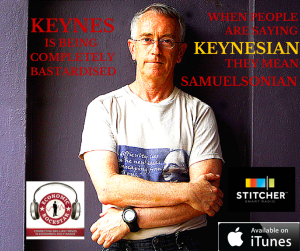
Episode 011: Steve Keen on Debunking Economics and the Misinterpretation of Keynes

L I G H T H O U S E (1)


012: Yoram Bauman on Cartoons, Being a Stand-Up Economist & His Passion to Save the Environment 

The


.


http://traffic.libsyn.com/economicrockstar/013_Personal_Habits_and_Advice_.mp3

Podcast: Play in new window | Download
Frank Conway

Frank Conway is founder of Economic Rockstar and lecturer of economics, finance and statistics. Read More…

View My Blog Posts

Youtube Sub

Become a Patron of the Economic Rockstar Podcast

patreon

Ireland’s Economy by the Numbers

Leaving Cert Economics: Ireland’s Economy  Click here to download a workbook on Ireland’s Economy so that you can add your own notes. [Original size] Ireland’s Economy by fconway

Categories

Subscribe and Never Miss An Episode

itunes-logo

Recent Posts

  • Ireland’s Economy by the Numbers April 8, 2019
  • 174: Wendy Carlin on The Core Project, Capitalism, Democracy and Normative Statements February 13, 2019
  • 173: Stephen Wright on Core Econ as a Learning Resource for Mainstream Economics January 28, 2019
  • 172: Best of 2018 Part 2: From the Great Depression to Futurism; Institutions, Individualism, Cooperation and Reciprocity January 22, 2019
  • 171: Best of 2018 Part 1 January 3, 2019

Copyright © 2026 · Podcast Pro Theme on Genesis Framework · WordPress · Log in

This website uses cookies to improve your experience. We'll assume you're ok with this, but you can opt-out if you wish. Accept Reject Read More
Privacy Policy

Privacy Overview

This website uses cookies to improve your experience while you navigate through the website. Out of these, the cookies that are categorized as necessary are stored on your browser as they are essential for the working of basic functionalities of the website. We also use third-party cookies that help us analyze and understand how you use this website. These cookies will be stored in your browser only with your consent. You also have the option to opt-out of these cookies. But opting out of some of these cookies may affect your browsing experience.
Necessary
Always Enabled
Necessary cookies are absolutely essential for the website to function properly. This category only includes cookies that ensures basic functionalities and security features of the website. These cookies do not store any personal information.
Non-necessary
Any cookies that may not be particularly necessary for the website to function and is used specifically to collect user personal data via analytics, ads, other embedded contents are termed as non-necessary cookies. It is mandatory to procure user consent prior to running these cookies on your website.
SAVE & ACCEPT