• ABOUT
  • RESOURCES
  • PODCAST
  • BOOKS
  • BLOG
  • SUPPORTERS
  • QFA Financial Advice
  • CONTACT

Economic Rockstar

Connecting Brilliant Minds in Economics and Finance

112: Stuti Khemani on Making Politics Work for Development and Using Creativity and the Arts to Make Better Policy Decisions

November 17, 2016 by Frank

http://traffic.libsyn.com/economicrockstar/112_Stuti_Khemani_Final.mp3
Play in New WindowDownload

112: Stuti Khemani on Making Politics Work for Development and Using Creativity and the Arts to Make Better Policy Decisions

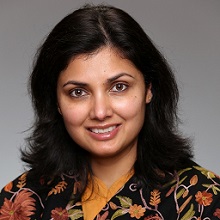
Stuti Khemani is a Senior Economist in the Development Research Group of The World Bank. She joined through stuti-khemani-economic-rockstarthe Young Professionals Program after obtaining a PhD in Economics from the Massachusetts Institute of Technology.
Dr. Khemani’s area of research is the political economy of public policy choices, and institutional reforms for development.

Her work is published in leading economics and political science journals, such as the American Economic Journal, Journal of Development Economics and American Political Science Review.

Stuti has studied the impact of electoral politics on fiscal policy and intergovernmental fiscal relations; drawn policy implications for the design of institutions to promote fiscal responsibility; and analyzed political constraints to efficient allocation of resources for health and education services.

She is also the lead author of the forthcoming Policy Research Report ‘Making Politics Work for Development: Harnessing Transparency and Citizen Engagement’.

Her research and advisory work spans a diverse range of countries, including Benin, China, India, the Philippines, Nigeria, Tanzania and Uganda.

More and more I’m fascinated by the world around me and with people currently living in the world.

In this episode you will learn:

  • why working in policy is important.
  • about the basic need for freedom and and the freedom to choose government.
  • about the Dictator’s Dilemma.
  • what makes a successful autocratic government.
  • whether culture plays a significant role in a successful government and economy.
  • how leader selection and sanction can create better government.
  • the importance of art and creativity in policy-making.
  • and much much more.

Papers:

Making politics work for development : harnessing transparency and citizen engagement.

The World Development Report 2016: Digital Dividends

Making Autocracy Work by Timothy Besley and Masayuki Kudamatsu 

Writing Tips:

  • “Write short sentences. My natural instinct is write long convoluted sentence. Now I discipline myself to edit and re-write and to make every sentence as short as possible.”
  • “Write to intuition. Not to use mystifying language or jargon. I try to think through how I would say it to my brother who works at Google and knows nothing about economics and then write it.”

People Mentioned in this Episode:

  • Jane Austin 
  • Rabindranath Tagore 
  • Vikram Seth 
  • Shanta Deverajan
  • Morten Jerven

Books:

  • Middle March by George Elliot 
  • Three Chinese Poets by Vikram Seth
  • Casual Vacancy by J. K. Rowling

http://traffic.libsyn.com/economicrockstar/112_Stuti_Khemani_Final.mp3

Podcast: Play in new window | Download
048: Steve Hanke on Currency Boards, Moral Hazard and the Benefits of Privatization

September 3, 2015 by Frank

http://traffic.libsyn.com/economicrockstar/048_Steve_Hanke_Final.mp3
Play in New WindowDownload

048: Steve Hanke on Currency Boards, Moral Hazard and the Benefits of Privatization

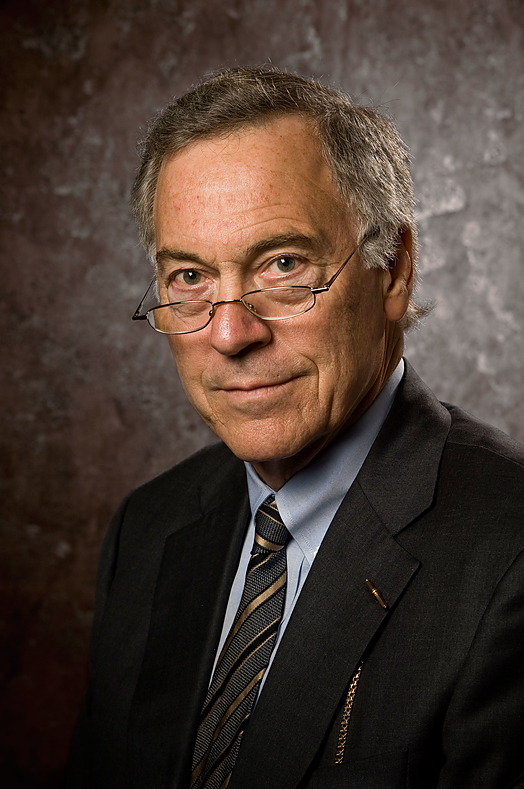
Steve Hanke is a Professor of Applied Economics, specializing in currency boards. He is Co-Director of the Institutesteve hanke for Applied Economics, Global Health, and the Study of Business Enterprise at The Johns Hopkins University in Baltimore.

Steve is a Senior Fellow and Director of the Troubled Currencies Project at the Cato Institute in Washington, D.C. and a member of the Charter Council of the Society of Economic Measurement and the Financial Advisory Council of the United Arab Emirates.

Previously, Professor Hanke was a Senior Economist on President Reagan’s Council of Economic Advisers and was also an Advisor to the Presidents of Bulgaria, Venezuela, and Indonesia.

He played an important role in establishing new currency regimes in Argentina, Estonia, Bulgaria, Bosnia-Herzegovina, Ecuador, Lithuania, and Montenegro. Professor Hanke has also advised the governments of many other countries, including Albania, Kazakhstan and Yugoslavia.

In 1998, Steve was named one of the twenty-five most influential people in the world by World Trade Magazine.

Professor Hanke is a well-known currency and commodity trader and serves as Chairman of Hanke-Guttridge Capital Management, LLC.

Steve Hanke’s most recent books are Zimbabwe: Hyperinflation to Growth (2008) and A Blueprint for a Safe, Sound Georgian Lari (2010).

Influencers:

Friedrich Hayek, Kenneth Boulding of the University of Colorado  and Bob Mundell

Economics:

In this interview, Steve mentions and discusses: currency boards, monetary policy, inflation, hyper-inflation, interest rates, currency reserves, optimum currency area, common currency, fiscal policy, moral hazard, eurozone, ECB, the World Bank, property rights, investment, central bank, dollarisation, interventionist policy, privatisation, hedging, Chicago Mercantile Exchange, futures contract and bitcoin.

Economists:

In this interview, Steve mentions and discusses: Kirk Schuller, Milton Friedman, Friedrich Hayek, Adam Smith, Robert Mundell and Kenneth Boulding.

There have only been 56 hyper-inflations in world history and I think I’ve stopped more of them than any living economist – Professor Steve Hanke

In this episode, you will learn:

  • what is a currency board and the reason why a country should resort to one.
  • about Bulgaria’s currency crisis in 1997, how hyper-inflation hit 142 percent per month and what Steve Hanke did to solve the problem.
  • the successful use of currency boards in Bulgaria in 1997 to significantly reduce inflation and interest rates.
  • why Bulgaria has one of the lowest fiscal deficits of any country.
  • about Yugoslavia’s hyper-inflation of 313 million percent in 1994.
  • why Montenegro dumped the Yugolsav Dinar for the Deutschmark during Slobodan Milosevic’s presidency of Yugoslavia.
  • how Montenegro will join the euro currency without having to do a currency changeover.
  • if it makes sense to leave a currency board to join a monetary union and giving up fiscal autonomy.
  • why it’s best for Bulgaria to stay outside the eurozone due to the issue of moral hazard.
  • why Greece ran up a fiscal deficit of 12.7% of GDP when the Maastricht Treaty stated a strict adherence to a maximum level of 3%.
  • about the Greek bailout of $472 billion and how it amounts to almost $43,000 for every man, woman and child in Greece.
  • how a currency board removes the moral hazard of a unified currency area by financing spending with current taxes or the private bond market.
  • if Greece should abandon the euro and set up a currency board and pegging their currency with the euro.
  • how a Greek currency board would operate if Greece left the eurozone.
  • about the success of the Hong Kong currency board and how it operates without a central bank.
  • if we are heading toward a one world currency.
  • why most small countries should abandon their currency and anchor it to the euro, dollar, yen or yuan.
  • whether Greece should sell off its ports, lands and other property to private investors just as Hayek proposed and Ronald Reagan did in the US in the 1980s.
  • about Ronald Reagan’s privatisation programme in the US in the early 1980s.
  • about the Bureaucratic Rule of Two and why privatisation is an optimal outcome for government, enterprise and society.
  • what Hayek was like as a person and what he thought of Ronald Reagan, The Intellectual.
  • about candling in the old days when grading eggs for futures contracts.

On Currency Boards:

A currency board system is a system in which you issue a domestic currency, which is anchored to a sound currency at a fixed exchange rate that’s fully convertible. The local currency is backed up with a 100% anchor currency’s reserves. So the local currency really becomes a clone of whatever the anchor currency happens to be.

The currency board is not allowed to emit credit to the government. If the government needs money for fiscal expansion, the only way to get this finance (in the form of your local currency) is to take hard currency in (like the euro) and exchange it for the local currency. Bulgaria has been doing this since 1997. The government cannot sell bonds to raise finance. They convert the euro (previously the Deutschmark) into their local currency, the lev, and can then carry out fiscal stimulus. Consequently, Bulgaria has one of the lowest fiscal deficits in Europe.

On Bulgaria and Why It Should Not Join the Eurozone:

“With the currency board, they (Bulgaria) ‘clone’ the euro, so they’re in a unified currency area with the eurozone but they’re not formally part of the eurozone itself. I’ve counselled the Bulgarians, and the best thing to do is to stay with that arrangement. And the reason why is that the eurozone, the common currency area, has a huge moral hazard associated with it. That is, something that creates bad behaviour encourages bad behaviour and Greece is a perfect example.” – Professor Steve Hanke

On the Greek Deceit and Its Fiscal Deficit:

“Greece entered the eurozone in 2001 on false pretences. They cooked the books and got in. They were allowed in the club even though the club knew the Greeks were lying in terms of their economics statistics.”

“The Greeks calculated that they could spend like drunken sailors, which they did and ran a completely irresponsible fiscal operation.”

“The moral hazard is you join a club and if you think the club won’t enforce its rules and won’t force you to tow the line, you will just go on your merry way spending and deficit spending and knowing, or at least thinking that, in this case the eurozone, would bail you out.”

Greece ranks 151 out of 189 countries for the ability of doing business. If you make a contract in Greece, the probability of having that contract enforced is very low by international standards. It’s like being in Zimbabwe. Greece is supposed to be part of the European Union and a modern country but it isn’t.

Greece should leave the eurozone, set up a currency board and re-introduce the Drachma. This would create fiscal discipline just like the situation in Bulgaria.

Quotes by Steve Hanke in Episode 048 of the Economic Rockstar Podcast:

I was hedging and trading when I was 14 years of age. I was trading with my grandfather – @steve_hanke

Click To Tweet

Hong Kong was aways a unilateralist free trader. That encourages competition, entrepreneurship and productivity. The countries with open trade tend to be more free market in general and they grow more rapidly. – Steve Hanke

“About 90 Central Banks should just be done away with completely and either a currency board be put in or a stronger foreign currency like the dollar, the euro or the yen.” – Steve Hanke

“If you want lower fiscal deficits, lower inflation and higher rates of growth you adopt with a currency board system or dollarize” – Steve Hanke

If you want to reduce corruption you privatise. But the potential gains in terms of economic prosperity are enormous – @steve_hanke

Click To Tweet

Europe’s lands are “a mere waste and loss of country in respect both of produce and population.” – Adam Smith

Click To Tweet

Bitcoin has a unit of account problem – @steve_hanke

Click To Tweet

On Hayek:

“He was delightful and charming and very interesting, particularly for Mrs Hanke and myself. One of Mrs Hanke’s Great Aunts was one of Hayek’s earlier loves of his life.”

Recommended Books:

  • Zimbabwe: Hyperinflation to Growth by Steve Hanke (Free download)
  • The Wealth of Nations by Adam Smith
  • Reagan, In His Own Hand by Ronald Reagan, edited by Marty Andersson et al.
  • The Advanced Introduction To The Austrian School of Economics by Randall Holcombe
  • The Essential Hayek by Donald Boudreaux (Free Kindle download)

Resources:

  • Case Studies written by Steve Hanke
  • Troubled Currencies Project
  • The Hanke-Krus Hyperinflation Index
  • http://econographic.com/hyperinflation
  • On the Measurement of Zimbabwe’s Hyperinflation by S. Hanke and A. Kwok
  • Friedman: Float or Fix? by Steve H. Hanke
  • Reflections on Currency Reform and the Euro by Steve H. Hanke
  • The Privatization Debate: An Insider’s View by Steve H. Hanke
  • Could Greece Adopt the Dollar? by Steve H. Hanke
  • Reflections on Reagan the Intellectual by Steve H. Hanke
  • On the Fall of the Rupiah and Suharto by Steve H. Hanke
  • Doing Business 2015 Report by The World Bank

Where to Find Steve Hanke:

  • Cato Institute: http://www.cato.org/people/steve-hanke
  • Johns Hopkins Institute: http://krieger.jhu.edu/iae/co-directors
  • Twitter: @steve_hanke
http://traffic.libsyn.com/economicrockstar/048_Steve_Hanke_Final.mp3

Podcast: Play in new window | Download
046: Shanta Devarajan on The World Bank, Quiet Corruption, Government Failure and Comparative Advantage in the MENA Region

August 20, 2015 by Frank

http://traffic.libsyn.com/economicrockstar/046_Shanta_Devarajan_Final.mp3
Play in New WindowDownload

046: Shanta Devarajan on The World Bank, Quiet Corruption, Government Failure and Comparative Advantage

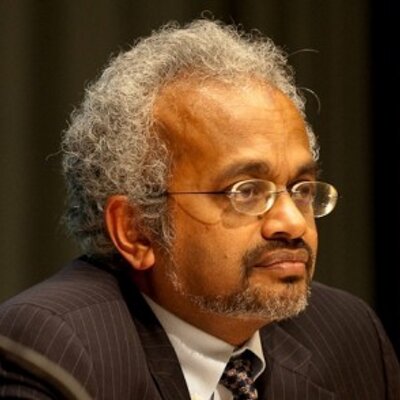
Shantayanan Devarajan is the former Chief Economist of the World Banshanta devarajank’s Middle East and North Africa Region. Since joining the World Bank in 1991, he has been a Principal Economist and Research Manager for Public Economics in the Development Research Group, and the Chief Economist of the Human Development Network, South Asia, and Africa Region.

Shanta was the director of the World Development Report 2004, ‘Making Services Work for Poor People’. Before 1991, he was on the faculty of Harvard University’s John F. Kennedy School of Government.

Shanta is the author and co-author of over 100 publications, with his research covering public economics, trade policy, natural resources and the environment, and general equilibrium modeling of developing countries.

Born in Sri Lanka, Shanta received his B.A. in Mathematics from Princeton University and his Ph.D. in Economics from University of California, Berkeley.

People care so much about education. They will not eat if they can send their kid to a better school – Shanta Devarajan

In this episode, you will learn:

  • why Shanta decided to take a sabbatical from lecturing and never went back.
  • about Shanta’s passion to end world poverty.
  • how experiencing living on a $1 a day with a poor family made Shanta realize that the failure lies with government.
  • how empowering people in poverty-stricken countries with information could be the catalyst to end poverty.
  • the huge government failures and market distortions threatening the economy in India.
  • why teachers and doctors in India are absent from work 25% and 40% of the time respectively and how this is affecting progress.
  • how the powerful medical union in India are making healthcare inaccessible to the poor.
  • why poor people in India think that the reason why doctors do not show up at clinics is because ‘the rain didn’t come’.
  • why politicians in India do not have an incentive to fix the problem of doctor absenteeism.
  • what the solutions to corruption in India.
  • about unemployment being the biggest problem in the Middle East and North Africa.
  • that the reason why unemployment is so high in the MENA region is due the industrial sector being highly monopolised.
  • about how crony capitalism is preventing SMEs from growing in the MENA region.
  • why Tunisia has failed to develop into an export-oriented economy due the legacy of the Ben Ali family and their connections to firms operating in heavily protected markets.
  • that the failure for governments to continue with social contracts due to high deficits triggered the Arab Spring.
  • about Colonel Gaddafi’s regime and how he managed to keep peace between tribes.
  • how water subsidies and water-intensive crops are depleting water resources in Yemen.
  • why the addictive habit of chewing qat or khat in Yemen is causing water shortages.
  • why Yemen, who doesn’t have a comparative advantage in qat, continues to use resources to produce the commodity.
  • what is the main purpose of the World Bank and how different is it to the IMF.
  • where the World Bank gets its finance from and how much interest they charge.
  • how the money trickles down to the unbanked people in low and middle-income countries.
  • about biometric identification smart cards and how the unbanked in low-income countries can access capital.

Takeaway:

The problems of poor people are man-made and we as economists can actually help solve them. The way in which we can solve them is by carrying our work toward empowering them. The reason they’re man-made is that poor people lack political power. We can actually strengthen their clout, their political power, by providing economic analysis and making it accessible to them – Shanta Devarajan

Economics:

In this interview, Shanta mentions and discusses: poverty, development, capital markets, government failure, policy distortion, structural adjustment, debt crisis, macroeconomic environment, incentives, quiet corruption, unemployment, monopoly, social contracts, crowding out, finance capital, subsidies, water subsidies, energy subsidies, comparative advantage, imports, exports, budget expenditures, IMF, the World Bank, MENA, public goods, leakages, multiple effect, dynamic stochastic general equilibrium model, savings, investments, sovereign wealth funds and consumption.

Economists:

In this interview, Shanta mentions and discusses: Chris Blattman, Gerard Debreu , Joseph Stiglitz, Sherman Robinson and Paul Collier 

Influencers:

Gerard Debreu , Joseph Stiglitz, Sherman Robinson , Paul Collier 

Quotes by Shanta Devarajan in Episode 046 of the Economic Rockstar Podcast:

The marginal product of writing an additional paper was lower than my actually trying to go out there and apply what I know to reduce poverty. I became quite passionate about this quest to reduce this poverty. – Shanta Devarajan

The problems of poverty under development are problems of government failure. The problem of government failure is because the political system is one where poor people don’t have sufficient voice and sufficient ability to make sure that politicians take decisions in their interest. – Shanta Devarajan

“The World Banks’ mission is a world free of poverty” – Shanta Devarajan

Click To Tweet

On the changing views of The World Bank:

The traditional view of development in the 1950s and 60s was a belief that it was a market failure. Their capital markets weren’t working. Poor countries didn’t have access to capital and so the World Bank had to provide capital. However, in the 1970s and 80s there was a realisation that the problem was not the result of a lack of capital. There  were policy distortions in these countries that made this capital unproductive. The challenge became trying to remove these policy distortions or try to improve these policies so that capital could be productive. – Shanta Devarajan

On Quite Corruption in India:

Quite corruption in India is a deep political problem. There is nothing illegal about this corruption. It is a failure of the system. The political system is geared so that it creates this kind of corruption. – Shanta Devarajan

On Crony Capitalism in Tunisia:

It’s a little bit of a puzzle why Tunisia, which has a very highly educated population, a very nice location right across from Europe and a pretty good infrastructure, hasn’t been able to be a manufacturing, export-driven power-house. The reason is the industrial structure is being monopolised by the cronies of the political elite. – Shanta Devarajan

On Tunisia: “We must protect this economy from elite capture” – Shanta Devarajan

Click To Tweet

On Capital Leakages in Chad:

The leakages are higher in resource-rich countries. For instance in Chad, the money that was intended for public primary clinics, that actually arrives at the clinic is 1%. So the leakage is 99%. Chad is an oil-rich country. The reason for that is there is very little accountability – Shanta Devarajan

Reasons Why Yemen is Producing Khat (Qat) Inefficiently

Yemen produces its own qat despite not having a comparative advantage in the commodity. Factors of production, such as land, labor and capital, are used inefficiently to produce khat. So, the question remains as to why Yemen does not import qat. There are two main reasons why the continue to produce it domestically.

The first is that qat is consumed fresh. Domestic production allows qat to be distributed and sold throughout Yemen once it is picked. Freshness is required and it is expected that any imported khat could reduce its quality.

The second reason is that the president’s wife manages the qat monopoly and made a lot of money from it. Any imports would be competition. Given that khat is an addictive substance, the revenue made by this monopoly would have been so large that using resources inefficiently, particularly water, outweighed the costs.

The Difference Between the World Bank and the IMF

  • The World Bank only works on developing countries and the IMF works on all countries.
  • The IMF is concerned with short-term macroeconomic development, whereas the World Bank is concerned about long-term development.
  • Anything that is in the order of one to two years is when the IMF will become involved in order to solve a macroeconomic crisis.  Whereas, if it’s a question of building a road or a bridge or educating children, that’s when the World Bank comes in. Both  the IMF and the World Bank, because they’re across the street from each other in Washington DC, communicate quite intensively.
  • In the past, it may have been viewed that the IMF, because it is more macro-focused, was more interested in the aggregate budget rather than the composition of the budget. In the late 1990s, there were many countries that had fiscal crises. The IMF insisted that they cut their budget in order to maintain fiscal balance. However, just cutting the budget rather than cutting wasteful expenditures and protecting some valuable expenditures makes a big difference.
  • It got to the stage where the World Bank would come in and look at the composition of the budget and suggest where it’s better to cut rather than simply take the targets that the IMF had set.
  • Both institutions have evolved quite a bit since the 1990s. The IMF now looks quite closely at the composition of budget expenditures and the World Bank worries a lot about macroeconomic stability.

How The World Bank Funds its Operations

  • The finance that the World Bank accumulates is obtained by World Bank bonds.
  • The World Bank uses the ‘paid-in capital’ which the original members of the World Bank pledged back in 1947. This has now grown to about $300 billion.
  • This capital is used as collateral to float bonds and because of this capital, the World Bank can get bonds at three-quarters of a percent below the market rate.
  • This capital is then lent to middle-income countries at about half to a quarter of a precent below the market rate. The difference between these rates is what pays the salaries of those working for the World Bank.
  • For low-income countries, mostly in Sub-Saharan Africa, there is a separate window called the International Development Association (IDA) where concessional loans are offered. These loans are pledged every three years by donor countries. The World Bank collects this IDA money, which is about $50 billion, and lends it to these low-income countries at virtually zero percent interest with a 35 year grace period.

Recommended Resource:

The World Bank Database

Recommended Book:

  • Dubliners by James Joyce

Where to Find Shanta Devarajan:

  • Blog: Future Development
  • Twitter: @Shanta_WB
  • Email: sd294 [at] georgetown [dot] edu

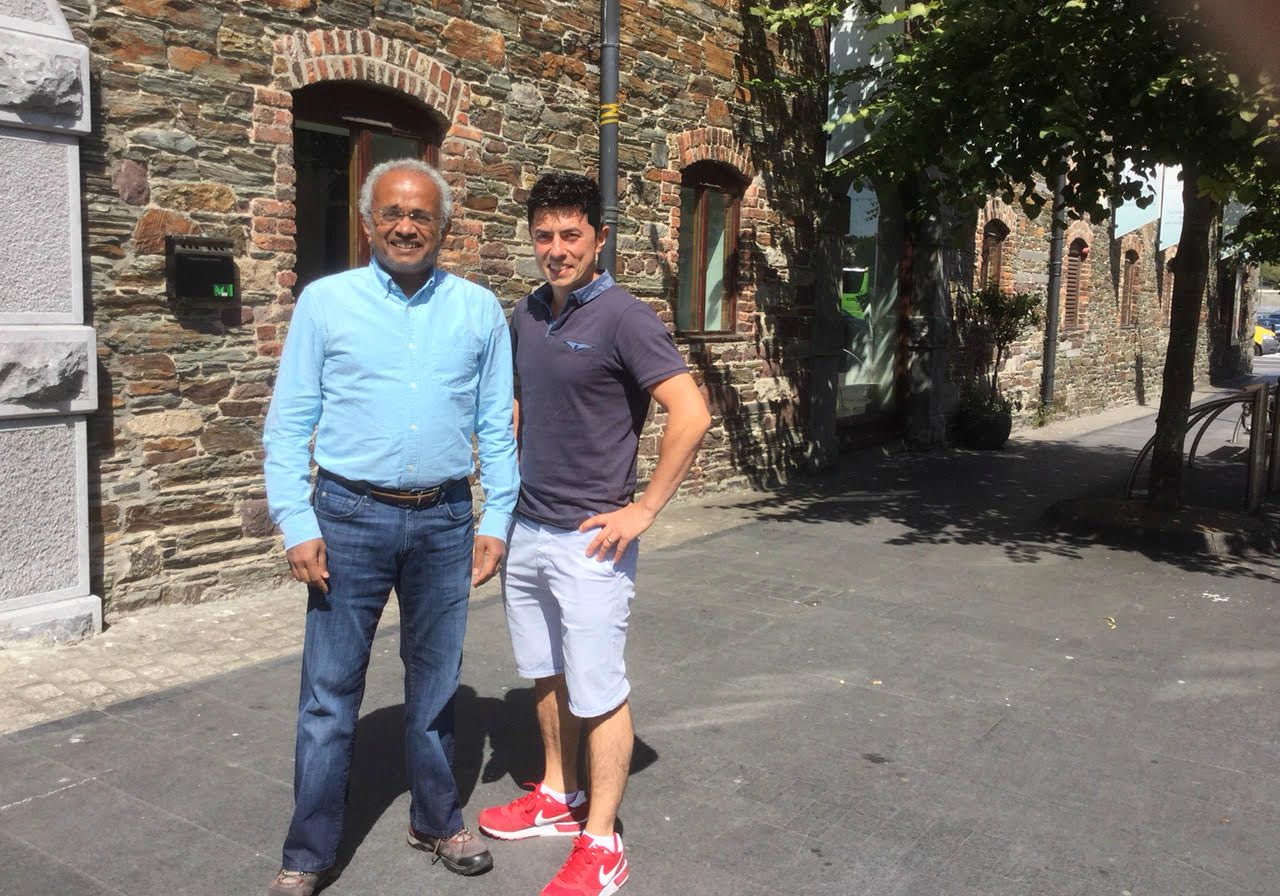
Meeting Up With Shanta in Waterford City, Ireland (August, 2015):

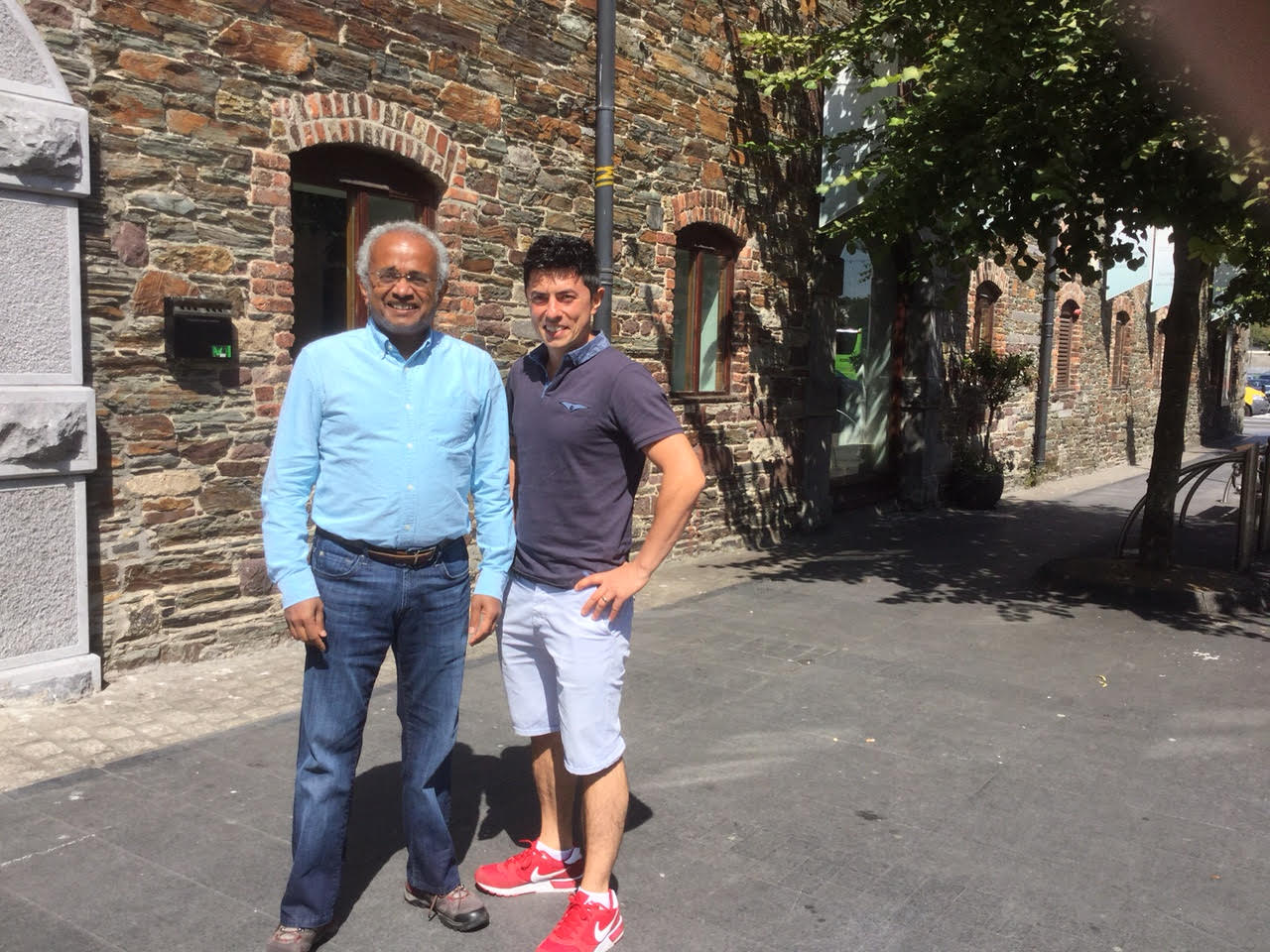
Since our conversation in episode 046 of the Economic Rockstar podcast, myself and Shanta met up for a brief period in Waterford City, Ireland. Shanta was on a visit form Washington DC (not work-related, just in case you think the The World Bank are coming in to Ireland!). Check back for a new blog post on what we chatted about.


Frank and Shanta

http://traffic.libsyn.com/economicrockstar/046_Shanta_Devarajan_Final.mp3

Podcast: Play in new window | Download
Frank Conway

Frank Conway is founder of Economic Rockstar and lecturer of economics, finance and statistics. Read More…

View My Blog Posts

Youtube Sub

Become a Patron of the Economic Rockstar Podcast

patreon

Ireland’s Economy by the Numbers

Leaving Cert Economics: Ireland’s Economy  Click here to download a workbook on Ireland’s Economy so that you can add your own notes. [Original size] Ireland’s Economy by fconway

Categories

Subscribe and Never Miss An Episode

itunes-logo

Recent Posts

  • Ireland’s Economy by the Numbers April 8, 2019
  • 174: Wendy Carlin on The Core Project, Capitalism, Democracy and Normative Statements February 13, 2019
  • 173: Stephen Wright on Core Econ as a Learning Resource for Mainstream Economics January 28, 2019
  • 172: Best of 2018 Part 2: From the Great Depression to Futurism; Institutions, Individualism, Cooperation and Reciprocity January 22, 2019
  • 171: Best of 2018 Part 1 January 3, 2019

Copyright © 2026 · Podcast Pro Theme on Genesis Framework · WordPress · Log in

This website uses cookies to improve your experience. We'll assume you're ok with this, but you can opt-out if you wish. Accept Reject Read More
Privacy Policy

Privacy Overview

This website uses cookies to improve your experience while you navigate through the website. Out of these, the cookies that are categorized as necessary are stored on your browser as they are essential for the working of basic functionalities of the website. We also use third-party cookies that help us analyze and understand how you use this website. These cookies will be stored in your browser only with your consent. You also have the option to opt-out of these cookies. But opting out of some of these cookies may affect your browsing experience.
Necessary
Always Enabled
Necessary cookies are absolutely essential for the website to function properly. This category only includes cookies that ensures basic functionalities and security features of the website. These cookies do not store any personal information.
Non-necessary
Any cookies that may not be particularly necessary for the website to function and is used specifically to collect user personal data via analytics, ads, other embedded contents are termed as non-necessary cookies. It is mandatory to procure user consent prior to running these cookies on your website.
SAVE & ACCEPT