• ABOUT
  • RESOURCES
  • PODCAST
  • BOOKS
  • BLOG
  • SUPPORTERS
  • QFA Financial Advice
  • CONTACT

Economic Rockstar

Connecting Brilliant Minds in Economics and Finance

The Breadwinner: Pavarna – A Heroine to All Girls Symbolizing Self-Empowerment and the Fight Against Oppression and Inequality

August 26, 2015 by Frank

Pavarna - A Heroine to All Girls Symbolizing

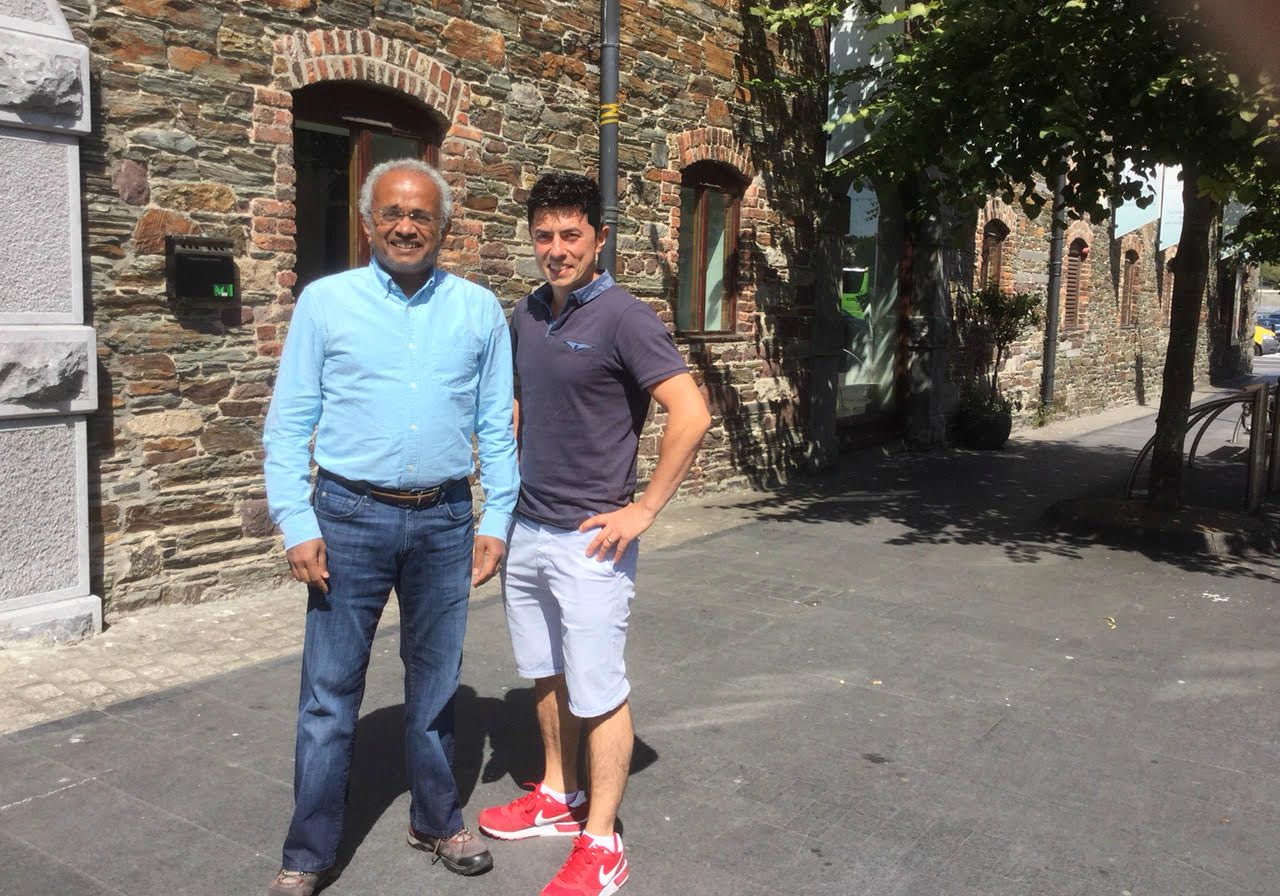
Recently, I met up with Dr. Shanta Devarajan and his wife Dr. Nancy Benjamin in Waterford City on their recent trip to Ireland. Shanta is MENA Chief Economist at the World Bank and Nancy is Senior Economist also at the World Bank.

I arranged to meet up with Shanta after interviewing him on the Economic Rockstar podcast when he informed me of his trip. Shanta and Nancy were travelling by coach from Cork City to Kilkenny City and were making a 1-hour stop in Waterford City. It was a beautiful day in August and the sun was shining and the temperature was such that we decided to sit outside for lunch at The Granary Cafe.

Shanta and Nancy both had a Chicken and Bacon Caesar wrap with Shanta deciding on an Americano and Nancy on a bottle of still water. I personally went for a fruit scone and an Americano. While relaxing outdoors, we were greeted by the soothing shelther of a sapling and comforted by a genial gentle breeze.

This differed to my previous remote meeting with Shanta, which took place on a Skype call – he in his office in Washington DC at 4pm EST and me in my home in Portlaw, Co. Waterford at 9pm Irish time. It was an audio-only interview so we didn’t see each other. The conversation flowed but within the realm and restrictions of economic themes.

Our conversation at The Granary Cafe was quite mixed. We spoke about economics (of course!), the Economic Rockstar podcast, some guest recommendations for the show by Shanta (Patrick Honohan and Chris Blattman) and about Irish animation studio Cartoon Saloon. Yes, you read that correctly – Cartoon Saloon!

The Breadwinner symbolWhy did three economists have a conversation about Cartoon Saloon? Well, we found out that we are all in some way connected to Cartoon Saloon – or more accurately the story behind their animated film ‘The Breadwinner’ (being produced by Aircraft Pictures, Cartoon Saloon and Melusine Productions).

My brother, multi-award winning animator, Rory Conway is employed by Cartoon Saloon and is part of the animation team behind this feature-length film. Angelina Jolie Pitt is Executive Director and her production company Jolie Pas Productions will join forces with Cartoon Saloon to make this a super-awesome and award-winning team.

Both Shanta and Nancy were on their way to Kilkenny City and visiting the beautiful and awe-inspiring Kilkenny Castle. For the summer of 2015, Rory was artist-in-residence at Kilkenny Castle where he showcased Cartoon Saloon’s recent feature length movie ‘Song of the Sea’. Shanta and Nancy met Rory there, where he divulged everything about this movie from idea generation to character design.

Okay! The connection hasn’t be fully made just yet. Shanta, Nancy, myself, Rory, Cartoon Saloon, The Breadwinner, Angelina Jolie Pitt and economics? I understand if you’re confused right now, but allow me to explain.

During our conversation, we chatted about The Breadwinner (written by Deborah Ellis), a story about a young girl from Afghanistan who must disguise herself as a boy in order to earn money for her family. Nancy had mentioned the work done by an investigative journalist who had discovered the lives of young Afghan women after they had lived and behaved as young boys during their childhood and adolescence. Nancy explained how families with only girls and no boys would feel a sense of shame and embarrassment in society. This social stigma is typically avoided when a girl from the same family is chosen to dress-up and behave as a boy. The girl has her hair cut short and takes on a male name.

Digging a bit deeper on the internet about this phenomenon, I came across the term ‘Bacha Posh’ to describe these Afghan girls living as boys. Jenny Nordberg, investigative journalist, was the first to use Bacha Posh to describe these girls since this practice didn’t even have a name. Jenny’s breaking story in The New York Times revealed this practice to the rest of the world and subsequent dedicated research by her culminated into a fascinating and must-read book titled ‘The Underground Girls of Kabul’. Jenny Nordberg reveals so much about these girls during and after their livelihood as boys. She exposes gender inequality, powerlessness and resistance.

Dressing these girls as boys is not to deceive society. But the belief is that a Bacha Posh, as she becomes known, will bring some ‘fortune’ to her mother in a later pregnancy where it is hoped that a boy will be born. A Bacha Posh does not take on the role of a boy or a girl, but has some intermediate status. She will not cook and clean (like all males) and she can attend school and work (unlike all females). The remaining females in her family can be escorted by her – a task strictly reserved for males. These girls performed better in all aspects of education than other girls in society due to their schooling opportunities.

A Bacha Posh must revert back to her female ‘status’ once she reaches puberty or when she marries. However, the sense of empowerment, the freedom, the rights and the opportunities enjoyed by these young girls and women is too invaluable to give up. Having an experience of what should be a right to all women is a difficult thing to give up – being replaced with a life of oppression, zero rights and a slave-like existence.

The 5 years of research and interviews that Jenny Nordberg conducted to investigate the lives of Bacha Posh have shown that the reversal of social status experienced by these women can lead to irreversible psychological effects. They must take on the persona of the traditional Afghan woman and displace the once coerced mannerisms of a boy and all the ‘social fortunes’ that came with their ‘male-like’ status. Also, the sense of freedom and opportunity provided to these women shines light on the inequality that exists at a basic human level. Such controversial treatment of women in Afghanistan has led to a surge of activity in women’s rights movements there.

Novelists like Deborah Ellis, investigative journalists and authors like Jenny Nordberg, women’s rights activists like Angelina Jolie Pitt and animation studios like Cartoon Saloon are a powerful force when they shine light on the oppression and restrictions faced by Afghan women. They educate us through facts, imagery, art, visual expression, color, sound and a theme that many feel they could possibly relate to – a struggle against oppression and an authoritative regime, and the fight for survival and self-empowerment.
The Breadwinner

The people behind The Breadwinner, are setting themselves up to be an impressive and potent combination that could possibly re-write the history books in Afghanistan and for women’s rights everywhere. The Breadwinner depicts the life of a Bacha Posh in such a compelling way – a story of oppression and self-empowerment. A story of Parvana, “a young girl living under the Taliban regime in Afghanistan, who must disguise herself as a boy and become the breadwinner of the family when her father is unfairly imprisoned”. The Breadwinner also celebrates the culture, history and beauty of Afghanistan.

It’s amazing how a conversation over a cup of coffee could result in an urge to write this post and how people are somewhat connected by a story – a story of Parvana, the protagonist in The Breadwinner and a symbol of survival, hope, and empowerment through imagination.

Young girls everywhere, even those in developed countries like Ireland, the UK and the US, should read Parvana’s story and watch the movie upon its release. They should take away from it the themes of oppression and self-empowerment.

Parvana must be your heroine, symbolizing the determination and the willingness to succeed in a world lacking opportunity. You must reflect upon their own position in society, in school, in your home and in the media. When someone says that you should not hold a hammer, learn computer coding, play in the mud or open up an old computer and mess with the memory board because ‘you are a girl’, then think of Parvana and all the young girls and women like Parvana today and in the past who have fought for equal rights. Stand up for your rights, empower yourself with imagination and dream of your goals, irrespective of what anyone says, and strive toward making your dreams a reality.

The Breadwinner will win an Oscar once released in 2017. But the greatest accolade that will be bestowed on all involved in the creation of this film will be the knowledge that they will empower women, not only in Afghanistan but throughout the world, giving them strength to fight for their rights and equality. You’ve read it here first on Economic Rockstar – The Breadwinner will be a deserved winner of the Nobel Peace Prize and Jenny Nordberg deserves her place as an individual recipient of the Peace Prize too. Just like Malala Yousafzai, the 2014 Nobel Peace Prize recipient who is fighting for girls’ right to education in Pakistan and beyond, and who suffered an attack on her life by Taliban gunmen in doing so, Pavarna will be the fictional heroine of the oppression suffered by girls in Afghanistan and beyond.

Oh, by the way, a group of people can win the Nobel Peace Prize. Don’t believe me? Check out episode 036 of the Economic Rockstar podcast with Professor Jason Shogren who was a member of the Intergovernmental Panel on Climate Change (IPCC),  joint recipients of the Nobel Peace Prize in 2007 along with Al Gore.

Links:

Jenny Nordberg: www.bachaposh.com

Deborah Ellis: www.deborahellis.com

Cartoon Saloon: www.cartoonsaloon.ie

Economic Rockstar: www.economicrockstar.com

Books:

The Underground Girls of Kabul: In search of a hidden resistance in Afghanistan by Jenny Nordberg

Read an excerpt from Jenny’s award-winning book here.

The Breadwinner by Deborah Ellis
 

046: Shanta Devarajan on The World Bank, Quiet Corruption, Government Failure and Comparative Advantage in the MENA Region

August 20, 2015 by Frank

http://traffic.libsyn.com/economicrockstar/046_Shanta_Devarajan_Final.mp3
Play in New WindowDownload

046: Shanta Devarajan on The World Bank, Quiet Corruption, Government Failure and Comparative Advantage

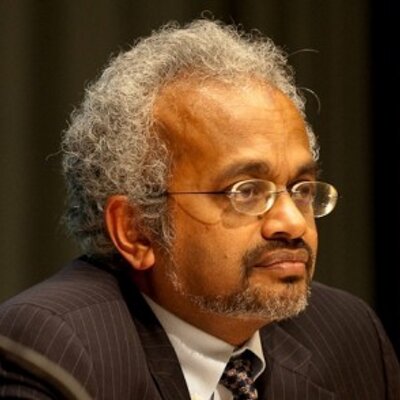
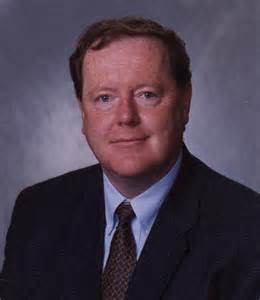
Shantayanan Devarajan is the former Chief Economist of the World Banshanta devarajank’s Middle East and North Africa Region. Since joining the World Bank in 1991, he has been a Principal Economist and Research Manager for Public Economics in the Development Research Group, and the Chief Economist of the Human Development Network, South Asia, and Africa Region.

Shanta was the director of the World Development Report 2004, ‘Making Services Work for Poor People’. Before 1991, he was on the faculty of Harvard University’s John F. Kennedy School of Government.

Shanta is the author and co-author of over 100 publications, with his research covering public economics, trade policy, natural resources and the environment, and general equilibrium modeling of developing countries.

Born in Sri Lanka, Shanta received his B.A. in Mathematics from Princeton University and his Ph.D. in Economics from University of California, Berkeley.

People care so much about education. They will not eat if they can send their kid to a better school – Shanta Devarajan

In this episode, you will learn:

  • why Shanta decided to take a sabbatical from lecturing and never went back.
  • about Shanta’s passion to end world poverty.
  • how experiencing living on a $1 a day with a poor family made Shanta realize that the failure lies with government.
  • how empowering people in poverty-stricken countries with information could be the catalyst to end poverty.
  • the huge government failures and market distortions threatening the economy in India.
  • why teachers and doctors in India are absent from work 25% and 40% of the time respectively and how this is affecting progress.
  • how the powerful medical union in India are making healthcare inaccessible to the poor.
  • why poor people in India think that the reason why doctors do not show up at clinics is because ‘the rain didn’t come’.
  • why politicians in India do not have an incentive to fix the problem of doctor absenteeism.
  • what the solutions to corruption in India.
  • about unemployment being the biggest problem in the Middle East and North Africa.
  • that the reason why unemployment is so high in the MENA region is due the industrial sector being highly monopolised.
  • about how crony capitalism is preventing SMEs from growing in the MENA region.
  • why Tunisia has failed to develop into an export-oriented economy due the legacy of the Ben Ali family and their connections to firms operating in heavily protected markets.
  • that the failure for governments to continue with social contracts due to high deficits triggered the Arab Spring.
  • about Colonel Gaddafi’s regime and how he managed to keep peace between tribes.
  • how water subsidies and water-intensive crops are depleting water resources in Yemen.
  • why the addictive habit of chewing qat or khat in Yemen is causing water shortages.
  • why Yemen, who doesn’t have a comparative advantage in qat, continues to use resources to produce the commodity.
  • what is the main purpose of the World Bank and how different is it to the IMF.
  • where the World Bank gets its finance from and how much interest they charge.
  • how the money trickles down to the unbanked people in low and middle-income countries.
  • about biometric identification smart cards and how the unbanked in low-income countries can access capital.

Takeaway:

The problems of poor people are man-made and we as economists can actually help solve them. The way in which we can solve them is by carrying our work toward empowering them. The reason they’re man-made is that poor people lack political power. We can actually strengthen their clout, their political power, by providing economic analysis and making it accessible to them – Shanta Devarajan

Economics:

In this interview, Shanta mentions and discusses: poverty, development, capital markets, government failure, policy distortion, structural adjustment, debt crisis, macroeconomic environment, incentives, quiet corruption, unemployment, monopoly, social contracts, crowding out, finance capital, subsidies, water subsidies, energy subsidies, comparative advantage, imports, exports, budget expenditures, IMF, the World Bank, MENA, public goods, leakages, multiple effect, dynamic stochastic general equilibrium model, savings, investments, sovereign wealth funds and consumption.

Economists:

In this interview, Shanta mentions and discusses: Chris Blattman, Gerard Debreu , Joseph Stiglitz, Sherman Robinson and Paul Collier 

Influencers:

Gerard Debreu , Joseph Stiglitz, Sherman Robinson , Paul Collier 

Quotes by Shanta Devarajan in Episode 046 of the Economic Rockstar Podcast:

The marginal product of writing an additional paper was lower than my actually trying to go out there and apply what I know to reduce poverty. I became quite passionate about this quest to reduce this poverty. – Shanta Devarajan

The problems of poverty under development are problems of government failure. The problem of government failure is because the political system is one where poor people don’t have sufficient voice and sufficient ability to make sure that politicians take decisions in their interest. – Shanta Devarajan

“The World Banks’ mission is a world free of poverty” – Shanta Devarajan

Click To Tweet

On the changing views of The World Bank:

The traditional view of development in the 1950s and 60s was a belief that it was a market failure. Their capital markets weren’t working. Poor countries didn’t have access to capital and so the World Bank had to provide capital. However, in the 1970s and 80s there was a realisation that the problem was not the result of a lack of capital. There  were policy distortions in these countries that made this capital unproductive. The challenge became trying to remove these policy distortions or try to improve these policies so that capital could be productive. – Shanta Devarajan

On Quite Corruption in India:

Quite corruption in India is a deep political problem. There is nothing illegal about this corruption. It is a failure of the system. The political system is geared so that it creates this kind of corruption. – Shanta Devarajan

On Crony Capitalism in Tunisia:

It’s a little bit of a puzzle why Tunisia, which has a very highly educated population, a very nice location right across from Europe and a pretty good infrastructure, hasn’t been able to be a manufacturing, export-driven power-house. The reason is the industrial structure is being monopolised by the cronies of the political elite. – Shanta Devarajan

On Tunisia: “We must protect this economy from elite capture” – Shanta Devarajan

Click To Tweet

On Capital Leakages in Chad:

The leakages are higher in resource-rich countries. For instance in Chad, the money that was intended for public primary clinics, that actually arrives at the clinic is 1%. So the leakage is 99%. Chad is an oil-rich country. The reason for that is there is very little accountability – Shanta Devarajan

Reasons Why Yemen is Producing Khat (Qat) Inefficiently

Yemen produces its own qat despite not having a comparative advantage in the commodity. Factors of production, such as land, labor and capital, are used inefficiently to produce khat. So, the question remains as to why Yemen does not import qat. There are two main reasons why the continue to produce it domestically.

The first is that qat is consumed fresh. Domestic production allows qat to be distributed and sold throughout Yemen once it is picked. Freshness is required and it is expected that any imported khat could reduce its quality.

The second reason is that the president’s wife manages the qat monopoly and made a lot of money from it. Any imports would be competition. Given that khat is an addictive substance, the revenue made by this monopoly would have been so large that using resources inefficiently, particularly water, outweighed the costs.

The Difference Between the World Bank and the IMF

  • The World Bank only works on developing countries and the IMF works on all countries.
  • The IMF is concerned with short-term macroeconomic development, whereas the World Bank is concerned about long-term development.
  • Anything that is in the order of one to two years is when the IMF will become involved in order to solve a macroeconomic crisis.  Whereas, if it’s a question of building a road or a bridge or educating children, that’s when the World Bank comes in. Both  the IMF and the World Bank, because they’re across the street from each other in Washington DC, communicate quite intensively.
  • In the past, it may have been viewed that the IMF, because it is more macro-focused, was more interested in the aggregate budget rather than the composition of the budget. In the late 1990s, there were many countries that had fiscal crises. The IMF insisted that they cut their budget in order to maintain fiscal balance. However, just cutting the budget rather than cutting wasteful expenditures and protecting some valuable expenditures makes a big difference.
  • It got to the stage where the World Bank would come in and look at the composition of the budget and suggest where it’s better to cut rather than simply take the targets that the IMF had set.
  • Both institutions have evolved quite a bit since the 1990s. The IMF now looks quite closely at the composition of budget expenditures and the World Bank worries a lot about macroeconomic stability.

How The World Bank Funds its Operations

  • The finance that the World Bank accumulates is obtained by World Bank bonds.
  • The World Bank uses the ‘paid-in capital’ which the original members of the World Bank pledged back in 1947. This has now grown to about $300 billion.
  • This capital is used as collateral to float bonds and because of this capital, the World Bank can get bonds at three-quarters of a percent below the market rate.
  • This capital is then lent to middle-income countries at about half to a quarter of a precent below the market rate. The difference between these rates is what pays the salaries of those working for the World Bank.
  • For low-income countries, mostly in Sub-Saharan Africa, there is a separate window called the International Development Association (IDA) where concessional loans are offered. These loans are pledged every three years by donor countries. The World Bank collects this IDA money, which is about $50 billion, and lends it to these low-income countries at virtually zero percent interest with a 35 year grace period.

Recommended Resource:

The World Bank Database

Recommended Book:

  • Dubliners by James Joyce

Where to Find Shanta Devarajan:

  • Blog: Future Development
  • Twitter: @Shanta_WB
  • Email: sd294 [at] georgetown [dot] edu

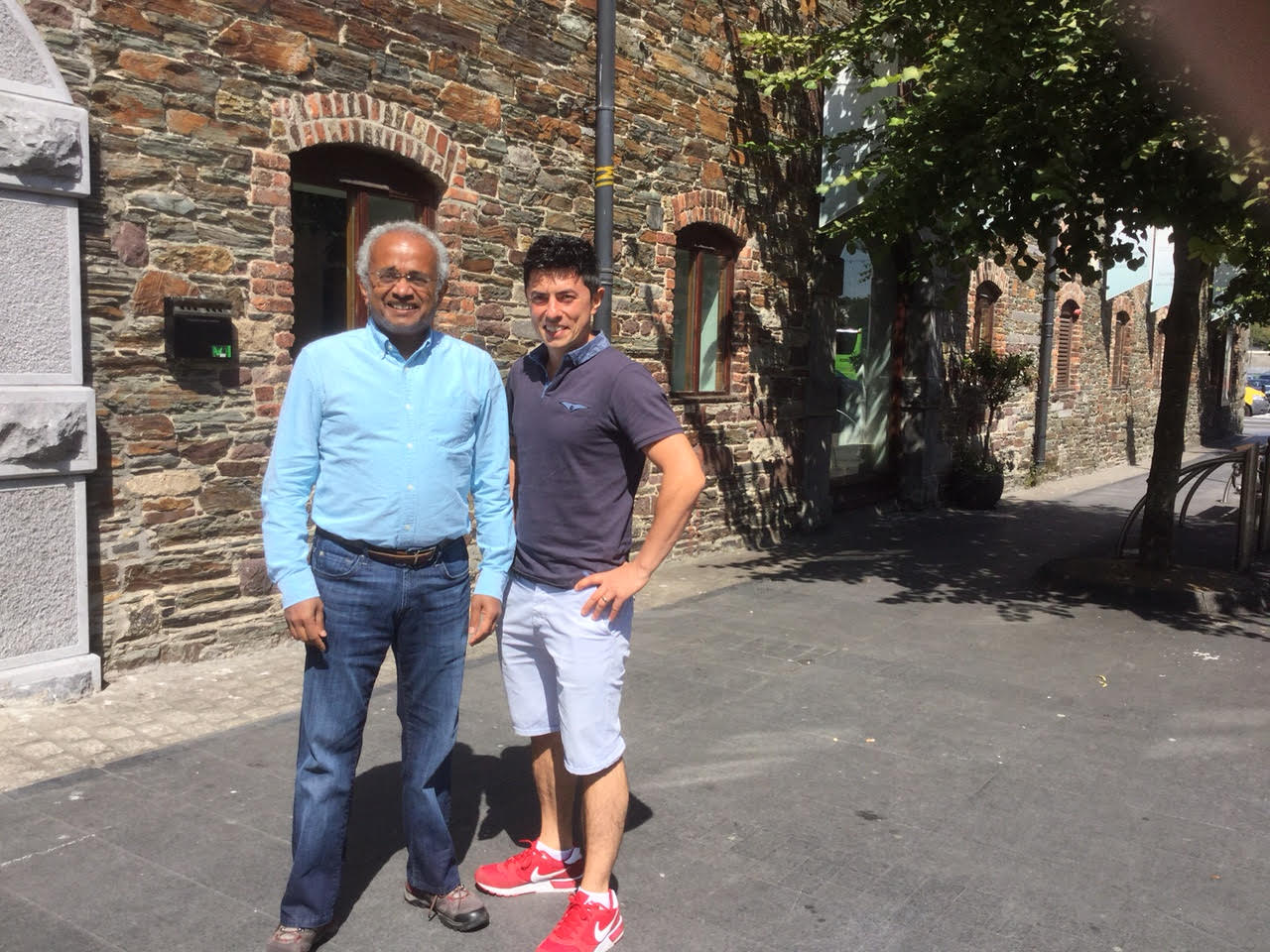
Meeting Up With Shanta in Waterford City, Ireland (August, 2015):

Since our conversation in episode 046 of the Economic Rockstar podcast, myself and Shanta met up for a brief period in Waterford City, Ireland. Shanta was on a visit form Washington DC (not work-related, just in case you think the The World Bank are coming in to Ireland!). Check back for a new blog post on what we chatted about.


Frank and Shanta

http://traffic.libsyn.com/economicrockstar/046_Shanta_Devarajan_Final.mp3

Podcast: Play in new window | Download

Economic Rockstar Podcast Survey

August 13, 2015 by Frank

ER Survey

Take the Economic Rockstar podcast survey and be in with a chance to win a $50 Amazon gift card

There are only 10 questions and you’ll be doing me a massive favor if you fill out this super quick survey. This is your opportunity to let me know what guests you’d like on the show and what topics you’d like me to cover and I can learn how to make this an even better show.

Thanks for taking time out. You are an Economic Rockstar!

 Click here to take the Economic Rockstar podcast survey and be in with a chance to win a $50 Amazon gift card


045: Jon Manning on the Art of Pricing and How Economic Theory Has Got Pricing All Wrong

August 13, 2015 by Frank

http://traffic.libsyn.com/economicrockstar/045_Jon_Manning_Final.mp3
Play in New WindowDownload

045: Jon Manning on the Art of Pricing and How Economic Theory Has Got Pricing All Wrong

Jon Manning is the Founder and Principal Consultant of Sans Prix and has over two decades of Pricing experiencejon manning in a wide variety of industries.

Since establishing Sans Prix, Jon (and his associates) have generated millions of dollars in incremental revenue for clients in places such as the UK, USA, India, and Australia.

Increasingly in demand as both a speaker and educator, Jon has spoken at many conferences, workshops, webinars and educational institutions across the Asia-Pacific, the Middle East and the United Kingdom.

In 2011, Jon and Greg Eyres established Pricing Prophets, the world’s first and only online pricing advisory service where clients can ask a panel of global pricing experts and thought-leaders what price to charge for a product or service and why.

Jon holds a Bachelor of Business (Applied Economics) from Deakin University (Australia), a Graduate Diploma of Business (Management) from Monash University (Australia) and a Master of Arts (European Studies), from The University of West London. He is a member of the Australian Institute of Management and the Professional Pricing Society.

In this episode, you will learn:

  • why Jon believes pricing is more of an a art than a science.
  • why pricing is based on human behavior that no scientific model can predict.
  • why there’s no such thing as Adam Smith’s Invisible Hand.
  • that 70% to 80% of companies use cost-based methods to set prices and few use a value-based method.
  • why customers don’t care about companies who use cost-based pricing and prefer companies that use value-based pricing methods.
  • why the best pricing strategy for a company is a value-based method.
  • the trials and tribulations of the pricing strategy adopted by Netflix and how it affected its share price.
  • how a $40 fine for returning a DVD late led to the founding of Netflix.
  • if the best strategy for companies to announce price increases to its customers is to do so a few years in advance.
  • how behavioral economics is opening up a minefield of exploration in pricing.
  • how Apple used anchoring techniques to sell their iWatch by offering a $10,000 iWatch. It makes the mainstream iWatch appear to be value for money.
  • how a $100 omelette was used by a restaurant to act as a decoy so it can influence your decision to pay for high-end or expensive goods.
  • how Goldilock Pricing helps a company, like Starbucks and Harvey Norman, sell more of a middle tiered product as it helps customers make decisions to buy.
  • how Starbucks found the that most of their customers have inelastic demand and decided to increase prices despite a recession in the US.
  • how the internet has changed the pricing model by offering freemium products and services and 30-Day money back guarantees.
  • if there are myths to pricing for companies.
  • how companies like Apple and Amazon price discriminate in order to capture market share and drive revenues upward.
  • how more and more companies are adopting dynamic pricing when selling into different markets.
  • the education pricing model in Ireland, Australia and the US.
  • about MOOCs and how it could have an impact on the future education model.
  • about Gaelic Football and how its players do not get paid unlike other sports.
  • how football games are using dynamic pricing models to charge for tickets based on opposition and weather.
  • that a 1% improvement in price leads to a 10% improvement in operating profit.
  • about the Banksy Experiment in New York where many passers-by failed to pick up an original for $60 that would otherwise fetch for $10,000 in an auction house.
  • how classical violinist Joshua Bell earned $26 in tips playing his $3.5 million violin but played to a packed audience for $100 per ticket the night before.
  • the 2 Golden Rules to Pricing.
  • about the ‘Pay What You Want’ model as followed by Radiohead and Jon Bon Jovi’s Soul Kitchen.

Economics:

In this interview, Jon mentions and discusses: pricing, the Invisible Hand, behavioral economics, heuristics, anchoring effects, framing, Extremeness Aversion, Goldilocks Pricing, demand, elasticity, elastic demand, inelastic demand, pricing architecture, consumer surplus, monopoly, price discrimination, dynamic pricing, marginal pricing and behavioral economics.

Economists:

In this interview, Jon mentions and discusses: Adam Smith, Dan Ariely, John H. Cochrane and Paul Samuelson.

Influencers:

Behavioral economists and marketers.

Quotes by Jon Manning in Episode 045 of the Economic Rockstar Podcast:

What they teach you in economics about pricing is true in theory but it’s irrelevant in practice – Jon Manning

Click To Tweet

I know why there is interest in price elasticity but I sort of think it’s a bit like the abominable snowman – Jon Manning.

Click To Tweet

There’s no formula to calculate the consumer surplus. You hear a lot of economists talk about the consumer surplus, which in the business community is known as leaving money on the table – Jon Manning.

There’s very few revolutionary monopolies around these days – Jon Manning.

Click To Tweet

There’s one thing that’s not a myth and that is you get what you pay for – Jon Manning.

Click To Tweet

The 2 Golden Rules to Pricing:

Rule #1: All value is subjective.

Value is in the eye of the customer. No matter what price you put onto something, at the end of the day, the customer is the single point of failure and if they don’t see value at the price you’ve attached to the product, they’re not going to buy. The ‘Pay What You Want’ pricing model is the purest form of value-based pricing since the customer can decide to pay for the product or service by attaching a value to it.

Rule #2: All value is contextual.

By placing a product or service in a certain context, people’s perceptions of its value change. A product placed in a high-end, up-market setting is more likely to command a higher price, whereas the exact same product placed in a low value setting or environment may only demand a smaller price. Joshua Bell and Banksy showed this golden rule of pricing in their experiments.

Companies Mentioned in this Episode Regarding their Pricing Methods:

Ryanair, EasyJet, Amazon, Apple, Uber, Starbucks, Harvey Norman and Netflix.

Recommended Books:

  • Meatonomics by David Simon
  • Priceless: The Myth of Fair Value (and How to Take Advantage of It) by William Poundstone
  • Information Rules: A Strategic Guide to the Network Economy by Carl Shapiro and Hal Varian
  • Pricing and Revenue Optimisation by Robert Phillips
  • Misbehaving by Richard Thaler
  • Butterfly Economics: A New General Theory of Social and Economic Behavior by Paul Omerod
  • New Ideas from Dead Economists by Todd G. Buchholz
  • The CEO of the Sofa by P. J. O’Rourke
  • Eat the Rich: A Treatise on Economics by PJ O’Rourke

Internet Resource:

  • 77 Inspirational Pricing Pages

Where to Find Jon Manning:

  • Sans Prix
  • Pricing Prophets
  • Twitter

http://traffic.libsyn.com/economicrockstar/045_Jon_Manning_Final.mp3

Podcast: Play in new window | Download

044: Nancy Folbre on Feminist Economics and the Care Economy

August 6, 2015 by Frank

http://traffic.libsyn.com/economicrockstar/044_Nancy_Folbre_Final1.mp3
Play in New WindowDownload

044: Nancy Folbre on Feminist Economics and the Care Economy

Nancy Folbre is a recently retired Professor of Economics at the University of Massachusetts, Amherst andNancy Folbrecurrently directs a research program of gender and care work at the Political Economy Research Institute.

Professor Folbre’s research focuses on the interface between feminist theory and political economy, with a particular focus on the work of caring for others.

Nancy was elected president of the International Association for Feminist Economics (IAFFE) in 2002, has been an associate editor of the Journal Feminist Economics since 1995, and is also an editorial assistant of the Journal of Women, Politics & Policy.

Nancy is recipient of a MacArthur Fellowship, and she has consulted for the United Nations Human Development Office, the World Bank and other organizations.

Professor Folbre has also written extensively on the social organization of time, namely the time allotted to care for children and the elderly and how family policies and social institutions limit the choices people can make between paid and unpaid work.

She is a contributor to the New York Times Economix blog.

Nancy’s book ‘Saving State U‘ (New Press, 2010) makes a case for strengthening public support for higher education in the United States.

Other recent books include ‘Greed, Lust, and Gender: A History of Economic Ideas’ (Oxford University Press, 2009) and ‘Valuing Children: Rethinking the Economics of the Family’ (Harvard University Press, 2008).

Nancy received a B.A. in philosophy from the University of Texas at Austin in 1971, an M.A. in Latin American studies from UT Austin in 1973, and a Ph.D. in economics from the University of Massachusetts, Amherst in 1979.

In this episode, you will learn:

  • why Nancy Folbre decided to study economics.
  • how the household is very much like the market economy.
  • about feminist household economics.
  • what the underlying principles and foundation to feminist economics.
  • why we should see unpaid work as part of the economy.
  • how the state and the market has reinforced the patriarchal system.
  • why the capitalist system, ironically, has downside effects on women today despite the benefits it provides.
  • why we should adopt the Scandinavian model of paternal responsibility.
  • about the unmeasured ‘Care Economy’ where people perform unpaid work.
  • about the opportunity cost to care work.
  • why Replacement Cost is a better proxy from a National Accounting perspective for measuring the size of the Care Economy.
  • why people are intrinsically motivated to care and that money is not an issue.
  • why Nancy Folbre strongly believes that we should think carefully about how we reward care work.
  • about the ‘Care Penalty’ and why we shouldn’t take advantage of the care workers motivation to work in the care industry.
  • about the societal pressures on a man who decides to stay at home and be the care giver.
  • why we should be providing a better account of the costs and benefits of raising kids.
  • if women have a ‘wage-penalty’ as they are, in most cases, the care-giver.
  • whether we can capture the value spent by parents caring for their children.
  • if intrinsic values of happiness lead to economic benefits for household.
  • if children of developed and less-developed countries are treated differently by their parents in terms of their perception of value.
  • about the rapid decline in fertility rates in India, Asia and Latin America.
  • why self-interest was always described in gender terms and why it was always permissible for men to be self-interested than women.
  • if having more women involved in economics and the economy would lead to better outcomes.

Economists:

In this interview, Nancy mentions and discusses: Gary Becker, Shoshana Grossbard, Friedrich Engels and Adam Smith.

Economics:

In this interview, Nancy mentions and discusses: feminist economics, market choice, economics of the household, altruism, rationality, interdependent utility, collective bargaining, choice, efficiency, inequality, incentives, opportunity cost, replacement cost, free market, Invisible Hand and happiness.

Quotes by Professor Folbre in Episode 044 of the Economic Rockstar Podcast:

Work can be very productive and create value for society even if it’s unpaid – Nancy Folbre

Click To Tweet

“Definitions of femininity and masculinity are changing in a positive way” – Nancy Folbre

Click To Tweet

“Smith had a lot of confidence in the pursuit of individual self-interest” – Nancy Folbre

Click To Tweet

Many people have taken Smith’s praise of the free market as an endorsement of selfish behavior, that it doesn’t matter if you think only of yourself because in a market economy we can be confident that everything will turn out just fine.  What I argue in the Invisible Heart is that’s really incorrect. The market economy really depends to a very great extent on a sense of commitment and obligation to other people of trust and reciprocity and concern for the welfare of others. That affects overall economic organisation and success in some pretty profound ways – Nancy Folbre

“We need to change the way we think about work and about value” – Nancy Folbre

Click To Tweet

Leading happy and worthwhile lives is kinda the point of the whole economic enterprise and sometimes we lose sight of that. And there’s certainly a lot of evidence that what makes people happy is good human relationships, having close ties with family and friends and community. If we appreciated that a little bit more fully, we could organise our economic system a lot more successfully – Nancy Folbre

“I think Feminist Economics is a part of the whole heterodox challenge to the mainstream economics, and I fell good about that” – Nancy Folbre

Recommended Books:

  • Valuing Children: Rethinking the Economics of the Family by Nancy Folbre
  • Greed, Lust, and Gender: A History of Economic Ideas by Nancy Folbre
  • Saving State U by Nancy Folbre
  • The Invisible Heart by Nancy Folbre
  • The Condition of the Working-Class in England in 1844 by Friedrich Engels
  • The Invisible Hand by Adam Smith

Blog:

  • Care Talk by Nancy Folbre

Conference:

  • International Association for Feminist Economics

http://traffic.libsyn.com/economicrockstar/044_Nancy_Folbre_Final1.mp3

Podcast: Play in new window | Download

How to set up your Blog in minutes with Bluehost!

August 3, 2015 by Frank

Are you ready to get your WordPress site up and running in minutes with Bluehost?

Follow the steps below and you’ll be an online rockstar in no time!

Step #1:

  • Click Here To Set Up Your Hosting Account & Aquire or Transfer Your Domain…

Your hosting account is where your website will be hosted and your domain is your website’s URL (economicrockstar.com is mine).

My #1 hosting recommendation is Bluehost because:

  1. They are a proven hosting company, hosting over 2 million websites.
  2. Their customer support is one of the best out there.
  3. One touch WordPress installation – setting up your website in 4 minutes.
  4. Their prices are the best (and they even buy your domain for you!).

Step #2:

  • Click here & click the green ‘get started now’ button…

Bluehost home page

Step #3:

  • Select your plan…


    Bluehost Plans

Step #4:

  • Choose your free domain name or transfer your current domain…

Bluehost Domains page

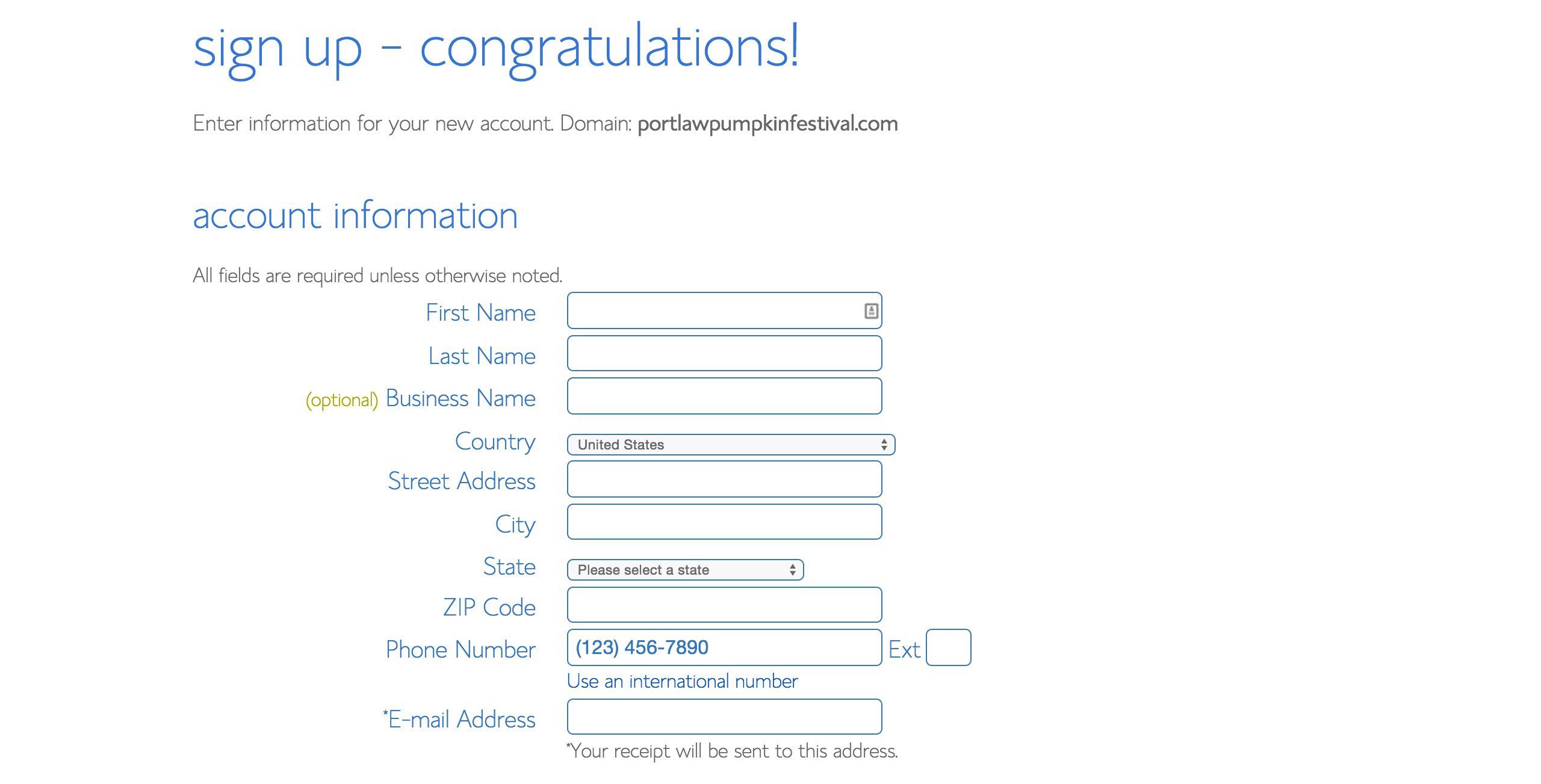
Step #5:

  • Place your order and pay for your plan…

Bluehost Sign Up page

Step #6:

  • Bluehost will email your login information.

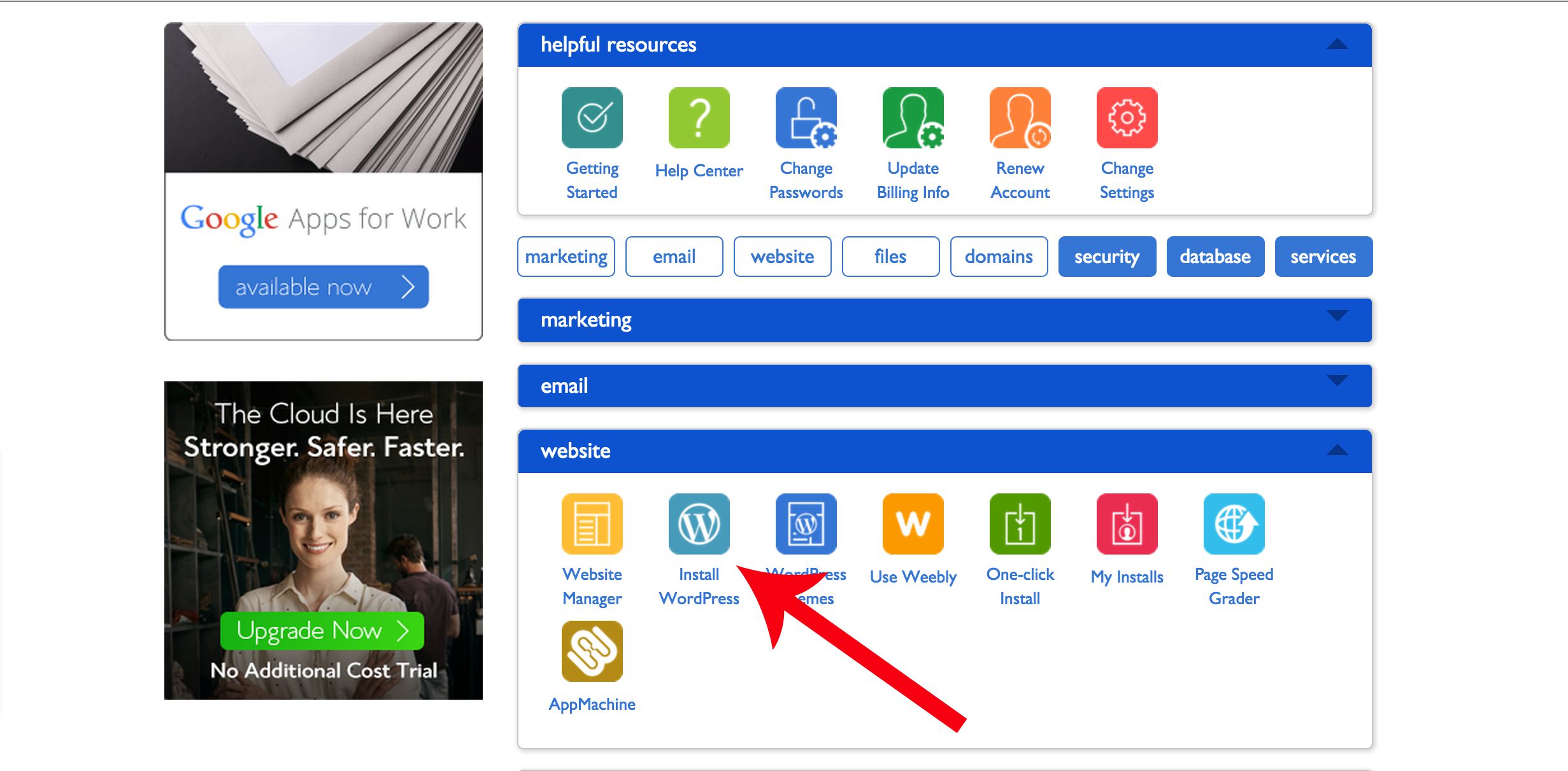
  • Login to Bluehost, and you’ll be taken to your Bluehost dashboard.

  • Here, you can install WordPress by double-clicking on ‘Install WordPress’…

Bluehost Install WP

Step #7:

  • Click the the green Install button…

Bluehost Install WP Step2

Step #8:

  • Choose the domain you registered or the one you transferred…

Bluehost Choose Domain

Step #9:

  • Check the ‘Show advanced options’ box.

  • Fill in the title, username, and password. Your title will be the name of your website (mine would be economicrockstar). The username and password will be what you use to login to the backend of your website (your WordPress dashboard).

IMPORTANT: Save this information somewhere where you won’t lose it. You will need it for step #11

step9

Step #10:

  • Bluehost will install WordPress on your server and let you know when it’s complete…

step10a

  • Click the ‘View Credentials’ button on the top right…

step10b

Step #11:

  • Click on ‘Admin URL’ (located below the green box) and enter your WordPress login credentials from step #9. This will take you to your WordPress dashboard. Your WordPress dashboard is where you will do almost everything on your blog. From writing articles to changing design…

Step11

Congratulations! You’re ready to rock your content!

Bluehost Affiliate Link

Disclosure:

The link above is an affiliate link which means that if you choose to make a purchase, I will earn a commission. This commission comes at no additional cost to you. Please understand that I have experience with Bluehost, and I recommend them because they are helpful and useful, not because of the small commissions I make if you decide to buy something. Please do not spend any money on these products unless you feel you need them or that they will help you achieve your goals.


How to Calculate Statistics Using Excel

July 30, 2015 by Frank

If you’ve just stumbled across this post, please feel free to download the PDF of Measures of Central Tendency and Dispersion. This will go great with the video series on YouTube and I hope you learn a lot from them.

Here’s one to get you started:

Thumbnail Vid 010a

Thanks for watching the ‘How to’ video series on statistics on my YouTube channel. I’ll be adding more content so why not subscribe to the Economic Rockstar channel on YouTube to get notified of any new video release.

Here’s a list of short ‘how to’ videos on statistics that you can watch right now:

►Simple Linear Regression Part 1

►Simple Linear Regression Part 2

►Simple Linear Regression Part 3

►Simple Linear Regression Part 4

►Calculation of Simple linear Regression Part 5

►How to Calculate the Correlation Coefficient

►How to Forecast using Time Series Analysis

►How to Calculate the Mean and Standard Deviation for a Data Set (Using Excel)

►How to Calculate the Mean, Median, Mode and Standard Deviation for a Data Set (Using Excel)

►How to Calculate the Mean Median and Mode for a Data Set Using Excel

►How to Calculate the Standard Deviation (formula) for a Data Set

043: Herbert Gintis on Game Theory and the Multidisciplinary Approach to Understanding Human Behavior

July 30, 2015 by Frank

http://traffic.libsyn.com/economicrockstar/043_Herbert_Gintis_Final.mp3
Play in New WindowDownload

043: Herbert Gintis on Game Theory and the Multidisciplinary Approach to Understanding Human Behavior

Herbert Gintis is Emeritus Professor of Economics at University of Massachusetts and visiting Professor at Central European University.Herbert Gintis

He is known for his theoretical contributions to sociobiology, especially altruism, cooperation, epistemic game theory and gene-culture co-evolution.

Herbert has a B.A and M.A in Mathematics but switched his PhD program at Harvard from mathematics to economics.

Professor Gintis was part of a group of economists who developed their ideas on a new economics which encompassed issues of alienation of labor, racism, sexism, and imperialism.

Herbert has worked extensively with economist Samuel Bowles, writing their landmark book, Schooling in Capitalist America.

One of Herbert’s latest books The Bounds of Reason emphasises the unification of economic theory with sociobiology and other behavioral sciences which, in the words of Nobel Prize-winning economist, Vernon L. Smith, “is firmly in the revolutionary tradition of David Hume (Convention) and Adam Smith (Sympathy)”.

In the episode you will learn:

  • about the importance of trans-disciplinary research and the importance of collaboration with other disciplines.
  • why economics is not the only social science that explains human behavior.
  • how biology, economics and sociology explain the behaviour of humans in different ways and which discipline is correct?
  • about the Ultimatum Game and how it shows the cooperative and non-cooperative behaviour of humans.
  • about the morality of humans and how we reciprocate kindness with kindness and unkindness with unkindness.
  • why reciprocity makes humans so successful as a species.
  • why some species have a symbiotic relationship with other species which is not the same as reciprocity.
  • how we can fit all the human feelings together to form a multi-disciplinary approach to understanding human behavior.
  • why we always need a system to punish free-riders and non-cooperators.
  • how the future structure of the University can be seen at Arizona State University today.
  • why we need a new generation of thinkers and research centres who are trans-disciplinary.
  • what projects Professor Herbert Gintis is working on right now.
  • why morality controls politics and your vote will not make a difference.
  • how Herbert gets things done in terms of writing books and journal articles.
  • why Herbert did not like The Black Swan by Nassim Nicholas Taleb.
  • about Herbert’s disagreement with Nassim Nicholas Taleb.
  • why Herbert believes that macroeconomics is wrong and is in agreement with Taleb on that issue.
  • the goal of economic policy is not to predict but to put in place economic and social policies that prevent really bad outcomes.

Influencers:

Kenneth Arrow, John Maynard Keynes, Adam Smith and Albert Einstein.

Economics:

In this interview, Herbert mentions and discusses: Marx, rationality, game theory, rational actor model, experimental economics, prisoners dilemma, the ultimatum game, labor market, reciprocity and morality.

Economists:

In this interview, Herbert mentions and discusses: Vernon Smith, Samuel Bowles, Ernst Fehr, Kenneth Arrow and Nassim Nicholas Taleb.

On Math Being the Core Link to Multi-Disciplinary Knowledge:

“It’s really hard in the Behavioral Sciences to get too close to any one thinker because they’re all tainted by disciplinarianism. We need a new generation of thinkers who really think in all of these disciplines at the same time. As long as you can do the math. If you can’t do the math, you can’t do economics or you can’t do biology. If you can do the math, and you know statistics, there’s no reason why you shouldn’t know all of the fields. We need a generation of people who do that. The reason it’s possible now is the internet. Now, there’s no reason for disciplinary isolation. I think the next generation of behavioral scientists is going to much more broad”.

Arizona State: The Next Generation University… Today

Arizona State University is organised trans-disciplinarily. They don’t have traditional disciplines. They have subject areas depending on who asks questions and subject areas there from all sorts of disciplines. Herbert Gintis believes that’s what the future is going to be like, where you abandon the disciplines and add new research centres based on asking questions like climate change, cooperation, epidemiology, warfare, political structure, etc. And then you just hire people who can do that and talk to each other. It is exciting. It will happen. But it will take a long time because the whole organisation of the university is in terms of disciplines.

All of the real advances in the Behavioral Sciences fall in between the disciplines. It requires you do it all at the same time. it’s likely that at the forefront of change in the Behavioral Sciences will be funding organisations, governmental organisations like the NFF in the United States and the ESF in Europe. 

Quotes by Professor Gintis in Episode 043 of the Economic Rockstar Podcast:

Disciplines are almost like a feudal fiefdom. So it’s very hard to do trans-disciplinary research but that’s where all the real action is these days. Not only in behavioral science but in natural science – Herbert Gintis.

As far as I’m concerned, all of life is game theory. It’s the interaction of strategic interaction of individuals of all discipline species and types and races. So game theory comes first – Herbert Gintis.

Human success is not based on selfishness. It’s based on our ability to cooperate – Herbert Gintis.

Click To Tweet

“The real enemy of understanding humans is the notion that we’re all selfish. It’s just not true – Herbert Gintis

To do creative work, you have to have time. Once you have time, you get a lot of work done – Herbert Gintis.

“What I like to do most in the world is to read and write. That’s what I do” – Herbert Gintis.

“I did not like The Black Swan at all. It made fun of science. It made fun of statistics. It capitalised on a unique event, the financial crisis of 2008, and he used it to say economics is a bunch of crap. I think that’s just a bad mistake and I had some run-ins with him on the web. He thinks that science is about prediction. Now prediction is important but that’s not what science is about. It’s about expectation” – Herbert Gintis.

Projects Herbert Gintis is Working on Right Now:

Non-consequential behaviour in politics: 

“People participate politically even when they don’t make any difference. In all English-speaking countries, no election with more then 40,000 voters has ever been won by one vote. Meaning that no individual has ever made a difference in a political booth. Political structures are moral structures and they don’t necessarily reflect particular self-interest concerns” – Herbert Gintis.

Resources:

  • Herbert created his own word processor and uses LaTex for mathematical equations.
  • The Web.
  • Evernote
  • Scrivener

Recommended Books:

  • The Bounds of Reason: Game Theory and the Unification of the Behavioral Sciences by Herbert Gintis
  • A Cooperative Species: Human Reciprocity and Its Evolution by Samuel Bowles and Herbert Gintis
  • Schooling in Capitalist America: Educational Reform and the Contradictions of Economic Life by Samuel Bowles and Herbert Gintis
http://traffic.libsyn.com/economicrockstar/043_Herbert_Gintis_Final.mp3

Podcast: Play in new window | Download

042: Parviz Parvizi on Clammr, Coffee, Coase and the Economy of Iran

July 23, 2015 by Frank

http://traffic.libsyn.com/economicrockstar/042_Parviz_Parvizi_Final.mp3
Play in New WindowDownload

042: Parviz Parvizi on Clammr, Coffee, Coase and the Economy of Iran

Parviz Parvizi is co-founder of Clammr, a mobile app and platform making audio more social and viral. Users areParviz Parvizi on the Economic Rockstar podcast calling Clammr, which features snack-sized audio clips of 18 seconds or less, the “Instagram of Audio” and “Audio Twitter”.

Previously, Parviz worked at McKinsey & Company, Goldman Sachs, the Federal Communications Commission, and O’Melveny & Myers.

He has advised top 5 global media companies and mobile carriers on strategy and growth. He was a founder of McKinsey’s iConsumer research initiative on digital consumer behavior, authoring 3 of the firm’s 10 most-downloaded media sector knowledge documents.

Parviz was a Olin Law & Economics Fellow at Yale Law School. At Cornell he majored in economics and served as President of the Cornell Economics Society while an undergraduate.

Parviz holds a JD from Yale Law School and AB from Cornell.

Economics:

In this interview, Parviz mentions and discusses: development economics, poverty, transitional economies, microeconomics, exports, auction markets, transaction costs, fair trade, taxes, theory of specialisation, Coase theorem, theory of the firm, property rights, bargaining power, market prices, transaction costs, fair trade, economic growth, consumption, productivity, autarky,

Economists

In this interview, Parviz mentions and discusses: Friedrich Hayek, Adam Smith,David Ricardo, Ronald Coase and Steven Dubnar, 

Favorite Economists:

  • Adam Smith and Ronald Coase

Clammr as featured on Economic Rockstar

Find Out:

  • about Clammr, the amazingly new app that shares an 18-second audio clip just like an audio tweet.
  • about Parviz Parvizi’s journey from Iran to the US.
  • how Parviz Parvizi got his name.
  • how there are 4 hours of audio-only time each day for people and how Clammr can accommodate your needs.
  • about the motivation behind the creation of Clammr and how Parviz and his co-founder solved a problem.
  • how Clammr was built up from the beginning at zero cost.
  • what Clammr found out about podcasting.
  • the difficulties of growing and monetising a podcast and how Clammr is helping podcasters to solve these challenges.
  • about the social aspect of Clammr and how you can share audio snippets to your friends, colleagues and audience.
  • if Clammr will adopt a monetization model similar to YouTube.
  • how Clammr’s ‘Hear More’ button can potentially lead to a paid transaction for users.
  • about the opportunities that exist for users of Clammr in the education sector.
  • how teachers can use Clammr in assessments and how students can collaborate to give their audio response in a mashup-like answer.
  • how Clammr could be the new route for a musician to become known, just like the way Justin Bieber made it using YouTube.
  • how being an early adopter of a new platform can lead to a large following.
  • about the sensation that is PewDiePie on YouTube and his degree in Industrial Economics.
  • about Parviz’s work in the Tanzania and Ethiopia coffee trade market.
  • about the challenges faced by African coffee growers and how Parviz solved this problem.
  • Parviz’s views on the recent US-Iran deal.
  • how the US-Iran deal may have economic limitations due to Iran’s economy being 70% state-dominated.
  • about the benefits of an export-oriented market economy.
  • about the benefits of a knowledge economy.
  • how democracy and economic growth could improve if marginalised groups in society are helped.

Quotes by Parviz in Episode 042 of the Economic Rockstar Podcast:

  • Clammr is really trying to address the challenge of discovery and social sharing in audio – Parviz Parvizi

    Click To Tweet

  • You build a more sustainable business if the way you get paid is a way in which all parties involved actually get value – Parviz Parvizi

Advice:

  • Don’t sell yourself short in terms of where you’re aiming and don’t think that your starting point has to define your ending point – Parviz Parvizi

  • Even if you’re aren’t getting access to the very best schools, it doesn’t actually take that much time to catch up with hard work – Parviz Parvizi

  • Aim high and exposing yourself to people, institutions and places of incredibly high standards is a great way to push yourself even if initially you’re kind of a failure”– Parviz Parvizi

  • Entrepreneuship is a constant battle of wills – Parviz Parvizi

    Click To Tweet

Recommended Books:

  • The Elements of Style by Strunk and White
  • Wealth of Nations by Adam Smith
  • The Holy Bible

The Next Decade of Podcasting:

  • What’s in store for the next decade of podcasting and radio? Check out this great post.
  • Clammr releases Future Podcasting 2015 Report on SlideShare.
  • The Future of Podcasting by Parviz Parvizi.

Where to Find Parviz Parvizi:

  • Twitter: @ClammrClammr App on Economic Rockstar
  • Clammr: @Parviz
  • Facebook: Clammr

Links for the Clammr App:

  • Download Clammr for iPhone/iPad in the App Store or by visiting Clammr.
  • For Android use the web-based publisher to upload files and for a basic listening experience.
  • Workshop and update videos.
http://traffic.libsyn.com/economicrockstar/042_Parviz_Parvizi_Final.mp3

Podcast: Play in new window | Download

041: Dermot Hayes on Comparative Advantage, Feeding the Chinese and the Malthusian Catastrophe

July 16, 2015 by Frank

http://traffic.libsyn.com/economicrockstar/041_Dermot_Hayes_Final.mp3
Play in New WindowDownload

041: Dermot Hayes on Comparative Advantage, Feeding the Chinese and the Malthusian Catastrophe

Dermot Hayes is the Pioneer Chair of Agribusiness, professor of economics, and professor of finance at Iowa State University. He heads theDermot Hayes 2 Trade and Agricultural Policy Division at CARD, a position he also held from 1990 through 1998.

He is co-director of the Food and Agricultural Policy Research Institute, a research center dually administered through the Centre for Agricultural and Rural Development (CARD) at Iowa State and at the University of Missouri at Columbia. He is also a leader of the Policy Task Force of the Plant Science Institute at Iowa State.

A native of the Republic of Ireland, Dermot obtained his degree in agriculture science from University College, Dublin and his Ph.D. from University of California, Berkeley with a major in international trade.

Dermot has distinguished himself with many awards at the college and university levels for his work as a teacher and researcher.

In 2006 he received a Publication of Enduring Quality award from the American Agricultural Economics Association, who subsequently named him a Fellow in 2007.

Besides his analysis of U.S. farm policy and international agricultural trade, Dermot’s other research interests include food safety, livestock modelling, demand analysis, and commodity markets.

Economics:

In this interview, Dermot mentions and discusses: market inefficiencies, government intervention, agricultural economics, property rights, comparative advantage, autarky, incentives, scarcity, Malthusian Catastrophe, free-trade, unemployment, subsidies and taxes.

Economists:

In this interview, Dermot mentions and discusses: Jason Shogren, Paul Dolan, David Zetland, David Simon, Adam Smith, Thomas Malthus, David Zilberman, Milton Friedman and Josh Angrist.

Influencer:

Milton Firedman

“Whenever prices rise, farmers and technology companies have an incentive to work harder to take advantage of high prices. And of course they do that by producing more and that brings prices back down again.” – Dermot Hayes

“Malthus was wrong. He was a negative person. But having said that, with more people and less efficient use of land, we are going to have to bring more land into cultivation – this is devastating to the environment.” – Dermot Hayes

In this episode, you will learn:

  • how China is finding ways to feed its people and how self-sufficiency no longer works.
  • about China’s ever-increasing demands for soybeans, sugar, wine, etc and how this is putting demands on the global agricultural industry.
  • how Ireland lost its comparative advantage in milk production by joining the EU.
  • about Kerrygold Irish grass-fed butter and Bullet-proof coffee.
  • why Kerry Group are only ‘scratching the surface’ in the US market.
  • what high-value, labor-intensive products China should concentrate on producing in order to feed their population and trade with other countries.
  • about if the Chinese government owns much of the land and property rights in China.
  • ‘terminator seeds’ and how private companies could be incentivised to manufacture them.
  • about the use of beta agonists, such as ractopomine, in the use of animal food production.
  • why Europe’s method of testing agricultural technologies frustrates Dermot.
  • about Dermot’s work on free-trade agreements between countries.
  • about Dermot’s ‘controversial’ ethanol research paper.
  • why Dermot created a formula that allowed the price of corn to track crude oil prices and how he bought agricultural land based on his findings.
  • how academic research can open up hatred and attacks amongst your peers and the industry to which you maybe researching.
  • what advice Dermot would give a government regarding the taxing and subsidies of goods and services for the purpose of trade.

Takeaway:

“If you haven’t travelled to strange places like Burma or Uruguay, find a way to do so and you’l come back a changed person.” – Dermot Hayes

Recommended Books:

  • Free to Choose by Milton Firedman

http://traffic.libsyn.com/economicrockstar/041_Dermot_Hayes_Final.mp3

Podcast: Play in new window | Download

  • Prev Page...
  • 1
  • …
  • 12
  • 13
  • 14
  • 15
  • 16
  • …
  • 19
  • ...Next Page

Frank Conway

Frank Conway is founder of Economic Rockstar and lecturer of economics, finance and statistics. Read More…

View My Blog Posts

Youtube Sub

Become a Patron of the Economic Rockstar Podcast

patreon

Ireland’s Economy by the Numbers

Leaving Cert Economics: Ireland’s Economy  Click here to download a workbook on Ireland’s Economy so that you can add your own notes. [Original size] Ireland’s Economy by fconway

Categories

Subscribe and Never Miss An Episode

itunes-logo

Recent Posts

  • Ireland’s Economy by the Numbers April 8, 2019
  • 174: Wendy Carlin on The Core Project, Capitalism, Democracy and Normative Statements February 13, 2019
  • 173: Stephen Wright on Core Econ as a Learning Resource for Mainstream Economics January 28, 2019
  • 172: Best of 2018 Part 2: From the Great Depression to Futurism; Institutions, Individualism, Cooperation and Reciprocity January 22, 2019
  • 171: Best of 2018 Part 1 January 3, 2019

Copyright © 2026 · Podcast Pro Theme on Genesis Framework · WordPress · Log in

This website uses cookies to improve your experience. We'll assume you're ok with this, but you can opt-out if you wish. Accept Reject Read More
Privacy Policy

Privacy Overview

This website uses cookies to improve your experience while you navigate through the website. Out of these, the cookies that are categorized as necessary are stored on your browser as they are essential for the working of basic functionalities of the website. We also use third-party cookies that help us analyze and understand how you use this website. These cookies will be stored in your browser only with your consent. You also have the option to opt-out of these cookies. But opting out of some of these cookies may affect your browsing experience.
Necessary
Always Enabled
Necessary cookies are absolutely essential for the website to function properly. This category only includes cookies that ensures basic functionalities and security features of the website. These cookies do not store any personal information.
Non-necessary
Any cookies that may not be particularly necessary for the website to function and is used specifically to collect user personal data via analytics, ads, other embedded contents are termed as non-necessary cookies. It is mandatory to procure user consent prior to running these cookies on your website.
SAVE & ACCEPT