• ABOUT
  • RESOURCES
  • PODCAST
  • BOOKS
  • BLOG
  • SUPPORTERS
  • QFA Financial Advice
  • CONTACT

Economic Rockstar

Connecting Brilliant Minds in Economics and Finance

124: Emily Oster on Diabetes and Diet, Disease and Vaccinations and Debunking Pregnancy Myths
January 18, 2018 by Frank

http://traffic.libsyn.com/economicrockstar/124_Emily_Oster_Final.mp3
Play in New WindowDownload

124: Emily Oster on Diabetes and Diet, Disease and Vaccinations and Debunking Pregnancy Myths


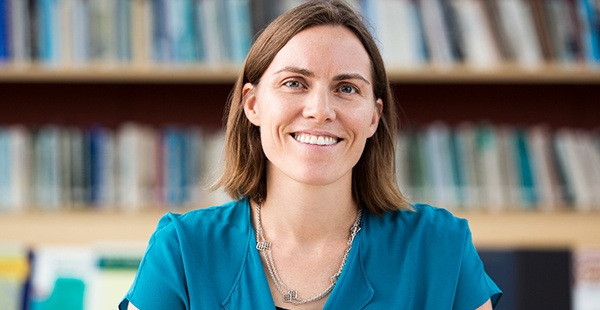
Emily Oster is Professor of Economics at Brown University. Before joining Brown University Professor Oster wasa faculty member of the University of Chicago, Booth School of Business following the completion of her PhD from Harvard. Emily’s research covers development economics, health economics and research design.

Professor Oster is the author of “Expecting Better: Why the Conventional Pregnancy Wisdom Is Wrong — and What You Really Need to Know”. Her book has over 600 customer reviews on Amazon and has over 4400 ratings on Goodreads. Emily has featured in SuperFreakonomics and her Ted talk ‘Flip your thinking on AIDs in Africa’, has almost 1 million views.

Links:

Diabetes and Diet: Purchasing Behavior Response to Health Information
American Economic Journal:Applied Economics,  Forthcoming

Does Disease Cause Vaccination? Disease Outbreaks and Vaccination Response
Journal of Health Economics, Forthcoming

Witchcraft, Weather and Economic Growth in Renaissance Europe
Journal of Economic Perspectives, Winter 2004.

Podcast Episodes Mentioned:

118: Zachary Feinstein on Systemic Risk and Economics in Star Wars and Harry Potter

114: Deirdre McCloskey on Equality and Greed and How To Be a Very Good Economist

022: Josh Angrist on Taking the Con Out of Econometrics – Kung Fu Style

The Time Ferriss Show: Gretchen Rubin — Experiments in Happiness and Creativity

Books:

Expecting Better: Why the Conventional Pregnancy Wisdom is Wrong, and What you Really Need to Know by Emily Oster

Mostly Harmless Econometrics: An Empiricist’s Companion by Josh Angrist and Jörn-Steffen Pischke

Radical Markets: Uprooting Capitalism and Democracy for a Just Society by Eric A. Posner and E. Glen Weyl

The Book of Dust: La Belle Sauvage by Philip Pullman

Harry Potter Paperback Box Set (Books 1-7) by J. K. Rowling

Patreon

If you’re a fan of the podcast and would like to show your support in anyway, please check out my Patreon page at patreon.com/economicrockstar where you can sign up for any of the awards for as little as $1 a month or you can simply follow me on the Economic Rockstar Facebook page or on Twitter or simply recommend the show to a friend, especially if they have never had the opportunity to study economics.

http://traffic.libsyn.com/economicrockstar/124_Emily_Oster_Final.mp3

Podcast: Play in new window | Download
123: Vernon Smith on Life During the Great Depression and World War II, Overcoming Adversity and Life as an Economist

January 11, 2018 by Frank

http://traffic.libsyn.com/economicrockstar/123_Vernon_Smith_Final.mp3
Play in New WindowDownload

123: Vernon Smith on Life During the Great Depression and World War II, Overcoming Adversity and Life as an Economist

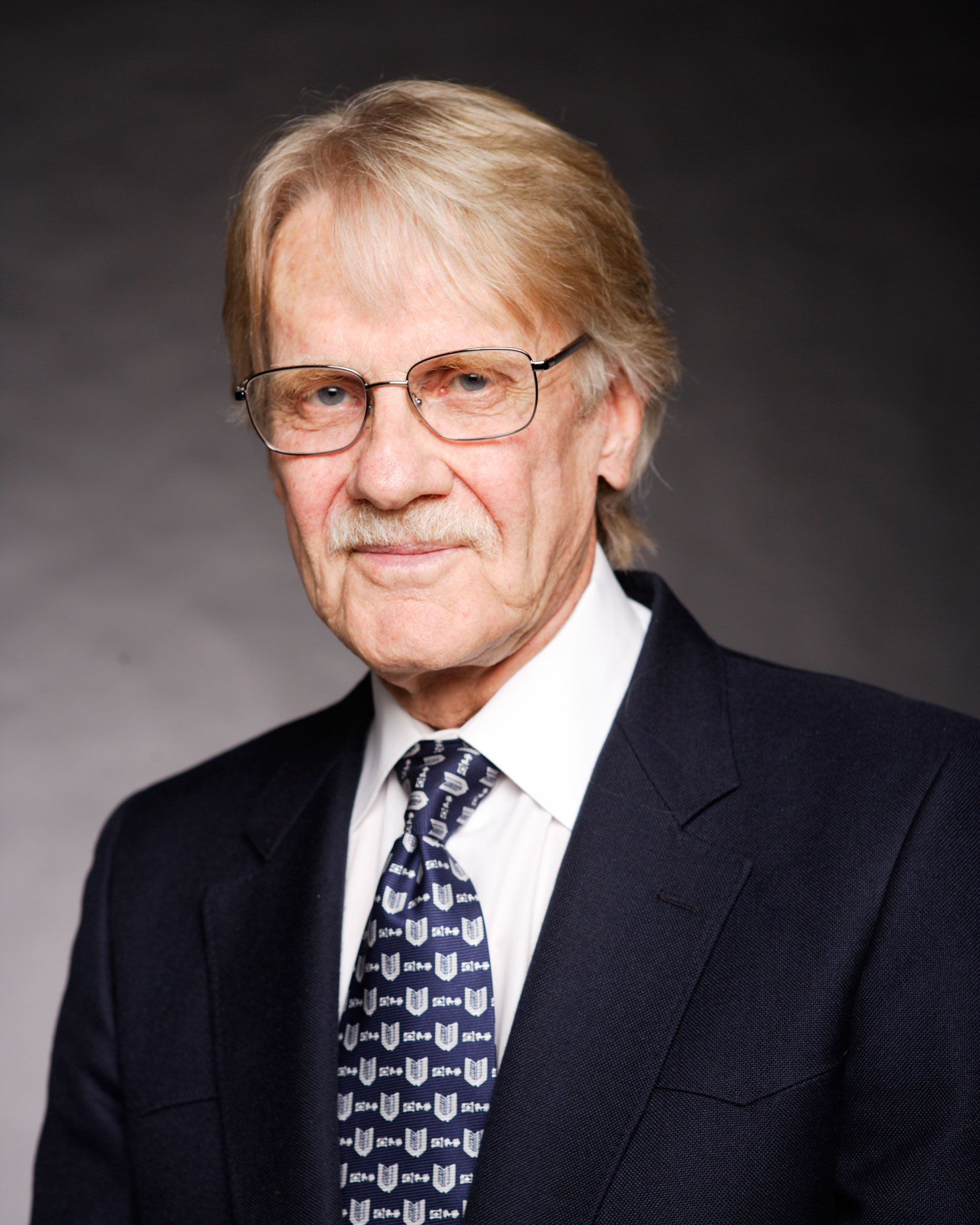
Professor, George L. Argyros Endowed Chair in Finance and Economics, Professor of Economics and Law

Dr. Vernon L. Smith was awarded the Nobel Prize in Economic Sciences in 2002 for his groundbreaking work in experimental economics.

He has joint appointments with the Argyros School of Business & Economics and the Fowler School of Law, and is part of a team that will create and run the new Economic Science Institute at Chapman.

Dr. Smith has authored or co-authored more than 300 articles and books on capital theory, finance, natural resource economics and experimental economics.

He serves or has served on numerous board of editors including the American Economic Review, The Cato Journal, Journal of Economic 

Behavior and Organization and the Journal of Economic Methodology.

Dr. Smith is a distinguished fellow of the American Economic Association, an Andersen Consulting Professor of the Year, and the 1995 Adam Smith Award recipient conferred by the Association for Private Enterprise Education.

Dr. Smith completed his undergraduate degree in electrical engineering at the California Institute of Technology, his master’s degree in economics at the University of Kansas, and his Ph.D. in economics at Harvard University.

In this episode, you will find out:

  • What life was like growing up in Wichita, Kansas during the Great Depression.
  • How Professor Smith was schooled during his early formative years by an immigrant German teacher.
  • The roles of his parents in influencing Vernon’s beliefs, morals and hard working ethics.
  • Vernon’s role during World War II as an employee of Boeing.
  • A story of overcoming adversity and being exposed to innovation and entrepreneurial activity.
  • How electrification during the Roosevelt Administration in the 1930s ended the use of the Coleman Lamp for famers but how Coleman Lamps pivoted to deal with this structural shift.
  • How Vernon found his way in studying economics and his influencers at that time.
  • We find out about Vernon’s discovery of a competitive equilibrium in an oral outcry auction without participants requiring complete or even prior knowledge resulting in his award of the Nobel Prize in Economic Sciences.
  • His invitation to unveil a statue of Adam Smith in Edinburgh
  • Who he would like to meet if he could time travel
  • Books he’d recommend and much more.

    Patreon

    If you’re a fan of the podcast and would like to show your support in anyway, please check out my Patreon page at patreon.com/economicrockstar where you can sign up for any of the awards for as little as $1 a month or you can simply follow me on the Economic Rockstar Facebook page or on Twitter or simply recommend the show to a friend, especially if they have never had the opportunity to study economics.

    http://traffic.libsyn.com/economicrockstar/123_Vernon_Smith_Final.mp3

    Podcast: Play in new window | Download
    122: Robin Hanson on The Elephant In the Brain: Hidden Motives in Everyday Life

    January 2, 2018 by Frank

    http://traffic.libsyn.com/economicrockstar/122_Robin_Hanson_3_Final.mp3
    Play in New WindowDownload

    122: Robin Hanson on The Elephant In the Brain: Hidden Motives in Everyday Life


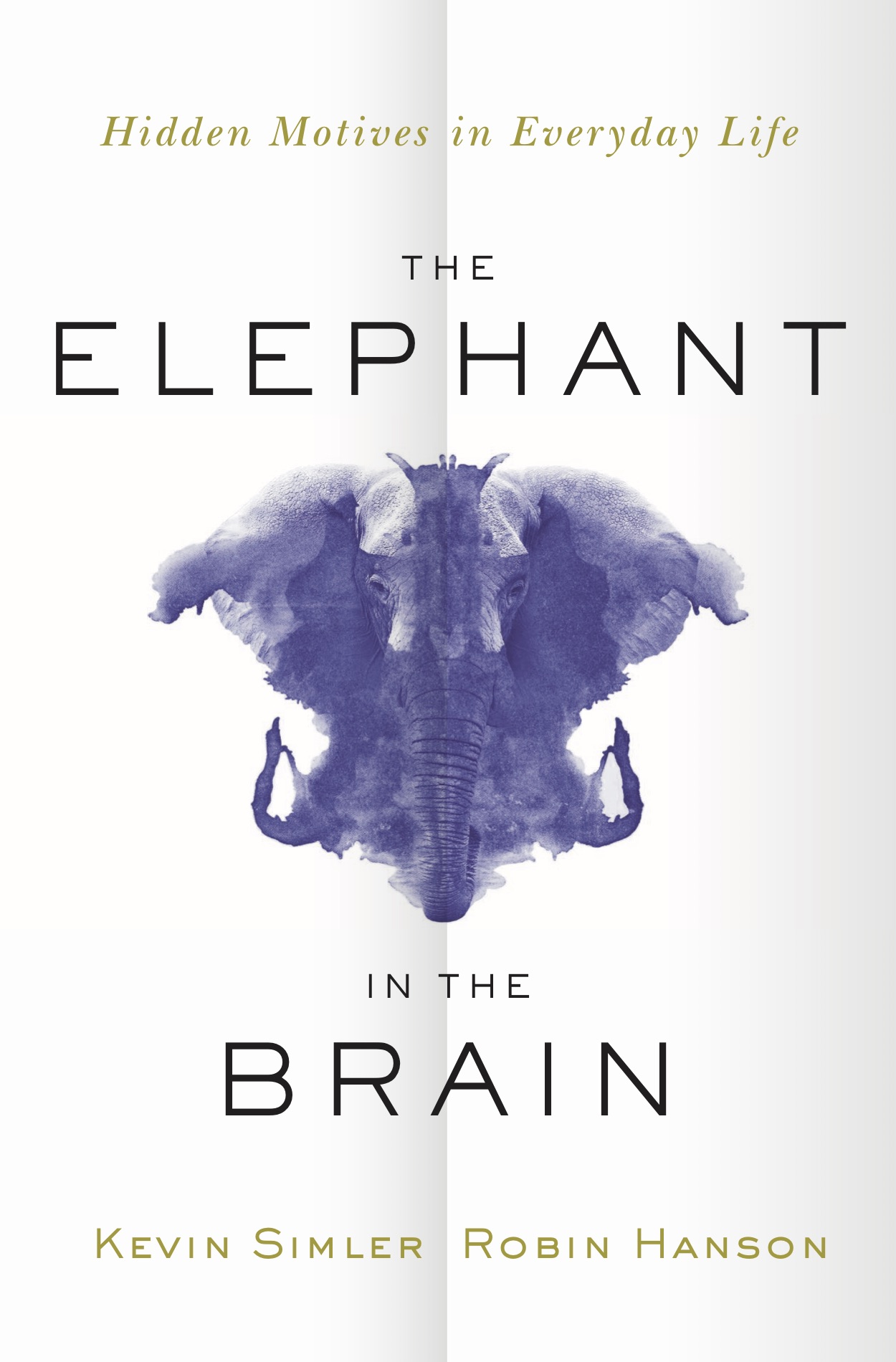
    So to begin again… In this weeks episode of the economic rockstar podcast I speak to Professor Robin Hanson, associate professor of economics at George Mason University. Professor Hanson has been on the podcast on two previous occasions, episodes 73 and 91 and has kindly joined me again for a hat-trick of episodes. We talk about his new book The Elephant In the Brain: Hidden Motives in everyday life, co-authored with Kevin Simler and available to buy in all good bookstores and, of course, online through Amazon, Barnes and Noble, Book Depository and more.  Check Robin and Kevin’s website elephantintheroom.com to explore the book in finer detail as well as some great content such as interviews, reviews and a Ted talk on the subject.

    You can download or stream this 122nd episode as well as find all the links mentioned above at economicrockstar.com/robinhanson3

    Patreon

    If you’re a fan of the podcast and would like to show your support in anyway, please check out my Patreon page at patreon.com/economicrockstar where you can sign up for any of the awards for as little as $1 a month or you can simply follow me on the Economic Rockstar Facebook page or on Twitter or simply recommend the show to a friend, especially if they have never had the opportunity to study economics.

    http://traffic.libsyn.com/economicrockstar/122_Robin_Hanson_3_Final.mp3

    Podcast: Play in new window | Download
    121: Doug McKee and Edward O’Neill on Teach Better and Using Technology in the Classroom

    January 30, 2017 by Frank

    http://traffic.libsyn.com/economicrockstar/121_Doug_and_Edward_Final.mp3
    Play in New WindowDownload

    121: Doug McKee and Edward O’Neill on Teach Better and Using Technology in the Classroom


    Douglas McKee is a senior lecturer at the Department of Economics at Cornell University. Dr McKee teaches Econometrics, Probability and Statistics and has previously taught at Yale.

    Doug’s research interests include Development Economics, Labor Economics, Health Economics and Structural Estimation

    Edward O’Neill consults and serves to solve teaching & learning problems for professors, and supports academic and other projects with learning design and technology services.

    Both Doug and Edward cohost the ‘Teach Better’ podcast focusing on expert-level university teaching & pedagogy.

    You can check out the podcast over at teachbetter.co and on iTunes where there are currently 45 amazing episodes on teaching in the classroom and the education system.

    Resources:

    • Panopto – the Lecture Capture System
    • i>clicker Buy the i>clicker from Amazon
    • Google Hangouts
    • Camtasia

    Links:

    • Teach Better Podcast
    • Educause – helping higher education elevate the impact of IT
    • Mayer, R. E. and Moreno, R. (2003). Nine Ways to Reduce Cognitive Load in Multimedia Learning. Educational Psychologist, 38(1), 43–52.
    • Professor Jonathan Holloway
    • Carla M. Horwitz, Yale Child Study Centre 

    Writing Tips:

    • Write the first sentence first. Brain storm. Organise, cull and finally edit. Write everyday – Doug McKee.
    • Always Be Done (the ABD method) – Edward O’Neill.

    Recommended Books:

    • Brain-Based Design Thinking by Edward O’Neill
    • Dune by Frank Herbert
    • What the Best College Students Do by Ken Bain
    • Building Expertise: Cognitive Methods for Training and Performance Improvement by Ruth Colvin Clarke

    http://traffic.libsyn.com/economicrockstar/121_Doug_and_Edward_Final.mp3

    Podcast: Play in new window | Download
    120: Best of 2016 Part 2

    January 30, 2017 by Frank


    119: Best of 2016 Part 1

    January 4, 2017 by Frank

    http://traffic.libsyn.com/economicrockstar/119_Best_of_2016_Part_I.mp3
    Play in New WindowDownload

    119: Best of 2016 Part 1

    During the year I had the absolute honor to converse with some of the brightest minds in economics. They shared their thinking, research and teaching methods with me and I personally learned a lot from them. I hope that you benefited from these conversations too.

    It was difficult to choose who to include, or more accurately who to leave out. I decided on a number of common themes for this ‘Best of 2016’ episode. So I hope you enjoy these sound bites and if you’re new to the show, I hope that this episode will give you a taste of the content in the catalogue of episodes that lie await for you on the Economic Rockstar podcast. Enjoy!

    The following are the episodes that I have chosen to include this year:

    068: Daron Acemoglu Inequality, Philanthropy, Inclusive Institutions and Creative Destruction.

    108 Steve Horwitz on the Micro Foundations of Macroeconomics and What Caused the Great Recession.

    088 Denise Cummins Reciprocity and Fairness.

    069 Diane Coyle GDP, the Happiness Index, the Human Development Index, The Soulful Science and How Very Human a Science Good Economics is by Being Concerned About Improving the Well-Being of People.

    104 Russ Roberts Definition of Economics, Adam Smith and Happiness.

    082 Peter Boettke Hayek and Keynes.

    085 Michael Roberts Capitalism, Marxism, Protecting Resources and Ecology.

    081 Julie Nelson Ecology and Gender.

    114 Deirdre McCloskey The change that brought about the equality of liberalism and her gender transformation.

    http://traffic.libsyn.com/economicrockstar/119_Best_of_2016_Part_I.mp3

    Podcast: Play in new window | Download
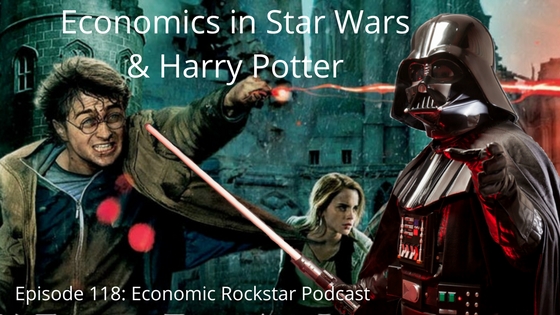
    118: Zachary Feinstein on Systemic Risk and Economics in Star Wars and Harry Potter

    December 30, 2016 by Frank

    http://traffic.libsyn.com/economicrockstar/118_Zachery_Feinstein_Final.mp3
    Play in New WindowDownload

    118: Zachary Feinstein on Systemic Risk and Economics in Star Wars and Harry Potter

    Zachary Feinstein is Professor joined the Preston M. Green Department of Electrical & Systems Engineering at Washington University in St. Louis in 2014.

    While earning a doctorate at Princeton University, Zachary supervised the senior thesis-writing group and assisted in teaching several courses.

    Previously, he conducted research at Hunan University in China and was an intern at Millennium Partners LP and Lehman Brothers Inc., both in New York City.

    Professor Feinstein works in the broad fields of operations research and financial engineering and he heads The Operations Research and Financial Engineering Laboratory Washington University.

    His research focus has been on the applications of set-optimization to financial risk measurement, with projects studying and defining dynamic risk measures in markets with transaction costs and measures of systemic risk.

    You can find Professor Feinstein’s work on Star Wars and more at www.fictionomics.com.

    On Systemic Crises and Contagion:

    “This is something that comes up very regularly in modern economic history. And really it’s something that we talk about it for a year after the crisis and then we forget to think that this is a problem. So by bringing it up in Star Wars and by bringing it up in Harry Potter we can keep this in the public consciousness.” Professor Zachary Feinstein.

    Economics:

    In this episode, Zachary discusses and mentions: systemic risk, contagion, world GDP, Gross World Product, Gross Galactic Product (GGP), interstellar travel, economic stagnation, financial deregulation, resources, scarcity, bailout, bank failures, TARP, moral hazard and the Glass-Steagall Act.

    In this Episode, you will Learn:

    • about the petition to White House to build the Death Star.
    • how the Death Star would cost $193 quintillion to build and World GDP is $70 trillion.
    • about how Professor Feinstein used the Manhattan Project to build the first Atomic Bomb as a proxy to calculate the cost of the second Death Star.
    • why people would go back to authoritarian rule like The First Order (economic depression).
    • how economic growth is linked to population growth.
    • what happens in a systemic crisis if it’s generated by currency exchanges.
    • the Economic System in the Star Wars Galaxy.
    • the systemic risk imposed by the Gringotts Bank in the Harry Potter series.
    • and much much more.

    Movies/TV Series Mentioned in this Episode:

    • The Clone Wars
    • Rogue One
    • Star Wars: The Force Awakens
    • Star Wars: The Empire Strikes Back
    • Star Wars: Return of the Jedi
    • Harry Potter and the Cursed Child
    • Lord of The Rings: The Fellowship of the Ring
    • Game of Thrones
    • Sharknado
    • Back to the Future
    • Doctor Who

    Writing Tips:

    Just write it down. Get something on page and then afterward you can mark it up in red as much as you want. Don’t worry about getting the right sentence down, just get something on the page and then move it all around. Mark it up. Completely delete it if you want. But once it’s on the page, it’s much easier to move forward than worrying about the perfect sentence to start – Professor Zachary Feinstein.

    Academic Papers:

    • Feinstein, Z. (2015). It’s a Trap: Emperor Palpatine’s Poison Pill. Washington University.
    • Other academic papers by Professor Zachery Feinstein.

    Links:

    • Petition to White House to build the Death Star
    • Rogue One and Building the Death Star by Zachary Feinstein
    • Thoughts on the Operational Costs of the Death Star by Zachary Feinstein
    • The economics of Star Wars: How the Empire collapses by Erika Ebsworth-Goold
    • Harry Potter and the Goblin Bank of Gringotts by Zachary Feinstein
    • Harry Potter and the Economic Catastrophe: The Rise of Voldemort by Zachary Feinstein
    • Sharknado: The Deficit Spending We Need by Zachary Feinstein

    Books:

    • Foundation by Isaac Asimov
    • Foundation and Empire by Isaac Asimov
    • Second Foundation by Isaac Asimov
    • Anathem byNeal Stephenson
    • Cryptomicon by Neal Stephenson
    • The Diamond Age by Neal Stephenson
    • Harry Potter and the Cursed Child by J. K. Rowling

    http://traffic.libsyn.com/economicrockstar/118_Zachery_Feinstein_Final.mp3

    Podcast: Play in new window | Download
    117: Courtney Conrad on Broadway Economics and What We Can Learn Through Musicals

    December 22, 2016 by Frank

    http://traffic.libsyn.com/economicrockstar/117_Courtney_Conrad_Final.mp3
    Play in New WindowDownload

    117: Courtney Conrad on Broadway Economics and What We Can Learn Through Musicals

    broadway-economics-economic-rockstar

    Courtney Conrad is a senior undergraduate economics major at Susquehanna University.courtney-conrad-economic-rockstar

    At Susquehanna, Courtney serves as a research assistant, teaching assistant for principles of microeconomics, and tutor.

    Courtney’s research interests include labor economics, experimental economics, behavioral economics, and the economics of education.

    After completing her Bachelor’s degree in economics, Courtney plans on furthering her economics studies and research at the graduate school level with the aspiration of becoming an academic.

    Since being hand-picked as a research assistant during her first year at SU, Courtney has actively assisted her mentor, professor and department chair Dr. Matthew Rousu, on a variety of projects over the years.

    As a first-year and sophomore, Courtney managed and conducted experimental auctions for a National Institute of Health grant-funded study in which tobacco smokers’ demand for e-cigarettes was assessed.

    Additionally, Courtney collaborates with Dr. Rousu in creating the videos and accompanying economics concept call-outs, discussion questions, and video descriptions for BroadwayEconomics.com.

    Links:

    • www.broadwayeconomics.com
    • “My Shot” from Hamilton the Musical
    • “Piragua (Reprise)” from In The Heights
    • “The World Will Know” from Newsies
    http://traffic.libsyn.com/economicrockstar/117_Courtney_Conrad_Final.mp3

    Podcast: Play in new window | Download

    116: Brian O’Roark on The Economics of Superheroes and The Hunger Games

    December 17, 2016 by Frank

    http://traffic.libsyn.com/economicrockstar/116_Brian_ORoark_Final.mp3
    Play in New WindowDownload

    116: Brian O’Roark on The Economics of Superheroes and The Hunger Games

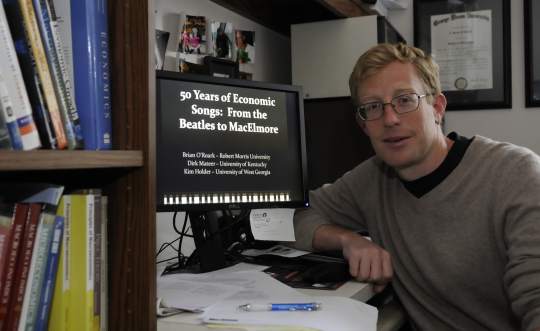
    Brian O’Roark is University Professor of Economics at Robert Morris University in Pittsburgh. He is the Co-Director of the Robert Morris Center for Economics Education and has a Ph.D. from George Mason University.

    In 2014, Brian was given the Undergraduate Teaching Innovation Award by the Middle Atlantic Association of Colleges of Business Administration. He teaches the Survey of Economics course, and Principles of Micro and Macro Economics.

    Brian is the co-author of The Ultimate Guide to Teaching Essentials of Economics where hundreds of teaching tips is compiled into one essential, thoughtfully designed teaching resource making it easy for new instructors to incorporate best teaching practices into their courses and for veteran teachers to find inspiration to enliven their lectures.

    Professor O’Roark has integrated economic content in songs with many topics being covered in the music videos available at  http://www.criticalcommons.org/author/oroark.

    To me Brian has become synonymous with superheroes and I could be forgiven for calling him Super Econ Man.

    Economics:

    In this episode, Brian discusses and mentions: comparative advantage, institutions, production possibility frontier, inequality, opportunity costs and choices.

    Economists:

    In this episode, Brian discusses and mentions: Jeff Cleveland, Kim Holder, Matt Rousu, Deirdre McClosky, Andrew Heaton, Beatrice Cherrier, Manu Saadia, Peter Leeson, Steve Horwitz, James Tierney, Dirk Mateer, James Buchanan and Walter Williams.

    Links:

    • Music For Econ

    Movies for Economics:

    • Matewan by Rebecca J. Bailey
    • It’s a Wonderful Life
    • A Clockwork Orange by Stanley Kubrick
    • Mad Max


    TV Shows:

    • The Flash
    • The Green Arrow
    • Super Girl

    Superheros:

    • Batman (DC)
    • Superman (DC)
    • Deadpool (Marvel)
    • Wonder Woman (DC)
    • Super Girl (DC)
    • Nate Grey (Marvel)
    • Doctor Manhattan (Marvel)
    • Scarlett Witch (Marvel)
    • Black Bull (Marvel)

    Writing Tips:

    1. Write on things that you’re interested in. Once you lose that interest, it makes writing so much more difficult. For me right now,  I’m writing on dystopian literature and writing about superheroes and hopefully writing more on information security. Those are things that I’m really really interested in and that makes the job of writing so much easier.
    2. Do the writing and get your ideas down on paper first. Don’t worry about what other people have said on the topic before you start writing yourself. When I was at Mason, James Buchanan was still there. And he made this comment that stuck with me more so than anything that I have learned in any of the classes that I had there. He would write the paper first and then do the literature review later. Because he didn’t want anybody else’s opinion’s to affect what he was writing. He wanted all of the ideas that he put down on paper to be his own. And if other people had written about it he could weave what they said into what he said. But he didn’t want to work it the other way around. He didn’t want to have his ideas be the offspring of somebody else’s work.
    3. Make sure you carve out time to write. If you carve out time to get your writing done it doesn’t become the last thing on your to-do list. When it becomes the last thing on your to-do list it tends to keep getting pushed back and pushed back and then it doesn’t get done at all.

    Books:

    • Matewan by Rebecca J. Bailey
    • The Grapes of Wrath by John Steinbeck
    • The Hunger Games by Suzanne Collins
    • Catching Fire by Suzanne Collins
    • Mockingjay by Suzanne Collins
    • Homer Economicus: The Simpsons and Economics by Joshua Hall
    • We Are Anonymous: Inside the Hacker World of LulzSec, Anonymous, and the Global Cyber Insurgency by Parmy Olson

    http://traffic.libsyn.com/economicrockstar/116_Brian_ORoark_Final.mp3

    Podcast: Play in new window | Download

    115: Edward Conard on The Upside of Inequality: How Good Intentions Undermine the Middle Class

    December 12, 2016 by Frank

    http://traffic.libsyn.com/economicrockstar/115_Ed_Conard_Final.mp3
    Play in New WindowDownload

    115: Edward Conard on The Upside of Inequality: How Good Intentions Undermine the Middle Class

    Edward Conard is the author of the New York Times top-ten bestselling book, Unintended Consequences: Why ed-conard-economic-rockstarEverything You’ve Been Told About the Economy Is Wrong (2012), and his recent book The Upside of Inequality: How Good Intentions Undermine the Middle Class which reached #7 on the New York Times Bestsellers list and is #1  on the New York Times business book list month. He is a visiting scholar at the American Enterprise Institute. and former Bain Capital partner.

    Ed Conard has debated economists, policymakers and journalists on topics related to inequality, the 2008 mortgage crisis, and the U.S. budget. He has appeared on television over 150 times, most notably when he debated Jon Stewart in one of the longest interviews in the Daily Show’s history. Ed has also written opinion pieces for the Wall Street Journal, The New York Times, Foreign Affairs and many other respected publications.

    You can check out interviews, op-eds and articles by Ed at his website www.edwardconard.com.

    Links:

    • Edward Conard’s Website: www.edwardconard.com
    • Facebook: www.facebook.com/EdwardConard/
    • Twitter: @EdwardConard
    • American Enterprise Institute

    Books:

    • Unintended Consequences: Why Everything You’ve Been Told About the Economy Is Wrong by Edward Conard
    • The Upside of Inequality: How Good Intentions Undermine the Middle Class by Edward Conard
    http://traffic.libsyn.com/economicrockstar/115_Ed_Conard_Final.mp3

    Podcast: Play in new window | Download

    • Prev Page...
    • 1
    • …
    • 4
    • 5
    • 6
    • 7
    • 8
    • …
    • 19
    • ...Next Page

    Frank Conway

    Frank Conway is founder of Economic Rockstar and lecturer of economics, finance and statistics. Read More…

    View My Blog Posts

    Youtube Sub

    Become a Patron of the Economic Rockstar Podcast

    patreon

    Ireland’s Economy by the Numbers

    Leaving Cert Economics: Ireland’s Economy  Click here to download a workbook on Ireland’s Economy so that you can add your own notes. [Original size] Ireland’s Economy by fconway

    Categories

    Subscribe and Never Miss An Episode

    itunes-logo

    Recent Posts

    • Ireland’s Economy by the Numbers April 8, 2019
    • 174: Wendy Carlin on The Core Project, Capitalism, Democracy and Normative Statements February 13, 2019
    • 173: Stephen Wright on Core Econ as a Learning Resource for Mainstream Economics January 28, 2019
    • 172: Best of 2018 Part 2: From the Great Depression to Futurism; Institutions, Individualism, Cooperation and Reciprocity January 22, 2019
    • 171: Best of 2018 Part 1 January 3, 2019

    Copyright © 2026 · Podcast Pro Theme on Genesis Framework · WordPress · Log in

    This website uses cookies to improve your experience. We'll assume you're ok with this, but you can opt-out if you wish. Accept Reject Read More
    Privacy Policy

    Privacy Overview

    This website uses cookies to improve your experience while you navigate through the website. Out of these, the cookies that are categorized as necessary are stored on your browser as they are essential for the working of basic functionalities of the website. We also use third-party cookies that help us analyze and understand how you use this website. These cookies will be stored in your browser only with your consent. You also have the option to opt-out of these cookies. But opting out of some of these cookies may affect your browsing experience.
    Necessary
    Always Enabled
    Necessary cookies are absolutely essential for the website to function properly. This category only includes cookies that ensures basic functionalities and security features of the website. These cookies do not store any personal information.
    Non-necessary
    Any cookies that may not be particularly necessary for the website to function and is used specifically to collect user personal data via analytics, ads, other embedded contents are termed as non-necessary cookies. It is mandatory to procure user consent prior to running these cookies on your website.
    SAVE & ACCEPT