• ABOUT
  • RESOURCES
  • PODCAST
  • BOOKS
  • BLOG
  • SUPPORTERS
  • QFA Financial Advice
  • CONTACT

Economic Rockstar

Connecting Brilliant Minds in Economics and Finance

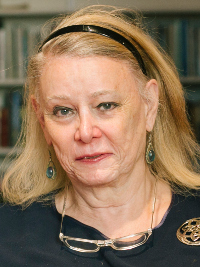
114: Deirdre McCloskey on Equality and Greed and How To Be a Very Good Economist
December 2, 2016 by Frank

http://traffic.libsyn.com/economicrockstar/114_Deirdre_McCloskey_Final.mp3
Play in New WindowDownload

114: Deirdre McCloskey on Equality and Greed and How To Be a Very Good Economist

Deirdre McCloskey taught at the University of Illinois at Chicago and was a Distinguished Professor of Economics, History, English, and Communication.

She was also adjunct professor of Philosophy and Classics there, and for five years was a visiting Professor of philosophy at Erasmus University in Rotterdam.

Since October 2007 Deirdre has received six honorary doctorates. In 2013, she received the Julian L. Simon Memorial Award from the Competitive Enterprise Institute for her work examining factors in history that led to advancement in human achievement and prosperity.

Deirdre’s main research interests include the origins of the modern world, the misuse of statistical significance in economics and other sciences, and the study of capitalism, among many others.

Deirdre has written 17 books and around 400 scholarly pieces on topics ranging from technical economics and statistical theory to transgender advocacy and the ethics of the bourgeois virtues.

Her latest book, Bourgeois Equality: How Ideas, Not Capital or Institutions, Enriched the World is part of the Bourgeois Era trilogy described as an “apology” for capitalism.

Deirdre describes herself as a “post-modern, quantitative, free-market, feminist, Episcopalian, Midwestern, gender-crossing, literary woman”.

Deirdre’s website deirdremccloskey.org contains information and links to her books, articles, interviews and much more.

Economics:

In this episode, Deirdre discusses and mentions: blackboard economics, poverty, game theory, inequality, education, healthcare, economic growth, trade, production possibility frontier, gains from trade, liberty, greed, equality, utility maximisation, covered interest arbitrage, theory of marriage.

Economists:

In this episode, Deirdre discusses and mentions: Adam Smith, John Mayanrd Keynes, Karl Marx, David Hume, Gary Becker, Shoshana Grossbard, Nancy Folbre, Herbert Gintis, Jonathan McEvoy, Sam Bowles, Nassim Taleb, Paul Samuelson, Kenneth Arrow, Thomas Piketty, Joseph Schumpeter and David Ricardo.

On the Economics Discipline:

“It’s not to soften the science. It’s to harden the science. We’ve got to stop talking about this softening. That’s not going to persuade the guys to take this stuff seriously. It’s harder to do it correctly than to do it by going on and on with Game Theory and Max. U. As Keynes said ‘A person who is only an economist is not going to be a very good economist’. And I think that’s correct. You need to be a statistician and a mathematician of course and I’m not against that. But you also need to be a historian and a philosopher and a sociologist and a psychologist and a serious person who knows the world. And the way we know the world is mainly through the humanities, through theology, through religion, through novels. through poetry, song, country music where the river meets the road. It’s through films, through gossip, through going to a football game with their mates. That’s how we learn how societies really work. And it’s harder to bring that to bare our human experience into the economic science. But to get a good economic science, and like any thoughtful person agrees, you have to have all of that.” – Deirdre McCloskey

On Greed and Envy:

“Greed is a corrosive sin. Greed is the sin of the conservatives and envy is the sin of the socialists. And both of them is corrosive of the human soul. What happens in both greed and envy is that possessions, if you allow me I am a Christian,  take the place of God or to take the place, to put it more generally, of some dignified transcendent outside yourself. Both of them are selfish.”  – Deirdre McCloskey

On Liberalism:

“Liberalism is under attack everywhere, this populism that we see all over the place is anti-liberal above all. But I believe on the long run all societies will become liberal democracies. And the reason is the incredible magnitude of the economic gain from adopting liberal policies as in Singapore, as in Hong Kong, as in South Korea andTaiwan, as in Botswana, as in most spectacularity China and India. And then, if I can persuade people, in the longer sweep of history I make the point of Holland in the 17th century and England and Scotland in the 18th in the New World. And this liberal experiment that we engaged in then and is being repeated now in China and India is so productive that I think that it will win in the end.”  – Deirdre McCloskey

People Mentioned in this Episode:

  • Lillian Bettencourt 
  • The Clancy Brothers 
  • St Thomas Aquinas

Writing Tips:

  • Put pen to paper and keep going. – Deirdre McCloskey
  • Read Deirdre’s book Economical Writing for amazing writing tips for economists.

Recommended Books:

  • Economical Writing by Deirdre McCloskey
  • Crossing: A Memoir by Deirdre McCloskey


http://traffic.libsyn.com/economicrockstar/114_Deirdre_McCloskey_Final.mp3

Podcast: Play in new window | Download

113: Jonathan McEvoy on Globalisation, National Autonomy, Capitalism and the Economic Resonance in Timeless Songs

November 25, 2016 by Frank

http://traffic.libsyn.com/economicrockstar/113-_Jonathan_McEvoy_Final.mp3
Play in New WindowDownload

113: Jonathan McEvoy on Globalisation, National Autonomy, Capitalism and the Economic Resonance in Timeless Songs

Jonathan McEvoy is currently an undergrad student of economics at Waterford Institute of Technology in jonathan-mcevoy-economic-rockstarIreland.

He was recently recognised for being in the top 5% of the Business School at W.I.T, earning the honour of being on the Deans List for Academic Achievement.

Jonathan has a unique understanding of the world around us and, together with his love of economics, has a unique perspective on the economics discipline.

Jonathan’s desire to discover and explore the multitude of economic thinking, from Keynesianism to Marxism, has resulted in him creating a blog called Economics – Thoughts of a Student which can be found at jonathanmcevoy888.blogspot.com.

His recent career history has prepared him well to be great public speaker and communicator.

Jonathan is also an athlete and a top soccer player, having spent time with English Premier League clubs Manchester City and Tottenham Hotspur.

Jonathan’s interests also include Health, Human Rights, Politics, Civil Rights, Poverty Alleviation and Science and Technology.

Economics:

In this episode, Jonathan discusses and mentions: production possibility frontier, comparative advantage, production, services, efficiency, technology, foreign direct investment, tariffs, income, vertical farming, externalities, capitalism, profit, inequality, welfare, labour costs, GDP, economics of war and economics of romance.

Economists:

In this episode, Jonathan discusses and mentions: Adam Smith, John Maynard Keynes, Karl Marx, Friedrich Engels and David Ricardo.

In this episode you will learn:

  • about the balance required between globalisation and national autonomy.
  • about Ireland’s role in CERN.
  • whether future-tech will improve humanity’s standard of living?

  • how economics and technology are inextricably interlinked.
  • why economists and technologists should increase collaboration for the betterment of society.
  • how the world’s production possibility frontier can move outward to reach once unimagined and unattainable outcomes.
  • whether ‘planetisation’ can be a reality.
  • the use of songs to capture the economic and social setting of an era.
  • and much much more.

People Mentioned in this Episode:

  • Cormac O’Rafferty
  • Stephen Hawking
  • Nikola Tesla
  • Elon Musk
  • John F. Kennedy
  • Neil deGrasse Tyson
  • Warren Buffett
  • Bob Dylan
  • Bruce Springsteen
  • Tupac Shakur
  • Bruce Hornsby

Links:

  • Finding the Balance Between Globalisation and National Autonomy by Jonathan McEvoy

  • Why Ireland Should Aspire to CERN Status – The Role of Economics in Science and Technology and How They Benefit One Another by Jonathan McEvoy

  • Will Future-Tech Improve Humanity’s Standards of Living? by Jonathan McEvoy
  • How to Write Timeless Songs like Springsteen and other Artists – The Economic Resonance in Timeless Songs and Creativity being born from Economics by Jonathan McEvoy

  • The Big Bang Theory

Where to Find Jonathan McEvoy:

  • Website: jonathanmcevoy888.blogspot.com
  • Twitter: @JonathanMcEv0y

Books:

  • Wealth of Nations by Adam Smith
  • Communist Manifesto by Karl Marx and Friedrich Engels
  • Game of Thrones by George R. R. Martin
http://traffic.libsyn.com/economicrockstar/113-_Jonathan_McEvoy_Final.mp3

Podcast: Play in new window | Download
112: Stuti Khemani on Making Politics Work for Development and Using Creativity and the Arts to Make Better Policy Decisions

November 17, 2016 by Frank

http://traffic.libsyn.com/economicrockstar/112_Stuti_Khemani_Final.mp3
Play in New WindowDownload

112: Stuti Khemani on Making Politics Work for Development and Using Creativity and the Arts to Make Better Policy Decisions

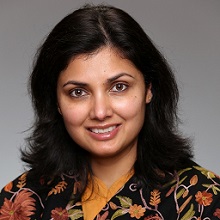
Stuti Khemani is a Senior Economist in the Development Research Group of The World Bank. She joined through stuti-khemani-economic-rockstarthe Young Professionals Program after obtaining a PhD in Economics from the Massachusetts Institute of Technology.

Dr. Khemani’s area of research is the political economy of public policy choices, and institutional reforms for development.

Her work is published in leading economics and political science journals, such as the American Economic Journal, Journal of Development Economics and American Political Science Review.

Stuti has studied the impact of electoral politics on fiscal policy and intergovernmental fiscal relations; drawn policy implications for the design of institutions to promote fiscal responsibility; and analyzed political constraints to efficient allocation of resources for health and education services.

She is also the lead author of the forthcoming Policy Research Report ‘Making Politics Work for Development: Harnessing Transparency and Citizen Engagement’.

Her research and advisory work spans a diverse range of countries, including Benin, China, India, the Philippines, Nigeria, Tanzania and Uganda.

More and more I’m fascinated by the world around me and with people currently living in the world.

In this episode you will learn:

  • why working in policy is important.
  • about the basic need for freedom and and the freedom to choose government.
  • about the Dictator’s Dilemma.
  • what makes a successful autocratic government.
  • whether culture plays a significant role in a successful government and economy.
  • how leader selection and sanction can create better government.
  • the importance of art and creativity in policy-making.
  • and much much more.

Papers:

Making politics work for development : harnessing transparency and citizen engagement.

The World Development Report 2016: Digital Dividends

Making Autocracy Work by Timothy Besley and Masayuki Kudamatsu 

Writing Tips:

  • “Write short sentences. My natural instinct is write long convoluted sentence. Now I discipline myself to edit and re-write and to make every sentence as short as possible.”
  • “Write to intuition. Not to use mystifying language or jargon. I try to think through how I would say it to my brother who works at Google and knows nothing about economics and then write it.”

People Mentioned in this Episode:

  • Jane Austin 
  • Rabindranath Tagore 
  • Vikram Seth 
  • Shanta Deverajan
  • Morten Jerven

Books:

  • Middle March by George Elliot 
  • Three Chinese Poets by Vikram Seth
  • Casual Vacancy by J. K. Rowling

http://traffic.libsyn.com/economicrockstar/112_Stuti_Khemani_Final.mp3

Podcast: Play in new window | Download

111: Greg Mankiw on Writing, Carbon Tax, Health Care and Education at the Economics Teaching Conference in Florida 2016

November 10, 2016 by Frank

http://traffic.libsyn.com/economicrockstar/111_Greg_Mankiw_Final.mp3
Play in New WindowDownload

111: Greg Mankiw on Writing, Carbon Tax, Health Care and Education at the Economics Teaching Conference in Florida 2016

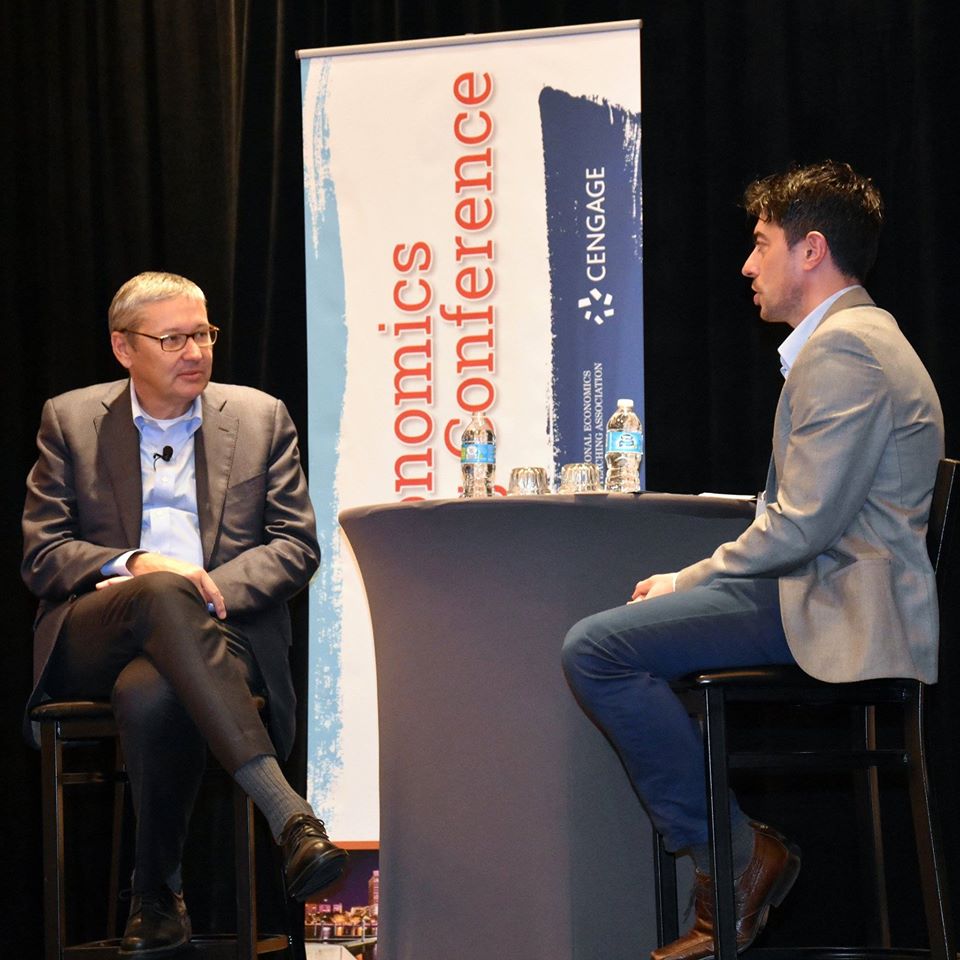
greg-mankiw-and-frank-conway-economic-rockstar-01

Greg Mankiw is the Robert M. Beren Professor of Economics at Harvard University. His research includes work on price adjustment, consumer behavior, financial markets, monetary and fiscal policy, and economic growth.

He has written two popular textbooks—the intermediate-level textbook Macroeconomics and the introductory textbook Principles of Economics. Principles of Economics has sold over two million copies and has been translated into twenty languages.

In addition to his teaching, research, and writing, Professor Mankiw has been a research associate of the National Bureau of Economic Research, an adviser to the Congressional Budget Office and the Federal Reserve Banks of Boston and New York, and a member of the ETS test development committee for the advanced placement exam in economics. From 2003 to 2005 he served as Chairman of the President’s Council of Economic Advisers.

I sometimes describe myself as a libertarian at the margin. When I take the libertarian party, they seem a little to extreme for me. But given where we’re starting today, I think a little bit more reliance on free markets, individual responsibility and personal liberty will be a good thing – Greg Mankiw.

Economics:

In this episode, Greg discusses and mentions: New Keynesian economics, micrcofoundations to macroeconomics, rational expectations, real business cycles, stochastic DSG models, Pigou Tax, carbon tax, externalities, refundable tax credits, subsidies, healthcare, inequality, unintended consequences, student debt and the Baumol disease.

Economists:

In this episode, Greg discusses and mentions: Richard Lispey, Peter Steiner, Harvey Rosen (Princeton), John Maynard Keynes, James Tobin, Stanley Fischer, Tom Sargeant, Robert Lucas, Alan Blinder, David Romer, Olivier Blanchard, Janet Yellen, Arthur Pigou, Karl Marx, Adam Smith and John Kenneth Galbraith

On Writing Books:

  • It does require a fair amount of discipline. That’s the hardest part. I have friends who try to write who have said ‘I’m behind schedule and I’m going to spend the weekend writing three chapters’. That’s a recipe for failure.
  • I try to be extremely disciplined about my writing. When I’m writing the books, I wake up and, after I send my kids off to school, it’s the first thing I do everyday.
  • I force myself to basically write two pages every day. Two pages is not that much. But if you write literally two pages every single day for a year – 365 days – that’d be a good-sized book at the end of the year. So that’s the hardest part – staying disciplined and keeping at it everyday.

On Pedagogy and Technology:

The technology has changed radically [since the first edition of Mankiw’s Intermediate Macro book]. The pedagogy is electronic where increasingly the number of people using online books has been rising. I’m actually kind of old-fashioned – a bit of a Luddite when it comes to these things but actually for the first time this year at Harvard we’re using the online book with the MindTap product.

Links:

  • Cengage Learning 
  • MindTap 
  • Pigou Club
  • Before the Flood (a movie about climate change) by Leonardo DiCaprio
  • Revenue-Neutral Carbon Tax in Washington State

http://traffic.libsyn.com/economicrockstar/111_Greg_Mankiw_Final.mp3

Podcast: Play in new window | Download

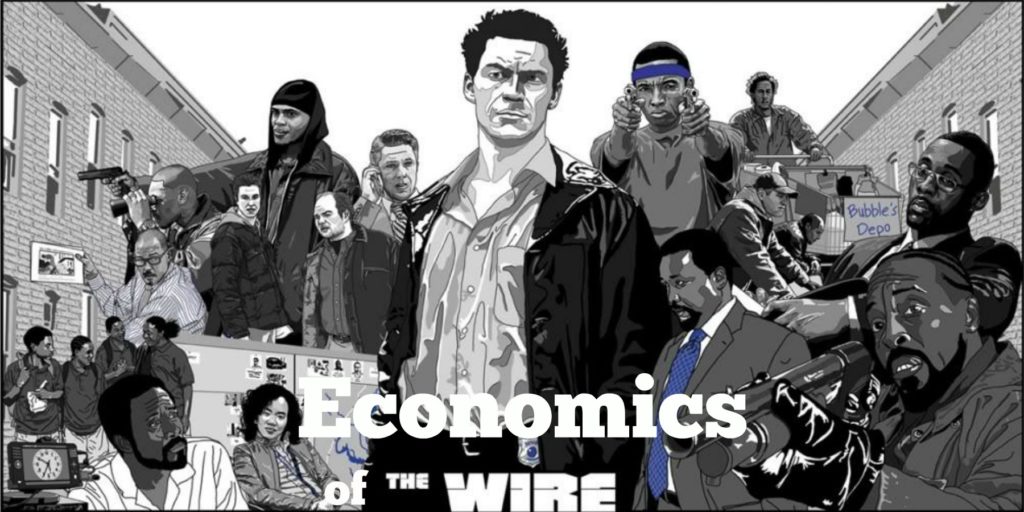
110: Beatrice Cherrier on the Economics of ‘The Wire’ and the Beginning of Economics at MIT

November 4, 2016 by Frank

http://traffic.libsyn.com/economicrockstar/110_Beatrice_Cherrier_Final.mp3
Play in New WindowDownload

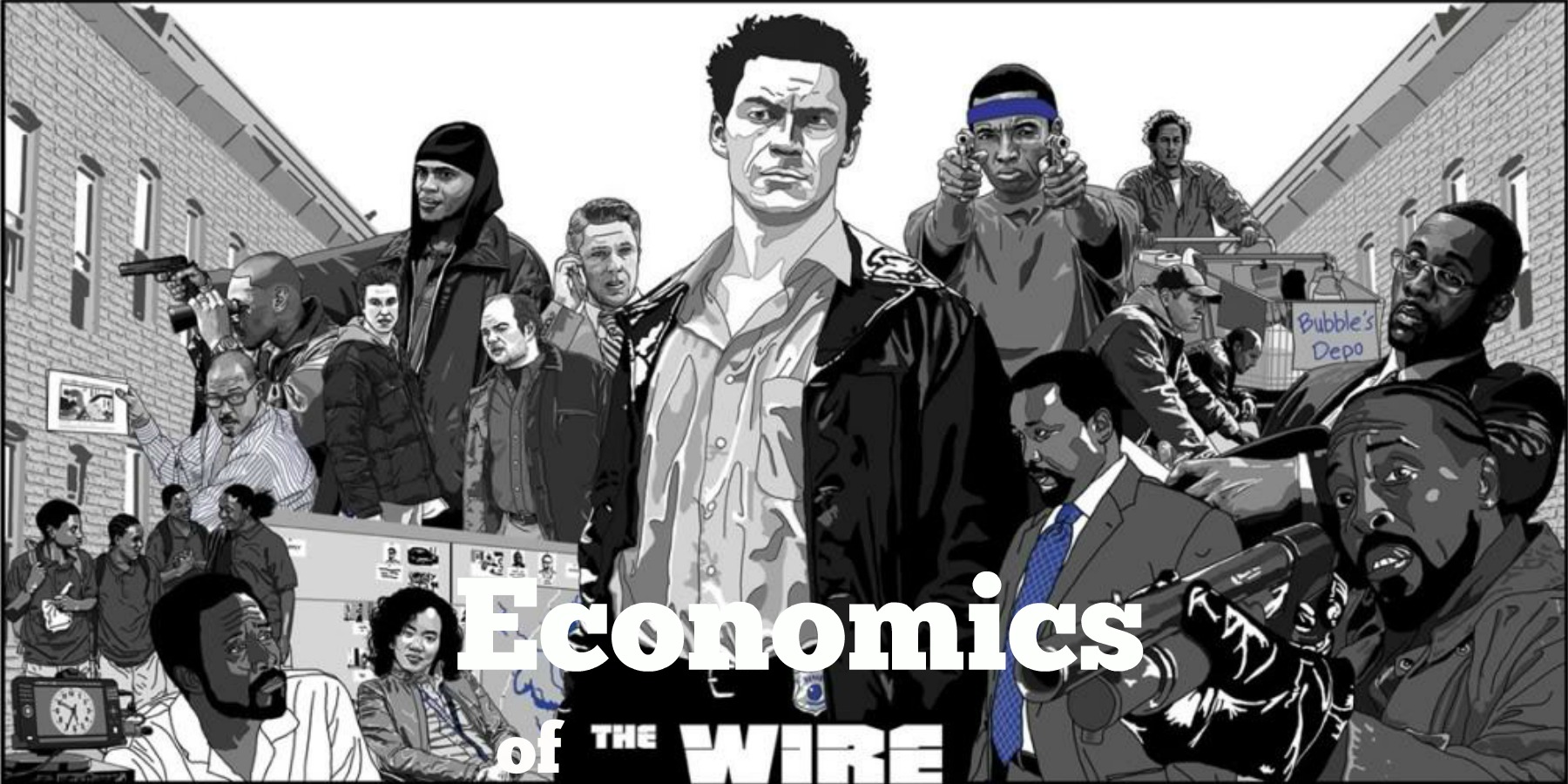
economics-of-the-wire

110: Beatrice Cherrier on the Economics of ‘The Wire’ and the Beginning of Economics at MIT

Beatrice Cherrier is an assistant professor at the University of Caen, France.

Professor Cherrier’s research includes the history of postwar economics and how economists’ individual visions combine in collective “styles” of doing economics.

Her current research project is aimed at understanding the rise of applied economics from the mid-1960s onwards.

Beatrice is affiliated with CREM, the Centre for Research in Economics and Management, where she researches alongside social choice theorists.

She teaches in a urban studies department, and is experimenting on her students to figure out how to get non-economists interested in the “dismal” science.

Professor Cherrier blogs on her personal website beatricecherrier.wordpress.com as well as for the Institute for New Economic Thinking.

These students have to understand economics, but not in the way of how to use it. You have to understand why they get that course and how they approach social science. For example urban study students work on the field all of the time, so introducing them to economics with a load of statistics is not the right way. They just won’t get it. They want tools to go into the field and to make sense of social behaviour. The solution is to bring the field into the classroom. The Wire is a great way to analyse these social behaviours, particularly in the city – Professor Beatrice Cherrier.

Economics:

In this episode, Beatrice discusses and mentions: Supply and demand, game theory, cooperation, prisoners dilemma, rationality, experimental economics, sunspots, monetary policy, animal spirits and bibliometric analysis.

Economists:

In this episode, Beatrice discusses and mentions: Kevin Hoover, Berger, Robert Solow, Paul Samuelson, John Maynard Keynes, John Hicks, Edward Prescott, Hanson, F. A. Hayek, Angus Deaton, Arthur Charpentier, Vernon Smith, Paul Krugman, Brad DeLong, Paul Romer, Franco Modigliani and Herbert Simon.

In this episode you will learn:

  • how to teach economics to non-economic students.
  • how to model the drug market using ‘The Wire‘ as a social analysis.
  • using The Wire as a tool to teach economics.
  • where is the rationality in gang warfare.
  • the benefits of using pop culture to teach economics.
  • the beginning of economics at MIT.
  • whether Samuelson and Solow ‘invented’ the economics we know today through their mathematics?
  • on the computerisation of economics using big data.
  • the evolution of economics.
  • the history of experimental economics.
  • and much much more.

Writing Tips:

  • “Writing has never been my strength. It’s the part of my job I don’t like.”
  • Do it. To force yourself to do it you have to do it publicly.
  • Write in a smaller format to try to put your ideas together and be convincing.
  • Blog.
  • Do not write for a public audience but rather write in public. If you put this stuff that you’re thinking online, you have to be better at organising your ideas even if you don’t like that.
  • “My tip is really for people who don’t like writing. Write on a blog because you can write small, it’s not consequential. Maybe people will read you and give you tips and you’re going to improve yourself.”

Links:

  • Introductory Economics for the Real World: Lessons from Teaching with “The Wire” TV Show by Beatrice Cherrier
  • The Most Intolerant Wins: The Dictatorship of the Small Minority by N. N. Taleb on Medium
  • The Wire
  • Breaking Bad
  • The Walking Dead
  • Russell-Sage Foundation
  • Freakonomics
  • Freakonometrics

Recommended Books:

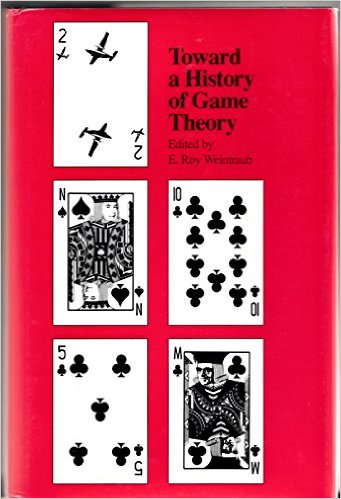
  • Toward a History of Game Theory by E. Roy Weintraub

toward-a-history-of-game-theory-economic-rockstar

http://traffic.libsyn.com/economicrockstar/110_Beatrice_Cherrier_Final.mp3

Podcast: Play in new window | Download

109: Julia Norgaard on the Online Black Market for Drugs and Why Detection Rates are Low

October 27, 2016 by Frank

http://traffic.libsyn.com/economicrockstar/109_Julia_Norgaard_Final.mp3
Play in New WindowDownload

109: Julia Norgaard on the Online Black Market for Drugs and Why Detection Rates are Low

Julia Norgaard is a Ph.D. Candidate in Economics at George Mason University. Version 5

Julia is also a Ph.D. Fellow at the Mercatus Center and a Graduate Lecturer at George Mason University. 

Her interests include development and institutional economics as well as public choice.

Julia’s teaching include Managerial Economics, Public Choice Economics, Economic Development of Developing Nations and Economies in Transition.

She received her Masters degree in economics from George Mason University in Fairfax, Virginia in 2015.  Julia graduated with a B.A. in economics with a minor in mathematics from The University of San Diego in 2012. 

In this episode you will learn:

  • about the online black market for drugs.
  • how the anonymity of the deep web creates the a market for illegal drugs.
  • whether prices for drugs are different if bought online or on the ground.
  • how the online drugs market is pretty much like shopping an Amazon, where drugs are packaged extremely well and, of course, you can leave positive and negative reviews for the buyers based.
  • why online sites selling cannabis are being shut down by the regulators even though they offer more an efficient and knowledgeable market.
  • the low detection and seizure rates of dugs packages.
  • the black market exchange rate and the determination of inflation rates.
  • the economics of the Jungle Book.
  • why concert ticket sellers don’t price discrimination and the growth of ticket scalping online.

Writing Tips:

  • Write every single day – James Stacey Taylor
  • Economics is everywhere. If you’re out and you think about something, email it to yourself through your phone and place it in a folder such as ‘Research Ideas’.

Links:

  • ‘Hamilton’ Broadway, NY
  • James Stacey Taylor

Where to Find Julia:

  • juliarnorgaard.com
  • organiceconomics.wordpress.com

Books:

  • Free To Choose by Milton and Rose Friedman
  • Economics Facts and Fallacies by Thomas Sowell
  • The Calculus of Consent by James Buchanan (free ebook)
  • Lawlessness and Economics by Avinash Dixit (free ebook)
  • Codes of the Underworld: How Criminals Communicate by Diego Gambetta
  • Private Governance: Creating Order in Economic and Social Life by Edward Peter Stringham

http://traffic.libsyn.com/economicrockstar/109_Julia_Norgaard_Final.mp3

Podcast: Play in new window | Download

108: Steve Horwitz on Spontaneous Order, the Microfoundations of Macroeconomics and Three Economic Myths

October 20, 2016 by Frank

http://traffic.libsyn.com/economicrockstar/108_Steve_Horwitz_Final.mp3
Play in New WindowDownload

108: Steve Horwitz on Spontaneous Order, the Microfoundations of Macroeconomics and Three Economic Myths

steve-horwitz-rush-economic-rockstar

Steven Horwitz is the Charles A. Dana Professor of Economics at St. Lawrence University in Canton, NY and is currently Visiting Scholar at Ball State University, Indiana.

Professor Horwitz is also an Affiliated Senior Scholar at the Mercatus Center Virgina, a Senior Fellow at the Fraser Institute in Canada, and a Distinguished Fellow at the Foundation for Economic Education.

Steve is the author of three books, Monetary Evolution, Free Banking, and Economic Order, Microfoundations and Macroeconomics: An Austrian Perspective, and Hayek’s Modern Family:  Classical Liberalism and the Evolution of Social Institutions.

He has written extensively on Austrian economics, Hayekian political economy, monetary theory and history, and American economic history.

Steve has a series of popular YouTube videos for the Learn Liberty series from the Institute for Humane Studies and blogs at Bleeding Heart Libertarians and writes regularly for FEE.org.

A member of the Mont Pelerin Society, he has a PhD in Economics from George Mason University and an AB in Economics and Philosophy from the University of Michigan.

Economics:

In this episode, Steve discusses and mentions: Austrian economics, spontaneous order, microeconomics, macroeconomics, free markets, capital markets and government.

Economists:

In this episode, Steve discusses and mentions: Adam Smith, F. A. Hayek, Karl Menger and Ludwig von Mises.

In this Episode, you will learn:

  • whether macro problems are the result of micro problems or is there a reverse causality.
  • Menger: the link between Adam Smith and F. A. Hayek.
  • the micro foundations of Adam Smith’s ‘Spontaneous Order’.
  • how the private sector responded better than government to the devastation caused by Hurricane Katrina. Is this a case for free market economics?
  • the three economic myths, including the gender wage gap and the rich getting rich and the poor getting poorer according to Professor Horwitz.
  • and much much more.

Where to Find Professor Horwitz:

  • bleedingheartlibertarians.com
  • www.fee.org
  • www.montpelerin.org

Links:

  • A Hayekian Theory of Parental Rights by Steve Horwitz
  • Capitalism and the Humanization of the Family by Steve Horwitz
  • Ayn Rand
  • Rush 
  • Neil Peart 
  • Hold Your Fire by Rush

Writing Tips:

  1. Write something everyday. Be in the habit of writing. Don’t feel like you’ have to edit everything as you go along.
  2. If you have writer’s block, just push through. Just start writing. There’s an old aphorism among writers: “How can I know what I think ’til I see what I say”.

Pedagogy:

Think about teaching as coaching. Like a coach, help students develop a skill. In this case the skill is the economic way of thinking – Steve Horwitz.

Books:

  • The Pure Theory of Capital by F. A.  Hayek
  • Success and Luck: Good Fortune and the Myth of Meritocracy by Robert H. Frank
  • The Global Great Depression and the Coming of World War Two by John Moser
  • Hayek’s Modern Family: Classical Liberalism and the Evolution of Social Institutions by Steve Horwitz

http://traffic.libsyn.com/economicrockstar/108_Steve_Horwitz_Final.mp3

Podcast: Play in new window | Download

107: Jaclyn Lindo on Hawaii Land-Based Learning as a Method for Teaching Economics and a Flipped Classroom in Practice

October 13, 2016 by Frank

http://traffic.libsyn.com/economicrockstar/107_Jaclyn_Lindo_Final.mp3
Play in New WindowDownload

107: Jaclyn Lindo on Hawaii Land-Based Learning as a Method for Teaching Economics and a Flipped Classroom in Practice

Dr. Jaclyn Lindo is an economics instructor at the University of Hawaii’s Kapiolani Community College where shejaclyn-lindo-economic-rockstar teaches principles-level courses and advise the Economics and Business Club.

Dr. Lindo flipped all of her courses using a combination of publisher-produced videos and her own problem-based, collaborative in-class assignments. She strives to make her course material as relevant to students’ experiences and interests by using pop culture as well as integrating local issues.

Jaclyn will be part of the first cohort of faculty to integrate land-based learning into their pedagogy with the aim of promoting learning that is rooted in Native Hawaiin values, place-based research, and community engagement to understand community needs.

Jaclyn previously lectured on health economics at the University of Hawaii at Manoa, continuing with her expertise as the senior health economist at Hawaii Health Information Corporation. While there, Jaclyn researched healthcare policy and outcomes at the national and local levels.

Jaclyn completed her PhD at the University of Hawaii at Manoa in 2011.

Show Notes Coming Soon!

http://traffic.libsyn.com/economicrockstar/107_Jaclyn_Lindo_Final.mp3

Podcast: Play in new window | Download

106: Michael Kofoed on the Effectiveness of an Economics Major in the Military and How the Pomegranate Defunded the Taliban

October 6, 2016 by Frank

http://traffic.libsyn.com/economicrockstar/106_Michael_Kofoed_Final.mp3
Play in New WindowDownload

106: Michael Kofoed on the Effectiveness of an Economics Major in the Military and How the Pomegranate Defunded the Taliban

Michael Kofoed is an Assistant Professor of Economics at the United States Military Academy at West Point, michael-kofoed-economic-rockstarNew York.

Professor Kofoed’s research focuses on the economics of higher education including the effects of financial aid on student outcomes, pricing behavior of for-profit universities, and measuring the effects of randomly assigned peers and mentors.

Michael has numerous published and forthcoming papers and his book chapter “Price Discrimination”, co-authored with David Mustard, features in Encyclopedia of Education Economics and Finance.

Michael received his PhD from the University of Georgia with the PhD title Essays on the Economics of Student Financial Aid and a BS in Quantitaive Economics from Weber State University.

A good economist is not someone who sits around and reads econ books for a long time but someone who just reads. Gets out of their comfort zone. Reads about something that might be different than what they normally read but engages the economic mind while reading through that. – Michael Kofoed

Economics:

In this episode, Michael discusses and mentions: rationality, opportunity costs, scarce resources, pay-offs, marginal benefit, labor market, equality, GDP, free trade and perfect competition. 

Economists: 

In this episode, Michael discusses and mentions: Adam Smith, F. A. Hayek, Karl Marx, John Maynard Keynes, Milton Friedman, Joseph Stiglitz, Gary Becker, Paul Romer and Greg Mankiw.

In this episode you will learn:

  • how students lose out on college financial aid up to the value of $2,000.
  • the effect of same-gender and same-race role models on occupation choice.
  • about US college financial aid and its business cycle.
  • how a position in a US military academy can present opportunities to all including minorities and those from disadvantaged backgrounds.
  • how useful an economics major would be on the battlefield.
  • what do you do with an economics degree after five years in the army and you realise the army is not for you.
  • about national security through the lens of economics.
  • about opportunity costs and the allocation of scarce resources.
  • how the pomegranate defunded the Taliban.
  • the conflict between economic logic, rationality and theory with reality.
  • writing tips.
  • and much more.

Writing Tips:

  1. Find something that you’re excited about. If you’re a grad student, it shouldn’t be about what your professor wants. It should be about what you want or else it’s just not going to be fun.
  2. Once you’ve found what makes you excited, ask yourself ‘Does anyone care?’. Is anyone going to read my stuff?’  If the answer is ‘Yes’ then you’ve hit a sweet spot because you care and other people care.
  3. The great secret of economics is that co-authorship is equally valued. Then go find co-authors that are smarter than you, because when they challenge and push you, they make you a better researcher.
  4. You need to get your writing out there. You don’t want to be Golum in The Lord of the Rings that sits there and strokes the precious and does’t let anyone else see the precious. You need to get other people to read it for you. You need to get it out in the conference circuit because when you have more eyes on it it will make you a better writer.
  5. Real research isn’t done in a closet somewhere. It’s done with other people. It’s a team effort.

Links:

  • Planet Money: Episode 576: When Women Stopped Coding
  • WSJ: Replacing Afghan Poppies With Pomegranates

Publications:

  • The Effect of the Business Cycle on Freshman Financial Aid (with Elizabeth Clelan) Contemporary Economic Policy.
  • To Apply or Not to Apply: FAFSA Completion and Financial Aid Gaps. Research in Higher Education.
  • Estimating the Effect of Work Time on Extracurricular Time for High School Students by Household Income (with Laura Crispin). Revise and Resubmit. Education Finance and Policy.

Book Chapters

  • Price Discrimination with David B. Mustard. In Encyclopedia of Education Economics and Finance, eds. Dominic J. Brewer and Lawrence O. Picus. Thousand Oaks, CA: SAGE.

Books:

  • Duty: Memoirs of a Secretary at War by Robert Gates
  • Team of Rivals: The Political Genius of Abraham Lincoln by Doris Kearns Goodwin
  • Free to Choose by Milton Friedman and Rose Friedman
  • Wealth of Nations by Adam Smith
  • Road to Serfdom by F. A. Hayek
  • The Communist Manifesto by Karl Marx and Frederick Engels
  • Seneca: Letters from a Stoic

http://traffic.libsyn.com/economicrockstar/106_Michael_Kofoed_Final.mp3

Podcast: Play in new window | Download

105: Jana Gallus on the Economics of Non-Financial Awards and How Editor Retention on Wikipedia Can Be Maintained

September 29, 2016 by Frank

http://traffic.libsyn.com/economicrockstar/105_Jana_Gallus_Final.mp3
Play in New WindowDownload

105: Jana Gallus on the Economics of Non-Financial Awards and How Editor Retention on Wikipedia Can Be Maintained

Jana Gallus is an assistant professor in the strategy group at UCLA Anderson.jana-gallus-economic-rockstar

Professor Gallus’s research interests lie in behavioral economics and strategy, with a focus on non-financial incentives and their effects on decision-making.

Jana investigates how incentive schemes can be designed to enhance employee motivation and organizational performance in the private and nonprofit sectors.

Jana joined UCLA Anderson from Harvard, where she was a postdoctoral fellow. She received her Ph.D. in economics from the University of Zurich, with the distinction summa cum laude, and holds two master’s degrees, from Sciences Po Paris in France and the University of St. Gallen in Switzerland.

Jana describes herself as an economist with a keen interest in studying and designing incentives to motivate human behaviour.

Her research and teaching lie at the intersection of strategy, economics and psychology.

Economists:

In this episode, Jana discusses and mentions: Adam Smith, Bruno Frey, John Bates Clark, Bengt Holmström

Economics:

In this episode, Jana discusses and mentions: incentives, awards, field experiments, utility, happiness, motivation and social signals.

The Salient Features of Wikipedia from a Economists Perspective When Studying the Motivation for Non-Financial Awards:

In a study by Professor Jana Gallus, the future behaviour of editors on Wikipedia were analysed from a purely non-financial awards perspective. A digital award was given to some newcomers who displayed it on their Wikipedia profile page. This group were compared to another group of newcomers who did not receive the digital award. Professor Gallus identified that non-financial awards are a motivating factor to determine future and continued behavior.

  1. The use of pseudonyms. This makes it possible to study purely symbolic awards without any material or career-related benefits. Normally when we study awards in the field of economics, it is difficult to argue that any motivational effect that you might find was due to the honour and the recognition rather than to the pecuniary benefit that comes along with most awards. Using pseudonyms on Wikipedia, nobody in the real world knows who it is, and  this allows a study of purely symbolic honors.
  1. The ability to randomize. This allows you to cleanly identify the effects of receiving an award on future behavior. Filtering out newcomers and ‘vandals’, allows the handing out of a ‘Newcomer Award’. The future behavior of those who receive the award, the treatment group, are compared to a control group (also newcomers who were not given an award). The only difference between both groups is the receipt of the ‘Newcomer Award’ which was given out by chance. So no other variables or characteristics were identified to discriminate or favor the newcomers.

The digital award for newcomers, a purely symbolic award, increases the retention rate of newcomers by 20% in the following month. This result was evident even in ‘high-powered’ editors and any minor editing activity was removed from the study, allowing for a more robust finding. The effect of this reward persists for a year and only then does the effect become insignificant.

Writing Tips:

  1. You must be motivated, love what you’re doing and be intrigued to know more about what you’re doing.
  2. Make sure to reserve time for active thinking. This seems so trivial but in today’s day and age of podcasting, you need to be optimizing all the time. Whether you’re cooking or exercising, every second can be optimized. It requires self-discipline to reserve some time for active thinking.
  3. Get a ‘birds-eye view’ of the research that you are doing by having amazing discussions with other researchers in your field of study. Discussions should not be on the nitty-gritty focused on the detail but more on the general phenomenon and why it is of interest.
  4. Always carry around a small booklet to keep notes.
  5. At the weekends, work from coffee houses and have lively discussions with others on topics that may not of interest immediately but may form the basis of your next research paper.
  6. Read books. By spending time reading a book, you are devoting more time on the subject matter than you would otherwise by reading an article or paper. You therefore deal with something more on a fundamental level and your thoughts keep coming back to this for a longer period of time than would be possible when you just read articles.

Papers:

  • The power of awards (with Bruno S. Frey). The Economists’ Voice, 2014, 11(1): 1–5.
  • Open issues in happiness research (with Bruno S. Frey and Lasse Steiner). International Review of Economics, 2014, 61(2): 115–125.
  • Other publications by Professor Gallus can be found here.

Where to Find Professor Gallus:

  • Website: www.janagallus.com
  • UCLA Anderson: www.anderson.ucla.edu/faculty/strategy/faculty/gallus

Links:

  • Wikipedia
  • Duolingo
  • Stack Exchange
  • Stack Overflow

Books:

  • Origins of Genius: Darwinian Perspectives on Creativity by Dean Keith Simonton
  • The Celebration of Heroes: Prestige as a Control System by William J. Goode
  • Models of the Man: Essays in Memory of Herbert Simon edited by Mie Augier and James G. March
  • What Works: Gender Equality By Design by Iris Bohnet
  • Arts and Economics: Analysis and Cultural Policy by Bruno S. Frey
  • Not Just for the Money: An Economic Theory of Personal Motivation by Bruno S. Frey
  • Happiness: A Revolution in Economics by Bruno S. Frey

http://traffic.libsyn.com/economicrockstar/105_Jana_Gallus_Final.mp3

Podcast: Play in new window | Download

  • Prev Page...
  • 1
  • …
  • 5
  • 6
  • 7
  • 8
  • 9
  • …
  • 19
  • ...Next Page

Frank Conway

Frank Conway is founder of Economic Rockstar and lecturer of economics, finance and statistics. Read More…

View My Blog Posts

Youtube Sub

Become a Patron of the Economic Rockstar Podcast

patreon

Ireland’s Economy by the Numbers

Leaving Cert Economics: Ireland’s Economy  Click here to download a workbook on Ireland’s Economy so that you can add your own notes. [Original size] Ireland’s Economy by fconway

Categories

Subscribe and Never Miss An Episode

itunes-logo

Recent Posts

  • Ireland’s Economy by the Numbers April 8, 2019
  • 174: Wendy Carlin on The Core Project, Capitalism, Democracy and Normative Statements February 13, 2019
  • 173: Stephen Wright on Core Econ as a Learning Resource for Mainstream Economics January 28, 2019
  • 172: Best of 2018 Part 2: From the Great Depression to Futurism; Institutions, Individualism, Cooperation and Reciprocity January 22, 2019
  • 171: Best of 2018 Part 1 January 3, 2019

Copyright © 2026 · Podcast Pro Theme on Genesis Framework · WordPress · Log in

This website uses cookies to improve your experience. We'll assume you're ok with this, but you can opt-out if you wish. Accept Reject Read More
Privacy Policy

Privacy Overview

This website uses cookies to improve your experience while you navigate through the website. Out of these, the cookies that are categorized as necessary are stored on your browser as they are essential for the working of basic functionalities of the website. We also use third-party cookies that help us analyze and understand how you use this website. These cookies will be stored in your browser only with your consent. You also have the option to opt-out of these cookies. But opting out of some of these cookies may affect your browsing experience.
Necessary
Always Enabled
Necessary cookies are absolutely essential for the website to function properly. This category only includes cookies that ensures basic functionalities and security features of the website. These cookies do not store any personal information.
Non-necessary
Any cookies that may not be particularly necessary for the website to function and is used specifically to collect user personal data via analytics, ads, other embedded contents are termed as non-necessary cookies. It is mandatory to procure user consent prior to running these cookies on your website.
SAVE & ACCEPT