• ABOUT
  • RESOURCES
  • PODCAST
  • BOOKS
  • BLOG
  • SUPPORTERS
  • QFA Financial Advice
  • CONTACT

Economic Rockstar

Connecting Brilliant Minds in Economics and Finance

094: Daniel Crosby on Stock Market Investment Errors and the Price Earnings Ratio

July 14, 2016 by Frank

http://traffic.libsyn.com/economicrockstar/094_Daniel_Crosby_Final.mp3
Play in New WindowDownload

094: Daniel Crosby on Stock Market Investment Errors and the Price Earnings Ratio

Dr. Daniel Crosby is a psychologist, behavioral finance expert and asset manager who daniel crosby economic rockstarapplies his study of market psychology to everything from financial product design to security selection. 
Daniel is author of 2 books – The Laws of Wealth: Psychology and the secret to investing success and You’re not that Great. He is co-author of the New York Times bestseller Personal Benchmark: Integrating Behavioral Finance and Investment Management.

Dr. Crosby is founder of Nocturne Capital. His ideas have appeared in the Huffington Post and Risk Management Magazine, as well as his monthly columns for WealthManagement.com and Investment News.

Daniel was named one of the “12 Thinkers to Watch” by Monster.com, a “Financial Blogger You Should Be Reading” by AARP and in the “Top 40 Under 40” by Investment News.

Daniel was educated at Brigham Young and Emory Universities.

Economics:

Volatility, stock markets, behavioral finance, investments, human error, behavioral bias, money, confirmation bias, loss aversion, price earnings ratio, CAPE, Quantitative Easing and central banks.

Economists:

Benjamin Graham, Christopher Geczy, Jeremy Siegel, Robert Shiller and John Paulson.

We lose 13% of our IQ when we are under stress, so even if you know all of these great lessons about the way the markets work, you tend to have least access to them when you need those lessons the most. – Daniel Crosby

5 consistent factors that underlie the 100 ways that we can make mistakes:

1. Ego – The belief that we are special or different.

2. Emotion – Allowing our feelings to drive our perception of risk.

When we’re in a good mood, the world seems to be a safe place to be. Equity markets seem to be a safe place to be. The opposite is also true.

3. Conservation – A preference for the status quo & Asymmetry – the way we see loses versus gains.

We are much more upset with a loss than a similarly sized gain.

4. Information – We have too much data available for our brains to absorb.

The Fed releases 45,000 pieces of economic data each month. There is no way that we can comprehend all of that. We have information processing problems and we mis-weight data.

5. Attention – Salience trumps probability.

The more vividly we’re able to think  about something, the more probable it seems

Books:

  • The Laws of Wealth: Psychology and the Secret to Investing Success by Daniel Crosby
  • You’re Not That Great by Daniel Crosby
  • Personal Benchmark: Integrating Behavioral Finance and Investment Management by Chuck Widger and Daniel Crosby
  • The Behavioral Finance Reading List featured on Nocturne Capital.

Links:

  • Nocturne Capital
  • 212 Years of Price Momentum (The World’s Longest Back Test: 1801 – 2012) by Christopher Geczy and Mikhail Samonov

Weatherman, Michael Fish gets it wrong with the 1987 Storm in England

http://traffic.libsyn.com/economicrockstar/094_Daniel_Crosby_Final.mp3

Podcast: Play in new window | Download
093: Arthur Charpentier on Freakonometrics, Machine Learning and Big Data

July 7, 2016 by Frank

http://traffic.libsyn.com/economicrockstar/093_Arthur_Charpentier_Final.mp3
Play in New WindowDownload

093: Arthur Charpentier on Freakonometrics, Machine Learning and Big Data

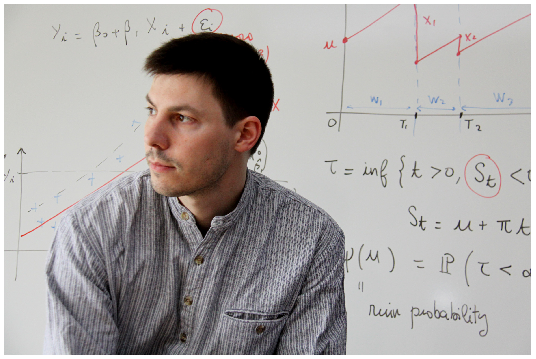
Arthur Charpentier is currently Assistant Professor at the Faculty of Economics at Université de Rennes I.Arthur Charpentier Economic Rockstar

Professor Charpentier’s teaching activities include Economics of Uncertainty, Modelling Natural Catastrophes, Nonlinear Econometrics, Multivariate Data Analysis, Advanced Techniques in Portfolio Management and Probability and Statistics.

Arthur’s research interests include copula theory, extreme values with applications in finance and insurance, option pricing, actuarial science and statistics of insurance, risk measures, capital allocation and diversification.

Arthur describes his blog ‘freakonometrics’ as an open lab-notebook experiment which can be found at freakonometrics.hypotheses.org/

Arthur completed a PhD Thesis in Mathematics (Statistics) at University of Leuven and a Masters degree in Mathematics applied to economics at University Paris IX Dauphine.

Economics:

In this episode, Arthur mentions: econometrics, significance tests, t-tests, p-value, confidence level, variables, big data, in-sample tests, out 0f sample tests, copula theory, linear models, non-linear models, machine learning and artificial intelligence.

Economists:

In this episode, Arthur mentions: Josh Angrist and Steve Pischke.

Links:

  • Freakonometrics: www.freakonometrics.hypothesis.org
  • Tensorflow: www.tensorflow.org
  • Journal of Machine Learning Research: www.jmlr.org

Books:

  • Mastering ‘Metrics: The Path from Cause to Effect by Josh Angrist and Steve Pishcke
  • Mostly Harmless Econometrics by Josh Angrist and Steve Pishcke
  • Mathématiques De L’assurance Non-Vie by Arthur Charpentier
  • Computational Actuarial Science with R by Arthur Charpentier


Podcast Episodes:

022: Josh Angrist on Taking the Con Out of Econometrics – Kung Fu Style

Coffee

http://traffic.libsyn.com/economicrockstar/093_Arthur_Charpentier_Final.mp3

Podcast: Play in new window | Download
092: Graham Brownlow on Rent Seeking, Cliometrics and the Economics of the DeLorean

June 30, 2016 by Frank

http://traffic.libsyn.com/economicrockstar/092_Graham_Brownlow_Final.mp3
Play in New WindowDownload

092: Graham Brownlow on Rent Seeking, Cliometrics and the Economics of the DeLorean

Dr. Graham Brownlow (PhD, QUB) is a Lecturer in Economics at Queen’s University in Belfast, Northern Ireland.Graham Brownlow Economic Rockstar

Dr. Brownlow’s research focuses primarily on economic history and institutions, evolutionary economics, Irish economic and business performance and violence. He also has an interest in methodology in economic and business history.

Graham edits the journal Irish Economic and Social History.

I’m very eclectic and pragmatic – Dr. Graham Brownlow

Economics:

In this episode, Graham mentions: rent seeking, cliometrics, inefficiency, corruption, institutions, subsidies, Brexit, monopolies, sharing economy, fast money, game theory, bargaining, public choice, regional economics and economic history. 

Economists:

In this episode, Graham mentions: Peter Boettke, Peter Leeson, Gary Becker, William Baumal, Douglass North, Robert Hamilton, Eli Hecksher, Adam Smith, John Maynard Keynes, Joseph Schumpeter, Friedrich Hayek, Milton Friedman, George Duncan, Tim Harford, Steven Landsburg and G. L. S. Shackle.

Using Analytic Narratives in Economic Research

Looking to balance the details of fact and yet keep the rigour of an economic model – Graham Brownlow

  1. Identify the problem or puzzle.
  2. Immerse yourself in the topic or resources.
  3. Move to more formal aspects.
  4. Don’t start with the model and then use it to explain your findings.
  5. You actually first look at the historical issue under investigation and then apply it to the model.

Links:

  • Mont Pelerin Society

Research by Dr. Graham Brownlow:

  • Back to the Failure: An Analytic Narrative of the De Lorean Debacle (2015).
  • Soft Budget Constraints and Regional Industrial Policy: Reinterpreting the Rise and Fall of De Lorean (2015).
  • ‘Review of Cullen Economy, Trade and Irish Merchants at Home and Abroad, 1600-1988’ (2013).
  • How do we Ensure a Useful Future for Irish Cliometrics? (2012).
  • A complete list of Graham’s research can be found here.

Economics of the DeLorean Economic Rockstar

Where to Find Graham:

  • Queen’s University, Belfast, Northern Ireland
  • Twitter: @GrahamBrownlow

Books:

  • The Undercover Economist by Tim Harford
  • The Undercover Economist Strikes Back: How to Run – or Ruin – an Economy by Tim Harford
  • The Undercover Economist, Revised and Updated Edition: Exposing Why the Rich Are Rich, the Poor Are Poor – and Why You Can Never Buy a Decent Used Car! by Tim Harford
  • The Logic of Life: The Rational Economics of an Irrational World by Tim Harford
  • Adapt: Why Success Always Starts with Failure by Tim Harford
  • Messy: The Power of Disorder to Transform Our Lives by Tim Harford
  • The Armchair Economist: Economics and Everyday Life by Steven Landsburg
  • Economics for Pleasure by G. L. S. Shackle
  • The New Geography of Jobs by Enrico Moretti


http://traffic.libsyn.com/economicrockstar/092_Graham_Brownlow_Final.mp3

Podcast: Play in new window | Download

091: The Age of Em by Robin Hanson

June 23, 2016 by Frank

http://traffic.libsyn.com/economicrockstar/091_Age_of_Em_Final.mp3
Play in New WindowDownload

091: The Age of Em by Robin Hanson

This is Robin Hanson’s second appearance on the Economic Rockstar podcast. I previously spoke to Robin about his work in episode 073. If you find this interview interesting, check out the other episode. You’ll love it.

This is the Book Review from Amazon:

“Robots may one day rule the world, but what is a robot-ruled Earth like?

Many think the first truly smart robots will be brain emulations or “ems.” Scan a human brain, then run a model with the same connections on a fast computer, and you have a robot brain, but recognizably human.

Train an em to do some job and copy it a million times: an army of workers is at your disposal. When they can be made cheaply, within perhaps a century, ems will displace humans in most jobs. In this new economic era, the world economy may double in size every few weeks.

Some say we can’t know the future, especially following such a disruptive new technology, but Professor Robin Hanson sets out to prove them wrong. Applying decades of expertise in physics, computer science, and economics, he uses standard theories to paint a detailed picture of a world dominated by ems.

While human lives don’t change greatly in the em era, em lives are as different from ours as our lives are from those of our farmer and forager ancestors. Ems make us question common assumptions of moral progress, because they reject many of the values we hold dear.

Read about em mind speeds, body sizes, job training and career paths, energy use and cooling infrastructure, virtual reality, aging and retirement, death and immortality, security, wealth inequality, religion, teleportation, identity, cities, politics, law, war, status, friendship and love.

This book shows you just how strange your descendants may be, though ems are no stranger than we would appear to our ancestors. To most ems, it seems good to be an em.”

Click here to win a copy of Robin Hanson’s book:

Create your own user feedback survey

Book:

The Age of Em: Work, Love and Life when Robots Rule the Earth

Links:

  • Podcast episode 073: Robin Hanson on The Age of Em and How Brain Emulations Will Double Economic Growth Every Month
  • The Age of Em
  • www.overcomingbias.com


http://traffic.libsyn.com/economicrockstar/091_Age_of_Em_Final.mp3

Podcast: Play in new window | Download

090: Stefan Szymanski on Soccernomics and How Sabermetrics, Inequality and Finance Rules the Sport

June 15, 2016 by Frank

http://traffic.libsyn.com/economicrockstar/090_Stefan_Szymanski_Final.mp3
Play in New WindowDownload

090: Stefan Szymanski on Soccernomics and How Sabermetrics, Inequality and Finance Rules the Sport

Stefan Szymanski is the Stephen J. Galetti Professor of Sport Management at the University of Michigan. Stefan Szymanski Economic Rockstar

Between 2008-2012 he was a Professor of Economics at Cass Business School, City University, London.

Stefan began researching the economics of professional football in 1989, and has since come to spend his entire time researching the economics and business of sport.

He has published 55 scholarly articles, 14 book chapters, six books and four edited volumes on sports related subjects.

Stefan has also acted as consultant to sport governing bodies and national governments, and has appeared in court as an expert witness on the economics of sport. He has become a regular pundit in the media on business related sports issues.

Stefan’s interests include sports management and economics; sport history, culture and society; the internationalization of sport; international sports federations and the governance of sport.

Stefan is co-author of Soccernomics, author of Money and Soccer: A Soccernomics Guide and co-owner of Soccernomics Agency.

Economics:

In this episode, Stefan mentions: John Kay and Simon Kuper.

Economists:

In this episode, Stefan mentions:

competitive balance defence, collusion, game theory, wage caps, bankruptcy, finance, sabermetrics and soccernomics.

Why the Football System is Stable:

  1. There are a vast number of clubs. Whenever one club fails there are at least a dozen other clubs ready to take their place.
  2. Football is so culturally central to European life that the clubs are never allowed to go bankrupt. They are always re-born in some form or another. In other words, the business that forms the football club can go bankrupt and disappear. But the football club itself almost never does. Football isn’t just a business in Europe, it’s also a dimension of community life. A football club only really dies if the community dies and that doesn’t happen very often.

Links:

  • The Swiss Ramble 
  • Rec.Sport.Soccer Statistics Foundation 
  • Football Management by John Beech 
  • Opta
  • Soccerbase 
  • 11v11 
  • European Football Statistics 
  • Leicester City and Donald Trump: a new era for the Premier League?

Podcasts:

  • Freakonomics
  • Episode 008: Robbie Butler on Using Sports to Teach Entry-Level Economics

Where to Find Stefan:

  • Twitter: @sszy
  • Website: Soccernomics Agency

Books:

  • Soccernomics: Why England Loses, Why Spain, Germany, and Brazil Win, and Why the U.S., Japan, Australia—and Even Iraq—Are Destined to Become the Kings of the World’s Most Popular Sport by Simon Kuper and Stefan Szymanski.
  • Money and Soccer: A Soccernomics Guide: Why Chievo Verona, Unterhaching, and Scunthorpe United Will Never Win the Champions League, Why Manchester … and Manchester United Cannot Be Stopped by Stefan Szymanski.
  • Once in a Great City: A Detroit Story by David Marannis.


http://traffic.libsyn.com/economicrockstar/090_Stefan_Szymanski_Final.mp3

Podcast: Play in new window | Download

089: James Brusseau on Wealth Inequality and the Accursed Share

June 9, 2016 by Frank

http://traffic.libsyn.com/economicrockstar/089_James_Brusseau_Final.mp3
Play in New WindowDownload

089: James Brusseau on Wealth Inequality and the Accursed Share

Dr. James Brusseau is a philosopher specializing in contemporary Continental philosophy, history of philosophy and james brusseau economic rockstarethics.

In 1994 James joined the faculty of Philosophy and Letters at the Mexican National University in Mexico City teaching graduate courses in Philosophy and Comparative Literature.

He has also taught in Europe and the California State University.

Dr. James Brusseau currently teaches at Pace University in New York City.

James is the author of four books: Isolated Experiences, Decadence of the French (Nietzsche), Empire of Humiliation and Business Ethics Workshop, Flat World Knowledge, 2011

He is also the host for The Wealth Inequality Workshop at wealthinequalityworkshop.org

Links:

  • www.jamesbrusseau.net
  • The Business Ethics Workshop
  • www.wealthinequalityworkshop.org

Books:

  • Decadence of the French Nietzsche by James Brusseau
  • Isolated Experiences by James Brusseau
  • Business Ethics Workshop by James Brusseau
  • Empire of Humiliation by James Brusseau
  • The Accursed Share: An Essay on General Economy by Georges Bataille

http://traffic.libsyn.com/economicrockstar/089_James_Brusseau_Final.mp3

Podcast: Play in new window | Download

088: Denise Cummins on Fairness in Economics, Altruism and the Prisoners Dilemma

June 2, 2016 by Frank

http://traffic.libsyn.com/economicrockstar/088_Denise_Cummins_Final.mp3
Play in New WindowDownload

088: Denise Cummins on Fairness in Economics, Altruism and the Prisoners Dilemma

Dr. Denise Cummins is a research psychologist and an author. She has held faculty and research positions at Yale Denise Cummins Economic RockstarUniversity, the University of California, the University of Illinois, and the Center for Adaptive Behavior at the Max Planck Institute in Berlin. 

Dr Cummins is a respected cognitive scientist who has authored numerous scientific articles, and is an elected Fellow of the Association for Psychological Science. 

In her Psychology Today blog and PBS NewsHour articles, Denise writes about what she and other cognitive scientists are discovering about the way people think, solve problems, and make decisions.

Denise’s experimental investigations focus on social, moral, and causal decision-making. The aim of her social research is investigating  how perceived relative status impacts fairness in economic transactions. 

Denise is the author of four books, the most recent being Good Thinking: Seven powerful ideas that influence the way we think.

Denise received her PhD in Experimental Psychology from University of Colorado, Boulder and you can find her work at www.denisecummins.com and PsychologyToday.com.

Books:

Cummins, D.D (2012) Good Thinking: Seven powerful ideas that influence the way we think. Cambridge, MA: Cambridge University Press.

Cummins, R.C., & Cummins, D.D. (Eds.) (2000) Minds, brains, and computers: Foundations of Cognitive Science. London: Blackwell.

Cummins, D.D., & Allen, C. (Eds.) (1998) The Evolution of Mind. Oxford University Press.

Cummins, D.D. (1995) The other side of psychology: How experimental psychologists find out about the way we think and act. NY: St. Martin’s Press.

http://traffic.libsyn.com/economicrockstar/088_Denise_Cummins_Final.mp3

Podcast: Play in new window | Download

087: Asgeir B. Torfason on the Economy of Iceland and Explaining Negative Cashflows in Banks

May 26, 2016 by Frank

http://traffic.libsyn.com/economicrockstar/087_Asgeir_Torfason_Final.mp3
Play in New WindowDownload

087: Asgeir B. Torfason on the Economy of Iceland and Explaining Negative Cashflows in Banks

Asgeir B. Torfason is Assistant Professor in the School of Business at the University of Iceland where he teaches asgeir torfasonFinance, Accounting and Financial Statement Analysis. Asgeir is also Postdoc Research Fellow, as well as an Assistant Professor at Gothenburg Research Institute.

Asgeir defended his PhD at Gothenburg University in May 2014 with dissertation: Cash Flow Accounting in Banks – A study of practice.

His research combines bank management, finance theory, monetary economics and accounting studies.

Previous research has focused on asset values and long-term investment in real estate, a field where Asgeir has extensive practical experience, covering the Nordics as VP for a REIT listed on NYSE.

Prior to that he worked in university management after getting an MBA from Norwegian Business School in Oslo, and studied earlier Philosophy and Economics in Iceland.

Economics:

In this episode, Asgeir mentions: Iceland’s economy, IT bubble, Tulip Mania, banks, capital controls, devaluation, tourism, resources, trade, cashflows, assets, liabilities, revenue, equity, income statements, bankruptcy, lending, negative cashflows, money multiplier, reserve requirement, central banks, quantitative easing, swap lines and housing bubbles.

Economists:

In this episode, Asgeir mentions: Joseph Schumpeter, John Maynard Keynes, Hyman Minsky, Perry G Mehrling, 

Links:

  • Economics of Money andBanking, Part One by Perry G Mehrling
  • Economics of Money andBanking, Part Two by Perry G Mehrling
  • Money View by Institute for New Economic Thinking
  • Katharina Pistor, Professor of Law at Columbia Law School

Papers:

  • The difference between cash flows in banks and non-financial firms by Asgeir B. Torfason
  • Methods for Making Sense of Cash Flow in Banks by Asgeir B. Torfason
  • Cash flow accounting in banks – a study of practice (PhD) by Asgeir B. Torfason

Books:

  • The New Lombard Street: How the Fed Became the Dealer of Last Resort by Perry Mehrling
  • Lombard Street-A Description of the Money Market by Walter Bagehot
  • Manias, Panics and Crashes: A History of Financial Crises, Sixth Edition by Charles P. Kindleberger
  • The Economic Consequences of the Peace by John Maynard Keynes

Where to Find Asgeir:

  • Twitter:  @asgeirbt
  • About.me
http://traffic.libsyn.com/economicrockstar/087_Asgeir_Torfason_Final.mp3

Podcast: Play in new window | Download

086: Philip Pilkington on Determinism and the Reformation in Economics

May 19, 2016 by Frank

http://traffic.libsyn.com/economicrockstar/086_Philip_Pilkington_Final.mp3
Play in New WindowDownload

086: Philip Pilkington on Determinism and the Reformation in Economics

Phillip Pilkington works in investment and has contributed to numerous online and print media philip pilkingtonoutlets as a freelance economic journalist.

Phillip ran a popular economics blog called www.fixingtheeconomists.wordpress.com and will be releasing his book The Reformation in Economics soon.

Phillip earned his B.A. in Journalism from the Independent Colleges, as well as his M.A. in Economics from Kingston University.

All views expressed by Phillip are his own and are not representative of the firm in which he works.

Economics:

In this episode, Philip mentions: utility maximizing, behavioral bias, interest rates, time preference, savings, money, comparative advantage, decision making, consumption function, marginal propensity to consume and the multiplier.

Economists:

In this episode, Philip mentions: Steve Keen, Paul Samuelson, Adam Smith, James Steuart, David Ricardo and G. L. S. Shackle.

Links:

  • Fixing the Economist – a blog by Philip Pilkington

Books:

  • The Reformation in Economics: A Deconstruction and Reconstruction of Economic Theory by Philip Pilkington
  • Foundations of Business Thought by Calvin M. Boardman
  • Market Sense and Nonsense: How the Markets Really Work (and How They Don’t) by Jack D. Schwager
  • A Treatise Concerning The Principles of Human Knowledge by George Berkley
http://traffic.libsyn.com/economicrockstar/086_Philip_Pilkington_Final.mp3

Podcast: Play in new window | Download

085: Michael Roberts on Understanding Karl Marx and His Thinking on Capitalism

May 12, 2016 by Frank

http://traffic.libsyn.com/economicrockstar/085_Michael_Roberts_Final_.mp3
Play in New WindowDownload

085: Michael Roberts on Understanding Karl Marx and His Thinking on Capitalism

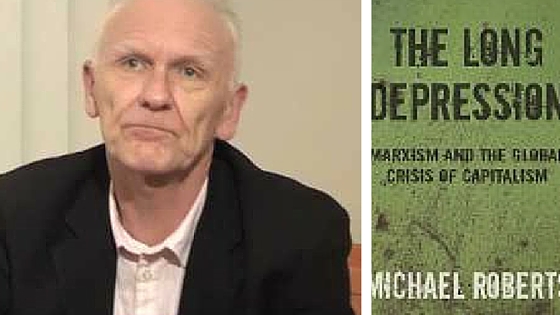
Michael Roberts

Michael Roberts has worked as an economist for over 30 years in the City of London. He is author of The Great Recession: Profit cycles, economic crisis A Marxist View and The Long Depression: Marxism and the Global Crisis of Capitalism.

Economics:

In this episode, Michael mentions: Marxism, capitalism, Austrian economics, GDP, multinationals, inflation, printing of money, booms, busts, profitability, recession, depression, inequality, wealth, means of production, private property, competition, externalities, unintended consequences, bailout, austerity and unemployment.

Economists:

In this episode, Michael mentions: Karl Marx, Friedrich Hayek, Adam Smith, John Maynard Keynes, Brad DeLong and Paul Mattick.

Links:

  • www.thenextrecession.wordpress.com by Michael Roberts

Books:

  • The Great Recession: Profit cycles, economic crisis A Marxist View by Michael Roberts
  • The Long Depression: Marxism and the Global Crisis of Capitalism by Michael Roberts
  • The Communist Manifesto by Karl Marx and Friedrich Engels
  • Capital by Karl Marx
  • Business As Usual by Paul Mattick
  • Waiting for Godot by Samuel Beckett


http://traffic.libsyn.com/economicrockstar/085_Michael_Roberts_Final_.mp3

Podcast: Play in new window | Download

  • Prev Page...
  • 1
  • …
  • 7
  • 8
  • 9
  • 10
  • 11
  • …
  • 19
  • ...Next Page

Frank Conway

Frank Conway is founder of Economic Rockstar and lecturer of economics, finance and statistics. Read More…

View My Blog Posts

Youtube Sub

Become a Patron of the Economic Rockstar Podcast

patreon

Ireland’s Economy by the Numbers

Leaving Cert Economics: Ireland’s Economy  Click here to download a workbook on Ireland’s Economy so that you can add your own notes. [Original size] Ireland’s Economy by fconway

Categories

Subscribe and Never Miss An Episode

itunes-logo

Recent Posts

  • Ireland’s Economy by the Numbers April 8, 2019
  • 174: Wendy Carlin on The Core Project, Capitalism, Democracy and Normative Statements February 13, 2019
  • 173: Stephen Wright on Core Econ as a Learning Resource for Mainstream Economics January 28, 2019
  • 172: Best of 2018 Part 2: From the Great Depression to Futurism; Institutions, Individualism, Cooperation and Reciprocity January 22, 2019
  • 171: Best of 2018 Part 1 January 3, 2019

Copyright © 2026 · Podcast Pro Theme on Genesis Framework · WordPress · Log in

This website uses cookies to improve your experience. We'll assume you're ok with this, but you can opt-out if you wish. Accept Reject Read More
Privacy Policy

Privacy Overview

This website uses cookies to improve your experience while you navigate through the website. Out of these, the cookies that are categorized as necessary are stored on your browser as they are essential for the working of basic functionalities of the website. We also use third-party cookies that help us analyze and understand how you use this website. These cookies will be stored in your browser only with your consent. You also have the option to opt-out of these cookies. But opting out of some of these cookies may affect your browsing experience.
Necessary
Always Enabled
Necessary cookies are absolutely essential for the website to function properly. This category only includes cookies that ensures basic functionalities and security features of the website. These cookies do not store any personal information.
Non-necessary
Any cookies that may not be particularly necessary for the website to function and is used specifically to collect user personal data via analytics, ads, other embedded contents are termed as non-necessary cookies. It is mandatory to procure user consent prior to running these cookies on your website.
SAVE & ACCEPT