• ABOUT
  • RESOURCES
  • PODCAST
  • BOOKS
  • BLOG
  • SUPPORTERS
  • QFA Financial Advice
  • CONTACT

Economic Rockstar

Connecting Brilliant Minds in Economics and Finance

124: Emily Oster on Diabetes and Diet, Disease and Vaccinations and Debunking Pregnancy Myths
January 18, 2018 by Frank

http://traffic.libsyn.com/economicrockstar/124_Emily_Oster_Final.mp3
Play in New WindowDownload

124: Emily Oster on Diabetes and Diet, Disease and Vaccinations and Debunking Pregnancy Myths


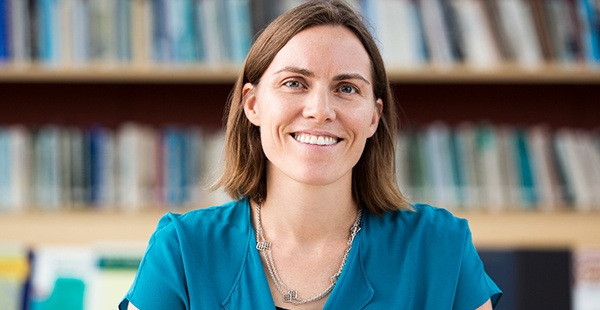
Emily Oster is Professor of Economics at Brown University. Before joining Brown University Professor Oster wasa faculty member of the University of Chicago, Booth School of Business following the completion of her PhD from Harvard. Emily’s research covers development economics, health economics and research design.

Professor Oster is the author of “Expecting Better: Why the Conventional Pregnancy Wisdom Is Wrong — and What You Really Need to Know”. Her book has over 600 customer reviews on Amazon and has over 4400 ratings on Goodreads. Emily has featured in SuperFreakonomics and her Ted talk ‘Flip your thinking on AIDs in Africa’, has almost 1 million views.

Links:

Diabetes and Diet: Purchasing Behavior Response to Health Information
American Economic Journal:Applied Economics,  Forthcoming

Does Disease Cause Vaccination? Disease Outbreaks and Vaccination Response
Journal of Health Economics, Forthcoming

Witchcraft, Weather and Economic Growth in Renaissance Europe
Journal of Economic Perspectives, Winter 2004.

Podcast Episodes Mentioned:

118: Zachary Feinstein on Systemic Risk and Economics in Star Wars and Harry Potter

114: Deirdre McCloskey on Equality and Greed and How To Be a Very Good Economist

022: Josh Angrist on Taking the Con Out of Econometrics – Kung Fu Style

The Time Ferriss Show: Gretchen Rubin — Experiments in Happiness and Creativity

Books:

Expecting Better: Why the Conventional Pregnancy Wisdom is Wrong, and What you Really Need to Know by Emily Oster

Mostly Harmless Econometrics: An Empiricist’s Companion by Josh Angrist and Jörn-Steffen Pischke

Radical Markets: Uprooting Capitalism and Democracy for a Just Society by Eric A. Posner and E. Glen Weyl

The Book of Dust: La Belle Sauvage by Philip Pullman

Harry Potter Paperback Box Set (Books 1-7) by J. K. Rowling

Patreon

If you’re a fan of the podcast and would like to show your support in anyway, please check out my Patreon page at patreon.com/economicrockstar where you can sign up for any of the awards for as little as $1 a month or you can simply follow me on the Economic Rockstar Facebook page or on Twitter or simply recommend the show to a friend, especially if they have never had the opportunity to study economics.

http://traffic.libsyn.com/economicrockstar/124_Emily_Oster_Final.mp3

Podcast: Play in new window | Download

  • facebook
  • linkedin
  • twitter
  • google+
  • pinterest

111: Greg Mankiw on Writing, Carbon Tax, Health Care and Education at the Economics Teaching Conference in Florida 2016

November 10, 2016 by Frank

http://traffic.libsyn.com/economicrockstar/111_Greg_Mankiw_Final.mp3
Play in New WindowDownload

111: Greg Mankiw on Writing, Carbon Tax, Health Care and Education at the Economics Teaching Conference in Florida 2016

greg-mankiw-and-frank-conway-economic-rockstar-01

Greg Mankiw is the Robert M. Beren Professor of Economics at Harvard University. His research includes work on price adjustment, consumer behavior, financial markets, monetary and fiscal policy, and economic growth.

He has written two popular textbooks—the intermediate-level textbook Macroeconomics and the introductory textbook Principles of Economics. Principles of Economics has sold over two million copies and has been translated into twenty languages.

In addition to his teaching, research, and writing, Professor Mankiw has been a research associate of the National Bureau of Economic Research, an adviser to the Congressional Budget Office and the Federal Reserve Banks of Boston and New York, and a member of the ETS test development committee for the advanced placement exam in economics. From 2003 to 2005 he served as Chairman of the President’s Council of Economic Advisers.

I sometimes describe myself as a libertarian at the margin. When I take the libertarian party, they seem a little to extreme for me. But given where we’re starting today, I think a little bit more reliance on free markets, individual responsibility and personal liberty will be a good thing – Greg Mankiw.

Economics:

In this episode, Greg discusses and mentions: New Keynesian economics, micrcofoundations to macroeconomics, rational expectations, real business cycles, stochastic DSG models, Pigou Tax, carbon tax, externalities, refundable tax credits, subsidies, healthcare, inequality, unintended consequences, student debt and the Baumol disease.

Economists:

In this episode, Greg discusses and mentions: Richard Lispey, Peter Steiner, Harvey Rosen (Princeton), John Maynard Keynes, James Tobin, Stanley Fischer, Tom Sargeant, Robert Lucas, Alan Blinder, David Romer, Olivier Blanchard, Janet Yellen, Arthur Pigou, Karl Marx, Adam Smith and John Kenneth Galbraith

On Writing Books:

  • It does require a fair amount of discipline. That’s the hardest part. I have friends who try to write who have said ‘I’m behind schedule and I’m going to spend the weekend writing three chapters’. That’s a recipe for failure.
  • I try to be extremely disciplined about my writing. When I’m writing the books, I wake up and, after I send my kids off to school, it’s the first thing I do everyday.
  • I force myself to basically write two pages every day. Two pages is not that much. But if you write literally two pages every single day for a year – 365 days – that’d be a good-sized book at the end of the year. So that’s the hardest part – staying disciplined and keeping at it everyday.

On Pedagogy and Technology:

The technology has changed radically [since the first edition of Mankiw’s Intermediate Macro book]. The pedagogy is electronic where increasingly the number of people using online books has been rising. I’m actually kind of old-fashioned – a bit of a Luddite when it comes to these things but actually for the first time this year at Harvard we’re using the online book with the MindTap product.

Links:

  • Cengage Learning 
  • MindTap 
  • Pigou Club
  • Before the Flood (a movie about climate change) by Leonardo DiCaprio
  • Revenue-Neutral Carbon Tax in Washington State

http://traffic.libsyn.com/economicrockstar/111_Greg_Mankiw_Final.mp3

Podcast: Play in new window | Download

  • facebook
  • linkedin
  • twitter
  • google+
  • pinterest

078: Arnold Kling on the Hidden Story of How Markets Work, the Mortgage Crisis and How We Pay for Health Care

March 24, 2016 by Frank

http://traffic.libsyn.com/economicrockstar/078_Arnold_Kling_.mp3
Play in New WindowDownload

078: Arnold Kling on the Hidden Story of How Markets Work, the Mortgage Crisis and How We Pay for Health Care

Arnold Kling is a Mercatus Center–affiliated senior scholar at George Mason University and a member of the arnold kling economic rockstarFinancial Markets Working Group.

Arnold specializes in housing-finance policy, financial institutions, macroeconomics, and the inside workings of America’s federal financial institutions. He also is an adjunct scholar at the Cato Institute in Washington, DC.

Arnold has testified before Congress on the collapse of Fannie Mae and Freddie Mac

He has authored five books, including Crisis of Abundance: Rethinking How We Pay for Health Care and Invisible Wealth: The Hidden Story of How Markets Work.

Arnold has published articles in the Economist, the Wall Street Journal, the New York Times, the Atlantic, and Forbes, among others, and he blogs at arnoldkling.com/blog/.

Previously, Arnold served as a senior economist at Freddie Mac and a staff economist on the Board of Governors of the Federal Reserve System.

He started Homefair, one of the first commercial websites on the Internet.

Arnold Kling received his PhD in economics from Massachusetts Institute of Technology.

“If you want to live a good lifestyle, you can find hobbies and interests that don’t cost very much. So it’s not hard to enjoy life. But if you want to make yourself miserable, watch politics.” – Arnold Kling

Economics:

In this episode, Arnold mentions and discusses: information rules, economic information, marginal cost of information, advertising, versioning, bundling, Austrian economics, risk measurement, capital, tax, mortgage-backed securities, loans, bubbles, crashes, excess leverage, marked-to-market, economics of health care, labor, capital, land, institutions.

Economists:

In this episode, Arnold mentions and discusses: Hal Varian, Carl Shapiro, Brad deLong, Tyler Cowen, Paul Krugman, Paul Volker, Douglass North, Robin Hanson, Bryan Caplan, James Buchanan, Adam Smith, F. A. Hayek and Robert Solow.

In this episode you will learn:

  • about Moore’s Law and what it means for the economy.
  • why economists are being lured into the world of start-ups and tech companies.
  • about the power of freemium and why companies need to build up trust to create a loyal customer base.
  • the difference between versioning and bundling.
  • what the future holds for the accessing information online.
  • about Arnold’s company online Homefair and how it was one of the first internet companies.
  • what really went on behind closed doors at Fannie Mae and Freddie Mac that resulted in their demise.
  • why Fannie Mae and Freddie Mac were bailed out.
  • how changing the culture at Freddie Mac caused its collapse.
  • about the state of health care in America today.
  • how Americans are to pay for the higher costs of health care.
  • about the fibre-bubble in the 1990s.
  • why we are richer today than a couple of hundred years ago.
  • why ideas are the foundation to economic growth and prosperity.
  • why nations like Cuba and North Korea are poor (bad institutions).
  • about the work being done at George Mason University.

Where to Find Arnold Kling:

  • www.arnoldkling.com/blog/

Books:

  • Crisis of Abundance: Rethinking How We Pay for Health Care by Arnold Kling
  • Invisible Wealth: The Hidden Story of How Markets Work by Arnold Kling
  • Information Rules: A Strategic Guide to the Network Economy by Carl Shapiro and Hal Varian
  • The Revolt of the Public and the Crisis of Authority in the New Millennium by Martin Gurri

Links: 

  • 23andMe: www.23andme.com
    • View reports on over 100 health conditions and traits
    • Find out about your inherited risk factors and how you might respond to certain medications
    • Discover your lineage and find DNA relatives
http://traffic.libsyn.com/economicrockstar/078_Arnold_Kling_.mp3

Podcast: Play in new window | Download
  • facebook
  • linkedin
  • twitter
  • google+
  • pinterest

Frank Conway

Frank Conway is founder of Economic Rockstar and lecturer of economics, finance and statistics. Read More…

View My Blog Posts

Youtube Sub

Become a Patron of the Economic Rockstar Podcast

patreon

Ireland’s Economy by the Numbers

Leaving Cert Economics: Ireland’s Economy  Click here to download a workbook on Ireland’s Economy so that you can add your own notes. [Original size] Ireland’s Economy by fconway

Categories

Subscribe and Never Miss An Episode

itunes-logo

Recent Posts

  • Ireland’s Economy by the Numbers April 8, 2019
  • 174: Wendy Carlin on The Core Project, Capitalism, Democracy and Normative Statements February 13, 2019
  • 173: Stephen Wright on Core Econ as a Learning Resource for Mainstream Economics January 28, 2019
  • 172: Best of 2018 Part 2: From the Great Depression to Futurism; Institutions, Individualism, Cooperation and Reciprocity January 22, 2019
  • 171: Best of 2018 Part 1 January 3, 2019

Copyright © 2026 · Podcast Pro Theme on Genesis Framework · WordPress · Log in

This website uses cookies to improve your experience. We'll assume you're ok with this, but you can opt-out if you wish. Accept Reject Read More
Privacy Policy

Privacy Overview

This website uses cookies to improve your experience while you navigate through the website. Out of these, the cookies that are categorized as necessary are stored on your browser as they are essential for the working of basic functionalities of the website. We also use third-party cookies that help us analyze and understand how you use this website. These cookies will be stored in your browser only with your consent. You also have the option to opt-out of these cookies. But opting out of some of these cookies may affect your browsing experience.
Necessary
Always Enabled
Necessary cookies are absolutely essential for the website to function properly. This category only includes cookies that ensures basic functionalities and security features of the website. These cookies do not store any personal information.
Non-necessary
Any cookies that may not be particularly necessary for the website to function and is used specifically to collect user personal data via analytics, ads, other embedded contents are termed as non-necessary cookies. It is mandatory to procure user consent prior to running these cookies on your website.
SAVE & ACCEPT