• ABOUT
  • RESOURCES
  • PODCAST
  • BOOKS
  • BLOG
  • SUPPORTERS
  • QFA Financial Advice
  • CONTACT

Economic Rockstar

Connecting Brilliant Minds in Economics and Finance

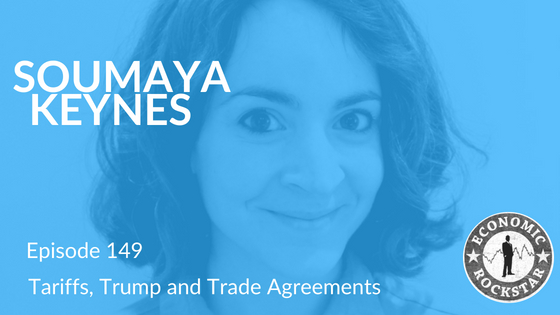
149: Soumaya Keynes on Tariffs, Trump and Trade Agreements
July 22, 2018 by Frank

http://traffic.libsyn.com/economicrockstar/149_Soumaya_Keynes_Final.mp3
Play in New WindowDownload

149: Soumaya Keynes on Tariffs, Trump and Trade Agreements


Soumaya Keynes is the economics and trade correspondent at The Economist. She writes for the print edition and the Free Exchange blog.

Before joining The Economist Soumaya did research on the public finances and pensions at the Institute for Fiscal Studies, an economic research institute.

Before that Soumaya worked in the Banking and Credit team at Her Majesty’s Treasury in London. Soumaya has an M.Phil. and B.A. in Economics from Trinity College, Cambridge.

She is co-host of a weekly podcast on trade economics called Trade Talks.

In this episode, Soumaya mentions and discusses:

  • Tariffs and Trade.
  • On the WTO: when they established and for what reason.
  • The General Agreement on Tariffs and Trade (GATT).
  • Trans-Pacific Partnership (TPP).
  • NATO.
  • EU blockage of US beef imports due to hormone induction but lacks scientific evidence.
  • Brexit: can Ireland and the UK create their own trade agreement as made permissible within the WTO which was also similar to those countries who created the TPP.
  • About NAFTA.
  • Why did Trump go after reforming or disrupting NAFTA?

Books:

Evicted: Poverty and Profit in the American City by Mathew Desmond.

Janesville: An American Story by Amy Goldstein

On Writing Well by William Zinsser


Writing Tips:

Excerpt from this episode with Soumaya Keynes

“Clear writing has value anywhere would be my first point. As someone who reads a lot of academic articles for my job, I think it has an impression that academic writing has to be wordier or more complicated essentially to demonstrate how clever you are. And as a reader of that I would argue that good writing is good wherever it is and there is huge value to being clear and having short sentences and being understandable. You know, jargon is often something that people hide behind. Do you really need to use the ten-letter version of the word where a five-letter version is available?

One thing that came to me relatively late is that essentially there are two kind of writers. There are the kind who other people think of as natural writers who can write out a first draft and it’s perfect. And for disclosure I am not one of those kind of writers. And then the other kind is the kind that basically needs three drafts to get what they are happy with. And I think before I came to The Economist that I would have thought that maybe because I need three drafts as I wasn’t as good a writer as the person who could do it first time. But that I think is really not the case. Just because it feels like it’s taken a lot of effort that you need to do a lot of re-writing to get it in the shape that you want that doesn’t say anything about the quality of the final product or just how good a writer you are.

The risk is that if you know that you need a few rounds of editing to get something in to the shape that you wanted that you label yourself a bad writer and that makes you worried or anxious about writing anything new.

And so, my words of wisdom would be ‘You’re still a great writer even if it takes you a few tries’, or at least that what I tell myself.”

Other Episodes that May Interest You:

  • 144: Donald Boudreaux on International Trade, Tariffs and Protectionism
  • 040: Rebecca Harding on Trade Finance and How Delta Economics Can Help Identify Growth Opportunities World-Wide

Links:

  • Soumaya Keynes personal website
  • The Economist
  • Trade Talks podcast
  • Peterson Institute for International Economics

Patreon

If you’re a fan of the podcast and would like to show your support in anyway, please check out my Patreon page at www.patreon.com/economicrockstar where you can sign up for any of the awards for as little as $1 a month or you can simply follow me on the Economic Rockstar Facebook page or on Twitter or simply recommend the show to a friend, especially if they have never had the opportunity to study economics.

http://traffic.libsyn.com/economicrockstar/149_Soumaya_Keynes_Final.mp3

Podcast: Play in new window | Download
  • facebook
  • linkedin
  • twitter
  • google+
  • pinterest

119: Best of 2016 Part 1

January 4, 2017 by Frank

http://traffic.libsyn.com/economicrockstar/119_Best_of_2016_Part_I.mp3
Play in New WindowDownload

119: Best of 2016 Part 1

During the year I had the absolute honor to converse with some of the brightest minds in economics. They shared their thinking, research and teaching methods with me and I personally learned a lot from them. I hope that you benefited from these conversations too.

It was difficult to choose who to include, or more accurately who to leave out. I decided on a number of common themes for this ‘Best of 2016’ episode. So I hope you enjoy these sound bites and if you’re new to the show, I hope that this episode will give you a taste of the content in the catalogue of episodes that lie await for you on the Economic Rockstar podcast. Enjoy!

The following are the episodes that I have chosen to include this year:

068: Daron Acemoglu Inequality, Philanthropy, Inclusive Institutions and Creative Destruction.

108 Steve Horwitz on the Micro Foundations of Macroeconomics and What Caused the Great Recession.

088 Denise Cummins Reciprocity and Fairness.

069 Diane Coyle GDP, the Happiness Index, the Human Development Index, The Soulful Science and How Very Human a Science Good Economics is by Being Concerned About Improving the Well-Being of People.

104 Russ Roberts Definition of Economics, Adam Smith and Happiness.

082 Peter Boettke Hayek and Keynes.

085 Michael Roberts Capitalism, Marxism, Protecting Resources and Ecology.

081 Julie Nelson Ecology and Gender.

114 Deirdre McCloskey The change that brought about the equality of liberalism and her gender transformation.

http://traffic.libsyn.com/economicrockstar/119_Best_of_2016_Part_I.mp3

Podcast: Play in new window | Download
  • facebook
  • linkedin
  • twitter
  • google+
  • pinterest

111: Greg Mankiw on Writing, Carbon Tax, Health Care and Education at the Economics Teaching Conference in Florida 2016

November 10, 2016 by Frank

http://traffic.libsyn.com/economicrockstar/111_Greg_Mankiw_Final.mp3
Play in New WindowDownload

111: Greg Mankiw on Writing, Carbon Tax, Health Care and Education at the Economics Teaching Conference in Florida 2016

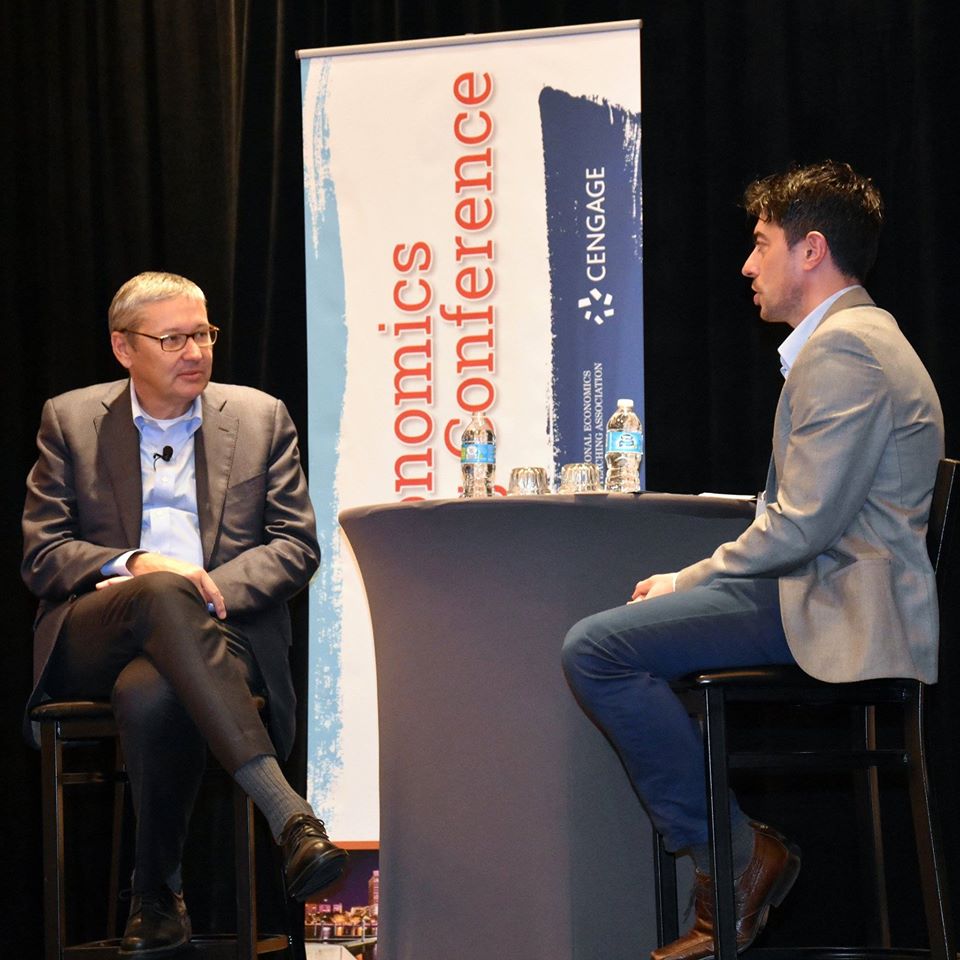
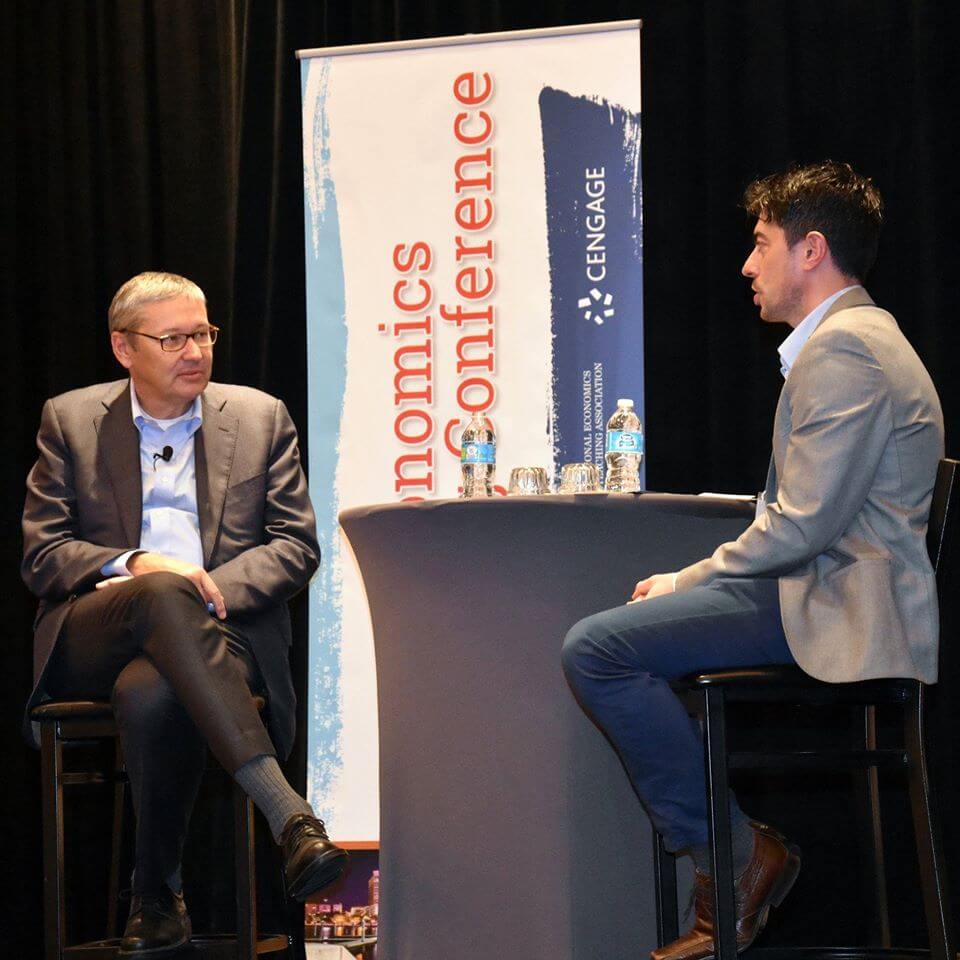
greg-mankiw-and-frank-conway-economic-rockstar-01

Greg Mankiw is the Robert M. Beren Professor of Economics at Harvard University. His research includes work on price adjustment, consumer behavior, financial markets, monetary and fiscal policy, and economic growth.

He has written two popular textbooks—the intermediate-level textbook Macroeconomics and the introductory textbook Principles of Economics. Principles of Economics has sold over two million copies and has been translated into twenty languages.

In addition to his teaching, research, and writing, Professor Mankiw has been a research associate of the National Bureau of Economic Research, an adviser to the Congressional Budget Office and the Federal Reserve Banks of Boston and New York, and a member of the ETS test development committee for the advanced placement exam in economics. From 2003 to 2005 he served as Chairman of the President’s Council of Economic Advisers.

I sometimes describe myself as a libertarian at the margin. When I take the libertarian party, they seem a little to extreme for me. But given where we’re starting today, I think a little bit more reliance on free markets, individual responsibility and personal liberty will be a good thing – Greg Mankiw.

Economics:

In this episode, Greg discusses and mentions: New Keynesian economics, micrcofoundations to macroeconomics, rational expectations, real business cycles, stochastic DSG models, Pigou Tax, carbon tax, externalities, refundable tax credits, subsidies, healthcare, inequality, unintended consequences, student debt and the Baumol disease.

Economists:

In this episode, Greg discusses and mentions: Richard Lispey, Peter Steiner, Harvey Rosen (Princeton), John Maynard Keynes, James Tobin, Stanley Fischer, Tom Sargeant, Robert Lucas, Alan Blinder, David Romer, Olivier Blanchard, Janet Yellen, Arthur Pigou, Karl Marx, Adam Smith and John Kenneth Galbraith

On Writing Books:

  • It does require a fair amount of discipline. That’s the hardest part. I have friends who try to write who have said ‘I’m behind schedule and I’m going to spend the weekend writing three chapters’. That’s a recipe for failure.
  • I try to be extremely disciplined about my writing. When I’m writing the books, I wake up and, after I send my kids off to school, it’s the first thing I do everyday.
  • I force myself to basically write two pages every day. Two pages is not that much. But if you write literally two pages every single day for a year – 365 days – that’d be a good-sized book at the end of the year. So that’s the hardest part – staying disciplined and keeping at it everyday.

On Pedagogy and Technology:

The technology has changed radically [since the first edition of Mankiw’s Intermediate Macro book]. The pedagogy is electronic where increasingly the number of people using online books has been rising. I’m actually kind of old-fashioned – a bit of a Luddite when it comes to these things but actually for the first time this year at Harvard we’re using the online book with the MindTap product.

Links:

  • Cengage Learning 
  • MindTap 
  • Pigou Club
  • Before the Flood (a movie about climate change) by Leonardo DiCaprio
  • Revenue-Neutral Carbon Tax in Washington State

http://traffic.libsyn.com/economicrockstar/111_Greg_Mankiw_Final.mp3

Podcast: Play in new window | Download
  • facebook
  • linkedin
  • twitter
  • google+
  • pinterest

102: Matías Vernengo on John Maynard Keynes and the Evolution of Keynesian Economic Thinking

September 8, 2016 by Frank

http://traffic.libsyn.com/economicrockstar/102_Matias_Vernango_Final.mp3
Play in New WindowDownload

102: Matías Vernengo on John Maynard Keynes and the Evolution of Keynesian Economic Thinking

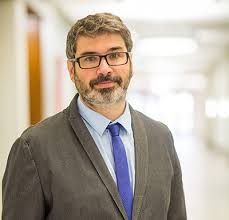
Matías Vernengo is Professor of Economics at Bucknell University, Pennsylvania, USA.matias-vernengo-economic-rockstar

Dr. Vernengo is co-author of ‘Conta de Juros Grande & Favela’ and has also edited four books including ‘Banking, Monetary Policy and the Political Economy of Financial Regulation – Essays in the Tradition of Jane D’Arista’.

He has published over fifty academic and popular articles, and contributes to the blogs Naked Keynesianism and Triple Crisis. He is also the co-editor of the Review of Keynesian Economics (ROKE).

Matías’ methodological view emphasizes the importance of the history of ideas for the development of economic theory, and is based on the surplus approach of the classical political economy authors and Marx and the heterodox followers of Keynes.

Dr. Vernengo has written on the effects of external liberalization in Latin America and alternatives to the Washington Consensus, on the international role of the dollar, on current monetary and fiscal policy, on macroeconomic policy during the 1930s and on the history of economic ideas.

Economics:

In this episode, Matías discusses and mentions: Keynesian economics, neo-Keynesianism, Animal Spirits, monetarists, uncertainty, rational expectations, wages, GDP< consumption, multiplier, 

Economists:

In this episode, Matías discusses and mentions: John Maynard Keynes, Joan Robinson, Karl Marx, Ricardo, Frank Knight, Joseph Schumpeter, Milton Friedman, Robert Lucas, Alvin Hansen, Robert Solow, James Tobin, Paul Samuelson, George Akerlof, Robert Shiller, Larry Summers, Alan Blinder, Ben Bernanke, Christina Romer and Janet Yellen.

Professor Matías Vernengo’s Writing Tips:

  1. Think of your audience and write for them.
  2. Present at conferences and get great feedback. It also gets your work out there.
  3. Plan carefully. Write your paper so that it is a good fit to each journal that you’re sending it to.

Where to Find Matías:

  • Website: Naked Keynesiansim
  • Website: Triple Crisis
  • Twitter: @nakedkeynes

Essay:

The Economic Consequences of Mr. Churchill by J. M. Keynes

Books:

  • The Cambridge Colloquium, 1916: Part 2, Analysis Situs by O. Veblen
  • Can Lloyd George Do It? An Examination of the Liberal Pledge by J.M. Keynes and H. D. Henderson
  • The General Theory of Employment, Interest, and Money by J. M. Keynes
  • A Treatise on Probability by J. M. Keynes
  • The Great Transformation: The Political and Economic Origins of Our Time by K. Polanyi
  • The American Economy by W. Greason, W. Gorman and M. Ziobro
  • Production of Commodities by Means of Commodities : Prelude to a Critique of Economic Theory by P. Sraffa
  • Animal Spirits: How Human Psychology Drives the Economy, and Why It Matters for Global Capitalism by G. Akerlof and R. Shiller
  • Phishing For Fools: The Economics of Manipulation and Deception by G. Akerlof and R. Shiller


http://traffic.libsyn.com/economicrockstar/102_Matias_Vernango_Final.mp3

Podcast: Play in new window | Download
  • facebook
  • linkedin
  • twitter
  • google+
  • pinterest

082: Peter Boettke on Smith and Keynes and Why We Should Be ‘Living Economics’

April 21, 2016 by Frank

http://traffic.libsyn.com/economicrockstar/082_Peter_Boettke.mp3
Play in New WindowDownload

082: Peter Boettke on Smith and Keynes and Why We Should Be ‘Living Economics’

Peter Boettke is Professor of Economics and Philosophy at George Mason University, the BB&TPeter Boettke Economic Rockstar Professor for the Study of Capitalism, and the Director of the F.A. Hayek Program for Advanced Study in Philosophy, Politics, and Economics at the Mercatus Center at George Mason University.

Peter is now the co-author, along with David Prychitko, of the classic principles of economics texts of Paul Heyne’s The Economic Way of Thinking.

Professor Boettke’s most recent book, Living Economics, provides a resource for how teachers and students can engage in many fascinating questions in economics and illuminates the core principles that should guide our thinking.

Peter’s efforts in the classroom have earned him a number of distinctions including the Golden Dozen Award for Excellence in Teaching from the College of Arts and Sciences at New York University and the George Mason University Alumni Association’s 2009 Faculty Member of the Year award.

Peter’s research has primarily been in the area of comparative political and economic systems and the consequences with regard to material progress and political freedom.

Economics:

In this episode, Peter mentions: Classical economics, Austrian economics, Keynesian economics, credit transmission, institutions, the invisible hand, mainline economics, mainstream economics, private property, public choice, rent-seeking, opportunity cost, scarcity, exchange, markets, negative externalities, laissez-faire, Coase theorem, Pigouvian tax, reciprocity, inflation, stagflation and Malthus’ theory of The General Glut.

Economists:

In this episode, Peter mentions: Adam Smith, F. A. Hayek, Ludwig von Mises, Milton Friedman, Paul Samuelson, John Maynard Keynes,Frédéric Bastiat, David Hume, Vernon Smith, Thomas Robert Malthus, J. K. Galbraith, Paul Heyne, Hyman Minsky, Thorstein Veblen, Steve Keen, Ben Bernanke, Arthur Pigou, Gordon Tullock, James Buchanan, Robert Coase, Elinor Ostrom, Vincent Ostrom and Major Douglas.

Papers:

  • Teaching Austrian Economics to Graduate Students
  • Beyond Equilibrium Economics: Reflections on the Uniqueness of the Austrian Tradition

Books:

  • Living Economics: Yesterday, Today, and Tomorrow by Peter J. Boettke
  • The Economic Consequences of Peace by J. M. Keynes
  • The End of Laissez-Faire by J. M. Keynes
  • The Rogue Gallery of Economic Thinkers by J. M. Keynes
  • The Road to Serfdom by F. A. Hayek
  • Challenging Institutional Analysis and Development: The Bloomington School by Paul Dragos Aligica and Peter Boettke
http://traffic.libsyn.com/economicrockstar/082_Peter_Boettke.mp3

Podcast: Play in new window | Download
  • facebook
  • linkedin
  • twitter
  • google+
  • pinterest

011: Steve Keen on Debunking Economics and the Misinterpretation of Keynes

December 18, 2014 by Frank

http://traffic.libsyn.com/economicrockstar/011_Steve_Keen.mp3
Play in New WindowDownload

011: Steve Keen on Debunking Economics and the Misinterpretation of Keynes

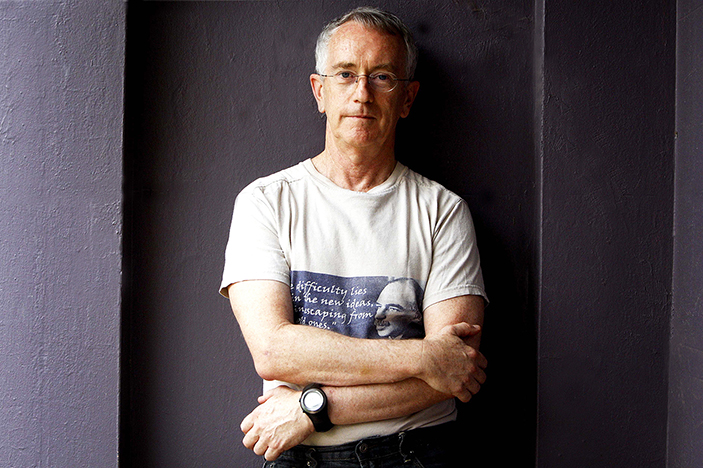
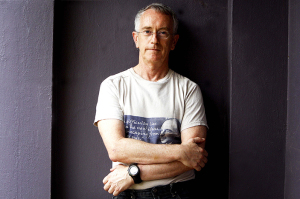
Prof Steve KingstonSteve Keen is Professor of Economics and Head of Department of Economics, History and Politics at Kingston University, London. Steve’s interpretative analysis is quite different to the norm. Steve likes to be known socially as an anti-economist and has spent 40 years fighting delusion in economics. That delusion has led us into a crisis and Steve may have finally won his battle… or has he? Steve is the winner of the Revere Award for being the economist who most convincingly warned of the economic crisis and whose work is most likely to prevent another one. He topped the poll beating Roubini, Shiller, Soros, Stiglitz and Krugman.

Economic Themes:

In this interview, Steve mentions and discusses: Keynesian economics, supply, demand and equilibrium, demand curves, Debt/GDP ratio, financial crisis, housing market bubble and IS-LM model.

Economists and Economic Schools:

In this interview, Steve mentions: Frank Stilwell, Neva Goodwin, Jack Reardon, John Maynard Keynes, Hyman Minsky, John Hicks, Paul Krugman, Paul Samuelson, Marshallian Economics (Alfred Marshall) and Walrasian Economics (Leon Walrasian).

In this episode, you will learn:

  • how Steve saw the 2008 financial crisis coming when he investigated Debt/GDP levels.
  • Steve’s views on current economic teachings in many school, colleges and universities around the world.
  • what should be done at these colleges and how a pluralist approach to teaching economics is best.
  • about Steve’s thoughts on the treatment of Keynesian economics.
  • about Steve’s involvement in a Marvel-style comic book dedicated to teaching economics.

‘Stability is Destabilising’ Steve Keen’s t-shirt from the MINSKY campaign

Economics deserves Comedy – Steve Keen

Click To Tweet

Keynesian Economics

“If you read the Keynes that I base my work on which is really Keynes in 1937, not the General Theory, but the papers from 1937 – read that and a lot of Austrians will think they’re reading Hayek. Keynes is being completely bastardised. What people when they are saying Keynesian they mean Samuelsonian”.

Keynes according to the Americans is what Samuelson said what Keynes said – Steve Keen

Click To Tweet

My vision of who Keynes is very different to the one that Paul Krugman has – Steve Keen

Click To Tweet

Recommended Books:

  • Debunking Economics: The Naked Emperor Dethroned by Steve Keen
  • Money, Blood and Revolution: How Darwin and the doctor of King Charles I could turn economics into a science by George Cooper
  • Dynamic Economic Systems: A Post-Keynesian Approach by John Markus Blatt
  • Introducing a New Economics: Pluralist, Sustainable, Progressive by Jack Reardon.

Favorite Internet Resources:

  • www.debtdeflation.com/blogs
  • Steve Keen on YouTube
  • www.ideaeconomics.org
http://traffic.libsyn.com/economicrockstar/011_Steve_Keen.mp3

Podcast: Play in new window | Download
  • facebook
  • linkedin
  • twitter
  • google+
  • pinterest

Frank Conway

Frank Conway is founder of Economic Rockstar and lecturer of economics, finance and statistics. Read More…

View My Blog Posts

Youtube Sub

Become a Patron of the Economic Rockstar Podcast

patreon

Ireland’s Economy by the Numbers

Leaving Cert Economics: Ireland’s Economy  Click here to download a workbook on Ireland’s Economy so that you can add your own notes. [Original size] Ireland’s Economy by fconway

Categories

Subscribe and Never Miss An Episode

itunes-logo

Recent Posts

  • Ireland’s Economy by the Numbers April 8, 2019
  • 174: Wendy Carlin on The Core Project, Capitalism, Democracy and Normative Statements February 13, 2019
  • 173: Stephen Wright on Core Econ as a Learning Resource for Mainstream Economics January 28, 2019
  • 172: Best of 2018 Part 2: From the Great Depression to Futurism; Institutions, Individualism, Cooperation and Reciprocity January 22, 2019
  • 171: Best of 2018 Part 1 January 3, 2019

Copyright © 2026 · Podcast Pro Theme on Genesis Framework · WordPress · Log in

This website uses cookies to improve your experience. We'll assume you're ok with this, but you can opt-out if you wish. Accept Reject Read More
Privacy Policy

Privacy Overview

This website uses cookies to improve your experience while you navigate through the website. Out of these, the cookies that are categorized as necessary are stored on your browser as they are essential for the working of basic functionalities of the website. We also use third-party cookies that help us analyze and understand how you use this website. These cookies will be stored in your browser only with your consent. You also have the option to opt-out of these cookies. But opting out of some of these cookies may affect your browsing experience.
Necessary
Always Enabled
Necessary cookies are absolutely essential for the website to function properly. This category only includes cookies that ensures basic functionalities and security features of the website. These cookies do not store any personal information.
Non-necessary
Any cookies that may not be particularly necessary for the website to function and is used specifically to collect user personal data via analytics, ads, other embedded contents are termed as non-necessary cookies. It is mandatory to procure user consent prior to running these cookies on your website.
SAVE & ACCEPT