• ABOUT
  • RESOURCES
  • PODCAST
  • BOOKS
  • BLOG
  • SUPPORTERS
  • QFA Financial Advice
  • CONTACT

Economic Rockstar

Connecting Brilliant Minds in Economics and Finance

133: David Zetland on Climate Change and Water Civilization
March 23, 2018 by Frank

http://traffic.libsyn.com/economicrockstar/133_David_Zetland_Final.mp3
Play in New WindowDownload

133: David Zetland on Climate Change and Water Civilization

David Zetland is an assistant professor at Leiden University College, where he teaches various classes on economics. He received his PhD in Agricultural and Resource Economics from UC Davis in 2008.

David has previoulsy featured in Episode 39 of the podcast.


Patreon

If you’re a fan of the podcast and would like to show your support in anyway, please check out my Patreon page at patreon.com/economicrockstar where you can sign up for any of the awards for as little as $1 a month or you can simply follow me on the Economic Rockstar Facebook page or on Twitter or simply recommend the show to a friend, especially if they have never had the opportunity to study economics.

http://traffic.libsyn.com/economicrockstar/133_David_Zetland_Final.mp3

Podcast: Play in new window | Download

  • facebook
  • linkedin
  • twitter
  • google+
  • pinterest

132: Eric Lonergan on the Philosophy of Money Part 2

March 20, 2018 by Frank

http://traffic.libsyn.com/economicrockstar/132_Eric_Lonergan_Part_2_Final.mp3
Play in New WindowDownload

132: Eric Lonergan on the Philosophy of Money Part 2

This is part 2 of my conversation with Eric Lonergan, hedge fund manager and author of Money. If you would like to hear more from Eric please check out episode 130.

His work can be found at www.pholosophyofmoney.net

Books:

The following books were mentioned in this episode with Eric. If you’d like to check them out, why not visit Amazon or your favourite book store to check out the blurbs, the table of contents and reviews before you buy. Any book mentioned on the Economic Rockstar podcast come highly recommended by the guests.

  • Inside the House of Money: Top Hedge Fund Traders on Profiting in the Global Markets by Steven Drobny
  • The New House of Money by Steven Drobny
  • The Invisible Hands: Top Hedge Fund Traders on Bubbles, Crashes, and Real Money by Steven Drobny
  • Ethics: Subjectivity and Truth (Essential Works of Foucault, 1954-1984, Vol. 1) by Michel Foucault
  • Aesthetics, Method, and Epistemology (Essential Works of Foucault, 1954-1984, Vol. 2) by Michel Foucault
  • Power (The Essential Works of Foucault, 1954-1984, Vol. 3) by Michel Foucault
  • Reminiscences of a Stock Operator by Edwin Lefévre
  • The Little Book That Beats The Market by Joel Greenblatt
  • Inequality: What Can Be Done? by Anthony B. Atkinson

Patreon

If you’re a fan of the podcast and would like to show your support in anyway, please check out my Patreon page at www.patreon.com/economicrockstar where you can sign up for any of the awards for as little as $1 a month or you can simply follow me on the Economic Rockstar Facebook page or on Twitter or simply recommend the show to a friend, especially if they have never had the opportunity to study economics.

http://traffic.libsyn.com/economicrockstar/132_Eric_Lonergan_Part_2_Final.mp3

Podcast: Play in new window | Download

  • facebook
  • linkedin
  • twitter
  • google+
  • pinterest

131: Vernon Smith Bonus Episode (Previously Unreleased)

March 12, 2018 by Frank

http://traffic.libsyn.com/economicrockstar/131_Vernon_Smith_Bonus_Episode.mp3
Play in New WindowDownload

131: Vernon Smith Bonus Episode (Previously Unreleased)

This is a short episode featuring Nobel laureate Professor Vernon Smith. It was recorded in March 2017 as part of the long form interview of Episode 123. I like keeping each episode about 60 minutes in length and decided to hold back on the remaining 15 minutes until now.

So enjoy this short episode with Professor Vernon Smith.

http://traffic.libsyn.com/economicrockstar/131_Vernon_Smith_Bonus_Episode.mp3

Podcast: Play in new window | Download

  • facebook
  • linkedin
  • twitter
  • google+
  • pinterest

130: Eric Lonergan on the Philosophy of Money (Part 1)

March 2, 2018 by Frank

http://traffic.libsyn.com/economicrockstar/130_Eric_Lonergan_Final.mp3
Play in New WindowDownload

130: Eric Lonergan on the Philosophy of Money (Part 1)


Eric Lonergan is a macro hedge fund manager, economist, and writer. His most recent book is Money published by Routledge. He has written for Foreign Affairs, The Financial Times, and The Economist. He also advises governments and policymakers. He first advocated expanding the tools of central banks to including cash transfers to households in the Financial Times in 2002. In December 2008, he advocated the policy as the most efficient way out of recession post-financial crisis, contributing to a growing debate over the need for ‘helicopter money’.

Patreon

If you’re a fan of the podcast and would like to show your support in anyway, please check out my Patreon page at patreon.com/economicrockstar where you can sign up for any of the awards for as little as $1 a month or you can simply follow me on the Economic Rockstar Facebook page or on Twitter or simply recommend the show to a friend, especially if they have never had the opportunity to study economics.

http://traffic.libsyn.com/economicrockstar/130_Eric_Lonergan_Final.mp3

Podcast: Play in new window | Download

  • facebook
  • linkedin
  • twitter
  • google+
  • pinterest

129: Sarah Skwire on the Sensibility of Literature for Economic Thinking

February 23, 2018 by Frank

http://traffic.libsyn.com/economicrockstar/129_Sarah_Skwire_Final.mp3
Play in New WindowDownload

129: Sarah Skwire on the Sensibility of Literature for Economic Thinking

is a Senior Fellow at Liberty Fund, a non-profit educational foundation, and the co-author of the college writing textbook, Writing with a Thesis, which is in its 12th edition.

Sarah has published a range of academic articles on subjects from Shakespeare to zombies and the broken window fallacy, and her work has appeared in journals as varied as Literature and Medicine, The George Herbert Journal, and The Journal of Economic Behavior and Organization.

Sarah writes a regular column for the Freeman Online and blogs for the Fraser Institute and Bleeding Heart Libertarians.

Sarah’s work on literature and economics has also appeared in Newsweek, The Freeman and in Cato Unbound, and she is an occasional lecturer for IHS, SFL, and other organizations. Her poetry has appeared, among other places, in Standpoint, The New Criterion, and The Vocabula Review.

Sarah graduated with honors in English from Wesleyan University, and earned a MA and PhD in English from the University of Chicago.

Books:

  • Red Plenty by Francis Spufford
  • High Wages by Dorothy Wipple
  • Emma McChesney & Co. by Edna Ferber
  • The Home-Maker by Dorothy Canfield
  • The Grapes of Wrath by John Steinbeck
  • Emma by Jane Austin
  • East of the Sun West of the Moon 
  • The Wealth of Nations by Adam Smith

Patreon

If you’re a fan of the podcast and would like to show your support in anyway, please check out my Patreon page at patreon.com/economicrockstar where you can sign up for any of the awards for as little as $1 a month or you can simply follow me on the Economic Rockstar Facebook page or on Twitter or simply recommend the show to a friend, especially if they have never had the opportunity to study economics.

http://traffic.libsyn.com/economicrockstar/129_Sarah_Skwire_Final.mp3

Podcast: Play in new window | Download

  • facebook
  • linkedin
  • twitter
  • google+
  • pinterest

128: Sarah Smith on the Economics of Charitable Giving and Gender Roles in Economics

February 16, 2018 by Frank

http://traffic.libsyn.com/economicrockstar/128_Sarah_Smith_Final.mp3
Play in New WindowDownload

128: Sarah Smith on the Economics of Charitable Giving and Gender Roles in Economics

Sarah Smith is Professor of Economics and Head of the Department of Economics at the University of Bristol. Her research interests are in applied micro – specifically consumer behaviour and public economics.

Sarah has worked on pensions, saving and retirement and welfare policy and her main focus now is the economics of not-for-profit organisations.

Professor Smith has been working with a number of charity organisations (JustGiving, Charities Aid Foundation, Remember a Charity, Big Lottery) to understand what motivates individuals to give and how donations respond to different economic and non-economic incentives.   

Sarah is a research associate at the Institute for Fiscal Studies, where she started her career and at the Centre for Economic Policy Research. Sarah has also worked at HM Treasury, the Financial Services Authority and the London School of Economics.

Sarah received her PhD from University College, London and an MSc Economics from the London School of Economics and Political Science.

Patreon

If you’re a fan of the podcast and would like to show your support in anyway, please check out my Patreon page at patreon.com/economicrockstar where you can sign up for any of the awards for as little as $1 a month or you can simply follow me on the Economic Rockstar Facebook page or on Twitter or simply recommend the show to a friend, especially if they have never had the opportunity to study economics.

http://traffic.libsyn.com/economicrockstar/128_Sarah_Smith_Final.mp3

Podcast: Play in new window | Download

  • facebook
  • linkedin
  • twitter
  • google+
  • pinterest

127: Barry Eichengreen on the Importance of Economic History, the IMF and Reserve Currencies

February 8, 2018 by Frank

http://traffic.libsyn.com/economicrockstar/127_Barry_Eichengreen_Final.mp3
Play in New WindowDownload

127: Barry Eichengreen on the Importance of Economic History, the IMF and Reserve Currencies

Barry Eichengreen is Professor of Economics and Professor of Political Science at the University of California, Berkeley, where he has taught since 1987, and Professor of American History and Institutions, University of Cambridge.

Professor Eichengreen is a Research Associate of the National Bureau of Economic Research and Research Fellow of the Centre for Economic Policy Research.

Professor Eichengreen has been a fellow of the Center for Advanced Study in the Behavioral Sciences (Palo Alto) and the Institute for Advanced Study (Berlin). He is a regular monthly columnist for Project Syndicate.

His most recent books are How Global Currencies Work: Past, Present, and Future with Livia Chitu and Arnaud Mehl, The Korean Economy: From a Miraculous Past to a Sustainable Future with Wonhyuk Lim, Yung Chul Park and Dwight H. Perkins and Exorbitant Privilege: The Rise and Fall of the Dollar and the Future of the International Monetary System (2011) (shortlisted for the Financial Times and Goldman Sachs Business Book of the Year Award in 2011).

Professor Eichengreen is the recipient of a doctor honoris causa from the American University in Paris, and the 2010 recipient of the Schumpeter Prize from the International Schumpeter Society.

Importance of Economic History

“One of my motivations for studying economic history is the belief that the past can inform the present” Professor Eichengreen

In this episode you will learn:

  • Whether we can learn from economic history and whether history can repeat itself.
  • The importance of history in institutions.
  • Why the economics discipline suffers from “academic schizophrenia”.
  • The problems of the IMF as an organisation today. 
  • How the IMF can change for the better.
  • The IMF letters to Ireland regarding its bailout.
  • The tensions regarding the rise of China  and the isolation of the United States.
  • Is there room for only one reserve currency or can we have more than one?
  • Advice Professor Eichengreen would give to the Chinese if they wish to establish the Renminbi as a reserve currency. 
  • Does Bitcoin meet the criteria to be regarded as money?
  • About Clarence Hatry and how he contributed to the stock market crash of 1929.

Economists:

In this episode, Professor Eichengreen mentions: Charles Kindleberger (MIT), John Maynard Keynes, Benjamin Strong and Montagu Strong.

Economics:

In this episode, Professor Eichengreen mentions: economic history, financial markets, institutional framework, monetary policy, central banks, cryptocurrencies, blockchain, function of money, central banks, King’s College, Cambridge

Writing Tips:

1) Read critically. Find someone whose writing you admire and try to figure out what makes it work.

2) Keep it simple. Shorter declarative sentences are better and you can always make them shorter and more declarative.

3) Revise. No sentence or paragraph is perfect or even adequate the first, second, third, fourth or fifth. Go around.

4) Practice. One’s writing tends to get better the more that you do.

Work Habits:

“I do better when it’s quiet and when there are fewer distractions. So I tend to work at home early on the morning and try to avoid my email until I’ve spent some time writing. I can only do serious writing at my desk in my study at home.” Professor Eichengreen

Movie:

  • It’s a Wonderful Life

Books:

  • Hall of Mirrors by Barry Eichengreen
  • How Global Currencies Work: Past, Present, and Future by Barry Eichengreen, Livia Chitu and Arnaud Mehl.
  • The Korean Economy: From a Miraculous Past to a Sustainable Future by Barry Eichengreen, Wonhyuk Lim, Yung Chul Park and Dwight H. Perkins.
  • Exorbitant Privilege: The Rise and Fall of the Dollar and the Future of the International Monetary System by Barry Eichengreen.

Recommend Book:

  • Against the Grain by James C. Scott

Patreon

If you’re a fan of the podcast and would like to show your support in anyway, please check out my Patreon page at www.patreon.com/economicrockstar where you can sign up for any of the awards for as little as $1 a month or you can simply follow me on the Economic Rockstar Facebook page or on Twitter or simply recommend the show to a friend, especially if they have never had the opportunity to study economics.

http://traffic.libsyn.com/economicrockstar/127_Barry_Eichengreen_Final.mp3

Podcast: Play in new window | Download

  • facebook
  • linkedin
  • twitter
  • google+
  • pinterest

126: Jeffrey Miron on Libertarianism, Drug Legalization and Genghis Khan

February 2, 2018 by Frank

http://traffic.libsyn.com/economicrockstar/126_Jeffrey_Miron_Final.mp3
Play in New WindowDownload

126: Jeffrey Miron on Libertarianism, Drug Legalization and Genghis Khan

Jeffrey Miron is a Senior Lecturer and Director of Undergraduate Studies in the Department of Economics at Harvard University, as well as a senior fellow at the Cato Institute.

His field of expertise is the economics of libertarianism; he has advocated for many libertarian policies, including legalizing all drugs and allowing failing banks to go bankrupt.

He has written four books including Drug War Crimes: The Consequences of Prohibition and Libertarianism, from A to Z.


Patreon

If you’re a fan of the podcast and would like to show your support in anyway, please check out my Patreon page at patreon.com/economicrockstar where you can sign up for any of the awards for as little as $1 a month or you can simply follow me on the Economic Rockstar Facebook page or on Twitter or simply recommend the show to a friend, especially if they have never had the opportunity to study economics.

http://traffic.libsyn.com/economicrockstar/126_Jeffrey_Miron_Final.mp3

Podcast: Play in new window | Download

  • facebook
  • linkedin
  • twitter
  • google+
  • pinterest

125: Eugene Fama on the Efficient Market Hypothesis, the Feds Fund Rate, Bitcoin and Daily Routines

January 25, 2018 by Frank

http://traffic.libsyn.com/economicrockstar/125_Eugene_Fama__Final.mp3
Play in New WindowDownload

125: Eugene Fama on the Efficient Market Hypothesis, the Feds Fund Rate, Bitcoin and Daily Routines

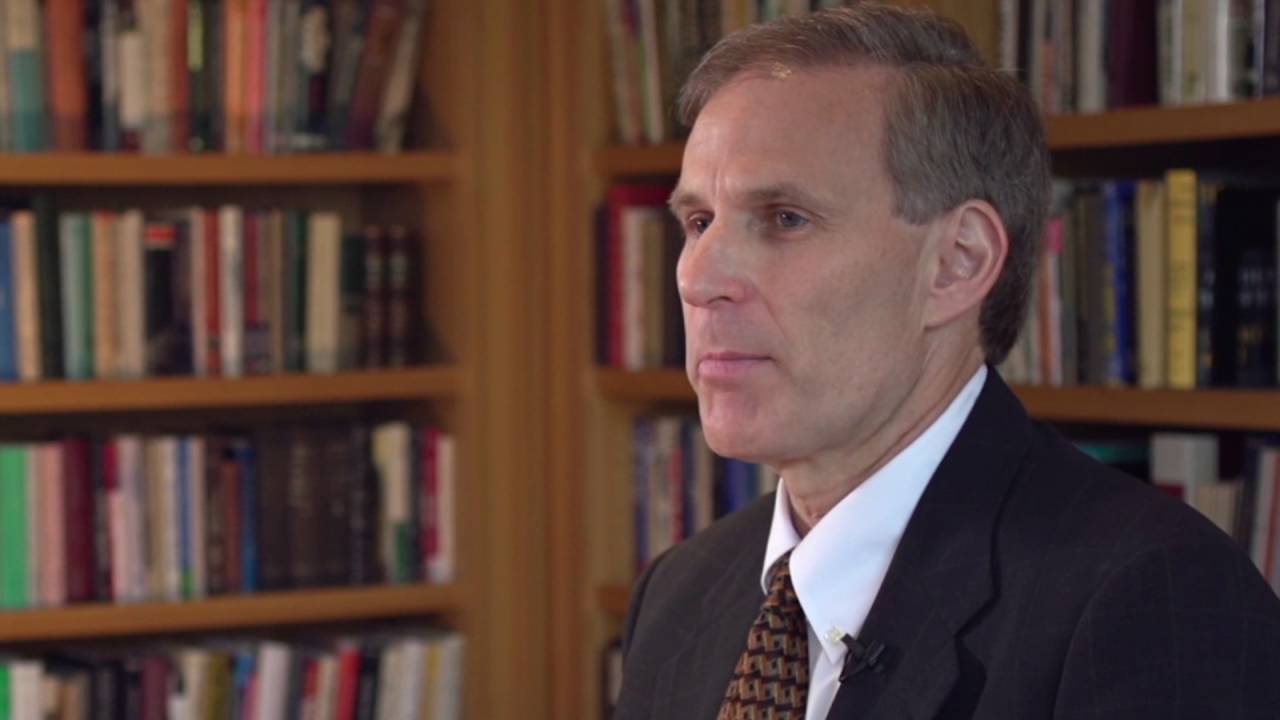
Eugene Fama Economic Rockstar

“I went into academics because I didn’t want to go into anything that would affect my sports life.” – Professor Eugene Fama

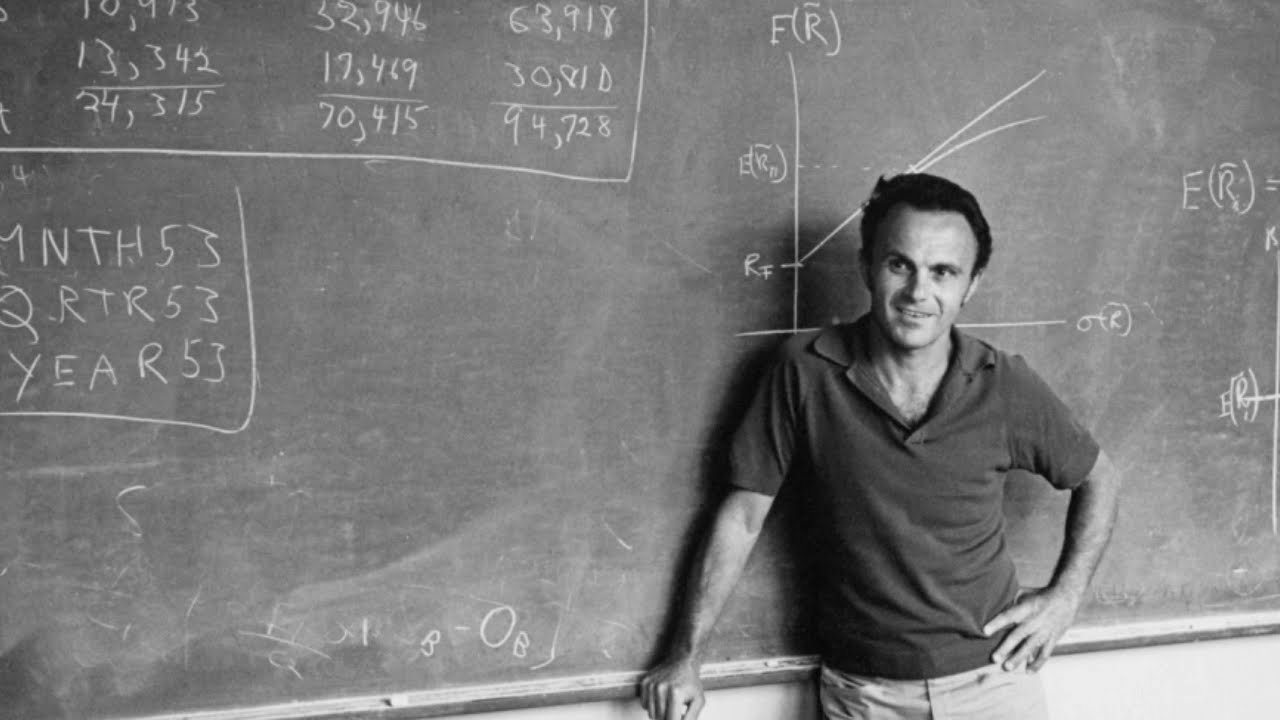
Eugene F. Fama is Professor of Finance at the University of Chicago Booth School of Business. Professor Fama was awarded the 2013 Nobel laureate in economic sciences and is widely recognized as the “father of modern finance.”

Professor Fama’s research is well known in both the academic and investment communities. He is strongly identified with research on markets, particularly the efficient markets hypothesis. He focuses much of his research on the relation between risk and expected return and its implications for portfolio management. His work has transformed the way finance is viewed and conducted.

Eugene is a prolific author, having written two books and published more than 100 articles in academic journals. He is among the most cited researchers in economics.

In addition to the Nobel Prize in Economic Sciences, Professor Fama was the first elected fellow of the American Finance Association in 2001. He is also a fellow of the Econometric Society and the American Academy of Arts and Sciences. He was the first recipient of three major prizes in finance: the Deutsche Bank Prize in Financial Economics (2005), the Morgan Stanley American Finance Association Award for Excellence in Finance (2007), and the Onassis Prize in finance (2009).

Professor Fama was awarded doctor of law degrees by the University of Rochester and DePaul University, a doctor honoris causa by the Catholic University of Leuven, Belgium, and a doctor of science honoris causa by Tufts University.

Eugene is chairman of the Center for Research in Security Prices at Chicago Booth, which was founded 40 years ago to create the finest tools for tracking, measuring, and analyzing securities data. He is also an advisory editor of the Journal of Financial Economics.

Professor Fama earned a bachelor’s degree from Tufts University in 1960, followed by an MBA and PhD from the University of Chicago Graduate School of Business (now the Booth School) in 1964. He joined the GSB faculty in 1963.

Economists:

In this episode, Professor Fama mentions: Gary Becker, Vernon Smith, John Cochrane,Robert Shiller, Campbell Harvey,  John Campbell, Narasimhan Jagadeesh, Sheridan Titman, Cliff Asness, Louis Bachlier, Paul Samuelson, Benoit Mandlebrot, Robert C. Merton, Fischer Black, Myron Scholes, Merton Miller, Harry Roberts and Kenneth French.

Economics:

In this episode, Professor Fama mentions: EMH, anomalies, Momentum Effect, January Effect, Options Pricing Model, Price Earnings Ratio, Federal Reserve, Fed Funds Rate, reserves, reserve requirements, lending mechanism, quantitative easing, economic activity, bitcoin, speculation, medium of exchange, Ripple and blockchain.

Professor Fama’s Mentors:

  • Merton Miller, Harry Roberts and Benoit Mandelbrot.

Individuals were very important to me especially Merton Miller and Harry Roberts. And Benoit too. – Professor Fama

Find out:

  • How studying economics in the 1960s differs to present day.
  • What is EMH and how it relates to the random walk and the submartingale process.
  • The beginning of mathematics in economics in the 1960s.
  • Independent, identically distributed  – a more restrictive view of EMH.
  • How prices and returns are so noisy that it is difficult to identify stock-picking skills.
  • About stock market anomalies.
  • What is the problem in academics?
  • About the Federal Funds Rate.
  • Does the Federal Reserve Bank or the market control the Fed Funds Rate?
  • If there is a lending channel.
  • Do we need a Federal Reserve bank?
  • About Professor Fama’s views on Quantitative Easing (QE).
  • About Professor Fama’s hobbies and how he uses them to regain balance in his life as an economist.
  • Why Eugene Fama went into academics.
  • Find out about Eugene’s daily routines.
  • About Bitcoin.

On the Problem in Academics:

“There is a problem in academics. Everybody wants to publish papers. That’s the way they advance and get tenure and get higher salaries. They also get noticed on Wall Street for doing it. So there’s an incentive to dredge the data and come with things that will be attention-grabbing but won’t necessarily be there in new data and aren’t the basis for new strategies.” – Professor Fama

Eugene Fama Economic Rockstar

On Theoretical Models

“Robustness is the name of the game. All scientific theories have anomalies otherwise they’re not theories, they’re reality.”

“All science is you propose models, you test them and you come up with some stuff that says that says this works pretty well and then you come with other stuff that says well it doesn’t work very well on this particular so called anomaly. And so you either tweak the model to incorporate that or you just accept it as one of the shortcomings of the model. That’s why you called them models.”

“You have to be careful. It has to be systematic empirical work. You can’t just go work with anecdotes. Anecdotes are not empirical work.”

On the Fed:

“What goes on when you go to work for the Fed or you get onto the Board or whatever, it’s the invasion of the Body Snatchers. Whatever you thought before becomes irrelevant and you buy the party line or you buy the line that says they have a lot of power.”

“I don’t there ever was a lending channel but there certainly isn’t one now.”

“The main job of the Fed is to control inflation. Unfortunately, in the current regime they can’t do that.”

On Bitcoin:

  • I’m suspicious about it as a unit of account because it has such an uncertain value. Monetary theory basically says that you want a unit of account that has a certain value.
  • It’s just like paper currency. If no body is willing to use it, it becomes valueless.

Thanks to Conor Murray for the question on Bitcoin!

On Writing:

  1. There’s no easy way to do it. I do a lot of writing with Kenneth French. We always re-write these papers that we put out at least twenty or thirty times front to back. And you struggle over every word and you try to say stuff as simply as possible because by saying it simply you reach more people than saying it in a more complex way.
  2. Work on it. Really read it. Get other people to read it and get their reactions.
  3. Organize how you present stuff. You want a brief introduction. Most papers tend to have long introductions. Get right into the guts and keep it as simple as possible for as long as possible so that you lose the fewest number of people.

Movies:

  • Invasion of the Body Snatchers
  • Equilibrium


Patreon

If you’re a fan of the podcast and would like to show your support in anyway, please check out my Patreon page at patreon.com/economicrockstar where you can sign up for any of the awards for as little as $1 a month or you can simply follow me on the Economic Rockstar Facebook page or on Twitter or simply recommend the show to a friend, especially if they have never had the opportunity to study economics.


http://traffic.libsyn.com/economicrockstar/125_Eugene_Fama__Final.mp3

Podcast: Play in new window | Download

  • facebook
  • linkedin
  • twitter
  • google+
  • pinterest

124: Emily Oster on Diabetes and Diet, Disease and Vaccinations and Debunking Pregnancy Myths

January 18, 2018 by Frank

http://traffic.libsyn.com/economicrockstar/124_Emily_Oster_Final.mp3
Play in New WindowDownload

124: Emily Oster on Diabetes and Diet, Disease and Vaccinations and Debunking Pregnancy Myths


Emily Oster is Professor of Economics at Brown University. Before joining Brown University Professor Oster wasa faculty member of the University of Chicago, Booth School of Business following the completion of her PhD from Harvard. Emily’s research covers development economics, health economics and research design.

Professor Oster is the author of “Expecting Better: Why the Conventional Pregnancy Wisdom Is Wrong — and What You Really Need to Know”. Her book has over 600 customer reviews on Amazon and has over 4400 ratings on Goodreads. Emily has featured in SuperFreakonomics and her Ted talk ‘Flip your thinking on AIDs in Africa’, has almost 1 million views.

Links:

Diabetes and Diet: Purchasing Behavior Response to Health Information
American Economic Journal:Applied Economics,  Forthcoming

Does Disease Cause Vaccination? Disease Outbreaks and Vaccination Response
Journal of Health Economics, Forthcoming

Witchcraft, Weather and Economic Growth in Renaissance Europe
Journal of Economic Perspectives, Winter 2004.

Podcast Episodes Mentioned:

118: Zachary Feinstein on Systemic Risk and Economics in Star Wars and Harry Potter

114: Deirdre McCloskey on Equality and Greed and How To Be a Very Good Economist

022: Josh Angrist on Taking the Con Out of Econometrics – Kung Fu Style

The Time Ferriss Show: Gretchen Rubin — Experiments in Happiness and Creativity

Books:

Expecting Better: Why the Conventional Pregnancy Wisdom is Wrong, and What you Really Need to Know by Emily Oster

Mostly Harmless Econometrics: An Empiricist’s Companion by Josh Angrist and Jörn-Steffen Pischke

Radical Markets: Uprooting Capitalism and Democracy for a Just Society by Eric A. Posner and E. Glen Weyl

The Book of Dust: La Belle Sauvage by Philip Pullman

Harry Potter Paperback Box Set (Books 1-7) by J. K. Rowling

Patreon

If you’re a fan of the podcast and would like to show your support in anyway, please check out my Patreon page at patreon.com/economicrockstar where you can sign up for any of the awards for as little as $1 a month or you can simply follow me on the Economic Rockstar Facebook page or on Twitter or simply recommend the show to a friend, especially if they have never had the opportunity to study economics.

http://traffic.libsyn.com/economicrockstar/124_Emily_Oster_Final.mp3

Podcast: Play in new window | Download

  • facebook
  • linkedin
  • twitter
  • google+
  • pinterest
  • Prev Page...
  • 1
  • …
  • 3
  • 4
  • 5
  • 6
  • 7
  • …
  • 18
  • ...Next Page

Frank Conway

Frank Conway is founder of Economic Rockstar and lecturer of economics, finance and statistics. Read More…

View My Blog Posts

Youtube Sub

Become a Patron of the Economic Rockstar Podcast

patreon

Ireland’s Economy by the Numbers

Leaving Cert Economics: Ireland’s Economy  Click here to download a workbook on Ireland’s Economy so that you can add your own notes. [Original size] Ireland’s Economy by fconway

Categories

Subscribe and Never Miss An Episode

itunes-logo

Recent Posts

  • Ireland’s Economy by the Numbers April 8, 2019
  • 174: Wendy Carlin on The Core Project, Capitalism, Democracy and Normative Statements February 13, 2019
  • 173: Stephen Wright on Core Econ as a Learning Resource for Mainstream Economics January 28, 2019
  • 172: Best of 2018 Part 2: From the Great Depression to Futurism; Institutions, Individualism, Cooperation and Reciprocity January 22, 2019
  • 171: Best of 2018 Part 1 January 3, 2019

Copyright © 2026 · Podcast Pro Theme on Genesis Framework · WordPress · Log in

This website uses cookies to improve your experience. We'll assume you're ok with this, but you can opt-out if you wish. Accept Reject Read More
Privacy Policy

Privacy Overview

This website uses cookies to improve your experience while you navigate through the website. Out of these, the cookies that are categorized as necessary are stored on your browser as they are essential for the working of basic functionalities of the website. We also use third-party cookies that help us analyze and understand how you use this website. These cookies will be stored in your browser only with your consent. You also have the option to opt-out of these cookies. But opting out of some of these cookies may affect your browsing experience.
Necessary
Always Enabled
Necessary cookies are absolutely essential for the website to function properly. This category only includes cookies that ensures basic functionalities and security features of the website. These cookies do not store any personal information.
Non-necessary
Any cookies that may not be particularly necessary for the website to function and is used specifically to collect user personal data via analytics, ads, other embedded contents are termed as non-necessary cookies. It is mandatory to procure user consent prior to running these cookies on your website.
SAVE & ACCEPT