• ABOUT
  • RESOURCES
  • PODCAST
  • BOOKS
  • BLOG
  • SUPPORTERS
  • QFA Financial Advice
  • CONTACT

Economic Rockstar

Connecting Brilliant Minds in Economics and Finance

105: Jana Gallus on the Economics of Non-Financial Awards and How Editor Retention on Wikipedia Can Be Maintained

September 29, 2016 by Frank

http://traffic.libsyn.com/economicrockstar/105_Jana_Gallus_Final.mp3
Play in New WindowDownload

105: Jana Gallus on the Economics of Non-Financial Awards and How Editor Retention on Wikipedia Can Be Maintained

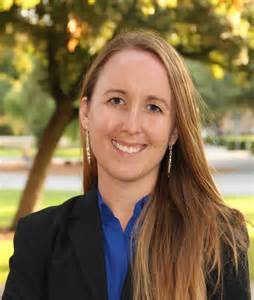
Jana Gallus is an assistant professor in the strategy group at UCLA Anderson.jana-gallus-economic-rockstar
Professor Gallus’s research interests lie in behavioral economics and strategy, with a focus on non-financial incentives and their effects on decision-making.

Jana investigates how incentive schemes can be designed to enhance employee motivation and organizational performance in the private and nonprofit sectors.

Jana joined UCLA Anderson from Harvard, where she was a postdoctoral fellow. She received her Ph.D. in economics from the University of Zurich, with the distinction summa cum laude, and holds two master’s degrees, from Sciences Po Paris in France and the University of St. Gallen in Switzerland.

Jana describes herself as an economist with a keen interest in studying and designing incentives to motivate human behaviour.

Her research and teaching lie at the intersection of strategy, economics and psychology.

Economists:

In this episode, Jana discusses and mentions: Adam Smith, Bruno Frey, John Bates Clark, Bengt Holmström

Economics:

In this episode, Jana discusses and mentions: incentives, awards, field experiments, utility, happiness, motivation and social signals.

The Salient Features of Wikipedia from a Economists Perspective When Studying the Motivation for Non-Financial Awards:

In a study by Professor Jana Gallus, the future behaviour of editors on Wikipedia were analysed from a purely non-financial awards perspective. A digital award was given to some newcomers who displayed it on their Wikipedia profile page. This group were compared to another group of newcomers who did not receive the digital award. Professor Gallus identified that non-financial awards are a motivating factor to determine future and continued behavior.

  1. The use of pseudonyms. This makes it possible to study purely symbolic awards without any material or career-related benefits. Normally when we study awards in the field of economics, it is difficult to argue that any motivational effect that you might find was due to the honour and the recognition rather than to the pecuniary benefit that comes along with most awards. Using pseudonyms on Wikipedia, nobody in the real world knows who it is, and  this allows a study of purely symbolic honors.
  1. The ability to randomize. This allows you to cleanly identify the effects of receiving an award on future behavior. Filtering out newcomers and ‘vandals’, allows the handing out of a ‘Newcomer Award’. The future behavior of those who receive the award, the treatment group, are compared to a control group (also newcomers who were not given an award). The only difference between both groups is the receipt of the ‘Newcomer Award’ which was given out by chance. So no other variables or characteristics were identified to discriminate or favor the newcomers.

The digital award for newcomers, a purely symbolic award, increases the retention rate of newcomers by 20% in the following month. This result was evident even in ‘high-powered’ editors and any minor editing activity was removed from the study, allowing for a more robust finding. The effect of this reward persists for a year and only then does the effect become insignificant.

Writing Tips:

  1. You must be motivated, love what you’re doing and be intrigued to know more about what you’re doing.
  2. Make sure to reserve time for active thinking. This seems so trivial but in today’s day and age of podcasting, you need to be optimizing all the time. Whether you’re cooking or exercising, every second can be optimized. It requires self-discipline to reserve some time for active thinking.
  3. Get a ‘birds-eye view’ of the research that you are doing by having amazing discussions with other researchers in your field of study. Discussions should not be on the nitty-gritty focused on the detail but more on the general phenomenon and why it is of interest.
  4. Always carry around a small booklet to keep notes.
  5. At the weekends, work from coffee houses and have lively discussions with others on topics that may not of interest immediately but may form the basis of your next research paper.
  6. Read books. By spending time reading a book, you are devoting more time on the subject matter than you would otherwise by reading an article or paper. You therefore deal with something more on a fundamental level and your thoughts keep coming back to this for a longer period of time than would be possible when you just read articles.

Papers:

  • The power of awards (with Bruno S. Frey). The Economists’ Voice, 2014, 11(1): 1–5.
  • Open issues in happiness research (with Bruno S. Frey and Lasse Steiner). International Review of Economics, 2014, 61(2): 115–125.
  • Other publications by Professor Gallus can be found here.

Where to Find Professor Gallus:

  • Website: www.janagallus.com
  • UCLA Anderson: www.anderson.ucla.edu/faculty/strategy/faculty/gallus

Links:

  • Wikipedia
  • Duolingo
  • Stack Exchange
  • Stack Overflow

Books:

  • Origins of Genius: Darwinian Perspectives on Creativity by Dean Keith Simonton
  • The Celebration of Heroes: Prestige as a Control System by William J. Goode
  • Models of the Man: Essays in Memory of Herbert Simon edited by Mie Augier and James G. March
  • What Works: Gender Equality By Design by Iris Bohnet
  • Arts and Economics: Analysis and Cultural Policy by Bruno S. Frey
  • Not Just for the Money: An Economic Theory of Personal Motivation by Bruno S. Frey
  • Happiness: A Revolution in Economics by Bruno S. Frey

http://traffic.libsyn.com/economicrockstar/105_Jana_Gallus_Final.mp3

Podcast: Play in new window | Download

103: Brian Mills on the Labor Market in Baseball, the Umpire Strikes Back and R

September 15, 2016 by Frank

http://traffic.libsyn.com/economicrockstar/103_Brian_Mills_Final.mp3
Play in New WindowDownload

103: Brian Mills on the Labor Market in Baseball, the Umpire Strikes Back and R

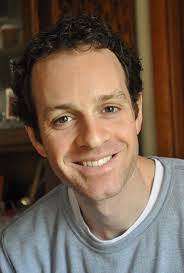
Brian Mills is an Assistant Professor at the University of Florida within the Department of Tourism, brian-mills-economic-rockstarRecreation, and Sport Management specializing in Managerial Sports Economics.

Professor Mills is also Associate Research Faculty within the Eric Friedheim Tourism Institute (EFTI).

Brian’s research interests encompass topics such as the sports labor market, industrial organization and sports league policy, public policy and economic development related to sport, and advanced analytics in the sports business. He is especially interested in applying economic lessons and quantitative analysis to problems that sport managers face in their everyday decision making.

Dr. Mills has also worked on consulting projects for professional sports teams and municipalities both in the U.S. and Canada.

Before arriving at Florida, Brian received his PhD and MA in Sport Management from the University of Michigan.  During that time, he also completed MA degrees in Statistics and in Applied Economics.  Brian earned his BA in Psychology in 2006 from St. Mary’s College of Maryland where he played NCAA Division III baseball.

Brian’s work and research interests can be found at brianmmills.com and at princeofslides.blogspot

Brian is now offering a new course called Exploring Pitch Data with R over at www.datacamp.com.

Check it out. You’ll have lots of fun learning basic data manipulation, summarization, and visualization in R using Statcast data.

Economics:

In this episode, Brian discusses and mentions: sports economics, labor market, externalities, incentives, wages, allocation of time, R, population, GDP and incomes.

Economists:

In this episode, Brian discusses and mentions: Rodney Fort, Stefan Szymanski, Lawrence Kahn and Bill Gerrard.

Links:

  • 090: Stefan Szymanski on Soccernomics and How Sabermetrics, Inequality and Finance Rules the Sport
  • 096: Cameron Murray on the Robinson Crusoe Economy and Blogging toward your PhD
  • 099: Rodney Fort on Sport Economics, Big Data in Baseball and the Value of Hosting an Olympic Games
  • Freakonomics
  • Fastball Movie
  • Trackman Baseball
  • Trackman Golf

Brian Mills’ Writing Tips:

  1. Always be reading and writing.
  2. Give or receive feedback and re-write.
  3. Develop a habit of note-taking.
  4. Turn your idea into a good story.

Resources:

  • Sabermetrics, Scouting, and the Science of Baseball
  • Data Camp
  • Exploring Pitch Data with R
  • A Guide to Sabermetric Research: How to Find Raw Data by the Society for American Baseball Research
  • Number Munchers game

Artilces:

Scoring in Baseball Is Down. Blame the Umpires: A Study Found That Umpires Have Expanded Their Strike Zone in Recent Years in The Wall Street Journal

Books:

  • Pay Dirt by Rodeny Fort
http://traffic.libsyn.com/economicrockstar/103_Brian_Mills_Final.mp3

Podcast: Play in new window | Download
101: Chris Coyne on the Opportunity Cost to War, Exporting Democracy and the Nirvana Fallacy

September 1, 2016 by Frank

http://traffic.libsyn.com/economicrockstar/101_Chris_Coyne_Final.mp3
Play in New WindowDownload

101: Chris Coyne on the Opportunity Cost of War, Exporting Democracy and the Nirvana Fallacy

Christopher Coyne is an Associate Professor of Economics at George Mason University and the AssociateChris Coyne Economic Rockstar Director of the F. A. Hayek Program for Advanced Study in Philosophy, Politics, and Economics at the Mercatus Center.

He also serves as Director of Graduate Studies for the Department of Economics.

Professor Coyne serves as the Co-Editor of The Review of Austrian Economics, the Co-Editor of The Independent Review, the Co-Editor of Advances in Austrian Economics, and the Book Review Editor of Public Choice.

Chris has authored numerous academic articles, book chapters, and policy studies and his research interests include political economy and military intervention.

Professor Coyne is the author or co-author of numerous books including Future: Economic Peril or Prosperity? and After War: The Political Economy of Exporting Democracy.

He is also the co-editor of The Oxford Handbook of Austrian Economics and The Handbook on the Political Economy of War.

In 2016 Chris was selected as a recipient of George Mason University’s University Teaching Excellence Award.

His work can be found at www.ccoyne.com

Economics:

In this episode, Chris discusses and mentions: economics of war, the Nirvana Fallacy, incentives, knowledge constraints, unintended consequences, the Capitalist-Peace hypothesis, dependency effects, public goods, praxeology, prohibition and society.

Economists:

In this episode, Chris discusses and mentions: Ludwig von Mises, F. A. Hayek, Robert Higgs, Mike Munger, Peter Leeson, Rachel Coyne, James Buchanan, Gordon Tullock, Claude-Frédéric Bastiat and Henry Hazlitt.

Professor Coyne’s Daily Routine:

  • Everyday is the same. I wake up every morning between 5 and 6 am and work out in the garage for 1 to 2 hours. Then I eat breakfast and get to work.
  • I work in chunks – anywhere from 1 to 3 hours and I take little breaks in between.
  • When I find myself losing focus, I do little things like getting a cup of coffee or do a chore around the house or going outside for a few minutes. It resets my mind.
  • I’ll work from 8 or 9 am to lunch. I get lunch, maybe work a little more and then I shift more into administrative mode. It requires a different brain power than reading and writing.

Links:

  • Polity IV Index

Recommended Books:

Human Action by Mises: “That is an excellent book in terms of a systematic treatise on economics.” – Chris Coyne.

Crisis and Leviathan: Critical Episodes in the Growth of American Government by Robert Higgs: “It’s a wonderful treatment of how government grows through the onset of crises. He’s focused mainly on the United States. He talks about the evolution of the US government and he highlights these punctuated points of crises where government grew. Of course World War 2 and the Great Depression being among the main ones that he highlights. It’s excellent both for the history but also for the framework he lays out – called the ‘Ratchet Effect’ (how the government ratchets up in size. It’s a wonderful book that I highly recommend.” – Chris Coyne.

Papers Mentioned in the Episode:

  • Coyne, C. and Hall. A. (2014). The Political Economy of Drones, Defence and Peace Economics, 25(5): 445-460.
  • Coyne, C., Boettke, P. and Leeson, P. (2014). Earw(h)ig: I Can’t Hear You Because Your Ideas are Old, Cambridge Journal of Economics, 38(3): 531-544.
  • Coyne, C. and Coyne, R. (2014). The Identity Economics of Female Genital Mutilation,” Journal of Developing Areas, 48(2): 137-152.
  • Coyne, C., Boettke, P. and Hall, A. (2013). Keep Off the Grass: The Economics of Prohibition and U.S. Drug Policy, Oregon Law Review, 91(4): 1069-1096.
  • Coyne, C. and Leeson,P. (2012). Sassywood, Journal of Comparative Economics, 40(4): 608-620. 

Where to Find Professor Coyne:

  • Website: www.coyne.com
  • Twitter: @ccoyne1

Books:

  • Human Action by Ludwig von Mises
  • Crisis and Leviathan: Critical Episodes in the Growth of American Government by Robert Higgs
  • Future: Economic Peril or Prosperity? by Chris Coyne
  • Flaws and Ceilings: Price Controls and the Damage They Cause by Chris Coyne
  • Doing Bad by Doing Good: Why Humanitarian Action Fails by Chris Coyne
  • Media, Development and Institutional Change by Chris Coyne
  • After War: The Political Economy of Exporting Democracy by Chris Coyne
  • The Oxford Handbook of Austrian Economics
  • The Handbook on the Political Economy of War.
http://traffic.libsyn.com/economicrockstar/101_Chris_Coyne_Final.mp3

Podcast: Play in new window | Download

074: Peter Leeson on The Invisible Hook: The Hidden Economics of Pirates

February 24, 2016 by Frank

http://traffic.libsyn.com/economicrockstar/074_Peter_Leeson_.mp3
Play in New WindowDownload

074: Peter Leeson on The Invisible Hook: The Hidden Economics of Pirates

Peter T. Leeson is Duncan Black Professor of Economics and Law at George Mason University.Peter Leeson

He is also a Senior Fellow at the F.A. Hayek Program for the Advanced Study of Philosophy, Politics, and Economics as well as the North American Editor of Public Choice.

Formerly, Peter was Visiting Professor of Economics at the University of Chicago, Visiting Fellow in Political Economy and Government at Harvard University, and F.A. Hayek Fellow at the London School of Economics.

Peter is author of The Invisible Hook: The Hidden Economics of Pirates and Anarchy Unbound: Why Self-Governance Works Better Than You Think.

Peter can be found at PeterLeeson.com.

Economists:

In this episode, Peter mentions and discusses: Ludwig von Miss, F. A. Hayek, Gary Becker, Karl Menger, Steven Levitt, Robin Hanson, Karl Marx, Adam Smith and Peter Boettke.

Economics:

In this episode, Peter mentions and discusses: price theory, human behaviour, Austrian Economics, Chicago School of Economics, economics of self-governance, rational thinking, profit maximisation, incentives, social insurance, externalities, unemployment, governance, self-governance, public goods and rational choice theory.

Pirates were economic actors but they were criminals. Criminal behaviour, as some had suggested, is not very amenable to the economic way of thinking.But Gary Becker pioneered research demonstrating that that wasn’t so.

In this episode you will learn:

  • about the similarities and differences between Austrian Economics and Becker’s thinking in the Chicago School of Economics.
  • why Peter decided to study the economics of pirates.
  • about the scientific approach to economic thinking.
  • how limitations to data restrict analytical research and how historical economic thinking can be used as a form of empirical analysis.
  • how using the economic narrative is just as effective as the mathematical regressions to explain theoretical concepts.
  • the similarities between The Invisible Hand and The Invisible Hook.
  • how pirates were rational thinkers and social revolutionaries.
  • how a hierarchy was established on a pirate ship using the Pirate Code.
  • how the Pirate Code created a social order that was economically beneficial to the crew.
  • about the constitutional democracy that pirates established onboard their ship and the misperceptions we had of an autocratic captain.
  • about some rules, codes of conduct and dispute resolution mechanisms that existed on a pirate ship.
  • how pirates were incentivised to engage in battle with a social fund (moral hazard) that was a predecessor to today’s social insurance policy.
  • how the pirate code minimised or eliminated the impact of a negative externality on a crew member or the whole crew.
  • how Peter’s book dedication, in the form of a marriage proposal, worked out.
  • when did piracy at sea begin and when did the romanticised period of piracy, as we know it, occur.
  • how are the pirates of the early 18th Century, such as Captain Blackbeard, so different to the pirates of today, such as the Somali pirates.
  • how sailors found solace and refuge as buccaneers and pirates after wars, such as the War of the Spanish Succession.
  • why unemployed sailors became buccaneers and pirates.
  • the risk-reward ratio of becoming a pirate.
  • whether pirates actually buried their treasure.
  • how an enterprising society was established at the land bases of pirates.
  • what pirates spent their spoils and treasures on.
  • the signalling effect of the Jolly Roger flag and why pirates used it as they approached a merchant ship.
  • how an ‘honor among thieves’ and collusive agreements between pirate groups allowed them to avoid attacking each other.
  • how coast guards, who were legally allowed to plunder merchant ships, often used the Jolly Roger flag as a signal to deceive their subjects into thinking they were pirates for the purpose of avoiding a bloody battle.
  • why coast guards used the Jolly Roger flag to cash in on the reputation of pirates.
  • if self-governance is effective and more successful that government.
  • whether the free-rider problem would exist in a self-governed economy regarding public goods.

Links:

  • Gary Becker’s Centre on Chicago Price Theory
  • Becker Friedman Institute for Research in Economics: The University of Chicago
  • Episode 072: F. A. Hayek
  • Episode 073: Robin Hanson
  • Episode 055: David Skarbek
  • Journal of Political Economy

Papers:

  • The Invisible Hook: The Law and Economics of Pirate Tolerance by Peter T. Leeson
  • Human Sacrifice by Peter T. Leeson in Review of Behavioral Economics. 

Books:

  • The Invisible Hook by Peter Leeson
  • Anarchy Unbound by Peter Leeson
  • Living Economics by Peter Boettke
  • Economic Approach to Human Behaviour by Gary Becker
  • Human Action: A Treatise on Economics by Ludwig von Mises
http://traffic.libsyn.com/economicrockstar/074_Peter_Leeson_.mp3

Podcast: Play in new window | Download

055: David Skarbek on the Economics of Prison Gangs and The Social Order of the Underworld

October 22, 2015 by Frank

http://traffic.libsyn.com/economicrockstar/055_David_Skarbek_Final.mp3
Play in New WindowDownload

055: David Skarbek on the Economics of Prison Gangs and The Social Order of the Underworld

Dr David Skarbek is a Senior Lecturer in Political Economy and Undergraduate Exam Board Chair in the Department of Political Economy at Kings College, London.

David’s research interest is to understand how people define and enforce property rights in the absence of strong, effective governments. His work has examined incarceration, gangs, and crime in the United States.

David received a BS in Economics from San Jose State University and a MA and PhD in Economics from George Mason University. He previously taught in the political science department at Duke University.

David’s teaching include ‘Research Methods for Politics’, ‘Economics of Crime’ and ‘Political Economy of Organized Crime’

David’s new book is The Social Order of the Underworld: How Prison Gangs Govern the American Penal System (Oxford University Press). It examines how inmates create self-governance institutions to promote economic and social interactions behind bars.

Economists:

In this interview, David mentions: Alex Tabarrok, Peter Leeson and Peter Boettke.

Economics:

In this interview, David mentions: Scarcity, rationality, irrationality, incentives, governance, social economics, black market economy, gang taxes, drug taxes, marginal cost, correlation, constitutional economics, the collective action problem, free-rider problem, monopoly, trade and protection.

Economics explains everything when properly applied and that discovering how it does so is the most delightful intellectual project that one can imagine – David Skarbek

“Gangs formed because the prison population became very large” – David Skarbek

Click To Tweet

Prison is a very strategic environment. In some ways prison is somewhat an excellent context to apply the rational choice approach – David Skarbek

In this episode you will learn:

  • what makes states stable.
  • how prisoners trade in a black market economy.
  • why gang-based governance in prisons looks very different today than 100 years ago.
  • why big prison systems have serious prison gang problems compared to small prison systems.
  • how women prisons are better controlled as they are governed in a decentralised way.
  • about the control that prisoners in adult correctional facilities have control over minors in juvenile correctional facilities.
  • whether private prisons result in a larger prison population.
  • diminishing returns to prison years.
  • how do prison guards feel about prison gangs.
  • how the costs of having prison gangs is externalised to the taxpayer.
  • how the availability of resources that are provided by prisons could determine the level of prison gang culture.
  • why didn’t slaves revolt when being shipped to other countries.
  • how the free-rider problem was the main reason why slaves did not revolt on ships.
  • whether having weapons is necessary in reducing crime.

Books:

  • The Social Order of the Underworld: How Prison Gangs Govern the American Penal System by David Skerbek
  • The Invisible Hook: The Hidden Economics of Pirates by Peter Leeson
  • Enforcing the Convict Code: Violence and Prison Culture by Rebecca Trammell
  • The Better Angels of Our Nature: Why Violence Has Declined by Steven Pinker

Papers:

  • Why Didn’t Slaves Revolt More Often During the Middle Passage? (D. Skarbek and A. Marcum) Rationality & Society 26(2) 2014: 232-262.

Movies:

  • The Godfather
  • The Godfather II

Where to Find David:

  • Website: www.davidskarbek.com
  • Twitter: @DavidSkarbek
http://traffic.libsyn.com/economicrockstar/055_David_Skarbek_Final.mp3

Podcast: Play in new window | Download

054: Christine Exley on the Economics of Volunteering, Market Failure in the Homeless Dog Market and Wagaroo

October 15, 2015 by Frank

http://traffic.libsyn.com/economicrockstar/054_Christine_Exley_Final.mp3
Play in New WindowDownload

054: Christine Exley on the Economics of Volunteering, Market Failure in the Homeless Dog Market and Wagaroo

Christine Exley is Professor of Business Administration at Harvard Business School. Christine is also Co-founder and Christine ExleyChief of Research at Wagaroo – an organisation dedicated to re-house homeless dogs to responsible and loving families.

Wagaroo was founded to bring a simple principle to life: When it comes to getting a pet, it’s time to make it easier for people to do the right thing! No puppy mills. No backyard breeders. Just owners, rescues, responsible breeders, and shelters working together to find great homes for dogs who need them. Find out more at wagaroo.com.

This episode is dedicated to Pepper, Christine’s family pet dog who recently passed away. Pepper is the Pit Bull that Christine mentions in this episode whom she rescued from a dog shelter.

Economics:

In this interview, Christine mentions: gender differences, labor markets, incentives, market failure, search costs, information asymmetry, supply, demand, thick and thin markets, labor markets and wage elasticities.

Economists:

In this interview, Christine mentions: Al Roth, Dan Ariely, Shawn Humphrey, Doug Bernstein, Charlie Springer and Stephen Terry.

In this episode you will learn:

  • the use of assumptions in economic models for testing.
  • how to encourage volunteering and whether monetary incentives work.
  • how a trip to Honduras changed Christine’s academic path from mathematics to economics.
  • how a story about an individuals’ plight can be a powerful message to have people react in a charitable manner, while the plight of millions with no media coverage of a personal story of suffering could become less powerful.
  • about Wagaroo and why Christine set it up to help save dogs from puppy mills.
  • what are thick and thin markets.
  • how to spot an irresponsible dog breeder.
  • about the family2family programme run by Wagaroo.
  • how localised knowledge is key to separate the responsible dog breeder from the irresponsible breeder.
  • why more must be done to regulate and protect animals.
  • how Christine saved a pups life from a dog shelter when she was 17 and became her family pet.
  • why people put in less effort once they hit a target.
  • about the motivating benefits of rewarding volunteers with gift cards rather than a cash equivalent.
  • how virtual rewards, like stickers and badges, can incentivise people to rmeet targets.
  • how people’s perceptions of Pit Bull are an Econ 101 thing!

Quotes by Christine in Episode 54 of the Economic Rockstar Podcast:

“Your population of volunteers really matters” – Christine Exley

Click To Tweet

On Al Roth – “He’s someone who always encourages you to dream bigger” – Christine Exley

Click To Tweet

On the successful family2family programme run by Wagaroo: “As an economist I’m very pleased with how clean and, in a sense, compatible that is” – Christine Exley

Market Failure in the Market for Homeless Pets

“I think there’s every market failure in the book in the market for homeless pets” – Christine Exley

Click To Tweet

Two of the biggest ones arise from search costs. It’s really hard to find the dog you’re looking for. There are thousands of organisations globally that have dogs. There are thousands, if not millions, of families each year that need to re-home dogs.

The heterogeneity in types of dogs – different sizes, ages, breeds and personalities. The inventory is not always up-to-date. It’s hard to coordinate among multiple actors. It’s a disaster. Trying to find out all of that information is challenging.

Information asymmetry is another market failure. Often people on the other side have more information about the dog than you do. Sometimes no one has information on the dog. Maybe the dog was found on the street and we have no idea what’s this dogs history is or how this dog would interact in different environments.

There are many fundamental challenges that really make it a tricky market.

There’s actually about 2 million dogs and cats every year that are killed because they don’t find homes. So there’s certainly a surplus so to speak of dogs and cats.

Up to 23 million people are interested in acquiring a pet for their family in any given year. The vast majority are open to multiple sources – adoption, buying from a breeder.

It’s very easy for bad actors to imitate good actors – Christine Exley

Personal Habits:

  • Getting up at 5:45 am and Running

Takeaway:

  • Get a dog. Particularly get a Pit Bull – Christine Exley

    Click To Tweet

Internet Resource:

  • Wagaroo
  • Al Roth’s blog: marketdesigner
  • LaTex

Contact: spot@wagaroo.com

Where to Find Christine:

  • wagaroo.com
  • wagaroo.com/app
http://traffic.libsyn.com/economicrockstar/054_Christine_Exley_Final.mp3

Podcast: Play in new window | Download

052: Alex Tabarrok on Globalisation, Bounty Hunters and Leveraging Online Education

October 1, 2015 by Frank

http://traffic.libsyn.com/economicrockstar/Alex_Tabbarrok__Final.mp3
Play in New WindowDownload

052: Alex Tabarrok on Globalisation, Bounty Hunters and Leveraging Online Education

Alex Tabarrok is Associate Professor of Economics at George Mason University and co-founder (with Tyler Cowen) of Marginal Revolution University, an online platform for learning economics.Alex Tabarrok

Alex is Senior Fellow and former Research Director for The Independent Institute, Assistant Editor of The Independent Review, Bartley J. Madden Chair in Economics at the Mercatus Center and Director of the Center for Study of Public Choice.

Alex is the author or editor of a number of books including the introductory economics textbooks, Modern Principles, The Voluntary City and Changing the Guard: Private Prisons and the Control of Crime.

Alex is a TED speaker with over 640,000 views of his TED talk, How Ideas Trump Crises.

Alex received his Ph.D. in economics from George Mason University, and he has taught at the University of Virginia and Ball State University.

“I hope to be teaching long after I’m dead” – Alex Tabarrok

Click To Tweet

In this episode, you will learn:

  • how to ensure that criminals turn up of trial and to reduce the possibility of them becoming a fugitive.
  • how bounty hunters are more successful than the police in catching criminals.
  • why bounty hunters and bail bondsmen are the most best for the taxpayer.
  • why bounty hunters invited Alex Tabarrok to join them in a bounty hunting.
  • why a mother’s signature on a bail bond is the most effective way of making sure a criminal repays its  due.
  • how effective are the police in deterring crime.
  • how a police strike in Montreal in 1967 resulted in an spike in crime.
  • how the terror alert level results in an increase in police presence and results in a decrease in local crime.
  • whether we should reward the police for reducing crime and the problems that could arise from this reward system.
  • about the use of value-added tests for identifying teacher quality.
  • whether the best teachers have a positive impact on the future earnings of their students.
  • if a country can have a welfare state and open borders.
  • how the next generation of immigrants revert to the average of their adopted country including crime.
  • why immigrants to the United States are the most entrepreneurial.
  • why Alex co-founded Marginal Revolution University.
  • what Marginal Revolution University is about and who it’s for.
  • how to leverage the best teachers and leverage their experience.
  • how teaching will evolve into a format that’s similar to how plays evolved into movies with leading actors being paid millions of dollars and the production being created just once.
  • how artificial intelligence and computer adaptive learning programmes will be the next wave of teaching and learning.
  • what is the ideal length for a recorded educational video.
  • why universities will have to adapt to online technologies.
  • why parents and politicians want colleges to use online technologies.

Immigrants have lower crime rates, but the children of immigrants have about average crime rates. It’s unfortunate that the immigrants adopt our ways. They assimilate to American crime rates – Alex Tabarrok

Personal Habits:

I love doing what I do and that removes a lot of barriers. It gets you up in the mornings – Alex Tabarrok

Takeaway:

“Economics is fun. Economics brings in these world histories, things about climate, geography and history” – Alex Tabarrok

Economics:

In this interview, Alex mentions: crime, incentives, causality, elasticity, Baumol’s Cost Disease, rewards, redistribution, welfare, taxes, entrepreneurship, human capital, globalisation, public goods, free trade, structural unemployment and trade.

Economists:

In this interview, Alex mentions: Tyler Cowen, Greg Mankiw, Paul Krugman, Eric Callan, John Click, Milton Freidamn, John Nash, Bryan Caplan, Robin Hanson, Joseph Schumpeter, Adam Smith, David Hume and Richard Cantillon.

“This is a cliche, but Adam Smith really is great” – Alex Tabarrok

Click To Tweet

Ted:

  • How Ideas Trump Crises by Alex Tabarrok
  • Comment: Solving Crises Through Innovation and Ideas or Creating Problems Through Marginalisation and Displacement by Frank Conway

My TED talk is 75% of my entire teaching. So that 15 minute talk has been seen by so many people that that’s the majority – the big majority of all my teaching in my life. – Alex Tabarrok

Podcasts:

  • EconPop

Books:

  • Economics in One Lesson by Henry Hazlitt
  • The Armchair Economist by Stephen Lansberg
  • Freakonomics by Steven  D. Levitt and Stephen J. Dubnar
  • An Economist Gets Lunch: New Rules for Everyday Foodies by Tyler Cowen
  • The Undercover Economist by Tim Hartford
  • The Undercover Economist Strikes Back by Tim Hartford
  • The Case Against Education by Bryan Caplan (coming soon)
  • The Age of Em by Robin Hanson 
  • Trekonomics by Manu Saadia

    http://traffic.libsyn.com/economicrockstar/Alex_Tabbarrok__Final.mp3

    Podcast: Play in new window | Download

    051: Eyal Winter on How Excessive Giving Ensures the Survival of the Human Race and on the Beautiful Mind of John Nash

    September 23, 2015 by Frank

    http://traffic.libsyn.com/economicrockstar/Eyal_Winter_Final.mp3
    Play in New WindowDownload

    051: Eyal Winter on How Excessive Giving Ensures the Survival of the Human Race and on the Beautiful Mind of John Nash

    eyal winter

    Eyal Winter is the Silverzweig Professor of Economics at the Hebrew University and Economics Professor at Leicester University.

    He is a member and a former director of the Center for the Study of Rationality, an elected council member of the International Game Theory Society and an elected fellow of the Economic Theory Society.

    Eyal was awarded the Humboldt Prize for excellence in research by the German government in 2010. He has presented his work in more than 120 research institutes in 26 countries around the world including Harvard, Stanford, Princeton, Berkeley, Cambridge, and Oxford.

    Eyal’s book Feeling Smart: Why our Emotions are More Rational Than We Think was published in January 2015.

    Eyal graduated from the Hebrew University of Jerusalem in Mathematics, Statistics and Economics before going on to study his doctorate in Game Theory.

    In this episode you will learn:

    • if there is a link between game theory and behavioral economics.
    • how the perceptions of human behaviour vary greatly across all disciplines.
    • if there is a need to have divisions in universities regarding the disciplines being taught.
    • how we can use emotion in a strategic way to make us better off.
    • why human evolution has not removed emotion if it’s considered a hindrance in economics.
    • the importance of training your rationality and emotions to work together.
    • why you should look at something from an outsiders perspective when dealing with an emotional situation.
    • how anger can be an emotion that can make you financially better off.
    • why love, empathy and sympathy can make you better-off in the way how other people treat us.
    • what Eyal Winter means when he says that there is logic in emotion and emotion in logic.
    • how subjective information is more powerful than evidence-based information.
    • why intuition should be taken into consideration in the decision-making process rather than using evidence alone.
    • why you should invoke your rationality into the decision-making process rather than rely on your gut instinct.
    • how game theory is not always about choosing the most optimal outcome for an individual.
    • how we can learn why humans give excessively by observing the behavior of ants and bees.
    • about the incentives of suicide bombers and why their behavior is not irrational if you think about their community.
    • why we treat each other much better than we treat animals.
    • about the incentive to donate and how mixed ethnic communities donate less than more homogenous communities.
    • why the Scandinavian countries are willing to pay the highest taxes and yet have the lowest tax evasion in the world.
    • why it was fascinating yet frustrating for Eyal Winter when he met John Nash.
    • why John Nash developed the Nash Equilibrium to reflect his own way of dealing with people and situations.
    • if we can change people’s behaviour with incentives or social pressure.
    • whether children have a higher emotional intelligence than adults.
    • if seeing a comedian live would be better than seeing your doctor if you feel sad.
    • whether employees should be subjected to ‘Emotional Labor’ by their employers.

    Influencers:

    Nobel Laureate Bob Aumann

    Economics:

    In this interview, Eyal mentions: game theory, rationality, irrationality, human behavior, donations, incentives,

    Economists:

    In this interview, Eyal mentions: Herbert Gintis, Bob Aumann and John Nash.

    Personal Habits:

    Play Guitar – Traditional Israeli songs and rock, listens to classical music and travel.

    “The human race has only one effective weapon, and that is laughter.” -Mark Twain

    Click To Tweet

    Books:

    • Feeling Smart: Why our Emotions are More Rational Than We Think by Eyal Winter
    • Mapping Human History: Genes, Race and Our Common Origins by Stephen Olson

    Resources:

    • Psychology Today 
    • Haaretz Newspaper 

    Song:

    • The Famous Blue Raincoat by Leonard Cohen sung by Professor Eyal Winter
    http://traffic.libsyn.com/economicrockstar/Eyal_Winter_Final.mp3

    Podcast: Play in new window | Download

    046: Shanta Devarajan on The World Bank, Quiet Corruption, Government Failure and Comparative Advantage in the MENA Region

    August 20, 2015 by Frank

    http://traffic.libsyn.com/economicrockstar/046_Shanta_Devarajan_Final.mp3
    Play in New WindowDownload

    046: Shanta Devarajan on The World Bank, Quiet Corruption, Government Failure and Comparative Advantage

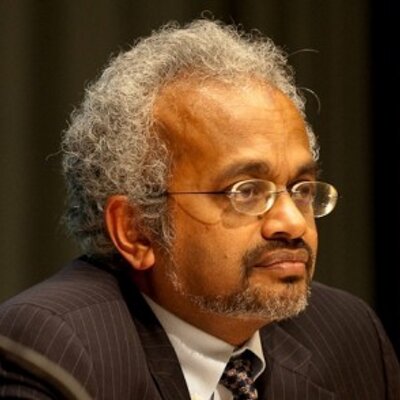
    Shantayanan Devarajan is the former Chief Economist of the World Banshanta devarajank’s Middle East and North Africa Region. Since joining the World Bank in 1991, he has been a Principal Economist and Research Manager for Public Economics in the Development Research Group, and the Chief Economist of the Human Development Network, South Asia, and Africa Region.

    Shanta was the director of the World Development Report 2004, ‘Making Services Work for Poor People’. Before 1991, he was on the faculty of Harvard University’s John F. Kennedy School of Government.

    Shanta is the author and co-author of over 100 publications, with his research covering public economics, trade policy, natural resources and the environment, and general equilibrium modeling of developing countries.

    Born in Sri Lanka, Shanta received his B.A. in Mathematics from Princeton University and his Ph.D. in Economics from University of California, Berkeley.

    People care so much about education. They will not eat if they can send their kid to a better school – Shanta Devarajan

    In this episode, you will learn:

    • why Shanta decided to take a sabbatical from lecturing and never went back.
    • about Shanta’s passion to end world poverty.
    • how experiencing living on a $1 a day with a poor family made Shanta realize that the failure lies with government.
    • how empowering people in poverty-stricken countries with information could be the catalyst to end poverty.
    • the huge government failures and market distortions threatening the economy in India.
    • why teachers and doctors in India are absent from work 25% and 40% of the time respectively and how this is affecting progress.
    • how the powerful medical union in India are making healthcare inaccessible to the poor.
    • why poor people in India think that the reason why doctors do not show up at clinics is because ‘the rain didn’t come’.
    • why politicians in India do not have an incentive to fix the problem of doctor absenteeism.
    • what the solutions to corruption in India.
    • about unemployment being the biggest problem in the Middle East and North Africa.
    • that the reason why unemployment is so high in the MENA region is due the industrial sector being highly monopolised.
    • about how crony capitalism is preventing SMEs from growing in the MENA region.
    • why Tunisia has failed to develop into an export-oriented economy due the legacy of the Ben Ali family and their connections to firms operating in heavily protected markets.
    • that the failure for governments to continue with social contracts due to high deficits triggered the Arab Spring.
    • about Colonel Gaddafi’s regime and how he managed to keep peace between tribes.
    • how water subsidies and water-intensive crops are depleting water resources in Yemen.
    • why the addictive habit of chewing qat or khat in Yemen is causing water shortages.
    • why Yemen, who doesn’t have a comparative advantage in qat, continues to use resources to produce the commodity.
    • what is the main purpose of the World Bank and how different is it to the IMF.
    • where the World Bank gets its finance from and how much interest they charge.
    • how the money trickles down to the unbanked people in low and middle-income countries.
    • about biometric identification smart cards and how the unbanked in low-income countries can access capital.

    Takeaway:

    The problems of poor people are man-made and we as economists can actually help solve them. The way in which we can solve them is by carrying our work toward empowering them. The reason they’re man-made is that poor people lack political power. We can actually strengthen their clout, their political power, by providing economic analysis and making it accessible to them – Shanta Devarajan

    Economics:

    In this interview, Shanta mentions and discusses: poverty, development, capital markets, government failure, policy distortion, structural adjustment, debt crisis, macroeconomic environment, incentives, quiet corruption, unemployment, monopoly, social contracts, crowding out, finance capital, subsidies, water subsidies, energy subsidies, comparative advantage, imports, exports, budget expenditures, IMF, the World Bank, MENA, public goods, leakages, multiple effect, dynamic stochastic general equilibrium model, savings, investments, sovereign wealth funds and consumption.

    Economists:

    In this interview, Shanta mentions and discusses: Chris Blattman, Gerard Debreu , Joseph Stiglitz, Sherman Robinson and Paul Collier 

    Influencers:

    Gerard Debreu , Joseph Stiglitz, Sherman Robinson , Paul Collier 

    Quotes by Shanta Devarajan in Episode 046 of the Economic Rockstar Podcast:

    The marginal product of writing an additional paper was lower than my actually trying to go out there and apply what I know to reduce poverty. I became quite passionate about this quest to reduce this poverty. – Shanta Devarajan

    The problems of poverty under development are problems of government failure. The problem of government failure is because the political system is one where poor people don’t have sufficient voice and sufficient ability to make sure that politicians take decisions in their interest. – Shanta Devarajan

    “The World Banks’ mission is a world free of poverty” – Shanta Devarajan

    Click To Tweet

    On the changing views of The World Bank:

    The traditional view of development in the 1950s and 60s was a belief that it was a market failure. Their capital markets weren’t working. Poor countries didn’t have access to capital and so the World Bank had to provide capital. However, in the 1970s and 80s there was a realisation that the problem was not the result of a lack of capital. There  were policy distortions in these countries that made this capital unproductive. The challenge became trying to remove these policy distortions or try to improve these policies so that capital could be productive. – Shanta Devarajan

    On Quite Corruption in India:

    Quite corruption in India is a deep political problem. There is nothing illegal about this corruption. It is a failure of the system. The political system is geared so that it creates this kind of corruption. – Shanta Devarajan

    On Crony Capitalism in Tunisia:

    It’s a little bit of a puzzle why Tunisia, which has a very highly educated population, a very nice location right across from Europe and a pretty good infrastructure, hasn’t been able to be a manufacturing, export-driven power-house. The reason is the industrial structure is being monopolised by the cronies of the political elite. – Shanta Devarajan

    On Tunisia: “We must protect this economy from elite capture” – Shanta Devarajan

    Click To Tweet

    On Capital Leakages in Chad:

    The leakages are higher in resource-rich countries. For instance in Chad, the money that was intended for public primary clinics, that actually arrives at the clinic is 1%. So the leakage is 99%. Chad is an oil-rich country. The reason for that is there is very little accountability – Shanta Devarajan

    Reasons Why Yemen is Producing Khat (Qat) Inefficiently

    Yemen produces its own qat despite not having a comparative advantage in the commodity. Factors of production, such as land, labor and capital, are used inefficiently to produce khat. So, the question remains as to why Yemen does not import qat. There are two main reasons why the continue to produce it domestically.

    The first is that qat is consumed fresh. Domestic production allows qat to be distributed and sold throughout Yemen once it is picked. Freshness is required and it is expected that any imported khat could reduce its quality.

    The second reason is that the president’s wife manages the qat monopoly and made a lot of money from it. Any imports would be competition. Given that khat is an addictive substance, the revenue made by this monopoly would have been so large that using resources inefficiently, particularly water, outweighed the costs.

    The Difference Between the World Bank and the IMF

    • The World Bank only works on developing countries and the IMF works on all countries.
    • The IMF is concerned with short-term macroeconomic development, whereas the World Bank is concerned about long-term development.
    • Anything that is in the order of one to two years is when the IMF will become involved in order to solve a macroeconomic crisis.  Whereas, if it’s a question of building a road or a bridge or educating children, that’s when the World Bank comes in. Both  the IMF and the World Bank, because they’re across the street from each other in Washington DC, communicate quite intensively.
    • In the past, it may have been viewed that the IMF, because it is more macro-focused, was more interested in the aggregate budget rather than the composition of the budget. In the late 1990s, there were many countries that had fiscal crises. The IMF insisted that they cut their budget in order to maintain fiscal balance. However, just cutting the budget rather than cutting wasteful expenditures and protecting some valuable expenditures makes a big difference.
    • It got to the stage where the World Bank would come in and look at the composition of the budget and suggest where it’s better to cut rather than simply take the targets that the IMF had set.
    • Both institutions have evolved quite a bit since the 1990s. The IMF now looks quite closely at the composition of budget expenditures and the World Bank worries a lot about macroeconomic stability.

    How The World Bank Funds its Operations

    • The finance that the World Bank accumulates is obtained by World Bank bonds.
    • The World Bank uses the ‘paid-in capital’ which the original members of the World Bank pledged back in 1947. This has now grown to about $300 billion.
    • This capital is used as collateral to float bonds and because of this capital, the World Bank can get bonds at three-quarters of a percent below the market rate.
    • This capital is then lent to middle-income countries at about half to a quarter of a precent below the market rate. The difference between these rates is what pays the salaries of those working for the World Bank.
    • For low-income countries, mostly in Sub-Saharan Africa, there is a separate window called the International Development Association (IDA) where concessional loans are offered. These loans are pledged every three years by donor countries. The World Bank collects this IDA money, which is about $50 billion, and lends it to these low-income countries at virtually zero percent interest with a 35 year grace period.

    Recommended Resource:

    The World Bank Database

    Recommended Book:

    • Dubliners by James Joyce

    Where to Find Shanta Devarajan:

    • Blog: Future Development
    • Twitter: @Shanta_WB
    • Email: sd294 [at] georgetown [dot] edu

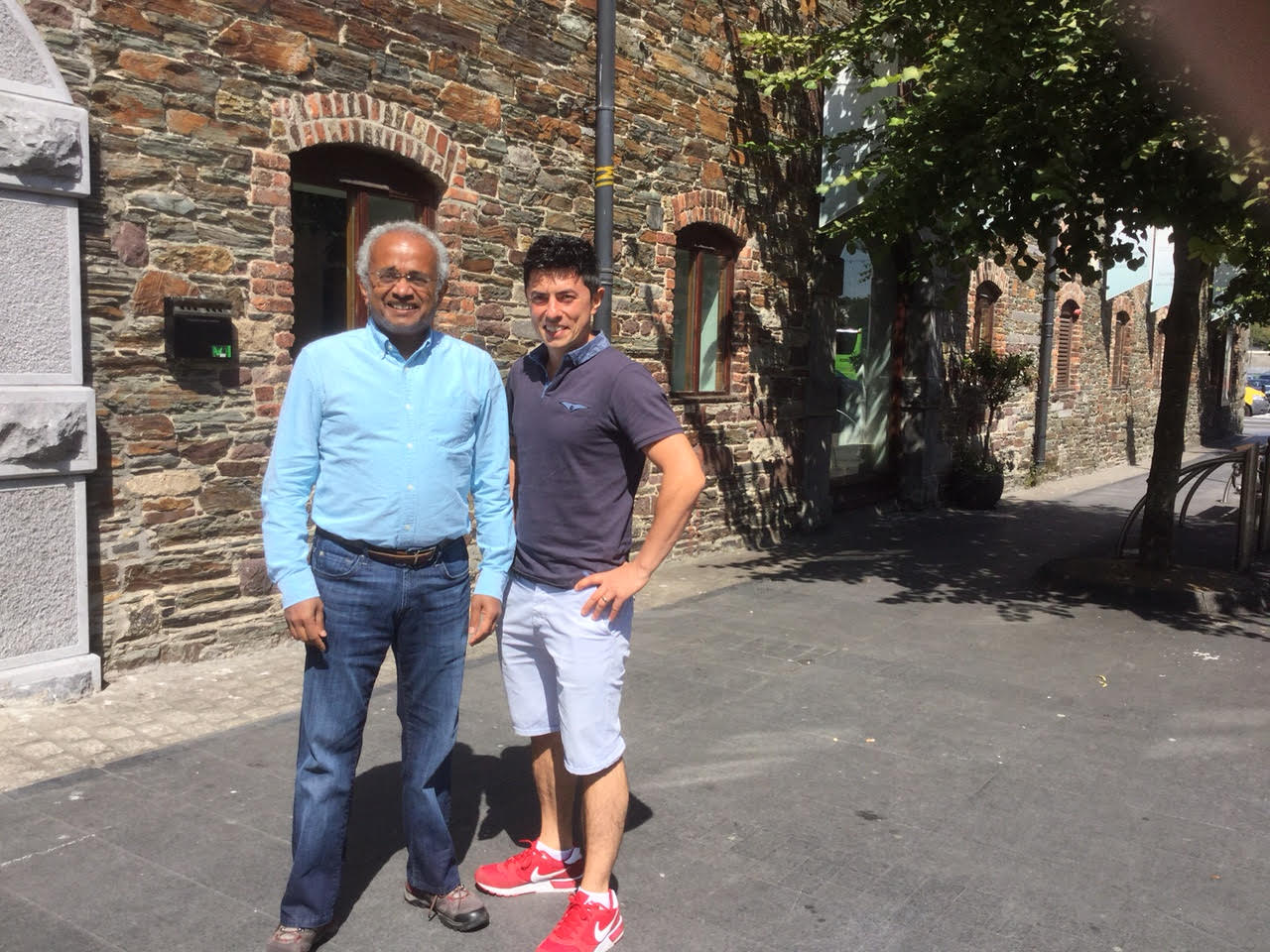
    Meeting Up With Shanta in Waterford City, Ireland (August, 2015):

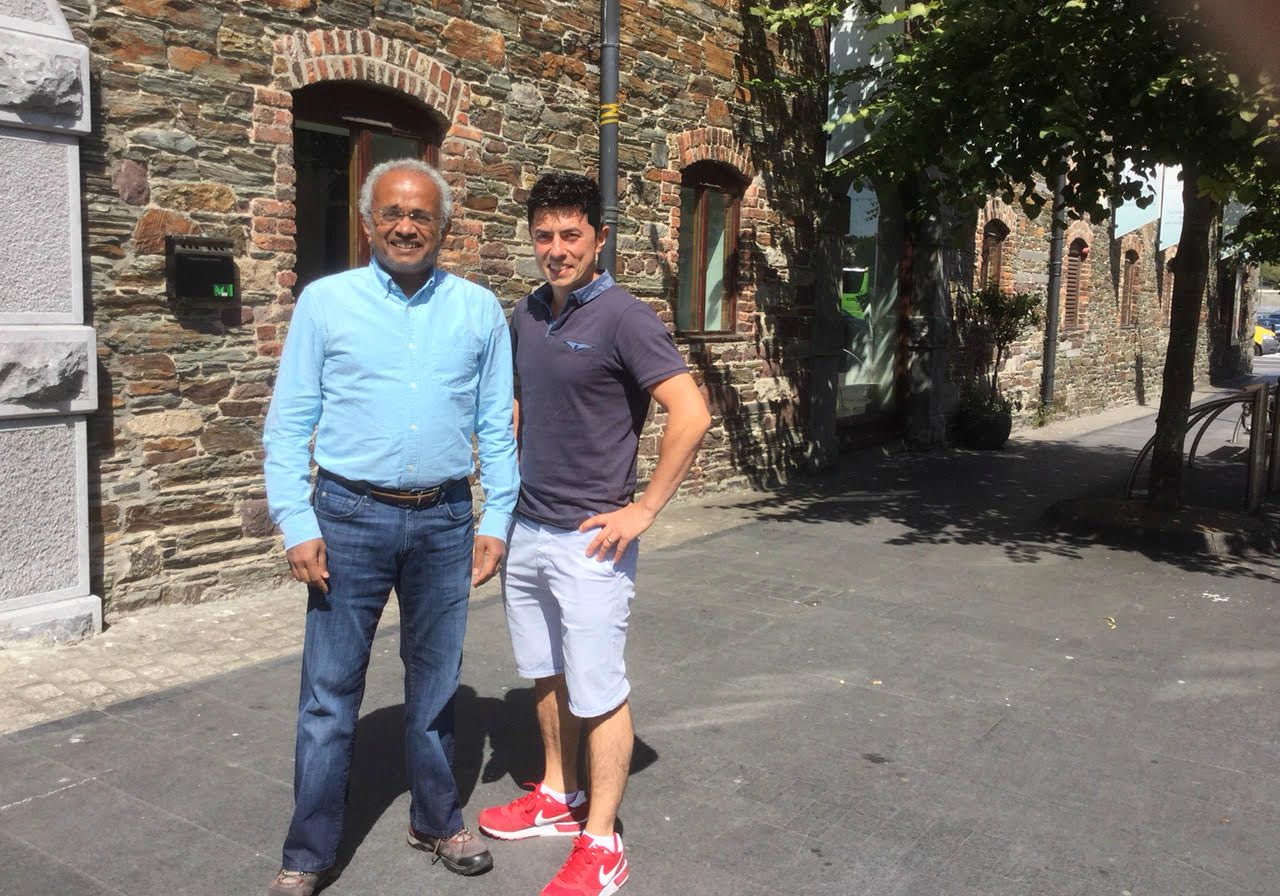
    Since our conversation in episode 046 of the Economic Rockstar podcast, myself and Shanta met up for a brief period in Waterford City, Ireland. Shanta was on a visit form Washington DC (not work-related, just in case you think the The World Bank are coming in to Ireland!). Check back for a new blog post on what we chatted about.


    Frank and Shanta

    http://traffic.libsyn.com/economicrockstar/046_Shanta_Devarajan_Final.mp3

    Podcast: Play in new window | Download

    044: Nancy Folbre on Feminist Economics and the Care Economy

    August 6, 2015 by Frank

    http://traffic.libsyn.com/economicrockstar/044_Nancy_Folbre_Final1.mp3
    Play in New WindowDownload

    044: Nancy Folbre on Feminist Economics and the Care Economy

    Nancy Folbre is a recently retired Professor of Economics at the University of Massachusetts, Amherst andNancy Folbrecurrently directs a research program of gender and care work at the Political Economy Research Institute.

    Professor Folbre’s research focuses on the interface between feminist theory and political economy, with a particular focus on the work of caring for others.

    Nancy was elected president of the International Association for Feminist Economics (IAFFE) in 2002, has been an associate editor of the Journal Feminist Economics since 1995, and is also an editorial assistant of the Journal of Women, Politics & Policy.

    Nancy is recipient of a MacArthur Fellowship, and she has consulted for the United Nations Human Development Office, the World Bank and other organizations.

    Professor Folbre has also written extensively on the social organization of time, namely the time allotted to care for children and the elderly and how family policies and social institutions limit the choices people can make between paid and unpaid work.

    She is a contributor to the New York Times Economix blog.

    Nancy’s book ‘Saving State U‘ (New Press, 2010) makes a case for strengthening public support for higher education in the United States.

    Other recent books include ‘Greed, Lust, and Gender: A History of Economic Ideas’ (Oxford University Press, 2009) and ‘Valuing Children: Rethinking the Economics of the Family’ (Harvard University Press, 2008).

    Nancy received a B.A. in philosophy from the University of Texas at Austin in 1971, an M.A. in Latin American studies from UT Austin in 1973, and a Ph.D. in economics from the University of Massachusetts, Amherst in 1979.

    In this episode, you will learn:

    • why Nancy Folbre decided to study economics.
    • how the household is very much like the market economy.
    • about feminist household economics.
    • what the underlying principles and foundation to feminist economics.
    • why we should see unpaid work as part of the economy.
    • how the state and the market has reinforced the patriarchal system.
    • why the capitalist system, ironically, has downside effects on women today despite the benefits it provides.
    • why we should adopt the Scandinavian model of paternal responsibility.
    • about the unmeasured ‘Care Economy’ where people perform unpaid work.
    • about the opportunity cost to care work.
    • why Replacement Cost is a better proxy from a National Accounting perspective for measuring the size of the Care Economy.
    • why people are intrinsically motivated to care and that money is not an issue.
    • why Nancy Folbre strongly believes that we should think carefully about how we reward care work.
    • about the ‘Care Penalty’ and why we shouldn’t take advantage of the care workers motivation to work in the care industry.
    • about the societal pressures on a man who decides to stay at home and be the care giver.
    • why we should be providing a better account of the costs and benefits of raising kids.
    • if women have a ‘wage-penalty’ as they are, in most cases, the care-giver.
    • whether we can capture the value spent by parents caring for their children.
    • if intrinsic values of happiness lead to economic benefits for household.
    • if children of developed and less-developed countries are treated differently by their parents in terms of their perception of value.
    • about the rapid decline in fertility rates in India, Asia and Latin America.
    • why self-interest was always described in gender terms and why it was always permissible for men to be self-interested than women.
    • if having more women involved in economics and the economy would lead to better outcomes.

    Economists:

    In this interview, Nancy mentions and discusses: Gary Becker, Shoshana Grossbard, Friedrich Engels and Adam Smith.

    Economics:

    In this interview, Nancy mentions and discusses: feminist economics, market choice, economics of the household, altruism, rationality, interdependent utility, collective bargaining, choice, efficiency, inequality, incentives, opportunity cost, replacement cost, free market, Invisible Hand and happiness.

    Quotes by Professor Folbre in Episode 044 of the Economic Rockstar Podcast:

    Work can be very productive and create value for society even if it’s unpaid – Nancy Folbre

    Click To Tweet

    “Definitions of femininity and masculinity are changing in a positive way” – Nancy Folbre

    Click To Tweet

    “Smith had a lot of confidence in the pursuit of individual self-interest” – Nancy Folbre

    Click To Tweet

    Many people have taken Smith’s praise of the free market as an endorsement of selfish behavior, that it doesn’t matter if you think only of yourself because in a market economy we can be confident that everything will turn out just fine.  What I argue in the Invisible Heart is that’s really incorrect. The market economy really depends to a very great extent on a sense of commitment and obligation to other people of trust and reciprocity and concern for the welfare of others. That affects overall economic organisation and success in some pretty profound ways – Nancy Folbre

    “We need to change the way we think about work and about value” – Nancy Folbre

    Click To Tweet

    Leading happy and worthwhile lives is kinda the point of the whole economic enterprise and sometimes we lose sight of that. And there’s certainly a lot of evidence that what makes people happy is good human relationships, having close ties with family and friends and community. If we appreciated that a little bit more fully, we could organise our economic system a lot more successfully – Nancy Folbre

    “I think Feminist Economics is a part of the whole heterodox challenge to the mainstream economics, and I fell good about that” – Nancy Folbre

    Recommended Books:

    • Valuing Children: Rethinking the Economics of the Family by Nancy Folbre
    • Greed, Lust, and Gender: A History of Economic Ideas by Nancy Folbre
    • Saving State U by Nancy Folbre
    • The Invisible Heart by Nancy Folbre
    • The Condition of the Working-Class in England in 1844 by Friedrich Engels
    • The Invisible Hand by Adam Smith

    Blog:

    • Care Talk by Nancy Folbre

    Conference:

    • International Association for Feminist Economics

    http://traffic.libsyn.com/economicrockstar/044_Nancy_Folbre_Final1.mp3

    Podcast: Play in new window | Download

    • 1
    • 2
    • ...Next Page

    Frank Conway

    Frank Conway is founder of Economic Rockstar and lecturer of economics, finance and statistics. Read More…

    View My Blog Posts

    Youtube Sub

    Become a Patron of the Economic Rockstar Podcast

    patreon

    Ireland’s Economy by the Numbers

    Leaving Cert Economics: Ireland’s Economy  Click here to download a workbook on Ireland’s Economy so that you can add your own notes. [Original size] Ireland’s Economy by fconway

    Categories

    Subscribe and Never Miss An Episode

    itunes-logo

    Recent Posts

    • Ireland’s Economy by the Numbers April 8, 2019
    • 174: Wendy Carlin on The Core Project, Capitalism, Democracy and Normative Statements February 13, 2019
    • 173: Stephen Wright on Core Econ as a Learning Resource for Mainstream Economics January 28, 2019
    • 172: Best of 2018 Part 2: From the Great Depression to Futurism; Institutions, Individualism, Cooperation and Reciprocity January 22, 2019
    • 171: Best of 2018 Part 1 January 3, 2019

    Copyright © 2026 · Podcast Pro Theme on Genesis Framework · WordPress · Log in

    This website uses cookies to improve your experience. We'll assume you're ok with this, but you can opt-out if you wish. Accept Reject Read More
    Privacy Policy

    Privacy Overview

    This website uses cookies to improve your experience while you navigate through the website. Out of these, the cookies that are categorized as necessary are stored on your browser as they are essential for the working of basic functionalities of the website. We also use third-party cookies that help us analyze and understand how you use this website. These cookies will be stored in your browser only with your consent. You also have the option to opt-out of these cookies. But opting out of some of these cookies may affect your browsing experience.
    Necessary
    Always Enabled
    Necessary cookies are absolutely essential for the website to function properly. This category only includes cookies that ensures basic functionalities and security features of the website. These cookies do not store any personal information.
    Non-necessary
    Any cookies that may not be particularly necessary for the website to function and is used specifically to collect user personal data via analytics, ads, other embedded contents are termed as non-necessary cookies. It is mandatory to procure user consent prior to running these cookies on your website.
    SAVE & ACCEPT