• ABOUT
  • RESOURCES
  • PODCAST
  • BOOKS
  • BLOG
  • SUPPORTERS
  • QFA Financial Advice
  • CONTACT

Economic Rockstar

Connecting Brilliant Minds in Economics and Finance

041: Dermot Hayes on Comparative Advantage, Feeding the Chinese and the Malthusian Catastrophe

July 16, 2015 by Frank

http://traffic.libsyn.com/economicrockstar/041_Dermot_Hayes_Final.mp3
Play in New WindowDownload

041: Dermot Hayes on Comparative Advantage, Feeding the Chinese and the Malthusian Catastrophe

Dermot Hayes is the Pioneer Chair of Agribusiness, professor of economics, and professor of finance at Iowa State University. He heads theDermot Hayes 2 Trade and Agricultural Policy Division at CARD, a position he also held from 1990 through 1998.
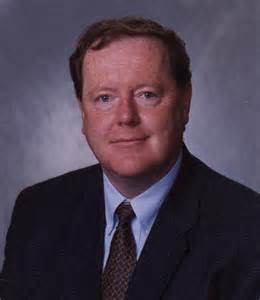
He is co-director of the Food and Agricultural Policy Research Institute, a research center dually administered through the Centre for Agricultural and Rural Development (CARD) at Iowa State and at the University of Missouri at Columbia. He is also a leader of the Policy Task Force of the Plant Science Institute at Iowa State.

A native of the Republic of Ireland, Dermot obtained his degree in agriculture science from University College, Dublin and his Ph.D. from University of California, Berkeley with a major in international trade.

Dermot has distinguished himself with many awards at the college and university levels for his work as a teacher and researcher.

In 2006 he received a Publication of Enduring Quality award from the American Agricultural Economics Association, who subsequently named him a Fellow in 2007.

Besides his analysis of U.S. farm policy and international agricultural trade, Dermot’s other research interests include food safety, livestock modelling, demand analysis, and commodity markets.

Economics:

In this interview, Dermot mentions and discusses: market inefficiencies, government intervention, agricultural economics, property rights, comparative advantage, autarky, incentives, scarcity, Malthusian Catastrophe, free-trade, unemployment, subsidies and taxes.

Economists:

In this interview, Dermot mentions and discusses: Jason Shogren, Paul Dolan, David Zetland, David Simon, Adam Smith, Thomas Malthus, David Zilberman, Milton Friedman and Josh Angrist.

Influencer:

Milton Firedman

“Whenever prices rise, farmers and technology companies have an incentive to work harder to take advantage of high prices. And of course they do that by producing more and that brings prices back down again.” – Dermot Hayes

“Malthus was wrong. He was a negative person. But having said that, with more people and less efficient use of land, we are going to have to bring more land into cultivation – this is devastating to the environment.” – Dermot Hayes

In this episode, you will learn:

  • how China is finding ways to feed its people and how self-sufficiency no longer works.
  • about China’s ever-increasing demands for soybeans, sugar, wine, etc and how this is putting demands on the global agricultural industry.
  • how Ireland lost its comparative advantage in milk production by joining the EU.
  • about Kerrygold Irish grass-fed butter and Bullet-proof coffee.
  • why Kerry Group are only ‘scratching the surface’ in the US market.
  • what high-value, labor-intensive products China should concentrate on producing in order to feed their population and trade with other countries.
  • about if the Chinese government owns much of the land and property rights in China.
  • ‘terminator seeds’ and how private companies could be incentivised to manufacture them.
  • about the use of beta agonists, such as ractopomine, in the use of animal food production.
  • why Europe’s method of testing agricultural technologies frustrates Dermot.
  • about Dermot’s work on free-trade agreements between countries.
  • about Dermot’s ‘controversial’ ethanol research paper.
  • why Dermot created a formula that allowed the price of corn to track crude oil prices and how he bought agricultural land based on his findings.
  • how academic research can open up hatred and attacks amongst your peers and the industry to which you maybe researching.
  • what advice Dermot would give a government regarding the taxing and subsidies of goods and services for the purpose of trade.

Takeaway:

“If you haven’t travelled to strange places like Burma or Uruguay, find a way to do so and you’l come back a changed person.” – Dermot Hayes

Recommended Books:

  • Free to Choose by Milton Firedman

http://traffic.libsyn.com/economicrockstar/041_Dermot_Hayes_Final.mp3

Podcast: Play in new window | Download
035: Stephen Young on Being Car-Free and the Behavioural Economics of Owning A Car

June 4, 2015 by Frank

http://traffic.libsyn.com/economicrockstar/035_Stephen_Young_Final.mp3
Play in New WindowDownload

035: Stephen Young on Being Car-Free and the Behavioural Economics of Owning A Car

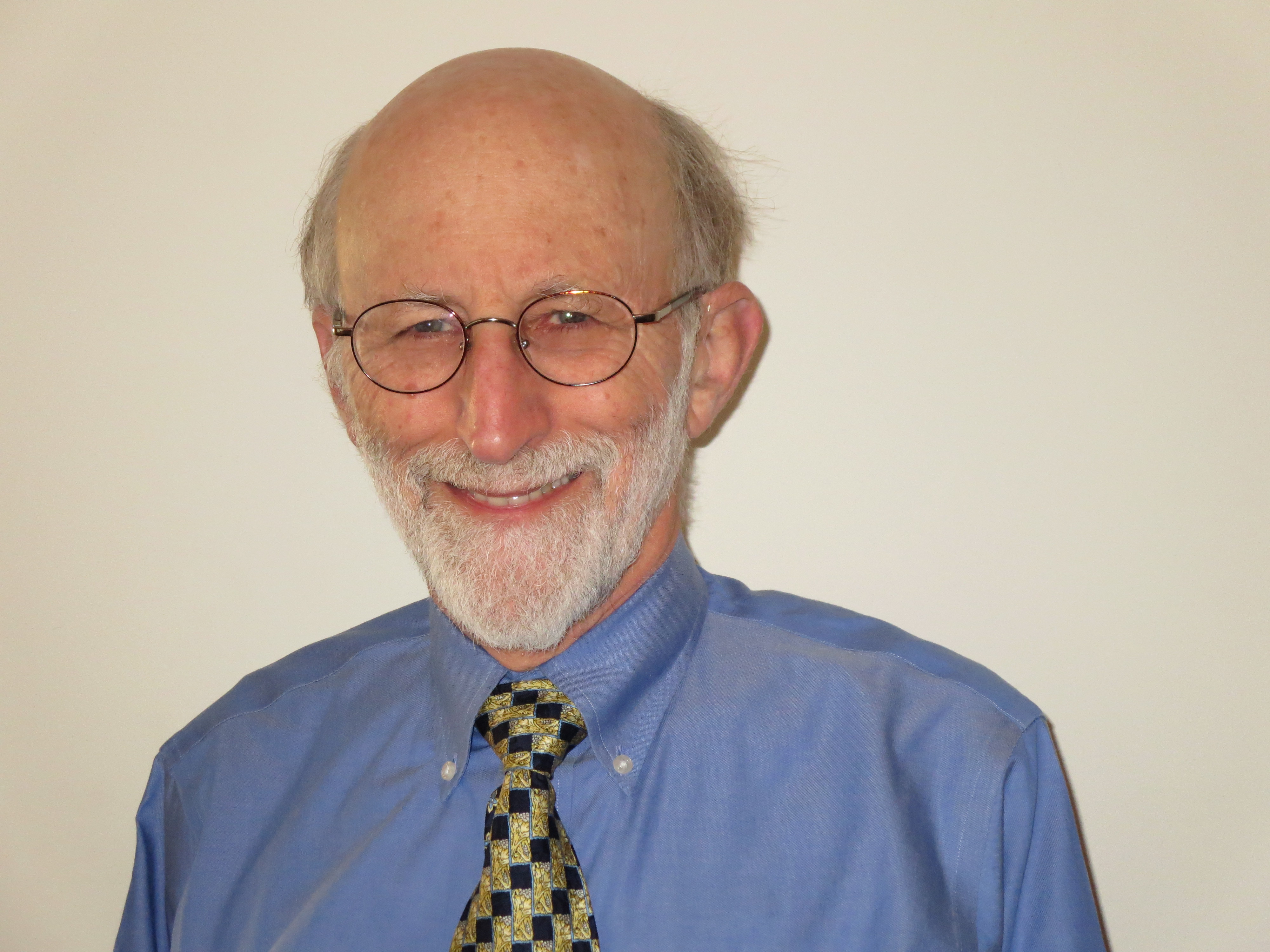
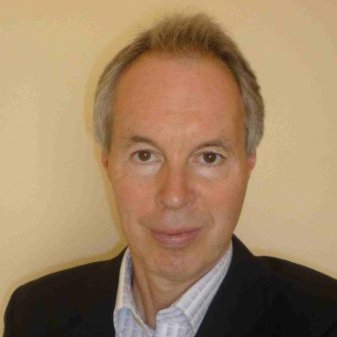
Stephen Young is a Senior Lecturer at Brighton Business School and is subject leader for behavioural economics.Stephen Young

He is also Visiting Lecturer at Brighton and Sussex Medical School, where he teaches Behavioural Economics to health professionals, including commissioners, public health practitioners and GPs.

As an independent consultant and trainer, Stephen also provides client workshops and presentations on behavioural economics and behaviour change.

Stephen is widely published and his research interests include behaviour change, climate change, health, sustainability, and Information and Communications Technology.

Stephen does not own a car and is so passionate about being car free that he writes regularly on his blog livingthecarfreelife.blogspot.com. 

Economists:

In this interview, Stephen mentions and discusses:

Paul Ormerod, Richard Thaler, Cass Sunstein, John Cochrane, Paul Dolan, Malcolm Gladwell, Phil Goodwin, Daniel Kahneman, Adam Smith, Karl Marx, Barry Schwartz, Richard Layard, Nassim Nicholas Taleb, Paul Krugman and Friedrich Hayek.

Economic Themes:

In this interview, Stephen mentions and discusses:

Bank run, financial crisis, risk, behavioural economics, nudge, rationality, incentives, tax, choice architecture, obesity, climate change, externalities, loss aversion and the endowment effect.

On Economic Theory:

“None of the models are completely perfect. None of them work to everybody’s benefit” – Stephen Young

Click To Tweet

Is behavioural economics storming the citadel or is it shoring up the ramparts? – Stephen Young

Click To Tweet

Find Out:

  • why Stephen decided to become an academic.
  • about the Northern Rock bank run in the UK in 2007.
  • why universities need to adapt or die when it comes to addressing relevant content.
  • what Stephen is doing to reduce his carbon footprint in college and how he’s responding to the digital needs of his students.
  • why health professionals are interested in behavioral economics.
  • about the Irish government’s fight against obesity.
  • how Stephen is encouraging a town in the UK to become pedestrian friendly.
  • about framing car ownership – status and perception of rank.
  • how by ditching your car you can burn calories.
  • how the average person is working two days a week to pay for their car.
  • about the emotional attachment that a car represents.
  • what major cities across Europe are doing to make them more pedestrian and bike-friendly.
  • about peak car ownership.
  • some advice from Stephen on how to give up your car and become car free.
  • about the pluralist approach to embracing economics.

“The externalities don’t work for car ownership because it’s not priced in because of the pollution emitted” – Stephen Young

Click To Tweet

You can live a better life without a car. You can be thinner. You  can be richer. You can be more sociable. You can be more flexible. You can get around just as easily – Stephen Young.

Reasons for Peak Car Ownership:

  1. The youth do not have the income to finance the ownership of a car due to the high unemployment rates.
  2. High cost of car insurance.
  3. The opportunity costs of owning the latest technology.
  4. You don’t need a car to participate in a lot of things today.

Behavior Economics in the Health Sector:

“We’re not just nudged by the other side, we’re being bombarded by the other side. There’s a lot of room to doubt the way public health policy is being transacted and implemented in a lot of economies” – Stephen Young.

Giving Up Your Car and Becoming Car Free:

  1. Try living without your car for a while before you give up.
  2. If you’re moving house, locate to an area where everything you need is close by.
  3. Don’t give up your car just because it’ll make the world a better place. Only do it to improve your own life.
  4. Take a ‘hike’ – go for a walk.
  5. Walking is a great way of forming your thoughts and ideas as it clears your head and frees your mind.
  6. Walking, rather than driving, improves your health and well-being. It connects you to where you live, to where you are.

“All truly great thoughts are conceived by walking” – Nietzcshe.

Click To Tweet

Recommended Books:

  • The Death of Economics by Paul Ormerod
  • Why Most Things Fail: Evolution, Extinction and Economics by Paul Ormerod
  • Nudge by Richard Thaler and Cass Sunstein
  • The Tipping Point by Malcolm Gladwell
  • Happiness by Design by Paul Dolan
  • Thinking, Fast and Slow by Daniel Kahneman
  • The Road to Serfdom by Friedrich Hayek
  • Capital: Volume 1 by Karl Marx
  • Misbehaving: The Making of Behavioural Economics by Richard Thaler
  • Poor Economics by Abhijit V. Banerjee and Esther Duflo
  • Scarcity by Sendil Mullainathan and Eldar Shafir
  • The Structure of Scientific Revolutions by Thomas Kuhn

Where to Find Stephen Young:

  • Website: stephenyoung.org.uk
  • Website: livingthecarfreelife.blogspot.com
  • LinkedIn: Stephen Young
  • Twitter: @stephenyounguk
  • BehaviourWorkshops Twitter: @BehaviourW
  • Behaviour Workshops Blog: http://www.behaviourworkshops.blogspot.co.uk/

Stephen Young’s Publications:

  • Young, S (2013). The Behavioural Economics of Owning A Car. eg magazine. Volume 18, Issue 5, March-April  2013. ISSN 2042-1990.
  • Other Publications.

Forthcoming

  • Young, S. and Caisey, V. Behavioral Economics and Social Marketing: Points of Contact?  Chapter in Volume II of Stewart, D. (Ed) Handbook of Persuasion and Social Marketing. NY: Praeger. 2015.
http://traffic.libsyn.com/economicrockstar/035_Stephen_Young_Final.mp3

Podcast: Play in new window | Download

033: Abdullah Al-Bahrani on the Economy of Oman and How Racial Discrimination Empowered Him to Succeed in Life and in Economics.

May 22, 2015 by Frank

http://traffic.libsyn.com/economicrockstar/033_Abdullah_Al_Bahrani_Final.mp3
Play in New WindowDownload

033: Abdullah Al-Bahrani on the Economy of Oman and How Racial Discrimination Empowered Him to Succeed in Life and in Economics.

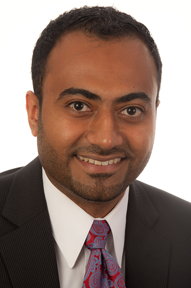
Dr. Abdullah Al Bahrani is an Assistant Professor of Economics at Northern Kentucky University,Abdullah al Bahrani where he serves as the Principles of Economics Coordinator.

Abdullah’s research interests are in the fields of Industrial Organization and Education of Economics. Currently, his primary focus is on innovative approaches to teaching Economics. In Industrial Organization, his research examines market structure and competition in the banking and real estate industries.

Prior to joining academia, Dr. Al Bahrani worked in the mortgage industry from 2003-2006. He has also served as outside economic consult to the Ministry of Education, Sultanate of Oman and new business ventures entering Oman.

Abdullah received his Ph.D. in Economics from the University of Kentucky in 2010, where he received an award for Best Economics Graduate Teaching Assistant.

His Master degree in Economic Theory was awarded by American University in Washington D.C. in 2003 and he earned a Bachelor of Science in Business Economics from the University of Louisville in 2002.

Influencers:

My parents are big advocates of education and they instil the value of education and the value of curiosity – Abdullah Al-Bahrani

Personal Habits:

Abdullah has a 5am start and gets to the gym most mornings. It is at the gym where Abdullah creates his to-do list, becomes super-organized and listens to Economic Rockstar!

On dealing with racial discrimination:

You roll up your sleeves and you keep on trying – Abdullah Al-Bahrani

Abdullah’s Philosophy and Affirmations:

Failure is the opportunity to begin again more intelligently

Click To Tweet

Failing in a business does not need to mean that you failed as a person – Abdullah Al-Bahrani

Click To Tweet

Whatever you do, allow your personality to shine – Abdullah Al-Bahrani

Click To Tweet

The thing that I appreciate is people that push the boundaries that create new paths – to me that’s what growth is – Abdullah Al-Bahrani

My philosophy is to embrace technology – Abdullah Al-Bahrani

Click To Tweet

Find Out:

  • why Abdullah decided to do a Phd in Economics in 2006 and left the mortgage industry just before it imploded.
  • about Abdullah’s economic consultancy work with the Sultanate of Oman.
  • about Abdullah’s connection when reviewing labor market studies in Oman (Hint: She is the Director General of the National Centre of Career Guidance and is as maternal to Abdullah as Oman as a country is to him).
  • how Oman are creating an entrepreneurial spirit to drive is economy in the future.
  • why Oman is faced with difficulties in transitioning to an entrepreneurial economy.
  • how Omani culture is preventing it’s people to take on risk and why incentives do not work.
  • about Abdullah’s suggestion that to create an entrepreneurial spirit in Oman, the labor market must first be liberalised.
  • how ‘Omanization’ has made it costly for foreign firms to set up subsidiaries in Oman.
  • why Omani’s are not hired by foreign firms setting up in Oman.
  • why discrimination exists in the Omani labor market and why US and UK ex-pats would be a preferred employee.
  • how data limitations for Oman make it difficult to conduct an empirical analysis of the labor market.
  • how labor market regulations in Oman is making it costly for firms to hire Omani’s.
  • about some economic indicators for Oman.
  • about Oman’s free trade agreements, the Gulf Corporation Council and the potential Oman offers.
  • about Oman’s tourism initiative to create Oman as an eco-friendly destination.
  • how Abdullah is integrating social media into the classroom, making education a more interactive and conducive learning environment for students.
  • about Abdullah’s clever way of using a students’ mobile phone in explaining the concept of a negative externality.
  • how to create a sense of community in a classroom.
  • why Abdullah received an Easter basket of goodies from a student’s mother.
  • why Abdullah is ‘helping his students to ‘clean’ their social media footprint.
  • how Abdullah encourages his students to connect with him on whatever platform they choose to use.
  • how using ESPN 30 for 30 to teach economics and to keep the economics student engaged.
  • how to teach economics with no math and no graphs.
  • about the research Abdullah is doing on racial discrimination in the labor market.
  • how Abdullah is identifying how racial discrimination is evident in online markets where, unlike traditional markets,  the color of your skin is not a factor.
  • if your last name prevent you from getting a loan, employment or from being priced out of a market.
  • how dropping a letter from your name can get you a job if you’re being racially discriminated against.
  • how Abdullah was racially discriminated against in both the labor market and when selling mortgage loans in the USA.
  • how Abdullah dealt with racial discrimination and how it gave him his Phd dissertation question.
  • how online price comparison websites may actually be anti-competitive.
  • how online stores are eating into the consumer surplus.

Economists:

In this interview, Abdullah mentions:

Darshak Patel, Kim Holder, Gary Becker, Steven Levitt, Stephen Dubnar, Frank Scott, Chris Bollinger and Gail Hoyt, Brandon Sheridan and Roland Fryer.

Economics:

In this interview, Abdullah mentions and discusses:

Labor market, incentives, entrepreneurship, small and medium sized enterprise, venture capital, unintended consequences, business cycle, unemployment, GDP per capita, trade agreements, indigenous industries, multinational companies, Gulf Corporation Council, tourism, factor endowments, negative externality, comparative advantage, search cost, marginal cost, competition and consumer surplus.

Papers:

  • Al-Bahrani, Abdullah and Darshak Patel (2014). Using ESPN 30 for 30 to Teach Economics. Southern Economic Journal. 81:3. 829-842.
  • Al-Bahrani, Abdullah. Competition in Online Markets: When Banks, Compete do Consumers Really Win? Journal of Housing Research. Forthcoming (Accepted October 2014).
  • Al-Bahrani, Abdullah and Darshak Patel (2015). Incorporating Twitter, Instagram and Facebook in Economics Classrooms. Journal of Economic Education. 44:1. 56-67.

Books:

  • The Color of Credit: Mortgage Discrimination, Research Methodology, and Fair-Lending Enforcement by Stephen Ross and John Yinger.
  • Chicago by Alaa Al-Aswani

Resources:

  • Twitter

Where to find Abdullah:

  • Twitter: @teach_econ
  • Website: www.teach-econ.com


http://traffic.libsyn.com/economicrockstar/033_Abdullah_Al_Bahrani_Final.mp3

Podcast: Play in new window | Download
031: Matt Rousu on Experimental Auctions and the Need for Peer-Reviewed Economic Impact Studies.

May 6, 2015 by Frank

http://traffic.libsyn.com/economicrockstar/031_Matthew_Roussu_Final.mp3
Play in New WindowDownload

031: Matt Rousu on Experimental Auctions and the Need for Peer-Reviewed Economic Impact Studies.

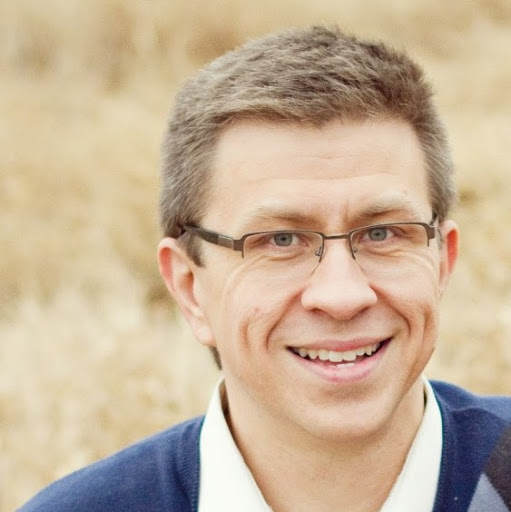
Dr. Matthew Rousu is a Professor and Warehime Chair in the Department of Economics atMatthew Rousu Susquehanna University. His main teaching interests include microeconomics, political economic thought, and game theory.

Matt is an expert on experimental auction design and implementation. He uses his expertise on experimental auctions to study problems in agricultural economics, environmental economics, and public health.  He has published over 40 scholarly articles, as well as book chapters, non-technical articles and Op-eds.

Matt has been quoted widely on many issues by The Chicago Tribune, Forbes, The NY Daily News, The Philadelphia Inquirer, US News and World Report, The Washington Post, Wikipedia, and Yahoo.com.

He has also been a guest for local radio stations mainly to discuss the local, state, and national economy.

Matt runs his own blog known as paeconomist.blogspot and is founder of the Economic Impact Review. He is the author of Political Trivia.

Matt earned a Bachelor’s degree from the University of South Dakota and a Ph.D. in Economics from Iowa State University.

Find Out:

  • the benefits of lecturing at a liberal arts college – switch up your research interests.
  • about experimental auctions and their design.
  • what is consumer demand for Genetically Modified Products.
  • how demand for GMOs change due to differences in packaging.
  • how print advertisement for e-cigarettes increases their demand.
  • whether e-cigarettes are a ‘healthy’ alternative to traditional cigarettes.
  • about the impact of plain package cigarettes on consumer demand.
  • if the Irish government correct in enforcing plain packaged cigarettes.
  • how much less buyers were willing to pay for plain packaged cigarettes.
  • how a picture of smoking-related diseases on cigarette packaging decreases demand for cigarettes.
  • why Matt set up The Economic Impact Review.
  • why economic impact studies should go through a peer-review process.
  • about the lack of transparency in economic impact studies.
  • about Matt’s libertarian stance and why he’s for fracking.
  • what you get when a libertarian and socialist collaborate on an economics fracking paper.
  • about the beautiful campus of Susquehanna University.
  • why small class sizes are beneficial to both student and teacher.
  • about Matt’s exploits in the World Series of Poker.
  • how an understanding of statistics and behavioral economics can benefit a poker player.
  • how Chris Moneymaker influenced Matt’s love of poker.
  • the economics of what makes a winning poker player.
  • if poker is a game of chance or a game of skill.
  • how poker is akin to economic game theory.
  • about people’s willingness to pay for GM foods versus non-GM foods.
  • if there is a need for an independent 3rd party to disseminate information on GM foods.
  • what annoys Matt the most.
  • why Matt switched to a flipped classroom style of teaching.
  • about deceptions in economic research and why journals will not publish such research.
  • why research in psychology accepts deception of the subjects but economics does not.
  • why a lot of economics journals will not publish your work.

Economists:

In this interview, Matt mentions: Milton Friedman, Wally Huffman (Iowa State), Jason Shogren (Wyoming) and Dan Ariely.

Economics:

In this interview, Matt mentions and discusses: Consumer demand, experimental auctions, bias, incentives, pricing, demand curve, sample size, economic impact of fracking, socialism, libertarianism, microeconomics, macroeconomics, game theory, political economic thought, forensics economics, positive analysis and normative analysis.

You can disagree without being disagreeable Matt Rousu.

Click To Tweet

Are you Willing to Pay More for Genetically-Modified Foods?

The goal of experimental auction is to assess consumers demand for some particular product.

If consumers receive information from a group, such as Green Peace, who were against GM foods, then those consumers were willing to pay up to 50% less for foods that were genetically modified compared to a plain-labelled product.

If consumers got information from an agri-business company, such as Monsanto, about the benefits of GM foods, then they would pay just as much for these foods as conventional food products.

What would the impact be on consumer’s willingness to pay if there were scientific information or, what Professor Rousu called ‘Objective Verifiable Information’ available in the decision-making process? The objective information ‘dampened’ the effects on either side.

Where to find Matt:

  • Website: Economic Impact Review
  • Blog: paeconomist
  • YouTube: Matthew’s Channel
  • Twitter: @matthewrousu
  • Research: What Makes a Winning Poker Player? Evidence From Online Poker. Gaming Law Review and Economics, 14 (9), Pages 677-683. (2010). With M. Smith.
  • Other Research Papers: http://www.susqu.edu/facstaff/r/rousu/research

http://traffic.libsyn.com/economicrockstar/031_Matthew_Roussu_Final.mp3

Podcast: Play in new window | Download
029: John Cochrane on the Future of Finance, MOOC Education, Regulation and the Case for Free Markets

April 22, 2015 by Frank

http://traffic.libsyn.com/economicrockstar/029_John_Cochrane_Final.mp3
Play in New WindowDownload

029: John Cochrane on the Future of Finance, MOOC Education, Regulation and the Case for Free Markets

John Cochrane is the AQR Capital Management Distinguished Service Professor of Finance at the University of Chicago Booth School of Business and is currently Senior Fellow at the Hoover Institution.

Professor Cochrane is a Research Associate of the National Bureau of Economic Research and past director of its asset pricing program, and an Adjunct Scholar of the CATO institute.

John is past President and Fellow of the American Finance Association, and a Fellow of the Econometric Society. He has been an Editor of the Journal of Political Economy, and associate editor of several journals including the Journal of Monetary Economics.

John’s is the author of 3 books including the book Asset Pricing. Other  finance publications include articles on stock and bond markets, exchange rates, interest rates, liquidity premiums and option pricing.

John’s monetary economics publications include articles on the relationship between deficits and inflation, the effects of monetary policy, and on the fiscal theory of the price level.

John currently teaches the MBA class Advanced Investments and a variety of PhD classes in Asset Pricing and Monetary Economics.

John earned a Bachelor’s degree in Physics at MIT, and earned his Ph.D. in Economics at the University of California at Berkeley.

In addition to research and teaching, John is a competitive sailplane pilot and windsurfs.

John blogs as ‘The Grumpy Economist’.

Find Out:

  • why Professor Cochrane is known as the Grumpy Economist.
  • about John’s Proposed New Structure for US Debt.
  • how to create financial stability with a currency fit for the 21st century.
  • about the advantages of government debt.
  • what happened when Ireland guaranteed the bondholders and entered into a bailout.
  • the limitations to a eurozone country when faced with a bailout.
  • why countries should be allowed to act like companies and default.
  • why Greece should have defaulted and why Ireland should not have bailed out the bondholders.
  • about Professor Cochrane competing in the World Gliding Championship for the USA.
  • why Professor Cochrane delivered his Asset Pricing PhD course as a MOOC.
  • the costs and benefits of delivering a MOOC.
  • how MOOCs will become the textbook of the future.
  • how to monetize a MOOC and which type of course would have mass market appeal.
  • Ireland’s aim to become the capital of MOOCs.
  • how to create a social environment for students using MOOCs.
  • why Professor Cochrane went from a degree in physics to a PhD in Economics.
  • why people are stuck in the welfare system.
  • about the over-regulated US economy that restricts the development of competitive markets.
  • how Uber gave supply-side competition in the US taxi market.
  • what should be done to the US healthcare industry which is protected from competition.
  • if the US Federal Reserve should end its monopoly on the dollar and allow other currencies, such as Bitcoin, compete.
  • about the unique feature of US government debt – it cannot default!
  • who are Professor Cochrane’s heroes due to their no bullshit approach to research.
  • why the the 2008 financial crisis was proof that the efficient market hypothesis works.
  • what annoys Professor Cochrane.

Influencers:

  • University of California: George Akerlof, Roger Crane, Jim Pearce and Tom Roffenburg.
  • University of Chicago: Robert Lucas, Lars Hansen, Gene Fama, Ed Prescott and Tom Sargeant.

Defining Moment

A professor was showing an economics class that John attended in which he explained, using the Budget Constraint, why people are stuck in welfare. Up to that point, John had read that it was due to people being lazy or that it was due to moral, sociology or cultural. However, the analysis showed that any normal person who was stuck below an income threshold and receiving benefits would not welcome a moderate pay rise as they would lose entitlements.

Here was a value-free, and ethics-free, a morality-free discussion of a social problem that showed exactly where it came from, exactly how to fix it, exactly how the perverse design of the well-intentioned welfare was causing people to get stuck. That was my conversion moment.

Economics:

In this interview, John mentions and discusses: Asset Pricing, unintended consequences, free markets, incentives, budget constraints, welfare, competition, supply-side competition, regulation, monopoly, natural monopoly, bitcoin, debt, default, Gold Standard, fractals and efficient market hypothesis.

Economists:

In this interview, John mentions and discusses: George Akerlof, Roger Crane, Jim Pearce, Tom Roffenburg, Robert Lucas, Lars Hansen, Eugene Fama, Ed Prescott, Tom Sargeant, Benoit Mandlebrot

“What makes free markets work is the discipline of competition, of the ability of new entrants to come in and disrupt things” – Professor Cochrane.

“Regulation is stifling the ability of  new people with great ideas, with cost control ideas to come in and make healthcare both better and a lot cheaper” – Professor Cochrane.

The Future of Finance:

Professor Cochrane likens the financial crisis as a ‘good old-fashioned’ run on the banks. Twenty years ago, the world economy developed ‘electronic interest-paying money’. Most of the financial system uses overnight repurchase agreements, money market funds and short-term government bonds. These became very liquid and have been prone to runs just like bank notes. For financial stability, the crucial thing is to get away from this run-prone system.

John proposed that governments should provide interest-paying electronic money that will not experience a run in the 21st Century. This would look something like a money-market fund. It will always be worth $1, pays interest and will always be electronically transferable. Financial stability would be achieved and we would have more efficient payments.

On Ireland Bailing Out All Depositors

Irish banks took a lot of German deposits and invested them in US sub-prime mortgages. The money passed through Ireland and it’s not quiet clear why the taxpayers of Ireland who footed the bill for that. Why couldn’t the depositors from Germany lost a little bit of their money along the way. That would have seemed to make sense. Cyprus and Iceland made their depositors take haircuts.

When you’re a small country with an open banking system, the model of the government who bails out all depositors including foreign depositors is not one that can go on. That’s a troublesome system. Ireland maybe regretting bailing out all of the depositors in the process.

Since Ireland is part of the EU and the eurozone, it cannot print money to bailout people. Government debt in that situation becomes private debt. Ireland would not be in as much trouble if it didn’t bailout the depositors in its bank.

Greece certainly should have just defaulted the way a company defaults. If a company defaults on its debt it doesn’t have to leave the eurozone, so why shouldn’t countries become like companies.

MOOCs: The Future but Not a Substitute for Formal Education

Professor Cochrane delivered his PhD class ‘Asset Pricing’ as a MOOC. He felt that such ‘cut and dry’ material would be easier to get started with, particularly when he also had a book of the same name, rather than a more discussion-based empirical class. There were numerous challenges along the way. “It turned out being a lot more work than I thought it was going to be but it also turned out very rewarding”. It allows Professor Cochrane to leverage his delivery going from teaching 20 students to upward of thousands of students.

MOOC

Like any new technology, there are lots of unanticipated ways in which it can be used, unanticipated markets that are going to find it that nobody thought about it how that was going to work out. MOOCs were originally intended to deliver ‘introductory-type’ classes which would have mass appeal. However, John believes that the way forward for MOOCs is in the delivery of ‘distinctive-type’ classes where the class is more specialised and in greater variety.

Creating a MOOC can be costly in terms of time, resources and the infrastructure that needs to be built to deliver the course. “Like all technology, if you’ve ever made a webpage, it has a high fixed cost but low marginal cost.” The secret to putting a MOOC together is it has a high fixed cost to put it together. Creating the video content for lectures is easy. It’s putting together the significant typo-free problem sets and other materials like that that’s hard. But once the MOOC is done, it is scalable in terms of multiple years and to a lot of people.

Professor Cochrane views MOOCs as a way of creating a ‘flipped classroom’. They will not be a substitute for formal education but one of the ways that MOOCs will develop into is that they will become the modern textbook. “The MOOC is a self-contained class outside the university but it’s a textbook for my classroom”. Professor Cochrane’s Asset Pricing class at Stanford is a much less formal experience due to the flipped nature of his classroom.

MOOCs have allowed his students to review the material and answer the questions in his series of videos before they arrive to class. Subsequently, Professor Cochrane can deliver more advanced material, as well as have an in-dept discussion on the material the student reviewed on his MOOC. The class becomes a much more rewarding, personal, interactive experience.

MOOCs will be beneficial to the university in so far as creating a brand so as to attract more students to attend. Being online with a MOOC will be useful for the university to connect with their alumni who may be interested in doing an executive education. The MOOC will be paid for indirectly by attracting people into the executive programmes since the flipped classroom model would work very well for this cohort of people.

The social environment of the class turns out to be very important to getting people to stick with the course on MOOC. MOOCs need to move from its current form to a version “2.0 Social Internet and to re-create that social structure that gets people going. The next round of MOOC will need to integrate social media so that the learning experience becomes part of a community of students just like it is on campus”.

How to Create a Social Environment for Students on MOOCs

  • Scheduled classes so that students attend together.
  • Discussion forums where students are encouraged to participate after the class.
  • Weekly Google Hangouts

http://youtu.be/U5CfYQw4X7k

How Similar the Study of Physics is to Economics

Physics teaches you quantitative analysis as well as modelling.

There is some truth in the physics joke: “Physics is the study of massless elephants going down a frictionless sandpaper”. You have to find the elements of a problem, simplify it down to what’s solvable and intuit how it works, not only mathematical. It’s about the intuition of seeing something work and describing it mathematically.

Economics is similar to undergraduate physics – everything before Quantum Theory. If you’re good at mechanics and electricity of magnetism, then that structure is what’s behind economics and you should be equally good at economics. You will also be good at the modelling part of economics which is all about throwing out all the real-world details that don’t really matter to a particular problem. If the mass of the elephant wasn’t particularly important to that problem, then just assume the mass of sumables. That’s the key to economics.

Economics is full of quantitative parables and you have to make them vivid by making them simple and clear. And then understanding intuitively how to put the pieces together.

On discovering economics, Professor Cochrane believed that he could use the tools of Physics to understand all the hard social problems that everybody is fighting and getting so excited about in a value-free way.

On Bitcoin:

“The design of Bitcoin is fundamentally flawed. We have lost anonymity. That worries me for political reasons as well as economic reasons”. Anything that is done electronically, then the National Security Administration knows what you bought if you use your credit card. Cash allows you to do things anonymously. “Bitcoin promised anonymity but didn’t really deliver it in the first place.”

Bitcoin is based on the Gold Standard model where we need a fixed supply of something rather than a steady price of something.

Where to Find John Cochrane:

  • Website: The Grumpy Economist
  • Faculty Page: Chicago Booth
  • MOOC: Asset Pricing

The Grumpy Economist

http://traffic.libsyn.com/economicrockstar/029_John_Cochrane_Final.mp3

Podcast: Play in new window | Download
025: Dan Hamermesh on the Economics of Beauty: Attractive People Are More Successful

March 26, 2015 by Frank

http://traffic.libsyn.com/economicrockstar/025_Dan_Hamermesh.mp3
Play in New WindowDownload

025: Dan Hamermesh on the Economics of Beauty: Attractive People Are More Successful 

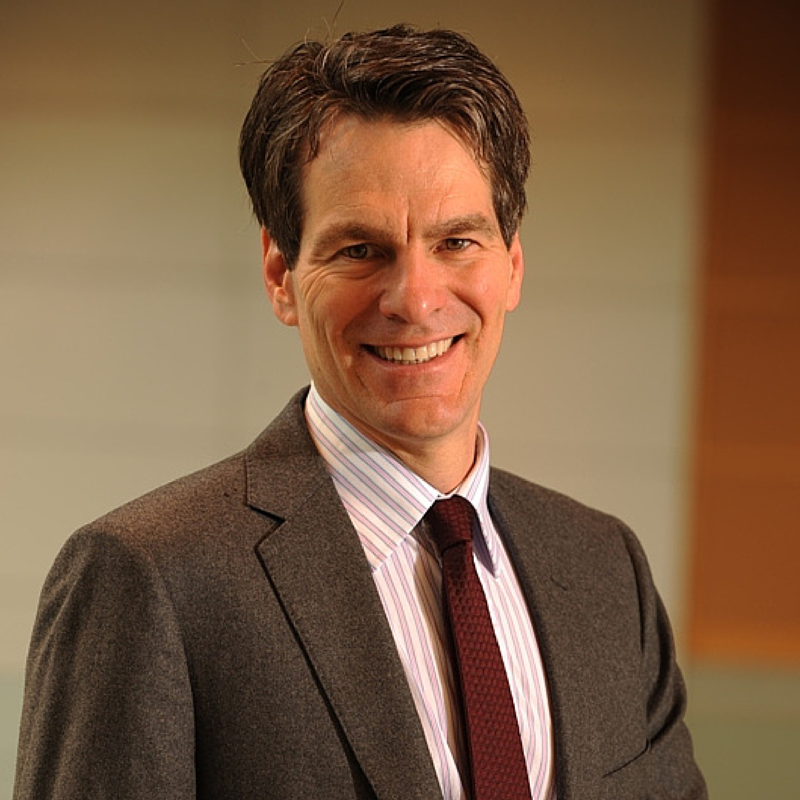
Dan Hamermesh is Professor in Economics at the Royal Holloway University of London and at thePortraitHamermeshwithoutJacket University of Texas at Austin. Dan researches the economics of beauty. He received his Ph.D. from Yale and has since taught at Princeton, at Michigan State, and at Texas. He has held visiting professorships at universities in North America, Europe, Australia and Asia, and lectured at almost 250 universities in 48 states and 33 foreign countries. His research, published in nearly 100 refereed papers in scholarly journals, has concentrated on time use, labor demand, discrimination, academic labor markets and unusual applications of labor economics (to beauty, sleep and suicide).

Professor Hamermesh has received many notable and distinguished honors and awards in recognition for his contribution to the field of economics. These include the Mincer Award and the IZA Prize in Labor Economics, the John R. Commons Award, as well as many teaching of excellence awards.

Daniel’s teaching include Microeconomics; Macroeconomics; Econometrics; Economics of Labor and Economics of Life.

Daniel is the author of many books including Demand for Labor: The Neglected Side of the Market, Beauty Pays: Why Attractive People Are More Successful, The Economics of Time Use and Economics Is Everywhere. He is also a regular contributor to the Freakonomics blog and podcast.

Economic Themes:

In this interview, Dan mentions and discusses:

Speculation, inter-temporal maximisation, labor economics, incentives, wages, welfare payments, comparative advantage and externalities.

Economists:

In this interview, Dan mentions:

 John Maynard Keynes, Gary Becker, Gregg Lewis, Robert Lucas and Michael Lewis.

Influencers:

Gary Becker and Gregg Lewis

A lot of my stuff is the weird kind of stuff that Becker pioneered – Dan Hamermesh.

Click To Tweet

Gregg Lewis had a concern about data – about doing it right, making sure you were right. That’s a crucial thing. One has to take data seriously – Dan Hamermesh.

Advice:

Do what you think you’ll enjoy, because if you think you’ll enjoy it the odds are pretty good you’ll do well at it. You’ll be motivated to work hard and to succeed – Dan Hamermesh

Find out:

  • how economics can be used beyond the theoretical framework we see in textbooks.
  • why we should think about economics in things we see or do in the real world.
  • how students of economics can inspire their professors in a two-way mutual learning process.
  • how economics is everywhere – we just need to think, see and interpret.
  • how economics is enjoying a revival in reaching to mass audiences.
  • the benefits of economics books like Freakonomics, Beauty Pays, Dollars and Sex and Happiness By Design.
  • why we should read interesting books on economics.
  • if happiness is related to how beautiful or attractive you are.
  • why better-looking men are happier.
  • how to recognise if you are beautiful.
  • what good-looking attorneys, prostitutes, politicians and NFL quarter-backs have in common.
  • if economists should be studying the effects of being attractive and ugly.
  • if people have an increased need to become beautiful.
  • whether increased spending on cosmetics, hair and clothing by women will have a pay-off in the labor market.
  • if plastic surgery to alter beauty results in higher earnings.
  • about the disability benefits available to obese people.
  • if an obese person is perceived to be less beautiful than a slim person.
  • if there is a relationship between ugliness and where a person lives.
  • why Dan was interested in studying the economic impact of beauty.
  • which economic markets show evidence of the impact of beauty.
  • how Dan first met his wife of 42 years.
  • what Dan thinks of Abercrombie and Fitch’s ‘six-pack’ hiring policy.
  • if being attractive prohibits opportunities in the labor market.
  • if you should work in the private or public sector if you are good-looking.
  • how to identify an externality on the side-walk.
  • why you should do what you’ll enjoy rather than chasing the money.

Why Attractive People Are Happier and Economically Better-Off.

Attractive people have been found to be happier than not-so-good-looking people. Better-looking men receive higher incomes, which make them happier overall. Attractive women are also happier, but their happiness is more direct in that their happiness is the result of knowing that they are good-looking. Attractive women do receive higher incomes but this is not a direct link to their happiness as it is for men.

“The beauty itself is directly more salient to them than it was for men, even though the overall effect was identical for both genders” – Dan Hamermesh.

How someone realises if they are attractive or not is due to the reinforcement by other people in making you aware whether you are good-looking or ugly. “Better-looking babies are treated better by their parents and by other people. Better-looking 5 year olds are treated better in kindergarten than ugly ones. When you’re chosen for teams or go out in High School, the better-looking people do better. And they also, given even the amount of education they attained, they’ll do better in the labor market. They’ll get better jobs, make higher pay, even within the same occupation” (Dan Hamermesh). Good-looking attorneys, prostitutes, politicians and National Football League quarter-backs make higher pay than their uglier colleagues.

In the labor market, the top one-third of people who are considered good-looking will earn 10 to 12% more in income independent of any differences that might exist between them and those not considered good-looking.

A woman’s increased spending on cosmetics, hair and clothing will not increase her perceived beauty and will also have a minimal pay-off on the labor market for her. Plastic surgery for cosmetic reasons does not have a benefit in terms of increasing earnings in the labor market. You do it to feel good. It’s not an economic investment, it’s a feel-good investment.

“Unless a person is morbidly obese, people do not view him or her as being any uglier than anybody else, all things taking together” – Dan Hammermesh.

Does Location Determine Whether You Are Beautiful or Ugly?

I ask Dan whether a person’s good looks are determined by the area in which they live. The reason I ask this is based on our earlier discussion on why attractive people typically earn a higher income. It can be fair to suggest that cities or regions that pay more would consequently attract good-looking people.

Dan states that “if you’re a good-looking person, you’re going to flock to an area where your looks pay off more. And if you’re a bad-looking person, you might want to go away from an area where looks pay off. In the UK, where people who were born in Scotland and Wales, if they’re good-looking, are more likely to migrate to South-East England (London) than other people”.

Also, “people who were born in South-East England (London) who are bad-looking appear to move to outlying areas where their looks aren’t so important”.

“Looks not only affects where we live in terms of what we make, but where we choose to live in terms of where we spend out adult lives. You’ll go where you get the biggest bang for your buck or, in this case, the biggest pounds for your beauty.”

Economic Markets Where Beauty and Attractiveness Are Present:

  1. Labor Markets: Higher wages and better conditions.
  2. Marriage Markets: A good-looking woman will attract a man who earns more.
  3. Market on Unsecured Loans: Attractive people are more likely to get a loan and on better terms.

Recommended Books:

  • Beauty Pays: Why Attractive People Are More Successful by Dan Hamermesh.
  • Economics Is Everywhere by Dan Hamermesh.
  • The Worldly Philosophers: The Lives, Times And Ideas Of The Great Economic Thinkers by Robert L. Heilbroner.
  • Moneyball by Michael Lewis.

Where To Find Dan Hamermesh:

  • Facebook: BeautyPays
http://traffic.libsyn.com/economicrockstar/025_Dan_Hamermesh.mp3

Podcast: Play in new window | Download
005: Hector Avellaneda on Buying Gold to Protect Your Wealth from a Dollar Crisis

November 19, 2014 by Frank

http://traffic.libsyn.com/economicrockstar/005_Hector_Avellaneda.mp3
Play in New WindowDownload

Episode 005: Hector Avellaneda on Buying Gold to Protect Your Wealth from a Dollar Crisis

Hector AvellanedaHector Avellaneda is from Houston, Texas and has a passion for entrepreneurship, economics, finance and gold. This, however, only materialized after Hector came face to face with a untold truth and one of the harshest lessons that only a life experience can teach you, as long as you are willing to dig deep in search for answers.

Hector, the son of Mexican immigrants to the US, grew up in poverty and was statistically destined to a life of poverty in adulthood. However, Hector wanted to defy this probability and worked extremely hard in school. In typical fashion, Hector accumulated college debt and was ironically facing a poorer life than his own parents despite a larger mean income.

Hector questioned the college debt system and deeply explored how US citizens have grown accustomed to taking on such debt. Further research led him to realise that middle-class America could see their wealth wiped out due to an impending dollar crisis. Subsequently, Hector wrote an economics and finance-related book to share his findings and to suggest what you can do to protect your wealth.

Economics and Finance Themes:

In this interview, Hector mentions and discusses: poverty, wealth, college debt, economic crisis, the Great Depression, loans, credit card debt, poverty trap, psychological effects of poverty, deficit, free markets, incentives, purchasing power, inflation, taxes, quantitative easing, money supply, the Minsky Moment, financial literacy, properties of money, fiat currency, the US Federal Reserve, stock markets, crypto-currencies, the Gold Standard.

Hector’s Influencers:

His dad and a college counsellor. Find out more in his book ‘De-CLASS-ified’ (see below for a link to Amazon and get an e-copy on Amazon for a bargain $2.99).

In this episode, you will learn:

  • how Hector had all the hallmarks of continuing to live a life of poverty in America.
  • about Hector being bullied in school because of the charitable clothes he wore .
  • how Hectors’ father and mother’s sense of hard-work and money management became naturally ingrained in him.
  • how Hector defied and beat the statistical odds of remaining poor for life due to a strong work ethic and a desire to succeed.
  • how hard work in school can open up many opportunities in life including an internship with NASA.
  • the importance of being mentored.
  • how easy credit for college education made Hector ‘s financial position worse off than his parents.
  • what triggered Hector into discovering the truth about the American economy and the college debt system.
  • the risks in the US economy.
  • why the US could be faced with a massive default on student loans and what is triggering this today.
  • how it became acceptable to borrow to pay for college.
  • why Hector’s $50,000 student debt became a blessing in disguise.
  • how Hector’s research into the US college debt crisis resulted in him writing an economics and finance book without having a background in these disciplines.
  • why the middle class in America is about to collapse financially.
  • why the US government will seize money from an American workers’ wages.
  • what type of college degree is not in demand in US anymore.
  • what you should do today when making a college or subject choice.
  • what it takes to have financial and economic freedom.
  • about the 7 properties of money.
  • what countries are doing today with their dollar reserves.
  • about who actually owns the Federal Reserve Bank of America. Hint: It’s not the US government!
  • what you can do to protect your wealth from being transferred to others.
  • who are buying up gold and for what reason.

On Living in Poverty:

  • ‘I was pretty poor. I lived in a small wooden type of house with a sheet metal roof’ – Hector Avellaneda
  • ‘Growing up I saw my parents argue and fight about money and not having enough money to take a family trip or a vacation or just be able to enjoy a day out on the town and so my parents were always very stressed out, always kind of arguing and fighting’ -Hector Avellaneda
  • ‘I was made fun off in school because a lot of clothes that I wore was donated from the local church or local program, a local donation program’ – Hector Avellaneda
  • ‘I always told myself that I was going to do whatever it took to make sure that I was successful in life and to make sure that I got out of that poverty that I had seen as a child’ – Hector Avellaneda

Advice:

  • “Today we need computer scientists, we need computer programmers, we need engineers – those are the degrees that are in demand  and I myself sit on the board directors of a non-profit organization here in Houston that actually encourages kids to go to college and major in things like engineering, major in things like computer science because I think those are the degrees that we need in today’s economy” – Hector Avellaneda.

  • ‘To have financial and economic freedom, I had to become an entrepreneur’ – Hector Avellaneda

    Click To Tweet

  • “For anyone who is going to college or who is thinking about going to college today, I would say ‘do some real research and figure out what pay expectations you will have upon graduation’ and, with that said, make sure that, if you are going to go to college, major in a degree that will be able to sustain your way of life that you want to live and if you don’t want to major in something like engineering or computer science because that’s just not what you are passionate for then don’t take on any student debt” – Hector Avellaneda.

  • Those holding onto paper assets are at risk of losing it all to those holding real tangible assets like gold and silver, land and claims on oil fields.

Personal Habits:

  • A hard worker, head-strong, determined, passionate and a desire to find out the truth through research, self-education, reading and learning.
  • Hector had a desire to find out what went wrong in his life as he was mis-sold the American idea of taking on college debt . With a limited exposure to finance and economics in college, $50,000 of college debt and unemployed due to the Great Recession of 2008, Hector read widely to learn and understand about the truth behind the US economy, the trillions of dollars of debt and the risks of a mass student loan default and a dollar crisis. 

Takeaway:

‘We have a generation of college students who are graduating into financial bondage’ – Hector

Click To Tweet

The free markets have been distorted due to all the incentives that have been created in the US economy.

‘Paper money eventually returns to its intrinsic value – zero’ – Voltaire

Click To Tweet

Before making a college decision, do a course that will allow you to earn an income to pay off your debt, otherwise do not take on debt.

Increase your understanding of financial literacy. Read books on money.

Schools and Universities need to teach more economics, finance and financial literacy subjects to all students.

Self-education is very important – read books and get access to the necessary information online.

‘Money is nothing more than an economic tool by which we convert our time and freedom’ – Hector

Click To Tweet

Recommended Books:

  • The Death of Money by James Rickards
  • De-CLASS-ified: The Fall of the Middle Class and Rise of the Internet Entrepreneur by Hector Avellaneda

Favorite Internet Resource:

  • iCloud

Where to Find Hector Avellaneda:

  • Gold and Silver Buyer Club
  • New Class Rising
  • Podcast on iTunes
http://traffic.libsyn.com/economicrockstar/005_Hector_Avellaneda.mp3

Podcast: Play in new window | Download
003: Erin Lowry on Millennials, College Debt and Asking for the Order

November 12, 2014 by Frank

http://traffic.libsyn.com/economicrockstar/003_Erin_Lowry_final.mp3
Play in New WindowDownload

Episode 003: Erin Lowry on Millennials, College Debt and Asking for the Order

Erin LowryErin Lowry is a double major in journalism and theatre and writes on finance and money related matters for the millennial generation. She lives in New York and is founder of brokemillennial.com where she is on a mission to explain financial concepts and money saving tips to her fellow Millennials using a little humor along the way. Erin is also a freelance writer for both Daily Finance and US News and World Report. Erin has deservedly been recognized for her astounding contribution to the finance and money industry, being voted ‘Top Finance Blog’ and winner of the ‘Best Personal Finance Blog for Young Adults’. Erin has also been featured on Forbes and Reuters, as well making appearances on TV, radio and other podcasts for her advice.

Economics and Finance Themes:

In this interview, Erin mentions and discusses: millennials, Generation Y, student loan debt, credit card debt, savings, habits, business startups, money, returns, net profit, incentives and perfect competition.

Erin’s Influencers: 

Her Mum and Dad, Warren Buffett, Bill Gates, Mark Cuban and Magic Johnson.

Find out:

  • how a Krispee Kreme gave Erin her biggest lesson in understanding finance, money and net profit at the tender age of seven.
  • how living in Japan and China during her childhood developed a different money mindset to her fellow consumer-led American peers.
  • how Erin left college debt-free.
  • who are millennials, if you are one and, if so, are you narcissistic and lazy?
  • about the massive student loan and credit card debt taken on by this generation and what you can do about it.
  • the money-saving tips that you can use in college or at work.
  • how saving a little, even $2, from a paycheck now will develop into a powerful life habit.
  • the importance of having a mentor in your life, particularly as a young adult.
  • the importance of networking for millennials.
  • how ‘Asking for the Order’ can help you succeed.
  • some money-saving dating tips.
  • how you can use your free-time between college classes or in the evenings to become creative and generate supplementary income.
  • how to manage your credit card and to use it to your advantage.
  • about the importance of list-making and how this can empower you.
  • about the ‘Snowball Method’ and how it can make you feel good.

Advice:

‘As soon as you get your pay cheque, the first thing you do is pay yourself’ – Erin Lowry

Click To Tweet

  • If you felt an outcome was unfair, ‘Ask for the Order’.  If you don’t tell people what you want, they can’t read your mind and the worse someone can tell you is ‘No’..
  • I find that list writing helps me organize my thoughts and then when I cross something off, it’s just such a satisfying feeling.

  • If you are having debt problems, talk about it to your loved ones, to your closest friends, to a credible financial planner or to a priest.

Personal Habits:

A respect for money was instilled in Erin at a young age by her father, which she carried right through into her adult life. As a head-strong decision-maker, Erin was faced with an ‘economic’ choice in adolescence which resulted in her finishing college debt-free! These traits, coupled with her mother’s mantra ‘Ask for the Order’ has given Erin enough social and financial clout too pursue her love of personal finance and helping fellow millennials to straighten out their finances.

‘Ask for the Order’ – Erin Lowry

Click To Tweet

Takeaway:

  • ‘Your relationship with your parents and how they treat money is huge because we started learning about money from an incredibly young age’.
  • ‘I find very fascinating… men and women that are able to go out and start their own companies and start with very little money and even not necessarily a lot of knowledge about something, and they teach themselves and they just go out and work really, really hard and I think that that’s the realization of the American dream and that it still really is possible.’
  • ‘Put yourself out there, develop contacts and network with others. You can be successful this way.’
  • ‘Never just make the minimum payment on your credit card. Pay it off in full. Banks will earn high interest on outstanding credit card debt.’

Recommended Books:

  • Personal Finance in Your 20s For Dummies by Eric Tyson
  • The Automatic Millionaire: A Powerful One-Step Plan to Live and Finish Rich by David Bach
  • The Ascent of Money by Niall Fergusan

Favourite Internet Resource:

  • Twitter

Where to Find Erin Lowry:

  • brokemillennial.com
  • magnifymoney.com
toto togel situs togel situs toto situs toto situs toto situs toto situs toto toto slot situs toto situs togel situs toto slot gacor situs toto situs togel situs toto situs toto situs togel situs toto pam4d situs toto pam4d gimbal4d pam4d gimbal4d sangkarbet sangkarbet pam4d toto slot
http://traffic.libsyn.com/economicrockstar/003_Erin_Lowry.mp3

Podcast: Play in new window | Download
  • Prev Page...
  • 1
  • 2

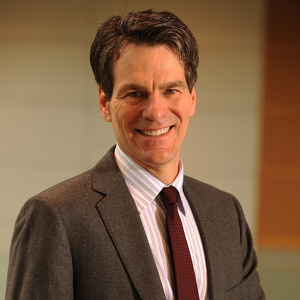
Frank Conway

Frank Conway is founder of Economic Rockstar and lecturer of economics, finance and statistics. Read More…

View My Blog Posts

Youtube Sub

Become a Patron of the Economic Rockstar Podcast

patreon

Ireland’s Economy by the Numbers

Leaving Cert Economics: Ireland’s Economy  Click here to download a workbook on Ireland’s Economy so that you can add your own notes. [Original size] Ireland’s Economy by fconway

Categories

Subscribe and Never Miss An Episode

itunes-logo

Recent Posts

  • Ireland’s Economy by the Numbers April 8, 2019
  • 174: Wendy Carlin on The Core Project, Capitalism, Democracy and Normative Statements February 13, 2019
  • 173: Stephen Wright on Core Econ as a Learning Resource for Mainstream Economics January 28, 2019
  • 172: Best of 2018 Part 2: From the Great Depression to Futurism; Institutions, Individualism, Cooperation and Reciprocity January 22, 2019
  • 171: Best of 2018 Part 1 January 3, 2019

Copyright © 2026 · Podcast Pro Theme on Genesis Framework · WordPress · Log in

This website uses cookies to improve your experience. We'll assume you're ok with this, but you can opt-out if you wish. Accept Reject Read More
Privacy Policy

Privacy Overview

This website uses cookies to improve your experience while you navigate through the website. Out of these, the cookies that are categorized as necessary are stored on your browser as they are essential for the working of basic functionalities of the website. We also use third-party cookies that help us analyze and understand how you use this website. These cookies will be stored in your browser only with your consent. You also have the option to opt-out of these cookies. But opting out of some of these cookies may affect your browsing experience.
Necessary
Always Enabled
Necessary cookies are absolutely essential for the website to function properly. This category only includes cookies that ensures basic functionalities and security features of the website. These cookies do not store any personal information.
Non-necessary
Any cookies that may not be particularly necessary for the website to function and is used specifically to collect user personal data via analytics, ads, other embedded contents are termed as non-necessary cookies. It is mandatory to procure user consent prior to running these cookies on your website.
SAVE & ACCEPT