• ABOUT
  • RESOURCES
  • PODCAST
  • BOOKS
  • BLOG
  • SUPPORTERS
  • QFA Financial Advice
  • CONTACT

Economic Rockstar

Connecting Brilliant Minds in Economics and Finance

072: Friedrich A. Hayek – That Entrepreneurial Knowledge is Situational and Commonsensical, Not Scientific
February 11, 2016 by Frank

http://traffic.libsyn.com/economicrockstar/072_Hayek_Essay.mp3
Play in New WindowDownload

072: Friedrich A. Hayek – That Entrepreneurial Knowledge is Situational and Commonsensical, Not Scientific

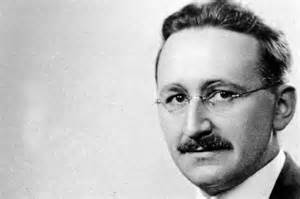
HayekIn this essay, I present a personal essay based on the work of Freidrich A. Hayek, most notably concerning his thoughts and discussion on how knowledge cannot be scientifically calculated for use within a centrally planned organisation, which is argued in his own essays ‘The Use of Knowledge in Society’ (1945) and ‘Competition as a Discovery Procedure’ (1984). 


That Entrepreneurial Knowledge is Situational and Commonsensical, Not Scientific

Part One:

Explanation and Development of the Thesis

In Austrian theory, that entrepreneur is an agent whose character has been carefully explored. Such on entrepreneur operates in a market economy, which is referred to as a ‘discovery process’ by Hayek¹. That entrepreneurs knowledge of the market is imperfect due to do reasoning that knowledge is dispersed amongst the undertakers of the business.

Entrepreneurs possess a certain degree of knowledge dust is unique to them individually and one that cannot be expressed quantitatively. Thus, Hayek disregards all neo-classical and Keynesian economics as they seem to dismiss the role of the entrepreneur via use of quantitative analysis (of averages and aggregates) in measuring equilibrium points to which all entrepreneurs must strive towards and achieve.

The unquantifiable (tacit) knowledge, possessed by the entrepreneur, is therefore ignored when scientific knowledge is made available. As Hayek stated ‘the knowledge of the particular circumstances of time and place… is… the body of very important but unorganized knowledge which cannot possibly be called scientific in the sense of knowledge of general rules’ (1945).

In the writings of Hayek, sScientific knowledge is associated with centralized planning whereas entrepreneurial knowledge is associated with a market order where knowledge is dispersed and situational. The latter includes tacit knowledge, as it is not directly communicable.

‘Every individual… possesses unique information of which beneficial use… [is] based on… [the] knowledge of people of local conditions and of special circumstances… of the fleeting moment not known to others… The sort of knowledge with which I have been concerned is knowledge of the kind which by its nature cannot enter into statistics and therefore cannot be conveyed to any central authority and statistical form’ (Hayek, 1945: 251).

The market economy can only operate at its most optimum level given the knowledge of entrepreneurs who mutually adjust via negative feedback. There is no role for scientific knowledge, as such use would ‘collectively’ combine the knowledge of all entrepreneurs in some mathematical formulation, thereby ignoring situational and commonsensical knowledge.

The market is a ‘discovery process’ for all undertakers who aim to eliminate in perfect knowledge by receiving ‘information for judgments about… matters by reading…, watching…, experiencing…, chatting…, strolling… Much of what he thereby observes – or senses – he could not express in explicit words or numbers’ (Yeager, 1996).

Thus, the entrepreneur will base decisions regarding cost minimisation, prices, allocation of resources, etc. on what they know and what they believe is the right and optimum choice. Scientific knowledge is irrelevant, as it does not quantify the ‘feel’ for the market. It aims for an equilibrium point in time, is costly, his complicated and fails to adjust to changes in the market at the required time.

Tacit knowledge is often not consciously known, even to those who process it, and come never be communicated to a central authority or used in their scientific evaluations. Such entrepreneurial knowledge is unknowingly transmitted throughout the economy as an unintended consequence of individuals pursuing their own ends. The unintended consequences of an economy fail to be recognized by those reliant on scientific knowledge, whereas the entrepreneur with situational knowledge, will recognize such and act accordingly.

Spontaneity is key to the entrepreneur and utmost for the market economy, thereby suggesting that the process towards obtaining equilibrium is a never ending process. As Knight put it, ‘business decisions deal with situations which are far too unique, for any sort of statistical tabulation to have any value for guidance’ (1971: 231).

Part Two:

A] Argument Against the Thesis

Hayek’s thesis that entrepreneurial knowledge is not scientific has drawn the attention of its critics, most notably Lange, Dickinson and Stiglitz. All three believe that entrepreneurial knowledge consists of scientific information as it practically improves business decisions.

Lange (1938) proposed that scientific knowledge of, say, conditional prices for all goods and factors of production should be made available and that these could be taken as parameters in the decision-making process of the entrepreneur. The result would speed up the equilibrium process and enhance the knowledge of the entrepreneur regarding market indicators.

‘the Central Planning Board has a much wider knowledge of what is going on in the whole economic system than any private entrepreneur can ever have’ (Lange, 1938).

In the advent of supercomputers, Lange stated that entrepreneurs could use scientific information to aid in their decision-making and that such scientific knowledge could be obtained in real-time given the demands of the market.

Dickinson agreed with Lange, stating that rational calculation under socialism was at least theoretically possible. Dickinson believed that any economy could be formerly represented by a Walrasian system of equations from which the undertakers in the market base their decisions to achieve an equilibrium point. Such scientific knowledge is vital for entrepreneurs if they wish to remain competitive and understand the direction taken by the market as a whole.

Stiglitz refers to ‘imperfect knowledge’ as known-to-be-available information that is costly to produce. Stiglitz states that such information, not known by the entrepreneur, could be obtained by acquiring statistical and computable data about the markets which can aid in the process of eliminating the imperfect knowledge of the entrepreneur and reduce uncertainty and risk.

Each decision is made within a well-defined framework made up of a given objective function, a given set of resource constraints, and a given set of technologically or economically means of transforming resources into desired objectives².

A famous physicist, Lord Kelvin, stated that ‘When you cannot measure your knowledge is meager and unsatisfactory’³ a statement that many critics of Hayek will stand by.

B] Arguments in Favor of the Thesis:

The main body of argument for Hayek’s thesis came from Hayek himself, although many supported his writings such as Kirzner, Gray and Yeager. Hayek argued that entrepreneurial knowledge is by no means scientific. Knowledge is dispersed throughout society and it is embodied in habits and dispositions of the entrepreneur.

Entrepreneurial knowledge ‘is “knowing where to look for knowledge” rather than knowledge of substantive market information’ (Kirzner, 1973: 68). Entrepreneurial knowledge cannot be quantified or recognized by a central planner or any undertaker in a market who uses a scientific approach.

‘Pantometria’ fails to recognize the tacit knowledge of the entrepreneur and, thus, competitive market behavior relying on scientific knowledge, cannot be a true reflection of entrepreneurial undertakings.

‘there is… a body of very important but unorganised knowledge which cannot possibly be called scientific… the knowledge of the particular circumstances of time and place… every individual… possesses unique information of which beneficial use might be made, but of which use can be made only if the decisions depending on it are left to him or are made with his active co-operation’ (Hayek, 1968, 250).

In response to Langes criticisms, Hayek states that the ‘imperfect knowledge’ of the entrepreneur is actually ‘previously unthought of knowledge’ which must be discovered by the entrepreneur without any need for science. The entrepreneur, given unique and tacit knowledge, can’t adapt to changing requirements of the market process.

Those who possessed scientific knowledge aim for an equilibrium point in time but fail to recognize that ‘long before [equilibrium] is reached the circumstances to which the local efforts adapt themselves will have changed themselves’. Only the entrepreneur who possesses unique and tacit knowledge will ‘change their plans in the direction made necessary by actual changes’.

‘One major flaw in all proposals for the economic planning is that they are all bound to attempt to transform entrepreneurial perception of opportunities into mechanical procedures for resource-utilization and to incur vast losses of efficiency in so attempting’ (Gray, 1998: 38).

With the application of scientific knowledge, entrepreneurs misinterpret the markers process and, as such, tacit knowledge is lost when averages and aggregates our computed. Entrepreneurs, due to the ‘organised complexity [of the market process] where we expect to find permanent constant relations between aggregates or averages’, must not rely upon scientific knowledge.

Part Three:

Argued Statement of Writer’s Own Position

  1. Acceptance of the Thesis

Having read the relevant literature and wait of the arguments for and against the thesis, the author is in the position of agreeing with Hayek’s thesis.

It is true that not all knowledge can be observed and represented by variables to be inserted into complicated scientific models and conceptual frameworks. Each entrepreneur possesses unique knowledge that orders do not have. Such knowledge is based upon intuition, beliefs, sense and first-hand know-how, which is collectively and instinctively used by entrepreneur to achieve his/her ends.

We human beings live in a world where science seems to preoccupy our minds and influence our decisions. However, such scientific knowledge it is based on the law of averages and probabilities, which persuade entrepreneurs that some optimum outcome will be achieved at some point in time.

The author shares the view of Hayek that there exists a body of knowledge that is ‘particular to the circumstances of time and place’ which cannot be detected, quantified or interpreted by any scientific machine, framework or equation. For example, become attrition’s aim to explain the relationships between variables, but there exists an error term in each regression due to unknown variables that are omitted from the model.

Introducing the case of the BSE crisis, a conflict of interest between individual and scientific knowledge is apparent. It is all well and good to provide statistical data, but entrepreneurs, who operate in the beef industry, do not need such information, how’s they already knew of the crisis when it became apparent.

Such knowledge was situational to entrepreneur and it was common sense that the affected cattle would be a threat to his/her undertakings. The entrepreneur, by a discovery process, will operate in the best possible market available under such a crisis. No scientific knowledge is required in predicting an equilibrium point for the farmer.

2. Objection to the Thesis

Despite accepting that entrepreneurial knowledge is situational and commonsensical, the author shares the view of Stiglitz that’s of entrepreneurs cannot afford to be ignorant of the fact that scientific methods are vital in expanding the decision making process of the entrepreneur. It is evident to every undertaker in a market. Scientific evaluations of costs, prices and other indices are available I’m very helpful in finalizing decisions.

Part Three

Responses to Objections Against the Writer’s Position:

In the previous section, it had been acknowledged that entrepreneurial knowledge is situational and commonsensical, but it is the belief of the writer that such knowledge is incomplete without the use of scientific knowledge.

Scientific knowledge is considered a net benefactor to entrepreneurs as it provides vital information that can almost drastically eliminate imperfections of knowledge. ‘Misallocations’ or ‘wastes’ would be minimised.

However, it is understandable to criticize the above statement and defend the position of Hayek. Entrepreneurs will eventually eliminate the imperfection that they possess via the ‘discovery process’ without the dependency of science.

To describe entrepreneurial activity as wasteful because it corrects mistakes only after they occur seems, as Kirzner put it, ‘similar to ascribing the ailment to the medicine which heals it, or even to blaming the diagnostic procedure for the disease is identifies’ (1973: 236).

To conclude, the writer believes that entrepreneurial knowledge is situational and to some degree commonsensical but it also includes an element of science.

References:

Caldwell, B. J. (1997). Hayek and Socialism. Journal of Economic Literature, 35(4):1856-1890.

Gray, J. (1998). Hayek on Liberty. Third edition. Routeledge: London and New York.

Hayek, F. A. (1945). The Use of Knowledge in Society. American Economic Review. XXXV, No. 4. pp. 519-30. American Economic Association.

Hayek, F. A. (1968). Competition as a Discovery Procedure. The Quarterly Journal of Austrian Economics 5, No. 3 (Fall 2002): 9–23.

Check out this FREE Kindle ebook ‘The Essential Hayek’ by Donald Boudreaux

http://traffic.libsyn.com/economicrockstar/072_Hayek_Essay.mp3

Podcast: Play in new window | Download

  • facebook
  • linkedin
  • twitter
  • google+
  • pinterest

071: Darshak Patel on Using Popular Culture to Engage Economics Students in the Classroom and Online

February 5, 2016 by Frank

http://traffic.libsyn.com/economicrockstar/071_Darshak_Patel.mp3
Play in New WindowDownload

071: Darshak Patel on Using Popular Culture to Engage Economics Students in the Classroom and Online

Darshak Patel is currently a Lecturer of economics at the University of Kentucky, USA.darshak patel

After a one-year Visiting Assistant Professor appointment at Roanoke College, Darshak served three years as an Assistant Professor of Economics at the University of Tennessee, Martin. 

Darshak’s research and teaching interests include labor economics, microeconomics, industrial organization, the economics of education, and sports economics.  

Darshak graduated with a PhD in Economics at the University of Kentucky with his dissertation exploring the use of  option value theory to explain student decision-making in post-secondary schooling. 

Economics:

In this interview, Darshak mentions: option value theory, pedagogy, decision-making, opportunity cost, logic, profit, the hazard model, entrepreneurship, economic growth and corruption.

Economists:

In this interview, Darshak mentions: Abdullah Al-Bahrani, Kim Holder, Brendan Sheridan, Jadrian Wooten and Milton Friedman.

In this episode you will learn:

  • whether using Twitter to enhance the students’ learning outcomes is effective.
  • how video scrapbooking can be integrated into the economics curriculum.
  • the benefits and difficulties of using social media platforms to teach economics.
  • what option value theory is.
  • about Milton Friedman’s recommendation to the US government to introduce a tax to finance the US involvement in World War II.
  • how Bing Crosby helped promote the purchase of war bonds for the US war effort during the Second World War.
  • about the transition of the Kenyan economy since the 1970s.
  • about the Chinese influence in Africa.
  • how you can use the economic data provided on FRED to bring your economics classroom alive.
  • how Darshak is using popular culture to help interpret economic concepts and theories.

Resources:

  • ESPN 30 for 30
  • Rockonomix
  • FRED
  • Critical Commons
  • Economics of Seinfeld by Professor Linda S. Ghent, Professor Alan Grant and George Lesica.
  • Bazinganomics by James Tierney, G. Dirk Mateer, Wayne Geerling, Jadrian Wooten and Ben Smith.
  • Economics of The Office by Dan Kuester, Dirk Mateer and Chris Youderian.
  • University of Kentucky Teaching Economics Conference

Books:

  • The Two-Second Advantage: How We Succeed by Anticipating the Future–Just Enough by Vivek Ranadive and Kevin Maney
  • Soccernomics by Simon Kuper and  Stefan Szymanski

Papers:

  • Al-Bahrani, A., Dowell, C. & Patel, D. (2016). Video Scrapbooking: An Art Form Revived in the Economics Curriculum. Journal of Economics and Economic Education Research. Forthcoming.
  • Patel, D. and Saunoris, J. (2016). Using FRED Data Series to Improve Learning Outcomes in Economic Courses: From Student to Practitioner, Journal of Economics and Finance Education. Forthcoming.
  • Al-bahrani, A., Patel, D. and Sheridan, B. (2015). Engaging Students Using Social Media: The Students Perspective. International Review of Economics Education, 19, 36-50.
  • Al-bahrani, A. and Patel, D. (2015). Incorporating Twitter, Instagram, and Facebook in Economics Classrooms,  Journal of Economic Education. 46 (1), 56-67.
  • Al-bahrani, A. and Patel, D. (2015). Using ESPN 30 for 30 to Teach Principles of Economics, Southern Economic Journal, 81 (3), 829-842.
  • Patel, D. and Ward, M. R. (2011). “Using Patent Citation Patterns to Infer Innovation Market Competition,” Research Policy. 40(6), 886–894.
http://traffic.libsyn.com/economicrockstar/071_Darshak_Patel.mp3

Podcast: Play in new window | Download
  • facebook
  • linkedin
  • twitter
  • google+
  • pinterest

070: Chronis Lalas on Prospect Theory and ‘Making a Behavioral Economist’

January 28, 2016 by Frank

http://traffic.libsyn.com/economicrockstar/070_Chronis_Lalas__Update.mp3
Play in New WindowDownload

070: Chronis Lalas on Prospect Theory and ‘Making a Behavioral Economist’

Chronis Lalas is an aspiring Behavioral Economist who is researching and publishing about the applications of chronis lalasBehavioral Economics in the real world. Chronis is a recent graduate of the University of Macedonia, Greece with a BA in Economics.

Chronis blogs at The Newbie Economist and aspires to be a behavioral economist that will optimize Fortune 500 corporations’ marketing campaigns through analyzing their existing customers’ behavior.

He aims to bring a fresh perspective to traditional economics by optimizing in consumer behavior analysis and brand management. As a young economist, his vision is to inspire students and the young generation to take on Behavioral Economics. His work has been published, amongst others, in the Online Political and Economic Newspaper The European Sting.

Economists:

In this interview, Chronis mentions: George Lowenstein, Dilip Soman, Leigh Caldwell, Yoram Bauman, Steve Keen and Dan Ariely.

Economics:

In this interview, Chronis mentions: behavioral economics, prospect theory, confirmation bias, loss aversion, financial crisis, capital controls, austerity, nudge and utility theory.

Who Chronis Would Love to Collaborate with:

Dan Ariely, Rory Sutherland of Ogilvy and Nir Eyal.

In this episode you will learn:

  • what is Prospect Theory.
  • about the infamous Prospect Theory graph.
  • about loss aversion and how Prospect Theory differs to Bernoulli’s Utility Theory.
  • how Prospect Theory is observed in Greece post the financial crisis.
  • about the reciprocity shown by TOMS shoes in Thessaloniki.
  • what makes consumers buy.
  • how consumer behavior can be influenced by manipulating their subconscious through a creatively built environment.
  • How playing French music influences the purchase of French wine.
  • How the names of products and how they are pronounced can change the way consumers think about the product.
  • why and how companies should consider a brand name for their product or service so as to maintain long-term customer loyalty.
  • about the plans that Chronis is undertaking including his behavioral economics comic.

Prospect Theory Paper and Graph:

  • Kahneman, D. and Tversky, A. (1979). Prospect Theory: An Analysis of Decision under Risk. Econometrica, 47(2), pp. 263-291.

Books:

  • Thinking, Fast and Slow by Kahneman and Tversky
  • Predictably Irrational by Dan Ariely
  • Nudge by Thaler and Sunstein
  • Misbehaving by Richard Thaler
  • Hooked: How to Build Habit-Forming Products by Nir Eyal
  • Why We Buy: The Science of Shopping by Paco Underhill
  • Decoded: The Science Behind Why We Buy by Phil Barden

Blog:

  • www.nirandfar.com by Nir Eyal
  • www.behavioraleconomics.com by Alain Samson
  • www.thebehaviouraleconomicslab.co.uk

Links:

  • Episode 067 of the Economic Rockstar podcast with Leigh Caldwell 
  • Behavioral Economics in Action by Dilip Soman 
  • The Behavioral Economics Guide 2015

Research:

  • North, A. C. The Effect of Background Music on the Taste of Wine.
  • North, A. C., Hargreaves, D. C. and McKendrick, J. (1997). In-store music affects product choice. Nature
  • Maglio, S. J., Rabaglia, C. D., Feder, M. A., Krehm, M. and Trope, Y. (2014). Vowel Sounds in Words Affect Mental Construal and Shift Preferences for Targets. Journal of Experimental Psychology: General.

Where to Find Chronis:

  • Website: The Newbie Economist
  • Email: chronis@lalas.info

Credits:

  • Parisian Kevin MacLeod (incompetech.com)
    Licensed under Creative Commons: By Attribution 3.0 License
    http://creativecommons.org/licenses/by/3.0/
http://traffic.libsyn.com/economicrockstar/070_Chronis_Lalas.mp3

Podcast: Play in new window | Download

  • facebook
  • linkedin
  • twitter
  • google+
  • pinterest

069: Diane Coyle on GDP, Its Shortcomings and Alternative Measures

January 21, 2016 by Frank

http://traffic.libsyn.com/economicrockstar/069_Diane_Coyle.mp3
Play in New WindowDownload

069: Diane Coyle on GDP, Its Shortcomings and Alternative Measures

Diane Coyle is Professor of Economics at the University of Manchester and runs the consultancy Enlightenment Economics.diane coyle

Diane is Vice-Chair of the BBC Trust and was a member of the Migration Advisory Committee and a member of the Competition Commission. She is also a visiting research associate at the University of Oxford’s Smith School of Enterprise and the Environment. 

Diane specialises in competition analysis and the economics of new technologies and globalisation.

Diane is the author of several books, including GDP: A Brief But Affectionate History, The Economics of Enough, The Soulful Science, Sex, Drugs and Economics and Paradoxes of Prosperity.

She was previously Economics Editor of The Independent and before that worked at the Treasury and in the private sector as an economist.

Diane has a PhD from Harvard and was awarded the OBE in January 2009.

Using happiness is an excuse for inactivity – Diane Coyle

Click To Tweet

Influencers:

Peter Sinclair (University of Birmingham) and Ben Friedman (Harvard).

Economists:

In this interview, Diane mentions: Adam Smith, John Stuart Mill, Sir Charles Bean, Daron Acemoglu, Thomas Piketty, John McMillan, Tim Harford, Peter Sinclair (University of Birmingham) and Ben Friedman (Harvard).

Economics:

In this interview, Diane mentions: GDP, budget deficit, fiscal policy, monetary policy, interest rates, growth, employment, unemployment, Human Development Index, Gross National Happiness Index, happiness, hysteresis, inequality, financial markets, derivatives and leverage.

In this episode you will learn:

  • what is GDP and how it is measured.
  • the complications with understanding the meaning of GDP.
  • the historical origins of GDP and why it is used to measure our economy.
  • the complications in measuring GDP.
  • how GDP data is still collected in such an ‘old-fashioned’ way and the new methods to collecting data.
  • about the uncertainty and margin of error in GDP statistics.
  • why it is wrong to make fiscal policy, monetary policy and interest rate decisions on GDP statistics.
  • what proxy variables were used to measure economic activity before GDP was introduced.
  • why we should re-think the meaning of the economy.
  • why GDP today doesn’t work in its present form and if there is an alternative.
  • how countries can use GDP and GNP measures to portray different economic conditions.
  • the difference between GDP and GNP.
  • the concerning use of ‘administrative statistics’ by countries to falsify economic growth.
  • whether it’s correct to include illegal drug activity and prostitution in measuring GDP.
  • why measuring happiness and well-being should be of little importance when measuring GDP.
  • why Diane is sceptical about the Happiness Index.
  • the reason why economics was coined by Thomas Carlyle as the the ‘dismal science’.
  • who is to blame for the financial crisis of 2007/2008.
  • about the UK’s over-reliance on the financial sector and its role in measuring GDP.
  • about the uncertainty that would exist if the UK withdrew from the EU.
  • the policy factors required to create a sustainable society and a stable government.


It’s just so easy now to download data from the internet and run through statistical packages and get some results. And I think a lot of professional economists are guilty of not rethinking about their data enough – Diane Coyle

You cannot think about the economy mechanically – Diane Coyle

Click To Tweet

The way we measure GDP now is really closely linked to Keynesian macroeconomic theory and a very famous definition he gave of  what total output in the economy is, that it’s consumer spending, government spending, investment spending and the balance of payments – Diane Coyle

There is no benefit for society in a lot of what happens in the financial markets – Diane Coyle

Click To Tweet

Resources:

  • The Enlightenment Economist
  • Doomsday Book  – Earliest recording of economic activity.
  • Time to ditch GDP as a measure of economic well-being by Diane Coyle 
  • The Review of Economics and Statistics

Favorite Internet Resource:

  • Twitter

If you pick the right people to follow it acts as a brilliant editor of all the interesting information that you might want to know and it’s like having a personalised newspaper – Diane Coyle

Books:

  • GDP: A Brief But Affectionate History by Diane Coyle
  • The Soulful Science: What Economists Really Do and Why It Matters by Diane Coyle
  • The Economics of Enough: How to Run the Economy as If the Future Matters by Diane Coyle
  • Sex, Drugs and Economics: An Unconventional Introduction to Economics by Diane Coyle
  • Paradoxes of Prosperity: Why the New Capitalism Benefits All by Diane Coyle
  • Reinventing the Bazaar: A natural History of Markets by John McMillan
  • The Undercover Economist by Tim Harford
  • The Undercover Economist Strikes Back: How to Run or Ruin an Economy by Tim Harford


http://traffic.libsyn.com/economicrockstar/069_Diane_Coyle.mp3

Podcast: Play in new window | Download
  • facebook
  • linkedin
  • twitter
  • google+
  • pinterest

068: Daron Acemoglu on Why Nations Fail and Why Inequality Exists Between Countries

January 14, 2016 by Frank

http://traffic.libsyn.com/economicrockstar/068_Daron_Acemoglu_.mp3
Play in New WindowDownload

068: Daron Acemoglu on Why Nations Fail and Why Inequality Exists Between Countries

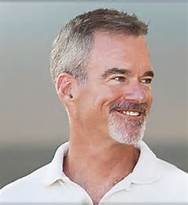
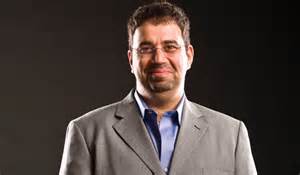
Daron Acemoglu is the Elizabeth and James Killian Professor of Economics at Massachusetts Institute of daron acemoglu economic rockstarTechnology in Boston.

Daron’s principal interests are political economy, development economics, economic growth, technology, income and wage inequality, human capital and training, and labour economics.

Daron was the winner of the 2005 John Bates Clark Medal awarded to economists under forty judged to have made the most significant contribution to economic thought and knowledge.

His most recent works concentrate on the role of institutions in economic development and political economy.

Daron received his M.Sc. in Econometrics and Mathematical Economics and his Ph.D. from the London School of Economics.

Daron is co-author of ‘Why Nations Fail: The Origins of Power, Prosperity, and Poverty’ which can be found at whynationsfail.com

Markets are the foundation of long run economic growth but only if they are under guard by inclusive institutions – Daron Acemoglu

Economics: 

In this interview, Daron mentions: capitalism, marxism, inequality, inclusive institutions, extractive institutions, property, public finance,  rights, risks, cliometrics, econometrics, labor, technology, human capital, inequality, creative destruction and comparative advantage.

Economists: 

In this interview, Daron mentions: James Robinson, George Akerlof, Thomas Picketty, Douglass North and Joseph Schumpeter.

In this episode you will learn:

  • why nations fail and others prosper.
  • why Daron despises the term capitalism refereeing it as ‘and ugly term’.
  • why macro variables are second order to the type of institution when explaining the prosperity of a country.
  • why we should study political systems in an economics course.
  • how economic decisions get made.
  • if democracy is good for economic growth.
  • how Daron first became interested in institutions while growing up under a political dictatorship in Turkey.
  • if the political economy or the type of institution of a country explain inequality.
  • what explains inequality within a nation.
  • about Daron’s mixed views on philanthropy.
  • why empires, such as the Roman, Ottoman and British, collapse and whether we could witness the collapse of other institutions.
  • why China will ultimately fail in its present institutional form.
  • what China must do to maintain its economic growth.
  • about the Ireland and how its economy transitioned over the last 100 years.

I think, on the contrary, extractive institutions have great staying power – Daron Acemoglu

Books:

  • ‘Why Nations Fail: The Origins of Power, Prosperity, and Poverty’ by Daron Acemoglu.
  • Why the West Rules–for Now: The Patterns of History, and What They Reveal About the Future by Ian Morris.
  • War! What is It Good For? Conflict and the Progress of Civilization from Primates to Robots by Ian Morris
  • The Dynamics of Ancient Empires: State Power from Assyria to Byzantium by Ian Morris
  • The Secret of Our Success: How Culture Is Driving Human Evolution, Domesticating Our Species, and Making Us Smarter by Joseph Henrich

Where to Find Daron:

  • http://whynationsfail.com/
  • MIT academic page
http://traffic.libsyn.com/economicrockstar/068_Daron_Acemoglu_.mp3

Podcast: Play in new window | Download

  • facebook
  • linkedin
  • twitter
  • google+
  • pinterest

067: Leigh Caldwell on Cognitive Economics and the Mathematics of Behavioral Economics

January 3, 2016 by Frank

http://traffic.libsyn.com/economicrockstar/067_Leigh_Caldwell_Final.mp3
Play in New WindowDownload

067: Leigh Caldwell on Cognitive Economics and the Mathematics of Behavioral Economics

leigh caldwellLeigh Caldwell is a behavioural economist based in London.

Leigh, together with Elina Halonen, runs the Irrational Agency, which takes the latest scientific discoveries in psychology and behavioural economics, blends it with their hands-on experience of marketing and business, and turns them into powerful, incisive market research techniques.

In 2012, Leigh condensed his experience in pricing and the marketing of several of his businesses into a new book The Psychology of Price: How to use price to increase demand, profit and customer satisfaction.

Leigh is co-founder of the London Behavioural Economics Network, writes for the Pricing Revolution and the Knowing and Making blogs, and regularly features as an economics commentator on BBC News, Radio 4, Research Magazine and other media.

My own background is all about intellectual challenge. I went to university early as a teenager. I studied maths and physics. I was always into pushing myself intellectually and finding the next challenge to take on – Leigh Caldwell

Economists: 

In this interview, Leigh mentions: Elina Halonen, Dan Ariely and George Lowenstein.

Economics:

In this interview, Leigh mentions: Behavioral economics, experimental economics, lab experiments, demand curve, equilibrium, utility, mathematics, rationality, nudge, choice architecture, cognitive economics, reference pricing model, anchoring, hyperbolic discounting, heuristics, neuroeconomics, Nudge Unit, organ donation, tax collection, productivity, GDP and unemployment.

In this episode you will learn:

  • why Leigh help co-found the London Behavioural Economics Network (LBEN).
  • the importance of academics and practitioners working together to further the discipline of economics.
  • why finding the sweet-spot between controlled experiments and realism is difficult yet important.
  • what cognitive economics is and how different it is the behavioral economics.
  • whether big data could influence an individuals consumption behaviors.
  • about the need to use the mathematics of computer science in behavioral economics.
  • why we shouldn’t use the current maths of economics to explain human behavior.
  • why a lack of mathematics is holding back the discipline of behavioral economics.
  • why mathematics is essential for theorising and modelling economics, especially behavioural economics.
  • about the paradox of self-awareness in cognitive economics when faced with choices.
  • how a consumers relationship with a material object is a unique experience and how putting a price on the good can ruin this experience.
  • why charging a higher price for your product or service would generate higher profits in a perceived perfectly competitive market.
  • whether the 99p or 99 cent pricing strategy works.
  • about the reference pricing model and why charging $39 for a product is better than charging $34 for the same product.
  • about the importance of setting prices when considering how numbers are spoken, i.e. numbers with more syllables are received to be more expensive than those with fewer syllables. 
  • how Leigh uses the findings in academic papers to make money for his business.
  • how Leigh uses economic conferences to network, to find out about the latest research and to discover the new academic societies that have been established.
  • about Leigh’s goal for 2016 to start a Cognitive Economics Society.
  • about the advice Leigh would give the UK government to apply cognitive and behavioral economics to deal with some aspects of social life.
  • how the UK government changed people’s behaviour about paying their taxes on time.
  • about the productivity challenge the UK government is facing today and what can be done about it.
  • about the current research Leigh is undertaking regarding where our preferences come from.

Conferences:

  • Judgement and Decision Making Conference
  • American Economics Association Conference

Books:

  • The Psychology of Price: How to use price to increase demand, profit and customer satisfaction by Leigh Caldwell.
  • Predictably Irrational by Dan Ariely.
  • Basic Instinct by Pete Luhn
  • Nudge by Richard Thaler
  • Thinking, Fast and Slow by Kahneman and Tversky

http://traffic.libsyn.com/economicrockstar/067_Leigh_Caldwell_Final.mp3

Podcast: Play in new window | Download

  • facebook
  • linkedin
  • twitter
  • google+
  • pinterest

066: Best of 2015 Part 2: A Look Back at the Economic Rockstar Podcast

January 2, 2016 by Frank

http://traffic.libsyn.com/economicrockstar/Best_of_2015_Part_2_Final.mp3
Play in New WindowDownload

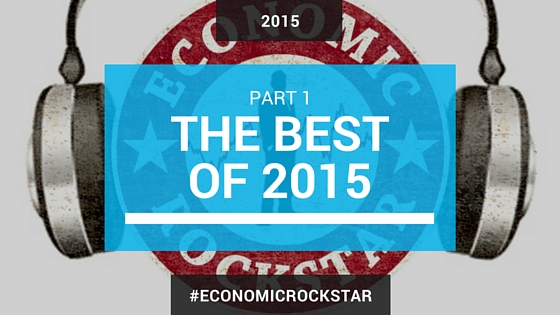
2015 Part 1 (1)

This is the second part of the ‘Best of 2015’ of the Economic Rockstar podcast.

This episode provides you with a glimpse of what type of guests and conversations I’ve had on the show this past year.

Previous episodes that feature in this Best of 2015 are:

022 Josh Angrist on Taking the Con Out of Econometrics

060 Manu Saadia on Trekonomics – The Economics of Star Trek: Scarcity, Productivity and Public Goods

017 Marina Adshade on Understanding Economics the Sexy and ‘Hard’ Way

049 Jon Haywood with Jez Groom on How a Cleverly Designed Nudge Can Change People’s Behavior – Including How We Pee

019 Mark Thornton on the Decriminalization of Marijuana and the Skyscraper Curse

027 Craig Medico on How Economics Saved My Career, How I’m Embracing Technology in the Classroom and Why I’m off to Wrestling School

020 George Magnus on The Age of Ageing, China and the EU

028 Alice Louise Kassens on Nudging Students to Study Economics and Why Mainstream Media Should Publish Research on Mental Health

030 Kim Holder on Rockonomix and Teaching Economics Through the Lens of Sport, Music and Movies

045 Jon Manning on the Art of Pricing and How Economic Theory Has Got Pricing All Wrong

http://traffic.libsyn.com/economicrockstar/Best_of_2015_Part_2_Final.mp3

Podcast: Play in new window | Download

  • facebook
  • linkedin
  • twitter
  • google+
  • pinterest

065: Best of 2015 Part 1: A Look Back at the Economic Rockstar Podcast

December 31, 2015 by Frank

http://traffic.libsyn.com/economicrockstar/065_Year_in_Review_PT_1_Final.mp3
Play in New WindowDownload

2015 Part 1

I’m Frank Conway and I am the host of the Economic Rockstar podcast. I do my best to bring on the brightest and most meaningful guests onto the show. Thank you so much listening and thank you for subscribing to the show on iTunes.

For those of you who have subscribed to the Economic Rockstar community at economicrockstar.com, I thank you for your feedback, interaction and shared insights and views. Let’s build this community bigger, both in size and knowledge.

I’m so grateful to have been in a position to bring to you a wide variety personalities to the show. While reflecting on the year 2015 for the podcast, I was amazed by the diversity and caliber of my guests and the incredible conversations we’ve had.

Their research, books, opinions, outlook, personal stories and teaching pedagogies is, to say the least, quite inspiring and has personally opened my eyes to the boundless capabilities in economics and finance. I truly hope that you found it to be likewise.

Both the end of year ‘Best of 2015’ episodes gives us a snapshot of some topics that were discussed – like a time capsule for the Economic Rockstar podcast of 2015. If you’ve been with me all year, then this episode will act as a refresher and take you back to some of the debates that abound the fields of economics.

If you’re new to the show or relatively new, then perhaps these episodes will offer you a window to glimpse into the show and type of guests and topics that we cover. Hopefully, they will encourage you to explore and listen to previous episodes of the podcast. For a full listing, you can visit economicrockstar.com/podcasts.

Although I did my utmost to choose a best of compilation that captured the essence of this podcast, it was extremely difficult to leave out some of my amazing guests.

I loved all my guests and every single one of them gave up their time to speak to me about their career, their research and personal lives. They exposed themselves to you, my amazing listeners, and answered questions that they had not seen before.

It was almost impossible to choose who to leave in and that’s why I reached to my Community on my email list for their favorites. Thanks for a great response. If I left out one of your favorites, then I apologize as I know how you feel. I’ve provided all the links to the show notes at the economic rockstar website at economicrockstar.com/65.

This is my mix-tape, my compilation of Economic Rockstars, so press play and do what you love doing while you listen – crosswords, chess, darts, exercise, walking the dog or cleaning the house.

What’s compelling about the guests on my show is how much of the work that they do is for the betterment of society as a whole.

The teaching innovations adopted and applied by John Cochrane, Kim Holder, Shawn Humphrey, Marina Adshade, Abdullah Al-Bahrani, Matt Rousu, Alice Lousie Kassens and Craig Medico have created an active rather than a passive economics classroom, helping their students to better understand concepts and how to apply them in a meaningful way.

Others guests, such as Jason Shogren, Alvin Roth, Dan Ariely, Helena Norberg-Hodge, David Simon, David Zetland, Stephen Young, Shanta Deverajan, Shawn Humphrey and Christine Exley have used their knowledge as a platform to help those in need – be it humans, animals or our environment.

The Economic Rockstar podcast also invites guests with a career in finance and it was such a pleasure to have spoken to Jack Schwager and Campbell Harvey.

Guests who feature in the Best of 2015 Part 1:

050 Dan Ariely -Professor of Psychology & Behavioral Economics at Duke University in North Carolina. 

057 Alvin Roth – Craig and Susan McCaw Professor of Economics at Stanford University.

043 Herbert Gintis – Emeritus Professor of Economics at University of Massachusetts.

036 Jason Shogren – the Stroock Professor of Natural Resource Conservation and Management and Chair of the Department of Economics and Finance at the University of Wyoming.

034 David Simon – lawyer and advocate for sustainable consumption. 

023 Loretta Napoleoni – expert on terrorist financing and the Islamic State.

048 Steve Hanke – Professor of Applied Economics, specializing in currency boards. He is Co-Director of the Institute for Applied Economics, Global Health, and the Study of Business Enterprise at The Johns Hopkins University in Baltimore.

051 Eyal Winter – the Silverzweig Professor of Economics at the Hebrew University and Economics Professor at Leicester University.

054 Christine Exley – Professor of Business Administration at Harvard Business School. Christine is also Co-founder and Chief of Research at Wagaroo an organization dedicated to re-house homeless dogs to responsible and loving families.

046 Shanta Devarajan – Chief Economist of the World Bank’s Middle-East and North Africa Region.

059 Shawn Humphrey – Associate Professor of Economics at the University of Mary Washington. Shawn is the founder of La Ceiba Microfinance,the Two Dollar Challenge, the Month of Microfinance, and the Poverty Action Conference. 

016 Jack Schwager – industry expert in futures and hedge funds and the author of a number of widely acclaimed financial books. Jack is one of the founders of Fund Seeder.

037 Noah Smith – Assistant Professor of Finance at Stony Brook University, New York where he is also a member of the Center for Behavioral Finance research team.

http://traffic.libsyn.com/economicrockstar/065_Year_in_Review_PT_1_Final.mp3

Podcast: Play in new window | Download

  • facebook
  • linkedin
  • twitter
  • google+
  • pinterest

064: Oliver Payne on Transitioning from a Marketing Creative to a Behavioral Scientist

December 24, 2015 by Frank

http://traffic.libsyn.com/economicrockstar/64_Oliver_Payne_Final.mp3
Play in New WindowDownload

064: Oliver Payne on Transitioning from a Marketing Creative to a Behavioral Scientist

Oliver Payne is Founder and Director of The Hunting Dynasty. He is a behavioural specialist, author, commentator, ex-ad creative, & manager.oliver payne

Since the late 2000’s Oliver has been working with psychology specifically through The Hunting Dynasty looking to find and build interventions that change behaviour.

Oliver is the author of ‘Inspiring Sustainable Behaviour: 19 Ways To Ask For Change’ which wrangles together environmental and social psychology, behavioural economics, and decision theory.

He is an advisor on the Influence Advisory Panel populated by experts from academia, politics, military, government and civil society.

Oliver is a speaker on behaviour at NATO (Latvia), for Government departments (Whitehall), Start-ups (Netherlands), Science Museum (London) and others.

He is the Co-founder of the London Behavioural Economics Network which meets monthly and is a Fellow of The Royal Society of Arts, and an Affiliate of the British Psychological Society.

Oliver’s company The Hunting Dynasty recently won the Gold Retail Nudge Award for 2015 for their ability to increase the comprehension level of a customer-facing product description.

In this episode you will learn:

  • why Oliver gave up a career in marketing to set up The Hunting Dynasty.
  • what Behavioral Economics and psychology has taught Oliver about human behavior and how he offers solutions to problems faced by companies.
  • about some behavioral studies and how we can manipulate the environment to change people’s behavior.
  • why the behavioral studies carried out by The Fun Theory could be wrong.
  • how we can improve recycling and reduce littering.
  • about the future of driverless cars.

Links:

  • The Hunting Dynasty
  • The Fun Theory

Books:

  • ‘Inspiring Sustainable Behaviour: 19 Ways To Ask For Change’ by Oliver Payne


http://traffic.libsyn.com/economicrockstar/64_Oliver_Payne_Final.mp3

Podcast: Play in new window | Download

  • facebook
  • linkedin
  • twitter
  • google+
  • pinterest

063: Todd Tressider on Financial Freedom and the 7 Steps to 7 Figures

December 17, 2015 by Frank

http://traffic.libsyn.com/economicrockstar/063_Todd_Tressider__Final.mp3
Play in New WindowDownload

063: Todd Tressider on Financial Freedom and the 7 Steps to 7 Figures

Todd Tresidder is an entrepreneur and founder of Financial Mentor. Todd educates and supports business owners and todd tresidderinvestors to achieve financial and personal freedom.

As a serial entrepreneur since childhood, Todd built many businesses and retired at age 35 from his position as a Hedge Fund Investment Manager responsible for a 20+ million dollar portfolio.

Todd raised his net worth from less than zero at age 23 to self-made millionaire 12 years later by using the same personal finance and investment strategies taught on this website.

Todd is an early pioneer and expert in statistical and mathematical risk management systems for investing and became financially independent from age 35 through investing – not marketing.

Todd has a B.A. in Economics from University of California.

In this Episode you will learn:

  • about the questions Todd raised as an undergrad on the application of statistical techniques in the financial markets.
  • about the importance of financial literacy.
  • about the impending bond market bubble.
  • why habits are necessary when starting out on a financial plan.
  • about the 7 steps to 7 figures.
  • why financial freedom was more about personal freedom than for wealth accumulation.
  • about the contradictions between the principles that led to his own financial success and what is commonly taught and practiced.
  • about the unique educational system that Todd developed for wealth building and how to achieve it.
  • about the inner transformation that Todd experienced during his path to financial freedom.
  • how Todd made his money investing in publicly traded markets, particularly in futures.

My focus is on the experience of life, not the toys and goodies – Todd Tresidder

Click To Tweet

Influencer:

  • Cory Rudell: remembercorey.com

Books:

  • In Search of Excellence by Thomas Peters and Robert Waterman
  • Deep Work: Rules for Focused Success in a Distracted World by Cal Newport
  • So Good They Can’t Ignore You by Cal Newport
  • Technical Analysis of the Financial Markets: A Comprehensive Guide to Trading Methods and Applications by John Murphy

Resources: 

7 Steps to 7 Figures

http://traffic.libsyn.com/economicrockstar/063_Todd_Tressider__Final.mp3

Podcast: Play in new window | Download

  • facebook
  • linkedin
  • twitter
  • google+
  • pinterest
  • Prev Page...
  • 1
  • …
  • 9
  • 10
  • 11
  • 12
  • 13
  • …
  • 18
  • ...Next Page

Frank Conway

Frank Conway is founder of Economic Rockstar and lecturer of economics, finance and statistics. Read More…

View My Blog Posts

Youtube Sub

Become a Patron of the Economic Rockstar Podcast

patreon

Ireland’s Economy by the Numbers

Leaving Cert Economics: Ireland’s Economy  Click here to download a workbook on Ireland’s Economy so that you can add your own notes. [Original size] Ireland’s Economy by fconway

Categories

Subscribe and Never Miss An Episode

itunes-logo

Recent Posts

  • Ireland’s Economy by the Numbers April 8, 2019
  • 174: Wendy Carlin on The Core Project, Capitalism, Democracy and Normative Statements February 13, 2019
  • 173: Stephen Wright on Core Econ as a Learning Resource for Mainstream Economics January 28, 2019
  • 172: Best of 2018 Part 2: From the Great Depression to Futurism; Institutions, Individualism, Cooperation and Reciprocity January 22, 2019
  • 171: Best of 2018 Part 1 January 3, 2019

Copyright © 2026 · Podcast Pro Theme on Genesis Framework · WordPress · Log in

This website uses cookies to improve your experience. We'll assume you're ok with this, but you can opt-out if you wish. Accept Reject Read More
Privacy Policy

Privacy Overview

This website uses cookies to improve your experience while you navigate through the website. Out of these, the cookies that are categorized as necessary are stored on your browser as they are essential for the working of basic functionalities of the website. We also use third-party cookies that help us analyze and understand how you use this website. These cookies will be stored in your browser only with your consent. You also have the option to opt-out of these cookies. But opting out of some of these cookies may affect your browsing experience.
Necessary
Always Enabled
Necessary cookies are absolutely essential for the website to function properly. This category only includes cookies that ensures basic functionalities and security features of the website. These cookies do not store any personal information.
Non-necessary
Any cookies that may not be particularly necessary for the website to function and is used specifically to collect user personal data via analytics, ads, other embedded contents are termed as non-necessary cookies. It is mandatory to procure user consent prior to running these cookies on your website.
SAVE & ACCEPT