• ABOUT
  • RESOURCES
  • PODCAST
  • BOOKS
  • BLOG
  • SUPPORTERS
  • QFA Financial Advice
  • CONTACT

Economic Rockstar

Connecting Brilliant Minds in Economics and Finance

052: Alex Tabarrok on Globalisation, Bounty Hunters and Leveraging Online Education

October 1, 2015 by Frank

http://traffic.libsyn.com/economicrockstar/Alex_Tabbarrok__Final.mp3
Play in New WindowDownload

052: Alex Tabarrok on Globalisation, Bounty Hunters and Leveraging Online Education

Alex Tabarrok is Associate Professor of Economics at George Mason University and co-founder (with Tyler Cowen) of Marginal Revolution University, an online platform for learning economics.Alex Tabarrok
Alex is Senior Fellow and former Research Director for The Independent Institute, Assistant Editor of The Independent Review, Bartley J. Madden Chair in Economics at the Mercatus Center and Director of the Center for Study of Public Choice.

Alex is the author or editor of a number of books including the introductory economics textbooks, Modern Principles, The Voluntary City and Changing the Guard: Private Prisons and the Control of Crime.

Alex is a TED speaker with over 640,000 views of his TED talk, How Ideas Trump Crises.

Alex received his Ph.D. in economics from George Mason University, and he has taught at the University of Virginia and Ball State University.

“I hope to be teaching long after I’m dead” – Alex Tabarrok

Click To Tweet

In this episode, you will learn:

  • how to ensure that criminals turn up of trial and to reduce the possibility of them becoming a fugitive.
  • how bounty hunters are more successful than the police in catching criminals.
  • why bounty hunters and bail bondsmen are the most best for the taxpayer.
  • why bounty hunters invited Alex Tabarrok to join them in a bounty hunting.
  • why a mother’s signature on a bail bond is the most effective way of making sure a criminal repays its  due.
  • how effective are the police in deterring crime.
  • how a police strike in Montreal in 1967 resulted in an spike in crime.
  • how the terror alert level results in an increase in police presence and results in a decrease in local crime.
  • whether we should reward the police for reducing crime and the problems that could arise from this reward system.
  • about the use of value-added tests for identifying teacher quality.
  • whether the best teachers have a positive impact on the future earnings of their students.
  • if a country can have a welfare state and open borders.
  • how the next generation of immigrants revert to the average of their adopted country including crime.
  • why immigrants to the United States are the most entrepreneurial.
  • why Alex co-founded Marginal Revolution University.
  • what Marginal Revolution University is about and who it’s for.
  • how to leverage the best teachers and leverage their experience.
  • how teaching will evolve into a format that’s similar to how plays evolved into movies with leading actors being paid millions of dollars and the production being created just once.
  • how artificial intelligence and computer adaptive learning programmes will be the next wave of teaching and learning.
  • what is the ideal length for a recorded educational video.
  • why universities will have to adapt to online technologies.
  • why parents and politicians want colleges to use online technologies.

Immigrants have lower crime rates, but the children of immigrants have about average crime rates. It’s unfortunate that the immigrants adopt our ways. They assimilate to American crime rates – Alex Tabarrok

Personal Habits:

I love doing what I do and that removes a lot of barriers. It gets you up in the mornings – Alex Tabarrok

Takeaway:

“Economics is fun. Economics brings in these world histories, things about climate, geography and history” – Alex Tabarrok

Economics:

In this interview, Alex mentions: crime, incentives, causality, elasticity, Baumol’s Cost Disease, rewards, redistribution, welfare, taxes, entrepreneurship, human capital, globalisation, public goods, free trade, structural unemployment and trade.

Economists:

In this interview, Alex mentions: Tyler Cowen, Greg Mankiw, Paul Krugman, Eric Callan, John Click, Milton Freidamn, John Nash, Bryan Caplan, Robin Hanson, Joseph Schumpeter, Adam Smith, David Hume and Richard Cantillon.

“This is a cliche, but Adam Smith really is great” – Alex Tabarrok

Click To Tweet

Ted:

  • How Ideas Trump Crises by Alex Tabarrok
  • Comment: Solving Crises Through Innovation and Ideas or Creating Problems Through Marginalisation and Displacement by Frank Conway

My TED talk is 75% of my entire teaching. So that 15 minute talk has been seen by so many people that that’s the majority – the big majority of all my teaching in my life. – Alex Tabarrok

Podcasts:

  • EconPop

Books:

  • Economics in One Lesson by Henry Hazlitt
  • The Armchair Economist by Stephen Lansberg
  • Freakonomics by Steven  D. Levitt and Stephen J. Dubnar
  • An Economist Gets Lunch: New Rules for Everyday Foodies by Tyler Cowen
  • The Undercover Economist by Tim Hartford
  • The Undercover Economist Strikes Back by Tim Hartford
  • The Case Against Education by Bryan Caplan (coming soon)
  • The Age of Em by Robin Hanson 
  • Trekonomics by Manu Saadia

    http://traffic.libsyn.com/economicrockstar/Alex_Tabbarrok__Final.mp3

    Podcast: Play in new window | Download

    • facebook
    • linkedin
    • twitter
    • google+
    • pinterest

    051: Eyal Winter on How Excessive Giving Ensures the Survival of the Human Race and on the Beautiful Mind of John Nash

    September 23, 2015 by Frank

    http://traffic.libsyn.com/economicrockstar/Eyal_Winter_Final.mp3
    Play in New WindowDownload

    051: Eyal Winter on How Excessive Giving Ensures the Survival of the Human Race and on the Beautiful Mind of John Nash

    eyal winter

    Eyal Winter is the Silverzweig Professor of Economics at the Hebrew University and Economics Professor at Leicester University.

    He is a member and a former director of the Center for the Study of Rationality, an elected council member of the International Game Theory Society and an elected fellow of the Economic Theory Society.

    Eyal was awarded the Humboldt Prize for excellence in research by the German government in 2010. He has presented his work in more than 120 research institutes in 26 countries around the world including Harvard, Stanford, Princeton, Berkeley, Cambridge, and Oxford.

    Eyal’s book Feeling Smart: Why our Emotions are More Rational Than We Think was published in January 2015.

    Eyal graduated from the Hebrew University of Jerusalem in Mathematics, Statistics and Economics before going on to study his doctorate in Game Theory.

    In this episode you will learn:

    • if there is a link between game theory and behavioral economics.
    • how the perceptions of human behaviour vary greatly across all disciplines.
    • if there is a need to have divisions in universities regarding the disciplines being taught.
    • how we can use emotion in a strategic way to make us better off.
    • why human evolution has not removed emotion if it’s considered a hindrance in economics.
    • the importance of training your rationality and emotions to work together.
    • why you should look at something from an outsiders perspective when dealing with an emotional situation.
    • how anger can be an emotion that can make you financially better off.
    • why love, empathy and sympathy can make you better-off in the way how other people treat us.
    • what Eyal Winter means when he says that there is logic in emotion and emotion in logic.
    • how subjective information is more powerful than evidence-based information.
    • why intuition should be taken into consideration in the decision-making process rather than using evidence alone.
    • why you should invoke your rationality into the decision-making process rather than rely on your gut instinct.
    • how game theory is not always about choosing the most optimal outcome for an individual.
    • how we can learn why humans give excessively by observing the behavior of ants and bees.
    • about the incentives of suicide bombers and why their behavior is not irrational if you think about their community.
    • why we treat each other much better than we treat animals.
    • about the incentive to donate and how mixed ethnic communities donate less than more homogenous communities.
    • why the Scandinavian countries are willing to pay the highest taxes and yet have the lowest tax evasion in the world.
    • why it was fascinating yet frustrating for Eyal Winter when he met John Nash.
    • why John Nash developed the Nash Equilibrium to reflect his own way of dealing with people and situations.
    • if we can change people’s behaviour with incentives or social pressure.
    • whether children have a higher emotional intelligence than adults.
    • if seeing a comedian live would be better than seeing your doctor if you feel sad.
    • whether employees should be subjected to ‘Emotional Labor’ by their employers.

    Influencers:

    Nobel Laureate Bob Aumann

    Economics:

    In this interview, Eyal mentions: game theory, rationality, irrationality, human behavior, donations, incentives,

    Economists:

    In this interview, Eyal mentions: Herbert Gintis, Bob Aumann and John Nash.

    Personal Habits:

    Play Guitar – Traditional Israeli songs and rock, listens to classical music and travel.

    “The human race has only one effective weapon, and that is laughter.” -Mark Twain

    Click To Tweet

    Books:

    • Feeling Smart: Why our Emotions are More Rational Than We Think by Eyal Winter
    • Mapping Human History: Genes, Race and Our Common Origins by Stephen Olson

    Resources:

    • Psychology Today 
    • Haaretz Newspaper 

    Song:

    • The Famous Blue Raincoat by Leonard Cohen sung by Professor Eyal Winter
    http://traffic.libsyn.com/economicrockstar/Eyal_Winter_Final.mp3

    Podcast: Play in new window | Download
    • facebook
    • linkedin
    • twitter
    • google+
    • pinterest

    050: Dan Ariely on Irrational Behavior and the Importance of Our Environment When Making Decisions

    September 16, 2015 by Frank

    http://traffic.libsyn.com/economicrockstar/050_Dan_Ariely_Final.mp3
    Play in New WindowDownload

    050: Dan Ariely on Irrational Behavior and the Importance of Our Environment When Making Decisions

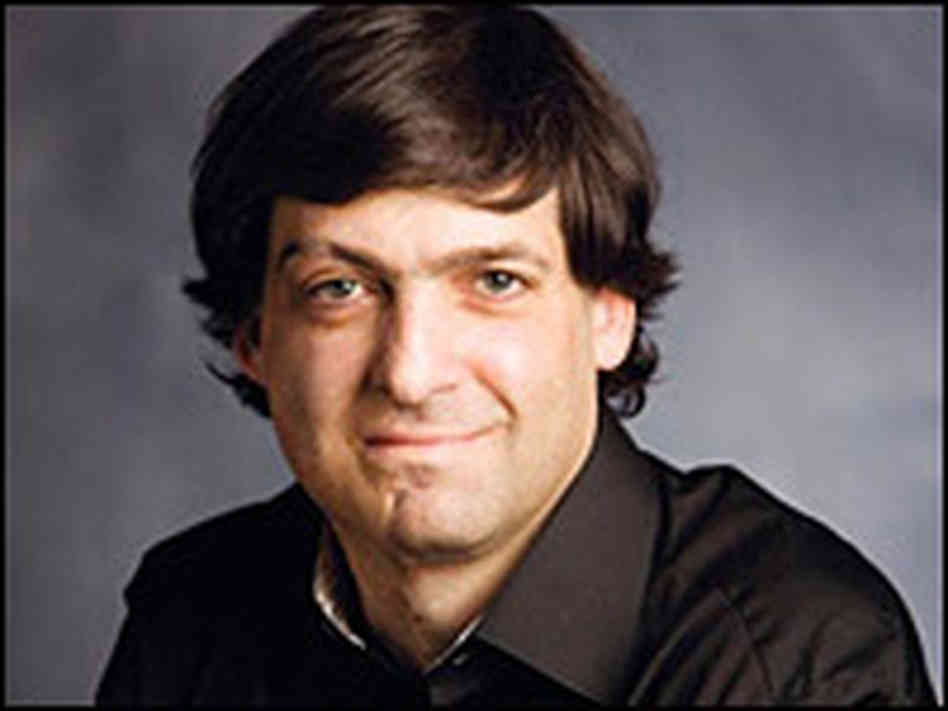
    Dan Ariely is Professor of Psychology & Behavioral Economics at Duke University in North Carolina. Dan’s interests spanDan Ariely a wide range of behaviors, and his sometimes unusual experiments are consistently interesting, amusing and informative, demonstrating profound ideas that fly in the face of common wisdom.

    In addition to appointments at the Fuqua School of Business, the Center for Cognitive Neuroscience, the Department of Economics, and the School of Medicine at Duke University, Dan is also a founding member of the Center for Advanced Hindsight.

    Dan is the author of the New York Times bestsellers Predictably Irrational, The Upside of Irrationality, and The Honest Truth About Dishonesty and his latest book Irrationally Yours is now available.

    Dan has received numerous honors and awards in medicine, psychology and economics.

    Dan received a B.A in Psychology from Tel Aviv University, an M.A and PhD in Cognitive Psychology from University of North Carolina and another PhD in Business Administration from Duke University.

    Influencer:

    Professor Hanan Frenk, Tel Aviv University

    Economists:

    In this interview, Dan mentions: Brian Wansink. 

    Psychologists:

    In this interview, Dan mentions: Mike Norton and Elizabeth Dunn.

    Economics:

    In this interview, Dan mentions and discusses: Tragedy of the Commons, behavioral economics, public goods, pricing, decision-making, choice architecture, Ulysses Contract, happiness, asymmetric dominance effect and choice.

    Takeaway:

    “Think about your environment and always experiment” – Dan Ariely

    Click To Tweet

    In this episode, you will learn:

    • about Dan Ariely’s traumatic experience resulting in severe burns.
    • how Dan Ariely found his love for psychology and behavioral economics.
    • why Dan will not be teaching his Irrational Behavior course on Coursera.
    • the problems with MOOCs like Coursera and why it is making the wrong choice regarding its open platform system.
    • why Dan was turned down for his first book – a cookbook and what advice he was given by a publisher.
    • why we as humans make very costly mistakes and what we can do about it.
    • how people eat more than they realise and how experiments in economics have shown this.
    • why we are bad at doing things that makes us happy.
    • the most common mistake companies make when making decisions or processing information.
    • how companies can avoid making mistakes.
    • if anger is a good or bad emotion.
    • the most surprising finding from Dan Ariely’s research.
    • the most surprising question put to Ask Ariely.
    • how to get poor people in Kenya to save.
    • how your environment matters when making decisions.

    Quotes by Dan Ariely in Episode 50 of the Economic Rockstar Podcast:

    “Choice architecture is this idea that our environment influences how we make decisions” – Dan Ariely

    Click To Tweet

    “In the process of trying to not make any mistakes, companies create environments that punish risk and therefore punish ingenuity and growth” – Dan Ariely

    “Tim is a very interesting character and he is experimenting on himself. We have to realize that his experiments have the validity that they work very well for him” – Dan Ariely

    On Coursera:

    “I think we do need rules for trolls. I think that pricing is a very good mechanism for some things and I’m not sure it’s a mechanism for all for all things like this. The reality is that Coursera probably over samples from the people on the tail of the distribution in terms of mental stability.” – Dan Ariely

    Books:

    • Predictably Irrational by Dan Ariely
    • The Upside of Irrationality by Dan Ariely
    • The Honest Truth About Dishonesty by Dan Ariely
    • Irrationally Yours by Dan Ariely
    • The 4 Hour Chef by Tim Ferriss
    • Happy Money: The Science of Smarter Spending by Elizabeth Dunn and Michael Norton

    Resources Mentioned by Dan Ariely:

    • Kitchen Safe: www.thekitchensafe.com
    • Coursera: www.coursera.org

    Where to Find Dan Ariely:

    • Website: www.danariely.com
    • Twitter: @danariely
    • LinkedIn: Dan Ariely
    • Ted: www.ted.com

    Transcript:

    The full transcript of this episode with Dan Ariely will be available shortly.

    Thanks for Listening!

    Thanks so much for joining me again this week. Have some feedback you’d like to share? Leave a note in the comment section below!

    If you enjoyed this episode, please share it using the social media buttons you see at the bottom of the post.

    Also, please leave an honest review for the Economic Rockstar Podcast on iTunes! Ratings and reviews are extremely helpful and greatly appreciated! They do matter in the rankings of the show, and I read each and every one of them.

    http://traffic.libsyn.com/economicrockstar/050_Dan_Ariely_Final.mp3

    Podcast: Play in new window | Download
    • facebook
    • linkedin
    • twitter
    • google+
    • pinterest

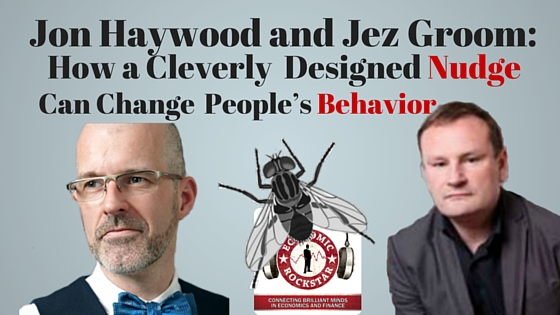
    049: Jez Groom and Jon Haywood on How a Cleverly Designed Nudge Can Change People’s Behavior – Including How We Pee

    September 10, 2015 by Frank

    http://traffic.libsyn.com/economicrockstar/Jez_Groom_Final.mp3
    Play in New WindowDownload

    049: Jez Groom and Jon Haywood on How a Cleverly Designed Nudge Can Change People’s Behavior – Including How We Pee

    Jez Groom is a behavioral economist and co-founder of the behavioral practice #ogilvychange in the United Kingdom.

    Alongside Rory Sutherland, Jez has created the Nudge Awards and Nudgestock, bringing the best in behavioral economics to the mainstream.

    Jon Haywood is the founder of Ambassadogs and has been working in the Advertising industry for almost 20 years.

    Jon has specialised in taking a more consumer (human) perspective of the marketing challenge, working with the likes of Rory Sutherland of #ogilvychange on understanding how behavioural economics can add a significant competitive advantage to the creative ideation process.

    Jez Groom and Jon Haywood

    Economists:

    Rory Sutherland, Paul Dolan, Richard Thaler, Cass Sunstein, Daniel Kahneman, Dan Ariely and Malcolm Gladwell.

    Economics:

    Behavioural economics, choice architecture, nudge, framing, heuristic, ’Fly in the Urinal’, ‘Piano Stairs’, ‘Stickman’, ‘The Religious Norming and The Begger’ and the ‘Facial Feedback Hypothesis’,

    In this episode, you will learn:

    • how #ogilvychange is bringing Behavioural Economics into the mainstream.
    • about Nudgestock which brings academics and practitioners together to discuss the theoretical and practical intersection of behavioural economics.
    • how a ‘Fat Stickman’ pointing to an escalator and a ‘Thin Stickman’ pointing to the stairs can nudge a person to take the stairs.
    • about the bathroom tip-jar trick that could net you more tips than ever!
    • how re-arranging the choice architecture of a sales product can boost sales.
    • how #ogilvychange gave The Times newspaper a ROI of 250 in incremental sales on a 1 investment.
    • that offering customers too many choices can affect your bottom-line.
    • how changing the environment of sales agents can increase average sales by 185% simply by changing the colours of the walls.
    • how we can nudge people to take the stairs rather than the elevator by creating ‘The Piano Stairs’.
    • how we can encourage people to bin their litter by simply creating ‘The World’s Deepest Bin’.
    • how we can reduce the amount of urine that ends up on the floor by putting a sticker in the urinal.
    • why businesses and governments are now embracing behavioral economics.
    • and much more!

    How a Clever Nudge Can Change People’s Behavior:

    The Fun Theory, an initiative by Volkswagen, aims to create ways to encourage people to make a small change in their lives for the better. A nudge is a strategic approach by firms, governments and individuals to encourage people to behave in a way you would like them to behave. Nudging has become quite synonymous with behavioral economics lately, particularly since the release of Thaler’s book ‘Nudge’.

    The Piano Stairs:

    There is a general consensus that taking the stairs rather than the elevator or escalator can, overtime, make people lead a healthier and happier life. Perhaps that outcome is somewhat extreme, but people may ‘feel better’ if they take the stairs every time. However, how can we encourage people to take the stairs rather than the elevator?

    Should we stop the escalator from moving or have an ‘Out of Order’ sign on an elevator? Not a good idea as this would possibly have an undesired outcome as people would end up infuriated. Although they are forced to the take the stairs, the path taken to get from A to B is not desirable. Problems would also arise for those unable to physically take the stairs. We should allow an option but encourage people, if they can, to take the stairs.

    Should we send out messages outlining the health and well-being benefits of taking the stairs? Perhaps this could be effective but taking the stairs today will not make someone any fitter or healthier. People will more than likely delay or feel it is pointless.

    https://www.youtube.com/watch?v=0Yu62StlsMY

    Do you remember or have you seen the 1988 movie Big featuring Tom Hanks? Tom’s character had made a wish, the day before when he was a young boy, to be older. His wish comes true but his mind and behavior is that of his younger self. Tom’s character immortalizes the famous New York toy store, FAO Schwarz, by playing ‘Chopsticks’ on a large piano on the floor. This captured the imagination of many people who wathced his movie and I’m sure the behavioral scientists at The Fun Theory knew exactly how they could now encourage people to take the stairs rather than the escalator.

    Enter The Piano Stairs, a fun and interactive experiment to nudge people to take the stairs and to, perhaps, feel better. Check out their video here and the interesting results achieved with this ‘nudge’ from The Fun Theory.

    The Urinal Fly:

    In this episode of the Economic Rockstar podcast, Jez Groom mentioned how placing a sticker of a fly in a urinal reduced the incidence of mis-direction of toileting by men. Subsequently, I reached out to Jon Haywood from ambassadogs.nl who explained the concept of the Urinal Fly and how a sticker or print of a fly within a urinal is a nudge that changed the behavior of those men in question.

    Jon is from Amsterdam and this particular nudge is credited to Amsterdam’s Schiphol Airport. The manager of the cleaning department at Schiphol Airport, Jos van Bedaf, is credited to introducing the urinal fly in order to reduce the amount of spillage. According to Jon Haywood, this had the effect of reducing spillage, resulting in lower clean-up costs and improved toilet conditions. The fly was chosen as it appears insanitary and men can aim at the image. A butterfly couldn’t be chosen as men may aim around this image as it could conjure up an image of beauty that you wouldn’t like to harm.

    The World’s Deepest Bin:

    Another nudge was developed by The Fun Theory to encourage people to bin their litter and have a litter-free environment. Again, Jon Haywood talks to us about this particular nudge and how a piece of deposited litter passed an internal sensor which activated a sound giving the perception that the litter was falling for 10 seconds.

    Recommended Books:

    • Thinking, Fast and Slow by Daniel Kahneman
    • Nudge by Richard H. Thaler
    • Blink by Malcolm Gladwell
    • Outliers by Malcom Gladwell
    • Freakonomics by Steven D. Levitt and Stephen Dubnar
    • SuperFreakonomics by Steven D. Levitt and Stephen J. Dubnar

    Resources:

    • #nudgesinthewild
    • O Behave!
    • www.thenudgeawards.com

    Where to Find Jez Groom:

    www.ogilvychange.com

    Where to Find Jon Haywood:

    www.ambassadogs.nl

    http://traffic.libsyn.com/economicrockstar/Jez_Groom_Final.mp3

    Podcast: Play in new window | Download
    • facebook
    • linkedin
    • twitter
    • google+
    • pinterest

    048: Steve Hanke on Currency Boards, Moral Hazard and the Benefits of Privatization

    September 3, 2015 by Frank

    http://traffic.libsyn.com/economicrockstar/048_Steve_Hanke_Final.mp3
    Play in New WindowDownload

    048: Steve Hanke on Currency Boards, Moral Hazard and the Benefits of Privatization

    Steve Hanke is a Professor of Applied Economics, specializing in currency boards. He is Co-Director of the Institutesteve hanke for Applied Economics, Global Health, and the Study of Business Enterprise at The Johns Hopkins University in Baltimore.

    Steve is a Senior Fellow and Director of the Troubled Currencies Project at the Cato Institute in Washington, D.C. and a member of the Charter Council of the Society of Economic Measurement and the Financial Advisory Council of the United Arab Emirates.

    Previously, Professor Hanke was a Senior Economist on President Reagan’s Council of Economic Advisers and was also an Advisor to the Presidents of Bulgaria, Venezuela, and Indonesia.

    He played an important role in establishing new currency regimes in Argentina, Estonia, Bulgaria, Bosnia-Herzegovina, Ecuador, Lithuania, and Montenegro. Professor Hanke has also advised the governments of many other countries, including Albania, Kazakhstan and Yugoslavia.

    In 1998, Steve was named one of the twenty-five most influential people in the world by World Trade Magazine.

    Professor Hanke is a well-known currency and commodity trader and serves as Chairman of Hanke-Guttridge Capital Management, LLC.

    Steve Hanke’s most recent books are Zimbabwe: Hyperinflation to Growth (2008) and A Blueprint for a Safe, Sound Georgian Lari (2010).

    Influencers:

    Friedrich Hayek, Kenneth Boulding of the University of Colorado  and Bob Mundell

    Economics:

    In this interview, Steve mentions and discusses: currency boards, monetary policy, inflation, hyper-inflation, interest rates, currency reserves, optimum currency area, common currency, fiscal policy, moral hazard, eurozone, ECB, the World Bank, property rights, investment, central bank, dollarisation, interventionist policy, privatisation, hedging, Chicago Mercantile Exchange, futures contract and bitcoin.

    Economists:

    In this interview, Steve mentions and discusses: Kirk Schuller, Milton Friedman, Friedrich Hayek, Adam Smith, Robert Mundell and Kenneth Boulding.

    There have only been 56 hyper-inflations in world history and I think I’ve stopped more of them than any living economist – Professor Steve Hanke

    In this episode, you will learn:

    • what is a currency board and the reason why a country should resort to one.
    • about Bulgaria’s currency crisis in 1997, how hyper-inflation hit 142 percent per month and what Steve Hanke did to solve the problem.
    • the successful use of currency boards in Bulgaria in 1997 to significantly reduce inflation and interest rates.
    • why Bulgaria has one of the lowest fiscal deficits of any country.
    • about Yugoslavia’s hyper-inflation of 313 million percent in 1994.
    • why Montenegro dumped the Yugolsav Dinar for the Deutschmark during Slobodan Milosevic’s presidency of Yugoslavia.
    • how Montenegro will join the euro currency without having to do a currency changeover.
    • if it makes sense to leave a currency board to join a monetary union and giving up fiscal autonomy.
    • why it’s best for Bulgaria to stay outside the eurozone due to the issue of moral hazard.
    • why Greece ran up a fiscal deficit of 12.7% of GDP when the Maastricht Treaty stated a strict adherence to a maximum level of 3%.
    • about the Greek bailout of $472 billion and how it amounts to almost $43,000 for every man, woman and child in Greece.
    • how a currency board removes the moral hazard of a unified currency area by financing spending with current taxes or the private bond market.
    • if Greece should abandon the euro and set up a currency board and pegging their currency with the euro.
    • how a Greek currency board would operate if Greece left the eurozone.
    • about the success of the Hong Kong currency board and how it operates without a central bank.
    • if we are heading toward a one world currency.
    • why most small countries should abandon their currency and anchor it to the euro, dollar, yen or yuan.
    • whether Greece should sell off its ports, lands and other property to private investors just as Hayek proposed and Ronald Reagan did in the US in the 1980s.
    • about Ronald Reagan’s privatisation programme in the US in the early 1980s.
    • about the Bureaucratic Rule of Two and why privatisation is an optimal outcome for government, enterprise and society.
    • what Hayek was like as a person and what he thought of Ronald Reagan, The Intellectual.
    • about candling in the old days when grading eggs for futures contracts.

    On Currency Boards:

    A currency board system is a system in which you issue a domestic currency, which is anchored to a sound currency at a fixed exchange rate that’s fully convertible. The local currency is backed up with a 100% anchor currency’s reserves. So the local currency really becomes a clone of whatever the anchor currency happens to be.

    The currency board is not allowed to emit credit to the government. If the government needs money for fiscal expansion, the only way to get this finance (in the form of your local currency) is to take hard currency in (like the euro) and exchange it for the local currency. Bulgaria has been doing this since 1997. The government cannot sell bonds to raise finance. They convert the euro (previously the Deutschmark) into their local currency, the lev, and can then carry out fiscal stimulus. Consequently, Bulgaria has one of the lowest fiscal deficits in Europe.

    On Bulgaria and Why It Should Not Join the Eurozone:

    “With the currency board, they (Bulgaria) ‘clone’ the euro, so they’re in a unified currency area with the eurozone but they’re not formally part of the eurozone itself. I’ve counselled the Bulgarians, and the best thing to do is to stay with that arrangement. And the reason why is that the eurozone, the common currency area, has a huge moral hazard associated with it. That is, something that creates bad behaviour encourages bad behaviour and Greece is a perfect example.” – Professor Steve Hanke

    On the Greek Deceit and Its Fiscal Deficit:

    “Greece entered the eurozone in 2001 on false pretences. They cooked the books and got in. They were allowed in the club even though the club knew the Greeks were lying in terms of their economics statistics.”

    “The Greeks calculated that they could spend like drunken sailors, which they did and ran a completely irresponsible fiscal operation.”

    “The moral hazard is you join a club and if you think the club won’t enforce its rules and won’t force you to tow the line, you will just go on your merry way spending and deficit spending and knowing, or at least thinking that, in this case the eurozone, would bail you out.”

    Greece ranks 151 out of 189 countries for the ability of doing business. If you make a contract in Greece, the probability of having that contract enforced is very low by international standards. It’s like being in Zimbabwe. Greece is supposed to be part of the European Union and a modern country but it isn’t.

    Greece should leave the eurozone, set up a currency board and re-introduce the Drachma. This would create fiscal discipline just like the situation in Bulgaria.

    Quotes by Steve Hanke in Episode 048 of the Economic Rockstar Podcast:

    I was hedging and trading when I was 14 years of age. I was trading with my grandfather – @steve_hanke

    Click To Tweet

    Hong Kong was aways a unilateralist free trader. That encourages competition, entrepreneurship and productivity. The countries with open trade tend to be more free market in general and they grow more rapidly. – Steve Hanke

    “About 90 Central Banks should just be done away with completely and either a currency board be put in or a stronger foreign currency like the dollar, the euro or the yen.” – Steve Hanke

    “If you want lower fiscal deficits, lower inflation and higher rates of growth you adopt with a currency board system or dollarize” – Steve Hanke

    If you want to reduce corruption you privatise. But the potential gains in terms of economic prosperity are enormous – @steve_hanke

    Click To Tweet

    Europe’s lands are “a mere waste and loss of country in respect both of produce and population.” – Adam Smith

    Click To Tweet

    Bitcoin has a unit of account problem – @steve_hanke

    Click To Tweet

    On Hayek:

    “He was delightful and charming and very interesting, particularly for Mrs Hanke and myself. One of Mrs Hanke’s Great Aunts was one of Hayek’s earlier loves of his life.”

    Recommended Books:

    • Zimbabwe: Hyperinflation to Growth by Steve Hanke (Free download)
    • The Wealth of Nations by Adam Smith
    • Reagan, In His Own Hand by Ronald Reagan, edited by Marty Andersson et al.
    • The Advanced Introduction To The Austrian School of Economics by Randall Holcombe
    • The Essential Hayek by Donald Boudreaux (Free Kindle download)

    Resources:

    • Case Studies written by Steve Hanke
    • Troubled Currencies Project
    • The Hanke-Krus Hyperinflation Index
    • http://econographic.com/hyperinflation
    • On the Measurement of Zimbabwe’s Hyperinflation by S. Hanke and A. Kwok
    • Friedman: Float or Fix? by Steve H. Hanke
    • Reflections on Currency Reform and the Euro by Steve H. Hanke
    • The Privatization Debate: An Insider’s View by Steve H. Hanke
    • Could Greece Adopt the Dollar? by Steve H. Hanke
    • Reflections on Reagan the Intellectual by Steve H. Hanke
    • On the Fall of the Rupiah and Suharto by Steve H. Hanke
    • Doing Business 2015 Report by The World Bank

    Where to Find Steve Hanke:

    • Cato Institute: http://www.cato.org/people/steve-hanke
    • Johns Hopkins Institute: http://krieger.jhu.edu/iae/co-directors
    • Twitter: @steve_hanke
    http://traffic.libsyn.com/economicrockstar/048_Steve_Hanke_Final.mp3

    Podcast: Play in new window | Download
    • facebook
    • linkedin
    • twitter
    • google+
    • pinterest

    047: Victor Ricciardi on The Psychology of Financial Planning and Investing

    August 27, 2015 by Frank

    http://traffic.libsyn.com/economicrockstar/047_Victor_Ricciardi_Final.mp3
    Play in New WindowDownload

    047: Victor Ricciardi on The Psychology of Financial Planning and Investing

    Victor Ricciardi is Finance Professor at Goucher College, Baltimore, Maryland where he teaches courses in Victor Ricciardipersonal financial planning, corporate finance, investments, behavioral finance, and the psychology of money.

    Victor is the Coordinator of Behavioral & Experimental Research for the Social Science Research Network also known as SSRN.

    Victor is the current Editor for seven SSRN eJournals including Behavioral & Experimental Finance, History of Finance, and Behavioral & Experimental Economics.

    He received his PhD from Golden Gate University and his MBA from St. John’s University.

    Victor’s current book Investor Behavior: The Psychology of Financial Planning and Investing with co-editor Kent Baker is now available and has 30 chapters on emerging research in behavioral finance.

    In this episode, you will learn:

    • the difference between Behavioral Economics and Behavioral Finance.
    • the rational approach to investing and whether it exists.
    • what bounded rationality really means.
    • if companies help you make decisions for their own personal benefit.
    • how framing can be a powerful tool to help customers make decisions.
    • the importance of financial literacy at different stages of your life.
    • the similarities between behavioral economics and marketing.
    • the future of Behavioral Economics and Behavioral Finance.
    • how your mood, good or bad, can influence your buying behaviour and increase risk-taking.
    • about the importance of studying the subconscious mind in finance or neurofinance.
    • why people generally do not take losses, known as loss aversion.
    • why Victor disagreed with the traditional views of economics and decided to study behavioral finance.
    • how and why some governments are using behavioural finance and economics techniques to nudge us to make better financial decisions in our lives.
    • how status quo bias makes it harder for employees to opt out of an automatically enrolled savings retirement plan.
    • how mounting student debt and high youth unemployment in the US could make it difficult to service pensions leading to a pension ‘ponzi’ scheme or a crisis.
    • why Victor Ricciardi believes that there should have been a law designed to make retirement planning easier for the employee.
    • what you should do when investing so as to manage bull and bear market cycles.

    Economics:

    In this interview, Victor mentions and discusses: behavioral Economics, Behavioral Finance, rational, bounded rationality, heuristics, framing, annuity puzzle, investment, consumption, self-control bias, nudging, consumer behavior, mutual returns, savings, investments, neurofinance, risk tolerance, over-confidence, loss aversion, nudging, status quo bias, retirement planning and wage inflation.

    Economists:

    In this interview, Victor mentions and discusses: Richard Peterson, Douglas Rice, Daniel Kahnemann, Amos Tversky, Robert Olson, Richard Thaler and Hersh Shefrin.

    Influencers:

    William Sharpe, Harry Markovicz, Terence Odean, Robert Olsen, Dan Ariely, Mair Stockman, Hersch Shefrin and John Nofsinger.

    Quotes by Victor Ricciardi in Episode 047 of the Economic Rockstar Podcast:

    Behavioural Finance is the notion of integrating psychology with finance. So you’re looking at some major themes where people are not only rational but they make decisions based on emotions. – Victor Ricciardi

    Risk tolerance is the maximum amount of risk a person is willing to take in their overall portfolio or risky asset. Typically, people are either very conservative risk-takers, they’re average or they’re very aggressive. The component of risk tolerance that’s related to it is known as ‘Risk Perception’, in which our feelings and emotions will increase or have an impact on our overall risk tolerance. – Victor Ricciardi

    Takeaway:

    Meet with a financial planner and get a financial plan done. In terms of investing, try to understand what type of investor you are and come with an asset allocation that you are comfortable with. Rebalance your portfolio on a year basis which allows you to stay within your risk tolerance. – Victor Ricciardi

    Recommend Resources:

    • Twitter

    Recommend Books:

    • Investor Behavior: The Psychology of Financial Planning and Investing by Victor Ricciardi and Kent Baker
    • The Psychology of Investing by Jon Nofsinger
    • Irrationally Yours by Dan Ariely
    • Predictably Irrational by Dan Ariely
    • Misbehaving by Richard Thaler

    Where to Find Victor Ricciardi:

    • Twitter
    • Goucher College
    http://traffic.libsyn.com/economicrockstar/047_Victor_Ricciardi_Final.mp3

    Podcast: Play in new window | Download
    • facebook
    • linkedin
    • twitter
    • google+
    • pinterest

    046: Shanta Devarajan on The World Bank, Quiet Corruption, Government Failure and Comparative Advantage in the MENA Region

    August 20, 2015 by Frank

    http://traffic.libsyn.com/economicrockstar/046_Shanta_Devarajan_Final.mp3
    Play in New WindowDownload

    046: Shanta Devarajan on The World Bank, Quiet Corruption, Government Failure and Comparative Advantage

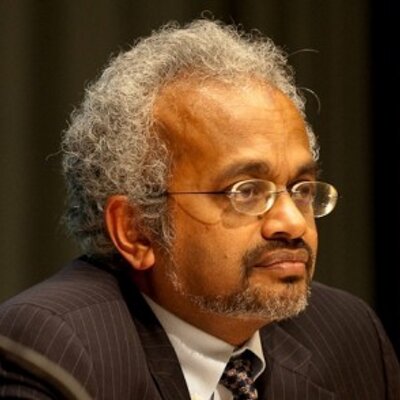
    Shantayanan Devarajan is the former Chief Economist of the World Banshanta devarajank’s Middle East and North Africa Region. Since joining the World Bank in 1991, he has been a Principal Economist and Research Manager for Public Economics in the Development Research Group, and the Chief Economist of the Human Development Network, South Asia, and Africa Region.

    Shanta was the director of the World Development Report 2004, ‘Making Services Work for Poor People’. Before 1991, he was on the faculty of Harvard University’s John F. Kennedy School of Government.

    Shanta is the author and co-author of over 100 publications, with his research covering public economics, trade policy, natural resources and the environment, and general equilibrium modeling of developing countries.

    Born in Sri Lanka, Shanta received his B.A. in Mathematics from Princeton University and his Ph.D. in Economics from University of California, Berkeley.

    People care so much about education. They will not eat if they can send their kid to a better school – Shanta Devarajan

    In this episode, you will learn:

    • why Shanta decided to take a sabbatical from lecturing and never went back.
    • about Shanta’s passion to end world poverty.
    • how experiencing living on a $1 a day with a poor family made Shanta realize that the failure lies with government.
    • how empowering people in poverty-stricken countries with information could be the catalyst to end poverty.
    • the huge government failures and market distortions threatening the economy in India.
    • why teachers and doctors in India are absent from work 25% and 40% of the time respectively and how this is affecting progress.
    • how the powerful medical union in India are making healthcare inaccessible to the poor.
    • why poor people in India think that the reason why doctors do not show up at clinics is because ‘the rain didn’t come’.
    • why politicians in India do not have an incentive to fix the problem of doctor absenteeism.
    • what the solutions to corruption in India.
    • about unemployment being the biggest problem in the Middle East and North Africa.
    • that the reason why unemployment is so high in the MENA region is due the industrial sector being highly monopolised.
    • about how crony capitalism is preventing SMEs from growing in the MENA region.
    • why Tunisia has failed to develop into an export-oriented economy due the legacy of the Ben Ali family and their connections to firms operating in heavily protected markets.
    • that the failure for governments to continue with social contracts due to high deficits triggered the Arab Spring.
    • about Colonel Gaddafi’s regime and how he managed to keep peace between tribes.
    • how water subsidies and water-intensive crops are depleting water resources in Yemen.
    • why the addictive habit of chewing qat or khat in Yemen is causing water shortages.
    • why Yemen, who doesn’t have a comparative advantage in qat, continues to use resources to produce the commodity.
    • what is the main purpose of the World Bank and how different is it to the IMF.
    • where the World Bank gets its finance from and how much interest they charge.
    • how the money trickles down to the unbanked people in low and middle-income countries.
    • about biometric identification smart cards and how the unbanked in low-income countries can access capital.

    Takeaway:

    The problems of poor people are man-made and we as economists can actually help solve them. The way in which we can solve them is by carrying our work toward empowering them. The reason they’re man-made is that poor people lack political power. We can actually strengthen their clout, their political power, by providing economic analysis and making it accessible to them – Shanta Devarajan

    Economics:

    In this interview, Shanta mentions and discusses: poverty, development, capital markets, government failure, policy distortion, structural adjustment, debt crisis, macroeconomic environment, incentives, quiet corruption, unemployment, monopoly, social contracts, crowding out, finance capital, subsidies, water subsidies, energy subsidies, comparative advantage, imports, exports, budget expenditures, IMF, the World Bank, MENA, public goods, leakages, multiple effect, dynamic stochastic general equilibrium model, savings, investments, sovereign wealth funds and consumption.

    Economists:

    In this interview, Shanta mentions and discusses: Chris Blattman, Gerard Debreu , Joseph Stiglitz, Sherman Robinson and Paul Collier 

    Influencers:

    Gerard Debreu , Joseph Stiglitz, Sherman Robinson , Paul Collier 

    Quotes by Shanta Devarajan in Episode 046 of the Economic Rockstar Podcast:

    The marginal product of writing an additional paper was lower than my actually trying to go out there and apply what I know to reduce poverty. I became quite passionate about this quest to reduce this poverty. – Shanta Devarajan

    The problems of poverty under development are problems of government failure. The problem of government failure is because the political system is one where poor people don’t have sufficient voice and sufficient ability to make sure that politicians take decisions in their interest. – Shanta Devarajan

    “The World Banks’ mission is a world free of poverty” – Shanta Devarajan

    Click To Tweet

    On the changing views of The World Bank:

    The traditional view of development in the 1950s and 60s was a belief that it was a market failure. Their capital markets weren’t working. Poor countries didn’t have access to capital and so the World Bank had to provide capital. However, in the 1970s and 80s there was a realisation that the problem was not the result of a lack of capital. There  were policy distortions in these countries that made this capital unproductive. The challenge became trying to remove these policy distortions or try to improve these policies so that capital could be productive. – Shanta Devarajan

    On Quite Corruption in India:

    Quite corruption in India is a deep political problem. There is nothing illegal about this corruption. It is a failure of the system. The political system is geared so that it creates this kind of corruption. – Shanta Devarajan

    On Crony Capitalism in Tunisia:

    It’s a little bit of a puzzle why Tunisia, which has a very highly educated population, a very nice location right across from Europe and a pretty good infrastructure, hasn’t been able to be a manufacturing, export-driven power-house. The reason is the industrial structure is being monopolised by the cronies of the political elite. – Shanta Devarajan

    On Tunisia: “We must protect this economy from elite capture” – Shanta Devarajan

    Click To Tweet

    On Capital Leakages in Chad:

    The leakages are higher in resource-rich countries. For instance in Chad, the money that was intended for public primary clinics, that actually arrives at the clinic is 1%. So the leakage is 99%. Chad is an oil-rich country. The reason for that is there is very little accountability – Shanta Devarajan

    Reasons Why Yemen is Producing Khat (Qat) Inefficiently

    Yemen produces its own qat despite not having a comparative advantage in the commodity. Factors of production, such as land, labor and capital, are used inefficiently to produce khat. So, the question remains as to why Yemen does not import qat. There are two main reasons why the continue to produce it domestically.

    The first is that qat is consumed fresh. Domestic production allows qat to be distributed and sold throughout Yemen once it is picked. Freshness is required and it is expected that any imported khat could reduce its quality.

    The second reason is that the president’s wife manages the qat monopoly and made a lot of money from it. Any imports would be competition. Given that khat is an addictive substance, the revenue made by this monopoly would have been so large that using resources inefficiently, particularly water, outweighed the costs.

    The Difference Between the World Bank and the IMF

    • The World Bank only works on developing countries and the IMF works on all countries.
    • The IMF is concerned with short-term macroeconomic development, whereas the World Bank is concerned about long-term development.
    • Anything that is in the order of one to two years is when the IMF will become involved in order to solve a macroeconomic crisis.  Whereas, if it’s a question of building a road or a bridge or educating children, that’s when the World Bank comes in. Both  the IMF and the World Bank, because they’re across the street from each other in Washington DC, communicate quite intensively.
    • In the past, it may have been viewed that the IMF, because it is more macro-focused, was more interested in the aggregate budget rather than the composition of the budget. In the late 1990s, there were many countries that had fiscal crises. The IMF insisted that they cut their budget in order to maintain fiscal balance. However, just cutting the budget rather than cutting wasteful expenditures and protecting some valuable expenditures makes a big difference.
    • It got to the stage where the World Bank would come in and look at the composition of the budget and suggest where it’s better to cut rather than simply take the targets that the IMF had set.
    • Both institutions have evolved quite a bit since the 1990s. The IMF now looks quite closely at the composition of budget expenditures and the World Bank worries a lot about macroeconomic stability.

    How The World Bank Funds its Operations

    • The finance that the World Bank accumulates is obtained by World Bank bonds.
    • The World Bank uses the ‘paid-in capital’ which the original members of the World Bank pledged back in 1947. This has now grown to about $300 billion.
    • This capital is used as collateral to float bonds and because of this capital, the World Bank can get bonds at three-quarters of a percent below the market rate.
    • This capital is then lent to middle-income countries at about half to a quarter of a precent below the market rate. The difference between these rates is what pays the salaries of those working for the World Bank.
    • For low-income countries, mostly in Sub-Saharan Africa, there is a separate window called the International Development Association (IDA) where concessional loans are offered. These loans are pledged every three years by donor countries. The World Bank collects this IDA money, which is about $50 billion, and lends it to these low-income countries at virtually zero percent interest with a 35 year grace period.

    Recommended Resource:

    The World Bank Database

    Recommended Book:

    • Dubliners by James Joyce

    Where to Find Shanta Devarajan:

    • Blog: Future Development
    • Twitter: @Shanta_WB
    • Email: sd294 [at] georgetown [dot] edu

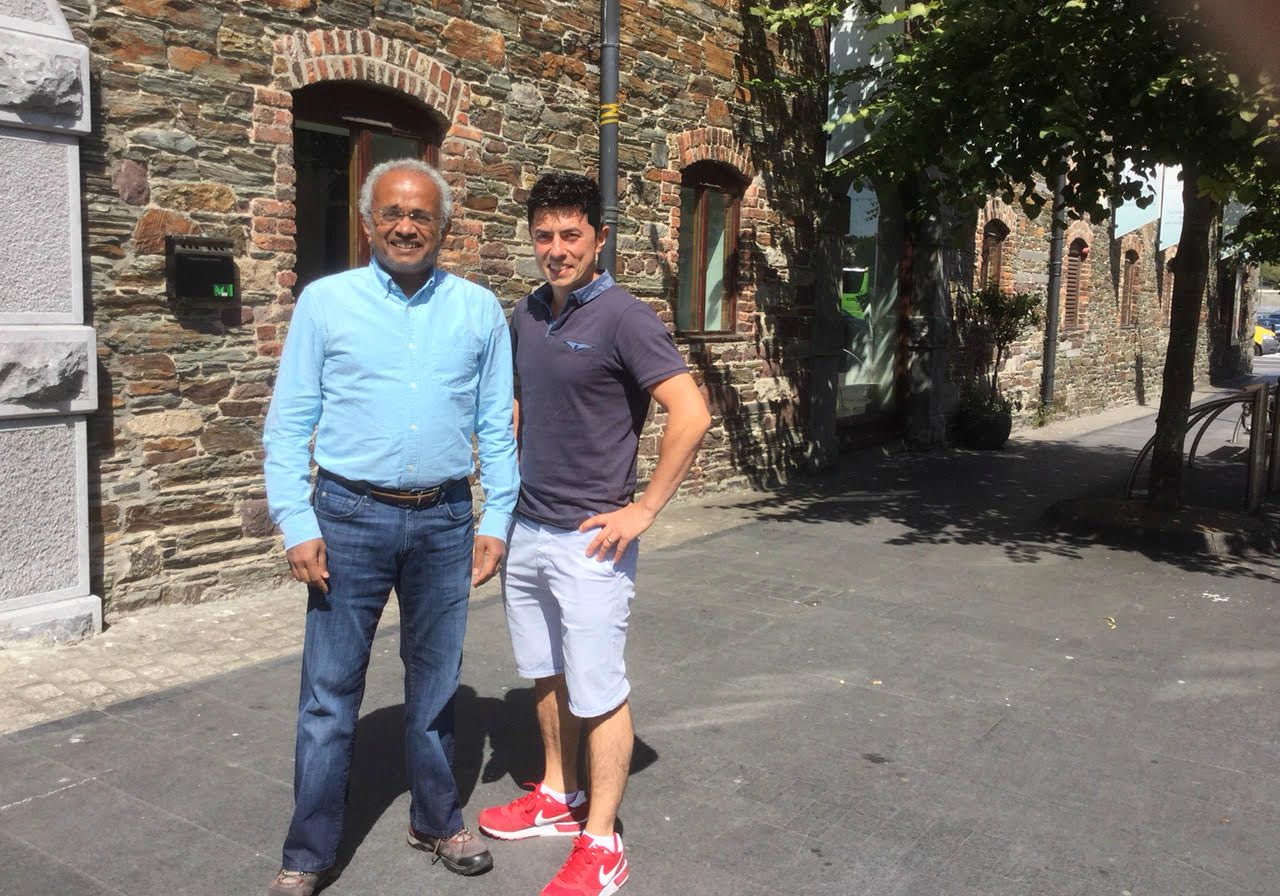
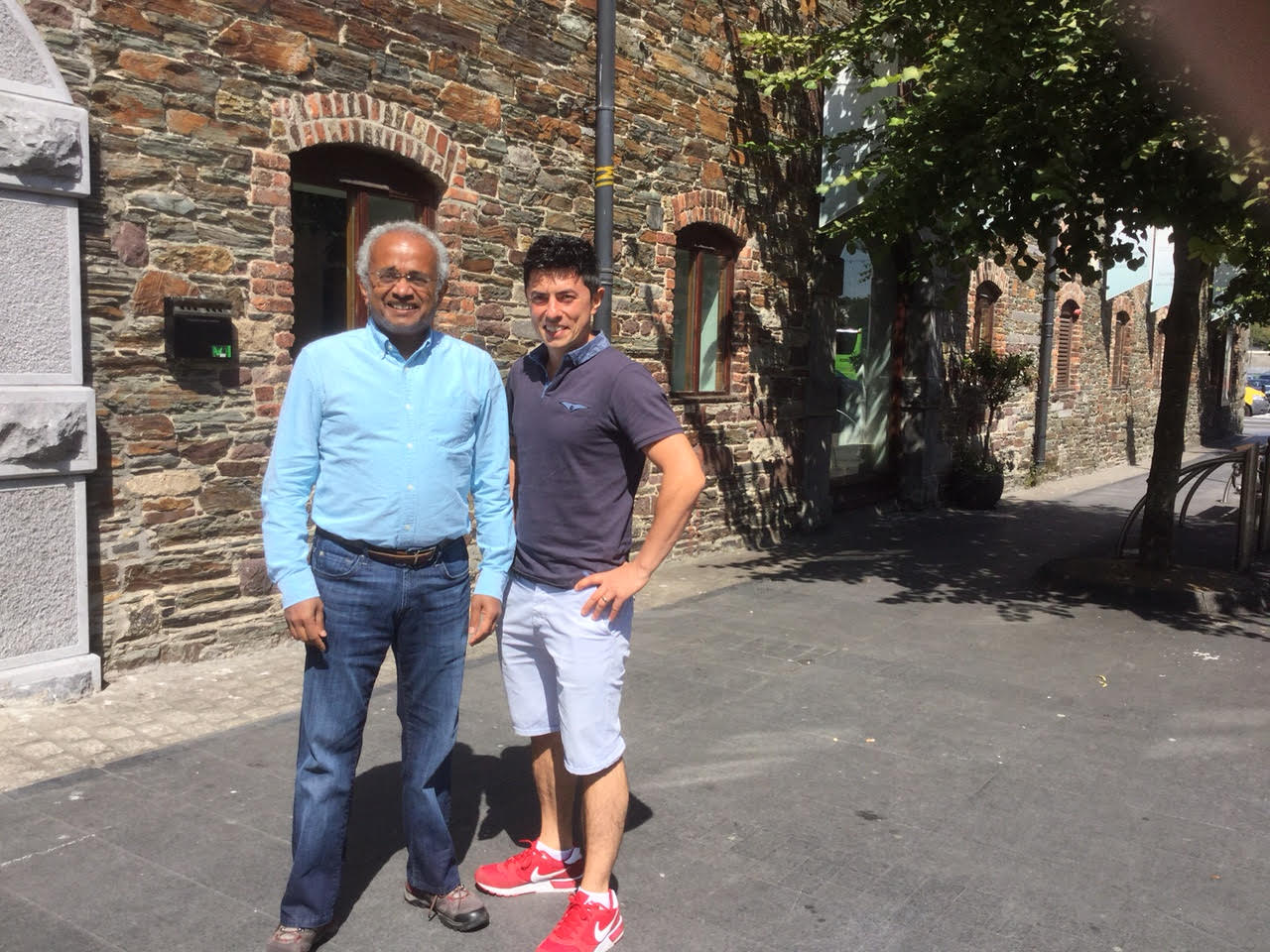
    Meeting Up With Shanta in Waterford City, Ireland (August, 2015):

    Since our conversation in episode 046 of the Economic Rockstar podcast, myself and Shanta met up for a brief period in Waterford City, Ireland. Shanta was on a visit form Washington DC (not work-related, just in case you think the The World Bank are coming in to Ireland!). Check back for a new blog post on what we chatted about.


    Frank and Shanta

    http://traffic.libsyn.com/economicrockstar/046_Shanta_Devarajan_Final.mp3

    Podcast: Play in new window | Download

    • facebook
    • linkedin
    • twitter
    • google+
    • pinterest

    Economic Rockstar Podcast Survey

    August 13, 2015 by Frank

    ER Survey

    Take the Economic Rockstar podcast survey and be in with a chance to win a $50 Amazon gift card

    There are only 10 questions and you’ll be doing me a massive favor if you fill out this super quick survey. This is your opportunity to let me know what guests you’d like on the show and what topics you’d like me to cover and I can learn how to make this an even better show.

    Thanks for taking time out. You are an Economic Rockstar!

     Click here to take the Economic Rockstar podcast survey and be in with a chance to win a $50 Amazon gift card


    • facebook
    • linkedin
    • twitter
    • google+
    • pinterest

    045: Jon Manning on the Art of Pricing and How Economic Theory Has Got Pricing All Wrong

    August 13, 2015 by Frank

    http://traffic.libsyn.com/economicrockstar/045_Jon_Manning_Final.mp3
    Play in New WindowDownload

    045: Jon Manning on the Art of Pricing and How Economic Theory Has Got Pricing All Wrong

    Jon Manning is the Founder and Principal Consultant of Sans Prix and has over two decades of Pricing experiencejon manning in a wide variety of industries.

    Since establishing Sans Prix, Jon (and his associates) have generated millions of dollars in incremental revenue for clients in places such as the UK, USA, India, and Australia.

    Increasingly in demand as both a speaker and educator, Jon has spoken at many conferences, workshops, webinars and educational institutions across the Asia-Pacific, the Middle East and the United Kingdom.

    In 2011, Jon and Greg Eyres established Pricing Prophets, the world’s first and only online pricing advisory service where clients can ask a panel of global pricing experts and thought-leaders what price to charge for a product or service and why.

    Jon holds a Bachelor of Business (Applied Economics) from Deakin University (Australia), a Graduate Diploma of Business (Management) from Monash University (Australia) and a Master of Arts (European Studies), from The University of West London. He is a member of the Australian Institute of Management and the Professional Pricing Society.

    In this episode, you will learn:

    • why Jon believes pricing is more of an a art than a science.
    • why pricing is based on human behavior that no scientific model can predict.
    • why there’s no such thing as Adam Smith’s Invisible Hand.
    • that 70% to 80% of companies use cost-based methods to set prices and few use a value-based method.
    • why customers don’t care about companies who use cost-based pricing and prefer companies that use value-based pricing methods.
    • why the best pricing strategy for a company is a value-based method.
    • the trials and tribulations of the pricing strategy adopted by Netflix and how it affected its share price.
    • how a $40 fine for returning a DVD late led to the founding of Netflix.
    • if the best strategy for companies to announce price increases to its customers is to do so a few years in advance.
    • how behavioral economics is opening up a minefield of exploration in pricing.
    • how Apple used anchoring techniques to sell their iWatch by offering a $10,000 iWatch. It makes the mainstream iWatch appear to be value for money.
    • how a $100 omelette was used by a restaurant to act as a decoy so it can influence your decision to pay for high-end or expensive goods.
    • how Goldilock Pricing helps a company, like Starbucks and Harvey Norman, sell more of a middle tiered product as it helps customers make decisions to buy.
    • how Starbucks found the that most of their customers have inelastic demand and decided to increase prices despite a recession in the US.
    • how the internet has changed the pricing model by offering freemium products and services and 30-Day money back guarantees.
    • if there are myths to pricing for companies.
    • how companies like Apple and Amazon price discriminate in order to capture market share and drive revenues upward.
    • how more and more companies are adopting dynamic pricing when selling into different markets.
    • the education pricing model in Ireland, Australia and the US.
    • about MOOCs and how it could have an impact on the future education model.
    • about Gaelic Football and how its players do not get paid unlike other sports.
    • how football games are using dynamic pricing models to charge for tickets based on opposition and weather.
    • that a 1% improvement in price leads to a 10% improvement in operating profit.
    • about the Banksy Experiment in New York where many passers-by failed to pick up an original for $60 that would otherwise fetch for $10,000 in an auction house.
    • how classical violinist Joshua Bell earned $26 in tips playing his $3.5 million violin but played to a packed audience for $100 per ticket the night before.
    • the 2 Golden Rules to Pricing.
    • about the ‘Pay What You Want’ model as followed by Radiohead and Jon Bon Jovi’s Soul Kitchen.

    Economics:

    In this interview, Jon mentions and discusses: pricing, the Invisible Hand, behavioral economics, heuristics, anchoring effects, framing, Extremeness Aversion, Goldilocks Pricing, demand, elasticity, elastic demand, inelastic demand, pricing architecture, consumer surplus, monopoly, price discrimination, dynamic pricing, marginal pricing and behavioral economics.

    Economists:

    In this interview, Jon mentions and discusses: Adam Smith, Dan Ariely, John H. Cochrane and Paul Samuelson.

    Influencers:

    Behavioral economists and marketers.

    Quotes by Jon Manning in Episode 045 of the Economic Rockstar Podcast:

    What they teach you in economics about pricing is true in theory but it’s irrelevant in practice – Jon Manning

    Click To Tweet

    I know why there is interest in price elasticity but I sort of think it’s a bit like the abominable snowman – Jon Manning.

    Click To Tweet

    There’s no formula to calculate the consumer surplus. You hear a lot of economists talk about the consumer surplus, which in the business community is known as leaving money on the table – Jon Manning.

    There’s very few revolutionary monopolies around these days – Jon Manning.

    Click To Tweet

    There’s one thing that’s not a myth and that is you get what you pay for – Jon Manning.

    Click To Tweet

    The 2 Golden Rules to Pricing:

    Rule #1: All value is subjective.

    Value is in the eye of the customer. No matter what price you put onto something, at the end of the day, the customer is the single point of failure and if they don’t see value at the price you’ve attached to the product, they’re not going to buy. The ‘Pay What You Want’ pricing model is the purest form of value-based pricing since the customer can decide to pay for the product or service by attaching a value to it.

    Rule #2: All value is contextual.

    By placing a product or service in a certain context, people’s perceptions of its value change. A product placed in a high-end, up-market setting is more likely to command a higher price, whereas the exact same product placed in a low value setting or environment may only demand a smaller price. Joshua Bell and Banksy showed this golden rule of pricing in their experiments.

    Companies Mentioned in this Episode Regarding their Pricing Methods:

    Ryanair, EasyJet, Amazon, Apple, Uber, Starbucks, Harvey Norman and Netflix.

    Recommended Books:

    • Meatonomics by David Simon
    • Priceless: The Myth of Fair Value (and How to Take Advantage of It) by William Poundstone
    • Information Rules: A Strategic Guide to the Network Economy by Carl Shapiro and Hal Varian
    • Pricing and Revenue Optimisation by Robert Phillips
    • Misbehaving by Richard Thaler
    • Butterfly Economics: A New General Theory of Social and Economic Behavior by Paul Omerod
    • New Ideas from Dead Economists by Todd G. Buchholz
    • The CEO of the Sofa by P. J. O’Rourke
    • Eat the Rich: A Treatise on Economics by PJ O’Rourke

    Internet Resource:

    • 77 Inspirational Pricing Pages

    Where to Find Jon Manning:

    • Sans Prix
    • Pricing Prophets
    • Twitter

    http://traffic.libsyn.com/economicrockstar/045_Jon_Manning_Final.mp3

    Podcast: Play in new window | Download
    • facebook
    • linkedin
    • twitter
    • google+
    • pinterest

    044: Nancy Folbre on Feminist Economics and the Care Economy

    August 6, 2015 by Frank

    http://traffic.libsyn.com/economicrockstar/044_Nancy_Folbre_Final1.mp3
    Play in New WindowDownload

    044: Nancy Folbre on Feminist Economics and the Care Economy

    Nancy Folbre is a recently retired Professor of Economics at the University of Massachusetts, Amherst andNancy Folbrecurrently directs a research program of gender and care work at the Political Economy Research Institute.

    Professor Folbre’s research focuses on the interface between feminist theory and political economy, with a particular focus on the work of caring for others.

    Nancy was elected president of the International Association for Feminist Economics (IAFFE) in 2002, has been an associate editor of the Journal Feminist Economics since 1995, and is also an editorial assistant of the Journal of Women, Politics & Policy.

    Nancy is recipient of a MacArthur Fellowship, and she has consulted for the United Nations Human Development Office, the World Bank and other organizations.

    Professor Folbre has also written extensively on the social organization of time, namely the time allotted to care for children and the elderly and how family policies and social institutions limit the choices people can make between paid and unpaid work.

    She is a contributor to the New York Times Economix blog.

    Nancy’s book ‘Saving State U‘ (New Press, 2010) makes a case for strengthening public support for higher education in the United States.

    Other recent books include ‘Greed, Lust, and Gender: A History of Economic Ideas’ (Oxford University Press, 2009) and ‘Valuing Children: Rethinking the Economics of the Family’ (Harvard University Press, 2008).

    Nancy received a B.A. in philosophy from the University of Texas at Austin in 1971, an M.A. in Latin American studies from UT Austin in 1973, and a Ph.D. in economics from the University of Massachusetts, Amherst in 1979.

    In this episode, you will learn:

    • why Nancy Folbre decided to study economics.
    • how the household is very much like the market economy.
    • about feminist household economics.
    • what the underlying principles and foundation to feminist economics.
    • why we should see unpaid work as part of the economy.
    • how the state and the market has reinforced the patriarchal system.
    • why the capitalist system, ironically, has downside effects on women today despite the benefits it provides.
    • why we should adopt the Scandinavian model of paternal responsibility.
    • about the unmeasured ‘Care Economy’ where people perform unpaid work.
    • about the opportunity cost to care work.
    • why Replacement Cost is a better proxy from a National Accounting perspective for measuring the size of the Care Economy.
    • why people are intrinsically motivated to care and that money is not an issue.
    • why Nancy Folbre strongly believes that we should think carefully about how we reward care work.
    • about the ‘Care Penalty’ and why we shouldn’t take advantage of the care workers motivation to work in the care industry.
    • about the societal pressures on a man who decides to stay at home and be the care giver.
    • why we should be providing a better account of the costs and benefits of raising kids.
    • if women have a ‘wage-penalty’ as they are, in most cases, the care-giver.
    • whether we can capture the value spent by parents caring for their children.
    • if intrinsic values of happiness lead to economic benefits for household.
    • if children of developed and less-developed countries are treated differently by their parents in terms of their perception of value.
    • about the rapid decline in fertility rates in India, Asia and Latin America.
    • why self-interest was always described in gender terms and why it was always permissible for men to be self-interested than women.
    • if having more women involved in economics and the economy would lead to better outcomes.

    Economists:

    In this interview, Nancy mentions and discusses: Gary Becker, Shoshana Grossbard, Friedrich Engels and Adam Smith.

    Economics:

    In this interview, Nancy mentions and discusses: feminist economics, market choice, economics of the household, altruism, rationality, interdependent utility, collective bargaining, choice, efficiency, inequality, incentives, opportunity cost, replacement cost, free market, Invisible Hand and happiness.

    Quotes by Professor Folbre in Episode 044 of the Economic Rockstar Podcast:

    Work can be very productive and create value for society even if it’s unpaid – Nancy Folbre

    Click To Tweet

    “Definitions of femininity and masculinity are changing in a positive way” – Nancy Folbre

    Click To Tweet

    “Smith had a lot of confidence in the pursuit of individual self-interest” – Nancy Folbre

    Click To Tweet

    Many people have taken Smith’s praise of the free market as an endorsement of selfish behavior, that it doesn’t matter if you think only of yourself because in a market economy we can be confident that everything will turn out just fine.  What I argue in the Invisible Heart is that’s really incorrect. The market economy really depends to a very great extent on a sense of commitment and obligation to other people of trust and reciprocity and concern for the welfare of others. That affects overall economic organisation and success in some pretty profound ways – Nancy Folbre

    “We need to change the way we think about work and about value” – Nancy Folbre

    Click To Tweet

    Leading happy and worthwhile lives is kinda the point of the whole economic enterprise and sometimes we lose sight of that. And there’s certainly a lot of evidence that what makes people happy is good human relationships, having close ties with family and friends and community. If we appreciated that a little bit more fully, we could organise our economic system a lot more successfully – Nancy Folbre

    “I think Feminist Economics is a part of the whole heterodox challenge to the mainstream economics, and I fell good about that” – Nancy Folbre

    Recommended Books:

    • Valuing Children: Rethinking the Economics of the Family by Nancy Folbre
    • Greed, Lust, and Gender: A History of Economic Ideas by Nancy Folbre
    • Saving State U by Nancy Folbre
    • The Invisible Heart by Nancy Folbre
    • The Condition of the Working-Class in England in 1844 by Friedrich Engels
    • The Invisible Hand by Adam Smith

    Blog:

    • Care Talk by Nancy Folbre

    Conference:

    • International Association for Feminist Economics

    http://traffic.libsyn.com/economicrockstar/044_Nancy_Folbre_Final1.mp3

    Podcast: Play in new window | Download

    • facebook
    • linkedin
    • twitter
    • google+
    • pinterest
    • Prev Page...
    • 1
    • …
    • 11
    • 12
    • 13
    • 14
    • 15
    • …
    • 18
    • ...Next Page

    Frank Conway

    Frank Conway is founder of Economic Rockstar and lecturer of economics, finance and statistics. Read More…

    View My Blog Posts

    Youtube Sub

    Become a Patron of the Economic Rockstar Podcast

    patreon

    Ireland’s Economy by the Numbers

    Leaving Cert Economics: Ireland’s Economy  Click here to download a workbook on Ireland’s Economy so that you can add your own notes. [Original size] Ireland’s Economy by fconway

    Categories

    Subscribe and Never Miss An Episode

    itunes-logo

    Recent Posts

    • Ireland’s Economy by the Numbers April 8, 2019
    • 174: Wendy Carlin on The Core Project, Capitalism, Democracy and Normative Statements February 13, 2019
    • 173: Stephen Wright on Core Econ as a Learning Resource for Mainstream Economics January 28, 2019
    • 172: Best of 2018 Part 2: From the Great Depression to Futurism; Institutions, Individualism, Cooperation and Reciprocity January 22, 2019
    • 171: Best of 2018 Part 1 January 3, 2019

    Copyright © 2026 · Podcast Pro Theme on Genesis Framework · WordPress · Log in

    This website uses cookies to improve your experience. We'll assume you're ok with this, but you can opt-out if you wish. Accept Reject Read More
    Privacy Policy

    Privacy Overview

    This website uses cookies to improve your experience while you navigate through the website. Out of these, the cookies that are categorized as necessary are stored on your browser as they are essential for the working of basic functionalities of the website. We also use third-party cookies that help us analyze and understand how you use this website. These cookies will be stored in your browser only with your consent. You also have the option to opt-out of these cookies. But opting out of some of these cookies may affect your browsing experience.
    Necessary
    Always Enabled
    Necessary cookies are absolutely essential for the website to function properly. This category only includes cookies that ensures basic functionalities and security features of the website. These cookies do not store any personal information.
    Non-necessary
    Any cookies that may not be particularly necessary for the website to function and is used specifically to collect user personal data via analytics, ads, other embedded contents are termed as non-necessary cookies. It is mandatory to procure user consent prior to running these cookies on your website.
    SAVE & ACCEPT