• ABOUT
  • RESOURCES
  • PODCAST
  • BOOKS
  • BLOG
  • SUPPORTERS
  • QFA Financial Advice
  • CONTACT

Economic Rockstar

Connecting Brilliant Minds in Economics and Finance

033: Abdullah Al-Bahrani on the Economy of Oman and How Racial Discrimination Empowered Him to Succeed in Life and in Economics.

May 22, 2015 by Frank

http://traffic.libsyn.com/economicrockstar/033_Abdullah_Al_Bahrani_Final.mp3
Play in New WindowDownload

033: Abdullah Al-Bahrani on the Economy of Oman and How Racial Discrimination Empowered Him to Succeed in Life and in Economics.

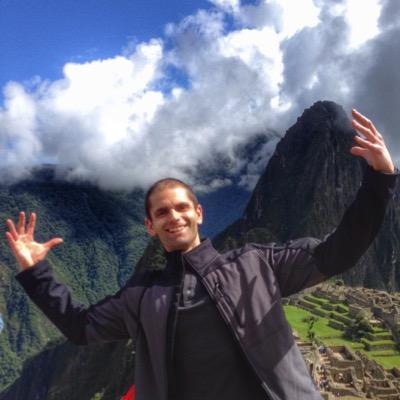
Dr. Abdullah Al Bahrani is an Assistant Professor of Economics at Northern Kentucky University,Abdullah al Bahrani where he serves as the Principles of Economics Coordinator.
Abdullah’s research interests are in the fields of Industrial Organization and Education of Economics. Currently, his primary focus is on innovative approaches to teaching Economics. In Industrial Organization, his research examines market structure and competition in the banking and real estate industries.

Prior to joining academia, Dr. Al Bahrani worked in the mortgage industry from 2003-2006. He has also served as outside economic consult to the Ministry of Education, Sultanate of Oman and new business ventures entering Oman.

Abdullah received his Ph.D. in Economics from the University of Kentucky in 2010, where he received an award for Best Economics Graduate Teaching Assistant.

His Master degree in Economic Theory was awarded by American University in Washington D.C. in 2003 and he earned a Bachelor of Science in Business Economics from the University of Louisville in 2002.

Influencers:

My parents are big advocates of education and they instil the value of education and the value of curiosity – Abdullah Al-Bahrani

Personal Habits:

Abdullah has a 5am start and gets to the gym most mornings. It is at the gym where Abdullah creates his to-do list, becomes super-organized and listens to Economic Rockstar!

On dealing with racial discrimination:

You roll up your sleeves and you keep on trying – Abdullah Al-Bahrani

Abdullah’s Philosophy and Affirmations:

Failure is the opportunity to begin again more intelligently

Click To Tweet

Failing in a business does not need to mean that you failed as a person – Abdullah Al-Bahrani

Click To Tweet

Whatever you do, allow your personality to shine – Abdullah Al-Bahrani

Click To Tweet

The thing that I appreciate is people that push the boundaries that create new paths – to me that’s what growth is – Abdullah Al-Bahrani

My philosophy is to embrace technology – Abdullah Al-Bahrani

Click To Tweet

Find Out:

  • why Abdullah decided to do a Phd in Economics in 2006 and left the mortgage industry just before it imploded.
  • about Abdullah’s economic consultancy work with the Sultanate of Oman.
  • about Abdullah’s connection when reviewing labor market studies in Oman (Hint: She is the Director General of the National Centre of Career Guidance and is as maternal to Abdullah as Oman as a country is to him).
  • how Oman are creating an entrepreneurial spirit to drive is economy in the future.
  • why Oman is faced with difficulties in transitioning to an entrepreneurial economy.
  • how Omani culture is preventing it’s people to take on risk and why incentives do not work.
  • about Abdullah’s suggestion that to create an entrepreneurial spirit in Oman, the labor market must first be liberalised.
  • how ‘Omanization’ has made it costly for foreign firms to set up subsidiaries in Oman.
  • why Omani’s are not hired by foreign firms setting up in Oman.
  • why discrimination exists in the Omani labor market and why US and UK ex-pats would be a preferred employee.
  • how data limitations for Oman make it difficult to conduct an empirical analysis of the labor market.
  • how labor market regulations in Oman is making it costly for firms to hire Omani’s.
  • about some economic indicators for Oman.
  • about Oman’s free trade agreements, the Gulf Corporation Council and the potential Oman offers.
  • about Oman’s tourism initiative to create Oman as an eco-friendly destination.
  • how Abdullah is integrating social media into the classroom, making education a more interactive and conducive learning environment for students.
  • about Abdullah’s clever way of using a students’ mobile phone in explaining the concept of a negative externality.
  • how to create a sense of community in a classroom.
  • why Abdullah received an Easter basket of goodies from a student’s mother.
  • why Abdullah is ‘helping his students to ‘clean’ their social media footprint.
  • how Abdullah encourages his students to connect with him on whatever platform they choose to use.
  • how using ESPN 30 for 30 to teach economics and to keep the economics student engaged.
  • how to teach economics with no math and no graphs.
  • about the research Abdullah is doing on racial discrimination in the labor market.
  • how Abdullah is identifying how racial discrimination is evident in online markets where, unlike traditional markets,  the color of your skin is not a factor.
  • if your last name prevent you from getting a loan, employment or from being priced out of a market.
  • how dropping a letter from your name can get you a job if you’re being racially discriminated against.
  • how Abdullah was racially discriminated against in both the labor market and when selling mortgage loans in the USA.
  • how Abdullah dealt with racial discrimination and how it gave him his Phd dissertation question.
  • how online price comparison websites may actually be anti-competitive.
  • how online stores are eating into the consumer surplus.

Economists:

In this interview, Abdullah mentions:

Darshak Patel, Kim Holder, Gary Becker, Steven Levitt, Stephen Dubnar, Frank Scott, Chris Bollinger and Gail Hoyt, Brandon Sheridan and Roland Fryer.

Economics:

In this interview, Abdullah mentions and discusses:

Labor market, incentives, entrepreneurship, small and medium sized enterprise, venture capital, unintended consequences, business cycle, unemployment, GDP per capita, trade agreements, indigenous industries, multinational companies, Gulf Corporation Council, tourism, factor endowments, negative externality, comparative advantage, search cost, marginal cost, competition and consumer surplus.

Papers:

  • Al-Bahrani, Abdullah and Darshak Patel (2014). Using ESPN 30 for 30 to Teach Economics. Southern Economic Journal. 81:3. 829-842.
  • Al-Bahrani, Abdullah. Competition in Online Markets: When Banks, Compete do Consumers Really Win? Journal of Housing Research. Forthcoming (Accepted October 2014).
  • Al-Bahrani, Abdullah and Darshak Patel (2015). Incorporating Twitter, Instagram and Facebook in Economics Classrooms. Journal of Economic Education. 44:1. 56-67.

Books:

  • The Color of Credit: Mortgage Discrimination, Research Methodology, and Fair-Lending Enforcement by Stephen Ross and John Yinger.
  • Chicago by Alaa Al-Aswani

Resources:

  • Twitter

Where to find Abdullah:

  • Twitter: @teach_econ
  • Website: www.teach-econ.com


http://traffic.libsyn.com/economicrockstar/033_Abdullah_Al_Bahrani_Final.mp3

Podcast: Play in new window | Download

  • facebook
  • linkedin
  • twitter
  • google+
  • pinterest

032: Joe Gladstone on the ‘Pay What You Want’ Pricing Model and Using Big Data to Understand You Better

May 14, 2015 by Frank

http://traffic.libsyn.com/economicrockstar/032_Joe_Gladstone_Final.mp3
Play in New WindowDownload

032: Joe Gladstone on the ‘Pay What You Want’ Pricing Model and Using Big Data to Understand You Better

Joe Gladstone is an academic researcher and consultant based at the University of Cambridge, where heJoe Gladstone applies insights from behavioral economics and psychological research to better understand consumer behaviour.

Joe partners with some of the world’s largest corporations, such as Twitter, Bupa and Visa, as well as government departments, to tackle challenges that deal with behaviour change.

Joe’s views on consumer behaviour have been featured in the BBC, Forbes, The Huffington Post and other media outlets.

Joe is founder of BE-events and BE-Recruit.  He received his Masters from Oxford University and his Phd from Cambridge University, and has been awarded a range of competitive grants and prizes.

Find Out:

  • about the link between the discipline of psychology and economics.
  • why Joe decided to do postgraduate research in behavioral economics.
  • how advances in technology, especially in social media, can help behavioral scientists understand human behaviour better.
  • why you do not know how much you spend on coffee.
  • how Joe has identified the relationship between psychology and money.
  • how Joe has used the ‘My Personality’ app to predict your personality from what you like.
  • how companies can use ‘Big Data’ to target messages directly to you.
  • why people are willing to pay for services that they could otherwise get for free.
  • if TIDAL will disrupt the online music industry by taking control of their own music.
  • if Spotify risks losing out to TIDAL.
  • how important is the price of zero?
  • how the ‘Pay What You Want’ pricing model defies classical economic theory.
  • why people pay even if they are given the option to take the product for free.
  • how Radiohead made more in sales when offering their album on a ‘Pay What You Want’ basis.
  • if the ‘Pay What You Want’ model is sustainable for a business in the long run?
  • how Jon Bon Jovi has successfully implemented the ‘Pay What You Want’ model in his Soul Kitchen restaurant in New Jersey.
  • how sitting with strangers to eat in Soul Kitchen can ‘nudge’ diners to pay more than what they were initially willing to pay.
  • about Joe’s passion for financial literacy and financial empowerment.
  • if you can become immune to nudging by having a deeper understanding of it.
  • if knowledge prevents you from being nudged.
  • about behavioral economics events that could be going on in your area with BE-events.org.
  • how Joe maximises his time by outsourcing his work on oDesk.
  • how to get girls in less-developed and poor countries to go to school.
  • how Joe built up a name for himself on LinkedIn by connecting with the main people in the banking sector and offering his services on a no cost basis.
  • what the five personality traits known as OCEAN stands for.

Economists Joe Would Love to Collaborate With:

Professor Dean Karlan of Yale University and Professor John List of University of Chicago.

Economists:

In this interview, Joe mentions: 

Daniel Kahneman, Amos Tversky, Cass Sunstein, Dean Karlan (Poverty Action), David Hagmann, George Loewenstein, Craig Fox (The Behavioral Science and Policy Association), John List and The Behavioural Insights Team in the UK.

Economics:

In this interview, Joe mentions and discusses:

Behavioral economics, experimental economics, factor analysis, microeconomics, poverty, banking, micro-finance, decision making, nudge, nudging, pricing, demand, supply, randomised control trials, field experiments and multi-variate testing.

The ‘Pay What You Want’ pricing model is a great example of where the Classical economic theory doesn’t do a great job of explaining real world behavior – Joe Gladstone.

Resources:

  • Upwork (formally oDesk)
  • Leadpages

Books:

  • The Behavioral Foundations of Public Policy by Eldar Shafir

Papers:

  • Warning: You Are About to be Nudged by David Hagmann and George Loewenstein.

Where to find Joe:

  • Website: www.joegladstone.com
  • BE-events.org
  • BE-recruit.com
  • LinkedIn: Joe Gladstone
http://traffic.libsyn.com/economicrockstar/032_Joe_Gladstone_Final.mp3

Podcast: Play in new window | Download

  • facebook
  • linkedin
  • twitter
  • google+
  • pinterest

031: Matt Rousu on Experimental Auctions and the Need for Peer-Reviewed Economic Impact Studies.

May 6, 2015 by Frank

http://traffic.libsyn.com/economicrockstar/031_Matthew_Roussu_Final.mp3
Play in New WindowDownload

031: Matt Rousu on Experimental Auctions and the Need for Peer-Reviewed Economic Impact Studies.

Dr. Matthew Rousu is a Professor and Warehime Chair in the Department of Economics atMatthew Rousu Susquehanna University. His main teaching interests include microeconomics, political economic thought, and game theory.

Matt is an expert on experimental auction design and implementation. He uses his expertise on experimental auctions to study problems in agricultural economics, environmental economics, and public health.  He has published over 40 scholarly articles, as well as book chapters, non-technical articles and Op-eds.

Matt has been quoted widely on many issues by The Chicago Tribune, Forbes, The NY Daily News, The Philadelphia Inquirer, US News and World Report, The Washington Post, Wikipedia, and Yahoo.com.

He has also been a guest for local radio stations mainly to discuss the local, state, and national economy.

Matt runs his own blog known as paeconomist.blogspot and is founder of the Economic Impact Review. He is the author of Political Trivia.

Matt earned a Bachelor’s degree from the University of South Dakota and a Ph.D. in Economics from Iowa State University.

Find Out:

  • the benefits of lecturing at a liberal arts college – switch up your research interests.
  • about experimental auctions and their design.
  • what is consumer demand for Genetically Modified Products.
  • how demand for GMOs change due to differences in packaging.
  • how print advertisement for e-cigarettes increases their demand.
  • whether e-cigarettes are a ‘healthy’ alternative to traditional cigarettes.
  • about the impact of plain package cigarettes on consumer demand.
  • if the Irish government correct in enforcing plain packaged cigarettes.
  • how much less buyers were willing to pay for plain packaged cigarettes.
  • how a picture of smoking-related diseases on cigarette packaging decreases demand for cigarettes.
  • why Matt set up The Economic Impact Review.
  • why economic impact studies should go through a peer-review process.
  • about the lack of transparency in economic impact studies.
  • about Matt’s libertarian stance and why he’s for fracking.
  • what you get when a libertarian and socialist collaborate on an economics fracking paper.
  • about the beautiful campus of Susquehanna University.
  • why small class sizes are beneficial to both student and teacher.
  • about Matt’s exploits in the World Series of Poker.
  • how an understanding of statistics and behavioral economics can benefit a poker player.
  • how Chris Moneymaker influenced Matt’s love of poker.
  • the economics of what makes a winning poker player.
  • if poker is a game of chance or a game of skill.
  • how poker is akin to economic game theory.
  • about people’s willingness to pay for GM foods versus non-GM foods.
  • if there is a need for an independent 3rd party to disseminate information on GM foods.
  • what annoys Matt the most.
  • why Matt switched to a flipped classroom style of teaching.
  • about deceptions in economic research and why journals will not publish such research.
  • why research in psychology accepts deception of the subjects but economics does not.
  • why a lot of economics journals will not publish your work.

Economists:

In this interview, Matt mentions: Milton Friedman, Wally Huffman (Iowa State), Jason Shogren (Wyoming) and Dan Ariely.

Economics:

In this interview, Matt mentions and discusses: Consumer demand, experimental auctions, bias, incentives, pricing, demand curve, sample size, economic impact of fracking, socialism, libertarianism, microeconomics, macroeconomics, game theory, political economic thought, forensics economics, positive analysis and normative analysis.

You can disagree without being disagreeable Matt Rousu.

Click To Tweet

Are you Willing to Pay More for Genetically-Modified Foods?

The goal of experimental auction is to assess consumers demand for some particular product.

If consumers receive information from a group, such as Green Peace, who were against GM foods, then those consumers were willing to pay up to 50% less for foods that were genetically modified compared to a plain-labelled product.

If consumers got information from an agri-business company, such as Monsanto, about the benefits of GM foods, then they would pay just as much for these foods as conventional food products.

What would the impact be on consumer’s willingness to pay if there were scientific information or, what Professor Rousu called ‘Objective Verifiable Information’ available in the decision-making process? The objective information ‘dampened’ the effects on either side.

Where to find Matt:

  • Website: Economic Impact Review
  • Blog: paeconomist
  • YouTube: Matthew’s Channel
  • Twitter: @matthewrousu
  • Research: What Makes a Winning Poker Player? Evidence From Online Poker. Gaming Law Review and Economics, 14 (9), Pages 677-683. (2010). With M. Smith.
  • Other Research Papers: http://www.susqu.edu/facstaff/r/rousu/research

http://traffic.libsyn.com/economicrockstar/031_Matthew_Roussu_Final.mp3

Podcast: Play in new window | Download

  • facebook
  • linkedin
  • twitter
  • google+
  • pinterest

030: Kim Holder on Rockonomix and Teaching Economics Through the Lens of Sport, Music and Movies

April 30, 2015 by Frank

http://traffic.libsyn.com/economicrockstar/030_Kim_Holder.mp3
Play in New WindowDownload

030: Kim Holder on Rockonomix and Teaching Economics Through the Lens of Sport, Music and Movies

Kim Holder is founder of Rockonomix and is an economics educator from the University of WesternKim Holder Georgia and teaches principles of macro and micro. Kim is passionate about economics, music, media, pop-culture and sports and loves using technology and social media in the classroom to get her students excited about learning. Kim is founder of Rockonomix, an inter-university contest held in the USA that encourages students to compose economic-themed lyrics to a popular song.

Find Out:

  • how Kim Holder uses music to assess her students taking micro and macro classes.
  • about Kim’s passion for economics and how she uses sports to explain economic concepts.
  • how you can become an ‘Economic Rockstar’ in the annual Rockonomix contest.
  • how to motivate students to study economics.
  • how selfies and memes can make students aware of economics around them.
  • about Kim’s decision to study economics because of true love.
  • about Kim’s summer course ‘Economics Is Everywhere’ which introduces you to micro and macro, as well as personal finance.
  • about the Centre for Economic Education at University of West Georgia and how it is for the wider community and not just for students.
  • how K-12 teachers can avail of the workshops put on by the Centre for Economic Education at University of West Georgia.
  • about Pop Econ and why more should be done to introduce it to students at a principles of micro and macro level.
  • why students should be pushed to seek out economic themes in movies.
  • how to use Twitter for the classroom and the best practices to communicate with students.
  • what Kim’s top 3 movies are that contain economic themes.
  • the importance of financial literacy for students who are faced with taking out college loans.
  • how Kim Holder escaped poverty through education.

Economics:

In this interview, Kim mentions and discusses: Microeconomics, macroeconomics, health economics, substitute goods, complementary goods, GDP and monetary indicators.

Economists:

In this interview, Kim mentions and discusses: Kenneth Arrow, Dirk Mateer and Brian O’Roark.

Favorite Economist:

  • Kenneth Arrow

Affirmation:

“Enjoy the journey”

On Potential:

People have a lot more potential than we give credit for. There’s just something small that’s holding them back. It might be money. It could be the absence of schools in the local area. It could be personal circumstances. Kim Holder.

On Economics:

Econ is very distinct from the other business disciplines because it’s more of a philosophy or a way to view the world than just a specific tool. Economics is a little bit business, a little bit social science, a little bit science. It has something of everything in it and that’s kind of my personality. Kim Holder.

About Rockonomix:

The following is an excerpt taken from Kim Holder’s Rockonomix website. I couldn’t explain it better than the actual founder, Kim:

Many of today’s students arrive in class with headphones on, listening to the latest hit song or watching the newest viral video. They often question learning material that they can simply “Google” and struggle with applying textbook concepts to the world around them. As educators, we are continually struggling to find ways to reach each of these students by engaging them in the learning process. Rockonomix, a student-produced music video parody project, helps motivate student learning by using popular media to reinforce basic economic principles.  Here is our story of how we brought Rockonomix to our students.

 As a brand new lecturer in the Department of Economics at the University of West Georgia in the fall of 2010, I was faced with the daunting task of engaging new business students as well as those in the general population who were completing either their required economics sequence or part of the core requirements. I developed a number of activities designed to help students learn to “see” economics in their everyday lives in order to help solidify the concepts that we learned in our lectures and readings. These smaller projects helped prepare students for the end of semester finale known as Rockonomix, a group based project where students are asked to write new lyrics to a popular song and produce their own original music video.

Since my introductory courses tend to contain a mix of students with a variety of skill sets, majors and interest levels, this project allows each student the unique opportunity to highlight talents that are not readily apparent in the traditional classroom. In addition, student feedback at UWG has been overwhelmingly positive with many indicating that they now view the subject of economics in a different way, that the assignment motivated them to read their textbook and actually learn the material so that they could write their song lyrics, and that linking economic concepts to music helped them remember difficult key concepts.

To increase student interest and collaboration across campuses, we have created the National Rockonomix Contest. Currently in its second semester, the national competition allows students from different universities across the country to compete with each other for the best overall video.  This additional level of interactivity has added a unique dimension to student submissions and pushed them to produce works that are truly amazing works of economic art!

 Kim Holder

Vote now for your favorite student music video.

Favorite Internet Resource:

  • YouTube: 
  • The Critical Critics: A website dedicated to the critical review of movies.
  • St Louis Fed: The Federal Reserve Bank of St. Louis was established in 1914, after the creation of the Federal Reserve System in 1913.

Kim’s Top 3 Economic-Themed Movies:

  • Moneyball
  • In Time
  • Hunger Games

Recommended Book:

  • Why Smart People Make Big Money Mistakes and How To Correct Them by Gary Belsky

Where to find Kim:

  • Twitter: @cubegrl
  • Website: Rockonomix
  • Pinterest: @cubegrl


http://traffic.libsyn.com/economicrockstar/030_Kim_Holder.mp3

Podcast: Play in new window | Download
  • facebook
  • linkedin
  • twitter
  • google+
  • pinterest

029: John Cochrane on the Future of Finance, MOOC Education, Regulation and the Case for Free Markets

April 22, 2015 by Frank

http://traffic.libsyn.com/economicrockstar/029_John_Cochrane_Final.mp3
Play in New WindowDownload

029: John Cochrane on the Future of Finance, MOOC Education, Regulation and the Case for Free Markets

John Cochrane is the AQR Capital Management Distinguished Service Professor of Finance at the University of Chicago Booth School of Business and is currently Senior Fellow at the Hoover Institution.

Professor Cochrane is a Research Associate of the National Bureau of Economic Research and past director of its asset pricing program, and an Adjunct Scholar of the CATO institute.

John is past President and Fellow of the American Finance Association, and a Fellow of the Econometric Society. He has been an Editor of the Journal of Political Economy, and associate editor of several journals including the Journal of Monetary Economics.

John’s is the author of 3 books including the book Asset Pricing. Other  finance publications include articles on stock and bond markets, exchange rates, interest rates, liquidity premiums and option pricing.

John’s monetary economics publications include articles on the relationship between deficits and inflation, the effects of monetary policy, and on the fiscal theory of the price level.

John currently teaches the MBA class Advanced Investments and a variety of PhD classes in Asset Pricing and Monetary Economics.

John earned a Bachelor’s degree in Physics at MIT, and earned his Ph.D. in Economics at the University of California at Berkeley.

In addition to research and teaching, John is a competitive sailplane pilot and windsurfs.

John blogs as ‘The Grumpy Economist’.

Find Out:

  • why Professor Cochrane is known as the Grumpy Economist.
  • about John’s Proposed New Structure for US Debt.
  • how to create financial stability with a currency fit for the 21st century.
  • about the advantages of government debt.
  • what happened when Ireland guaranteed the bondholders and entered into a bailout.
  • the limitations to a eurozone country when faced with a bailout.
  • why countries should be allowed to act like companies and default.
  • why Greece should have defaulted and why Ireland should not have bailed out the bondholders.
  • about Professor Cochrane competing in the World Gliding Championship for the USA.
  • why Professor Cochrane delivered his Asset Pricing PhD course as a MOOC.
  • the costs and benefits of delivering a MOOC.
  • how MOOCs will become the textbook of the future.
  • how to monetize a MOOC and which type of course would have mass market appeal.
  • Ireland’s aim to become the capital of MOOCs.
  • how to create a social environment for students using MOOCs.
  • why Professor Cochrane went from a degree in physics to a PhD in Economics.
  • why people are stuck in the welfare system.
  • about the over-regulated US economy that restricts the development of competitive markets.
  • how Uber gave supply-side competition in the US taxi market.
  • what should be done to the US healthcare industry which is protected from competition.
  • if the US Federal Reserve should end its monopoly on the dollar and allow other currencies, such as Bitcoin, compete.
  • about the unique feature of US government debt – it cannot default!
  • who are Professor Cochrane’s heroes due to their no bullshit approach to research.
  • why the the 2008 financial crisis was proof that the efficient market hypothesis works.
  • what annoys Professor Cochrane.

Influencers:

  • University of California: George Akerlof, Roger Crane, Jim Pearce and Tom Roffenburg.
  • University of Chicago: Robert Lucas, Lars Hansen, Gene Fama, Ed Prescott and Tom Sargeant.

Defining Moment

A professor was showing an economics class that John attended in which he explained, using the Budget Constraint, why people are stuck in welfare. Up to that point, John had read that it was due to people being lazy or that it was due to moral, sociology or cultural. However, the analysis showed that any normal person who was stuck below an income threshold and receiving benefits would not welcome a moderate pay rise as they would lose entitlements.

Here was a value-free, and ethics-free, a morality-free discussion of a social problem that showed exactly where it came from, exactly how to fix it, exactly how the perverse design of the well-intentioned welfare was causing people to get stuck. That was my conversion moment.

Economics:

In this interview, John mentions and discusses: Asset Pricing, unintended consequences, free markets, incentives, budget constraints, welfare, competition, supply-side competition, regulation, monopoly, natural monopoly, bitcoin, debt, default, Gold Standard, fractals and efficient market hypothesis.

Economists:

In this interview, John mentions and discusses: George Akerlof, Roger Crane, Jim Pearce, Tom Roffenburg, Robert Lucas, Lars Hansen, Eugene Fama, Ed Prescott, Tom Sargeant, Benoit Mandlebrot

“What makes free markets work is the discipline of competition, of the ability of new entrants to come in and disrupt things” – Professor Cochrane.

“Regulation is stifling the ability of  new people with great ideas, with cost control ideas to come in and make healthcare both better and a lot cheaper” – Professor Cochrane.

The Future of Finance:

Professor Cochrane likens the financial crisis as a ‘good old-fashioned’ run on the banks. Twenty years ago, the world economy developed ‘electronic interest-paying money’. Most of the financial system uses overnight repurchase agreements, money market funds and short-term government bonds. These became very liquid and have been prone to runs just like bank notes. For financial stability, the crucial thing is to get away from this run-prone system.

John proposed that governments should provide interest-paying electronic money that will not experience a run in the 21st Century. This would look something like a money-market fund. It will always be worth $1, pays interest and will always be electronically transferable. Financial stability would be achieved and we would have more efficient payments.

On Ireland Bailing Out All Depositors

Irish banks took a lot of German deposits and invested them in US sub-prime mortgages. The money passed through Ireland and it’s not quiet clear why the taxpayers of Ireland who footed the bill for that. Why couldn’t the depositors from Germany lost a little bit of their money along the way. That would have seemed to make sense. Cyprus and Iceland made their depositors take haircuts.

When you’re a small country with an open banking system, the model of the government who bails out all depositors including foreign depositors is not one that can go on. That’s a troublesome system. Ireland maybe regretting bailing out all of the depositors in the process.

Since Ireland is part of the EU and the eurozone, it cannot print money to bailout people. Government debt in that situation becomes private debt. Ireland would not be in as much trouble if it didn’t bailout the depositors in its bank.

Greece certainly should have just defaulted the way a company defaults. If a company defaults on its debt it doesn’t have to leave the eurozone, so why shouldn’t countries become like companies.

MOOCs: The Future but Not a Substitute for Formal Education

Professor Cochrane delivered his PhD class ‘Asset Pricing’ as a MOOC. He felt that such ‘cut and dry’ material would be easier to get started with, particularly when he also had a book of the same name, rather than a more discussion-based empirical class. There were numerous challenges along the way. “It turned out being a lot more work than I thought it was going to be but it also turned out very rewarding”. It allows Professor Cochrane to leverage his delivery going from teaching 20 students to upward of thousands of students.

MOOC

Like any new technology, there are lots of unanticipated ways in which it can be used, unanticipated markets that are going to find it that nobody thought about it how that was going to work out. MOOCs were originally intended to deliver ‘introductory-type’ classes which would have mass appeal. However, John believes that the way forward for MOOCs is in the delivery of ‘distinctive-type’ classes where the class is more specialised and in greater variety.

Creating a MOOC can be costly in terms of time, resources and the infrastructure that needs to be built to deliver the course. “Like all technology, if you’ve ever made a webpage, it has a high fixed cost but low marginal cost.” The secret to putting a MOOC together is it has a high fixed cost to put it together. Creating the video content for lectures is easy. It’s putting together the significant typo-free problem sets and other materials like that that’s hard. But once the MOOC is done, it is scalable in terms of multiple years and to a lot of people.

Professor Cochrane views MOOCs as a way of creating a ‘flipped classroom’. They will not be a substitute for formal education but one of the ways that MOOCs will develop into is that they will become the modern textbook. “The MOOC is a self-contained class outside the university but it’s a textbook for my classroom”. Professor Cochrane’s Asset Pricing class at Stanford is a much less formal experience due to the flipped nature of his classroom.

MOOCs have allowed his students to review the material and answer the questions in his series of videos before they arrive to class. Subsequently, Professor Cochrane can deliver more advanced material, as well as have an in-dept discussion on the material the student reviewed on his MOOC. The class becomes a much more rewarding, personal, interactive experience.

MOOCs will be beneficial to the university in so far as creating a brand so as to attract more students to attend. Being online with a MOOC will be useful for the university to connect with their alumni who may be interested in doing an executive education. The MOOC will be paid for indirectly by attracting people into the executive programmes since the flipped classroom model would work very well for this cohort of people.

The social environment of the class turns out to be very important to getting people to stick with the course on MOOC. MOOCs need to move from its current form to a version “2.0 Social Internet and to re-create that social structure that gets people going. The next round of MOOC will need to integrate social media so that the learning experience becomes part of a community of students just like it is on campus”.

How to Create a Social Environment for Students on MOOCs

  • Scheduled classes so that students attend together.
  • Discussion forums where students are encouraged to participate after the class.
  • Weekly Google Hangouts

http://youtu.be/U5CfYQw4X7k

How Similar the Study of Physics is to Economics

Physics teaches you quantitative analysis as well as modelling.

There is some truth in the physics joke: “Physics is the study of massless elephants going down a frictionless sandpaper”. You have to find the elements of a problem, simplify it down to what’s solvable and intuit how it works, not only mathematical. It’s about the intuition of seeing something work and describing it mathematically.

Economics is similar to undergraduate physics – everything before Quantum Theory. If you’re good at mechanics and electricity of magnetism, then that structure is what’s behind economics and you should be equally good at economics. You will also be good at the modelling part of economics which is all about throwing out all the real-world details that don’t really matter to a particular problem. If the mass of the elephant wasn’t particularly important to that problem, then just assume the mass of sumables. That’s the key to economics.

Economics is full of quantitative parables and you have to make them vivid by making them simple and clear. And then understanding intuitively how to put the pieces together.

On discovering economics, Professor Cochrane believed that he could use the tools of Physics to understand all the hard social problems that everybody is fighting and getting so excited about in a value-free way.

On Bitcoin:

“The design of Bitcoin is fundamentally flawed. We have lost anonymity. That worries me for political reasons as well as economic reasons”. Anything that is done electronically, then the National Security Administration knows what you bought if you use your credit card. Cash allows you to do things anonymously. “Bitcoin promised anonymity but didn’t really deliver it in the first place.”

Bitcoin is based on the Gold Standard model where we need a fixed supply of something rather than a steady price of something.

Where to Find John Cochrane:

  • Website: The Grumpy Economist
  • Faculty Page: Chicago Booth
  • MOOC: Asset Pricing

The Grumpy Economist

http://traffic.libsyn.com/economicrockstar/029_John_Cochrane_Final.mp3

Podcast: Play in new window | Download

  • facebook
  • linkedin
  • twitter
  • google+
  • pinterest

028: Alice Louise Kassens on Nudging Students to Study Economics and Why Mainstream Media Should Publish Research on Mental Health

April 16, 2015 by Frank

http://traffic.libsyn.com/economicrockstar/028_Alice_Louise_Kassens.mp3
Play in New WindowDownload

028: Alice Louise Kassens on Nudging Students to Study Economics and Why Mainstream Media Should Publish Research on Mental Health

Dr. Alice Louise Kassens is an Economics Professor at Roanoke College and has already built a notable
reputation in her profession.

Alice is the current recipient of Roanoke’s John S. Shannon Professorship in Economics, which honors and supports a faculty member who is an outstanding teacher and accomplished scholar and who is thoroughly committed to enriching the lives of Roanoke students.

Dr Kassens’ work at Roanoke includes creating and maintaining an economics program blog and a biannual newsletter, Roanomics. She also serves as the faculty advisor for the College’s Economics Club.

Alice’s areas of expertise include labor and health economics. She has won several awards and fellowships, and her work has been published in numerous academic journals.

Alice is one of three economists who won Cengage Learning’s 2013 Economist Educators Best in Class Award for her method of teaching using Twitter.

Dr Kassens is president of the Virginia Association of Economics, has recently been appointed by Governor McAuliffe to his Joint Advisory Board of Economists, is a senior analyst for the Institute for Policy and Opinion Research and is a Referee for the Journal of Economic  Education, the Journal of Economics and Finance Education, and the National Council on Undergraduate Research.

Alice is the author of Changing Perceptions and Waistlines – A Bayesian and Behavioral Approach and is known as the ‘Running Economist’ not because of her busy lifestyle but because she is a competitive runner.

Alice earned her bachelor’s degree from the College of William and Mary and her Ph.D. from North Carolina State University.

Personal Habits:

  • Running, swimming and looking after her five dogs and an 18 year old cat!

Economic Themes:

In this interview, Alice mentions and discusses: 

Supply-side and demand-side of the housing market, primary research methods, sample selection bias, surveys, employment, unemployment, the Great Recession and regression discontinuity design models.

Economists:

In this interview, Alice mentions: 

Milton Friedman, Thomas Sowell, William Rogers, Mark V. Pauly, Alvin Headen, Yana van der Meulen Rodgers, Luther Lawson, Dean Baker and Jadrian Wooten.

Takeaway:

Do a little something everyday, even if it’s as simple as downloading a dataset, making an outline for a paper, talking to a colleague about a project. Do something small and all of it adds up overtime.

Find out:

  • how Alice’s secrets to increasing an economics class size.
  • how Alice uses social media to encourage students to learn economics more effectively.
  • how Twitter can be used to remove the limitations to classroom-specific learning.
  • how Dr. Kassens collects data for the Consumer Sentiment Report for Virginia.
  • how to remove sample selection bias when collecting primary data.
  • how to analyse unobservables using observed data.
  • about the benefits of small-class sizes for learning.
  • which economist Dr. Kassens would love to collaborate with.
  • how being an athlete helped with a career decision to become a health economist.
  • why Dr. Kassens wrote a report on gender disparities in health care in Papa New Guinea.
  • about the gender disparity in depression levels upon losing a job.
  • whether men or women respond better to losing their jobs by continuing to job search.
  • if people lose their job because they were depressed or are they depressed because they’re unemployed?
  • how Dr. Kassens’ research can help people with depression if the media can report her findings to the masses.
  • if people reduce their expectations to live longer once they are diagnosed with Type II diabetes.
  • if obese people who are diagnosed with Type II diabetes respond by losing weight.
  • how writing a blog makes you accountable for what you do and helps you get things done.
  • the importance of why organisations should make their data freely accessible to academics.

Nudging Students to Study Economics at Roanoke College

  • Running Economist Blog.
  • Twitter Feeds.
  • Roanonomics Newsletter.
  • Economics Club.
  • Economics Reading Group.
  • Economics Study Trip.
  • Create a sense of community among Economic Students.
  • Working with Advanced Placement Teachers at High School.
  • Inviting High School students to Roanoke College Campus.

Dr. Kassens offers her best students the opportunity to teach economics weekly at the local Patrick Henry High School in Roanoke to help teach Mr. Hartman’s Advanced Placement Economics course. This is part of Dr. Kassens’ Service Learning Independent Study in which participating seniors are awarded academic credit for meeting the course requirements. Students teach the economics lesson plan of the day and sometimes run simulations, do group-work or show movies or tv programs like House of Cards, extracting economic concepts and themes from them. This helps reinforce the learning process both for the economic seniors and for the High School students.

To fulfil a whole credit, Dr. Kassens’ students are required to write reflective pieces based on a number of questions such as ‘What did you learn about yourself?’, ‘How do you think you’re helping the community?’ and ‘What challenges did you face?’. Dr. Kassens has identified research which shows that employers need students to be able to articulate what they learned and why their independent study or internship was important, not that they actually did one.

The Service Learning Independent Study at Roanoke College fulfils such a need. Not only does it give students the opportunity to gain invaluable experience but also prepares the student to be self-motivated, confident and above-all being able to demonstrate, in an articulate fashion, to potential employers what they have gained from such an experience.

This program is a win-win both for the senior at Roanoke College and the student at Patrick Henry High School. The senior, who is at this stage studying intermediate micro and macro, will go over principles of economics to teach the High School students. This only reinforces the learning process and makes them a more accomplished student. By reinforcing the material of principle micro and macro, the student can create a solid foundation to build upon, which will become invaluable at intermediate level economics.

Using Twitter in the Classroom to Teach Economics

Dr. Kassens uses Twitter as part of her assignments for her Principles of Micro and Macro classes. Students are given 10 different tasks to fulfil during this semester-long assignment in which they need to write and articulate an economic-related tweet based on the pre-assigned guidelines. For example, students are required to tweet about economic policy as outlined in the State of the Union address by the US President. Following this, students must then comment on or answer a question made by a fellow student. The hashtag #kassensecon122 must be used in order to keep the conversation going and for ease of tracking the students work. This can be challenging due to the limitation of articulating a tweet of up to 140 characters in length.

The students also helped Dr. Kassens in the development of a rubric so they knew how they were going to be graded. It was a short but well-defined rubric, which was important as it allowed Dr. Kassens to be responsive leading to a fast turn-around in grading results. This was considered vital since “the goal was to improve their writing”. Using Twitter to improve writing skills may, at first, appear a failed experiment but it is surprisingly “difficult to put into 140 characters something meaningful that’s going to score well on the rubric because they can’t use funny abbreviations”.

[Tweeting your way to improved writing, reflection, and community by Dr. Alice Louise Kassens]

The rubric was therefore important so that students could get feedback quickly allowing them to make improvements in their next assignment. Finding topics that Dr. Kassens believes her students would find interesting was also important. Dr. Kassens reached out to other economists on Twitter, some she didn’t know personally such as Dean Baker, and asked them to engage with her students by asking  a question. Once students answered this question, Dr. Kassens sent the answers back to the economist.

The benefits Dr. Kassens found with using Twitter in assessing economics was that students’ writing skills improved as evidenced by how the rubric scoring went but “it also broke down these barriers that you have with a classroom so that they could beyond the classroom walls and interact with well-known economists”.

The semester-long project at Roanoke College is worth 20 to 25% of the students’ final grade. However, Dr. Kassens found it interesting that half of her students did not have a Twitter account. She had believed that most young kids use Twitter. This statistic seemed consistent for each of the three semesters in which the assignment was delivered. Consequently, the first week of the semester was devoted to setting up an account, informing students of how to use Twitter and sending out ‘practice’ tweets that reflects an economic argument, concept or point-of-view within 140 characters.

Using Twitter to sharpen critical thinking and writing skills by Dr. Alice Louise Kassens

Favorite Internet Resource:

  • SAS: Visual Analytics for UN Comtrade

Recommended Book:

  • Keynes Hayek: The Clash that Defined Modern Economics by Nicholas Washout
  • Economic Facts and Fallacies by Thomas Sowell
  • How to Write A Lot: A Practical Guide to Productive Academic Writing by Paul J. Silvia
  • Changing Perceptions and Waistlines – A Bayesian and Behavioral Approach by Alice Kassens

Where to Find Alice Kassens:

  • Website: The Running Economist
  • Twitter: @RnningEconomist 
http://traffic.libsyn.com/economicrockstar/028_Alice_Louise_Kassens.mp3

Podcast: Play in new window | Download
  • facebook
  • linkedin
  • twitter
  • google+
  • pinterest

027: Craig Medico on How Economics Saved My Career, How I’m Embracing Technology in the Classroom and Why I’m off to Wrestling School

April 8, 2015 by Frank

http://traffic.libsyn.com/economicrockstar/027_Craig_Medico.mp3
Play in New WindowDownload

027: Craig Medico on How Economics Saved My Career, Using Technology in the Classroom and Why I’m off to Wrestling School

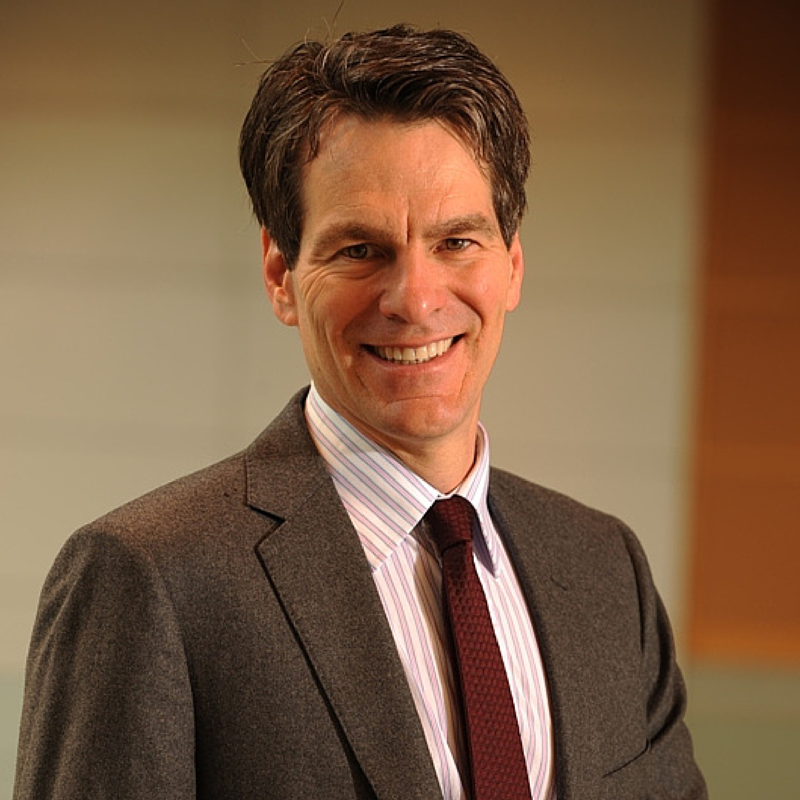
Craig Medico is an Economics and History educator in New York with 11 years ofCraig Medico classroom experience. Craig is doing amazing things to get young people to understand and become interested in economics.

He is the author of No Bull Review – Macroeconomics and Microeconomics: For use with the AP Macroeconomics and AP Microeconomics Exams (2012) and No Bull Review – Macroeconomics and Microeconomics: Top 10 Guide (2014). 

Craig is the developer of several best-selling iPhone test prep apps from Study By App, LLC, including Economics AP (2010), Economics AP Free (2011), and Economics Flashcard Review (2011). 

In 2010, he contributed to WNYC Radio/Public Radio International’s morning news program The Takeaway. 

Craig is the Macroeconomics instructor for the Junior State of America summer school at Princeton University and teaches Advanced Placement Economics at Paul D. Schreiber High School in Port Washington, New York.

He recently completed an economics educator study tour of Peru with the Global Economic Education Alliance in association with the University of Colorado-Colorado Springs and the Peruvian University of Applied Sciences.

In his spare time, Craig records and produces educational music videos for The Social Studs.

Economic Themes:

In this interview, Craig mentions and discusses: Teaching economics, Advanced Placement program, opportunity costs, supply and demand and the Philips Curve.

Economists:

In this interview, Craig mentions: 

John Brock.

Find out:

  • about Craig Medico’s education trip to Peru.
  • about the class distinction in Peru and how it is upsetting the quality of education for the poor.
  • the answer to this problem: 2 + 2 x 2 + 2 Tweet me https://twitter.com/Econ_Rockstar
  • how technology can be so beneficial to learning.
  • how Peruvian kids are excited about the country’s economic future.
  • how a trip to Peru will become part of Craig’s lessons at High School.
  • about Craig’s opinions about using technology in education.
  • why Craig embraces technology in education both for himself and for his students.
  • if there is a disruptive technology that exists that could compromise the traditional bricks-and-mortar way of education.
  • what upset Craig when he saw a mother and son at a donut shop.
  • how economics saved Craig’s career.
  • how idiot-proofing economics allowed Craig to master the concepts.
  • about Craig’s philosophy in his teaching methods and how it helps students to learn effectively.
  • about the Advanced Placement programs in the United States and how to earn college credit.
  • about Craig’s philosophy which is based on the thoughts of Roman Emperor Marcus Aurelius.
  • who are George Washing-tone and Abrajamz Lincoln and what are they teaching kids?
  • why Craig Medico transforms into Mr Medi-KO and why he’s off to wrestling school.
  • about the technological challenges facing all schools today.
  • about some of the apps you can use to create educational content.

Defining Moment:

Craig self-proclaimed that he “was actually an economic moron up to about 12 years ago”.

Craig was originally a World History instructor and his school wanted to offer an Advanced Placement program. In order to keep his job, Craig had to “figure out economics. So, in a desperate attempt to keep my job  that year, I’d to figure out how to make economics work for me. I’d to figure out a way to idiot-proof the content of the curriculum since I was a complete economic idiot.”

“I was pretty much in my students’ shoes moments before trying to teach them and I used that to my advantage. I knew what it was to be like in their shoes.”

“When you teach something, you reinforce the material for yourself and perhaps take the most important step toward mastery of that content”.

Affirmation/Philosophy:

It’s important to reserve some quite time for myself each day. I try to workout a few days each week even if it’s for 30 minutes. It helps clear the mind. It helps me feel good and if you feel good you look good.

I have this 3 hour window every morning where my mind feels extra sharp and this is where my creative ideas typically originate. Ultimately the goal is just to be a happy person. Be happy with what I do everyday.

“The happiness of your life depends on the quality of your thoughts” – Roman Emperor Marcus Aurelius.

Influencers:

My students influenced Craig the most when it came to writing the books and apps.

“When it comes to developing material for the classroom, my influencers are Metallica, KISS, Aerosmith and the Rolling Stones. I used to view each lesson as a performance – like a rock show.”

Takeaway:

No matter how old you are or where you are in life, always be an active learner. There’s nothing more rewarding than learning new ideas, new activities, taking on new hobbies. And then once you learn something, become a teacher. Share it with the people around you.

About the Use of Technology in Education:

I love it. I don’t think it necessarily replaces the classroom experience. But it supplements it in such a great way. I view the online stuff as just another way of diversifying how we learn.

MOOCs are the big thing in education right now. To take a class with 80,000 other students – how cool is that? And do it on your own terms, do it at low or no cost.

“I got into technology because it’s fun. It’s so much fun to put the websites together and the apps, the books and the videos on YouTube. I do it to keep things interesting for me. If I taught the classes the same way every single year I would end up in a huge rut. My goal is to constantly improve and be as great as a teacher as I can for my students.”

“I think human interaction is very important. Especially in the workplace where we still have to deal with human beings. We’ve gotta create students who can handle that down the line.”

Tools Educators Can Use to Help with Teaching:

  • Powerpoint: Allows diagrams to show movement such as changes to curves.
  • Twitter
  • Snapchat
  • Apps:
    • Explain Everything – Used to make YouTube videos.
    • AppShed – create your own apps or get students to create their own.
    • Socrative – Socrative lets teachers engage and assess their students with educational activities on tablets, laptops and smartphones.
    • studybyapp – provides an intuitive web-based platform that enables you to build apps that fit your needs.

Education in Peru: A Tale of Two Standards but a Key Determinant to Long-Term Economic Growth

A recent trip by Craig Medico and 11 other educators from the USA was organised by the Global Economic Education Alliance in partnership with Dr. John Brock, Director of the Center for Economic Education at the University of Colorado, Colorado Springs (UCCS) and Claudia Sicoli, Director of the Centro de Educación Económica de la Universidad Peruana de Ciencias Aplicadas (UPC) in Lima, Peru.

Mr. Medico embarked on a tour of Peru’s educational system as well as experiencing some of the economic development that has been going on in Peru over the last few decades. This trip was a great opportunity both for Peru and the USA to forge an education alliance and to open up a teacher-exchange in the future and to improve the education system in both places.

Craig visited wealthy private schools, middle-class private schools and poor public schools, as well as meeting with students at the local university. He, along with the other educators met with representatives of the Central Bank of Peru and the ministry of education.

Craig found a lot of challenges and inequities throughout Peru’s educational system. A visit to one upper-class private school in Lima was an ‘eye-popping experience’. This was a trophy school that epitomised the trappings of wealth and symbolized the success of Peru’s economy. “It resembled more of a country club than a school – large outdoor swimming pools, soccer fields, lots  of open space. Lots of technology in the classroom, every student had their own computer”.

The construction of new buildings on the grounds of this private school confirmed its continued and rapid expansion and is analogous to the determination of Peru to be the best in attaining educational standards. Students are granted a lot of academic freedom through project-based learning. “Most of the instructors are foreign that would come in from overseas and teach for a couple of years. They seem to be high-level teachers.”

It was a totally different story for a poor public school outside Lima. “That school was surrounded by dirt and dilapidated housing. I didn’t see a single computer in a classroom. The closest thing was a dusty broken TV set that didn’t work anymore. The students seemed very unengaged and many were confused. I observed one teacher who was teaching students completely incorrect information.”

In that particular lesson, students were working in groups to understand bar graphs. Their prop were wooden boards with nails sticking out from them and they were creating bar graphs with rubber bands. Craig is shocked at how this school has fallen behind in standards, particularly failing to embrace technology due to the lack of funding it receives. 

“Many struggle through it and I’m thinking, WOW, this is a great example of where technology, like an interactive white-board, would greatly enhance these kids’ classroom experience.”

The thing that struck Craig the most, in addition to the technology, was the teacher’s approach to teaching math. She wasn’t teaching math using the ‘Order of Operations’ – the PEMDAS Rules that are applied to learning in 3rd and 4th Grade. She was just solving problems on the board left to right. Craig was so concerned about a math problem that was being solved incorrectly by the teacher at this point that he imagined mistakes and incorrect information being taught at other schools, not only in Peru, but also in the US.

Craig interacted with kids from a Middle School in Cusco, Peru who where so excited about their country’s economy and what it means for them. When they asked Craig and the other educators about their personal thoughts, Craig, in true economic fashion, highlighted the key underlying strengths and benefits that are determining factors to a successful economy: the valuable inputs and factors of production, property rights are better protected, buildings and infrastructure is being built to accommodate growth and sustain future economic development.

However, Craig gravitated toward education being the number one catalyst for maintaining a healthy, vibrant and opportunistic economy, which is a reflection of his true-calling as a passionate and dedicated educator. “Improving education and human capital is going to be the main determinant as to whether Peru is going to be a true economic powerhouse over the longer term.”

Craig is an champion and a hero, not just in the wrestling ring, but in the classroom. His passion and dedication exudes and shines through his continued and dynamic approach to making learning (and teaching) fun and accessible. Craig is an early adopter of the use of technology and social media in the classroom, which embraces the needs of both student and teacher. His students are extremely lucky to have a teacher so dedicated to giving it all and I sincerely hope they realise this. It seems that he has unlocked the true meaning of life: help others and find happiness in the things you do each day.

Recommended Books:

  • No Bull Review – Macroeconomics and Microeconomics: For use with the AP Macroeconomics and AP Microeconomics Exams (2012) by Craig Medico.
  • No Bull Review – Macroeconomics and Microeconomics: Top 10 Guide (2014) by Craig Medico.
  • The Stoic Philosophy of Seneca: Essays and Letters by Lucius Annaeus Seneca

Apps by Craig Medico:

  • Economics AP Free
  • Economics AP
  • Economics Flashcards

All three apps by Mr Medico can be found on the iTunes store but here is a link that will take you to his website showing the apps on the right of the homepage.

Where To Find Craig Medico:

  • Website: www.mrmedico.info
  • Twitter: @mrmedicoinfo
  • email: cmedico@gmail.com
  • YouTube: SocialStudsRock 
http://traffic.libsyn.com/economicrockstar/027_Craig_Medico.mp3

Podcast: Play in new window | Download
  • facebook
  • linkedin
  • twitter
  • google+
  • pinterest

025: Dan Hamermesh on the Economics of Beauty: Attractive People Are More Successful

March 26, 2015 by Frank

http://traffic.libsyn.com/economicrockstar/025_Dan_Hamermesh.mp3
Play in New WindowDownload

025: Dan Hamermesh on the Economics of Beauty: Attractive People Are More Successful 

Dan Hamermesh is Professor in Economics at the Royal Holloway University of London and at thePortraitHamermeshwithoutJacket University of Texas at Austin. Dan researches the economics of beauty. He received his Ph.D. from Yale and has since taught at Princeton, at Michigan State, and at Texas. He has held visiting professorships at universities in North America, Europe, Australia and Asia, and lectured at almost 250 universities in 48 states and 33 foreign countries. His research, published in nearly 100 refereed papers in scholarly journals, has concentrated on time use, labor demand, discrimination, academic labor markets and unusual applications of labor economics (to beauty, sleep and suicide).

Professor Hamermesh has received many notable and distinguished honors and awards in recognition for his contribution to the field of economics. These include the Mincer Award and the IZA Prize in Labor Economics, the John R. Commons Award, as well as many teaching of excellence awards.

Daniel’s teaching include Microeconomics; Macroeconomics; Econometrics; Economics of Labor and Economics of Life.

Daniel is the author of many books including Demand for Labor: The Neglected Side of the Market, Beauty Pays: Why Attractive People Are More Successful, The Economics of Time Use and Economics Is Everywhere. He is also a regular contributor to the Freakonomics blog and podcast.

Economic Themes:

In this interview, Dan mentions and discusses:

Speculation, inter-temporal maximisation, labor economics, incentives, wages, welfare payments, comparative advantage and externalities.

Economists:

In this interview, Dan mentions:

 John Maynard Keynes, Gary Becker, Gregg Lewis, Robert Lucas and Michael Lewis.

Influencers:

Gary Becker and Gregg Lewis

A lot of my stuff is the weird kind of stuff that Becker pioneered – Dan Hamermesh.

Click To Tweet

Gregg Lewis had a concern about data – about doing it right, making sure you were right. That’s a crucial thing. One has to take data seriously – Dan Hamermesh.

Advice:

Do what you think you’ll enjoy, because if you think you’ll enjoy it the odds are pretty good you’ll do well at it. You’ll be motivated to work hard and to succeed – Dan Hamermesh

Find out:

  • how economics can be used beyond the theoretical framework we see in textbooks.
  • why we should think about economics in things we see or do in the real world.
  • how students of economics can inspire their professors in a two-way mutual learning process.
  • how economics is everywhere – we just need to think, see and interpret.
  • how economics is enjoying a revival in reaching to mass audiences.
  • the benefits of economics books like Freakonomics, Beauty Pays, Dollars and Sex and Happiness By Design.
  • why we should read interesting books on economics.
  • if happiness is related to how beautiful or attractive you are.
  • why better-looking men are happier.
  • how to recognise if you are beautiful.
  • what good-looking attorneys, prostitutes, politicians and NFL quarter-backs have in common.
  • if economists should be studying the effects of being attractive and ugly.
  • if people have an increased need to become beautiful.
  • whether increased spending on cosmetics, hair and clothing by women will have a pay-off in the labor market.
  • if plastic surgery to alter beauty results in higher earnings.
  • about the disability benefits available to obese people.
  • if an obese person is perceived to be less beautiful than a slim person.
  • if there is a relationship between ugliness and where a person lives.
  • why Dan was interested in studying the economic impact of beauty.
  • which economic markets show evidence of the impact of beauty.
  • how Dan first met his wife of 42 years.
  • what Dan thinks of Abercrombie and Fitch’s ‘six-pack’ hiring policy.
  • if being attractive prohibits opportunities in the labor market.
  • if you should work in the private or public sector if you are good-looking.
  • how to identify an externality on the side-walk.
  • why you should do what you’ll enjoy rather than chasing the money.

Why Attractive People Are Happier and Economically Better-Off.

Attractive people have been found to be happier than not-so-good-looking people. Better-looking men receive higher incomes, which make them happier overall. Attractive women are also happier, but their happiness is more direct in that their happiness is the result of knowing that they are good-looking. Attractive women do receive higher incomes but this is not a direct link to their happiness as it is for men.

“The beauty itself is directly more salient to them than it was for men, even though the overall effect was identical for both genders” – Dan Hamermesh.

How someone realises if they are attractive or not is due to the reinforcement by other people in making you aware whether you are good-looking or ugly. “Better-looking babies are treated better by their parents and by other people. Better-looking 5 year olds are treated better in kindergarten than ugly ones. When you’re chosen for teams or go out in High School, the better-looking people do better. And they also, given even the amount of education they attained, they’ll do better in the labor market. They’ll get better jobs, make higher pay, even within the same occupation” (Dan Hamermesh). Good-looking attorneys, prostitutes, politicians and National Football League quarter-backs make higher pay than their uglier colleagues.

In the labor market, the top one-third of people who are considered good-looking will earn 10 to 12% more in income independent of any differences that might exist between them and those not considered good-looking.

A woman’s increased spending on cosmetics, hair and clothing will not increase her perceived beauty and will also have a minimal pay-off on the labor market for her. Plastic surgery for cosmetic reasons does not have a benefit in terms of increasing earnings in the labor market. You do it to feel good. It’s not an economic investment, it’s a feel-good investment.

“Unless a person is morbidly obese, people do not view him or her as being any uglier than anybody else, all things taking together” – Dan Hammermesh.

Does Location Determine Whether You Are Beautiful or Ugly?

I ask Dan whether a person’s good looks are determined by the area in which they live. The reason I ask this is based on our earlier discussion on why attractive people typically earn a higher income. It can be fair to suggest that cities or regions that pay more would consequently attract good-looking people.

Dan states that “if you’re a good-looking person, you’re going to flock to an area where your looks pay off more. And if you’re a bad-looking person, you might want to go away from an area where looks pay off. In the UK, where people who were born in Scotland and Wales, if they’re good-looking, are more likely to migrate to South-East England (London) than other people”.

Also, “people who were born in South-East England (London) who are bad-looking appear to move to outlying areas where their looks aren’t so important”.

“Looks not only affects where we live in terms of what we make, but where we choose to live in terms of where we spend out adult lives. You’ll go where you get the biggest bang for your buck or, in this case, the biggest pounds for your beauty.”

Economic Markets Where Beauty and Attractiveness Are Present:

  1. Labor Markets: Higher wages and better conditions.
  2. Marriage Markets: A good-looking woman will attract a man who earns more.
  3. Market on Unsecured Loans: Attractive people are more likely to get a loan and on better terms.

Recommended Books:

  • Beauty Pays: Why Attractive People Are More Successful by Dan Hamermesh.
  • Economics Is Everywhere by Dan Hamermesh.
  • The Worldly Philosophers: The Lives, Times And Ideas Of The Great Economic Thinkers by Robert L. Heilbroner.
  • Moneyball by Michael Lewis.

Where To Find Dan Hamermesh:

  • Facebook: BeautyPays
http://traffic.libsyn.com/economicrockstar/025_Dan_Hamermesh.mp3

Podcast: Play in new window | Download
  • facebook
  • linkedin
  • twitter
  • google+
  • pinterest

024: Greg Davies on Behavioral Finance and Controlling Your Emotions When Making Trading Decisions

March 19, 2015 by Frank

http://traffic.libsyn.com/economicrockstar/024_Greg_Davies.mp3
Play in New WindowDownload

024: Greg Davies on Behavioral Finance and Controlling Your Emotions When Making Trading Decisions

Greg Davies is Managing Director and Head of Behavioral Finance at Barclays.  He joined the firm in December 2006 to develop and implement commercial applications drawing on behavioural portfolio theory, the psychology of judgment and decision making, and decision sciences.

Today Greg leads a global team of behavioural and quantitative finance specialists, and is responsible for the design and global implementation of Barclays’ Investment Philosophy.

Greg is an Associate Fellow at Oxford University’s Saïd Business School and his first (co-authored) book, ‘Behavioral Investment Management: An Efficient Alternative to Modern Portfolio Theory’, was published in January 2012.

He is co-curator and co-creator of Open Outcry – a reality opera based on the stock market trading floor.

Greg has authored papers in multiple academic disciplines, presents at academic and industry conferences, and is a frequent media commentator on Behavioural Finance.  He is an Editorial Board Member of the Journal of Behavioural and Experimental Finance.

Greg studied at the University of Cape Town and obtained a degree in Economics, Philosophy and Finance. He followed this with an MPhil in Economics and a PhD in Decision Theory and Behavioural Finance from the University of Cambridge.

Economic Themes:

In this interview, Greg mentions and discusses:

Behavioral economics, behavioral finance, rationality, irrational behavior, heuristics, cognitive biases, system 1, system 2, homo economicus, trade-off, home bias, familiarity bias, risk, return, portfolio, efficient frontier, stochastic model, trading floor, noise, herding, bubbles, booms, bust, returns, standard deviation, deterministic model, decision theory, expected utility theory, mean variance and portfolio theory.

Economists:

In this interview, Greg mentions:

Danial Kahneman, Amos Tversky, Terence Odean, Warren Buffet, Charlie Munger and Harry Markowitz.

Influencers:

Jon Elster and Amos Tversky.

Advice:

Be multi-disciplinary. Look for links between fields. Be continuously curious.

Keep learning. Stay curious. Say ‘yes’ to things that are outside your comfort zone.

Find out:

  • what is Behavioral Economics/Finance
  • the disconnection between economics and psychology.
  • how Kahneman and Tversky were ‘swimming up-stream’ to bring common sense to economics.
  • why viewing the world through biases is harmful to behavioral finance.
  • why the ever-increasing list of biases may not be good for the behavioral finance field.
  • about System 1 and System 2 as popularised by Daniel Kahneman.
  • why it’s good to allow emotions to part of the portfolio decision-making process.
  • how to acquire the emotional comfort you need for your long-term financial objectives.
  • how to buy emotional insurance for your long-term investment portfolio.
  • how to avoid costly short-term emotional mistakes.
  • how psychometric tests can extract measures of financial personality.
  • why a set of nudges are designed to help high net-worth individuals to make better decisions.
  • how to build a tailored portfolio to meet your clients needs.
  • why you should consider including expected anxiety into your portfolio building along with risk and return.
  • what an opera experiment has to do with replicating the open outcry system of a trading floor.
  • how music can control your emotions while trading markets.
  • how Barclays Capital are improving the understanding of their clients by turning the lens on themselves.

Behavioral economics is the combination of finance theory and behavioral psychology. It’s about trying to understand how people actually do go about making financial decisions and, as a result, how we might make them better financial decisions.

Problems with Biases in Behavioral Finance:

  • Biases are only often biases if you view them through the lens of what economic theory very narrowly and mathematically deems to be rational.
  • There’s nothing irrational about having the need for a  short-term immediate emotional comfort.
  • A lot of deviations from narrow economic thinking are not irrational at all. They are perfectly reasonable. It is just that other people are bringing other objectives to bear on the decision.
  • The other problem is the tendency to look at the world through a list of biases.

Classical Finance would typically remove irrational behavior from its theories and models. However, the position of Behavioral Finance is much more subtle. As humans, we need emotional comfort. We need to be comfortable with the decisions we make and with the portfolio we hold. There is nothing irrational about that.

You need to find a way of not switching off your emotions but utilising them effectively – Greg Davies

Click To Tweet

Emotions are actually a very good source of information for us if we use them in a thoughtful way – Greg Davies

Resources:

Farnam Street by Shane Parish 

Recommended Books:

  • Thinking Fast and Slow by Daniel Kahneman
  • Explaining Social Behavior: More Nuts and Bolts for the Social Sciences by Jon Elster
  • Behavioral Investment Management: An Efficient Alternative to Modern Portfolio Theory by Greg Davies

Where To Find Greg Davies:

  • Website: Investment Philosophy 
  • Twitter: @GregBDavies
http://traffic.libsyn.com/economicrockstar/024_Greg_Davies.mp3

Podcast: Play in new window | Download

  • facebook
  • linkedin
  • twitter
  • google+
  • pinterest

023: Loretta Napoleoni on Financing Terrorism and the Creation of the Islamic State

March 12, 2015 by Frank

http://traffic.libsyn.com/economicrockstar/023_Loretta_Napoleoni.mp3
Play in New WindowDownload

023: Loretta Napoleoni on Financing Terrorism and the Creation of the Islamic State

Loretta Napoleoni is an expert on terrorist financing and the IslLoretta Napoleoniamic State. She advises several governments and international organizations on counter-terrorism and money laundering.

As Chairman of the countering terrorism financing group for the Club de Madrid, Loretta brought heads of state from around the world together to create a new strategy for combating the financing of terror networks.

Loretta is a regular media commentator for CNN, Sky and the BBC and advises several banks on strategies to counter the current ongoing crisis. She lectures regularly around the world on economics, terrorism and money laundering.

Loretta is also a columnist and writes about terrorism, money laundering and the economy for several European financial papers including El Pais, The Guardian and Le Monde.

Loretta began her career as an economist, working for several banks and international organizations in Europe and the US. She has a Phd in economics and a Masters of Philosophy in International Relations and one in terrorism.

She is the bestselling author of numerous books including The Islamist Phoenix, Maoanomics, Rogue Economics, Terror Incorporated and Insurgent Iraq.

Her books are translated into 18 languages including Chinese and Arabic.

“I studied economics because I thought that economics was the way to change the world” – Loretta Napoleoni.

Economic Themes:

In this interview, Loretta mentions and discusses: Islamic Finance, gold, barter, quantitative easing, reserve currency, consumerism, the Marshall Plan, labor, wages, sex trade, slavery, demand, profit, trade unions, capitalism and growth.

Economists:

In this interview, Loretta mentions: Adam Smith, David Ricardo, Karl Marx, John Stuart Mills and John Maynard Keynes.

Advice:

The key is to always search for the truth. It is important to listen to the experts because otherwise you get the wrong picture – Loretta Napoleoni.

Find out:

  • about Loretta’s involvement in the feminist revolution in the 1970s in Italy where she was one of the founding members of the Italian Feminist Movement.
  • why she studied economics and the subsequent irony of working for a Russian bank.
  • why Loretta sold her company to do a PhD in terrorism at the London School of Economics.
  • about Loretta’s contact with the Italian Marxist organisation, The Red Brigade.
  • how terrorists fund their activities.
  • who initially sponsored ISIS or the Islamic State initially and how they may regret this.
  • why Jihadi John and others were attracted to the Islamic State.
  • how Saudi Arabia’s sponsor of a war by proxy against the Assad regime in Syria resulted in the creation of IS.
  • about The Caliphate and why IS wants to re-create a modern version of this region.
  • about the functioning economy of the Islamic State.
  • if the Islamic State has a functioning banking system.
  • if the Islamic State is using gold coins, dollars or a bartering system.
  • about the how women are treated in the Islamic State.
  • why Loretta believes that the feminist movement ultimately failed.
  • if the US policy of quantitative easing is making it easier to finance terrorism due to the increase in the money supply.
  • the meaning of the Patriot Act and how every transaction made in US dollars is tracked and traced everywhere in the world.
  • whether the US should stop their foreign policy in the Middle East and North Africa.
  • how the world is being shaped by dark economic forces based on the fantasy world of consumerism.
  • how an increase in the number of democratic countries has resulted in an increase in modern-day slavery.
  • about the sex trade and the fall of the Berlin Wall.
  • how the Chinese are better capitalists than Western countries.
  • how we can learn from the Chinese economy.
  • whether Africa will benefit from the Chinese model of capitalism.
  • why there is a ‘race to the bottom’ in todays economy.
  • why Loretta believes that we need a new theory in economics.
  • about the problem of mathematics in economics.
  • the advice Loretta gives for writing a book.

The Caliphate and Islamic State

The Caliphate is a way to formulate the Muslim political utopia, whereby for centuries, Muslims have dreamt of the creation of a State but have failed. The political reality of their world has been dictatorship, foreign power, colonization or the tribal system.

The Caliphate is the only political expression that the Muslims have produced. The ancient Caliphate was a splendid civilization, very different from the Caliphate of the Islamic State because it was very tolerant. Jews, Christians and Muslims lived together in peace without any problems.

Today, the economy of the Islamic State is a closed economy in which the trading of goods and services is done within the State. There is some degree of smuggling going on. Loretta Napoleoni believes that the rise of the Islamic State is a European problem because of colonialization.

Quantitative Easing, the US Dollar and the Illegal Arms Market

The US can borrow against the stock of dollars in circulation all over the world since the dollar is the reserve currency. What this means is that the US prints more dollars, not only for the demand inside the US but also for the demand outside the US. The illegal arms market is run in dollars. Since this is a market that grows, it therefore needs to be fed an increasing supply of dollars. If the Islamic State is using dollars, then they will benefit indirectly from the printing of money inside the United States.

Slavery and the Link with Consumerism

This economy, this rogue economics, is very much an economy that is driven on one end by consumption, this endless consumption. And to feed this monster of endless consumption, you have to produce at a cheaper level. So you use anything you can.  – Loretta Napoleoni.

The sex trade boomed with the fall of the Berlin Wall. Some women had no alternative but to prostitute themselves to feed their family because of the collapse of the Communist economy.

On economics:

“There is too much maths. Everything is reduced to mathematical models. They want to predict everything with numbers. Economics is a social science so you can’t predict people’s behavior.”

Advice:

“If you want to write a book, you start now and you stop when you finish. You don’t stop in the middle, you don’t do many things. All you do is work, work, work.” – Loretta Napoleoni.

Resources:

  • Scrivener 
  • Evernote

Recommended Books:

  • The Islamist Phoenix: Islamic State and the Redrawing of the Middle East by Loretta Napoleoni.
  • Maonomics: Why Chinese Communists Make Better Capitalists than We Do by Loretta Napoleoni.
  • 10 Years That Shook the World by Loretta Napoleoni.
  • Terrorism and the Economy: How the War on Terror is Bankrupting the World by Loretta Napoleoni.
  • Rogue Economics: Capitalism’s New Reality by Loretta Napoleoni.
  • Terror Incorporated: Tracing the Dollars Behind the Terror Networks by Loretta Napoleoni.
  • The Wealth of Nations by Adam Smith
  • The Theory of Moral Sentiments by Adam Smith

Where To Find Loretta Napoleoni:

  • www.lorettanapoleoni.net
http://traffic.libsyn.com/economicrockstar/023_Loretta_Napoleoni.mp3

Podcast: Play in new window | Download

  • facebook
  • linkedin
  • twitter
  • google+
  • pinterest
  • Prev Page...
  • 1
  • …
  • 13
  • 14
  • 15
  • 16
  • 17
  • 18
  • ...Next Page

Frank Conway

Frank Conway is founder of Economic Rockstar and lecturer of economics, finance and statistics. Read More…

View My Blog Posts

Youtube Sub

Become a Patron of the Economic Rockstar Podcast

patreon

Ireland’s Economy by the Numbers

Leaving Cert Economics: Ireland’s Economy  Click here to download a workbook on Ireland’s Economy so that you can add your own notes. [Original size] Ireland’s Economy by fconway

Categories

Subscribe and Never Miss An Episode

itunes-logo

Recent Posts

  • Ireland’s Economy by the Numbers April 8, 2019
  • 174: Wendy Carlin on The Core Project, Capitalism, Democracy and Normative Statements February 13, 2019
  • 173: Stephen Wright on Core Econ as a Learning Resource for Mainstream Economics January 28, 2019
  • 172: Best of 2018 Part 2: From the Great Depression to Futurism; Institutions, Individualism, Cooperation and Reciprocity January 22, 2019
  • 171: Best of 2018 Part 1 January 3, 2019

Copyright © 2026 · Podcast Pro Theme on Genesis Framework · WordPress · Log in

This website uses cookies to improve your experience. We'll assume you're ok with this, but you can opt-out if you wish. Accept Reject Read More
Privacy Policy

Privacy Overview

This website uses cookies to improve your experience while you navigate through the website. Out of these, the cookies that are categorized as necessary are stored on your browser as they are essential for the working of basic functionalities of the website. We also use third-party cookies that help us analyze and understand how you use this website. These cookies will be stored in your browser only with your consent. You also have the option to opt-out of these cookies. But opting out of some of these cookies may affect your browsing experience.
Necessary
Always Enabled
Necessary cookies are absolutely essential for the website to function properly. This category only includes cookies that ensures basic functionalities and security features of the website. These cookies do not store any personal information.
Non-necessary
Any cookies that may not be particularly necessary for the website to function and is used specifically to collect user personal data via analytics, ads, other embedded contents are termed as non-necessary cookies. It is mandatory to procure user consent prior to running these cookies on your website.
SAVE & ACCEPT