• ABOUT
  • RESOURCES
  • PODCAST
  • BOOKS
  • BLOG
  • SUPPORTERS
  • QFA Financial Advice
  • CONTACT

Economic Rockstar

Connecting Brilliant Minds in Economics and Finance

043: Herbert Gintis on Game Theory and the Multidisciplinary Approach to Understanding Human Behavior

July 30, 2015 by Frank

http://traffic.libsyn.com/economicrockstar/043_Herbert_Gintis_Final.mp3
Play in New WindowDownload

043: Herbert Gintis on Game Theory and the Multidisciplinary Approach to Understanding Human Behavior

Herbert Gintis is Emeritus Professor of Economics at University of Massachusetts and visiting Professor at Central European University.Herbert Gintis
He is known for his theoretical contributions to sociobiology, especially altruism, cooperation, epistemic game theory and gene-culture co-evolution.

Herbert has a B.A and M.A in Mathematics but switched his PhD program at Harvard from mathematics to economics.

Professor Gintis was part of a group of economists who developed their ideas on a new economics which encompassed issues of alienation of labor, racism, sexism, and imperialism.

Herbert has worked extensively with economist Samuel Bowles, writing their landmark book, Schooling in Capitalist America.

One of Herbert’s latest books The Bounds of Reason emphasises the unification of economic theory with sociobiology and other behavioral sciences which, in the words of Nobel Prize-winning economist, Vernon L. Smith, “is firmly in the revolutionary tradition of David Hume (Convention) and Adam Smith (Sympathy)”.

In the episode you will learn:

  • about the importance of trans-disciplinary research and the importance of collaboration with other disciplines.
  • why economics is not the only social science that explains human behavior.
  • how biology, economics and sociology explain the behaviour of humans in different ways and which discipline is correct?
  • about the Ultimatum Game and how it shows the cooperative and non-cooperative behaviour of humans.
  • about the morality of humans and how we reciprocate kindness with kindness and unkindness with unkindness.
  • why reciprocity makes humans so successful as a species.
  • why some species have a symbiotic relationship with other species which is not the same as reciprocity.
  • how we can fit all the human feelings together to form a multi-disciplinary approach to understanding human behavior.
  • why we always need a system to punish free-riders and non-cooperators.
  • how the future structure of the University can be seen at Arizona State University today.
  • why we need a new generation of thinkers and research centres who are trans-disciplinary.
  • what projects Professor Herbert Gintis is working on right now.
  • why morality controls politics and your vote will not make a difference.
  • how Herbert gets things done in terms of writing books and journal articles.
  • why Herbert did not like The Black Swan by Nassim Nicholas Taleb.
  • about Herbert’s disagreement with Nassim Nicholas Taleb.
  • why Herbert believes that macroeconomics is wrong and is in agreement with Taleb on that issue.
  • the goal of economic policy is not to predict but to put in place economic and social policies that prevent really bad outcomes.

Influencers:

Kenneth Arrow, John Maynard Keynes, Adam Smith and Albert Einstein.

Economics:

In this interview, Herbert mentions and discusses: Marx, rationality, game theory, rational actor model, experimental economics, prisoners dilemma, the ultimatum game, labor market, reciprocity and morality.

Economists:

In this interview, Herbert mentions and discusses: Vernon Smith, Samuel Bowles, Ernst Fehr, Kenneth Arrow and Nassim Nicholas Taleb.

On Math Being the Core Link to Multi-Disciplinary Knowledge:

“It’s really hard in the Behavioral Sciences to get too close to any one thinker because they’re all tainted by disciplinarianism. We need a new generation of thinkers who really think in all of these disciplines at the same time. As long as you can do the math. If you can’t do the math, you can’t do economics or you can’t do biology. If you can do the math, and you know statistics, there’s no reason why you shouldn’t know all of the fields. We need a generation of people who do that. The reason it’s possible now is the internet. Now, there’s no reason for disciplinary isolation. I think the next generation of behavioral scientists is going to much more broad”.

Arizona State: The Next Generation University… Today

Arizona State University is organised trans-disciplinarily. They don’t have traditional disciplines. They have subject areas depending on who asks questions and subject areas there from all sorts of disciplines. Herbert Gintis believes that’s what the future is going to be like, where you abandon the disciplines and add new research centres based on asking questions like climate change, cooperation, epidemiology, warfare, political structure, etc. And then you just hire people who can do that and talk to each other. It is exciting. It will happen. But it will take a long time because the whole organisation of the university is in terms of disciplines.

All of the real advances in the Behavioral Sciences fall in between the disciplines. It requires you do it all at the same time. it’s likely that at the forefront of change in the Behavioral Sciences will be funding organisations, governmental organisations like the NFF in the United States and the ESF in Europe. 

Quotes by Professor Gintis in Episode 043 of the Economic Rockstar Podcast:

Disciplines are almost like a feudal fiefdom. So it’s very hard to do trans-disciplinary research but that’s where all the real action is these days. Not only in behavioral science but in natural science – Herbert Gintis.

As far as I’m concerned, all of life is game theory. It’s the interaction of strategic interaction of individuals of all discipline species and types and races. So game theory comes first – Herbert Gintis.

Human success is not based on selfishness. It’s based on our ability to cooperate – Herbert Gintis.

Click To Tweet

“The real enemy of understanding humans is the notion that we’re all selfish. It’s just not true – Herbert Gintis

To do creative work, you have to have time. Once you have time, you get a lot of work done – Herbert Gintis.

“What I like to do most in the world is to read and write. That’s what I do” – Herbert Gintis.

“I did not like The Black Swan at all. It made fun of science. It made fun of statistics. It capitalised on a unique event, the financial crisis of 2008, and he used it to say economics is a bunch of crap. I think that’s just a bad mistake and I had some run-ins with him on the web. He thinks that science is about prediction. Now prediction is important but that’s not what science is about. It’s about expectation” – Herbert Gintis.

Projects Herbert Gintis is Working on Right Now:

Non-consequential behaviour in politics: 

“People participate politically even when they don’t make any difference. In all English-speaking countries, no election with more then 40,000 voters has ever been won by one vote. Meaning that no individual has ever made a difference in a political booth. Political structures are moral structures and they don’t necessarily reflect particular self-interest concerns” – Herbert Gintis.

Resources:

  • Herbert created his own word processor and uses LaTex for mathematical equations.
  • The Web.
  • Evernote
  • Scrivener

Recommended Books:

  • The Bounds of Reason: Game Theory and the Unification of the Behavioral Sciences by Herbert Gintis
  • A Cooperative Species: Human Reciprocity and Its Evolution by Samuel Bowles and Herbert Gintis
  • Schooling in Capitalist America: Educational Reform and the Contradictions of Economic Life by Samuel Bowles and Herbert Gintis
http://traffic.libsyn.com/economicrockstar/043_Herbert_Gintis_Final.mp3

Podcast: Play in new window | Download

  • facebook
  • linkedin
  • twitter
  • google+
  • pinterest

042: Parviz Parvizi on Clammr, Coffee, Coase and the Economy of Iran

July 23, 2015 by Frank

http://traffic.libsyn.com/economicrockstar/042_Parviz_Parvizi_Final.mp3
Play in New WindowDownload

042: Parviz Parvizi on Clammr, Coffee, Coase and the Economy of Iran

Parviz Parvizi is co-founder of Clammr, a mobile app and platform making audio more social and viral. Users areParviz Parvizi on the Economic Rockstar podcast calling Clammr, which features snack-sized audio clips of 18 seconds or less, the “Instagram of Audio” and “Audio Twitter”.

Previously, Parviz worked at McKinsey & Company, Goldman Sachs, the Federal Communications Commission, and O’Melveny & Myers.

He has advised top 5 global media companies and mobile carriers on strategy and growth. He was a founder of McKinsey’s iConsumer research initiative on digital consumer behavior, authoring 3 of the firm’s 10 most-downloaded media sector knowledge documents.

Parviz was a Olin Law & Economics Fellow at Yale Law School. At Cornell he majored in economics and served as President of the Cornell Economics Society while an undergraduate.

Parviz holds a JD from Yale Law School and AB from Cornell.

Economics:

In this interview, Parviz mentions and discusses: development economics, poverty, transitional economies, microeconomics, exports, auction markets, transaction costs, fair trade, taxes, theory of specialisation, Coase theorem, theory of the firm, property rights, bargaining power, market prices, transaction costs, fair trade, economic growth, consumption, productivity, autarky,

Economists

In this interview, Parviz mentions and discusses: Friedrich Hayek, Adam Smith,David Ricardo, Ronald Coase and Steven Dubnar, 

Favorite Economists:

  • Adam Smith and Ronald Coase

Clammr as featured on Economic Rockstar

Find Out:

  • about Clammr, the amazingly new app that shares an 18-second audio clip just like an audio tweet.
  • about Parviz Parvizi’s journey from Iran to the US.
  • how Parviz Parvizi got his name.
  • how there are 4 hours of audio-only time each day for people and how Clammr can accommodate your needs.
  • about the motivation behind the creation of Clammr and how Parviz and his co-founder solved a problem.
  • how Clammr was built up from the beginning at zero cost.
  • what Clammr found out about podcasting.
  • the difficulties of growing and monetising a podcast and how Clammr is helping podcasters to solve these challenges.
  • about the social aspect of Clammr and how you can share audio snippets to your friends, colleagues and audience.
  • if Clammr will adopt a monetization model similar to YouTube.
  • how Clammr’s ‘Hear More’ button can potentially lead to a paid transaction for users.
  • about the opportunities that exist for users of Clammr in the education sector.
  • how teachers can use Clammr in assessments and how students can collaborate to give their audio response in a mashup-like answer.
  • how Clammr could be the new route for a musician to become known, just like the way Justin Bieber made it using YouTube.
  • how being an early adopter of a new platform can lead to a large following.
  • about the sensation that is PewDiePie on YouTube and his degree in Industrial Economics.
  • about Parviz’s work in the Tanzania and Ethiopia coffee trade market.
  • about the challenges faced by African coffee growers and how Parviz solved this problem.
  • Parviz’s views on the recent US-Iran deal.
  • how the US-Iran deal may have economic limitations due to Iran’s economy being 70% state-dominated.
  • about the benefits of an export-oriented market economy.
  • about the benefits of a knowledge economy.
  • how democracy and economic growth could improve if marginalised groups in society are helped.

Quotes by Parviz in Episode 042 of the Economic Rockstar Podcast:

  • Clammr is really trying to address the challenge of discovery and social sharing in audio – Parviz Parvizi

    Click To Tweet

  • You build a more sustainable business if the way you get paid is a way in which all parties involved actually get value – Parviz Parvizi

Advice:

  • Don’t sell yourself short in terms of where you’re aiming and don’t think that your starting point has to define your ending point – Parviz Parvizi

  • Even if you’re aren’t getting access to the very best schools, it doesn’t actually take that much time to catch up with hard work – Parviz Parvizi

  • Aim high and exposing yourself to people, institutions and places of incredibly high standards is a great way to push yourself even if initially you’re kind of a failure”– Parviz Parvizi

  • Entrepreneuship is a constant battle of wills – Parviz Parvizi

    Click To Tweet

Recommended Books:

  • The Elements of Style by Strunk and White
  • Wealth of Nations by Adam Smith
  • The Holy Bible

The Next Decade of Podcasting:

  • What’s in store for the next decade of podcasting and radio? Check out this great post.
  • Clammr releases Future Podcasting 2015 Report on SlideShare.
  • The Future of Podcasting by Parviz Parvizi.

Where to Find Parviz Parvizi:

  • Twitter: @ClammrClammr App on Economic Rockstar
  • Clammr: @Parviz
  • Facebook: Clammr

Links for the Clammr App:

  • Download Clammr for iPhone/iPad in the App Store or by visiting Clammr.
  • For Android use the web-based publisher to upload files and for a basic listening experience.
  • Workshop and update videos.
http://traffic.libsyn.com/economicrockstar/042_Parviz_Parvizi_Final.mp3

Podcast: Play in new window | Download
  • facebook
  • linkedin
  • twitter
  • google+
  • pinterest

041: Dermot Hayes on Comparative Advantage, Feeding the Chinese and the Malthusian Catastrophe

July 16, 2015 by Frank

http://traffic.libsyn.com/economicrockstar/041_Dermot_Hayes_Final.mp3
Play in New WindowDownload

041: Dermot Hayes on Comparative Advantage, Feeding the Chinese and the Malthusian Catastrophe

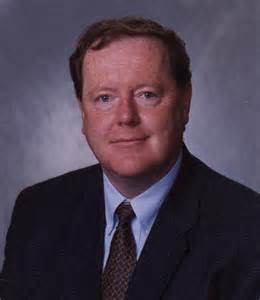
Dermot Hayes is the Pioneer Chair of Agribusiness, professor of economics, and professor of finance at Iowa State University. He heads theDermot Hayes 2 Trade and Agricultural Policy Division at CARD, a position he also held from 1990 through 1998.

He is co-director of the Food and Agricultural Policy Research Institute, a research center dually administered through the Centre for Agricultural and Rural Development (CARD) at Iowa State and at the University of Missouri at Columbia. He is also a leader of the Policy Task Force of the Plant Science Institute at Iowa State.

A native of the Republic of Ireland, Dermot obtained his degree in agriculture science from University College, Dublin and his Ph.D. from University of California, Berkeley with a major in international trade.

Dermot has distinguished himself with many awards at the college and university levels for his work as a teacher and researcher.

In 2006 he received a Publication of Enduring Quality award from the American Agricultural Economics Association, who subsequently named him a Fellow in 2007.

Besides his analysis of U.S. farm policy and international agricultural trade, Dermot’s other research interests include food safety, livestock modelling, demand analysis, and commodity markets.

Economics:

In this interview, Dermot mentions and discusses: market inefficiencies, government intervention, agricultural economics, property rights, comparative advantage, autarky, incentives, scarcity, Malthusian Catastrophe, free-trade, unemployment, subsidies and taxes.

Economists:

In this interview, Dermot mentions and discusses: Jason Shogren, Paul Dolan, David Zetland, David Simon, Adam Smith, Thomas Malthus, David Zilberman, Milton Friedman and Josh Angrist.

Influencer:

Milton Firedman

“Whenever prices rise, farmers and technology companies have an incentive to work harder to take advantage of high prices. And of course they do that by producing more and that brings prices back down again.” – Dermot Hayes

“Malthus was wrong. He was a negative person. But having said that, with more people and less efficient use of land, we are going to have to bring more land into cultivation – this is devastating to the environment.” – Dermot Hayes

In this episode, you will learn:

  • how China is finding ways to feed its people and how self-sufficiency no longer works.
  • about China’s ever-increasing demands for soybeans, sugar, wine, etc and how this is putting demands on the global agricultural industry.
  • how Ireland lost its comparative advantage in milk production by joining the EU.
  • about Kerrygold Irish grass-fed butter and Bullet-proof coffee.
  • why Kerry Group are only ‘scratching the surface’ in the US market.
  • what high-value, labor-intensive products China should concentrate on producing in order to feed their population and trade with other countries.
  • about if the Chinese government owns much of the land and property rights in China.
  • ‘terminator seeds’ and how private companies could be incentivised to manufacture them.
  • about the use of beta agonists, such as ractopomine, in the use of animal food production.
  • why Europe’s method of testing agricultural technologies frustrates Dermot.
  • about Dermot’s work on free-trade agreements between countries.
  • about Dermot’s ‘controversial’ ethanol research paper.
  • why Dermot created a formula that allowed the price of corn to track crude oil prices and how he bought agricultural land based on his findings.
  • how academic research can open up hatred and attacks amongst your peers and the industry to which you maybe researching.
  • what advice Dermot would give a government regarding the taxing and subsidies of goods and services for the purpose of trade.

Takeaway:

“If you haven’t travelled to strange places like Burma or Uruguay, find a way to do so and you’l come back a changed person.” – Dermot Hayes

Recommended Books:

  • Free to Choose by Milton Firedman

http://traffic.libsyn.com/economicrockstar/041_Dermot_Hayes_Final.mp3

Podcast: Play in new window | Download

  • facebook
  • linkedin
  • twitter
  • google+
  • pinterest

040: Rebecca Harding on Trade Finance and How Delta Economics Can Help Identify Growth Opportunities World-wide

July 8, 2015 by Frank

http://traffic.libsyn.com/economicrockstar/040_Rebecca_Harding_Final.mp3
Play in New WindowDownload

040: Rebecca Harding on Trade Finance and How Delta Economics Can Help Identify Growth Opportunities World-wide

Dr Rebecca Harding is CEO of Delta Economics, which specialises in the area of Trade Finance. Rebecca is an independent economistRebecca Harding with an extensive background in modelling economic growth, trade, productivity, innovation and enterprise.

Rebecca is the author of nine books and has written over 250 articles on economic issues. She has held senior positions in leading academic, think-tank and corporate organisations, including roles at the London Business School, Deloitte and the Work Foundation.

Rebecca has advised the European Union and regional governments and agencies in the UK and Germany on innovation and enterprise policy.

Rebecca is a Board Member of the Society of Business Economists and a Board Member and Trustee of the German British Forum. In 2013, she was elected as a national representative of the European Movement UK.

Rebecca holds a BA in Economics and German and an MSc and PhD in the economics of Science and Innovation from the University of Sussex and writes on her blog rebeccanomics.com.

How Rebecca First Discovered Economics:

Rebecca was taught economics as a kid by her father who was a sociologist. “An economist who’s taught by a sociologist is quite an unusual thing. He started off with the fundamental principle that economics is wrong because people aren’t rational. So the first lesson in economics I had was my father telling me that the subject was wrong”.

I have a very eclectic background. I was taught by a sociologist. Some of my big influences when I was in university were in geopolitics and international relations. I’ve done a lot of political science and a lot of philosophy as well. And then, of course, I have an economics, mathematics and language background. So I’m a bit weird. I call myself a hybrid.

Find Out:

  • about Dr Harding’s company DeltaEconomics.
  • about the data used by DeltaEconomics and why it has developed its database of statistics.
  • what is Trade Finance and how it has experienced phenomenal growth in recent years.
  • how companies bridge the finance gap between the time they export goods to the time they receive payment.
  • what the challenges are with long-term growth in trade.
  • if there are inherent risks associated with the trade finance market as more sophisticated derivative and credit markets emerge.
  • about the inherent risks that may appear in the derivatives markets for trade finance.
  • if a market collapse could be the outcome of a non-compliant and unregulated trade finance securities market.
  • if could an implosion in trade finance is possible with large defaults in payments due mainly to the development of a derivatives and securities market.
  • if sovereign risk will become prominent if trade finance risk increases.
  • if enough data exists for trade finance to allow it to mature into a fully functioning wholesale and derivatives market.
  • about some risks to the global supply chain.
  • about the pioneers of innovation and productivity in economic theory.
  • how productivity and trade finance could be correlated.

Economics:

In this interview, Rebecca mentions and discusses: trade finance, credit, exports, growth, derivatives, securitisation, risk aversion, sovereign risk, business risk, contagion, commodities, inflation, fiscal policy, monetary policy, foreign direct investment, demographics, innovation and total factor productivity.

Economists:

In this interview, Rebecca mentions and discusses: Joseph Schumpeter, Christopher Freeman, Carlota Perez, J. K. Galbraith and Frances Coppola.

Influencers:

Karl Marx, Christopher Freeman, Carlota Perez, Joseph Schumpeter, J. K. Galbraith,

On Delta Economics:

“For trade data, it’s the best platform in the world – it’s corrected, it’s clean, it’s comprehensive and it covers continents like Africa all on one platform. It gives clients information on what the trading opportunities are” – Rebecca Harding, CEO of Delta Economics.

“We view the world from a trade perspective. Trade is important because it’s how businesses interact with one another.”

Delta Economics – It’s macroeconomic big data! – Rebecca Harding

Click To Tweet

What we’ve done is pioneer the way in which big data is used in economics – Rebecca Harding

Click To Tweet

What is Trade Finance?

Trade Finance is everything that drives trade itself. From a financial perspective, if you look at the value of world trade, about 80% of that is financed by banks or backed up by big insurance companies or finance through export credit agencies. It’s a huge market and grew very quickly in the from 2000 to 2007. The reason being was due to emerging markets entering into global trade in a very much aggressive way. Banks saw huge opportunities for financing trade.

Essentially, if you are trading with another company in another country, then what you need is some kind of bridging finance between the gap from when you put your goods onto a ship or an aeroplane and when it’s received by the person in the other country and paid for. So what this company needs is some kind of financing gap between those two points. That’s what trade finance is.

By including trade finance data into forecasting, you get much more accurate forecasts as to what’s going to happen to trade. In 2007, there was a tightening of credit available to businesses since the credit in the financial markets of developed countries had locked up. Subsequently, much of the trade finance went to emerging Asia and emerging Latin America and financed huge growth there.

The whole Trade Finance market is largely driven through very large finance houses such as JP Morgan, HSBC, Barclays, Bank of America, Merrill Lynch and BNP Paribas. These very big global banks are the ones that are involved on a day-to-day basis with the trade-receivables, the credit lines, the letters of credit, the open account and the working capital.

What’s also interesting about Trade Finance is that you also have quasi-government agencies and export credit agencies, which are part of the private sector and which are sometimes supported by the public sector. There is also a massive insurance market and legal sector attached to it. With such growth in the Trade Finance market, there is interest now coming from private sector private equity companies who see an opportunity to buy the debt and securitise it and actually use it as an asset class. What Delta Economics also do is it allows the data user to understand trade finance as an asset class. Companies can securitise the debt and trade that securitisation. The derivatives market will be an important component of this.

The Trade Finance market is estimated to be worth $7.4 trillion annually. There are many companies , like Lloyds, who will be putting security behind the money they are backing up.

It was seen as a way of fuelling long-term economic growth through trade.

Data Sources Mentioned in this Episode:

  • Delta Economics
  • UN Comtrade
  • IMF Direction of Trade Statistics

Recommended Books:

  • As Time Goes by: From the Industrial Revolutions to the Information Revolution by Christopher Freeman

Where to Find Rebecca Harding:

  • Twitter: @RebeccaDelta
  • LinkedIn: Rebecca Harding
  • Blog: www.rebeccanomics.com
  • Website: www.deltaeconomics.com
http://traffic.libsyn.com/economicrockstar/040_Rebecca_Harding_Final.mp3

Podcast: Play in new window | Download

  • facebook
  • linkedin
  • twitter
  • google+
  • pinterest

039: David Zetland on Aguanomics, Water Scarcity, Water Wars and ‘Toilet-to-Tap’

July 1, 2015 by Frank

http://traffic.libsyn.com/economicrockstar/039_David_Zetland_Final.mp3
Play in New WindowDownload

039: David Zetland on Aguanomics, Water Scarcity, Water Wars and ‘Toilet-to-Tap’

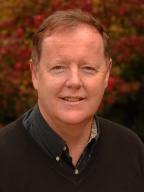
David Zetland is an assistant professor at Leiden University College, where he teaches various classes on economics. He was a PostdoctoralDavid Zetland Fellow in Natural Resource Economics and Political Economy at UC Berkeley (2008-2010) and a Senior Water Economist at Wageningen University (2011-2013). David blogs on water, economics and politics at aguanomics.com and gives many talks to public, professional and academic audiences.

David has two books The End of Abundance: economic solutions to water scarcity (2011)  and Living with Water Scarcity (2014). He received his PhD in Agricultural and Resource Economics from UC Davis in 2008. David lives in Amsterdam.

Influencers:

Adam Smith, Friedrich Hayek and Nassim Taleb.

Economics:

In this interview, David mentions and discusses: scarcity, shortage, commodity, supply, demand, marginal cost, opportunity cost, unintended consequences, monopoly, common-carrier system, the water-diamond paradox, development economics, governance, probability, fat tails, Buddhist economics, the problem of over-consumption, non-satiation assumption, GDP, pricing, fairness and efficiency.

Economists:

In this interview, David mentions and discusses: Adam Smith, Friedrich Hayek, Nassim Nicholas Taleb and Ernst Friedrich Schumacher.

The Water-Diamond Paradox (23rd minute in this Episode)

Find out:

  • if we should be worried more about a shortage of water or a scarcity of water.
  • if we should learn from the oil industry and develop the technology-equivalent of extracting oil from oil sands and desalinate the ocean water?
  • if we can tell whether we know the water footprint of a cow and if it’s different in California than Ireland.
  • why water is actually free and what you pay is for the delivery.
  • if there is an opportunity costs to acquiring water?
  • why people living in the slums of India pay up to 50 times the price for water than those who have cheaper piped water.
  • if a water monopoly is an effective market structure.
  • if price competition in the market for water would result in the over-use of water consumption.
  • about Scottish Water and how other utilities across the UK and adopting their distribution and pricing structure.
  • about the water-diamond paradox.
  • why David decided to do a PhD in economics after failing to get rich in the dotcom era.
  • how David came to get his family name ‘Zetland’.
  • about the coming ‘Water Wars’ and how it has already started.
  • about Sao Paulo’s troubled water situation and how it’s creating gang warfare on the streets.
  • who we should assign the property rights to water.
  • about Chile‘s exemplary assigning of water property rights.
  • what David proposes to be the most effective way of managing water.
  • how Singapore are becoming independent in creating their supply of water and are no longer depending on imports from Malaysia.
  • how Singapore are building technologies to recycle water from waste.
  • why the ‘toilet-to-tap’ water recycling initiative has failed in the US but is working in Singapore.
  • how marketing recycled water works in Singapore and not in the US – one known as ‘New Water’ and the other ‘Toilet-to-Tap Water’.
  • why Singapore treats water as a national security issue.
  • why it will take 20 years to build a desalination plant and why San Diego will need 15 of these plants to serve the water needs of the locals.
  • about the new Irish water utility, Irish Water, and how the management decided to ‘award’ themselves bonuses even before the Irish people payed for their water.
  • about ‘Buddhist Economics’ and the assumption of non-satiation.
  • what David would suggest if he was an Economic Advisor to any country regarding water policy.

Why David Studied Economics:

When I was between 25 and 30 years old, I travelled to 65 countries and when I came back to the States I was looking around and figuring out what to do. I tried to get rich in the dotcom era and that totally failed and I started to work with a bunch of academic mathematicians and they were really kinda cool people. But they were pretty cool and I thought ‘well this is interesting. Maybe I should go and do something academic’. I went back to grad school to get a PhD and I wanted to do development economics. My research project, which was to go and study cocaine production in South America, sounded to my advisors a littlest dangerous. Then one of my advisors said that there was this really strange case in Southern California where San Diego is in a big fight with other water utilities and maybe you should look into that. So that ended up being my dissertation – David Zetland.

David’s Advice to a Country Implementing a Water Policy:

“You have to take care of your environment. Then you have to commodify all the rest of the water. But all that revenue really should go to the citizens of that country. Other than that, I’m open to any other discussion about what’s a better system in terms of balancing between efficiency, which is pricing and fairness which is the distribution of those revenues” – David Zetland.

‘Water Water Everywhere and Not a Drop to Drink’: The Right to Water – It’s a Necessity After All

The ‘Right to Water’ is an important part of the conversation but it tends to confuse things. People need water for drinking, cleaning, washing and so on. But is there a right to water to put on your garden? Is there a right to water to wash your car? Do farmers have a right to water that goes on their fields if that means the river is going to be dry? So, there comes a point where the ‘Right to Water’ runs out and we have to start talking about water as a scarce good or an economic commodity. That’s the separation you need to start with.

Shortage is worse than scarcity because you can’t get any of what you want, even if you have time or money – David Zetland

David Zetland’s book ‘Living with Water Scarcity’ is about learning how to manage water scarcity, the same way we have learned to manage land scarcity, time scarcity and money scarcity. Water scarcity is not confined to any particular region or country. This is a global phenomenon. We can generalise water scarcity in terms of the lack of water available. But there exists specific concerns such as the scarcity of clean water, which is becoming a problem in northern European countries and eastern United States, where there’s lots of water but a lot of it is polluted.

Ireland's Anti-Water Charges Protest 2014

Ireland’s Anti-Water Charges Protest 2014

The irony for people living in Ireland, for example, is that the country is surrounded by water but yet availability of fresh, clean water can be scarce in some regions. There are a few towns and villages in Ireland who have been buying bottled water or are on boiling notices due the presence of cryptosporidium in their water. Water shortages is not necessarily an immediate concern for Ireland. However, California, on the other hand, is experiencing their 4th year of drought. This is something that is being experienced in many regions around the world, but ‘California has more reporters hanging around’ and other regions’ grief remain unreported.

The ‘Water Water Everywhere and Not a Drop to Drink’ problem leads people to think that we should desalinate the ocean and get all the water that we want from the ocean. This, however, would be a great physical and expensive task to undertake and the conversation on desalination tends to stop. Should we learn from the oil industry and develop the technology-equivalent of extracting oil from oil sands and desalinate the ocean water?

Adam Smith explained the value in exchange as being determined by labor: ‘The real price of every thing, what every thing really costs to the man who wants to acquire it, is the toil and trouble of acquiring it’.

David frames this as ‘Technologies and Techniques’; techniques meaning how we use technologies and how we use water. “In the case where you have scarcity, you could say we’re going to build a desalination plant, drill a deeper well, build aqueducts, take shorter showers or stop watering our lawns. We should try and help people use as many ways as possible instead of focusing on one particular silver bullet.”

Who’s the Straw that Broke the Camels Back?

Numerous groups are pointing the finger at each other and casting blame each others way for causing pollution, drought and water scarcity. Besides the natural precipitation, farmers use half as much water as people in the city, such as industries and municipalities. In California, farmers use four times as much water as cities, say in the UK. Farmers obviously use water in various forms, but they’re not necessarily using more than the cities.

Then there’s the big discussion about who should be allowed to or who has the right to us water and that’s where the politics and mudslinging comes in. However, the level of precipitation is different in Arizona and California, as well as in Spain and Cyprus, compared to regions in Ireland and the UK.

Quotes from David in this Episode:

“These pro-poor policies can end up being so anti-poor. It’s terrible, it’s actually almost a crime” – David Zetland

Click To Tweet

on how cheap water in India results in water utilities not having the infrastructure to deliver water to the slum areas. These people end up paying up to 50 times for their water from tankards. This water is dirty and people, particularly children, queue up for hours to collect and carry this water to their homes which can often be on the 3rd or 4th floor of a building.

“The customer is vulnerable to being exploited by the monopoly and the monopoly is vulnerable to being exploited by the customer. And that’s where regulations come in” – David Zetland on the need for regulation in the market for water.

Why is water, which is something we need to live, so cheap, whereas diamonds, which are a pure frivolous luxury, so expensive? – David Zetland on the Water-Diamond Paradox.

Water Wars in Sao Paulo, Brazil

Sao Paulo’s reservoirs have fallen to such low levels that their supply fails to meet with their expected demand. There were a lot of ways in which Sao Paulo could’ve dealt with this risk, such as fixing their leaky networks. They cannot get water from somewhere else. You’ve got a limited amount of water and 10 to 20 million people who need water to drink. The utility can shut off the water supply at various locations if they like and that raises the question of rich versus poor. That kind of decision is not going to please anybody. There have been protests over this.

David’s assessment of this is that if Sao Paulo wants to avoid a war on the streets, they need to shut of everybody’s water and have tankard trucks distributing water in Jerry cans in the corners – one man, one bottle. And that’s because you’d be addressing the concern of social equality and human rights.

Israel is not going to invade Turkey for their water. You can’t win that battle. You can’t bring back the water – it’s too heavy.There won’t be wars of plunder, there’ll be just conflicts over who’s going to get the water. Water gangs will form and they will take your water.


Recommended Books:

  • The End of Abundance: economic solutions to water scarcity (2011)  by David Zetland.
  • Living with Water Scarcity (2014) by David Zetland.
  • Small is Beautiful by Ernst Friedrich Schumacher.
  • The Theory of Moral Sentiments by Adam Smith.
  • Check out David’s review of ‘Small is Beautiful’ by E. F. Schumacher.
  • Find out here why David decided to give his book away for FREE.

Where to Find David Zetland:

  • Blog: aguanomics
  • Twitter: @aguonomics
http://traffic.libsyn.com/economicrockstar/039_David_Zetland_Final.mp3

Podcast: Play in new window | Download
  • facebook
  • linkedin
  • twitter
  • google+
  • pinterest

038: Leah Bell on Being an Angry Grad and Setting Yourself Up for a Life of Success

June 25, 2015 by Frank

http://traffic.libsyn.com/economicrockstar/038_Leah_Bell_Final.mp3
Play in New WindowDownload

038: Leah Bell on Being an Angry Grad and Setting Yourself Up for a Life of Success

Leah BellLeah Bell spent tens of thousands of dollars on a college education for a degree in Education with the same hope of getting a job one day.  After struggling to find a teaching job as an Elementary school teacher, Leah had to work at a minimum part-time job to supplement her teaching salary. However, the school closed and she lost her job. Leah took on a job related to sales. But after a few years she realized that she wanted nothing more than to stay at home with her son. But with student debt and rising prices, it was extremely difficult on one income.

Leah Bell learned the most about life, not in the classrooms of the colleges she attended, but in the years following. After realizing the struggle in the job market, the difficulty of paying off student loans, and the heartbreak of sacrificing priceless time with family to meet financial needs, she and her husband have devoted their lives to sparing people of this depressing fate through their company Neotrep™, providing entrepreneurs with affordable education and tools to succeed. She recently wrote the book The Angry Grad to help prospective students and recent graduates choose the route of entrepreneurship instead of the unstable job world.

Economics:

Mortgage, student loan, debt, competition, labor, happiness, tax and return on investment.

Economics and finance suddenly became personal. It became emotional and, at that time, I became interested in it because it’s not just about numbers. I want people to get their finances under control so they can have a better life and give their children a better life – Leah Bell.

Economists:

Paul Dolan and John Gathergood.

Influencer:

Robert Kiyosaki

Takeaway:

“Always be asking questions, always be willing to learn and take advantage of all of the resources that are out there” – Leah Bell.

Find Out:

  • what is the average student debt?
  • how a college degree is different today than it was just two or three decades ago.
  • why it’s so difficult for college graduates to find jobs and pay back their student loans.
  • how the future will look if we continue teaching young people that debt is the only way to afford a house, a car and an education.
  • what other options are there for people who are considering an education.
  • how debt is not the only way to get through college.
  • if we are paying more for college than we can hope to get back.
  • if it’s still worth taking on so much debt to get a degree.
  • if we’re living in a school loan debt bubble.
  • what we can do about all this?

The Disillusioned Student

High-school students are being blind-sided and do not truly understand the debt that they will accumulate while attending college. Educators and college and career guidance counsellors are failing high-school students by only providing a one-sided argument to going to college. They emphasise the pros of going to college and, in most cases, fail to disclose the cons of going to college in terms of the costs, term loans and the interest repayments. Educators prepare high-school students for college in terms of the grades but lack the financial planning required by the student and their parents.

Typically, a $30,000 loan, which is approximately the average student debt in the US, will amount to $60,000 in capital and interest repayments over the life the loan. However, in many cases, students fail to meet these repayments which equate to upward of $1,000 per month. Consequently, the loan becomes structured to suit the needs of the graduate by acknowledging their current income status and the number of children they may have.

People are putting life events on hold because of the amount of debt they are in – Leah Bell.

Many graduates have become disillusioned with the education system in terms of the costs and the likelihood of repaying it with jobs that do not exist for the training and preparation that they had done at college. For example, teachers are supplementing their teaching salary (if they have a teaching job that is) with a second income earned at shoe stores and restaurants.

By the time students plan to have their entire loan paid off, their going to have double maybe triple the total amount that they originally took out – Leah Bell.

Unfortunately, parents do not understand the reality of the situation. When they themselves were graduating from college, they typically did well relative to those who didn’t attend. Then, jobs weren’t competitive but today, almost everyone has a college degree and finding a job is so much greater than it was then. Now, you need a masters degree to be competitive.

Since there is a demand for college places and lenders are willing to give education loans, colleges  can charge whatever they want. Colleges are aware of this and are raising their rates to astronomical levels. Colleges too are borrowing to finance the development of their campus and their sports and recreational facilities. Football stadiums are being built to professional standards and who best to service this debt than the incoming college students who are paying the ever-increasing fees.

Students are paying more for a college experience than for a college education – Leah Bell

“The college experience is setting up people to fail”. Unless you’re going to college for an engineering degree or something in computer science or physics, something math or science heavy, those are the jobs that you make a decent amount coming out of college. But not everyone fits this mould. Some want to do something in education, social science, music, photography or the arts. Those, however, are on the lower end of the pay scale.

Quotes by Leah Bell on the Economic Rockstar podcast:

“We’re living a very different life than the one we were expecting” – Leah Bell.

“The highest taxed person is the employee” – Leah Bell.

“Why people are encouraged to go to college and get a job is just for the tax reasons” – Leah Bell.

“Set yourself up for a life of success” – Leah Bell.

Click To Tweet

If you can just discipline yourself enough to sit down and learn and go out and try things and be willing to fail and get back up again, you can do anything – Leah Bell.

You’re capped out at your salary and your employer is using your strengths to become really wealthy. What upsets me is people don’t look inside themselves and see all the potential they have and what they can do for themselves – Leah Bell.

“There is no limit to what you can do. No-one is limiting you” – Leah Bell.

Click To Tweet

“I feel that when I wrote this book, I was writing it to myself 12 years ago” – Leah Bell.

Get off your butt. Get some confidence. Do things different. Step out of the box and be different. Don’t be what everyone’s telling you you have to be – Leah Bell.

“The only person that will ever hold you back is you” – Leah Bell.

Click To Tweet

I deal with doubts every single day – whether or not I can do what I wan to do. Do I have enough time in the day? Am I good enough to do it? That’s so natural – Leah Bell.

There’s no one in the world that has not failed except for the people who don’t try. And the people who don’t try never succeed because they never try to get to the point of success – Leah Bell.

“A winner never quits and a quitter never wins” – Napoleon Hill

Click To Tweet

Blogs Mentioned in this Episode:

  • www.neotrep.com by Leah and Walt Bell
  • www.theangrygrad.com by Leah Bell
  • www.smartpassiveincome.com by Pat Flynn
  • www.flippedlifestyle.com by Shane and Jocelyn Sams

Podcast Episodes Mentioned in this Episode:

  • SPI 122 : From Teachers to Totally Rocking it Online – Shane and Jocelyn Sams Share their Success Story – Smart Passive Income.
  • 007: Ryan Blair – Gangster turned Millionaire on Decision-Making, Game Theory and Incentives – Economic Rockstar.

Recommended Books:

  • The Angry Grad: Your Guide to Student Loans, a Struggling Economy, and Becoming Your Own Boss by Leah Bell
  • Spirit of Apollo by Sidney Newton Bremer
  • The 4-Hour Workweek by Tim Ferriss
  • Nothing to Lose, Everything to Gain: How I Went from Gang Member to Multimillionaire Entrepreneur by Ryan Blair 
  • Rich Dad Poor Dad: What the Rich Teach Their Kids About Money That the Poor and Middle Class Do Not! by Robert Kiyosaki 

Music:

It’s Not Right For You by The Script

This song inspired Leah during the writing of her book The Angry Grad.

Where to Find Leah Bell:

  • Twitter: @AngryGradBook
  • Facebook: The Angry Grad
  • Website: www.theangrygrad.com
http://traffic.libsyn.com/economicrockstar/038_Leah_Bell_Final.mp3

Podcast: Play in new window | Download
  • facebook
  • linkedin
  • twitter
  • google+
  • pinterest

037: Noah Smith on Austrian Theory Being a ‘Bad Joke’, Heterodox Models and Efficient Markets

June 18, 2015 by Frank

http://traffic.libsyn.com/economicrockstar/037_Noah_Smith.mp3
Play in New WindowDownload

037: Noah Smith on Austrian Theory Being a ‘Bad Joke’, Heterodox Models and Efficient Markets

Noah Smith is Assistant Professor of Finance at Stony Brook University, New York where he is also a member of the Center for Behavioral Noah SmithFinance research team. Noah’s research Interests include Experimental Finance, Behavioral Finance and Macroeconomics Noah was panel discussant for the Institute for New Economic Thinking Task Force and has received numerous research awards and fellowships. 

Noah is a regular contributor to Bloomberg View where he writes extensively on economics and finance related topics. He also writes at his fantastic economics blog Noahpinion.

Noah received his PhD in economics from the University of Michigan, graduating in 2012. His dissertation examined expectation formation in financial markets. Noah majored in physics as an undergraduate at Stanford University, and spent three years working in Japan, where he still returns from time to time to do research.

Everyone who meets in the public sphere, unless you’re extremely dry and technical, is going to piss people off. Econ is one of those fields where everyone has their own opinion and position and their models that they like. Traditionally, it was this very closed discipline. Econ was for economists and they didn’t often interface with the outside world except through official policy advice and the occasional op-ed. People start talking in the public sphere and I think that disturbs a lot of people. So all the blogs are bad boys really – Noah Smith.

Economics:

GDP, inflation, Central Bank, consumption, microeconomics, macroeconomics, behavioral economics, DSGE, game theory, decision theory, supply, demand, time series, interest rates, linear regression, forecasting, Quantitative Easing, money, gold, Federal Reserve, efficient markets hypothesis, extrapolative expectations, hedge funds, adverse selection, random walk, fat tails and volatility.

Economists:

Paul Samuelson, Brad DeLong, Steve Keen, Greg Mankiw, John H. Cochrane, Jack Schwager, Josh Angrist, Steve Pischke, Ed Phelps, Robert Lucas, Ed Prescott, Paul Volcker, Ludwig von Mises, Friedrich Hayek, Hyman Minsky, Andrei Schleifer, Alok Kumar, Kelly Schuh,  Jonathan Burke, Burton Malkiel, Marcus Brunnermeier, Mark Thoma, Tyler Cowen and Alex Tabarrok.

Find out:

  • whether economists suffer from ‘Physics Envy’.
  • if we should remove mathematics from economics.
  • how math took over economics.
  • if there is a connection between economics and physics.
  • how economics is becoming a more data-driven field.
  • about the micro foundations to macro theory and why these models don’t work.
  • why theory and math-focused economics papers are waning in the academic publishing field.
  • how to approach teaching micro and macro when the theoretical models may not explain much.
  • about whether Economics is moving away from the orthodox method of teaching toward a heterodox method.
  • about the difference between Heterodox and Orthodox teaching in Economics.
  • why Noah considers Austrian Economics to be a bad joke.
  • where Noah falls within the economic spectrum.
  • why Noah believes that heterodox economics is not the future.
  • Noah’s recommended economics blogs to follow.
  • why the Efficient Market Hypothesis is a good starting model for finance students to understand.
  • and much much more

Physics Envy and the Mathematisation of Economics:

At one point economics was a literary discipline. It was philosophical. It was people writing down verbal description of how they thought things worked. Then people started writing down equations. At first it was just a couple of people doing it who were obscure and then, with Paul Samuelson, they really started putting everything in terms of equations and mathematising everything. It was at that point people started to mention that economists had ‘Physics Envy’ because physicists write everything in equations. Maybe that was true as Samuelson had also studied Physics. This was probably a misnomer.

There were new mathematical tools and people were just trying to apply them to things. Math really took over economics and the style of math they did was sometimes similar to physics. Mathematicians are very rigorous. They start with axioms and they have this really formal proof structure. A physicists approach to working with equations is a lot more ad hoc and informal. So in economics, you see both styles. Noah doesn’t think there’s a lot of connection between economics and physics. He also doesn’t believe there is any particular pieces of math in economics that were inspired by physics.

Math helps you organise your thoughts. It makes your economic theory more internally consistent because math always has to work out perfectly and all the logic has to work out. But in practice it rarely does that. What usually happens is that people usually end up sticking in the assumptions they need to get the conclusions they want to see in the theories. So there’s essentially no discipline provided by math on theory, but math is useful when you want to get actual numbers.

Economics is becoming a more and more data-driven field. Now that we have information technology, we have so much data. We have macro data and industry-level data that we can keep track of with electronic records. Government can easily keep track of statistics on all kinds of variables on the economy. We have a lot more financial data. It is easier to get people surveyed so you have a lot more survey data. So you have huge amounts of data that is easily transferable and easily manipulatable in statistics programs. Economists are basically rolling in data. What we’ve seen from that is that data and empirics has become so much central  to the economics field in recent years. The number of published papers that are data and empiric-focused has soared, whereas the percent that is just theory and math-focused has gone down in the last twenty years.

On Teaching Micro and Macro When Theoretical Models Fail:

Economics is not data-free. You can use data to help you teach. But in terms of giving students a hands-on thing where they can predict some outcome something, well for lower-level students, there’s not much you can do. But for upper-level students there are some things you can do with linear regression that help you make a prediction or forecast. Certainly with graduate-level students you can do things with time series econometrics. Then you can have them make forecasts and see how well their forecasts come out. There’s things you can do but it doesn’t work as beautifully as it does in Physics – Noah Smith

Noah Smith on Why He Considers Austrian Economics to be a Bad Joke and Why Heterodox Economics is Not the Future:

The idea that economics is substantially divided between the orthodox and the heterodox is wrong. That’s just not the way it is. There’s only a very few people in the world who call themselves heterodox. For any science you’re going to get some people somewhere who are doing something totally different. There’s probably somebody out there using physics models that look nothing like quantum mechanics or Newton’s Laws or any of the core physics models we think of as real physics. There’s probably someone out there doing some model of a type you and I never heard of and will never hear of. And that’s basically what the heterodox economics guys are.

The people who call themselves heterodox in economics, include some people who are nakedly political. All they really are is political, well I could say hacks but they’re not paid by parties, but they’re trying to make economics into a politicised discipline. So, the most prominent group of these is people who call themselves Austrians.

There were these guys, called the Austrians, who wrote some ideas down. All of those ideas were later taken up by the mathematical economists and put into math language. Most were tested in some way. They were developed further on. But then what happened was there was a tribe of people who declared that all the mathematical economics was bullshit and that what we had to do was pay attention to the wisdom of the ‘Old Masters’. So they spend a lot of time reading the old wisdom of Mises and Hayek and those guys. And the only way this group could survive when economics itself had moved on was to take donations from political people who agree with their politics.

So they politicise themselves in order to survive. And in the wilderness where they deserve to be, their method of analysis they use are a joke. A lot of mainstream normal economics might also be a joke but the Austrian stuff is definitely a joke. And the problem is with the addition of politics to the mix, it really becomes a bad joke.

Most of what they do is advocating through their version of free markets or advocating for various conservative policies and politics. And that’s what they spend most of their time doing. It’s clear that what they really want to do is just turn economics into a mouthpiece for conservative ideas.

I haven’t spent hundreds of hours reading Mises because that would be robbing me of many many valuable hours of my life-span and I’m mortal and my life-span is ticking away and I can’t spend my time reading Mises. I’ve read a little bit. It was obviously silly. It was like reading Jacques Derrida.

It’s so dense and confusing and self-referential and full of neologisms and just, frankly, badly written that what it descends into this infinite recursion where you have people who read the ‘Old Master’ and write some interpretation of the ‘Old Master’ and then someone reads what that person wrote and mis-interprets that and then writes their own interpretation of that. Then you just have this infinite recurring commentary where nobody really knows what the hell anyone else is talking about and they all just sort of talk about their own distorted, twisted perception of what these other people talk about. It gives no insight and no understanding. People ‘parrot’ the words of the ‘Old Masters’ without understanding what the ‘Old Masters ‘ were necessarily meant or what those ideas would even imply.

If you criticise the ‘Old Masters’ or criticise this paradigm of relying on the ‘Old Masters’, They say “Oh, you have to go read everything the ‘Old Masters’ wrote before you are qualified to comment on this. How dare you comment on this when you haven’t read this and this and this. I’ve spent time reading this.” What do you say to that. That’s not scientific. That’s scholastic.

Sometimes you look at Minsky and you look at Hayek and you say these guys aren’t saying such different things after all actually. But the thing is you have the right-wingers in the modern day who think that Hayek and Mises are gods and left-wing guys who think Minsky is a god and they fight like cats and dogs.

The mere fact of these kind of battles is one thing that convinces me that so-called heterodox economics is not the future at all.

Austrians have a lot of blogs. They have a big mouth-piece; much bigger than their academic footprint. Austrians took a huge hit in 2011 and 2012. Those are absolute critical years for this sort of ‘pop-Austrianism’ that has become very popular on sites like zerohedge. All the Austrians are saying is the Fed is printing all this money doing Quantitative Easing. There’s going to be big inflation. And this never happened. That was like a thunderbolt that really discredited Austrians. They were saying things were going to happen by gold now. There was a gold bubble and gold is quite a bit off its peak. A lot of people lost some of their savings on that. People are not happy to lose their savings. If you bought gold collectibles in 2011, well you were a sad puppy when it crashed. That’s God’s punishment. That’s the market’s punishment anyway. It’s the markets punishment for making bets on silliness.

Where does Noah Fall within the Economic Spectrum:

I really don’t know. I suspect something that would look like demand is responsible for most recessions. And I suspect something that they call a limit cycle is going on where something in a boom actually causes a bust to become more likely. So booms lead to busts. Austrians said that, absolutely. The ‘Old Masters’ definitely said that and Minsky said that too – Noah Smith

Recommended Blogs:

  • Economists’ View by Mark Thoma
  • Marginal Revolution by Tyler Cowen and Alex Tabarrok
  • Grasping Reality by Brad DeLong

Recommended Book:

  • The Myth of the Rational Market by Justin Fox
http://traffic.libsyn.com/economicrockstar/037_Noah_Smith.mp3

Podcast: Play in new window | Download

  • facebook
  • linkedin
  • twitter
  • google+
  • pinterest

036: Jason Shogren on Music and Endogenous Risk and Rationality in the Environmental Goods Market

June 11, 2015 by Frank

http://traffic.libsyn.com/economicrockstar/Jason_Shogren_Final.mp3
Play in New WindowDownload

036: Jason Shogren on Music and Endogenous Risk and Rationality in the Environmental Goods Market

Jason Shogren is the Stroock Professor of Natural Resource Conservation and Management and Chair of the Department of Economics and Finance at the University of Wyoming.Jason Shogren

Professor Shogren’s background and research interests include the economics of environmental and natural resource policy, experimental methods; endangered species; invasive species; climate change; agricultural and forest management; energy; health; regulation; and paleoeconomics.

Jason has been named a fellow of the Association of Environmental and Resource Economists (AERE), the nation’s pre-eminent professional society for environmental economists and policy.

Jason served as professor to Sweden’s King Carl Gustaf XVI in 2012 and is a 2007 Nobel Peace Prize winner (shared with Al Gore) as a member of the United Nations team working on climate change.

He has also served as a senior economist on the Council of Economic Advisers in the White House under the Clinton Administration.

Professor Shogren’s teaching include Global Economic Issues, Natural Resource and Environmental Economics, Environmental Risk and Conflict and Experimental Economics.

Jason is well published with over 200 articles and is the author and editor-in-chief of numerous books including Encyclopedia on Resource, Environmental, and Energy Economics, Experimental Auctions and Fat Economics: Nutrition, Health, and Economic Policy

Jason loves fishing and music. He spends his time composing acoustic roots songs that he describes as catawampus Americana music, has five albums and will be touring this summer.

Economists:

In this interview, Jason mentions and discusses:

Janet Yellen, Thomas Sowell, Daniel Kahneman, Amos Tversky, Gary Becker, Isaac Ehrlich, Ralph C. D’Arge, Tom Crocker, Peter Baum, Karl-Göran Mäler, Vernon Smith and Charlie Plott.

Economic Themes:

In this interview, Jason mentions and discusses:

Carbon tax, cap and trade market, the Coase Theorem, probability, general equilibrium models, expected utility, nudge, rationality, irrationality, risk aversion, loss aversion, homo economicus, soft paternalism, trade-off, scarcity, endogenous risk and extreme tail-end events.

“I spent most of my life before becoming a PhD economist as a musician” -Jason Shogren.

Click To Tweet

“I like to think of economics as applied philosophy”- Jason Shogren.

Click To Tweet

Find Out:

  • about the Cap and Trade Market for carbon emissions is a failure and would only work in a micro-management setting.
  • why its best to implement a carbon tax.
  • the difference between luxury emissions and survival emissions and why it maybe difficult for China and India to reduce their carbon.
  • how Jason’s depiction of a low probability-high severity event influenced Janet Yellen to take action on climate change.
  • if we are acting rationally or irrationally toward the environment.
  • how we can exploit rationality ‘for the good’.
  • how, over the last 30 years, we have become averse to just about everything.
  • how we can take advantage of peoples’ status quo to increase their contribution of paying a carbon tax.
  • how designing the right system can nudge people to do the right thing – just like soft paternalism.
  • how Jason sought inspiration about rationality from other disciplines, such as English literature and music composition, rather than from economics.
  • how Jason uses music as a form of escapism.
  • about the inspiration Jason gets for writing songs from economics.
  • who the talented people are behind the creation of Jason’s amazing artwork and photography.
  • about the concerts that Jason Shogren will be playing at each year.
  • about Jason’s hitch-hiking experience in Ireland in 1985 from the Giants Causeway and down along the West Coast (now known as the Wild Atlantic Way).
  • about Jason theoretical thought process regarding endogenous risk and  how he applies it to different environmental risks.
  • what Jason would do if he was once again Economic Advisor to the US government.
  • a little about the Endangered Species Act.
  • what I saw on Professor Shogren’s whiteboard when I spoke to him on Skype. Hint: It’s his next economic model.
  • about the 25% chance you have in meeting Jason in Centennial, Wyoming – it involves the population and the number of pubs!
  • about Jason’s plastic Nobel Prize keychain and where he hangs it.

Jason Shogren band

Influencers:

Ralph C. D’Arge, Tom Crocker (Wyoming), Peter Baum (University of Stockholm) , Karl-Göran Mäler, Vernon Smith  and Charlie Plott.

An Economic Theory that Influenced Jason Shogren:

A paper by Ehrlich and Becker on self-protection and self-insurance, i.e. endogenous risk, where people invest to change the lottery they face in life, influenced Professor Shogren’s theoretical approach to economics. Once Jason started looking at economics from that perspective, he began to see a lot of models in which the states of nature where independent. To Jason, that seemed too fatalistic for how we spend our resources and how we invest. Most environmental policies are a lottery because we can’t guarantee that somebody’s going to live or not get sick based on exposure (to environmental risk).

We have an estimate and ‘safe’ minimum standards, but there’s no guarantee. So we’re really talking about policies at a collective level that are moving probabilities and damages around. We also have investment at a private level in which we’re doing the same thing – Jason Shogren

What, therefore, struck Jason was asking people about their value of reducing risk and they giving him a value of zero. He questioned people’s decision of applying a value of zero to reducing risk. The reason was that they valued the ‘collective’ reduction as zero and not their ‘individual’ reduction because they took care of the risk themselves.

Applying this theoretical thought process to climate change, endangered species, health risks, pandemics, invasive species or any other problem, will most likely have some element of endogenous risk. Once you add that element to it, the model gets a little richer and once the model gets a little richer, then you can explain a little more behaviour. By adding the behavioural element to the model, the question is ‘What drives things more? Technology of reducing risk? Tastes? How do they work together or how they work apart?’.

“If you can strip it down to that level, then you can really look at a lot of different problems using that type of kit”– Jason Shogren. It can become very flexible as a theoretical framework and model, that it is the reason why Jason, his peers and his students were able to look at a lot of different problems in terms of endogenous risk. It allows for focus on a particular research topic, otherwise it would be too scattered.

Jason on Carbon Emissions:

“We still have to figure out a Plan B, because there is no Planet B” – Jason Shogren.

Click To Tweet

Putting a price on carbon has been the way to reduce carbon emissions. Trying to set up cap and trade markets has been too hard. The cap and trade market has allowed the supply to increase – Jason Shogren.

“If you’re waiting for people to do the right thing for the right reason, you can wait a long time. We’ve seen that throughout history. Economists would say that ‘if you want to do the right thing at the right time, let’s get the prices right and then people will make their own choices’. But if you get prices to reflect true costs and reveal hidden costs that are being imposed on others, then hopefully we don’t have to job-own them and nudge them. Maybe we have to nudge people and get the price right. Both theoretical aspects of economics should be complementary and we should not substitute one for the other” – Jason Shogren.

Before we start calling it nudging, there was a saying “The target is the target and the costs are regrettable but not really decisive” – Thomas Sowell.

Rationality in the Environmental Goods Market:

Rationality in psychology is very different to rationality in economics, in that when we think about rationality in economics we think about a social construct. People are making choices within an active exchange institution like a market and if they start making their emotions run wild, then there are people to arbitrage them. Either they like less money to more or they adjust and they start looking for opportunities themselves. It’s not that we all have to be 100% rational. As long as the folks at the margin who are making those trades pay attention, the market is powerful enough to move it along as if everybody was rational. But they don’t have to be.

The problem with environmental goods is that we don’t have markets like that. So now we have to figure out the problem of how to aggregate up in a way that would incorporate both economic monetary decisions and economic non-monetary decisions. That becomes trickier. Up to quite recently, the only thing economists were dealing with in terms of aversion was risk aversion. Typically it was believed that risk was the only thing that people were averse of. And then Kahneman and Tversky came along and we were now averse to losses and we treated gains and losses differently.

Over the last 30 years, we have become averse to just about everything – ambiguity, inflation aversion, equity aversion, disappointment aversion, envy aversion, lying aversion, guilt aversion. And so by adding all of these emotions into our typical economic model, the question is ‘How and when do we stop?’. Do we add all 40 emotions into our models? And now how do we sort out cross-partial derivatives between equity and envy and disappointment and suspicion and regret? And those are jobs that economists have not been typically trained to deal with – assigning complementarities or substitutabilities between different emotional factors.

So part of this working on nudges is trying to understand that if we tweak the models so that we can take advantage of how people feel guilty about this or how they opt-in or opt-out about different things, we can exploit that irrationality ‘for the good’. For example, people like status quo, so let’s take advantage of that. So instead of buying an airline ticket, nowadays you have to opt-in to add in a carbon price or you can buy a carbon off-set. What we should do is get all the airlines to opt out of buying that carbon off-set. And giving our tendencies not to want to opt out of things, we would probably buy a whole lot more carbon off-sets.

If we can exploit those at the same time as having an active market for those off-sets and a price, then it’s not irrational or rational. It’s understanding that there is some instinctual behaviour that people at a ground level will stick with. That’s the whole soft paternalism idea that we know that you know what’s right and we’re just designing the system to help you get there as opposed to us telling you what’s right.

It is extremely difficult to single out one emotion and to identify it as the one emotion that is driving homo economicus away from our rational base-line. It’s going to take us a while to say ‘Here are the ten big emotions that we can live with and let’s just work on those’.

On Human Behavior:

“If I really want to understand human behaviour, who should I read – Shakespeare or Gary Becker?” – Jason Shogren.

Click To Tweet

If we really want to study emotions we should study literature. If you really want to be economical about how people think, then you should study poetry. Then if you want to convey all of that in a compact form that people will pay attention to then you add music. Now you’ve got a melody and lyrics  and you have a path where essentially you are projecting what you are considering to be an important story to tell. Song writing has its structures and its forms that you can easily translate into guidelines and rules and math models, just like we do in economics. To me, arts and science – I don’t know if they’re ying and yang – to me they go parallel and spillover all over each other – Jason Shogren.

What Professor Shogren Would Do Today as Economic Advisor to the US Government:

  1. Figure out a way to introduce a carbon tax but difficulty would lie with the Senate and the House of Representatives since they are essentially run by the Republicans.
  1. Take on the Endangered Species Act because it’s being waiting to be revised for almost 22 years. The way that it is written is that any species has to be protected at any cost. That type pf pressure can’t hold without the economy bursting at the seams. It would be worth going through this Act and add safety valves in a systematic and coherent way. It’s too important for this Act to just sit idly by when people using discretion as to when it holds and when it doesn’t.

josh shogren

Takeaway:

As a younger man, everybody sort of hits that wall of maturity that you don’t really want to go through. Sometime you get forced through it and sometimes you walk through it and sometimes you fall through it. Once you get there and you decide you can’t control the universe, that’s a good place to be – Jason Shogren.

At the same time, you take care of what you can’t control. You know, it’s the oldest story in the book. Once you come to the realisation and you find that balance, things are just way more interesting, way easier to deal with and just, in general, happier. Being a good Scandinavian doesn’t mean I have my gloomy dark moments – Jason Shogren.

Songs Mentioned and Played in this Episode:

  • Works by Jason Shogren
  • Exit In Flames by Jason Shogren
  • Broken Every Vow by Jason Shogren
  • Me and Genghis Khan by Jason Shogren

Concerts Where You Can See Jason Shogren:

  • WHAT fest
  • Nowoodstock
  • Snowy Range

On Ireland:

“I spent a month hitch-hiking in Ireland way back in ’85. I started up in Larne, went up through the Causeway, then all the way down the West coast. It was a great month of hitch-hiking, Guinness, rain, people and adventure. So, yeah, I’m ready to come again” – Jason Shogren.

On Conferences:

“It’s supposed to be fun. You’re supposed to live and learn and try to pass on something better. Sometimes it’s ideas and sometimes it’s ideas through songs” – Jason Shogren.

Musicians Mentioned in this Episode:

  • Mumford and Sons
  • Gordon Barry

Recommended Book:

  • What Work Is by Philip Levine (Poet) 

Where to Find Jason Shogren:

  • Website: www.jshogren.com
  • CDBaby
http://traffic.libsyn.com/economicrockstar/Jason_Shogren_Final.mp3

Podcast: Play in new window | Download

  • facebook
  • linkedin
  • twitter
  • google+
  • pinterest

035: Stephen Young on Being Car-Free and the Behavioural Economics of Owning A Car

June 4, 2015 by Frank

http://traffic.libsyn.com/economicrockstar/035_Stephen_Young_Final.mp3
Play in New WindowDownload

035: Stephen Young on Being Car-Free and the Behavioural Economics of Owning A Car

Stephen Young is a Senior Lecturer at Brighton Business School and is subject leader for behavioural economics.Stephen Young

He is also Visiting Lecturer at Brighton and Sussex Medical School, where he teaches Behavioural Economics to health professionals, including commissioners, public health practitioners and GPs.

As an independent consultant and trainer, Stephen also provides client workshops and presentations on behavioural economics and behaviour change.

Stephen is widely published and his research interests include behaviour change, climate change, health, sustainability, and Information and Communications Technology.

Stephen does not own a car and is so passionate about being car free that he writes regularly on his blog livingthecarfreelife.blogspot.com. 

Economists:

In this interview, Stephen mentions and discusses:

Paul Ormerod, Richard Thaler, Cass Sunstein, John Cochrane, Paul Dolan, Malcolm Gladwell, Phil Goodwin, Daniel Kahneman, Adam Smith, Karl Marx, Barry Schwartz, Richard Layard, Nassim Nicholas Taleb, Paul Krugman and Friedrich Hayek.

Economic Themes:

In this interview, Stephen mentions and discusses:

Bank run, financial crisis, risk, behavioural economics, nudge, rationality, incentives, tax, choice architecture, obesity, climate change, externalities, loss aversion and the endowment effect.

On Economic Theory:

“None of the models are completely perfect. None of them work to everybody’s benefit” – Stephen Young

Click To Tweet

Is behavioural economics storming the citadel or is it shoring up the ramparts? – Stephen Young

Click To Tweet

Find Out:

  • why Stephen decided to become an academic.
  • about the Northern Rock bank run in the UK in 2007.
  • why universities need to adapt or die when it comes to addressing relevant content.
  • what Stephen is doing to reduce his carbon footprint in college and how he’s responding to the digital needs of his students.
  • why health professionals are interested in behavioral economics.
  • about the Irish government’s fight against obesity.
  • how Stephen is encouraging a town in the UK to become pedestrian friendly.
  • about framing car ownership – status and perception of rank.
  • how by ditching your car you can burn calories.
  • how the average person is working two days a week to pay for their car.
  • about the emotional attachment that a car represents.
  • what major cities across Europe are doing to make them more pedestrian and bike-friendly.
  • about peak car ownership.
  • some advice from Stephen on how to give up your car and become car free.
  • about the pluralist approach to embracing economics.

“The externalities don’t work for car ownership because it’s not priced in because of the pollution emitted” – Stephen Young

Click To Tweet

You can live a better life without a car. You can be thinner. You  can be richer. You can be more sociable. You can be more flexible. You can get around just as easily – Stephen Young.

Reasons for Peak Car Ownership:

  1. The youth do not have the income to finance the ownership of a car due to the high unemployment rates.
  2. High cost of car insurance.
  3. The opportunity costs of owning the latest technology.
  4. You don’t need a car to participate in a lot of things today.

Behavior Economics in the Health Sector:

“We’re not just nudged by the other side, we’re being bombarded by the other side. There’s a lot of room to doubt the way public health policy is being transacted and implemented in a lot of economies” – Stephen Young.

Giving Up Your Car and Becoming Car Free:

  1. Try living without your car for a while before you give up.
  2. If you’re moving house, locate to an area where everything you need is close by.
  3. Don’t give up your car just because it’ll make the world a better place. Only do it to improve your own life.
  4. Take a ‘hike’ – go for a walk.
  5. Walking is a great way of forming your thoughts and ideas as it clears your head and frees your mind.
  6. Walking, rather than driving, improves your health and well-being. It connects you to where you live, to where you are.

“All truly great thoughts are conceived by walking” – Nietzcshe.

Click To Tweet

Recommended Books:

  • The Death of Economics by Paul Ormerod
  • Why Most Things Fail: Evolution, Extinction and Economics by Paul Ormerod
  • Nudge by Richard Thaler and Cass Sunstein
  • The Tipping Point by Malcolm Gladwell
  • Happiness by Design by Paul Dolan
  • Thinking, Fast and Slow by Daniel Kahneman
  • The Road to Serfdom by Friedrich Hayek
  • Capital: Volume 1 by Karl Marx
  • Misbehaving: The Making of Behavioural Economics by Richard Thaler
  • Poor Economics by Abhijit V. Banerjee and Esther Duflo
  • Scarcity by Sendil Mullainathan and Eldar Shafir
  • The Structure of Scientific Revolutions by Thomas Kuhn

Where to Find Stephen Young:

  • Website: stephenyoung.org.uk
  • Website: livingthecarfreelife.blogspot.com
  • LinkedIn: Stephen Young
  • Twitter: @stephenyounguk
  • BehaviourWorkshops Twitter: @BehaviourW
  • Behaviour Workshops Blog: http://www.behaviourworkshops.blogspot.co.uk/

Stephen Young’s Publications:

  • Young, S (2013). The Behavioural Economics of Owning A Car. eg magazine. Volume 18, Issue 5, March-April  2013. ISSN 2042-1990.
  • Other Publications.

Forthcoming

  • Young, S. and Caisey, V. Behavioral Economics and Social Marketing: Points of Contact?  Chapter in Volume II of Stewart, D. (Ed) Handbook of Persuasion and Social Marketing. NY: Praeger. 2015.
http://traffic.libsyn.com/economicrockstar/035_Stephen_Young_Final.mp3

Podcast: Play in new window | Download
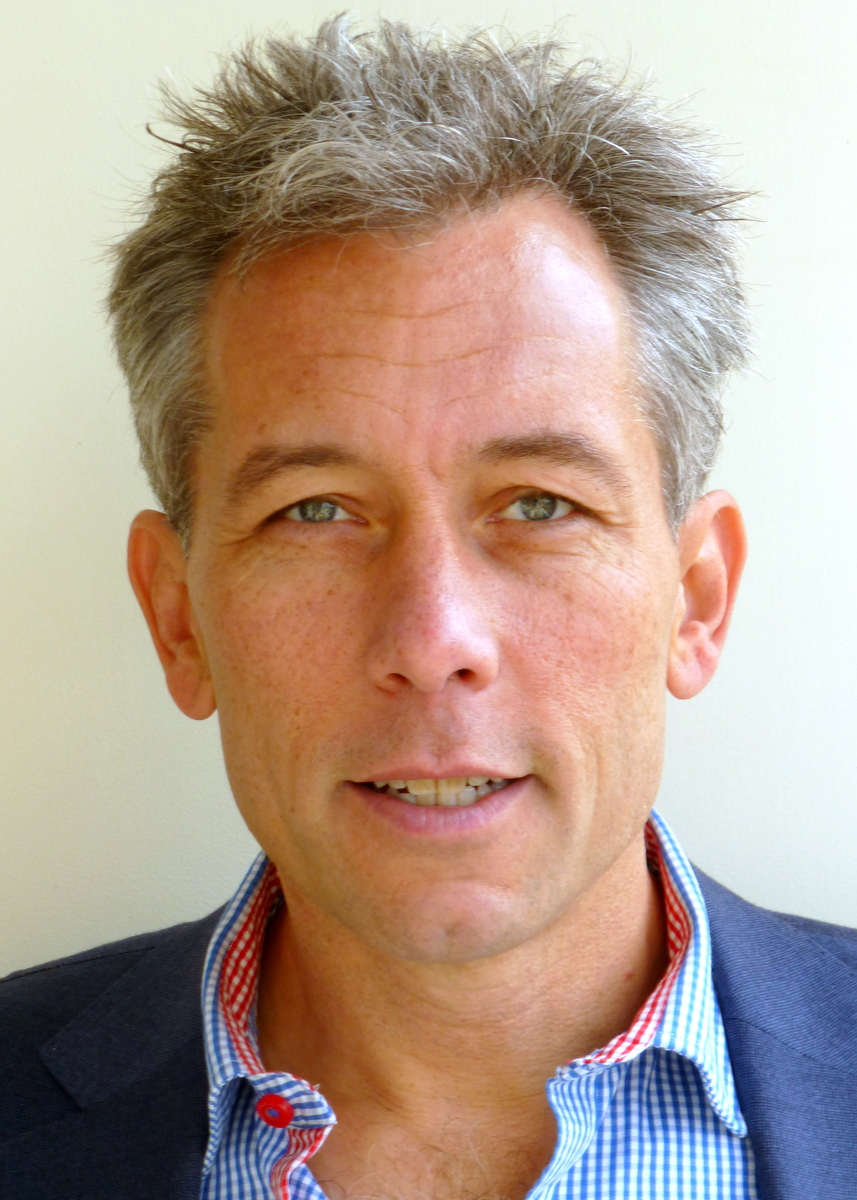
  • facebook
  • linkedin
  • twitter
  • google+
  • pinterest

034: David Simon on Meatonomics and How the Meat and Dairy Industry Impose Substantial Negative Externalities on Society

May 28, 2015 by Frank

http://traffic.libsyn.com/economicrockstar/034_David_Simon_Final.mp3
Play in New WindowDownload

034: David Simon on Meatonomics and How the Meat and Dairy Industry Impose Substantial Negative Externalities on Society

David Robinson Simon is a lawyer and advocate for sustainable consumption.david simon

David works as general counsel for a healthcare company and serves on the board of the Animal Protection and Rescue League Fund, a non-profit dedicated to protecting animals.

David runs a website that keeps us up-to-date on matters arising from the farm animal industry as well as informing us of other animal-related causes.

David received his B.A. from U.C. Berkeley and his J.D. from the University of Southern California. He is the author of two books: New Millennium Law Dictionary, a full-length legal dictionary and Meatonomics.

He lives in Southern California with his partner, artist Tania Marie, and their rabbit, tortoise, and two cats.

Why David Wrote Meatonomics:

David’s reason to write ‘Meatonomics’ was the same reason why he turned vegan in the first place – the inhumane treatment of farm animals in factory farms.

150 years ago, many Western countries were agrarian-based economies. Farm animals lived on open pastures and were humanely treated. However, the transition to a factory-based system of farming resulted in these animals being removed from open farm lands and placed into a factory-type industrial environment which goes largely unnoticed by the general human population. These farm animals are treated inhumanely and are hidden from view. David wanted to share with us their story and to reveal some startling research and statistics that we must know.

“I think it is difficult to go vegan, but it’s only difficult in the same sense that it’s difficult to learn how to drive a car or ride a bike” – David Simon.

Simply changing my diet to a Vegan diet is one of the best things I’d ever done – David Robinson Simon

David Simon had a BMI that categorised him as being over-weight. He was suffering from high blood cholesterol levels that were always over 200 mg per decilitre, which is the heart-attack risk level. David also had acid reflux, also known as GERD.

When David turned vegan, it was due to his ethical concerns for the welfare of farm animals. However, the unintended consequences of transitioning to a vegan diet, showed remarkable health improvements. Soon after going vegan, David’s weight dropped by 15 pounds, his acid reflux had gone and never came back and his cholesterol has gone from 220 to as low as 140.

David also does some yoga each day to help alleviate the stresses of sitting at a desk all day. This is his way of preventing any foreseeable back and neck problems that otherwise would result from inactivity. Yoga is also a great way for David to focus and think about what was going on during his day.

Economic Themes:

In this interview, David mentions and discusses:

Negative externalities, cost-benefit analysis, supply, demand, equilibrium, prices, subsidies, quotas, consumption and the multiplier effect.

Find Out:

  • why David, a lawyer, turned to economics to explain how the meat industry is a cost to society.
  • about the lack of rights that exist for farm animals.
  • how the farming community set the standards on how farm animals are treated.
  • how the Customary Farming Extension was introduced to legally treat farm animals inhumanely.
  • about the environmental costs associated with producing animal products.
  • how to control or even reverse climate change by reducing meat consumption.
  • how taking shorter showers is not going to alleviate the drought in California.
  • what the true external cost to society is when someone consumes an animal product.
  • how deferring climate change measures today will impose greater costs on society in the future.
  • what David, who is a vegan, had for breakfast this morning.
  • the ingredients to David’s ‘power smoothie’ – a refreshing and nutrient dense meal in a glass!
  • how companies are being subsidised by government to lower the retail price of meat.
  • about the heavy subsidies being paid out to the meat industry.
  • how artificially-low meat and dairy prices are fuelled by out-of-whack farm subsidies.
  • about Ireland’s removal of milk quotas and what it means for market prices.
  • about the role of government in the promotion of milk consumption and how athletes are being used in adverts.
  • about the ubiquitous, powerful but misleading meat and dairy marketing campaigns.
  • about the causal connection between obesity and the consumption of milk, dairy and other animal products.
  • the correlation between some cancers and meat and dairy consumption.
  • why you should remove animal food products from your diet so as to remove the risk of cancer.
  • why you should switch to a plant-based diet and remove meat and dairy if you or a loved-one has cancer.
  • what the multiplier effect is for every $1 spent by government to promote dairy and meat consumption.
  • if consumers are being duped and manipulated by government into buying meat and dairy products.
  • the true cost of a Big Mac – would you pay $13 for one?
  • how the economics of institutional animal food production hold sway over our spending, eating, health, prosperity, economy, environment and longevity.
  • why David wrote his book ‘Meatonomics’.
  • where to source your protein if you decide to go vegan.
  • about Rich Roll, one of the fittest men in the US, who is vegan and lives on a plant-based diet.
  • about the largest animals on our planet – cow, gorilla, rhinoceros, giraffe and hippopotamus – that are all vegan and source there protein from plants.
  • how David changed his lifestyle to become vegan which reduced his risk of heart failure and lowered his BMI from over-weight to normal.
  • how future litigations against the meat and dairy industry could mirror the tobacco industry where once doctors advertised the health benefits of smoking tobacco.
  • about ‘Lobster Liberation’ in Ireland and how David is there to advise and help groups like these who may face criminal prosecution.
  • about David’s own successful liberation of lobsters who were unethically subjected to a vending machine claw game.

David’s ‘Power Vegan Smoothie’:

David starts his day with a raw power smoothie that is packed full of protein and anti-oxidants.

  • Fruit of the day
  • Kale
  • Flaxseed
  • Cinnamon
  • Cacao

David’s ‘Portobello Vegan Burger’:

For dinner, David recommends his ‘Portobello Vegan Burger’, an alternative to the beef burger, with no saturated fat and no cholesterol.

  • Bun of your choice – gluten-free or wholemeal
  • Portobello mushroom
  • Vegan cheese
  • Vegan bacon
  • Jalapeños
  • Tomatoes
  • Onions

Negative Externalities Associated with the Meat and Dairy Industry

Cow linkedIn

There are huge environmental costs associated with producing animal products. They include damage to soil, erosion, pesticide use, fertiliser use, pollution to eco-systems and  diminution in real estate values. Research has shown that if properties are located near factory farms, then the value of those properties fall in value.

There are also costs associated with climate change mitigation. Various studies have shown different values for the impact animal production has on climate change, with some reporting that it is responsible for up to 51% or as low as 14%. In the US alone, David has calculated that the environmental externalised cost of animal food production are about $37 billion. Who pays these costs? The farming community? No.

These costs have been externalised and society ends up paying for the damage being caused. However, David suggests that the payment of these costs are being delayed. It’s a deferred cost that is recognised in conventional economics but it’s something that will come back to ‘bite us on the nose’. For example the climate change mitigating cost is about $9 billion in the US but it is not being done right now. Because we’re not dealing with costs today, we’re allowing climate change to proceed along a path that will end up costing us a lot more in the future.

With the boom in farming and the ever increasing supply of meat products to cater for the demand, carbon emissions have soared. The cow population has grown exponentially as new markets have opened up in developing economies. Diets, such as the paleo diet, has added to this demand. The methane gas emitted from cattle is an astonishingly large contributor to green house gases. This has led to a larger carbon footprint per animal due to the associated transportation costs required to ferry these animals by land and sea. Carbon dioxide emissions also increases with the transportation of these animals.

“If we were to reduce our consumption of animal foods by say 40% to 45%, that would have the same effect on the emissions that drive climate change as if we were to garage all of our motor vehicles and motor vessels during the entire time that that reduction in consumption is in effect” (David Simon). This action alone could have a tremendous effect to control or even reverse climate change.

Negative externalities affect every living thing on the planet – humans, fish, fauna, primates, etc. You can be vegan or a herbivore. There is no way that you can avoid these costs be imposed on you. Reports have indicated that pesticides are airborne, which can be harmful to a persons health.  Our water table, our rivers and our oceans are being polluted by the slurry and manure that is being washed or dumped into these rivers. Fish are being affected with dead-zones appearing in our oceans, resulting in life being unsupported.  Plant-life, insect species and exotic animals are being displaced due to the landscape of the Amazon rainforest being forever altered to cater for cattle grazing. These are all costs borne on our society due to the serious impact it has on our environment and our planet. Much of the harm being done is irreversible. However, it can be stopped and further mistakes prevented if effective measures are introduced. Human diseases, such as MRSA, originates in livestock and spreads through the distribution of animal foods and, because of the antibiotic use in livestock, people are challenged to find antibiotics that can actually resist that disease.

Everyone is affected by current farming practices. For every $1 of animal foods sold at retail, there’s another $1.70 in externalised costs that is imposed on society. For example, for every $5 Big Mac sold by McDonalds, there’s another $8 imposed on every single person. These costs, which if absorbed by the producer, would result in higher retail prices for the consumer. To overcome these potentially high market prices, governments subsidise the meat industry. In the US alone, the government heavily subsidises the meat industry to the tune of $38 billion payments each year. To put that into perspective, that is half of what the US government pays in unemployment benefits every year to all the 320 million unemployed workers. At the moment, the fruit and vegetable industry in the US is being subsidised with only about $17 million. That’s a difference of circa $37.83 billion!

Counter-arguments by those suggesting that if these subsidies were removed from the meat industry, then higher prices would occur, followed by mass lay-offs and higher levels of unemployment. This outcome would occur due to consumers reducing their demand for animal products and getting their protein from different sources or substitutes. David foresees that if this were to occur, people would naturally transition toward a plant-based diet as a source for their protein. Consequently, plant-based agriculture would be then in a position to hire more workers and the numbers of lost jobs in the meat industry would be off-set by the levels of employment in the plant-based industry.

Why Do Animal Food Producers Receive So Much in Subsidies and Why Does the Inhumane Treatment of Animals Remain Legally Unchallenged?

The main reason why the meat production industry receives these subsidies and are allowed such farm practices is due to the powerful lobby group that represents them. In the US alone, estimated suggests that the farming lobbying group spend $100 million per year lobbying state and federal law makers. Also, some studies that examine such farming practices, as well as examining the economic and health benefits of the human consumption of meat, have been carried out or sponsored by groups that have a direct interest in the reported findings and recommendations.

The externalities that were outlined above are by no means localised. This has become a widespread phenomenon in so far as becoming a globalised concern. 90% of the planets rainforests have been removed, and flattened, with much of it being replaced with grazing pastures for cattle. David revealed a startling statistic of 3 acres per minute of rainforest being destroyed with 2 of these acres being dedicated to providing grazing land for beef cattle or for growing feed crops like soy or corn to feed beef cattle.

How ironic is it that the very trees that undergo a natural process of cleaning the air by absorbing carbon dioxide and producing oxygen is being overwhelmed by the amount of emissions from cattle. The ratio of trees to emissions is falling at an astonishing rate due to the destruction of these rainforests.

Ireland Removes its Milk Quota’s

Ireland have recently been given the go-ahead to remove the milk quota restrictions that were put in place by the EU. This is great news for Irish dairy farmers with 2 billion extra litres of milk being produced by the year 2020. To accommodate such a vast swell in milk production, 300,000 extra cows will join the national herd, resulting in a cow population of 1.3 million. Small farms will disappear resulting in large-scale farms. This will of course lead to economies of scale for these larger farms, an increase in employment, an increase in investments in new technologies, production processes and machinery and possibly better logistics and bargaining power.

A quota is essentially a tool for managing supply. Up until the 1990s, the US used supply management to stabilise prices for animal agriculture. Former President Ronald Reagan was a leading advocate for free market economics. He allowed agricultural markets to regulate themselves in the expectation that rational farmers would naturally find the market equilibrium by supplying the desired output which would lead to market equilibrium prices. However, it turned out that individual farmers think for themselves and produced at output levels that aggregated to exceedingly high levels of output at a national level. This resulted in lower prices.

This scenario could now be played out in Ireland whereby individual dairy farmers could increase their milk output levels, expecting and increase in income. However, incomes could fall if consumption or demand does not meet this new supply. Consequently, we may have a situation where farmers are being subsidised, just like in the US. Feed crops, such as corn, become heavily subsidised in order to reduce the costs to farmers.

The Role of Government in Influencing Consumer Meat and Dairy Buying Behaviors

Governments are harming the livelihood of people by promoting meat and dairy consumption. In the US alone, for every $1 spent by government there is a $9 or more multiplier effect on sales of meat and dairy. These programmes are quiet effective in the US. Most people are unaware of the ‘Check-Off Programmes’ that are overseen by the US Department of Agriculture. The average return on every $1 collected through these programmes is at least $8. In a typical year the US spent $557 million on these programmes, resulting in an increase in sales of $4.6 billion.

There is a concern that consumers are being manipulated at a subconscious level to increase their consumption of meat and dairy products. This is one of the themes of David’s book ‘Meatonomics’. Animal food producers are using their ability to deliver products at very low prices – prices that are artificially low – to manipulate consumers into buying more of these goods than they would otherwise. For example, a $5 Big Mac would cost $13 if the industry internalised all the costs associated with the production of beef. This would result in fewer Big Macs being sold.

Economists are interested in whether markets are demand-driven (by consumer traits in behaviour, by incomes or by tastes) or supply-driven (by producer behaviour and by pricing). The market for meat has grown so much in the last 100 years that consumer demand has increased from 100 pounds of meat per person per year to 200 pounds of meat per person per year. It could easily be mistaken that this increase in demand is a typical example of a demand-driven market and that producers are simply meeting that demand. However, due to agricultural subsidies and the ‘Check-Off Programmes’, farmers are able to keep prices artificially low. They are also engaging in behaviours that are diminishing the ability of consumers to actually make informed and independent decisions about how much meat and dairy to eat. This suggests that the market has become a supply-driven market.

“I just think it’s so bizarre that our governments are engaged in marketing to its own citizens to get them to buy products that the clinical research shows that are actually damaging our health” – David Simon.

Is there a Causal Link Between Obesity and Other Diseases and Animal Meat and Dairy Consumption?

Studies exist that show a worrying causal trend between obesity and animal food consumption. Due to over-supply and lower prices, we have increased our consumption of animal-related foods such as milk, dairy and beef. The World Health Organisation has recognised this link and it is only recently that the FDA has recommended a change in the Food Pyramid to accommodate an increase in the consumption of plant-based foods and to reduce the intake of animal-related foods in our diets. David Simon created the Meatonomics Index of 40 Numbers that Tell a Story and within this Index, I was startled to find the following statistics: the “factor by which US per-capita consumption of chicken and other meat exceeds world average is 3 and the factor by which US incidence of cancer exceeds world average is [also] 3”.

One must be careful with spurious relationships where correlation does not mean causation. However, these statistics cannot be ignored and US dependence on animal food products, and the widespread consumption and promotion of meat and dairy at a national level, corresponds to a trend in health-related problems. Clinical studies have shown that up to 1/3 of cancers, particularly in the West, can be attributable to a diet that is high in meat and dairy.

doctor smokes camel

Meat and dairy is being advertised both by local government and at a national level as being a healthy choice. Such promotion continues irrespective of the health risks associated with meat and dairy consumption, particularly when people over-consume. Parallels can be drawn between the animal food industry today and the tobacco industry prior to the 1960s. Old adverts show doctors smoking Camel cigarettes and claiming the health benefits of smoking. Clinical research has shown the health risks to smoking and subsequently litigations followed where the tobacco industry has been sued. Plaintiffs have been able to recover damage awards against tobacco companies. In the US alone, over the last several decades, Big Tobacco has paid more than $400 billion to States Attorney General who have sued them over medical costs. Over the next several decades, David foresees a similar action being taken against the animal food industry for medical costs associated with eating meat and dairy products.

Takeaway:

Think about what you’re putting into your body and don’t take for granted that certain foods are good for you just because the government is telling you that.

Recommended Books:

  • Meatonomics by David Robinson Simon

Receive your FREE copy of Meatonomics. For being an Economic Rockstar listener, you can get an audio copy of Meatonomics by David Simon for FREE. Just click on this link and you’ll be re-directed to Audiobooks.com.

  • The China Study by Colin Campbell

The China Study is the leading piece of clinical information on the differences between an animal-based diet and a plant-based diet. He has found that when you feed animal protein to an animal or a person, and if they had tumours, then those tumours will continue to grow. Conversely, if you take them off the animal food diet and put them on a plant-based diet, those tumours are likely to shrink.

Where to Find David Simon:

  • Website: meatonomics.com
  • Twitter: @meatonomics
http://traffic.libsyn.com/economicrockstar/034_David_Simon_Final.mp3

Podcast: Play in new window | Download
  • facebook
  • linkedin
  • twitter
  • google+
  • pinterest
  • Prev Page...
  • 1
  • …
  • 12
  • 13
  • 14
  • 15
  • 16
  • …
  • 18
  • ...Next Page

Frank Conway

Frank Conway is founder of Economic Rockstar and lecturer of economics, finance and statistics. Read More…

View My Blog Posts

Youtube Sub

Become a Patron of the Economic Rockstar Podcast

patreon

Ireland’s Economy by the Numbers

Leaving Cert Economics: Ireland’s Economy  Click here to download a workbook on Ireland’s Economy so that you can add your own notes. [Original size] Ireland’s Economy by fconway

Categories

Subscribe and Never Miss An Episode

itunes-logo

Recent Posts

  • Ireland’s Economy by the Numbers April 8, 2019
  • 174: Wendy Carlin on The Core Project, Capitalism, Democracy and Normative Statements February 13, 2019
  • 173: Stephen Wright on Core Econ as a Learning Resource for Mainstream Economics January 28, 2019
  • 172: Best of 2018 Part 2: From the Great Depression to Futurism; Institutions, Individualism, Cooperation and Reciprocity January 22, 2019
  • 171: Best of 2018 Part 1 January 3, 2019

Copyright © 2026 · Podcast Pro Theme on Genesis Framework · WordPress · Log in

This website uses cookies to improve your experience. We'll assume you're ok with this, but you can opt-out if you wish. Accept Reject Read More
Privacy Policy

Privacy Overview

This website uses cookies to improve your experience while you navigate through the website. Out of these, the cookies that are categorized as necessary are stored on your browser as they are essential for the working of basic functionalities of the website. We also use third-party cookies that help us analyze and understand how you use this website. These cookies will be stored in your browser only with your consent. You also have the option to opt-out of these cookies. But opting out of some of these cookies may affect your browsing experience.
Necessary
Always Enabled
Necessary cookies are absolutely essential for the website to function properly. This category only includes cookies that ensures basic functionalities and security features of the website. These cookies do not store any personal information.
Non-necessary
Any cookies that may not be particularly necessary for the website to function and is used specifically to collect user personal data via analytics, ads, other embedded contents are termed as non-necessary cookies. It is mandatory to procure user consent prior to running these cookies on your website.
SAVE & ACCEPT