• ABOUT
  • RESOURCES
  • PODCAST
  • BOOKS
  • BLOG
  • SUPPORTERS
  • QFA Financial Advice
  • CONTACT

Economic Rockstar

Connecting Brilliant Minds in Economics and Finance

062: Stephen Terry on Real Business Cycles, Total Factor Productivity, Short-Termism and Doing a PhD
December 10, 2015 by Frank

http://traffic.libsyn.com/economicrockstar/Stephen_Terry_Final.mp3
Play in New WindowDownload

062: Stephen Terry on Real Business Cycles, Total Factor Productivity, Short-Termism and DoiStephen_Terryng a PhD

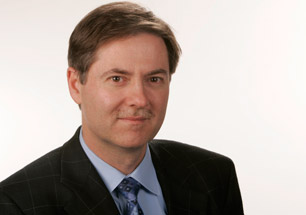
Stephen Terry is Assistant Professor of Economics at Boston University.

In 2013 he was a Dissertation Intern, Federal Reserve Bank of Richmond and, from 2007 to 2009, Stephen was a Research Associate at the Federal Reserve Bank of Kansas City.

Stephen  received a PhD in Economics from Stanford University in 2015 as well as an  MA in Economics in 2011.

Stephen also has an MA in Mathematics from the University of Oklahoma and a BA in Economics from University of Texas at Arlington.

Stephens research interests include short-termism, uncertainty and real business cycles.

One of the most important summary statistics in macroeconomics is a measure known as TFP or total factor productivity of the economy as a whole – Stephen Terry

Economics:

In this interview, Stephen mentions: labor markets, double coincidence of wants, selection markets, matching markets, algebraic topology, total factor productivity, real business cycles, economic shocks, volatility, variance, risk, uncertainty, aggregate output, employment, investment, allocation of inputs, uncertainty, earnings, profits, short-termism and the Principle-Agent Problem.

Economists:

In this interview, Stephen mentions: Christine Exley, Nick Bloom, John Van Reenen and John Maynard Keynes.

In this episode you will learn:

  • about Stephen’s experience with the two-body or joint location problem.
  • about Stephen’s PhD process and the experience he developed along the way.
  • of some suggestions if you’re considering undertaking a PhD.
  • the differences and similarities in the mathematics of economics and the mathematics of other disciplines such as physics and chemistry.
  • if there is a divergence or a convergence in the branches of macroeconomics and microeconomics.
  • what really happens during recessions.
  • how firms can learn and react to the data provided at a micro level.
  • what Total Factor Productivity is.
  • about Real Business Cycle theory.
  • whether changes in uncertainty causes or amplifies recessions.
  • whether managers should forego the long-term objectives of the firm due to the pressures of short-termism.
  • whether rating agencies are beneficial to investors or if they potentially hinder the growth prospects of the firm due to short-term pressures and expectations.

Preparation for Life as a Research Economists into 2 Stages:

1) Useful things that you can be doing before graduate school.

You have to study Math. Economics at graduate level is increasingly dominated by the technical and quantitative research methods.

Having some practical experience in the application of mathematics in economics is not not only valuable for later on in your career but is now becoming a pre-condition to gaining access to research-intensive PhD programmes.

If your undergrad or Masters degree lacks math rigour, then you should consider building on your current level of math by undertaking a math PhD programme.

3) The ways in which you can maximise the benefits you get in your PhD training.

You should consider becoming a Research Assistant prior to starting your PhD so that you gain the practical experience.

This will put you in a situation in which you can be mentored and instructed by other economists who are undertaking economics and statistical research projects.

Being exposed to this will offer you an insight into the research process as well as ‘train’ you to become quite efficient and structured in terms of time management and application.

On the Use of Math in Economics:

At its core, math and applied mathematical techniques, but also pure mathematical proof-based reasoning, are ways to go from some set of assumptions to a coherent set of conclusions that you know follow logically without inconsistency from those assumptions.

By harnessing that logical consistency, economics is something, in the last few decades, that has been able to harness a great deal of precision in the statements that it’s able to make. But still at its core, where the debate centres, you have to understand that the assumptions that we make are primarily assumptions about people. Economic actors sometimes go their own way and don’t always follow perfectly the rules or logical coherent types of assumptions that we start with as an economist.

There’s a great deal of power and precision that is gained by math but this underlying realisation that we’re dealing with individuals rather than physical particles that you would use in physics is something that an economist has to keep in mind when they do think about the real world.

Papers:

  • Terry, S. (2015). The Macro Impact of Short-Termism. Working Paper.
  • Bloom, N.,  Floetotto, M., Jaimovich, N., Saporta-Eksten, I., and Terry, S. (2014). Really Uncertain Business Cycles. Working Paper.

Sources:

  • US Census Bureau
  • Institute for Fiscal Studies
  • McKinsey and Company
http://traffic.libsyn.com/economicrockstar/Stephen_Terry_Final.mp3

Podcast: Play in new window | Download

  • facebook
  • linkedin
  • twitter
  • google+
  • pinterest

061: Roger Whitney on the Myths to Retirement Planning and the Lazy Mans Method to Saving

December 3, 2015 by Frank

http://traffic.libsyn.com/economicrockstar/061_Roger_Whitney_Final.mp3
Play in New WindowDownload

061: Roger Whitney on the Myths to Retirement Planning and the Lazy Mans Method to Saving

Roger Whitney began his career as a Financial Advisor in 1991 and witnessed first-hand the rise and fall of the ‘New roger whitneyEconomy’ and the Dot-com bubble that ended in 2000.

This experience made Roger realise that financial management is about people, not money, and that they are served best by advisors that are fiduciaries to their clients and have the heart of a teacher.

In 2003 Roger left, at the time, the largest private bank in the world and co-founded WWK Wealth Advisors. Today, they are a firm of 14 professionals managing over $200 million in assets.

Roger is a lifelong learner and holds many degrees and certifications. He has a B.A. in International Relations, is a Certified Investment Management Analyst and a Certified Private Wealth Advisor.

Roger also teaches courses on Wealth Management, Retirement Planning and Employee Benefits.

Roger’s blog, The Retirement Answer Man, was recently awarded the 2015 PLUTUS award for the best Retirement focused blog and podcast. You can check it out at rogerwhitney.com as well as on iTunes.

Advice:

“Make sure you make the most of the only life you have. Retirement is part of that but don’t miss where you’re at today” – Roger Whitney

Economics/Finance:

In this interview, Roger mentions: the Permanent Income Hypothesis, retirement, retirement planning, pensions, social security, demographics, baby boomers, capitalism, growth, IRAs, Roth IRAs, 401k, quantitative easing, real estate, cash flow, investment, private placement memorandum and capital rates.

Economists:

In this interview, Roger mentions: Milton Freidman

In this episode you will learn:

  • the problem with budgeting.
  • develop one habit to control your budgeting needs and requirements.
  • lazy man’s method to saving.
  • four myths that could ruin your retirement and how to avoid them.
  • the Permanent Income Hypothesis.
  • how Roger got his cashflow in place when setting up his business.
  • that cutting your cable bill won’t create the opportunity to generate income.
  • the biggest regrets that people have when they retire.
  • the 3 Phases of Retirement.
  • whether we have a pension time bomb or if capitalism will reduce the risks.
  • what are IRAs and Roth IRAs work.
  • the possible scenario for the next generation to fund a bankrupt social security in the US.

Quotes by Roger in Episode 61 0f the Economic Rockstar podcast:

The bigger opportunity is how to generate extra income – Roger Whitney

Click To Tweet

“I know quantitative easing. I know how bad all this stuff might be. At the end of the day, we just have to have out own house in order. And if we have our own house in order, we can insulate ourselves from a lot of things. That’s the only way I know how to get through things.” – Roger Whitney

4 Myths that Could Ruin Your Retirement and How to Avoid Them:

  1. Retirement is not a number: How much do I need to save for retirement?
  2. You’re spending is going to be consistent throughout your retirement.
  3. Retirement means not working.
  4. Having a financial plan is enough.

3 Phases of Retirement:

  1. The Go-Go Years
  2. The Slow-Go Years
  3. The No-Go Years

Books:

  • QBQ! the Question Behind the Question: Practicing Personal Accountability at Work and in Life by John G. Miller

  • The How of Happiness: A New Approach to Getting the Life You Want by Sonja Lyubomirsky

Podcasts:

  • The Retirement Answer Man
  • Stacking Benjamins
http://traffic.libsyn.com/economicrockstar/061_Roger_Whitney_Final.mp3

Podcast: Play in new window | Download
  • facebook
  • linkedin
  • twitter
  • google+
  • pinterest

060: Manu Saadia on Trekonomics – The Economics of Star Trek: Scarcity, Productivity and Public Goods

November 26, 2015 by Frank

http://traffic.libsyn.com/economicrockstar/Manu_Saadia_Final.mp3
Play in New WindowDownload

060: Manu Saadia on Trekonomics – The Economics of Star Trek: Scarcity, Productivity and Public Goods

Manu Saadia fell into science fiction and Star Trek fandom at the age of eight, back in Paris, France, where he was born and raised.Manu Saadia

Manu  studied history of science and economic history in Paris and Chicago. After many happy years in the Ivory Tower, he yielded to his childhood passion for the future.

Manu embarked on his continuing mission to explore strange new worlds by boldly going where many have gone before: Los Angeles, CA, where he advise and (occasionally) builds tech companies.

Manu received the 2005 Wayne C. Booth Graduate Student Prize for Excellence in Teaching at the University of Chicago.

His book, Trekonomics, is currently available for pre-order at www.inkshares.com and will be released in 2016.

Star Trek offers much more detail about its own world and the way its economics actually works – like the plumbing so to speak. So that’s what I wanted to do. Go into the plumbing of Star Trek. – Manu Saadia

Economics:

In this interview, Manu mentions:  trekonomics, crowd funding, labor, economic history, trade, robots, capitalism, comparative advantage, currency, money, Gold-Pressed Latinum, public goods, conspicuous consumption, scarcity, peak oil, productivity and opportunity costs.

Economists:

In this interview, Manu mentions: Brad DeLong, Felix Salmon, Adam Smith, Thomas Malthus, Hubbert, Paul Ehrlich, Julian Simon, Romer, Larry Summers, John Maynard Keynes and Angus Deaton,

In this episode you will learn:

  • why Manu Saadia wrote Trekonomics.
  • about the Star Trek Economics panel at Comic Con.
  • why economists love Star Trek.
  • about inkshares and how it can help authors publish their book.
  • how traditional media rather than social media boosted pre-order sales of Trekonomics – an ironic outcome.
  • when Manu’s interested in economics and Star Trek collided.
  • about the work of Isaac Asimov and how his stories are a discourse on economics.
  • how the stories of robots and the future by Asimov influenced and shaped the storyline in Star Trek.
  • about the replicators in Star Trek and how they solve the problem of economic scarcity.
  • about the Ferengi’s and how they represent capitalism and trade.
  • why The Federation or the humans in Star Trek do not use money but have a foreign account to trade with the Ferengi’s.
  • about the Ferengi’s currency, Gold-Pressed Latinum, which cannot be replicable.
  • why owning a replicator is a ‘pain in the ass’.
  • how things that cannot be replicated has value but those that can be replicated has no value.
  • if Keynes’ The Economic Possibilities of Our Grand Children is a rebuttal of the writings of H. G. Wells.
  • about GPS being a public good and the benefits it has brought to the public.
  • why making GPS a public good in 1983 was one of the best decisions Ronald Reagan made as US President.
  • Manu’s favourite Star Trek episode is Lower Decks (The Next Generation).

Quotes by Manu Saadia in Episode 60 of the Economic Rockstar Podcast:

Trekonomics got a lot of support and very nice feedback from a lot of economists – Manu Saadia

Click To Tweet

“It always baffles me when you have these very famous and serious economic thinkers were in fact  total Star Trek nerds. I was on a panel at New York Comic Con with Brad DeLong, Paul Krugman and Annalen Newitz from i09. There was Chris Black as well and Felix Salmon.” – Manu Saadia

Brad DeLong came to the panel with a Star Trek hoodie. – Manu Saadia

Click To Tweet

On Isaac Asimov: “All of his work is a long meditation on economics, either foundation where there is this science called psychohistory which is in fact a fictional mathematical modelling of human behaviours on the scale of societies on a galactic scale.” – Manu Saadia

“One of the reasons why I wanted to study economics was that I was fascinated by and really wanted to understand the transformation of humanity’s relation to its own labor. This is one of the great questions of political economy because it determines a lot of things when it comes to the shape society and the role of the state and how behaviors are determined and constructed over time. But it’s also the key to understanding where we’re going”. – Manu Saadia

“I would say the replicators are more of a metaphor. If you look at their status in the series, they do not help move the narratives forward. They’re just there to signify that there’s no need to work. They’re a little bit like robots in Asimov. They have the same narrative function, which is to show and demonstrate that post-scarcity does exist and is based on automation and artificial intelligence.” – Manu Saadia

The Ferengi’s are the capitalist, merchant traders of the galaxy – Manu Saadia

Click To Tweet

Most of the stuff in Star Trek is basically a public good – Manu Saadia

Click To Tweet

I think Star Trek is very much what Keynes described in The Economic Possibilities of Our Grand Children – Manu Saadia

Click To Tweet

Books:

  • Scatter, Adapt, and Remember by Annalen Newitz 
  • Isaac Asimov
  • Frankenstein by Mary Shelly
  • The Economic Possibilities of Our Grand Children by John Maynard Keynes

Papers:

  • Romer (1990) Productivity Gains

Links:

  • What I Learned Crowdfunding Trekonomics  by Manu Saadia
  • Trekonomics The economics of Star Trek: how does it work, and how do we get there?  by Manu Saadia
  • View the transcript to The Amazing Economics of Star Trek at New York Comic Con
  • www.i09.com 
  • www.inkshares.com
  • What the economics of Star Trek can teach us about the real world by Brian Fung, Andrea Peterson and Hayley Tsukayama Washington Post 
  • The Live Long and Prosper Edition Slate Money 
  • Club of Rome 

Manu’s Favorite Star Trek Epsiodes:

  • City on the Edge of Forever
  • Arena

Where to Find Manu:

  • inkshares.com
  • fusion.net

Music:

  • Star Trek Episode Amok Time
http://traffic.libsyn.com/economicrockstar/Manu_Saadia_Final.mp3

Podcast: Play in new window | Download

  • facebook
  • linkedin
  • twitter
  • google+
  • pinterest

059: Shawn Humphrey on La Ceiba Microfinance, Tribal Teaching and Creating a Culture of Commitment in the Classroom

November 19, 2015 by Frank

http://traffic.libsyn.com/economicrockstar/059_Shawn_Humphrey_Final.mp3
Play in New WindowDownload

059: Shawn Humphrey on La Ceiba Microfinance, Tribal Teaching and Creating a Culture of Commitment in the Classroom

Shawn Humphrey is currently an Associate Professor of Economics at the University of Mary Washington.shawn humphrey

Shawn is the founder of La Ceiba Microfinance,the Two Dollar Challenge, the Month of Microfinance, and the Poverty Action Conference. 

He is also on the Board of Directors of Students Helping Honduras, a former Clinton Global Initiative University mentor, an Opportunity Collaboration alum and a 2014 Feast on Good Speaker.

Shawn is from North Bend, OH, earned his BA in Economics from Earlham College (Richmond, IN), his MA in Economics at Virginia Commonwealth University (Richmond, VA), and after having read Douglass C. North’s Institutions, Institutional Change, and Economic Performance headed to Washington University in St. Louis where he earned his PhD in Economics.

Shawn describes himself as a Tribal Teacher, a Diligent Do-Gooder and a Global Grassroots Mobilizer.

I grew up poor in Ohio. I was bullied from the time I was young, all the way through 8th grade. Both these things are part of my core and they motivate me in everything that I do – Shawn Humphrey

Economics:

In this interview, Shawn mentions: economic development, microfinance, consumption smoothing, poverty and globalisation.

Economists:

In this interview, Shawn mentions: Christine Exley, Helena Nordberg-Hodge, Eugene Power, Robert Solow, Douglass North, Armen Alchian, Harold Demsetz and Gary Miller.

In this episode you will learn:

  • about the social entrepreneurial journey that Shawn found himself pursuing.
  • about Shawn’s Tribal Teaching pedagogy and if this is the future of education.
  • why Shawn wanted to help the poor in Honduras and to encourage people to experience poverty.
  • about Shawn’s family experiencing poverty in the 1970s and how their standing in the community led him to believe that there was a better way to treat and help people out of poverty.
  • about how La Ceiba are helping the poor in Honduras.
  • about the importance of building relationships with individuals that seek assistance from La Ceiba.
  • the problems with microfinance due to group lending and peer-pressure.
  • about the Two Dollar Challenge and you can get involved.
  • why supporting local leaders is the key to ending poverty.
  • about Shawn’s 7 year journey to finding a common ground in humanity.
  • why Shawn’s initial desire to feel significant while helping the poor is now a constant battle.
  • about Tribal Teaching and the pedagogy Shawn has  designed and embraced to make a better learning environment and process.
  • about the culture of commitment that Shawn has introduced into his classroom.

Shawn Humphrey on La Ceiba Microfinance:

“My students and I, we run our own microfinance institution in Honduras called La Ceiba where we take a very distinct approach to microfinance which is different to anything else that is out there.” – Shawn Humphrey

You can make a global impact on not a lot of money if you’re creative enough to embrace your constraints and say ‘hey, let’s find a way around this one!’ and do it creatively. – Shawn Humphrey

“Group lending is simply peer-pressure. It’s a public process by which a small set of individuals can apply pressure to one individual in the group who is unable and/or unwilling at that moment to pay off her loan.”

“90% of our clients did not use their loans for entrepreneurial activities. Most of them use it for consumption smoothing.” – Shawn Humphrey

We get more stories out of coffee and donuts than we do out of group meetings – Shawn Humphrey

Click To Tweet

My role is actually on the side-lines as a side-kick, not as a hero in this whole thing – Shawn Humphrey

Click To Tweet

I’m fighting an entire culture that has conditioned us to believe in certain things – Shawn Humphrey

Click To Tweet

When I started this work, I was flailing human being. I felt hollow inside and for some reason I felt that I could fill that hole by trying to end someone else’s poverty. – Shawn Humphrey

Our hardest work is inside of us – Shawn Humphrey

Click To Tweet

Where to Find Shawn Humphrey:

  • shawnhumphrey.com

Organisations founded by Shawn Humphrey:

  • La Ceiba Microfinance
  • Tribal Teaching
  • Month of Microfinance
  • Two Dollar Challenge

Recommended Readings:

  • 5 Species of Students by Shawn Humphrey
  • Life Chart by Shawn Humphrey
  • If You Breathe You Must Battle by Shawn Humphrey
  • To Hell With Good Intentions by Ivan Illich 

Documentaries:

  • Cowspiracy: The Sustainability Secret by Kip Andersen and Keegan Kuhn
  • The Stanford Prison Experiment

Books:

  • The Hero with a Thousand Faces by Joseph Campbell
  • Institutions, Institutional Change, and Economic Performance by Douglass C. North
  • Managerial Dilemma’s by Gary Miller
  • The War of Art by Stephen Pressfield
http://traffic.libsyn.com/economicrockstar/059_Shawn_Humphrey_Final.mp3

Podcast: Play in new window | Download
  • facebook
  • linkedin
  • twitter
  • google+
  • pinterest

058: Morten Jerven on Poor Numbers and Why Economists Get It Wrong With Africa

November 11, 2015 by Frank

http://traffic.libsyn.com/economicrockstar/058_Morten_Jerven_Final.mp3
Play in New WindowDownload

058: Morten Jerven on Poor Numbers and Why Economists Get It Wrong With Africa

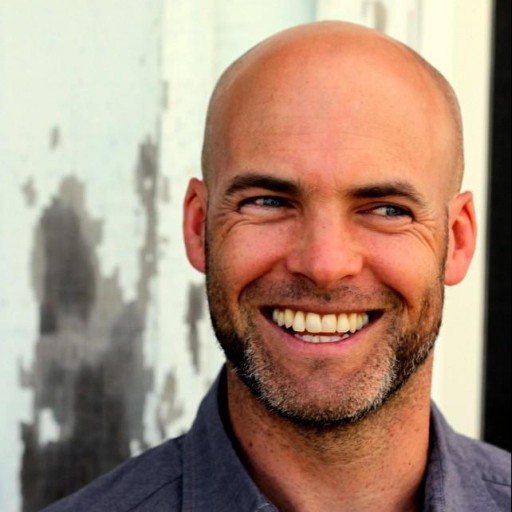
Morton Jerven is Professor of Economic History and Development at the School for International Studies at Simon Fraser University in Vancouver, Canada.

In 2014, Morton was appointed Associate Professor in Global Change and International Relations at Noragrica at the Norwegian University of Life Sciences.

Morton has published widely on African economic development, and particularly on patterns of economic growth and on economic development statistics.

Upon the release of his book, Poor Numbers: How We Are Misled by African Development Statistics and What to Do about It, Morton caused uproar across Africa and had been expelled from two conferences. His latest book Africa: Why Economists Get It Wrong is now available on Amazon.

Morton is an economic historian, with an MSc and PhD from the London School of Economics.

Economics:

In this interview, Morten mentions: capital markets, sovereign bonds, National Income Statistics, GDP, demographics, wages, rents, profits, consumption, investment, exports, imports, population growth, m-pesa, debt-to-GDP ratio, poverty and GDP per capita.

Economists:

In this interview, Morten mentions: Jonathan Temple, Stephen Durlauf, Simon Johnson, Shanta Deverajan, Neil Fantom (World Bank) and Wolfgang Stolper.

In this episode you will learn:

  • why Morten was expelled from two conferences in Africa.
  • about the knowledge problem that exists in economic statistical data.
  • if economic statistics is underfunded relative to other social sciences.
  • whether economic data from African countries is intentionally misleading or if it’s a methodology and availability problem.
  • what is GDP and why is it used.
  • the problems with measuring GDP.
  • why the production approach is really the only valid method to measuring GDP.
  • why a country’s GDP is estimate by proxy and how productivity data is difficult to collect.
  • how population growth is used as a proxy for GDP.
  • whether we should allow Google and other companies that store big data to provide economic data.
  • whether cooperation or conflict between big data and official statistics will emerge.
  • how observing the brightness of countries from space is now being used to measure economic growth.
  • what the IMF does to missing data, such as GDP.
  • why Morten collected his own data for a number of African countries since the IMF wouldn’t share their own.
  • whether papers written by the IMF and the World Bank undergo a peer-review process.
  • how the ‘branding’ of statistics by the World Bank and the IMF can mislead the user.
  • how using the 3 methods of calculating GDP for all African countries shows significant differences when ranking each from poorest to wealthiest.

Quotes by Morten Jerven:

Statistics is the archetypal way of generalising from complex social realities to a very orderly aggregate picture – Morten Jerven

Make everything count. If you write something, make sure it’s going somewhere. If you prepare a lecture to speak about something, make sure you have an idea about how that can become a publishable unit – Morten Jerven

Make sure, as an academic working, it’s important not to think that working long hours is the key to being effective. Start writing early. It’s important – Morten Jerven

Organisations Mentioned in this Episode:

  • African Development Bank
  • IMF
  • World Bank
  • Centers for Disease Control and Prevention

Books:

  • Poor Numbers: How We Are Misled by African Development Statistics and What to Do About It by Morton Jerven
  • Africa: Why Economists Get It Wrong by Morton Jerven
  • How to Lie with Statistics by Darryl Huff
  • Handbook of Econometrics by Stephen Durlof and Jonathan Temple
  • Planning Without Facts: Lessons in Resource Allocation from Nigeria’s Development by Wolfgang Stolper

Papers/Articles:

  • Henderson, V., Storeygard, A. and Weil, D. (2012) “Measuring economic growth from outer space” American Economic Review 102(2): 994-1028.
  • Financial Times: Africa Counts the Costs of Miscalculation by Andrew Jack

Resources:

  • World Bank Development Database
http://traffic.libsyn.com/economicrockstar/058_Morten_Jerven_Final.mp3

Podcast: Play in new window | Download
  • facebook
  • linkedin
  • twitter
  • google+
  • pinterest

057: Alvin Roth on Match-Making, Repugnant Markets and Market Design

November 5, 2015 by Frank

http://traffic.libsyn.com/economicrockstar/057_Alvin_Roth_Final.mp3
Play in New WindowDownload

057: Alvin Roth on Match-Making, Repugnant Markets and Market Design

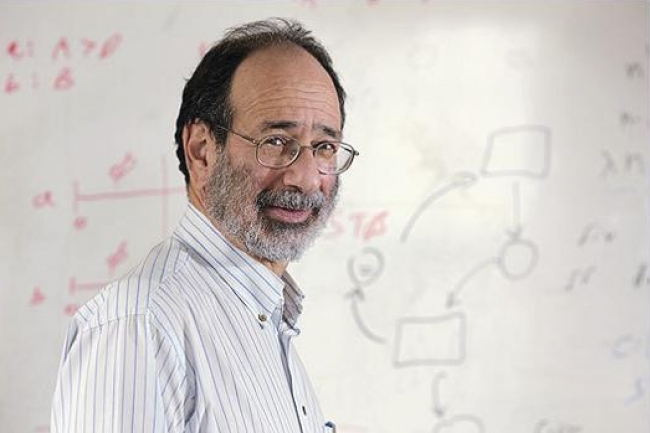
Alvin Roth is the Craig and Susan McCaw Professor of Economics at Stanford University.Alvin Roth

Professor Roth has made significant contributions to the fields of game theory, experimental economics and market design and is known for his emphasis on applying economic theory to solutions for “real-world” problems.

In 2012, Alvin won the Nobel Memorial Prize in Economic Sciences jointly with Lloyd Shapley “for the theory of stable allocations and the practice of market design.”

Alvin Roth has a B.S form Columbia University,  and earned his MS and Ph.D. from Stanford University.

Alvin’s latest book Who Gets What and Why: The New Economics of Matchmaking and Market Design is now available on Amazon.

Economics:

In this interview, Alvin mentions: money, barter, matching markets, supply, demand, price discovery, labor markets, marriage markets, market design, double coincidence of wants, property rights and game theory.

Economists:

In this interview, Alvin mentions: Gary Becker, Christien Exley, Lloyd Shapley, David Gayle, Herb Scarf, Hal R. Varian,  Preston McAfee, Fuhito Kojima, Muriel Niederle, Paul Milgrom, John Levin, Ilya Segal and Oskar Morgenstern.

In this episode you will learn:

  • what economics is and if we need money to allow a market to operate efficiently.
  • about the price discovery process in economics.
  • what is match-making markets and how similar the labor market is to the dating market.
  • what is market design and why it is important.
  • how entrepreneurs and start-ups, like Airbnb and Uber, use market failure to solve a problem.
  • what is a repugnant market.
  • the difference between a thick and a thin market.
  • what makes a market thick.
  • about the black market for kidneys.
  • how kidney exchange works.
  • about the double coincidence of wants in the kidney exchange market.
  • about the problem in the market for water in California.
  • some of the unintended consequences from the war on drugs.

Books:

  • Who Gets What and Why: The New Economics of Matchmaking and Market Design by Alvin Roth
  • Thinking, Fast and Slow by Daniel Kahneman
  • Theory of Games in Economic Behaviour by John von Neumann and Oskar Morgenstern

Papers:

  • Gayle, D. and L. Shapley (1962). College Admissions and the Stability of Marriage, The American Mathematical Monthly, Vol. 69, No. 1, pp: 9 – 15.  
  • Scarf, H. and L. Shapley. (1974). On Cores and Indivisibility. Journal of Mathematical Economics 1: 23-37.

Websites Mentioned in this Episode:

  • Market Design: Alvin Roth’s blog
  • Angel Flight: People Helping People in Need
http://traffic.libsyn.com/economicrockstar/057_Alvin_Roth_Final.mp3

Podcast: Play in new window | Download
  • facebook
  • linkedin
  • twitter
  • google+
  • pinterest

056: Campbell Harvey on Improving Significance Tests, the Importance of Positive Skew and the Future of Blockchain

October 28, 2015 by Frank

http://traffic.libsyn.com/economicrockstar/056_Harvey_Campbell_Final.mp3
Play in New WindowDownload

056: Campbell Harvey on Improving Significance Tests, the Importance of Positive Skew and the Future of Blockchain

Campbell R. Harvey is Professor of Finance at the Fuqua School of Business at Duke University and a Research Campbell HarveyAssociate of the National Bureau of Economic Research in Cambridge, Massachusetts. He served as Editor of The Journal of Finance from 2006-2012 and is President-elect of the American Finance Association.

Professor Harvey obtained his doctorate at the University of Chicago in business finance. He has served on the faculties of the Stockholm School of Economics, the Helsinki School of Economics, and the Booth School of Business at the University of Chicago. He has also been a visiting scholar at the Board of Governors of the Federal Reserve System.

Campbell received the 2014 Reader’s Choice Award for the best paper published in the Financial Analysts Journal and the 2015 prize for the best paper published in the Journal of Portfolio Management. His recent work on evaluating trading strategies has won best paper awards.

Campbell’s research interests include statistical methods, risk management, asset allocation, real assets and cryptocurrencies. He is the Investment Strategy Advisor to the Man Group plc, the world’s largest, publicly listed, global hedge fund.

Economics:

In this interview, Campbell mentions: t-statistics, significance tests, trading strategies, investment premium, beta, correlation, standard deviation, confidence interval, P-value, Bonferroni multiple testing method, Type I error, Type II error, probability, normal distribution, optimal portfolio, volatility, expected returns, portfolio, pay-off, skew, over-fitting, regularisation, Efficient Market Hypothesis, Fractal Markets, stock market anomalies, Straw Man Model, momentum effect, mis-pricing and outliers.

Economists:

In this interview, Campbell mentions: Nassim Taleb, Benoit Mandlebrot, Peter Edgar, Yan Liu and Eugene Fama.

In this episode you will learn:

  • why it’s important to use t-statistics and significance tests and how it can be improved.
  • about the very simple idea Professor Campbell Harvey applies to his statistical modelling to improve the robustness of his tests.
  • why it’s wrong to use 2 standard deviations to have 95% confidence when running many tests.
  • about ‘Significant’, the XKCD cartoon that illustrates the vulnerability of statistical significance testing.
  • do green jelly beans really cause acne? How significance tests can mislead with a fluke.
  • how a trading strategy based upon picking a portfolio of shares based upon the first letter of a ticker symbol showed that those tickers that began with the letter A outperformed other stocks.
  • how testing multiple times is effectively data mining and what should be done about it.
  • about the meaning of 95% confidence and 5% level of significance.
  • what a p-value is and why we ant it to be as small as possible.
  • if it’s important for the finance and economics profession to look at how other sciences are applying testing methods?
  • whether we need a tougher standard to lower the possibility of false discoveries?
  • if there is a chance of a fluke finding and why we should apply the Bonferroni multiple testing method solve this?
  • about the decay signature of the Higgs Boson and whether it is just background noise.
  • whether the findings of many published academic peer-reviewed papers are wrong.
  • about Type I and Type II errors and their trade-off.
  • about All Trials’ mission to make all randomised control trials made public.
  • the problems when measuring and using volatility in asset returns.
  • why the level of skew in a distribution must play more of an important role in risk management and portfolio selection.
  • why Taleb’s Black Swan only looks at one side of the distribution – the negative side, and why we must also look at the positive side.
  • how applying ‘regularization’ to portfolio selection avoids ‘over-fitting’ the data so that unexpected future outcomes can be considered.
  • about the efficient market hypothesis and the 316 anomalies that have been published to refute this hypothesis.
  • why the best traders are in Asia and how insider activity makes them so.
  • about the rise of crypto currencies and Bitcoin and why schools across US universities are introducing modules on it.
  • what is blockchain and why its is safe.
  • about the bank’s idea of creating a permission blockchain.

The Problem with Significance Testing and How to Solve It

If you’re trying to see if a variable Y is associated with a variable in a significant way, we usually think of looking at that correlation and determining whether you’re 95% confident that you’ve got it right. Usually what that means is that you’re 2 standard deviations away from zero. So, zero would be there’s no relation.

It turns out that that is perfectly acceptable if we’re looking at one correlation between Y and X. However, if it’s not X, it’s X1 you try. You try X2. You try X3, you try … X100. You try 100 different things. Then the criteria of using 2 standard deviations to have 95% confidence is just plain wrong.

The reason why this is wrong, is that when you’re running 100 tests, there is going to be a high probability that something will turn up that’s 2 standard deviations from zero just by chance.

The ‘Jelly Bean’ cartoon by XKCD called ‘Significant’ illustrates how testing a hypothesis can become misleading when conducting a significance test. The hypothesis being tested here is whether jelly beans causes acne.

A randomised control trial is ‘conducted’ by scientists. This is done where, say we have 50 people with jelly beans and 50 people with no jelly beans and we count the acne. And what basically happens is that there is no significance. So the scientists don’t achieve the 95% and conclude that there is no relation between jelly beans and acne.

However, the cartoon further illustrates what happens when the color of each jelly bean is tested to see if a particular color causes acne. 20 additional randomised control trials are conducted. The cartoon shows that the link between the Red Jelly Bean and acne is insignificant. Blue Jelly Bean – insignificant. Until you get to the last jelly bean, the 20th, which is the Green Jelly Bean. They find that there is a significant relation between Green Jelly Beans and acne. The final frame in the cartoon is a headline saying ‘Green Jelly Beans Linked to Acne’.

So, if you do 20 trials, one of those is likely to show up as significant using the standard criteria and it’s a fluke.

“The idea of my research is that we need to raise the bar that 2 standard deviations is no longer – that 2 sigma is no longer – something that should be considered. We need to go much higher.” – Professor Campbell Harvey

http://imgs.xkcd.com/comics/significant.png

The Bonferroni Multiple Testing Method

When we say that there is 95% confidence, we are saying that there is a 5% chance that the finding is a fluke. The 5% is called the p-value. What you would like is for that p-value to be as small as possible. You want as small as possible probability that the finding is a fluke. So the usual p-value for a single test with just X and Y for 5%, would imply 2 standard deviations. When you do multiple tests, you need more than 2 standard deviations from zero. If there is a chance of a fluke finding, then we should apply the Bonferroni multiple testing method solve this.

What the Bonferroni does is a simple correction. What it says is ‘you discover a p-value which is, say, 0.004 and you multiply by the number of things or X’s you’ve tried, which is, say, X1 to X100. All of a sudden, your p-value transforms to 0.4 or 40%. That means there is a 40% chance that in repeated trials that this thing you’ve identified, say X57, is a fluke. So when you use this adjustment, you discard that variable.

Quotes by Professor Campbell Harvey in Episode 56 of the Economic Rockstar Podcast:

In the practice of finance, some investment manager goes to a client and shows a great strategy and looks amazing. But they don’t tell the client or potential client that they tried 499 other possibilities and this is the only one out of 500 that worked – Professor Campbell Harvey. 

“Over half of what’s published in empirical asset pricing is probably incorrect” – Professor Campbell Harvey

Click To Tweet

“The problem with volatility is that it is a symmetric measure, that if you’re way above the average that contributes to the same volatility as if you’re way below the average” – Professor Campbell Harvey

“I’ve being pushing for the last 15 years to reform the way that we do our portfolio analysis, our standard models, to have the skew play a role.” – Professor Campbell Harvey

“It’s also a fact that it’s really hard to find any asset return that adheres to a normal distribution. If it does, it is very unusual.” – Professor Campbell Harvey

“What we want in economics and finance is repeatability.” – Professor Campbell Harvey

Click To Tweet

“I believe, just as Gene Fama believes, that markets are inefficient.” – Professor Campbell Harvey

Click To Tweet

“Blockchain provides a way to give unprecedented security. You’re immune effectively from this hacking.”

Click To Tweet

Books:

  • The New York Times Dictionary of Money and Investing: The Essential A-to-Z Guide to the Language of the New Market by Campbell Harvey and Gretchen Morgenson
  • The Black Swan by Nassim Taleb
  • The Ascent of Money by Neil Ferguson

Papers:

  • Evaluating Trading Strategies. by Campbell Harvey and Yan Lui
  • Where are the World’s Best Analysts? Campbell Harvey, Sam Radnor, Khalil Mohammed and William Ferreira
  • Conditional Skewness in Asset Pricing Tests. Campbell Harvey and Akhtar Siddique, Journal of Finance 55, (2000): 1263-1295. (P56)

Other Resources:

  • Garden of Econ podcast
  • Hypertextual Finance Glossary – Over 8,000 Entries and 18,000 Hyperlinks: The largest financial glossary on the Internet
  • The New York Times Dictionary of Money and Investing: The Essential A-to-Z Guide to the Language of the New Market by Campbell Harvey and Gretchen Morgenson

Websites:

  • www.alltrials.net

Where to Find Campbell: 

Website: Duke University

http://traffic.libsyn.com/economicrockstar/056_Harvey_Campbell_Final.mp3

Podcast: Play in new window | Download

  • facebook
  • linkedin
  • twitter
  • google+
  • pinterest

055: David Skarbek on the Economics of Prison Gangs and The Social Order of the Underworld

October 22, 2015 by Frank

http://traffic.libsyn.com/economicrockstar/055_David_Skarbek_Final.mp3
Play in New WindowDownload

055: David Skarbek on the Economics of Prison Gangs and The Social Order of the Underworld

Dr David Skarbek is a Senior Lecturer in Political Economy and Undergraduate Exam Board Chair in the Department of Political Economy at Kings College, London.

David’s research interest is to understand how people define and enforce property rights in the absence of strong, effective governments. His work has examined incarceration, gangs, and crime in the United States.

David received a BS in Economics from San Jose State University and a MA and PhD in Economics from George Mason University. He previously taught in the political science department at Duke University.

David’s teaching include ‘Research Methods for Politics’, ‘Economics of Crime’ and ‘Political Economy of Organized Crime’

David’s new book is The Social Order of the Underworld: How Prison Gangs Govern the American Penal System (Oxford University Press). It examines how inmates create self-governance institutions to promote economic and social interactions behind bars.

Economists:

In this interview, David mentions: Alex Tabarrok, Peter Leeson and Peter Boettke.

Economics:

In this interview, David mentions: Scarcity, rationality, irrationality, incentives, governance, social economics, black market economy, gang taxes, drug taxes, marginal cost, correlation, constitutional economics, the collective action problem, free-rider problem, monopoly, trade and protection.

Economics explains everything when properly applied and that discovering how it does so is the most delightful intellectual project that one can imagine – David Skarbek

“Gangs formed because the prison population became very large” – David Skarbek

Click To Tweet

Prison is a very strategic environment. In some ways prison is somewhat an excellent context to apply the rational choice approach – David Skarbek

In this episode you will learn:

  • what makes states stable.
  • how prisoners trade in a black market economy.
  • why gang-based governance in prisons looks very different today than 100 years ago.
  • why big prison systems have serious prison gang problems compared to small prison systems.
  • how women prisons are better controlled as they are governed in a decentralised way.
  • about the control that prisoners in adult correctional facilities have control over minors in juvenile correctional facilities.
  • whether private prisons result in a larger prison population.
  • diminishing returns to prison years.
  • how do prison guards feel about prison gangs.
  • how the costs of having prison gangs is externalised to the taxpayer.
  • how the availability of resources that are provided by prisons could determine the level of prison gang culture.
  • why didn’t slaves revolt when being shipped to other countries.
  • how the free-rider problem was the main reason why slaves did not revolt on ships.
  • whether having weapons is necessary in reducing crime.

Books:

  • The Social Order of the Underworld: How Prison Gangs Govern the American Penal System by David Skerbek
  • The Invisible Hook: The Hidden Economics of Pirates by Peter Leeson
  • Enforcing the Convict Code: Violence and Prison Culture by Rebecca Trammell
  • The Better Angels of Our Nature: Why Violence Has Declined by Steven Pinker

Papers:

  • Why Didn’t Slaves Revolt More Often During the Middle Passage? (D. Skarbek and A. Marcum) Rationality & Society 26(2) 2014: 232-262.

Movies:

  • The Godfather
  • The Godfather II

Where to Find David:

  • Website: www.davidskarbek.com
  • Twitter: @DavidSkarbek
http://traffic.libsyn.com/economicrockstar/055_David_Skarbek_Final.mp3

Podcast: Play in new window | Download
  • facebook
  • linkedin
  • twitter
  • google+
  • pinterest

054: Christine Exley on the Economics of Volunteering, Market Failure in the Homeless Dog Market and Wagaroo

October 15, 2015 by Frank

http://traffic.libsyn.com/economicrockstar/054_Christine_Exley_Final.mp3
Play in New WindowDownload

054: Christine Exley on the Economics of Volunteering, Market Failure in the Homeless Dog Market and Wagaroo

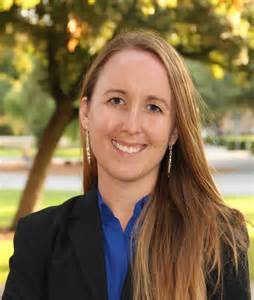
Christine Exley is Professor of Business Administration at Harvard Business School. Christine is also Co-founder and Christine ExleyChief of Research at Wagaroo – an organisation dedicated to re-house homeless dogs to responsible and loving families.

Wagaroo was founded to bring a simple principle to life: When it comes to getting a pet, it’s time to make it easier for people to do the right thing! No puppy mills. No backyard breeders. Just owners, rescues, responsible breeders, and shelters working together to find great homes for dogs who need them. Find out more at wagaroo.com.

This episode is dedicated to Pepper, Christine’s family pet dog who recently passed away. Pepper is the Pit Bull that Christine mentions in this episode whom she rescued from a dog shelter.

Economics:

In this interview, Christine mentions: gender differences, labor markets, incentives, market failure, search costs, information asymmetry, supply, demand, thick and thin markets, labor markets and wage elasticities.

Economists:

In this interview, Christine mentions: Al Roth, Dan Ariely, Shawn Humphrey, Doug Bernstein, Charlie Springer and Stephen Terry.

In this episode you will learn:

  • the use of assumptions in economic models for testing.
  • how to encourage volunteering and whether monetary incentives work.
  • how a trip to Honduras changed Christine’s academic path from mathematics to economics.
  • how a story about an individuals’ plight can be a powerful message to have people react in a charitable manner, while the plight of millions with no media coverage of a personal story of suffering could become less powerful.
  • about Wagaroo and why Christine set it up to help save dogs from puppy mills.
  • what are thick and thin markets.
  • how to spot an irresponsible dog breeder.
  • about the family2family programme run by Wagaroo.
  • how localised knowledge is key to separate the responsible dog breeder from the irresponsible breeder.
  • why more must be done to regulate and protect animals.
  • how Christine saved a pups life from a dog shelter when she was 17 and became her family pet.
  • why people put in less effort once they hit a target.
  • about the motivating benefits of rewarding volunteers with gift cards rather than a cash equivalent.
  • how virtual rewards, like stickers and badges, can incentivise people to rmeet targets.
  • how people’s perceptions of Pit Bull are an Econ 101 thing!

Quotes by Christine in Episode 54 of the Economic Rockstar Podcast:

“Your population of volunteers really matters” – Christine Exley

Click To Tweet

On Al Roth – “He’s someone who always encourages you to dream bigger” – Christine Exley

Click To Tweet

On the successful family2family programme run by Wagaroo: “As an economist I’m very pleased with how clean and, in a sense, compatible that is” – Christine Exley

Market Failure in the Market for Homeless Pets

“I think there’s every market failure in the book in the market for homeless pets” – Christine Exley

Click To Tweet

Two of the biggest ones arise from search costs. It’s really hard to find the dog you’re looking for. There are thousands of organisations globally that have dogs. There are thousands, if not millions, of families each year that need to re-home dogs.

The heterogeneity in types of dogs – different sizes, ages, breeds and personalities. The inventory is not always up-to-date. It’s hard to coordinate among multiple actors. It’s a disaster. Trying to find out all of that information is challenging.

Information asymmetry is another market failure. Often people on the other side have more information about the dog than you do. Sometimes no one has information on the dog. Maybe the dog was found on the street and we have no idea what’s this dogs history is or how this dog would interact in different environments.

There are many fundamental challenges that really make it a tricky market.

There’s actually about 2 million dogs and cats every year that are killed because they don’t find homes. So there’s certainly a surplus so to speak of dogs and cats.

Up to 23 million people are interested in acquiring a pet for their family in any given year. The vast majority are open to multiple sources – adoption, buying from a breeder.

It’s very easy for bad actors to imitate good actors – Christine Exley

Personal Habits:

  • Getting up at 5:45 am and Running

Takeaway:

  • Get a dog. Particularly get a Pit Bull – Christine Exley

    Click To Tweet

Internet Resource:

  • Wagaroo
  • Al Roth’s blog: marketdesigner
  • LaTex

Contact: spot@wagaroo.com

Where to Find Christine:

  • wagaroo.com
  • wagaroo.com/app
http://traffic.libsyn.com/economicrockstar/054_Christine_Exley_Final.mp3

Podcast: Play in new window | Download
  • facebook
  • linkedin
  • twitter
  • google+
  • pinterest

053: Helena Norberg-Hodge on Localisation, Trade Treaties and the Economics of Happiness

October 8, 2015 by Frank

http://traffic.libsyn.com/economicrockstar/Helena_Norberg_Hodge_Final.mp3
Play in New WindowDownload

053: Helena Norberg-Hodge on Localisation, Trade Treaties and the Economics of Happiness

Helena Norberg-Hodge is the founder and director of Local Futures. A pioneer of the ‘new economy’ movement, she has been promoting an economics of personal, social and ecological well-being for more than 30 years.Helena Norberg Hodge

Helena is the producer and co-director of the award-winning documentary The Economics of Happiness, and is the author of Ancient Futures: Learning from Ladakh, described as “an inspirational classic”.

Helena has given public lectures in seven languages, and has appeared in broadcast, print, and online media worldwide.

She was honored with the Right Livelihood Award (or ‘Alternative Nobel Prize’) for her groundbreaking work in Ladakh, and received the 2012 Goi Peace Prize for contributing to “the revitalization of cultural and biological diversity, and the strengthening of local communities and economies worldwide”.

Economics:

In this interview, Helena mentions: localisation, globalisation, deregulation, finance, banking, money, real economy, price, demand, subsidies, tax, business alliances, lobbying, competition, trade treaties, unemployment, poverty, natural environment, growth, climate, energy consumption, comparative advantage and GDP.

Economists:

In this interview, Helena mentions: Alex Tabarrok, Adam Smith, David Riccardo,

In this episode you will learn:

  • how and why Helena decided to advocate for and promote localisation.
  • about Ladakh and how it was removed from the rest of the world.
  • how the global market was very destructive to the local market in Ladakh.
  • how globalisation destroyed the livelihood of farms and local businesses and created unemployment.
  • how the happiness and high self-esteem among the people of Ladakh was destroyed after a decade of economic development.
  • why extreme tensions between buddhists and muslims erupted after living in peace for over 500 years in Ladakh.
  • about Ladakh, where the Dalai Lama is the spiritual head.
  • how Ladakh has become a case study on how a local economy has been quickly affected by globalisation.
  • about the phenomenal work Helena is doing to highlight the changing lives and economy of Ladakh and other regions.
  • about the true meaning of the real economy and how cheap money and speculation is destroying it.
  • why the earth is so precious and must be protected before we see irreversible and horrific damage.
  • about the terrific work being undertaken by Local Futures to highlight the need for economic change to protect our earth.
  • why we need to make the local food market a global initiative.
  • how small towns and villages are taking initiatives to feed their community with fresh, organic foods.
  • how schools are integrating nature into their infrastructure to increase the well-being of staff and pupils.
  • how nature provides profound and important psychological healing benefits.
  • how diversifying and staying local can provide more diversified foods per unit of land and water than the large monocultures.
  • why farmers prefer to work closely with the customer than with large-scale supermarkets.
  • whether small farmers and businesses should create a group to represent the their interests and to lobby governments in much the same way as large companies like Volkswagen and Monsanto.
  • how to make small and local businesses more visible.
  • about Helena’s mantra for resistance and renewal – resisting trade treaties and renewing localisation.
  • about the law that was passed in Sweden to have trade treaties to be discussed in secret.
  • how, under the new trade agreements, multinational corporations can sue governments if they inhibit their profit-making ability of that governments country.
  • whether GDP is a good measure of progress and how Helena interprets its true meaning.

Quotes by Helena on the Economic Rockstar Podcast:

“The EU is essentially an economic union and it’s bringing with it a centralised bureaucracy” – Helena Norberg-Hodge

About Earth Being Our Only Economy:

“The earth is our only economy. There’s nothing we use that doesn’t come from the earth. Nothing, nothing. Every iPad, every shoe, every television. And that economy, the real economy, is diversity. It requires and can only continue to live by respecting the uniqueness of every leaf, of every human being. Everything that lives is unique and is changing from moment to moment.” – Helena Norberg-Hodge

“I describe Nature as the economy, but it’s also our Mother. It’s our spiritual home” – Helena Norberg-Hodge

Click To Tweet

“Usually when people talk about the economy, they’re just thinking about paper money. They don’t think about culture and farming as having anything to do with the economy.” – Helena Norberg-Hodge

“The global food economy, from beginning to end, is the biggest contributor to CO2 emissions, and it’s not just because of the factory farming with animals. It’s across the board.” – Helena Norberg-Hodge

About the Stock Market and Cheap Money:

“The market is really young lads sitting in front of computers speculating with huge amounts of money. And they inevitably have to and do favour the giant. They’re betting on the giants ‘horses’ like Monsanto, McDonalds and Walmart. And so this connection between that flood of cheap money created out of thin air, now has become a sort of a ‘blind machinery’ that is eating up the real economy, the earth, extremely rapidly and we’re going to see more horrific examples.” – Helena Norberg-Hodge

Other Quotes:

There is a growing local food market that is going global – Helena Norberg-Hodge

Click To Tweet

GDP is an outrageous measure of progress. It is simply a measure of commercialisation – Helena Norberg-Hodge

With Riccardo and the notion of comparative advantage, it sounds good on the surface. But let’s remember it was brought in in a time of slavery – Helena Norberg-Hodge

Where to Find Helena:

  • Local Futures: www.localfutures.org
  • Economics of Happiness
http://traffic.libsyn.com/economicrockstar/Helena_Norberg_Hodge_Final.mp3

Podcast: Play in new window | Download
  • facebook
  • linkedin
  • twitter
  • google+
  • pinterest
  • Prev Page...
  • 1
  • …
  • 10
  • 11
  • 12
  • 13
  • 14
  • …
  • 18
  • ...Next Page

Frank Conway

Frank Conway is founder of Economic Rockstar and lecturer of economics, finance and statistics. Read More…

View My Blog Posts

Youtube Sub

Become a Patron of the Economic Rockstar Podcast

patreon

Ireland’s Economy by the Numbers

Leaving Cert Economics: Ireland’s Economy  Click here to download a workbook on Ireland’s Economy so that you can add your own notes. [Original size] Ireland’s Economy by fconway

Categories

Subscribe and Never Miss An Episode

itunes-logo

Recent Posts

  • Ireland’s Economy by the Numbers April 8, 2019
  • 174: Wendy Carlin on The Core Project, Capitalism, Democracy and Normative Statements February 13, 2019
  • 173: Stephen Wright on Core Econ as a Learning Resource for Mainstream Economics January 28, 2019
  • 172: Best of 2018 Part 2: From the Great Depression to Futurism; Institutions, Individualism, Cooperation and Reciprocity January 22, 2019
  • 171: Best of 2018 Part 1 January 3, 2019

Copyright © 2026 · Podcast Pro Theme on Genesis Framework · WordPress · Log in

This website uses cookies to improve your experience. We'll assume you're ok with this, but you can opt-out if you wish. Accept Reject Read More
Privacy Policy

Privacy Overview

This website uses cookies to improve your experience while you navigate through the website. Out of these, the cookies that are categorized as necessary are stored on your browser as they are essential for the working of basic functionalities of the website. We also use third-party cookies that help us analyze and understand how you use this website. These cookies will be stored in your browser only with your consent. You also have the option to opt-out of these cookies. But opting out of some of these cookies may affect your browsing experience.
Necessary
Always Enabled
Necessary cookies are absolutely essential for the website to function properly. This category only includes cookies that ensures basic functionalities and security features of the website. These cookies do not store any personal information.
Non-necessary
Any cookies that may not be particularly necessary for the website to function and is used specifically to collect user personal data via analytics, ads, other embedded contents are termed as non-necessary cookies. It is mandatory to procure user consent prior to running these cookies on your website.
SAVE & ACCEPT