• ABOUT
  • RESOURCES
  • PODCAST
  • BOOKS
  • BLOG
  • SUPPORTERS
  • QFA Financial Advice
  • CONTACT

Economic Rockstar

Connecting Brilliant Minds in Economics and Finance

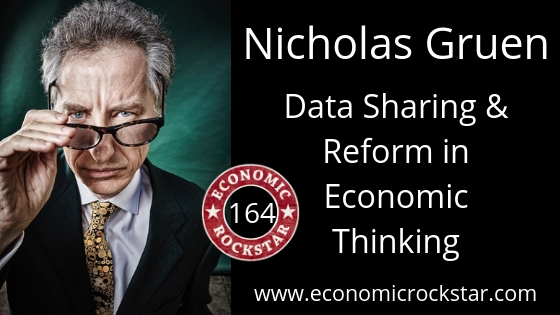
164: Nicholas Gruen on Data Sharing and Reform in Economic Thinking
November 2, 2018 by Frank

http://traffic.libsyn.com/economicrockstar/164_Nicholas_Gruen_Final.mp3
Play in New WindowDownload

164: Nicholas Gruen on Data Sharing and Reform in Economic Thinking

Nicholas Gruen is CEO of Lateral Economics and is a widely published policy economist, entrepreneur and commentator.

In this episode Professor Gruen discusses the need for reform in economics at both academic and policy level.

He also explains the importance of information and how information is poorly managed at the central planning stage but can be used effectively under the right direction if this information or data can be shareable both from the private and the public sector.

Links:

  • Lateral Economics by Nicholas Gruen
  • Kilkenomics Festival where economics and comedy collide
  • Kaggle: Your Home for Data Science
  • Breezedocs
  • Slant.co
  • HealthKit
  • Lendable

Books:

  • Superforecasting: The Art and Science of Prediction by Philip E. Tetlock
  • Truth About Markets: Why Some Countries Are Rich And Others Remain Poor by John Kay

Blogs:

  • Interfluidity by Steve Randy Waldman  
  • Synthentic Assets by Carolyn Sissoko
  • Krugman Online by Paul Krugman

Patreon

If you’re a fan of the podcast and would like to show your support in anyway, please check out my Patreon page at www.patreon.com/economicrockstar where you can sign up for any of the awards for as little as $1 a month or you can simply follow me on Instagram, the Economic Rockstar Facebook page or on Twitter or simply recommend the show to a friend, especially if they have never had the opportunity to study economics.

http://traffic.libsyn.com/economicrockstar/164_Nicholas_Gruen_Final.mp3

Podcast: Play in new window | Download
  • facebook
  • linkedin
  • twitter
  • google+
  • pinterest

164: Kevin Kelly on the Inevitable and Asking Questions of the Unknown

October 25, 2018 by Frank

http://traffic.libsyn.com/economicrockstar/163_Kevin_Kelly_Final.mp3
Play in New WindowDownload

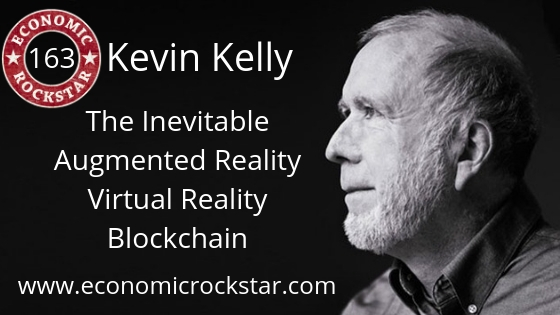
164: Kevin Kelly on the Inevitable and Asking Questions of the Unknown

Kevin Kelly is cofounder of Wired Magazine and former editor of The Whole Earth Review.

He is considered a futurist and has written a number of books identifying technological trends and innovations, including his  most recent book The Inevitable: Understanding the 12 Technological Forces That Will Shape Our Future.

Check out the episode over on the Economic Rockstar YouTube channel or scroll down if you’d prefer to see us in person.

Links:

  • www.kk.org
  • Quantified Self
  • Wired Magazine
  • The Whole Earth Catalogue

Books:

  • The Inevitable: Understanding the 12 Technological Forces That Will Shape Our Future by Kevin Kelly
  • New Rules for the New Economy: 10 Radical Strategies for a Connected World by Kevin Kelly


Patreon

If you’re a fan of the podcast and would like to show your support in anyway, please check out my Patreon page at www.patreon.com/economicrockstar where you can sign up for any of the awards for as little as $1 a month or you can simply follow me on Instagram, the Economic Rockstar Facebook page or on Twitter or simply recommend the show to a friend, especially if they have never had the opportunity to study economics.


http://traffic.libsyn.com/economicrockstar/163_Kevin_Kelly_Final.mp3

Podcast: Play in new window | Download
  • facebook
  • linkedin
  • twitter
  • google+
  • pinterest

162: Jennifer Burns on Ayn Rand: Goddess of the Market and Objectivism

October 20, 2018 by Frank

http://traffic.libsyn.com/economicrockstar/162_Jennifer_Burns_Final.mp3
Play in New WindowDownload

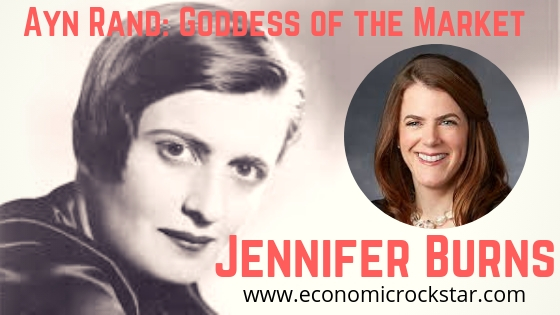
162: Jennifer Burns on Ayn Rand: Goddess of the Market and Objectivism

Writing Advice:

Be happy with incrementalism. Write everyday. I have a schedule on and I’m very strict about it. I don’t try to force it, I don’t try to push it. I just try and do a little bit every day and I find if I’ve written everyday for a month, I’ve done this incredible amount of work.

So I think consistency is very much a part of it. And then you have to find a way to connect into why you’re writing and to really sort of feed that inner goal. So having questions or problems that are really intriguing to you because as a writer you have this unstructured time to write and you’re not going to write unless you’re really passionate about it.

Part of my writing practice is I don’t check my email and I don’t check the internet for certain times until I’ve done the writing. For me it works in the morning. And I do it by time and not by output.

Books:

Goddess of the Market: Ayn Rand and the American Right by Jennifer Burns

Atlas Shrugged by Ayn Rand

The Fountainhead by Ayn Rand

We the Living by Ayn Rand

Patreon

If you’re a fan of the podcast and would like to show your support in anyway, please check out my Patreon page at www.patreon.com/economicrockstar where you can sign up for any of the awards for as little as $1 a month or you can simply follow me on Instagram, the Economic Rockstar Facebook page or on Twitter or simply recommend the show to a friend, especially if they have never had the opportunity to study economics.

http://traffic.libsyn.com/economicrockstar/162_Jennifer_Burns_Final.mp3

Podcast: Play in new window | Download

  • facebook
  • linkedin
  • twitter
  • google+
  • pinterest

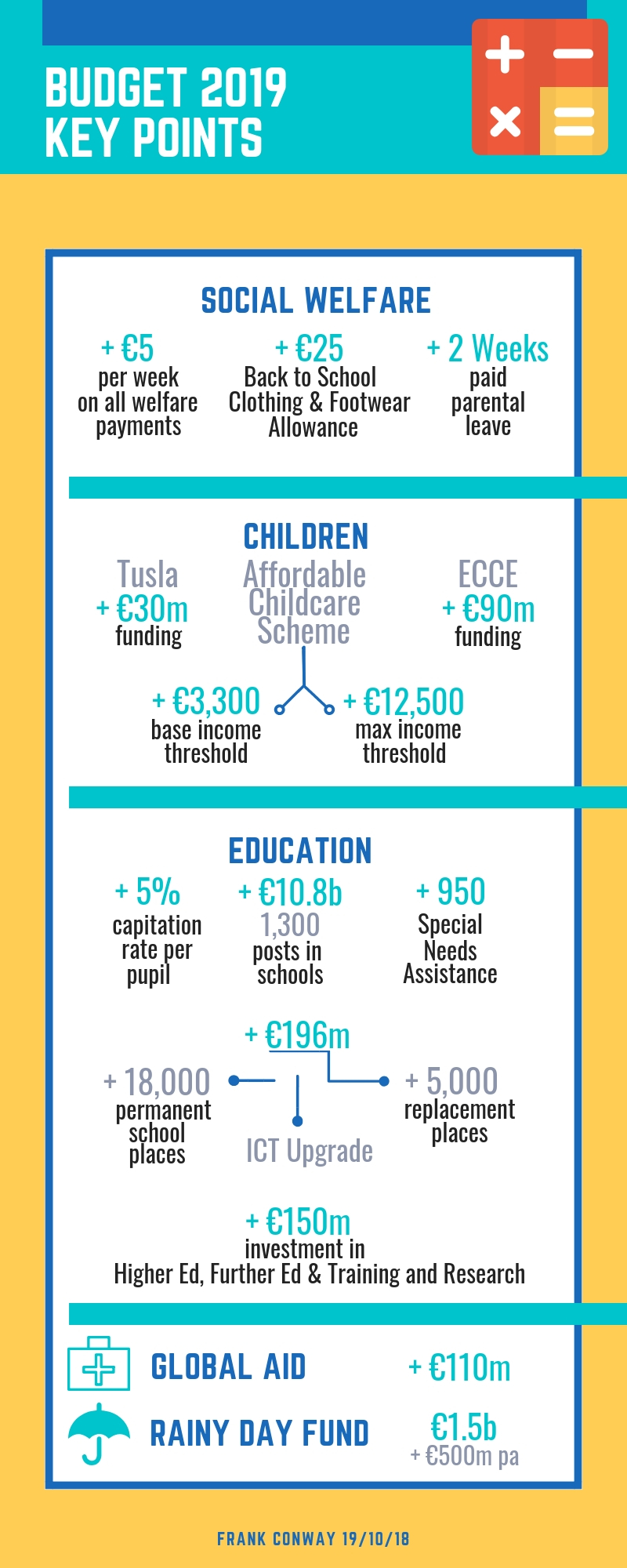
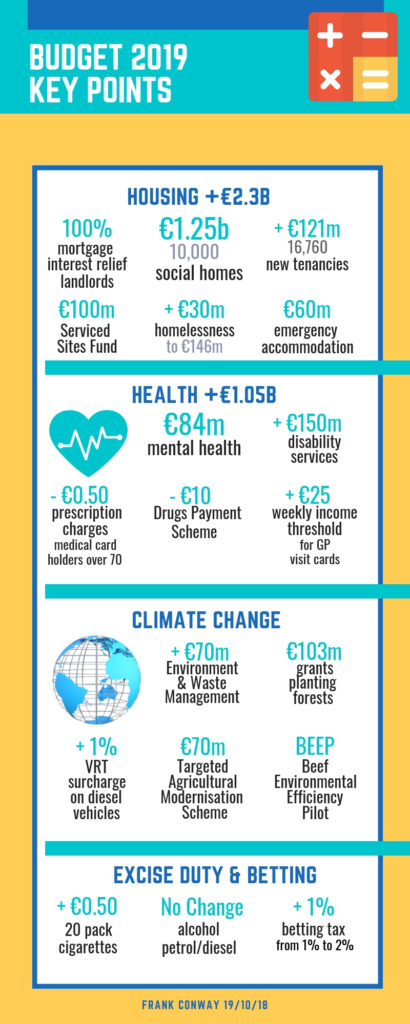
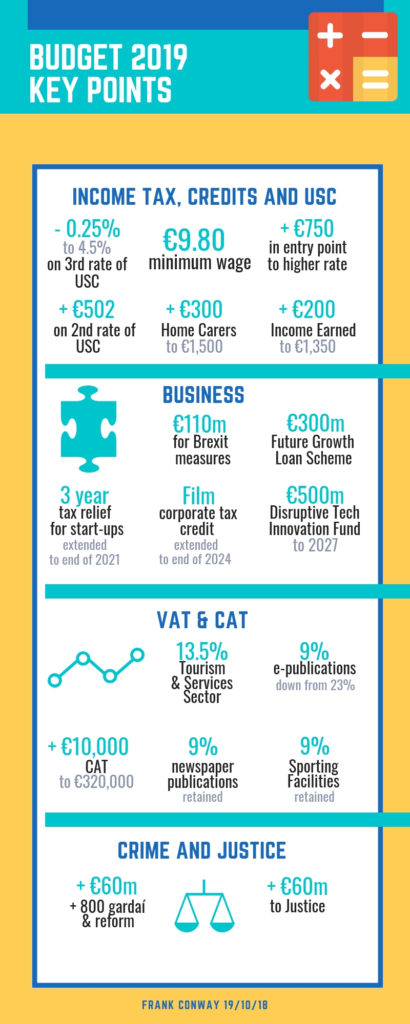
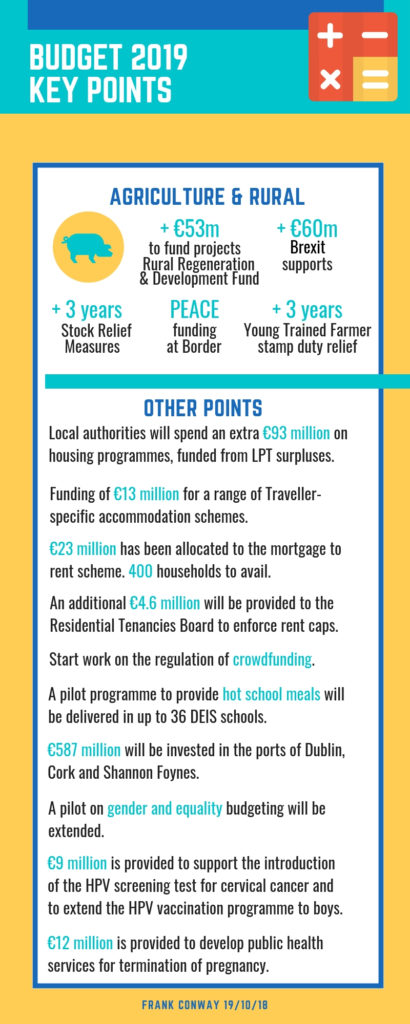
Ireland’s Budget 2019

October 19, 2018 by Frank

  • facebook
  • linkedin
  • twitter
  • google+
  • pinterest

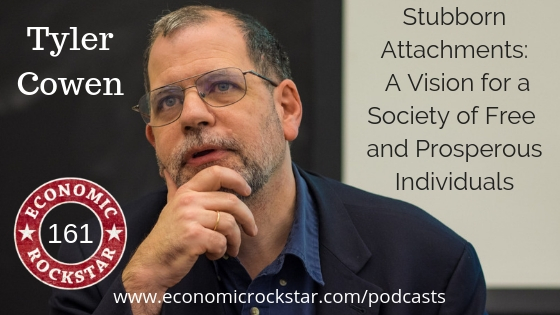
161: Tyler Cowen on Stubborn Attachments – A Vision for a Society of Free and Prosperous Individuals

October 11, 2018 by Frank

http://traffic.libsyn.com/economicrockstar/161_Tyler_Cowen_Final.mp3
Play in New WindowDownload

161: Tyler Cowen on Stubborn Attachments – A Vision for a Society of Free and Prosperous Individuals


Tyler Cowen is Holbert L. Harris Chair of Economics at George Mason University and serves as chairman and general director of the Mercatus Center at George Mason University.

He is coauthor of the popular economics blog Marginal Revolution and cofounder of the online educational platform Marginal Revolution University.

His latest book ‘Stubborn Attachments’ is part of our discussion in this episode.

“This is a book I’ve been working on for 20 years. You can think of it as an account of my stubborn attachments which are to the ideas of economic growth and liberty and human rights and also sustainability. So if you go back and you look at say Hayek, Mises, Rothbard, John Rawls, Robert Nozick and John Stewart Mill, they’re all trying to justify their vision of a free society. And in my opinion actually all of those attempts failed. So I’m trying to reconstruct the case for freedom and economic growth and also economics as a way of approaching human phenomena using philosophical argument. So in a way it’s my most personal book. It’s my most direct book. It’s the kinda final bottom-line analysis ‘here’s what Tyler really thinks’ and for 20 years I would spend maybe a month a year working on the book, maybe two months a year. Always returning to it trying to improve it, changing my mind on things and this is the final result of that.” – Tyler Cowen on writing Stubborn Attachments

People Mentioned in this Episode:

Arjo Klamer, Kenneth Rogoff, Patrick Wolf (Hedge Funds), Paul Krugman, Adam Smith, John Maynard Keynes, Milton Friedmand, F. A. Hayek, Patrick Collison, Margaret Atwood, Daniel Kahnemann, Aristotle, Socrates, Ayn Rand, Spencer McCallum, William Boumal (was a wood sculptor), John Rawls, Robert Nozick, N. N. Taleb, Paul Ehrlich, Julien Simon, Elvis Presley, Chuck Berry, The Beetles, Bob Dylan, Andy Warhol, Jasper Jones, Roy Fox Lichtenstein and Banksy.

Podcast:

  • Conversations with Tyler

Writing Tips:

“Write every single day. Make it a routine. Even if it’s a small amount, I assure you if you write every day it will pile up and you’ll get things done.” – Tyler Cowen

Links:

  • www.tylercowen.com
  • Marginal Revolution
  • The Freeman by Foundation for Economic Education
  • Twitter: @tylercowen

Books:

  • Stubborn Attachments : A vision for a society of free, prosperous, and responsible individuals by Tyler Cowen
  • In Praise of Commercial Culture by Tyler Cowen
  • Creative Destruction: How Globalization Is Changing the World’s Cultures by Tyler Cowen
  • The Dialogues of Plato
  • Gulliver’s Travels by Jonathan Swift
  • Ulysses by James Joyce
  • The Odyssey by Homer
  • The Theory of Moral Sentiments by Adam Smith,

Patreon

If you’re a fan of the podcast and would like to show your support in anyway, please check out my Patreon page at www.patreon.com/economicrockstar where you can sign up for any of the awards for as little as $1 a month or you can simply follow me on Instagram, the Economic Rockstar Facebook page or on Twitter or simply recommend the show to a friend, especially if they have never had the opportunity to study economics.

http://traffic.libsyn.com/economicrockstar/161_Tyler_Cowen_Final.mp3

Podcast: Play in new window | Download

  • facebook
  • linkedin
  • twitter
  • google+
  • pinterest

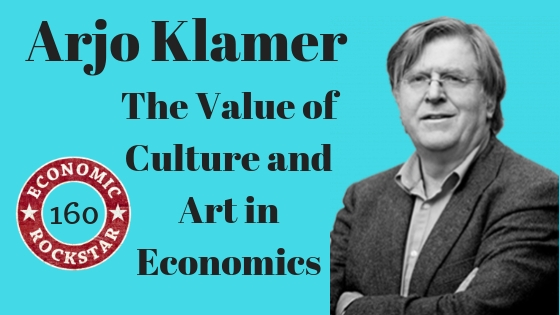
160: Arjo Klamer on the Value of Culture and Art in Economics

October 4, 2018 by Frank

http://traffic.libsyn.com/economicrockstar/160_Arjo_Klamer__Final.mp3
Play in New WindowDownload

160: Arjo Klamer on the Value of Culture and Art in Economics


Arjo Klamer is professor of the Economics of Art and Culture at Erasmus University in Rotterdam, The Netherlands, and holds the world’s only chair in the field of cultural economics. Prior to that and after acquiring his PhD at Duke University, he taught for many years at several universities in the US, including Wellesley College and George Washington University.

In 1984, he attracted a great deal of attention with his Conversations with Economists. He has collaborated with Deirdre McCloskey to promote the rhetorical perspective on economics.

His current research focuses on the cultural dimension of economic life and the values of art.

His latest book ‘Doing the Right Thing: A Value Based Economy’ is part of the conversation in this episode. This book is for all those who are seeking a human perspective on economic and organizational processes. It lays the foundations for a value based approach to the economy.

The value based approach is another economics; it focuses on values and on the most important goods such as families, homes, communities, knowledge, and art. It places economic processes in their cultural context.

The value based approach restores the ancient idea that quality of life and of society is what the economy is all about. It advocates shifting the focus from quantities (“how much?”) to qualities (“what is important?”).

Economics:

In this episode Arjo mentions: Altruism, reciprocity, externalities and animal spirits,

Economists:

In this episode Arjo mentions: Deirdre McCloskey, Russ Roberts, Adam Smith, John Maynard Keynes, F. A. Hayek,

Other Episodes Mentioned in this Conversation:

  • 104: Russ Roberts on How Adam Smith Can Change Your Life and the Theory of Moral Sentiments
  • 114: Deirdre McCloskey on Equality and Greed and How To Be a Very Good Economist

Books:

  • Doing the Right Thing: A Value Based Economy by Arjo Klamer
  • The value of culture: On the Relationship Between Economics and Arts by Arjo Klamer
  • Conversations with economists by Arjo Klamer
  • Bourgeois Equality: How Ideas, Not Capital or Institutions, Enriched the World by Deirdre McCloskey
  • Emotional Intelligence: Why It Can Matter More Than IQ by Daniel Coleman

Patreon

If you’re a fan of the podcast and would like to show your support in anyway, please check out my Patreon page at www.patreon.com/economicrockstar where you can sign up for any of the awards for as little as $1 a month or you can simply follow me on Instagram, the Economic Rockstar Facebook page or on Twitter or simply recommend the show to a friend, especially if they have never had the opportunity to study economics.

http://traffic.libsyn.com/economicrockstar/160_Arjo_Klamer__Final.mp3

Podcast: Play in new window | Download

  • facebook
  • linkedin
  • twitter
  • google+
  • pinterest

157: François Allisson on Value and Prices in Russian Economic Thought

September 8, 2018 by Frank

http://traffic.libsyn.com/economicrockstar/157_Francois_Allisson_Final.mp3
Play in New WindowDownload

157: François Allisson on Value and Prices in Russian Economic Thought

François Allisson is a scholar in history of economic thought and a senior lecturer at the Centre Walras-Pareto at the University of Lausanne in Switzerland.

His research interests encompass the whole history of Russian economic thought, with a special emphasis on the theories of value and prices at the end of the imperial period and the beginning of the Soviet era ( which covers the years from the 1870s to the 1920s).

Francois’s interests int the theories of value, distribution, money, crises, accumulation of capital and planning lead him to study various schools of economic thought and classical political economy as well as Marxism, and marginalism.

His book Value and Prices in Russian Economic Thought was awarded the European Society for the History of Economic Thought (ESHET) Best Book Award in 2016.

Francois is now engaged in a collective project intending towards an intellectual biography of Nikolay Ivanovich Sieber (1844–1888), a Swiss and Russian economist

His teaching activities include a course on the history of contemporary economic thought, which covers the history of macroeconomics since Keynes’s General Theory, in both mainstream and heterodox traditions.

Francois was recently elected Vice-President of the International Walras Association. Among other activities, he is General Secretary of the Association Charles Gide (the French association for history of economic thought) and a Managing Editor of Œconomia.

Talk about economic thought during the 1890s to 1920s and the Russian economists of the time.

About the classical theory of pricing based on the value of labour and how that has changed since the preferred neoclassical marginal revolution in pricing theory that we know of today.

Links:

  • François Allisson website
  • International Walras Association
  • Association Charles Gide
  • Œconomia
  •  Centre Walras-Pareto
  •  University of Lausanne

Books:

  • Value and Prices in Russian Economic Thought: A journey inside the Russian synthesis, 1890–1920 by François Allisson
  • Economics and Other Branches – In the Shade of the Oak Tree: Essays in Honour of Pascal Bridel by Roberto Baranzini and François Allisson
  • Red Star: The First Bolshevik Utopia by Alexander Bogdanov
  • Journey of My Brother Alexsey to the Land of Peasant Utopia by Alexander Chayanov

Patreon

If you’re a fan of the podcast and would like to show your support in anyway, please check out my Patreon page at www.patreon.com/economicrockstar where you can sign up for any of the awards for as little as $1 a month or you can simply follow me on Instagram the Economic Rockstar Facebook page or on Twitter or simply recommend the show to a friend, especially if they have never had the opportunity to study economics.

http://traffic.libsyn.com/economicrockstar/157_Francois_Allisson_Final.mp3

Podcast: Play in new window | Download

  • facebook
  • linkedin
  • twitter
  • google+
  • pinterest

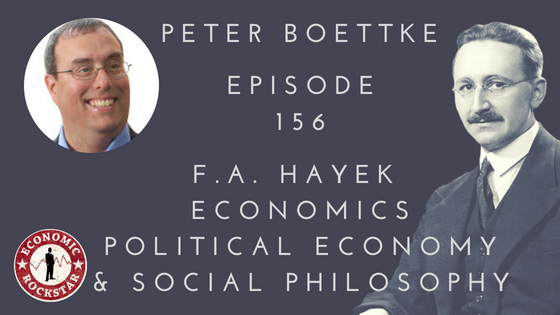
156: Peter Boettke on Hayekian Economics, Political Economy and Social Philosophy

September 1, 2018 by Frank

http://traffic.libsyn.com/economicrockstar/156_Peter_Boettke_Final.mp3
Play in New WindowDownload

156: Peter Boettke on Hayekian Economics, Political Economy and Social Philosophy

Peter Boettke of George Mason University joins me once again on the podcast.

He discusses the Hayekian principles laid out in his new book “F. A. Hayek: Economics, Political Economy and Social Philosophy”.

Other Episodes Featuring Professor Boettke:

  • 084: Mises v Marx: A Discussion with Peter Boettke
  • 082: Peter Boettke on Smith and Keynes and Why We Should Be ‘Living Economics’

Book:

F. A. Hayek: Economics, Political Economy and Social Philosophy by Peter Boettke

If you are at a university and your university library has the Springer subscription (which most do), you can order a print-on -demand version for $25, so that makes it somewhat more reasonable than the library prices.  You can click here for a discount flyer to get 20% off.

Patreon

If you’re a fan of the podcast and would like to show your support in anyway, please check out my Patreon page at www.patreon.com/economicrockstar where you can sign up for any of the awards for as little as $1 a month or you can simply follow me on the Economic Rockstar Facebook page or on Twitter or simply recommend the show to a friend, especially if they have never had the opportunity to study economics.

http://traffic.libsyn.com/economicrockstar/156_Peter_Boettke_Final.mp3

Podcast: Play in new window | Download
  • facebook
  • linkedin
  • twitter
  • google+
  • pinterest

155: Lotta Moberg on Refugee Cities and the Blockchain Industry as Special Economic Zones

August 25, 2018 by Frank

http://traffic.libsyn.com/economicrockstar/155_Lotta_Moberg_Final.mp3
Play in New WindowDownload

155: Lotta Moberg on Refugee Cities and the Blockchain Industry as Special Economic Zones

Lotta Moberg is a Macroeconomic Analyst for William Blair’s Dynamic Allocation Strategies (DAS) team. She has a Ph.D. in Economics from George Mason University and earned her BA in Economics from Lund University (Sweden). Prior to joining the DAS team, Lotta worked in Russia for the Swedish Ministry for Foreign Affairs and in Kosovo for the Swedish Armed Forces. She has published articles on special economic zones, tax benefits, tax competition, and municipal bankruptcy. Lotta’s book The Political Economy of Special Economic Zones: Concentrating Economic Development is available at your favourite online store.

Find Out:

About Dr. Moberg’s work on SEZs as well as her book The Political Economy of Special Economic Zones which highlights not only the successes of these zones but also their failures.

The opportunities that special economic zones can bring to blockchain and cryptos and how these zones can be a testing ground for a country that would like to adopt blockchain tech before committing to a full scale adoption.

About Lotta’s work at refugeecities.org which is devoted to the economic empowerment of refugee camp residents.

Lotta discusses how refugee camps could obtain special economic zone type status and give those living there the opportunity to establish an economy that will allow trade with the host country and others. This would generate employment and create business opportunities for the camp residents.

In this Episode, Lotta Mentions and Discusses: 

  • Special Economic Zones, including those in China, Ireland, Cuba and Saudi Arabia.
  • Blockchain technology and cryptocurrencies
  • Venezuela and the Petro dollar
  • Saudi Arabia’s NEOM.
  • and much more

Links:

  • Lotta Moberg: www.lottamoberg.com
  • Refugee Cities: www.refugeecities.org

Paper:

  • Moberg, L. (2015). The Political Economy of Special Economic Zones. Journal of Institutional Economics. Vol. 11(1); 167 – 190.

Bands:

  • First Aid Kit
  • Billy Joel

People:

  • Tom W. Bell
  • Genghis Khan

Books:

  • The Political Economy of Special Economic Zones: Concentrating Economic Development by Lotta Moberg
  • Origin of Wealth:  The Radical Remaking of Economics and What it Means for Business and Society by Eric D. Beinhocker 
  • End of Theory: Financial Crises, the Failure of Economics, and the Sweep of Human Interaction by
  • Theory of Moral Sentiments by Adam Smith
  • The Jungle by Upton Sinclair

Other episodes:

  • 148: Tom W. Bell on Special Economic Zones, Copyright and Liberland
  • 137: Rakesh Ramachandran on Crypto Economics and How Knowledge of Austrian Economics Created His Blockchain Company QBRICS 
  • 009: Naomi Brockwell (Bitcoin Girl) on Bitcoins, Liberty, Government and Fiat Currency 

Patreon

If you’re a fan of the podcast and would like to show your support in anyway, please check out my Patreon page at www.patreon.com/economicrockstar where you can sign up for any of the awards for as little as $1 a month or you can simply follow me on the Economic Rockstar Facebook page or on Twitter or simply recommend the show to a friend, especially if they have never had the opportunity to study economics.

http://traffic.libsyn.com/economicrockstar/155_Lotta_Moberg_Final.mp3

Podcast: Play in new window | Download
  • facebook
  • linkedin
  • twitter
  • google+
  • pinterest

154: Pat Holt on the Economics in Spider-Man, Wonder Woman and Black Panther

August 18, 2018 by Frank

http://traffic.libsyn.com/economicrockstar/154_Pat_Holt_Final.mp3
Play in New WindowDownload

154: Pat Holt on the Economics in Spider-Man, Wonder Woman and Black Panther


Pat Holt is a computer engineer, a comic book geek and a born-again economics lover.

Pat reached out to Brian O’Roark after listening to episode 116 of this podcast and after a while, he contributed a chapter tothe book ‘Superheroes and Economics: The Shadowy World of 

Capes, Masks and Invisible Hands’ edited by Rob Salkowitz and Brian.

In this Episode, Pat mentions and discusses:

  • Unemployment, utility maximisation when saving the galaxy.
  • Human capital, opportunity costs and trade-offs.
  • How comic books provide a historical context life by capturing the social and economic issues of the day.
  • Racism, chauvinism and feminism.
  • How Superman brought down the Ku Klux Klan.
  • How Spider-Man epitomises many of our battles to get through the day.
  • Whether Spider-Man is representative of a start-up entrepreneur.
  • The gender inequalities of the 1960s and how Wonder Woman led the way to fight for women’s rights and continued the feminist movement.
  • The Dandy and The Beano at the time of World War 2.
  • Lou Ferrigno as the Incredible Hulk.
  • How Gloria Steinem helped Diana Prince gain back her Wonder Woman powers.
  • Black Panther, the Resource Curse, trade and vibranium.
  • Captain Marvel.
  • Supergirl.
  • Wakandanomics by The Economist
  • Weird Al Yankovich: Everything You Know Is Wrong

Other Episodes of Interest:

  • 116: Brian O’Roark on The Economics of Superheroes and The Hunger Games
  • 118: Zachary Feinstein on Systemic Risk and Economics in Star Wars and Harry Potter
  • 060: Manu Saadia on Trekonomics – The Economics of Star Trek: Scarcity, Productivity and Public Goods
  • 057: Alvin Roth on Match-Making, Repugnant Markets and Market Design
  • 054: Christine Exley on the Economics of Volunteering, Market Failure in the Homeless Dog Market and Wagaroo

How to Contact Pat Holt:

  • Twitter: @PatNHolt
  • Email: ballroomsalsadancer[at]gmail[dot]com

Books:

  • Superheroes and Economics: The Shadowy World of Capes, Masks and Invisible Hands by Brian O’Roark (Editor) and Rob Salkowitz (Editor)
  • Poor Peter Parker: Spider sense doesn’t apply to making a living by Patrick Holt
  • The Hitchhiker Trilogy by Douglas Adams

Patreon

If you’re a fan of the podcast and would like to show your support in anyway, please check out my Patreon page at www.patreon.com/economicrockstar where you can sign up for any of the awards for as little as $1 a month or you can simply follow me on the Economic Rockstar Facebook page or on Twitter or simply recommend the show to a friend, especially if they have never had the opportunity to study economics.

http://traffic.libsyn.com/economicrockstar/154_Pat_Holt_Final.mp3

Podcast: Play in new window | Download

  • facebook
  • linkedin
  • twitter
  • google+
  • pinterest
  • Prev Page...
  • 1
  • 2
  • 3
  • 4
  • …
  • 18
  • ...Next Page

Frank Conway

Frank Conway is founder of Economic Rockstar and lecturer of economics, finance and statistics. Read More…

View My Blog Posts

Youtube Sub

Become a Patron of the Economic Rockstar Podcast

patreon

Ireland’s Economy by the Numbers

Leaving Cert Economics: Ireland’s Economy  Click here to download a workbook on Ireland’s Economy so that you can add your own notes. [Original size] Ireland’s Economy by fconway

Categories

Subscribe and Never Miss An Episode

itunes-logo

Recent Posts

  • Ireland’s Economy by the Numbers April 8, 2019
  • 174: Wendy Carlin on The Core Project, Capitalism, Democracy and Normative Statements February 13, 2019
  • 173: Stephen Wright on Core Econ as a Learning Resource for Mainstream Economics January 28, 2019
  • 172: Best of 2018 Part 2: From the Great Depression to Futurism; Institutions, Individualism, Cooperation and Reciprocity January 22, 2019
  • 171: Best of 2018 Part 1 January 3, 2019

Copyright © 2026 · Podcast Pro Theme on Genesis Framework · WordPress · Log in

This website uses cookies to improve your experience. We'll assume you're ok with this, but you can opt-out if you wish. Accept Reject Read More
Privacy Policy

Privacy Overview

This website uses cookies to improve your experience while you navigate through the website. Out of these, the cookies that are categorized as necessary are stored on your browser as they are essential for the working of basic functionalities of the website. We also use third-party cookies that help us analyze and understand how you use this website. These cookies will be stored in your browser only with your consent. You also have the option to opt-out of these cookies. But opting out of some of these cookies may affect your browsing experience.
Necessary
Always Enabled
Necessary cookies are absolutely essential for the website to function properly. This category only includes cookies that ensures basic functionalities and security features of the website. These cookies do not store any personal information.
Non-necessary
Any cookies that may not be particularly necessary for the website to function and is used specifically to collect user personal data via analytics, ads, other embedded contents are termed as non-necessary cookies. It is mandatory to procure user consent prior to running these cookies on your website.
SAVE & ACCEPT