• ABOUT
  • RESOURCES
  • PODCAST
  • BOOKS
  • BLOG
  • SUPPORTERS
  • QFA Financial Advice
  • CONTACT

Economic Rockstar

Connecting Brilliant Minds in Economics and Finance

066: Best of 2015 Part 2: A Look Back at the Economic Rockstar Podcast

January 2, 2016 by Frank

http://traffic.libsyn.com/economicrockstar/Best_of_2015_Part_2_Final.mp3
Play in New WindowDownload

2015 Part 1 (1)

This is the second part of the ‘Best of 2015’ of the Economic Rockstar podcast.

This episode provides you with a glimpse of what type of guests and conversations I’ve had on the show this past year.

Previous episodes that feature in this Best of 2015 are:

022 Josh Angrist on Taking the Con Out of Econometrics

060 Manu Saadia on Trekonomics – The Economics of Star Trek: Scarcity, Productivity and Public Goods

017 Marina Adshade on Understanding Economics the Sexy and ‘Hard’ Way

049 Jon Haywood with Jez Groom on How a Cleverly Designed Nudge Can Change People’s Behavior – Including How We Pee

019 Mark Thornton on the Decriminalization of Marijuana and the Skyscraper Curse

027 Craig Medico on How Economics Saved My Career, How I’m Embracing Technology in the Classroom and Why I’m off to Wrestling School

020 George Magnus on The Age of Ageing, China and the EU

028 Alice Louise Kassens on Nudging Students to Study Economics and Why Mainstream Media Should Publish Research on Mental Health

030 Kim Holder on Rockonomix and Teaching Economics Through the Lens of Sport, Music and Movies

045 Jon Manning on the Art of Pricing and How Economic Theory Has Got Pricing All Wrong

http://traffic.libsyn.com/economicrockstar/Best_of_2015_Part_2_Final.mp3

Podcast: Play in new window | Download

065: Best of 2015 Part 1: A Look Back at the Economic Rockstar Podcast

December 31, 2015 by Frank

http://traffic.libsyn.com/economicrockstar/065_Year_in_Review_PT_1_Final.mp3
Play in New WindowDownload

2015 Part 1

I’m Frank Conway and I am the host of the Economic Rockstar podcast. I do my best to bring on the brightest and most meaningful guests onto the show. Thank you so much listening and thank you for subscribing to the show on iTunes.

For those of you who have subscribed to the Economic Rockstar community at economicrockstar.com, I thank you for your feedback, interaction and shared insights and views. Let’s build this community bigger, both in size and knowledge.

I’m so grateful to have been in a position to bring to you a wide variety personalities to the show. While reflecting on the year 2015 for the podcast, I was amazed by the diversity and caliber of my guests and the incredible conversations we’ve had.

Their research, books, opinions, outlook, personal stories and teaching pedagogies is, to say the least, quite inspiring and has personally opened my eyes to the boundless capabilities in economics and finance. I truly hope that you found it to be likewise.

Both the end of year ‘Best of 2015’ episodes gives us a snapshot of some topics that were discussed – like a time capsule for the Economic Rockstar podcast of 2015. If you’ve been with me all year, then this episode will act as a refresher and take you back to some of the debates that abound the fields of economics.

If you’re new to the show or relatively new, then perhaps these episodes will offer you a window to glimpse into the show and type of guests and topics that we cover. Hopefully, they will encourage you to explore and listen to previous episodes of the podcast. For a full listing, you can visit economicrockstar.com/podcasts.

Although I did my utmost to choose a best of compilation that captured the essence of this podcast, it was extremely difficult to leave out some of my amazing guests.

I loved all my guests and every single one of them gave up their time to speak to me about their career, their research and personal lives. They exposed themselves to you, my amazing listeners, and answered questions that they had not seen before.

It was almost impossible to choose who to leave in and that’s why I reached to my Community on my email list for their favorites. Thanks for a great response. If I left out one of your favorites, then I apologize as I know how you feel. I’ve provided all the links to the show notes at the economic rockstar website at economicrockstar.com/65.

This is my mix-tape, my compilation of Economic Rockstars, so press play and do what you love doing while you listen – crosswords, chess, darts, exercise, walking the dog or cleaning the house.

What’s compelling about the guests on my show is how much of the work that they do is for the betterment of society as a whole.

The teaching innovations adopted and applied by John Cochrane, Kim Holder, Shawn Humphrey, Marina Adshade, Abdullah Al-Bahrani, Matt Rousu, Alice Lousie Kassens and Craig Medico have created an active rather than a passive economics classroom, helping their students to better understand concepts and how to apply them in a meaningful way.

Others guests, such as Jason Shogren, Alvin Roth, Dan Ariely, Helena Norberg-Hodge, David Simon, David Zetland, Stephen Young, Shanta Deverajan, Shawn Humphrey and Christine Exley have used their knowledge as a platform to help those in need – be it humans, animals or our environment.

The Economic Rockstar podcast also invites guests with a career in finance and it was such a pleasure to have spoken to Jack Schwager and Campbell Harvey.

Guests who feature in the Best of 2015 Part 1:

050 Dan Ariely -Professor of Psychology & Behavioral Economics at Duke University in North Carolina. 

057 Alvin Roth – Craig and Susan McCaw Professor of Economics at Stanford University.

043 Herbert Gintis – Emeritus Professor of Economics at University of Massachusetts.

036 Jason Shogren – the Stroock Professor of Natural Resource Conservation and Management and Chair of the Department of Economics and Finance at the University of Wyoming.

034 David Simon – lawyer and advocate for sustainable consumption. 

023 Loretta Napoleoni – expert on terrorist financing and the Islamic State.

048 Steve Hanke – Professor of Applied Economics, specializing in currency boards. He is Co-Director of the Institute for Applied Economics, Global Health, and the Study of Business Enterprise at The Johns Hopkins University in Baltimore.

051 Eyal Winter – the Silverzweig Professor of Economics at the Hebrew University and Economics Professor at Leicester University.

054 Christine Exley – Professor of Business Administration at Harvard Business School. Christine is also Co-founder and Chief of Research at Wagaroo an organization dedicated to re-house homeless dogs to responsible and loving families.

046 Shanta Devarajan – Chief Economist of the World Bank’s Middle-East and North Africa Region.

059 Shawn Humphrey – Associate Professor of Economics at the University of Mary Washington. Shawn is the founder of La Ceiba Microfinance,the Two Dollar Challenge, the Month of Microfinance, and the Poverty Action Conference. 

016 Jack Schwager – industry expert in futures and hedge funds and the author of a number of widely acclaimed financial books. Jack is one of the founders of Fund Seeder.

037 Noah Smith – Assistant Professor of Finance at Stony Brook University, New York where he is also a member of the Center for Behavioral Finance research team.

http://traffic.libsyn.com/economicrockstar/065_Year_in_Review_PT_1_Final.mp3

Podcast: Play in new window | Download
064: Oliver Payne on Transitioning from a Marketing Creative to a Behavioral Scientist

December 24, 2015 by Frank

http://traffic.libsyn.com/economicrockstar/64_Oliver_Payne_Final.mp3
Play in New WindowDownload

064: Oliver Payne on Transitioning from a Marketing Creative to a Behavioral Scientist

Oliver Payne is Founder and Director of The Hunting Dynasty. He is a behavioural specialist, author, commentator, ex-ad creative, & manager.oliver payne

Since the late 2000’s Oliver has been working with psychology specifically through The Hunting Dynasty looking to find and build interventions that change behaviour.

Oliver is the author of ‘Inspiring Sustainable Behaviour: 19 Ways To Ask For Change’ which wrangles together environmental and social psychology, behavioural economics, and decision theory.

He is an advisor on the Influence Advisory Panel populated by experts from academia, politics, military, government and civil society.

Oliver is a speaker on behaviour at NATO (Latvia), for Government departments (Whitehall), Start-ups (Netherlands), Science Museum (London) and others.

He is the Co-founder of the London Behavioural Economics Network which meets monthly and is a Fellow of The Royal Society of Arts, and an Affiliate of the British Psychological Society.

Oliver’s company The Hunting Dynasty recently won the Gold Retail Nudge Award for 2015 for their ability to increase the comprehension level of a customer-facing product description.

In this episode you will learn:

  • why Oliver gave up a career in marketing to set up The Hunting Dynasty.
  • what Behavioral Economics and psychology has taught Oliver about human behavior and how he offers solutions to problems faced by companies.
  • about some behavioral studies and how we can manipulate the environment to change people’s behavior.
  • why the behavioral studies carried out by The Fun Theory could be wrong.
  • how we can improve recycling and reduce littering.
  • about the future of driverless cars.

Links:

  • The Hunting Dynasty
  • The Fun Theory

Books:

  • ‘Inspiring Sustainable Behaviour: 19 Ways To Ask For Change’ by Oliver Payne


http://traffic.libsyn.com/economicrockstar/64_Oliver_Payne_Final.mp3

Podcast: Play in new window | Download

063: Todd Tressider on Financial Freedom and the 7 Steps to 7 Figures

December 17, 2015 by Frank

http://traffic.libsyn.com/economicrockstar/063_Todd_Tressider__Final.mp3
Play in New WindowDownload

063: Todd Tressider on Financial Freedom and the 7 Steps to 7 Figures

Todd Tresidder is an entrepreneur and founder of Financial Mentor. Todd educates and supports business owners and todd tresidderinvestors to achieve financial and personal freedom.

As a serial entrepreneur since childhood, Todd built many businesses and retired at age 35 from his position as a Hedge Fund Investment Manager responsible for a 20+ million dollar portfolio.

Todd raised his net worth from less than zero at age 23 to self-made millionaire 12 years later by using the same personal finance and investment strategies taught on this website.

Todd is an early pioneer and expert in statistical and mathematical risk management systems for investing and became financially independent from age 35 through investing – not marketing.

Todd has a B.A. in Economics from University of California.

In this Episode you will learn:

  • about the questions Todd raised as an undergrad on the application of statistical techniques in the financial markets.
  • about the importance of financial literacy.
  • about the impending bond market bubble.
  • why habits are necessary when starting out on a financial plan.
  • about the 7 steps to 7 figures.
  • why financial freedom was more about personal freedom than for wealth accumulation.
  • about the contradictions between the principles that led to his own financial success and what is commonly taught and practiced.
  • about the unique educational system that Todd developed for wealth building and how to achieve it.
  • about the inner transformation that Todd experienced during his path to financial freedom.
  • how Todd made his money investing in publicly traded markets, particularly in futures.

My focus is on the experience of life, not the toys and goodies – Todd Tresidder

Click To Tweet

Influencer:

  • Cory Rudell: remembercorey.com

Books:

  • In Search of Excellence by Thomas Peters and Robert Waterman
  • Deep Work: Rules for Focused Success in a Distracted World by Cal Newport
  • So Good They Can’t Ignore You by Cal Newport
  • Technical Analysis of the Financial Markets: A Comprehensive Guide to Trading Methods and Applications by John Murphy

Resources: 

7 Steps to 7 Figures

http://traffic.libsyn.com/economicrockstar/063_Todd_Tressider__Final.mp3

Podcast: Play in new window | Download
062: Stephen Terry on Real Business Cycles, Total Factor Productivity, Short-Termism and Doing a PhD

December 10, 2015 by Frank

http://traffic.libsyn.com/economicrockstar/Stephen_Terry_Final.mp3
Play in New WindowDownload

062: Stephen Terry on Real Business Cycles, Total Factor Productivity, Short-Termism and DoiStephen_Terryng a PhD

Stephen Terry is Assistant Professor of Economics at Boston University.

In 2013 he was a Dissertation Intern, Federal Reserve Bank of Richmond and, from 2007 to 2009, Stephen was a Research Associate at the Federal Reserve Bank of Kansas City.

Stephen  received a PhD in Economics from Stanford University in 2015 as well as an  MA in Economics in 2011.

Stephen also has an MA in Mathematics from the University of Oklahoma and a BA in Economics from University of Texas at Arlington.

Stephens research interests include short-termism, uncertainty and real business cycles.

One of the most important summary statistics in macroeconomics is a measure known as TFP or total factor productivity of the economy as a whole – Stephen Terry

Economics:

In this interview, Stephen mentions: labor markets, double coincidence of wants, selection markets, matching markets, algebraic topology, total factor productivity, real business cycles, economic shocks, volatility, variance, risk, uncertainty, aggregate output, employment, investment, allocation of inputs, uncertainty, earnings, profits, short-termism and the Principle-Agent Problem.

Economists:

In this interview, Stephen mentions: Christine Exley, Nick Bloom, John Van Reenen and John Maynard Keynes.

In this episode you will learn:

  • about Stephen’s experience with the two-body or joint location problem.
  • about Stephen’s PhD process and the experience he developed along the way.
  • of some suggestions if you’re considering undertaking a PhD.
  • the differences and similarities in the mathematics of economics and the mathematics of other disciplines such as physics and chemistry.
  • if there is a divergence or a convergence in the branches of macroeconomics and microeconomics.
  • what really happens during recessions.
  • how firms can learn and react to the data provided at a micro level.
  • what Total Factor Productivity is.
  • about Real Business Cycle theory.
  • whether changes in uncertainty causes or amplifies recessions.
  • whether managers should forego the long-term objectives of the firm due to the pressures of short-termism.
  • whether rating agencies are beneficial to investors or if they potentially hinder the growth prospects of the firm due to short-term pressures and expectations.

Preparation for Life as a Research Economists into 2 Stages:

1) Useful things that you can be doing before graduate school.

You have to study Math. Economics at graduate level is increasingly dominated by the technical and quantitative research methods.

Having some practical experience in the application of mathematics in economics is not not only valuable for later on in your career but is now becoming a pre-condition to gaining access to research-intensive PhD programmes.

If your undergrad or Masters degree lacks math rigour, then you should consider building on your current level of math by undertaking a math PhD programme.

3) The ways in which you can maximise the benefits you get in your PhD training.

You should consider becoming a Research Assistant prior to starting your PhD so that you gain the practical experience.

This will put you in a situation in which you can be mentored and instructed by other economists who are undertaking economics and statistical research projects.

Being exposed to this will offer you an insight into the research process as well as ‘train’ you to become quite efficient and structured in terms of time management and application.

On the Use of Math in Economics:

At its core, math and applied mathematical techniques, but also pure mathematical proof-based reasoning, are ways to go from some set of assumptions to a coherent set of conclusions that you know follow logically without inconsistency from those assumptions.

By harnessing that logical consistency, economics is something, in the last few decades, that has been able to harness a great deal of precision in the statements that it’s able to make. But still at its core, where the debate centres, you have to understand that the assumptions that we make are primarily assumptions about people. Economic actors sometimes go their own way and don’t always follow perfectly the rules or logical coherent types of assumptions that we start with as an economist.

There’s a great deal of power and precision that is gained by math but this underlying realisation that we’re dealing with individuals rather than physical particles that you would use in physics is something that an economist has to keep in mind when they do think about the real world.

Papers:

  • Terry, S. (2015). The Macro Impact of Short-Termism. Working Paper.
  • Bloom, N.,  Floetotto, M., Jaimovich, N., Saporta-Eksten, I., and Terry, S. (2014). Really Uncertain Business Cycles. Working Paper.

Sources:

  • US Census Bureau
  • Institute for Fiscal Studies
  • McKinsey and Company
http://traffic.libsyn.com/economicrockstar/Stephen_Terry_Final.mp3

Podcast: Play in new window | Download
061: Roger Whitney on the Myths to Retirement Planning and the Lazy Mans Method to Saving

December 3, 2015 by Frank

http://traffic.libsyn.com/economicrockstar/061_Roger_Whitney_Final.mp3
Play in New WindowDownload

061: Roger Whitney on the Myths to Retirement Planning and the Lazy Mans Method to Saving

Roger Whitney began his career as a Financial Advisor in 1991 and witnessed first-hand the rise and fall of the ‘New roger whitneyEconomy’ and the Dot-com bubble that ended in 2000.

This experience made Roger realise that financial management is about people, not money, and that they are served best by advisors that are fiduciaries to their clients and have the heart of a teacher.

In 2003 Roger left, at the time, the largest private bank in the world and co-founded WWK Wealth Advisors. Today, they are a firm of 14 professionals managing over $200 million in assets.

Roger is a lifelong learner and holds many degrees and certifications. He has a B.A. in International Relations, is a Certified Investment Management Analyst and a Certified Private Wealth Advisor.

Roger also teaches courses on Wealth Management, Retirement Planning and Employee Benefits.

Roger’s blog, The Retirement Answer Man, was recently awarded the 2015 PLUTUS award for the best Retirement focused blog and podcast. You can check it out at rogerwhitney.com as well as on iTunes.

Advice:

“Make sure you make the most of the only life you have. Retirement is part of that but don’t miss where you’re at today” – Roger Whitney

Economics/Finance:

In this interview, Roger mentions: the Permanent Income Hypothesis, retirement, retirement planning, pensions, social security, demographics, baby boomers, capitalism, growth, IRAs, Roth IRAs, 401k, quantitative easing, real estate, cash flow, investment, private placement memorandum and capital rates.

Economists:

In this interview, Roger mentions: Milton Freidman

In this episode you will learn:

  • the problem with budgeting.
  • develop one habit to control your budgeting needs and requirements.
  • lazy man’s method to saving.
  • four myths that could ruin your retirement and how to avoid them.
  • the Permanent Income Hypothesis.
  • how Roger got his cashflow in place when setting up his business.
  • that cutting your cable bill won’t create the opportunity to generate income.
  • the biggest regrets that people have when they retire.
  • the 3 Phases of Retirement.
  • whether we have a pension time bomb or if capitalism will reduce the risks.
  • what are IRAs and Roth IRAs work.
  • the possible scenario for the next generation to fund a bankrupt social security in the US.

Quotes by Roger in Episode 61 0f the Economic Rockstar podcast:

The bigger opportunity is how to generate extra income – Roger Whitney

Click To Tweet

“I know quantitative easing. I know how bad all this stuff might be. At the end of the day, we just have to have out own house in order. And if we have our own house in order, we can insulate ourselves from a lot of things. That’s the only way I know how to get through things.” – Roger Whitney

4 Myths that Could Ruin Your Retirement and How to Avoid Them:

  1. Retirement is not a number: How much do I need to save for retirement?
  2. You’re spending is going to be consistent throughout your retirement.
  3. Retirement means not working.
  4. Having a financial plan is enough.

3 Phases of Retirement:

  1. The Go-Go Years
  2. The Slow-Go Years
  3. The No-Go Years

Books:

  • QBQ! the Question Behind the Question: Practicing Personal Accountability at Work and in Life by John G. Miller

  • The How of Happiness: A New Approach to Getting the Life You Want by Sonja Lyubomirsky

Podcasts:

  • The Retirement Answer Man
  • Stacking Benjamins
http://traffic.libsyn.com/economicrockstar/061_Roger_Whitney_Final.mp3

Podcast: Play in new window | Download
060: Manu Saadia on Trekonomics – The Economics of Star Trek: Scarcity, Productivity and Public Goods

November 26, 2015 by Frank

http://traffic.libsyn.com/economicrockstar/Manu_Saadia_Final.mp3
Play in New WindowDownload

060: Manu Saadia on Trekonomics – The Economics of Star Trek: Scarcity, Productivity and Public Goods

Manu Saadia fell into science fiction and Star Trek fandom at the age of eight, back in Paris, France, where he was born and raised.Manu Saadia

Manu  studied history of science and economic history in Paris and Chicago. After many happy years in the Ivory Tower, he yielded to his childhood passion for the future.

Manu embarked on his continuing mission to explore strange new worlds by boldly going where many have gone before: Los Angeles, CA, where he advise and (occasionally) builds tech companies.

Manu received the 2005 Wayne C. Booth Graduate Student Prize for Excellence in Teaching at the University of Chicago.

His book, Trekonomics, is currently available for pre-order at www.inkshares.com and will be released in 2016.

Star Trek offers much more detail about its own world and the way its economics actually works – like the plumbing so to speak. So that’s what I wanted to do. Go into the plumbing of Star Trek. – Manu Saadia

Economics:

In this interview, Manu mentions:  trekonomics, crowd funding, labor, economic history, trade, robots, capitalism, comparative advantage, currency, money, Gold-Pressed Latinum, public goods, conspicuous consumption, scarcity, peak oil, productivity and opportunity costs.

Economists:

In this interview, Manu mentions: Brad DeLong, Felix Salmon, Adam Smith, Thomas Malthus, Hubbert, Paul Ehrlich, Julian Simon, Romer, Larry Summers, John Maynard Keynes and Angus Deaton,

In this episode you will learn:

  • why Manu Saadia wrote Trekonomics.
  • about the Star Trek Economics panel at Comic Con.
  • why economists love Star Trek.
  • about inkshares and how it can help authors publish their book.
  • how traditional media rather than social media boosted pre-order sales of Trekonomics – an ironic outcome.
  • when Manu’s interested in economics and Star Trek collided.
  • about the work of Isaac Asimov and how his stories are a discourse on economics.
  • how the stories of robots and the future by Asimov influenced and shaped the storyline in Star Trek.
  • about the replicators in Star Trek and how they solve the problem of economic scarcity.
  • about the Ferengi’s and how they represent capitalism and trade.
  • why The Federation or the humans in Star Trek do not use money but have a foreign account to trade with the Ferengi’s.
  • about the Ferengi’s currency, Gold-Pressed Latinum, which cannot be replicable.
  • why owning a replicator is a ‘pain in the ass’.
  • how things that cannot be replicated has value but those that can be replicated has no value.
  • if Keynes’ The Economic Possibilities of Our Grand Children is a rebuttal of the writings of H. G. Wells.
  • about GPS being a public good and the benefits it has brought to the public.
  • why making GPS a public good in 1983 was one of the best decisions Ronald Reagan made as US President.
  • Manu’s favourite Star Trek episode is Lower Decks (The Next Generation).

Quotes by Manu Saadia in Episode 60 of the Economic Rockstar Podcast:

Trekonomics got a lot of support and very nice feedback from a lot of economists – Manu Saadia

Click To Tweet

“It always baffles me when you have these very famous and serious economic thinkers were in fact  total Star Trek nerds. I was on a panel at New York Comic Con with Brad DeLong, Paul Krugman and Annalen Newitz from i09. There was Chris Black as well and Felix Salmon.” – Manu Saadia

Brad DeLong came to the panel with a Star Trek hoodie. – Manu Saadia

Click To Tweet

On Isaac Asimov: “All of his work is a long meditation on economics, either foundation where there is this science called psychohistory which is in fact a fictional mathematical modelling of human behaviours on the scale of societies on a galactic scale.” – Manu Saadia

“One of the reasons why I wanted to study economics was that I was fascinated by and really wanted to understand the transformation of humanity’s relation to its own labor. This is one of the great questions of political economy because it determines a lot of things when it comes to the shape society and the role of the state and how behaviors are determined and constructed over time. But it’s also the key to understanding where we’re going”. – Manu Saadia

“I would say the replicators are more of a metaphor. If you look at their status in the series, they do not help move the narratives forward. They’re just there to signify that there’s no need to work. They’re a little bit like robots in Asimov. They have the same narrative function, which is to show and demonstrate that post-scarcity does exist and is based on automation and artificial intelligence.” – Manu Saadia

The Ferengi’s are the capitalist, merchant traders of the galaxy – Manu Saadia

Click To Tweet

Most of the stuff in Star Trek is basically a public good – Manu Saadia

Click To Tweet

I think Star Trek is very much what Keynes described in The Economic Possibilities of Our Grand Children – Manu Saadia

Click To Tweet

Books:

  • Scatter, Adapt, and Remember by Annalen Newitz 
  • Isaac Asimov
  • Frankenstein by Mary Shelly
  • The Economic Possibilities of Our Grand Children by John Maynard Keynes

Papers:

  • Romer (1990) Productivity Gains

Links:

  • What I Learned Crowdfunding Trekonomics  by Manu Saadia
  • Trekonomics The economics of Star Trek: how does it work, and how do we get there?  by Manu Saadia
  • View the transcript to The Amazing Economics of Star Trek at New York Comic Con
  • www.i09.com 
  • www.inkshares.com
  • What the economics of Star Trek can teach us about the real world by Brian Fung, Andrea Peterson and Hayley Tsukayama Washington Post 
  • The Live Long and Prosper Edition Slate Money 
  • Club of Rome 

Manu’s Favorite Star Trek Epsiodes:

  • City on the Edge of Forever
  • Arena

Where to Find Manu:

  • inkshares.com
  • fusion.net

Music:

  • Star Trek Episode Amok Time
http://traffic.libsyn.com/economicrockstar/Manu_Saadia_Final.mp3

Podcast: Play in new window | Download

059: Shawn Humphrey on La Ceiba Microfinance, Tribal Teaching and Creating a Culture of Commitment in the Classroom

November 19, 2015 by Frank

http://traffic.libsyn.com/economicrockstar/059_Shawn_Humphrey_Final.mp3
Play in New WindowDownload

059: Shawn Humphrey on La Ceiba Microfinance, Tribal Teaching and Creating a Culture of Commitment in the Classroom

Shawn Humphrey is currently an Associate Professor of Economics at the University of Mary Washington.shawn humphrey

Shawn is the founder of La Ceiba Microfinance,the Two Dollar Challenge, the Month of Microfinance, and the Poverty Action Conference. 

He is also on the Board of Directors of Students Helping Honduras, a former Clinton Global Initiative University mentor, an Opportunity Collaboration alum and a 2014 Feast on Good Speaker.

Shawn is from North Bend, OH, earned his BA in Economics from Earlham College (Richmond, IN), his MA in Economics at Virginia Commonwealth University (Richmond, VA), and after having read Douglass C. North’s Institutions, Institutional Change, and Economic Performance headed to Washington University in St. Louis where he earned his PhD in Economics.

Shawn describes himself as a Tribal Teacher, a Diligent Do-Gooder and a Global Grassroots Mobilizer.

I grew up poor in Ohio. I was bullied from the time I was young, all the way through 8th grade. Both these things are part of my core and they motivate me in everything that I do – Shawn Humphrey

Economics:

In this interview, Shawn mentions: economic development, microfinance, consumption smoothing, poverty and globalisation.

Economists:

In this interview, Shawn mentions: Christine Exley, Helena Nordberg-Hodge, Eugene Power, Robert Solow, Douglass North, Armen Alchian, Harold Demsetz and Gary Miller.

In this episode you will learn:

  • about the social entrepreneurial journey that Shawn found himself pursuing.
  • about Shawn’s Tribal Teaching pedagogy and if this is the future of education.
  • why Shawn wanted to help the poor in Honduras and to encourage people to experience poverty.
  • about Shawn’s family experiencing poverty in the 1970s and how their standing in the community led him to believe that there was a better way to treat and help people out of poverty.
  • about how La Ceiba are helping the poor in Honduras.
  • about the importance of building relationships with individuals that seek assistance from La Ceiba.
  • the problems with microfinance due to group lending and peer-pressure.
  • about the Two Dollar Challenge and you can get involved.
  • why supporting local leaders is the key to ending poverty.
  • about Shawn’s 7 year journey to finding a common ground in humanity.
  • why Shawn’s initial desire to feel significant while helping the poor is now a constant battle.
  • about Tribal Teaching and the pedagogy Shawn has  designed and embraced to make a better learning environment and process.
  • about the culture of commitment that Shawn has introduced into his classroom.

Shawn Humphrey on La Ceiba Microfinance:

“My students and I, we run our own microfinance institution in Honduras called La Ceiba where we take a very distinct approach to microfinance which is different to anything else that is out there.” – Shawn Humphrey

You can make a global impact on not a lot of money if you’re creative enough to embrace your constraints and say ‘hey, let’s find a way around this one!’ and do it creatively. – Shawn Humphrey

“Group lending is simply peer-pressure. It’s a public process by which a small set of individuals can apply pressure to one individual in the group who is unable and/or unwilling at that moment to pay off her loan.”

“90% of our clients did not use their loans for entrepreneurial activities. Most of them use it for consumption smoothing.” – Shawn Humphrey

We get more stories out of coffee and donuts than we do out of group meetings – Shawn Humphrey

Click To Tweet

My role is actually on the side-lines as a side-kick, not as a hero in this whole thing – Shawn Humphrey

Click To Tweet

I’m fighting an entire culture that has conditioned us to believe in certain things – Shawn Humphrey

Click To Tweet

When I started this work, I was flailing human being. I felt hollow inside and for some reason I felt that I could fill that hole by trying to end someone else’s poverty. – Shawn Humphrey

Our hardest work is inside of us – Shawn Humphrey

Click To Tweet

Where to Find Shawn Humphrey:

  • shawnhumphrey.com

Organisations founded by Shawn Humphrey:

  • La Ceiba Microfinance
  • Tribal Teaching
  • Month of Microfinance
  • Two Dollar Challenge

Recommended Readings:

  • 5 Species of Students by Shawn Humphrey
  • Life Chart by Shawn Humphrey
  • If You Breathe You Must Battle by Shawn Humphrey
  • To Hell With Good Intentions by Ivan Illich 

Documentaries:

  • Cowspiracy: The Sustainability Secret by Kip Andersen and Keegan Kuhn
  • The Stanford Prison Experiment

Books:

  • The Hero with a Thousand Faces by Joseph Campbell
  • Institutions, Institutional Change, and Economic Performance by Douglass C. North
  • Managerial Dilemma’s by Gary Miller
  • The War of Art by Stephen Pressfield
http://traffic.libsyn.com/economicrockstar/059_Shawn_Humphrey_Final.mp3

Podcast: Play in new window | Download
058: Morten Jerven on Poor Numbers and Why Economists Get It Wrong With Africa

November 11, 2015 by Frank

http://traffic.libsyn.com/economicrockstar/058_Morten_Jerven_Final.mp3
Play in New WindowDownload

058: Morten Jerven on Poor Numbers and Why Economists Get It Wrong With Africa

Morton Jerven is Professor of Economic History and Development at the School for International Studies at Simon Fraser University in Vancouver, Canada.

In 2014, Morton was appointed Associate Professor in Global Change and International Relations at Noragrica at the Norwegian University of Life Sciences.

Morton has published widely on African economic development, and particularly on patterns of economic growth and on economic development statistics.

Upon the release of his book, Poor Numbers: How We Are Misled by African Development Statistics and What to Do about It, Morton caused uproar across Africa and had been expelled from two conferences. His latest book Africa: Why Economists Get It Wrong is now available on Amazon.

Morton is an economic historian, with an MSc and PhD from the London School of Economics.

Economics:

In this interview, Morten mentions: capital markets, sovereign bonds, National Income Statistics, GDP, demographics, wages, rents, profits, consumption, investment, exports, imports, population growth, m-pesa, debt-to-GDP ratio, poverty and GDP per capita.

Economists:

In this interview, Morten mentions: Jonathan Temple, Stephen Durlauf, Simon Johnson, Shanta Deverajan, Neil Fantom (World Bank) and Wolfgang Stolper.

In this episode you will learn:

  • why Morten was expelled from two conferences in Africa.
  • about the knowledge problem that exists in economic statistical data.
  • if economic statistics is underfunded relative to other social sciences.
  • whether economic data from African countries is intentionally misleading or if it’s a methodology and availability problem.
  • what is GDP and why is it used.
  • the problems with measuring GDP.
  • why the production approach is really the only valid method to measuring GDP.
  • why a country’s GDP is estimate by proxy and how productivity data is difficult to collect.
  • how population growth is used as a proxy for GDP.
  • whether we should allow Google and other companies that store big data to provide economic data.
  • whether cooperation or conflict between big data and official statistics will emerge.
  • how observing the brightness of countries from space is now being used to measure economic growth.
  • what the IMF does to missing data, such as GDP.
  • why Morten collected his own data for a number of African countries since the IMF wouldn’t share their own.
  • whether papers written by the IMF and the World Bank undergo a peer-review process.
  • how the ‘branding’ of statistics by the World Bank and the IMF can mislead the user.
  • how using the 3 methods of calculating GDP for all African countries shows significant differences when ranking each from poorest to wealthiest.

Quotes by Morten Jerven:

Statistics is the archetypal way of generalising from complex social realities to a very orderly aggregate picture – Morten Jerven

Make everything count. If you write something, make sure it’s going somewhere. If you prepare a lecture to speak about something, make sure you have an idea about how that can become a publishable unit – Morten Jerven

Make sure, as an academic working, it’s important not to think that working long hours is the key to being effective. Start writing early. It’s important – Morten Jerven

Organisations Mentioned in this Episode:

  • African Development Bank
  • IMF
  • World Bank
  • Centers for Disease Control and Prevention

Books:

  • Poor Numbers: How We Are Misled by African Development Statistics and What to Do About It by Morton Jerven
  • Africa: Why Economists Get It Wrong by Morton Jerven
  • How to Lie with Statistics by Darryl Huff
  • Handbook of Econometrics by Stephen Durlof and Jonathan Temple
  • Planning Without Facts: Lessons in Resource Allocation from Nigeria’s Development by Wolfgang Stolper

Papers/Articles:

  • Henderson, V., Storeygard, A. and Weil, D. (2012) “Measuring economic growth from outer space” American Economic Review 102(2): 994-1028.
  • Financial Times: Africa Counts the Costs of Miscalculation by Andrew Jack

Resources:

  • World Bank Development Database
http://traffic.libsyn.com/economicrockstar/058_Morten_Jerven_Final.mp3

Podcast: Play in new window | Download

057: Alvin Roth on Match-Making, Repugnant Markets and Market Design

November 5, 2015 by Frank

http://traffic.libsyn.com/economicrockstar/057_Alvin_Roth_Final.mp3
Play in New WindowDownload

057: Alvin Roth on Match-Making, Repugnant Markets and Market Design

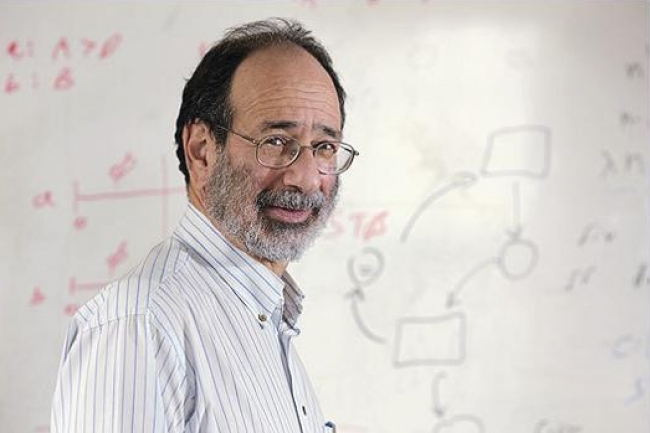
Alvin Roth is the Craig and Susan McCaw Professor of Economics at Stanford University.Alvin Roth

Professor Roth has made significant contributions to the fields of game theory, experimental economics and market design and is known for his emphasis on applying economic theory to solutions for “real-world” problems.

In 2012, Alvin won the Nobel Memorial Prize in Economic Sciences jointly with Lloyd Shapley “for the theory of stable allocations and the practice of market design.”

Alvin Roth has a B.S form Columbia University,  and earned his MS and Ph.D. from Stanford University.

Alvin’s latest book Who Gets What and Why: The New Economics of Matchmaking and Market Design is now available on Amazon.

Economics:

In this interview, Alvin mentions: money, barter, matching markets, supply, demand, price discovery, labor markets, marriage markets, market design, double coincidence of wants, property rights and game theory.

Economists:

In this interview, Alvin mentions: Gary Becker, Christien Exley, Lloyd Shapley, David Gayle, Herb Scarf, Hal R. Varian,  Preston McAfee, Fuhito Kojima, Muriel Niederle, Paul Milgrom, John Levin, Ilya Segal and Oskar Morgenstern.

In this episode you will learn:

  • what economics is and if we need money to allow a market to operate efficiently.
  • about the price discovery process in economics.
  • what is match-making markets and how similar the labor market is to the dating market.
  • what is market design and why it is important.
  • how entrepreneurs and start-ups, like Airbnb and Uber, use market failure to solve a problem.
  • what is a repugnant market.
  • the difference between a thick and a thin market.
  • what makes a market thick.
  • about the black market for kidneys.
  • how kidney exchange works.
  • about the double coincidence of wants in the kidney exchange market.
  • about the problem in the market for water in California.
  • some of the unintended consequences from the war on drugs.

Books:

  • Who Gets What and Why: The New Economics of Matchmaking and Market Design by Alvin Roth
  • Thinking, Fast and Slow by Daniel Kahneman
  • Theory of Games in Economic Behaviour by John von Neumann and Oskar Morgenstern

Papers:

  • Gayle, D. and L. Shapley (1962). College Admissions and the Stability of Marriage, The American Mathematical Monthly, Vol. 69, No. 1, pp: 9 – 15.  
  • Scarf, H. and L. Shapley. (1974). On Cores and Indivisibility. Journal of Mathematical Economics 1: 23-37.

Websites Mentioned in this Episode:

  • Market Design: Alvin Roth’s blog
  • Angel Flight: People Helping People in Need
http://traffic.libsyn.com/economicrockstar/057_Alvin_Roth_Final.mp3

Podcast: Play in new window | Download
  • Prev Page...
  • 1
  • …
  • 10
  • 11
  • 12
  • 13
  • 14
  • …
  • 19
  • ...Next Page

Frank Conway

Frank Conway is founder of Economic Rockstar and lecturer of economics, finance and statistics. Read More…

View My Blog Posts

Youtube Sub

Become a Patron of the Economic Rockstar Podcast

patreon

Ireland’s Economy by the Numbers

Leaving Cert Economics: Ireland’s Economy  Click here to download a workbook on Ireland’s Economy so that you can add your own notes. [Original size] Ireland’s Economy by fconway

Categories

Subscribe and Never Miss An Episode

itunes-logo

Recent Posts

  • Ireland’s Economy by the Numbers April 8, 2019
  • 174: Wendy Carlin on The Core Project, Capitalism, Democracy and Normative Statements February 13, 2019
  • 173: Stephen Wright on Core Econ as a Learning Resource for Mainstream Economics January 28, 2019
  • 172: Best of 2018 Part 2: From the Great Depression to Futurism; Institutions, Individualism, Cooperation and Reciprocity January 22, 2019
  • 171: Best of 2018 Part 1 January 3, 2019

Copyright © 2026 · Podcast Pro Theme on Genesis Framework · WordPress · Log in

This website uses cookies to improve your experience. We'll assume you're ok with this, but you can opt-out if you wish. Accept Reject Read More
Privacy Policy

Privacy Overview

This website uses cookies to improve your experience while you navigate through the website. Out of these, the cookies that are categorized as necessary are stored on your browser as they are essential for the working of basic functionalities of the website. We also use third-party cookies that help us analyze and understand how you use this website. These cookies will be stored in your browser only with your consent. You also have the option to opt-out of these cookies. But opting out of some of these cookies may affect your browsing experience.
Necessary
Always Enabled
Necessary cookies are absolutely essential for the website to function properly. This category only includes cookies that ensures basic functionalities and security features of the website. These cookies do not store any personal information.
Non-necessary
Any cookies that may not be particularly necessary for the website to function and is used specifically to collect user personal data via analytics, ads, other embedded contents are termed as non-necessary cookies. It is mandatory to procure user consent prior to running these cookies on your website.
SAVE & ACCEPT