• ABOUT
  • RESOURCES
  • PODCAST
  • BOOKS
  • BLOG
  • SUPPORTERS
  • QFA Financial Advice
  • CONTACT

Economic Rockstar

Connecting Brilliant Minds in Economics and Finance

111: Greg Mankiw on Writing, Carbon Tax, Health Care and Education at the Economics Teaching Conference in Florida 2016

November 10, 2016 by Frank

http://traffic.libsyn.com/economicrockstar/111_Greg_Mankiw_Final.mp3
Play in New WindowDownload

111: Greg Mankiw on Writing, Carbon Tax, Health Care and Education at the Economics Teaching Conference in Florida 2016

greg-mankiw-and-frank-conway-economic-rockstar-01

Greg Mankiw is the Robert M. Beren Professor of Economics at Harvard University. His research includes work on price adjustment, consumer behavior, financial markets, monetary and fiscal policy, and economic growth.

He has written two popular textbooks—the intermediate-level textbook Macroeconomics and the introductory textbook Principles of Economics. Principles of Economics has sold over two million copies and has been translated into twenty languages.

In addition to his teaching, research, and writing, Professor Mankiw has been a research associate of the National Bureau of Economic Research, an adviser to the Congressional Budget Office and the Federal Reserve Banks of Boston and New York, and a member of the ETS test development committee for the advanced placement exam in economics. From 2003 to 2005 he served as Chairman of the President’s Council of Economic Advisers.

I sometimes describe myself as a libertarian at the margin. When I take the libertarian party, they seem a little to extreme for me. But given where we’re starting today, I think a little bit more reliance on free markets, individual responsibility and personal liberty will be a good thing – Greg Mankiw.

Economics:

In this episode, Greg discusses and mentions: New Keynesian economics, micrcofoundations to macroeconomics, rational expectations, real business cycles, stochastic DSG models, Pigou Tax, carbon tax, externalities, refundable tax credits, subsidies, healthcare, inequality, unintended consequences, student debt and the Baumol disease.

Economists:

In this episode, Greg discusses and mentions: Richard Lispey, Peter Steiner, Harvey Rosen (Princeton), John Maynard Keynes, James Tobin, Stanley Fischer, Tom Sargeant, Robert Lucas, Alan Blinder, David Romer, Olivier Blanchard, Janet Yellen, Arthur Pigou, Karl Marx, Adam Smith and John Kenneth Galbraith

On Writing Books:

  • It does require a fair amount of discipline. That’s the hardest part. I have friends who try to write who have said ‘I’m behind schedule and I’m going to spend the weekend writing three chapters’. That’s a recipe for failure.
  • I try to be extremely disciplined about my writing. When I’m writing the books, I wake up and, after I send my kids off to school, it’s the first thing I do everyday.
  • I force myself to basically write two pages every day. Two pages is not that much. But if you write literally two pages every single day for a year – 365 days – that’d be a good-sized book at the end of the year. So that’s the hardest part – staying disciplined and keeping at it everyday.

On Pedagogy and Technology:

The technology has changed radically [since the first edition of Mankiw’s Intermediate Macro book]. The pedagogy is electronic where increasingly the number of people using online books has been rising. I’m actually kind of old-fashioned – a bit of a Luddite when it comes to these things but actually for the first time this year at Harvard we’re using the online book with the MindTap product.

Links:

  • Cengage Learning 
  • MindTap 
  • Pigou Club
  • Before the Flood (a movie about climate change) by Leonardo DiCaprio
  • Revenue-Neutral Carbon Tax in Washington State

http://traffic.libsyn.com/economicrockstar/111_Greg_Mankiw_Final.mp3

Podcast: Play in new window | Download
  • facebook
  • linkedin
  • twitter
  • google+
  • pinterest

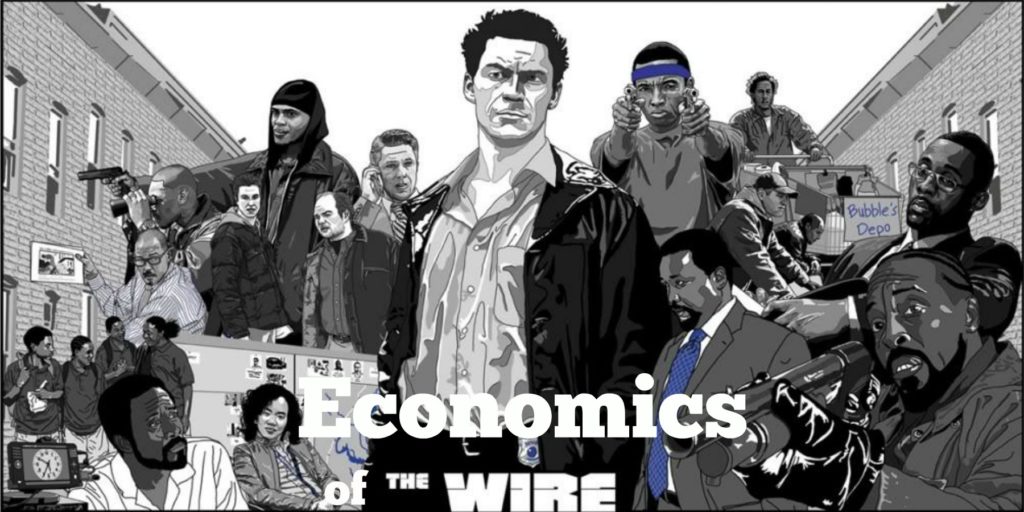
110: Beatrice Cherrier on the Economics of ‘The Wire’ and the Beginning of Economics at MIT

November 4, 2016 by Frank

http://traffic.libsyn.com/economicrockstar/110_Beatrice_Cherrier_Final.mp3
Play in New WindowDownload

economics-of-the-wire

110: Beatrice Cherrier on the Economics of ‘The Wire’ and the Beginning of Economics at MIT

Beatrice Cherrier is an assistant professor at the University of Caen, France.

Professor Cherrier’s research includes the history of postwar economics and how economists’ individual visions combine in collective “styles” of doing economics.

Her current research project is aimed at understanding the rise of applied economics from the mid-1960s onwards.

Beatrice is affiliated with CREM, the Centre for Research in Economics and Management, where she researches alongside social choice theorists.

She teaches in a urban studies department, and is experimenting on her students to figure out how to get non-economists interested in the “dismal” science.

Professor Cherrier blogs on her personal website beatricecherrier.wordpress.com as well as for the Institute for New Economic Thinking.

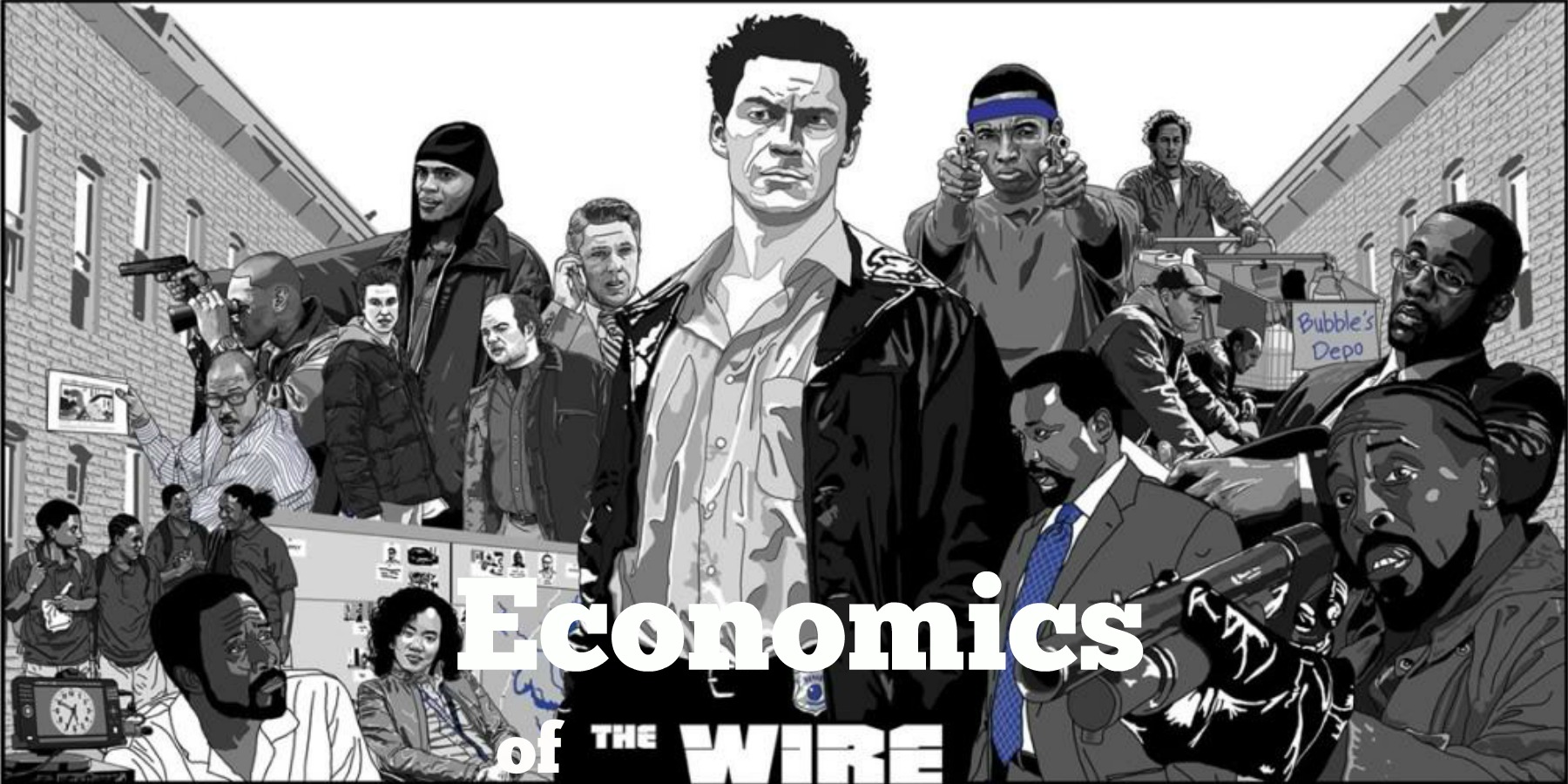
These students have to understand economics, but not in the way of how to use it. You have to understand why they get that course and how they approach social science. For example urban study students work on the field all of the time, so introducing them to economics with a load of statistics is not the right way. They just won’t get it. They want tools to go into the field and to make sense of social behaviour. The solution is to bring the field into the classroom. The Wire is a great way to analyse these social behaviours, particularly in the city – Professor Beatrice Cherrier.

Economics:

In this episode, Beatrice discusses and mentions: Supply and demand, game theory, cooperation, prisoners dilemma, rationality, experimental economics, sunspots, monetary policy, animal spirits and bibliometric analysis.

Economists:

In this episode, Beatrice discusses and mentions: Kevin Hoover, Berger, Robert Solow, Paul Samuelson, John Maynard Keynes, John Hicks, Edward Prescott, Hanson, F. A. Hayek, Angus Deaton, Arthur Charpentier, Vernon Smith, Paul Krugman, Brad DeLong, Paul Romer, Franco Modigliani and Herbert Simon.

In this episode you will learn:

  • how to teach economics to non-economic students.
  • how to model the drug market using ‘The Wire‘ as a social analysis.
  • using The Wire as a tool to teach economics.
  • where is the rationality in gang warfare.
  • the benefits of using pop culture to teach economics.
  • the beginning of economics at MIT.
  • whether Samuelson and Solow ‘invented’ the economics we know today through their mathematics?
  • on the computerisation of economics using big data.
  • the evolution of economics.
  • the history of experimental economics.
  • and much much more.

Writing Tips:

  • “Writing has never been my strength. It’s the part of my job I don’t like.”
  • Do it. To force yourself to do it you have to do it publicly.
  • Write in a smaller format to try to put your ideas together and be convincing.
  • Blog.
  • Do not write for a public audience but rather write in public. If you put this stuff that you’re thinking online, you have to be better at organising your ideas even if you don’t like that.
  • “My tip is really for people who don’t like writing. Write on a blog because you can write small, it’s not consequential. Maybe people will read you and give you tips and you’re going to improve yourself.”

Links:

  • Introductory Economics for the Real World: Lessons from Teaching with “The Wire” TV Show by Beatrice Cherrier
  • The Most Intolerant Wins: The Dictatorship of the Small Minority by N. N. Taleb on Medium
  • The Wire
  • Breaking Bad
  • The Walking Dead
  • Russell-Sage Foundation
  • Freakonomics
  • Freakonometrics

Recommended Books:

  • Toward a History of Game Theory by E. Roy Weintraub

toward-a-history-of-game-theory-economic-rockstar

http://traffic.libsyn.com/economicrockstar/110_Beatrice_Cherrier_Final.mp3

Podcast: Play in new window | Download
  • facebook
  • linkedin
  • twitter
  • google+
  • pinterest

100: Emily Skarbek on the Economics of Natural Disasters and the Samaritan’s Dilemma

August 25, 2016 by Frank

http://traffic.libsyn.com/economicrockstar/100_Emily_Skarbek_Final.mp3
Play in New WindowDownload

100: Emily Skarbek on  the Economics of Natural Disasters and the Samaritan’s Dilemma

Dr. Emily Skarbek is a Lecturer in Political Economy at King’s College London.Emily Skarbek Economic Rockstar

Emily’s research examines the role of voluntary associations in solving complex public goods problems after natural disasters.

Her empirical approach is three-pronged, drawing on archives, historical sources, and field-work following large-scale natural disasters.

In addition, Emily has a passion for the history of economic thought, which she believes can play a key role in advancing contemporary debates. She is particularly interested in the epistemic arguments of Friedrich Hayek.

In 2014, Emily was awarded the annual Gordon Tullock prize for best article published in Public Choice by a junior scholar. She is also a contributing author to several books including After Katrina: The Political Economy of Disaster and Community Rebound and Hayek and the Modern World.

Dr. Skarbek received her PhD in Economics from George Mason University and was previously an Assistant Professor at San Jose State University and a Fellow at the Center for History of Political Economy at Duke University.

Emily blogs at EconLog, one of the world’s leading economics blogs. For more on Dr. Skarbek, visit her website www.emilyskarbek.com or follow her on twitter @EmilySkarbek.

Economics:

In this episode, Emily discusses and mentions: natural disasters, political incentives and the Samaritan’s Dilemma.

Economists:

In this episode, Emily discusses and mentions: David Skarbek, Elinor Ostrom, Emily Chamlee-Wright, Virgil Storr, Adam Smith, David Ricardo, Karl Marx, John Stuart Mill, Alfred Marshall, John Maynard Keynes, Friedrich Hayek, William Easterly, Claudia Williamson, James Buchanan, Daniel Kahneman, Peter Leeson and Diane Coyle.

Dr. Emily Skarbek’s Tips on Writing:

  1. Write about what you are passionate about.
  2. Ask interesting questions.
  3. Get feedback and be open to the harshest critics or actively seek criticism.

Festival:

  • Festival of Economics 2016: Bristol Festival of Ideas

Papers:

  • Skarbek, E. (2016). Aid, Ethics, and the Samaritan’s Dilemma: Strategic Courage in Constitutional Entrepreneurship, Journal of Institutional Economics 12(2): 371-393.
  • Skarbek, E. (2014). The Chicago Fire of 1871: A Bottom Up Approach to Disaster Relief, Public Choice  160(1): 155-180.
  • Skarbek, E. (2010). Coordinating the Reconstruction of Haiti, Journal of International Peace Operations 6(2) 2010: 25-27.
  • Easterly, W. & Williamson, C. R. (2011). Rhetoric versus Reality: The Best and Worst of Aid Agency Practices, World Development Vol. 39, No. 11, pp. 1930–1949.

Where to Find Emily Skarbek:

Website: www.emilyskarbek.com

Twitter: @EmilySkarbek

Books:

  • The political economy of Hurricane Katrina and community rebound by Emily Chamlee-Wright and Virgil Henry Storr (Eds.).
  • Community Revival in the Wake of Disaster: Lessons in Local Entrepreneurship (Perspectives from Social Economics) by Virgil Henry Storr, Stefanie Haeffele-Balch, Laura E. Grube

  • The Fable of the Bees by Bernard Mandeville
  • Human Action by Ludwig von Mises
  • Individualsim and Economic Order by F. A. Hayek
http://traffic.libsyn.com/economicrockstar/100_Emily_Skarbek_Final.mp3

Podcast: Play in new window | Download
  • facebook
  • linkedin
  • twitter
  • google+
  • pinterest

098: Kirk Du Plessis on Options Trading and Creating on Online Teaching and Trading Platform

August 11, 2016 by Frank

http://traffic.libsyn.com/economicrockstar/098_Kirk_Du_Plessis_Final.mp3
Play in New WindowDownload

098: Kirk Du Plessis on Options Trading and Creating on Online Teaching and Trading Platform

Kirk Du Plessis is a full-time options trader, real estate investor, stay-at-home Dad and personal trading coach.Kirk Du Plessis Economic Rockstar

His background and experience includes time on Wall Street as an investment banker, a senior stock analyst and a senior loan officer.

Kirk is the Founder and Fund Manager at Option Alpha, an online education and training platform for options traders with students from 42 different countries around the world.

You can grab his completely FREE 12-Part Video Training Course which will help you discover how to trade options for consistent monthly income over at optionalpha.com.

Kirk was recently featured in Barron’s Magazine as a contributor to their Annual Broker’s Review.

Kirk’s podcast, The Option Alpha Podcast, features great tips, advice and explanations on all things options trading.

In this Episode, Kirk mentions and discusses:

options, options trading,derivatives, calls, puts, bull call spreads, straddles, stock market, efficient market hypothesis, technical analysis, wasting asset, time decay, turtle traders, delta, survivorship bias, discipline, arbitrage, black swan and leverage.

Podcasts:

  • The Option Alpha Podcast
  • SPI 175: The 8-Year Hobby Blog That Quickly Transformed into a 6-Figure Per Month Business with Kirk Du Plessis
  • EonFire 1092: Learn how to trade options from home with Kirk Du Plessis

Links:

  • Turtle Trader


http://traffic.libsyn.com/economicrockstar/098_Kirk_Du_Plessis_Final.mp3

Podcast: Play in new window | Download

  • facebook
  • linkedin
  • twitter
  • google+
  • pinterest

079: Bryan Caplan on Parenting, the Case Against Education and the Rational Voter

March 31, 2016 by Frank

http://traffic.libsyn.com/economicrockstar/079_Bryan_Caplan.mp3
Play in New WindowDownload

079: Bryan Caplan on Parenting, the Case Against Education and the Rational Voter

Bryan Caplan is Professor of Economics at George Mason University and Senior Scholar at the Mercatus Center.Bryan Caplan Economic Rockstar

Bryan is the author of The Myth of the Rational Voter: Why Democracies Choose Bad Policies, named “the best political book of the year” by the New York Times, and Selfish Reasons to Have More Kids: Why Being a Great Parent Is Less Work and More Fun Than You Think. He also blogs at EconLog.

Bryan has published in the New York Times, the Washington Post, the Wall Street Journal, the American Economic Review, the Economic Journal, the Journal of Law and Economics, and Intelligence, and has appeared on 20/20, FoxNews, and C-SPAN. He is now working on a new book, The Case Against Education.

His webpage, bcaplan.com, features both his academic research and his numerous other interests, including the online Museum of Communism.

Bryan has a B.A. in Economics from University of California, Berkeley and a Ph.D. in Economics from Princeton University.

Economists and Influencers:

In this episode, Bryan mentions: Milton Friedman, Gary Becker, Daniel Kahneman and Tyler Cowen.

Economics:

In this episode, Bryan mentions: the signaling effect, behavioral genetics, fertility rates, immigration, open borders, productivity and democracy.

Where to Find Bryan Caplan:

  • www.bryancaplan.com
  • EconLog

Books:

  • The Myth of the Rational Voter: Why Democracies Choose Bad Policies by Bryan Caplan
  • Selfish Reasons to Have More Kids: Why Being a Great Parent Is Less Work and More Fun Than You Think by Bryan Caplan
  • Understanding Comics: The Invisible Art by Scott McCloud
http://traffic.libsyn.com/economicrockstar/079_Bryan_Caplan.mp3

Podcast: Play in new window | Download
  • facebook
  • linkedin
  • twitter
  • google+
  • pinterest

071: Darshak Patel on Using Popular Culture to Engage Economics Students in the Classroom and Online

February 5, 2016 by Frank

http://traffic.libsyn.com/economicrockstar/071_Darshak_Patel.mp3
Play in New WindowDownload

071: Darshak Patel on Using Popular Culture to Engage Economics Students in the Classroom and Online

Darshak Patel is currently a Lecturer of economics at the University of Kentucky, USA.darshak patel

After a one-year Visiting Assistant Professor appointment at Roanoke College, Darshak served three years as an Assistant Professor of Economics at the University of Tennessee, Martin. 

Darshak’s research and teaching interests include labor economics, microeconomics, industrial organization, the economics of education, and sports economics.  

Darshak graduated with a PhD in Economics at the University of Kentucky with his dissertation exploring the use of  option value theory to explain student decision-making in post-secondary schooling. 

Economics:

In this interview, Darshak mentions: option value theory, pedagogy, decision-making, opportunity cost, logic, profit, the hazard model, entrepreneurship, economic growth and corruption.

Economists:

In this interview, Darshak mentions: Abdullah Al-Bahrani, Kim Holder, Brendan Sheridan, Jadrian Wooten and Milton Friedman.

In this episode you will learn:

  • whether using Twitter to enhance the students’ learning outcomes is effective.
  • how video scrapbooking can be integrated into the economics curriculum.
  • the benefits and difficulties of using social media platforms to teach economics.
  • what option value theory is.
  • about Milton Friedman’s recommendation to the US government to introduce a tax to finance the US involvement in World War II.
  • how Bing Crosby helped promote the purchase of war bonds for the US war effort during the Second World War.
  • about the transition of the Kenyan economy since the 1970s.
  • about the Chinese influence in Africa.
  • how you can use the economic data provided on FRED to bring your economics classroom alive.
  • how Darshak is using popular culture to help interpret economic concepts and theories.

Resources:

  • ESPN 30 for 30
  • Rockonomix
  • FRED
  • Critical Commons
  • Economics of Seinfeld by Professor Linda S. Ghent, Professor Alan Grant and George Lesica.
  • Bazinganomics by James Tierney, G. Dirk Mateer, Wayne Geerling, Jadrian Wooten and Ben Smith.
  • Economics of The Office by Dan Kuester, Dirk Mateer and Chris Youderian.
  • University of Kentucky Teaching Economics Conference

Books:

  • The Two-Second Advantage: How We Succeed by Anticipating the Future–Just Enough by Vivek Ranadive and Kevin Maney
  • Soccernomics by Simon Kuper and  Stefan Szymanski

Papers:

  • Al-Bahrani, A., Dowell, C. & Patel, D. (2016). Video Scrapbooking: An Art Form Revived in the Economics Curriculum. Journal of Economics and Economic Education Research. Forthcoming.
  • Patel, D. and Saunoris, J. (2016). Using FRED Data Series to Improve Learning Outcomes in Economic Courses: From Student to Practitioner, Journal of Economics and Finance Education. Forthcoming.
  • Al-bahrani, A., Patel, D. and Sheridan, B. (2015). Engaging Students Using Social Media: The Students Perspective. International Review of Economics Education, 19, 36-50.
  • Al-bahrani, A. and Patel, D. (2015). Incorporating Twitter, Instagram, and Facebook in Economics Classrooms,  Journal of Economic Education. 46 (1), 56-67.
  • Al-bahrani, A. and Patel, D. (2015). Using ESPN 30 for 30 to Teach Principles of Economics, Southern Economic Journal, 81 (3), 829-842.
  • Patel, D. and Ward, M. R. (2011). “Using Patent Citation Patterns to Infer Innovation Market Competition,” Research Policy. 40(6), 886–894.
http://traffic.libsyn.com/economicrockstar/071_Darshak_Patel.mp3

Podcast: Play in new window | Download

  • facebook
  • linkedin
  • twitter
  • google+
  • pinterest

059: Shawn Humphrey on La Ceiba Microfinance, Tribal Teaching and Creating a Culture of Commitment in the Classroom

November 19, 2015 by Frank

http://traffic.libsyn.com/economicrockstar/059_Shawn_Humphrey_Final.mp3
Play in New WindowDownload

059: Shawn Humphrey on La Ceiba Microfinance, Tribal Teaching and Creating a Culture of Commitment in the Classroom

Shawn Humphrey is currently an Associate Professor of Economics at the University of Mary Washington.shawn humphrey

Shawn is the founder of La Ceiba Microfinance,the Two Dollar Challenge, the Month of Microfinance, and the Poverty Action Conference. 

He is also on the Board of Directors of Students Helping Honduras, a former Clinton Global Initiative University mentor, an Opportunity Collaboration alum and a 2014 Feast on Good Speaker.

Shawn is from North Bend, OH, earned his BA in Economics from Earlham College (Richmond, IN), his MA in Economics at Virginia Commonwealth University (Richmond, VA), and after having read Douglass C. North’s Institutions, Institutional Change, and Economic Performance headed to Washington University in St. Louis where he earned his PhD in Economics.

Shawn describes himself as a Tribal Teacher, a Diligent Do-Gooder and a Global Grassroots Mobilizer.

I grew up poor in Ohio. I was bullied from the time I was young, all the way through 8th grade. Both these things are part of my core and they motivate me in everything that I do – Shawn Humphrey

Economics:

In this interview, Shawn mentions: economic development, microfinance, consumption smoothing, poverty and globalisation.

Economists:

In this interview, Shawn mentions: Christine Exley, Helena Nordberg-Hodge, Eugene Power, Robert Solow, Douglass North, Armen Alchian, Harold Demsetz and Gary Miller.

In this episode you will learn:

  • about the social entrepreneurial journey that Shawn found himself pursuing.
  • about Shawn’s Tribal Teaching pedagogy and if this is the future of education.
  • why Shawn wanted to help the poor in Honduras and to encourage people to experience poverty.
  • about Shawn’s family experiencing poverty in the 1970s and how their standing in the community led him to believe that there was a better way to treat and help people out of poverty.
  • about how La Ceiba are helping the poor in Honduras.
  • about the importance of building relationships with individuals that seek assistance from La Ceiba.
  • the problems with microfinance due to group lending and peer-pressure.
  • about the Two Dollar Challenge and you can get involved.
  • why supporting local leaders is the key to ending poverty.
  • about Shawn’s 7 year journey to finding a common ground in humanity.
  • why Shawn’s initial desire to feel significant while helping the poor is now a constant battle.
  • about Tribal Teaching and the pedagogy Shawn has  designed and embraced to make a better learning environment and process.
  • about the culture of commitment that Shawn has introduced into his classroom.

Shawn Humphrey on La Ceiba Microfinance:

“My students and I, we run our own microfinance institution in Honduras called La Ceiba where we take a very distinct approach to microfinance which is different to anything else that is out there.” – Shawn Humphrey

You can make a global impact on not a lot of money if you’re creative enough to embrace your constraints and say ‘hey, let’s find a way around this one!’ and do it creatively. – Shawn Humphrey

“Group lending is simply peer-pressure. It’s a public process by which a small set of individuals can apply pressure to one individual in the group who is unable and/or unwilling at that moment to pay off her loan.”

“90% of our clients did not use their loans for entrepreneurial activities. Most of them use it for consumption smoothing.” – Shawn Humphrey

We get more stories out of coffee and donuts than we do out of group meetings – Shawn Humphrey

Click To Tweet

My role is actually on the side-lines as a side-kick, not as a hero in this whole thing – Shawn Humphrey

Click To Tweet

I’m fighting an entire culture that has conditioned us to believe in certain things – Shawn Humphrey

Click To Tweet

When I started this work, I was flailing human being. I felt hollow inside and for some reason I felt that I could fill that hole by trying to end someone else’s poverty. – Shawn Humphrey

Our hardest work is inside of us – Shawn Humphrey

Click To Tweet

Where to Find Shawn Humphrey:

  • shawnhumphrey.com

Organisations founded by Shawn Humphrey:

  • La Ceiba Microfinance
  • Tribal Teaching
  • Month of Microfinance
  • Two Dollar Challenge

Recommended Readings:

  • 5 Species of Students by Shawn Humphrey
  • Life Chart by Shawn Humphrey
  • If You Breathe You Must Battle by Shawn Humphrey
  • To Hell With Good Intentions by Ivan Illich 

Documentaries:

  • Cowspiracy: The Sustainability Secret by Kip Andersen and Keegan Kuhn
  • The Stanford Prison Experiment

Books:

  • The Hero with a Thousand Faces by Joseph Campbell
  • Institutions, Institutional Change, and Economic Performance by Douglass C. North
  • Managerial Dilemma’s by Gary Miller
  • The War of Art by Stephen Pressfield
http://traffic.libsyn.com/economicrockstar/059_Shawn_Humphrey_Final.mp3

Podcast: Play in new window | Download

  • facebook
  • linkedin
  • twitter
  • google+
  • pinterest

052: Alex Tabarrok on Globalisation, Bounty Hunters and Leveraging Online Education

October 1, 2015 by Frank

http://traffic.libsyn.com/economicrockstar/Alex_Tabbarrok__Final.mp3
Play in New WindowDownload

052: Alex Tabarrok on Globalisation, Bounty Hunters and Leveraging Online Education

Alex Tabarrok is Associate Professor of Economics at George Mason University and co-founder (with Tyler Cowen) of Marginal Revolution University, an online platform for learning economics.Alex Tabarrok

Alex is Senior Fellow and former Research Director for The Independent Institute, Assistant Editor of The Independent Review, Bartley J. Madden Chair in Economics at the Mercatus Center and Director of the Center for Study of Public Choice.

Alex is the author or editor of a number of books including the introductory economics textbooks, Modern Principles, The Voluntary City and Changing the Guard: Private Prisons and the Control of Crime.

Alex is a TED speaker with over 640,000 views of his TED talk, How Ideas Trump Crises.

Alex received his Ph.D. in economics from George Mason University, and he has taught at the University of Virginia and Ball State University.

“I hope to be teaching long after I’m dead” – Alex Tabarrok

Click To Tweet

In this episode, you will learn:

  • how to ensure that criminals turn up of trial and to reduce the possibility of them becoming a fugitive.
  • how bounty hunters are more successful than the police in catching criminals.
  • why bounty hunters and bail bondsmen are the most best for the taxpayer.
  • why bounty hunters invited Alex Tabarrok to join them in a bounty hunting.
  • why a mother’s signature on a bail bond is the most effective way of making sure a criminal repays its  due.
  • how effective are the police in deterring crime.
  • how a police strike in Montreal in 1967 resulted in an spike in crime.
  • how the terror alert level results in an increase in police presence and results in a decrease in local crime.
  • whether we should reward the police for reducing crime and the problems that could arise from this reward system.
  • about the use of value-added tests for identifying teacher quality.
  • whether the best teachers have a positive impact on the future earnings of their students.
  • if a country can have a welfare state and open borders.
  • how the next generation of immigrants revert to the average of their adopted country including crime.
  • why immigrants to the United States are the most entrepreneurial.
  • why Alex co-founded Marginal Revolution University.
  • what Marginal Revolution University is about and who it’s for.
  • how to leverage the best teachers and leverage their experience.
  • how teaching will evolve into a format that’s similar to how plays evolved into movies with leading actors being paid millions of dollars and the production being created just once.
  • how artificial intelligence and computer adaptive learning programmes will be the next wave of teaching and learning.
  • what is the ideal length for a recorded educational video.
  • why universities will have to adapt to online technologies.
  • why parents and politicians want colleges to use online technologies.

Immigrants have lower crime rates, but the children of immigrants have about average crime rates. It’s unfortunate that the immigrants adopt our ways. They assimilate to American crime rates – Alex Tabarrok

Personal Habits:

I love doing what I do and that removes a lot of barriers. It gets you up in the mornings – Alex Tabarrok

Takeaway:

“Economics is fun. Economics brings in these world histories, things about climate, geography and history” – Alex Tabarrok

Economics:

In this interview, Alex mentions: crime, incentives, causality, elasticity, Baumol’s Cost Disease, rewards, redistribution, welfare, taxes, entrepreneurship, human capital, globalisation, public goods, free trade, structural unemployment and trade.

Economists:

In this interview, Alex mentions: Tyler Cowen, Greg Mankiw, Paul Krugman, Eric Callan, John Click, Milton Freidamn, John Nash, Bryan Caplan, Robin Hanson, Joseph Schumpeter, Adam Smith, David Hume and Richard Cantillon.

“This is a cliche, but Adam Smith really is great” – Alex Tabarrok

Click To Tweet

Ted:

  • How Ideas Trump Crises by Alex Tabarrok
  • Comment: Solving Crises Through Innovation and Ideas or Creating Problems Through Marginalisation and Displacement by Frank Conway

My TED talk is 75% of my entire teaching. So that 15 minute talk has been seen by so many people that that’s the majority – the big majority of all my teaching in my life. – Alex Tabarrok

Podcasts:

  • EconPop

Books:

  • Economics in One Lesson by Henry Hazlitt
  • The Armchair Economist by Stephen Lansberg
  • Freakonomics by Steven  D. Levitt and Stephen J. Dubnar
  • An Economist Gets Lunch: New Rules for Everyday Foodies by Tyler Cowen
  • The Undercover Economist by Tim Hartford
  • The Undercover Economist Strikes Back by Tim Hartford
  • The Case Against Education by Bryan Caplan (coming soon)
  • The Age of Em by Robin Hanson 
  • Trekonomics by Manu Saadia

    http://traffic.libsyn.com/economicrockstar/Alex_Tabbarrok__Final.mp3

    Podcast: Play in new window | Download

    • facebook
    • linkedin
    • twitter
    • google+
    • pinterest

    The Breadwinner: Pavarna – A Heroine to All Girls Symbolizing Self-Empowerment and the Fight Against Oppression and Inequality

    August 26, 2015 by Frank

    Pavarna - A Heroine to All Girls Symbolizing

    Recently, I met up with Dr. Shanta Devarajan and his wife Dr. Nancy Benjamin in Waterford City on their recent trip to Ireland. Shanta is MENA Chief Economist at the World Bank and Nancy is Senior Economist also at the World Bank.

    I arranged to meet up with Shanta after interviewing him on the Economic Rockstar podcast when he informed me of his trip. Shanta and Nancy were travelling by coach from Cork City to Kilkenny City and were making a 1-hour stop in Waterford City. It was a beautiful day in August and the sun was shining and the temperature was such that we decided to sit outside for lunch at The Granary Cafe.

    Shanta and Nancy both had a Chicken and Bacon Caesar wrap with Shanta deciding on an Americano and Nancy on a bottle of still water. I personally went for a fruit scone and an Americano. While relaxing outdoors, we were greeted by the soothing shelther of a sapling and comforted by a genial gentle breeze.

    This differed to my previous remote meeting with Shanta, which took place on a Skype call – he in his office in Washington DC at 4pm EST and me in my home in Portlaw, Co. Waterford at 9pm Irish time. It was an audio-only interview so we didn’t see each other. The conversation flowed but within the realm and restrictions of economic themes.

    Our conversation at The Granary Cafe was quite mixed. We spoke about economics (of course!), the Economic Rockstar podcast, some guest recommendations for the show by Shanta (Patrick Honohan and Chris Blattman) and about Irish animation studio Cartoon Saloon. Yes, you read that correctly – Cartoon Saloon!

    The Breadwinner symbolWhy did three economists have a conversation about Cartoon Saloon? Well, we found out that we are all in some way connected to Cartoon Saloon – or more accurately the story behind their animated film ‘The Breadwinner’ (being produced by Aircraft Pictures, Cartoon Saloon and Melusine Productions).

    My brother, multi-award winning animator, Rory Conway is employed by Cartoon Saloon and is part of the animation team behind this feature-length film. Angelina Jolie Pitt is Executive Director and her production company Jolie Pas Productions will join forces with Cartoon Saloon to make this a super-awesome and award-winning team.

    Both Shanta and Nancy were on their way to Kilkenny City and visiting the beautiful and awe-inspiring Kilkenny Castle. For the summer of 2015, Rory was artist-in-residence at Kilkenny Castle where he showcased Cartoon Saloon’s recent feature length movie ‘Song of the Sea’. Shanta and Nancy met Rory there, where he divulged everything about this movie from idea generation to character design.

    Okay! The connection hasn’t be fully made just yet. Shanta, Nancy, myself, Rory, Cartoon Saloon, The Breadwinner, Angelina Jolie Pitt and economics? I understand if you’re confused right now, but allow me to explain.

    During our conversation, we chatted about The Breadwinner (written by Deborah Ellis), a story about a young girl from Afghanistan who must disguise herself as a boy in order to earn money for her family. Nancy had mentioned the work done by an investigative journalist who had discovered the lives of young Afghan women after they had lived and behaved as young boys during their childhood and adolescence. Nancy explained how families with only girls and no boys would feel a sense of shame and embarrassment in society. This social stigma is typically avoided when a girl from the same family is chosen to dress-up and behave as a boy. The girl has her hair cut short and takes on a male name.

    Digging a bit deeper on the internet about this phenomenon, I came across the term ‘Bacha Posh’ to describe these Afghan girls living as boys. Jenny Nordberg, investigative journalist, was the first to use Bacha Posh to describe these girls since this practice didn’t even have a name. Jenny’s breaking story in The New York Times revealed this practice to the rest of the world and subsequent dedicated research by her culminated into a fascinating and must-read book titled ‘The Underground Girls of Kabul’. Jenny Nordberg reveals so much about these girls during and after their livelihood as boys. She exposes gender inequality, powerlessness and resistance.

    Dressing these girls as boys is not to deceive society. But the belief is that a Bacha Posh, as she becomes known, will bring some ‘fortune’ to her mother in a later pregnancy where it is hoped that a boy will be born. A Bacha Posh does not take on the role of a boy or a girl, but has some intermediate status. She will not cook and clean (like all males) and she can attend school and work (unlike all females). The remaining females in her family can be escorted by her – a task strictly reserved for males. These girls performed better in all aspects of education than other girls in society due to their schooling opportunities.

    A Bacha Posh must revert back to her female ‘status’ once she reaches puberty or when she marries. However, the sense of empowerment, the freedom, the rights and the opportunities enjoyed by these young girls and women is too invaluable to give up. Having an experience of what should be a right to all women is a difficult thing to give up – being replaced with a life of oppression, zero rights and a slave-like existence.

    The 5 years of research and interviews that Jenny Nordberg conducted to investigate the lives of Bacha Posh have shown that the reversal of social status experienced by these women can lead to irreversible psychological effects. They must take on the persona of the traditional Afghan woman and displace the once coerced mannerisms of a boy and all the ‘social fortunes’ that came with their ‘male-like’ status. Also, the sense of freedom and opportunity provided to these women shines light on the inequality that exists at a basic human level. Such controversial treatment of women in Afghanistan has led to a surge of activity in women’s rights movements there.

    Novelists like Deborah Ellis, investigative journalists and authors like Jenny Nordberg, women’s rights activists like Angelina Jolie Pitt and animation studios like Cartoon Saloon are a powerful force when they shine light on the oppression and restrictions faced by Afghan women. They educate us through facts, imagery, art, visual expression, color, sound and a theme that many feel they could possibly relate to – a struggle against oppression and an authoritative regime, and the fight for survival and self-empowerment.

    The Breadwinner

    The people behind The Breadwinner, are setting themselves up to be an impressive and potent combination that could possibly re-write the history books in Afghanistan and for women’s rights everywhere. The Breadwinner depicts the life of a Bacha Posh in such a compelling way – a story of oppression and self-empowerment. A story of Parvana, “a young girl living under the Taliban regime in Afghanistan, who must disguise herself as a boy and become the breadwinner of the family when her father is unfairly imprisoned”. The Breadwinner also celebrates the culture, history and beauty of Afghanistan.

    It’s amazing how a conversation over a cup of coffee could result in an urge to write this post and how people are somewhat connected by a story – a story of Parvana, the protagonist in The Breadwinner and a symbol of survival, hope, and empowerment through imagination.

    Young girls everywhere, even those in developed countries like Ireland, the UK and the US, should read Parvana’s story and watch the movie upon its release. They should take away from it the themes of oppression and self-empowerment.

    Parvana must be your heroine, symbolizing the determination and the willingness to succeed in a world lacking opportunity. You must reflect upon their own position in society, in school, in your home and in the media. When someone says that you should not hold a hammer, learn computer coding, play in the mud or open up an old computer and mess with the memory board because ‘you are a girl’, then think of Parvana and all the young girls and women like Parvana today and in the past who have fought for equal rights. Stand up for your rights, empower yourself with imagination and dream of your goals, irrespective of what anyone says, and strive toward making your dreams a reality.

    The Breadwinner will win an Oscar once released in 2017. But the greatest accolade that will be bestowed on all involved in the creation of this film will be the knowledge that they will empower women, not only in Afghanistan but throughout the world, giving them strength to fight for their rights and equality. You’ve read it here first on Economic Rockstar – The Breadwinner will be a deserved winner of the Nobel Peace Prize and Jenny Nordberg deserves her place as an individual recipient of the Peace Prize too. Just like Malala Yousafzai, the 2014 Nobel Peace Prize recipient who is fighting for girls’ right to education in Pakistan and beyond, and who suffered an attack on her life by Taliban gunmen in doing so, Pavarna will be the fictional heroine of the oppression suffered by girls in Afghanistan and beyond.

    Oh, by the way, a group of people can win the Nobel Peace Prize. Don’t believe me? Check out episode 036 of the Economic Rockstar podcast with Professor Jason Shogren who was a member of the Intergovernmental Panel on Climate Change (IPCC),  joint recipients of the Nobel Peace Prize in 2007 along with Al Gore.

    Links:

    Jenny Nordberg: www.bachaposh.com

    Deborah Ellis: www.deborahellis.com

    Cartoon Saloon: www.cartoonsaloon.ie

    Economic Rockstar: www.economicrockstar.com

    Books:

    The Underground Girls of Kabul: In search of a hidden resistance in Afghanistan by Jenny Nordberg

    Read an excerpt from Jenny’s award-winning book here.

    The Breadwinner by Deborah Ellis


    • facebook
    • linkedin
    • twitter
    • google+
    • pinterest

    038: Leah Bell on Being an Angry Grad and Setting Yourself Up for a Life of Success

    June 25, 2015 by Frank

    http://traffic.libsyn.com/economicrockstar/038_Leah_Bell_Final.mp3
    Play in New WindowDownload

    038: Leah Bell on Being an Angry Grad and Setting Yourself Up for a Life of Success

    Leah BellLeah Bell spent tens of thousands of dollars on a college education for a degree in Education with the same hope of getting a job one day.  After struggling to find a teaching job as an Elementary school teacher, Leah had to work at a minimum part-time job to supplement her teaching salary. However, the school closed and she lost her job. Leah took on a job related to sales. But after a few years she realized that she wanted nothing more than to stay at home with her son. But with student debt and rising prices, it was extremely difficult on one income.

    Leah Bell learned the most about life, not in the classrooms of the colleges she attended, but in the years following. After realizing the struggle in the job market, the difficulty of paying off student loans, and the heartbreak of sacrificing priceless time with family to meet financial needs, she and her husband have devoted their lives to sparing people of this depressing fate through their company Neotrep™, providing entrepreneurs with affordable education and tools to succeed. She recently wrote the book The Angry Grad to help prospective students and recent graduates choose the route of entrepreneurship instead of the unstable job world.

    Economics:

    Mortgage, student loan, debt, competition, labor, happiness, tax and return on investment.

    Economics and finance suddenly became personal. It became emotional and, at that time, I became interested in it because it’s not just about numbers. I want people to get their finances under control so they can have a better life and give their children a better life – Leah Bell.

    Economists:

    Paul Dolan and John Gathergood.

    Influencer:

    Robert Kiyosaki

    Takeaway:

    “Always be asking questions, always be willing to learn and take advantage of all of the resources that are out there” – Leah Bell.

    Find Out:

    • what is the average student debt?
    • how a college degree is different today than it was just two or three decades ago.
    • why it’s so difficult for college graduates to find jobs and pay back their student loans.
    • how the future will look if we continue teaching young people that debt is the only way to afford a house, a car and an education.
    • what other options are there for people who are considering an education.
    • how debt is not the only way to get through college.
    • if we are paying more for college than we can hope to get back.
    • if it’s still worth taking on so much debt to get a degree.
    • if we’re living in a school loan debt bubble.
    • what we can do about all this?

    The Disillusioned Student

    High-school students are being blind-sided and do not truly understand the debt that they will accumulate while attending college. Educators and college and career guidance counsellors are failing high-school students by only providing a one-sided argument to going to college. They emphasise the pros of going to college and, in most cases, fail to disclose the cons of going to college in terms of the costs, term loans and the interest repayments. Educators prepare high-school students for college in terms of the grades but lack the financial planning required by the student and their parents.

    Typically, a $30,000 loan, which is approximately the average student debt in the US, will amount to $60,000 in capital and interest repayments over the life the loan. However, in many cases, students fail to meet these repayments which equate to upward of $1,000 per month. Consequently, the loan becomes structured to suit the needs of the graduate by acknowledging their current income status and the number of children they may have.

    People are putting life events on hold because of the amount of debt they are in – Leah Bell.

    Many graduates have become disillusioned with the education system in terms of the costs and the likelihood of repaying it with jobs that do not exist for the training and preparation that they had done at college. For example, teachers are supplementing their teaching salary (if they have a teaching job that is) with a second income earned at shoe stores and restaurants.

    By the time students plan to have their entire loan paid off, their going to have double maybe triple the total amount that they originally took out – Leah Bell.

    Unfortunately, parents do not understand the reality of the situation. When they themselves were graduating from college, they typically did well relative to those who didn’t attend. Then, jobs weren’t competitive but today, almost everyone has a college degree and finding a job is so much greater than it was then. Now, you need a masters degree to be competitive.

    Since there is a demand for college places and lenders are willing to give education loans, colleges  can charge whatever they want. Colleges are aware of this and are raising their rates to astronomical levels. Colleges too are borrowing to finance the development of their campus and their sports and recreational facilities. Football stadiums are being built to professional standards and who best to service this debt than the incoming college students who are paying the ever-increasing fees.

    Students are paying more for a college experience than for a college education – Leah Bell

    “The college experience is setting up people to fail”. Unless you’re going to college for an engineering degree or something in computer science or physics, something math or science heavy, those are the jobs that you make a decent amount coming out of college. But not everyone fits this mould. Some want to do something in education, social science, music, photography or the arts. Those, however, are on the lower end of the pay scale.

    Quotes by Leah Bell on the Economic Rockstar podcast:

    “We’re living a very different life than the one we were expecting” – Leah Bell.

    “The highest taxed person is the employee” – Leah Bell.

    “Why people are encouraged to go to college and get a job is just for the tax reasons” – Leah Bell.

    “Set yourself up for a life of success” – Leah Bell.

    Click To Tweet

    If you can just discipline yourself enough to sit down and learn and go out and try things and be willing to fail and get back up again, you can do anything – Leah Bell.

    You’re capped out at your salary and your employer is using your strengths to become really wealthy. What upsets me is people don’t look inside themselves and see all the potential they have and what they can do for themselves – Leah Bell.

    “There is no limit to what you can do. No-one is limiting you” – Leah Bell.

    Click To Tweet

    “I feel that when I wrote this book, I was writing it to myself 12 years ago” – Leah Bell.

    Get off your butt. Get some confidence. Do things different. Step out of the box and be different. Don’t be what everyone’s telling you you have to be – Leah Bell.

    “The only person that will ever hold you back is you” – Leah Bell.

    Click To Tweet

    I deal with doubts every single day – whether or not I can do what I wan to do. Do I have enough time in the day? Am I good enough to do it? That’s so natural – Leah Bell.

    There’s no one in the world that has not failed except for the people who don’t try. And the people who don’t try never succeed because they never try to get to the point of success – Leah Bell.

    “A winner never quits and a quitter never wins” – Napoleon Hill

    Click To Tweet

    Blogs Mentioned in this Episode:

    • www.neotrep.com by Leah and Walt Bell
    • www.theangrygrad.com by Leah Bell
    • www.smartpassiveincome.com by Pat Flynn
    • www.flippedlifestyle.com by Shane and Jocelyn Sams

    Podcast Episodes Mentioned in this Episode:

    • SPI 122 : From Teachers to Totally Rocking it Online – Shane and Jocelyn Sams Share their Success Story – Smart Passive Income.
    • 007: Ryan Blair – Gangster turned Millionaire on Decision-Making, Game Theory and Incentives – Economic Rockstar.

    Recommended Books:

    • The Angry Grad: Your Guide to Student Loans, a Struggling Economy, and Becoming Your Own Boss by Leah Bell
    • Spirit of Apollo by Sidney Newton Bremer
    • The 4-Hour Workweek by Tim Ferriss
    • Nothing to Lose, Everything to Gain: How I Went from Gang Member to Multimillionaire Entrepreneur by Ryan Blair 
    • Rich Dad Poor Dad: What the Rich Teach Their Kids About Money That the Poor and Middle Class Do Not! by Robert Kiyosaki 

    Music:

    It’s Not Right For You by The Script

    This song inspired Leah during the writing of her book The Angry Grad.

    Where to Find Leah Bell:

    • Twitter: @AngryGradBook
    • Facebook: The Angry Grad
    • Website: www.theangrygrad.com
    http://traffic.libsyn.com/economicrockstar/038_Leah_Bell_Final.mp3

    Podcast: Play in new window | Download

    • facebook
    • linkedin
    • twitter
    • google+
    • pinterest
    • Prev Page...
    • 1
    • 2
    • 3
    • ...Next Page

    Frank Conway

    Frank Conway is founder of Economic Rockstar and lecturer of economics, finance and statistics. Read More…

    View My Blog Posts

    Youtube Sub

    Become a Patron of the Economic Rockstar Podcast

    patreon

    Ireland’s Economy by the Numbers

    Leaving Cert Economics: Ireland’s Economy  Click here to download a workbook on Ireland’s Economy so that you can add your own notes. [Original size] Ireland’s Economy by fconway

    Categories

    Subscribe and Never Miss An Episode

    itunes-logo

    Recent Posts

    • Ireland’s Economy by the Numbers April 8, 2019
    • 174: Wendy Carlin on The Core Project, Capitalism, Democracy and Normative Statements February 13, 2019
    • 173: Stephen Wright on Core Econ as a Learning Resource for Mainstream Economics January 28, 2019
    • 172: Best of 2018 Part 2: From the Great Depression to Futurism; Institutions, Individualism, Cooperation and Reciprocity January 22, 2019
    • 171: Best of 2018 Part 1 January 3, 2019

    Copyright © 2026 · Podcast Pro Theme on Genesis Framework · WordPress · Log in

    This website uses cookies to improve your experience. We'll assume you're ok with this, but you can opt-out if you wish. Accept Reject Read More
    Privacy Policy

    Privacy Overview

    This website uses cookies to improve your experience while you navigate through the website. Out of these, the cookies that are categorized as necessary are stored on your browser as they are essential for the working of basic functionalities of the website. We also use third-party cookies that help us analyze and understand how you use this website. These cookies will be stored in your browser only with your consent. You also have the option to opt-out of these cookies. But opting out of some of these cookies may affect your browsing experience.
    Necessary
    Always Enabled
    Necessary cookies are absolutely essential for the website to function properly. This category only includes cookies that ensures basic functionalities and security features of the website. These cookies do not store any personal information.
    Non-necessary
    Any cookies that may not be particularly necessary for the website to function and is used specifically to collect user personal data via analytics, ads, other embedded contents are termed as non-necessary cookies. It is mandatory to procure user consent prior to running these cookies on your website.
    SAVE & ACCEPT